 The Death and Life of Great American Cities
Quotes from the Book
The city is not merely a repository of pleasures. It is the stage on which we fight our battles, where we act out the drama of our own lives. It can enhance or corrode our ability to cope with everyday challenges. It can steal our autonomy or give us the freedom to thrive. It can offer a navigable environment, or it can create a series of impossible gauntlets that wear us down daily. The messages encoded in architecture and systems can foster a sense of mastery or helplessness.
9
Happiness is a house with many rooms, but at its core is a hearth around which we gather with family, friends, the community, and sometimes even strangers to find the best part of ourselves.
6
We were born to move—not merely to be transported,
6
listen to the parts of ourselves that are more inclined toward curiosity, trust, and cooperation.
5
As much as we complain about other people, there is nothing worse for mental health than a social desert. A study of Swiss cities found that psychotic disorders, including schizophrenia, are most common in neighborhoods with the thinnest social networks. Social isolation just may be the greatest environmental hazard of city living—worse than noise, pollution, or even crowding. The more connected we are with family and community, the less likely we are to experience colds, heart attacks, strokes, cancer, and depression. Simple friendships with other people in one’s neighborhood are some of the best salves for stress during hard economic times—in fact, sociologists have found that when adults keep these friendships, their kids are better insulated from the effects of their parents’ stress. Connected people sleep better at night. They are more able to tackle adversity. They live longer. They consistently report being happier.
5
We drive as fast as road designs tell us to drive. The result: drivers kill four times as many pedestrians on spacious suburban residential streets than on the narrow streets of traditional neighborhoods, because those spacious roads make driving faster feel safer. And it is not collisions that kill people, but collisions at high speed.
4
Partly because sprawl has forced Americans to drive farther and farther in the course of every day, per capita road death rates in the United States hover around forty thousand per year. That’s a third more people than are killed by guns. It’s more than ten times the number of people killed in the terrorist attacks of September 11, 2001.
4
You are important—not because you’re rich, but because you are human.
4
having one friend or family member to confide in had the same effect on life satisfaction as a tripling of income.
4
The sad part is that a place’s popularity can actually destroy the elements that contribute to happiness. The more we flock to high-status cities for the good life—money, opportunity, novelty—the more crowded, expensive, polluted, and congested those places become. The result? Surveys show that rich, high-status states in the United States are among the least happy in the country.
4
Here’s an image that sticks: imagine a loaded Boeing 747 crashing every three days, killing everyone aboard. That’s how many people die on U.S. highways every year.
3
There is no single answer to any problem in the city. The solution comes from a multiplicity of answers.’”*
3
a human on a bicycle is the most efficient traveler among all machines and animals.
3
sociologist Erving Goffman suggested that life is a series of performances in which we are all continually managing the impression we give other people.
3
People who live in monofunctional, car-dependent neighborhoods outside of urban centers are much less trusting of other people than people who live in walkable neighborhoods where housing is mixed with shops, services, and places to work.
3
The logical response to these converging crises would be to alter our individual and collective behavior in order to stave off disaster. It demands using less energy and raw materials. It means moving more efficiently and moving shorter distances. It means living closer together and sharing more spaces, walls, and vehicles. It means collecting experiences rather than objects.
2
Globally, traffic injuries are the greatest killer of ten- to twenty-four-year-olds.* A rational actor would be terrified of suburban roads. A rational policy maker would wage war, not on other nations, but on traffic deaths.
2
The conclusion: killer drivers are so common in sprawl that the carnage they create far exceeds the damage done by killers who use other weapons. In fact, someone who walks out her door on the edges of sprawl suburbia is much more likely to die at the hands of a stranger than someone moving through most American central cities or inner suburbs. The only difference is that most of suburbia’s killers didn’t mean it.
2
Scant few neighborhoods in North America feature places that draw people together regularly for anything other than buying stuff.
2
Enrique Peñalosa with a big and simple idea: that urban design should be used to make people happier.
2
The garden was not merely a biophilic intervention. It was a social machine.
2
The more TV you watch, the fewer friendships you are likely to have, the less trusting you become, and the less happy you are likely to be.
2
Aside from the financial burden, people who endure long drives tend to experience higher blood pressure and more headaches than those with short commutes. They get frustrated more easily and tend to be grumpier when they get to their destination.
2
By spending resources and designing cities in a way that values everyone's experience, life can get easier and more pleasant for everyone. We can make cities that are more generous and less cruel. We can make cities that help us all get stronger, more resilient, more connected, more active and more free. We just have to decide who our cities are for. And we have to believe that they can change.
1
Humans do not perceive the value of thing in absolute terms. We never have. Just as our eyes process the color and luminosity of an object relative to its surroundings, the brain constantly adjusts its idea of what we need in order to be happy. It compares what we have now to what we had yesterday and what we might possibly get next. It compares what we have to what everyone else has. Then it recalibrates the distance to a revised finish line. But the finish line moves even when other conditions stay the same, simply because we get used to things. So happiness, in these economists' particular formulation, is inherently remote. It never stands still.
1
Part of the problem is that sprawl’s wide streets and big lots take up so much space that cities can’t afford to build fire stations close by, so it takes fire trucks longer to reach each blaze.)
1
six-story mixed-use building produced more than thirteen times the tax revenue and twelve times the jobs per acre of land than the Walmart on the edge of town.
1
land zoning that excludes apartments and affordable housing from neighborhoods also constitutes a form of segregation.
1
Watch on YouTube
About Charles Montgomery
About the book
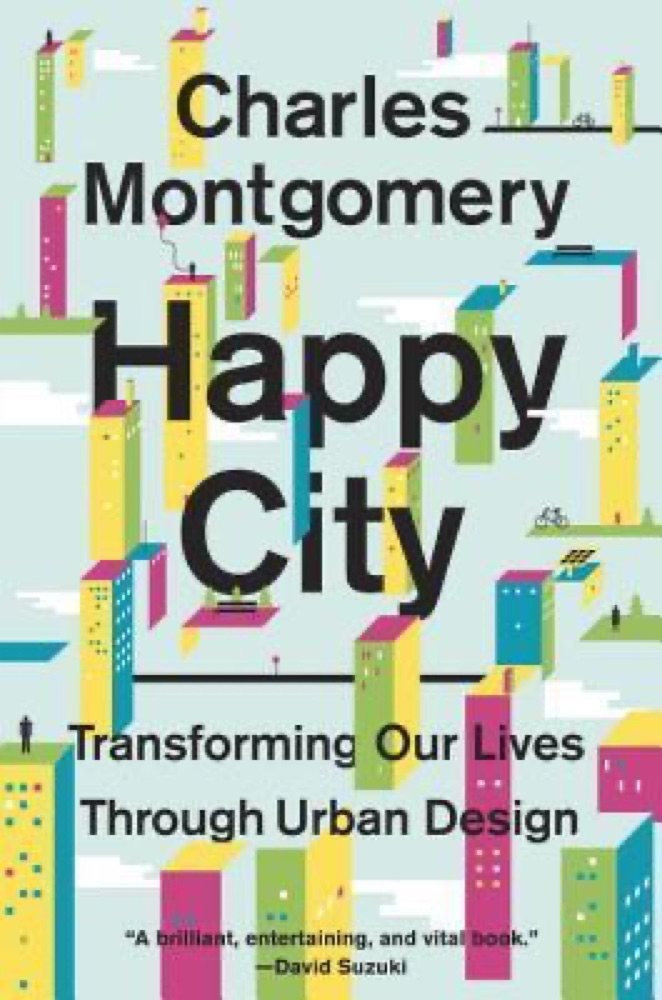
Charles Montgomery’s Happy City will revolutionize the way we think about urban life.
After decades of unchecked sprawl, more people than ever are moving back to the city. Dense urban living has been prescribed as a panacea for the environmental and resource crises of our time. But is it better or worse for our happiness? Are subways, sidewalks and condo towers an improvement on the car-dependence of sprawl?
The award-winning journalist Charles Montgomery finds answers to such questions at the intersection between urban design and the emerging science of happiness, during an exhilarating journey through some of the world’s most dynamic cities. He meets the visionary mayor who introduced a “sexy” bus to ease status anxiety in Bogotá; the architect who brought the lessons of medieval Tuscan hill towns to modern-day New York City; the activist who turned Paris’s urban freeways into be
Book details
- First published
- 2012
- Author
- Charles Montgomery
- Genre
- Nonfiction
- Goodreads rating
- 4.35 (10k ratings)
Keep reading
The Death and Life of Great American Cities
 The Nature Fix: Why Nature Makes Us Happier, Healthier, and More Creative
 Stuffocation: Living More with Less
 Tribe: On Homecoming and Belonging
 Bicycle Diaries
 This Is Where You Belong: The Art and Science of Loving the Place You Live
 Traffic: Why We Drive the Way We Do and What It Says About Us
 Social: Why Our Brains Are Wired to Connect
 Early Retirement Extreme: A Philosophical and Practical Guide to Financial Independence
 Humankind: A Hopeful History
 The Rational Optimist: How Prosperity Evolves
 A Paradise Built in Hell: The Extraordinary Communities That Arise in Disaster
 Antifragile: Things That Gain from Disorder
 The World Is Flat: A Brief History of the Twenty-first Century
 The Ghost Map: The Story of London's Most Terrifying Epidemic - and How It Changed Science, Cities, and the Modern World
 Small Is Beautiful: Economics as if People Mattered
 The Tipping Point: How Little Things Can Make a Big Difference
 Coming Apart: The State of White America, 1960-2010
 The Spirit Level: Why More Equal Societies Almost Always Do Better
 How Long 'til Black Future Month?
 Overwhelmed: Work, Love, and Play When No One Has the Time
 Revenge of the Tipping Point
 Blackfish City
 The Geography of Bliss: One Grump's Search for the Happiest Places in the World
 The Social Animal: The Hidden Sources of Love, Character, and Achievement
 The Anxious Generation: How the Great Rewiring of Childhood Caused an Epidemic of Mental Illness
 A Hunter-Gatherer's Guide to the 21st Century: Evolution and the Challenges of Modern Life
 Abundance: The Future Is Better Than You Think
 Shortest Way Home: One Mayor's Challenge and a Model for America's Future
 The Happiness Hypothesis: Finding Modern Truth in Ancient Wisdom
 On Trails: An Exploration
 Even Cowgirls Get the Blues
 My Life on the Road
 Homo Deus: A History of Tomorrow
 Open City
 The World-Ending Fire: The Essential Wendell Berry
 Naked Economics: Undressing the Dismal Science
 The Socrates Express: In Search of Life Lessons from Dead Philosophers
 The Freedom Manifesto
 New York 2140
 The Evolution of Everything: How New Ideas Emerge
 Stumbling on Happiness
 Walden Two
 Utopia for Realists: How We Can Build the Ideal World
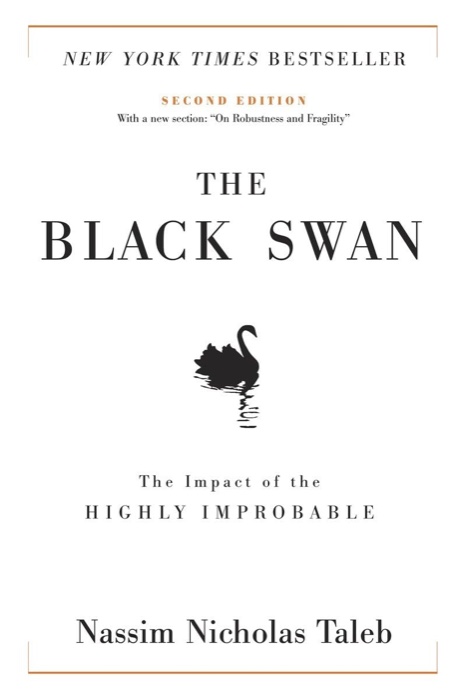 The Black Swan: The Impact of the Highly Improbable
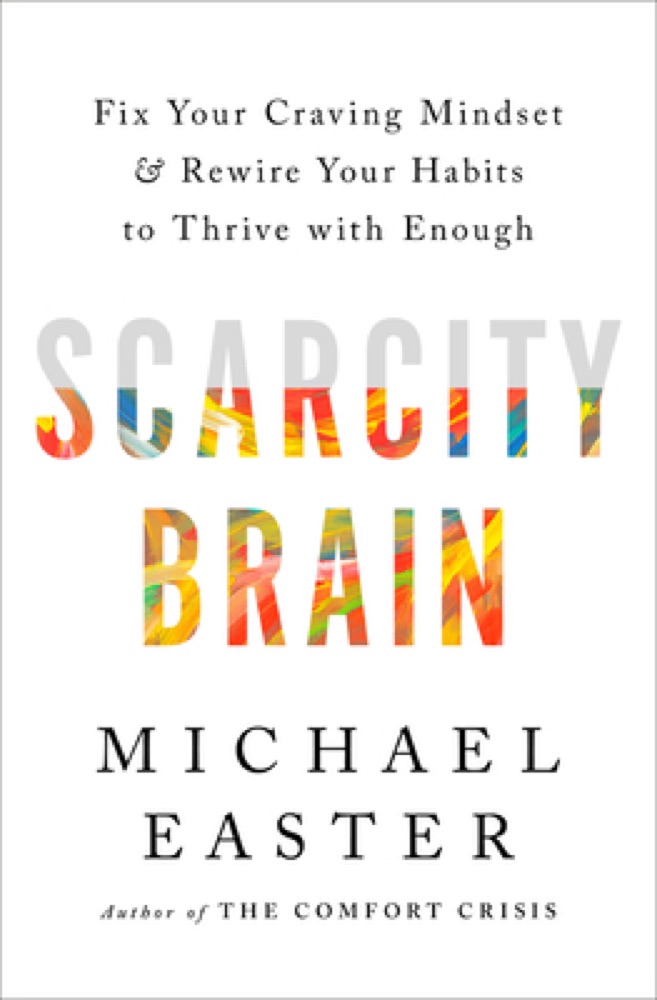 Scarcity Brain: Fix Your Craving Mindset and Rewire Your Habits to Thrive with Enough
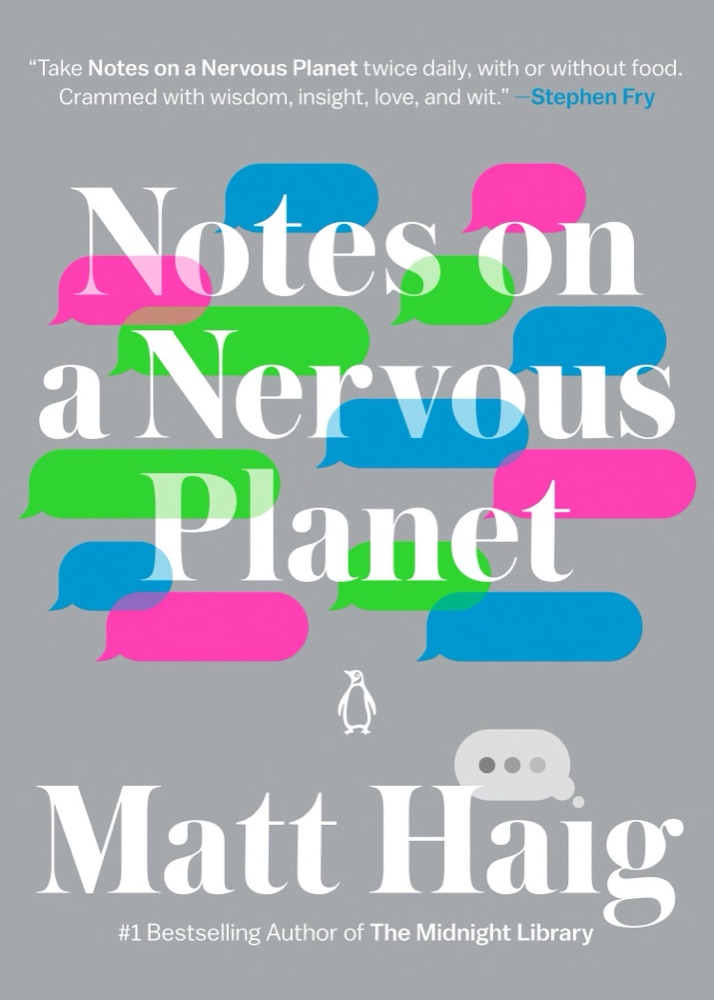 Notes on a Nervous Planet
 This Is What Inequality Looks Like
 SuperFreakonomics: Global Cooling, Patriotic Prostitutes And Why Suicide Bombers Should Buy Life Insurance
 Blue Mars
 Flâneuse: Women Walk the City in Paris, New York, Tokyo, Venice and London
 Endgame, Vol. 1: The Problem of Civilization
 We Live in Water
 Predictably Irrational: The Hidden Forces That Shape Our Decisions
 Wanderlust: A History of Walking
 Freakonomics: A Rogue Economist Explores the Hidden Side of Everything
 The Algebra of Wealth: A Simple Formula for Financial Security
 The Algebra of Happiness: Notes on the Pursuit of Success, Love, and Meaning
 The Shockwave Rider