 The Art of Loving
Quotes from the Book
That millions of people share the same forms of mental pathology does not make these people sane.
392
The whole life of the individual is nothing but the process of giving birth to himself; indeed, we should be fully born when we die - although it is the tragic fate of most individuals to die before they are born.
126
Thus, the ultimate choice for a man, inasmuch as he is driven to transcend himself, is to create or to destroy, to love or to hate.
52
It is naively assumed that the fact that the majority of people share certain ideas or feelings proves the validity of these ideas and feelings. Nothing is further from the truth. Consensual validation as such has no bearing on reason or mental health. Just as there is a "folie a deux" there is a folie a millions. The fact that millions of people share the same vices does not make these vices virtues, the fact that they share so many errors does not make the errors to be truths, and the fact that millions of people share the same forms of mental pathology does not make these people sane.
39
The danger of the past was that men became slaves. The danger of the future is that men may become robots.
30
What kind of men, then, does our society need? What is the "social character" suited to twentieth century Capitalism? It needs men who co-operate smoothly in large groups; who want to consume more and more, and whose tasks are standardized and can easily be influenced and anticipated. It needs men who feel free and independent, not subject to any authority, or principle, or conscience - yet willing to be commanded, to do what is expected, to fit into the social machine without friction.
22
Reason is man’s faculty for grasping the world by thought, in contradiction to intelligence, which is man’s ability to manipulate the world with the help of thought. Reason is man’s instrument for arriving at the truth, intelligence is man’s instrument for manipulating the world more successfully; the former is essentially human, the latter belongs to the animal part of man.
18
We consume, as we produce, without any concrete relatedness to the objects with which we deal; We live in a world of things, and our only connection with them is that we know how to manipulate or to consume them.
15
Indeed the alienated person finds it almost impossible to remain by himself, because he is seized by the panic of experiencing nothingness.
15
Mental health cannot be defined in terms of the "adjustment" of the individual to his society, but, on the other hand, that it must be defined in terms of the society to the needs of man, of its role in furthering or hindering the development of mental health. Whether or not the individual is healthy, is primarily not an individual matter, but depends on the structure of his society.
14
Both the mentally healthy and the neurotic are driven by the need to find an answer [to the problem of human existence], the only difference being that one answer corresponds more to the total needs of man, and hence is more conducive to the unfolding of his powers and to his happiness than the other. All cultures provide for a patterned system in which certain solutions are predominant, hence certain strivings and satisfactions.... The deviate from the cultural pattern is just as much in search of an answer as his more well-adjusted brother. His answer may be better or worse than the one given by his culture - it is always another answer to the same fundamental question raised by human existence. In this sense all cultures are religious and every neurosis is a private form of religion, provided we mean by religion an attempt to answer the problem of human existence.
14
Each new step into his new human existence is frightening. It always means to give up a secure state, which was relatively known, for one which is new, which one has not yet mastered. Undoubtedly, if the infant could think at the moment of the severance of the umbilical cord, he would experience the fear of dying. A loving fate protects us from this first panic. But at any new step, at any new stage of our birth, we are afraid again. We are never free from two conflicting tendencies: one to emerge from the womb, from the animal form of existence into a more human existence, from bondage to freedom; another, to return to the womb, to nature, to certainty and security.
14
The common element in both submission and domination is the symbiotic nature of relatedness. Both persons involved have lost their integrity and freedom; they live on each other and from each other, satisfying their craving for closeness, yet suffering from the lack of inner strength and self-reliance which would require freedom and independence, and furthermore constantly threatened by the conscious or unconscious hostility which is bound to arise from the symbiotic relationship.10 The realization of the submissive (masochistic) or the domineering (sadistic) passion never leads to satisfaction.
12
Why should anyone be so grateful for acceptance unless he doubts that he is acceptable, and why should a young, educated and successful couple have such doubts, if not due to the fact that they cannot accept themselves because they are not themselves.
6
The absolutely alienated individual worships at the altar of an idol, and it makes little difference by what names this idol is known.
6
There is only one passion which satisfies man’s need to unite himself with the world, and to acquire at the same time a sense of integrity and individuality, and this is love. Love is union with somebody, or something, outside oneself, under the condition of retaining the separateness and integrity of one’s own self. It is an experience of sharing, of communion, which permits the full unfolding of one’s own inner activity. The experience of love does away with the necessity of illusions. There is no need to inflate the image of the other person, or of myself, since the reality of active sharing and loving permits me to transcend my individualized existence, and at the same time to experience myself as the bearer of the active powers which constitute the act of loving. What
5
The “tourist” with his camera is an outstanding symbol of an alienated relationship to the world. Being constantly occupied with taking pictures, actually he does not see anything at all, except through the intermediary of the camera. The camera sees for him, and the outcome of his “pleasure” trip is a collection of snapshots, which are the substitute for an experience which he could have had, but did not have.
4
We... have created a greater material wealth than any other society in the history of the human race. Yet we have managed to kill off millions of our population in an arrangement which we call "war.
4
There exists no more difficult art than living. For other arts and sciences, numerous teachers are to be found everywhere. Even young people believe that they have acquired these in such a way, that they can teach them to others: throughout the whole of life, one must continue to learn to live and, what will amaze you even more, throughout life one must learn to die. SENECA
3
Let us, in good psychiatric fashion, look at the facts. In the last one hundred years we, in the Western world, have created a greater material wealth than any other society in the history of the human race. Yet we have managed to kill off millions of our population in an arrangement which we call “war.” Aside from smaller wars, we had larger ones in 1870, 1914 and 1939. During these wars, every participant firmly believed that he was fighting in his self-defense, for his honor, or that he was backed up by God. The groups with whom one is at war are, often from one day to the next, looked upon as cruel, irrational fiends, whom one must defeat to save the world from evil. But a few years after the mutual slaughter is over, the enemies of yesterday are our friends, the friends of yesterday our enemies, and again in full seriousness we begin to paint them with appropriate colors of black and white. At this moment, in the year 1955, we are prepared for a mass slaughter which would, if it came to pass, surpass any slaughter the human race has arranged so far. One of the greatest discoveries in the field of natural science is prepared for this purpose. Everybody is looking with a mixture of confidence and apprehension to the “statesmen” of the various peoples, ready to heap all praise on them if they “succeed in avoiding a war,” and ignoring the fact that it is only these very statesmen who ever cause a war, usually not even through their bad intentions, but by their unreasonable mismanagement of the affairs entrusted to them. In these outbursts of destructiveness and paranoid suspicion, however, we are not behaving differently from what the civilized part of mankind has done in the last three thousand years of history.
3
The person who is given to the exclusive pursuit of his passion for money is possessed by his striving for it; money is the idol which he worships as the projection of one isolated power in himself, his greed for it.
3
The approach of normative humanism is based on the assumption that, as in any other problem, there are right and wrong, satisfactory and unsatisfactory solutions to the problem of human existence.
3
Man can attempt to become one with the world by submission to a person, to a group, to an institution, to God. In this way, he transcends the separateness of his individual existence by becoming part of somebody or something bigger than himself, and experiences his identity in connection with the power to which he has submitted.
3
Nationalism is our form of incest, is our idolatry, is our insanity. “Patriotism” is its cult. It should hardly be necessary to say, that by “patriotism” I mean that attitude which puts the own nation above humanity, above the principles of truth and justice; not the loving interest in one’s own nation, which is the concern with the nation’s spiritual as much as with its material welfare—never with its power over other nations. Just as love for one individual which excludes the love for others is not love, love for one’s country which is not part of one’s love for humanity is not love, but idolatrous worship.
2
Man as he appears in any given culture is always a manifestation of human nature, a manifestation, however, which in its specific outcome is determined by the social arrangements under which he lives.
2
Watch on YouTube
About Erich Fromm
We have collected 125 quotes from 6 books by Erich Fromm on BookQuoters.
More about the author →More by Erich Fromm
All books by Erich Fromm →
About the book
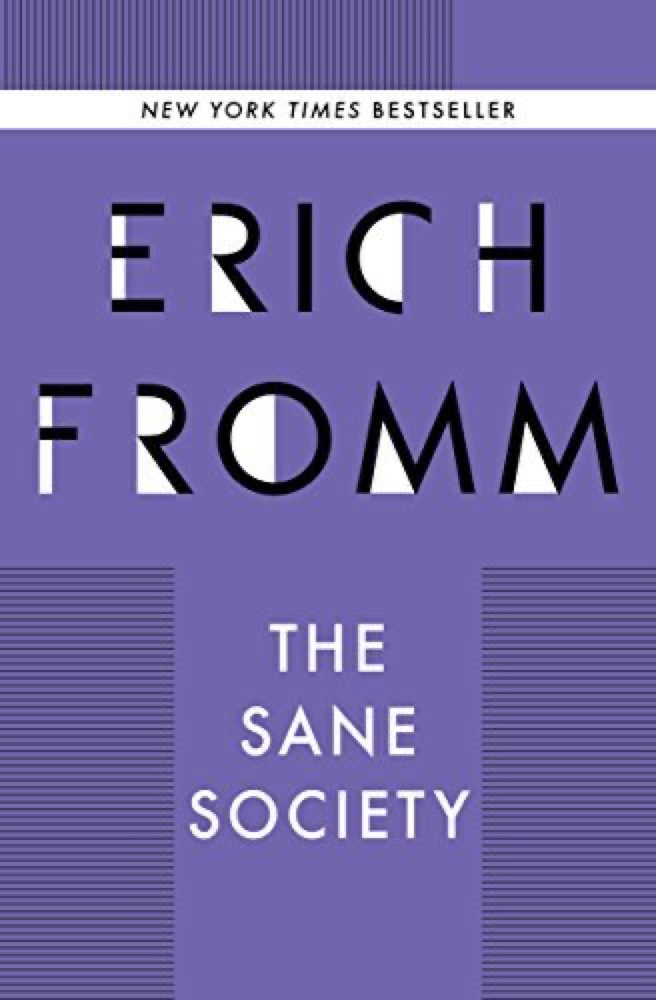
A sound societyIt analyzes modern society through the concept of a complete system of humanistic psychoanalysis, and draws the path of building a healthy society. We suggested that our mental state is normal, what is a sick society, mental health and society. Prom, who left asylum in his homeland under Hitler in 34, stayed in Mexico through the United States and was published in New York in 1955. In this book, he combines Marxs social analysis with Freuds psychological analysis, two psychological trends that prevailed European intellectual society in the early 1900s, to diagnose the mental situation of humans in industrial society and explain why they were willing to accept fascism. did. The sequel to Escape from Freedom = "". Free
Book details
- First published
- 1955
- Author
- Erich Fromm
- Genre
- Nonfiction
- Goodreads rating
- 4.24 (3k ratings)
Keep reading
 The Undiscovered Self
 Escape from Freedom
 Civilization and Its Discontents
 Man and His Symbols
 Toward a Psychology of Being
 Daybreak: Thoughts on the Prejudices of Morality
 The Book: On the Taboo Against Knowing Who You Are
 The Human Condition
 The Politics of Experience/The Bird of Paradise
 The Soul of Man Under Socialism
 The Blank Slate: The Modern Denial of Human Nature
 The Will to Power
 The Art of Being
 Anti-Oedipus: Capitalism and Schizophrenia
 Brave New World Revisited
 The Divided Self: An Existential Study in Sanity and Madness
 Walden Two
 Modern Man in Search of a Soul
 Irrational Man: A Study in Existential Philosophy
 The Man Without Qualities
 Untimely Meditations
 The Varieties of Religious Experience
 The Ethics of Ambiguity
 The Birth and Death of Meaning: An Interdisciplinary Perspective on the Problem of Man
 The Denial of Death
 The Culture of Narcissism: American Life in An Age of Diminishing Expectations
 A Language Older Than Words
 The Virtue of Selfishness: A New Concept of Egoism
 Maps of Meaning: The Architecture of Belief
 The Source of Self-Regard: Selected Essays, Speeches, and Meditations
 Lila: An Inquiry Into Morals
 The Perennial Philosophy
 Freedom from the Known
 Myths to Live By
 Demian
 Man's Search for Himself
 Man's Search for Ultimate Meaning
 The Will to Meaning: Foundations and Applications of Logotherapy
 What's Wrong with the World
 Love's Executioner and Other Tales of Psychotherapy
 Love and Will
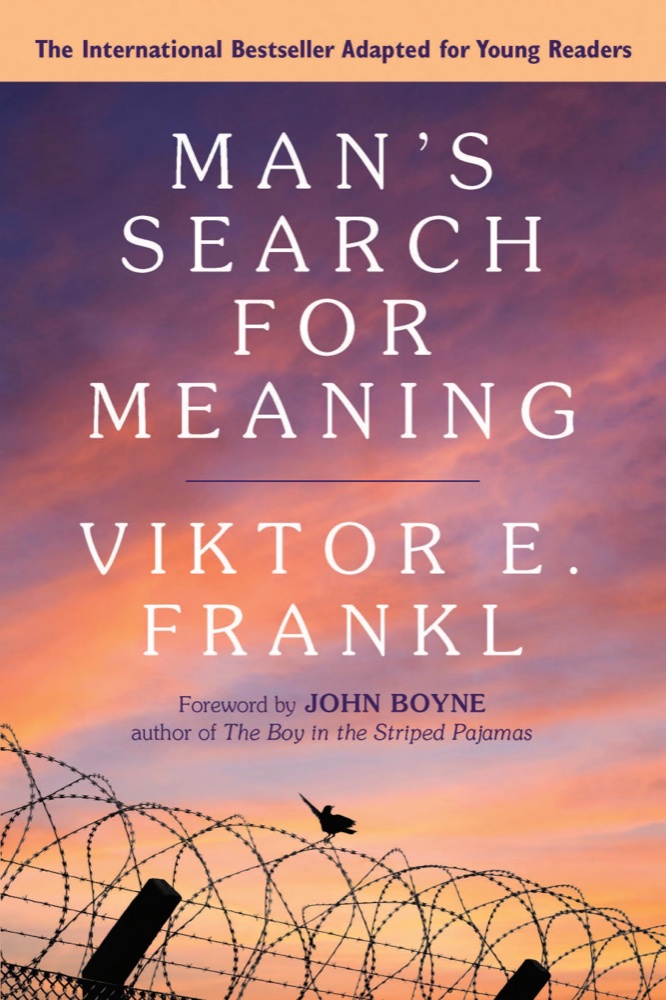 Man's Search for Meaning
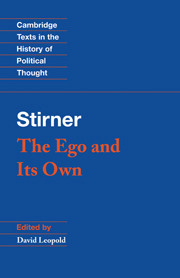 The Ego and Its Own
 Genesis
 The Second Mountain
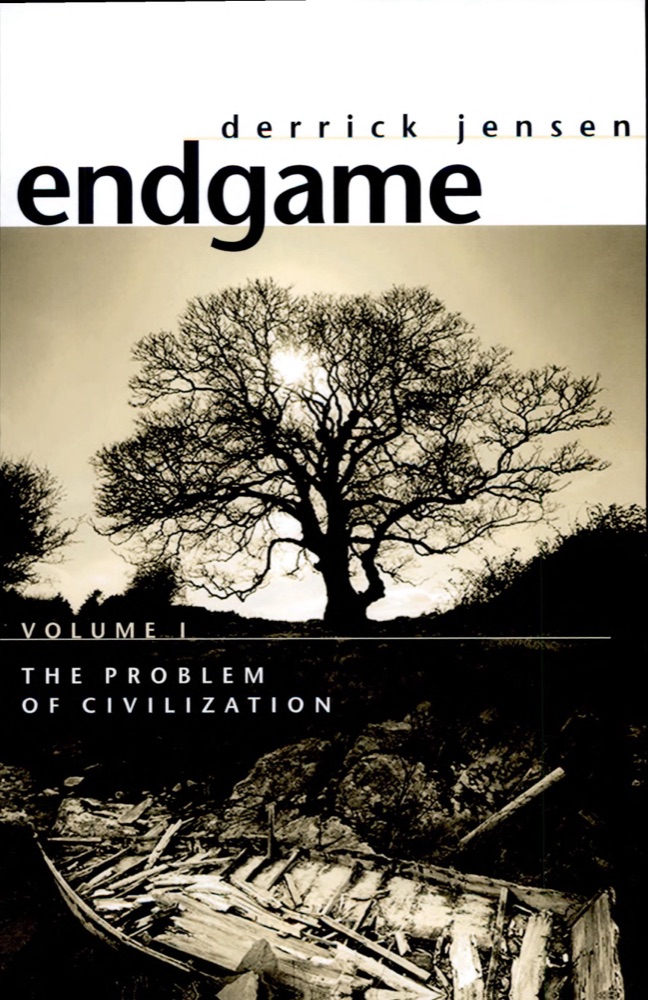 Endgame, Vol. 1: The Problem of Civilization
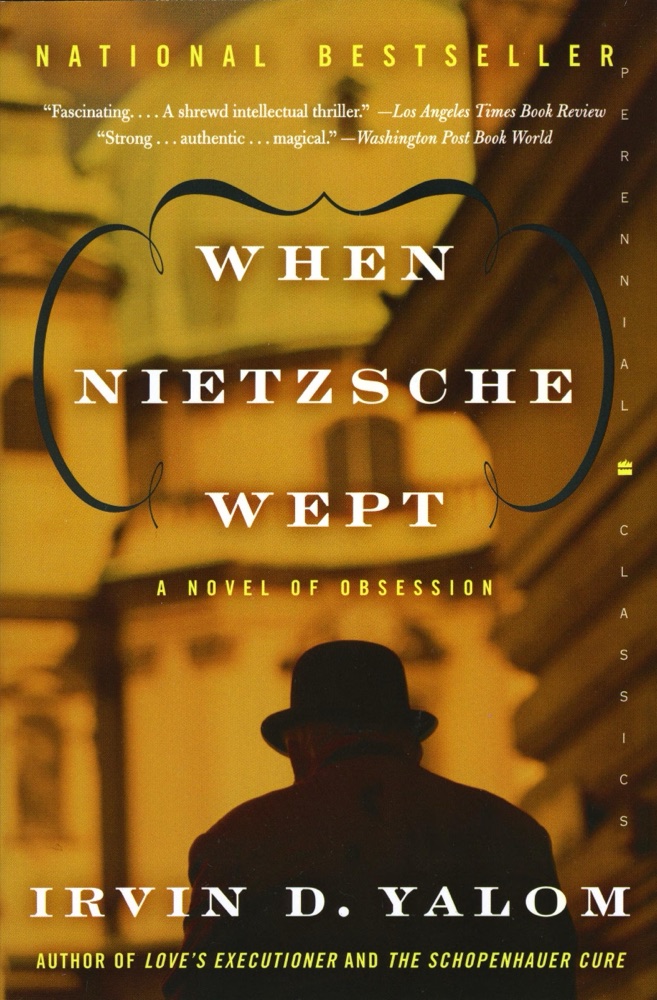 When Nietzsche Wept
 Living on Your Own Terms: What Is Real Rebellion?
 Heretics
 Humankind: A Hopeful History
 12 Rules for Life: An Antidote to Chaos
 Survival in Auschwitz
 Philosophy: Who Needs It
 Tribe: On Homecoming and Belonging
 Status Anxiety
 The Art of the Commonplace: The Agrarian Essays
 Minima Moralia: Reflections on a Damaged Life
 Persian Letters
 The Empusium