 The Name of God is Mercy
Quotes from the Book
For me it's clear: we must redesign the economy so that it can offer every person access to a dignified existence while protecting and regenerating the natural world.
6
Now, more than ever, what is revealed is the fallacy of making individualism the organizing principle of society. What will be our new principle? We need a movement of people who know we need each other, who have a sense of responsibility to others and to the world. We need to proclaim that being kind, having faith, and working for the common good are great life goals that need courage and vigor; while glib superficiality and the mockery of ethics have done us no good. The modern era, which has developed equality and liberty with such determination, now needs to focus on fraternity with the same drive and tenacity to confront the challenges ahead. Fraternity will enable freedom and equality to take its rightful place in the symphony.
5
A sober, humble lifestyle dedicated to service is worth far more than thousands of followers on social networks.
2
Sin is a rejection of the limits that love requires.
1
The most corrupt media are those that pander to their readers and viewers, twisting the facts to suit their prejudices and fears.
1
Migration is not a threat to Christianity except in the minds of those who benefit from claiming it is. To promote the Gospel and not welcome the strangers in need, nor affirm their humanity as children of God, is to seek to encourage a culture that is Christian in name only, emptied of all that makes it distinctive.
1
Human life is never a burden. It demands we make space for it, not cast it off. Of course the arrival of a new human life in need—whether the unborn child in the womb or the migrant at our border—challenges and changes our priorities. With abortion and closed borders we refuse that readjustment of our priorities, sacrificing human life to defend our economic security or to assuage our fear that parenthood will upend our lives. Abortion is a grave injustice. It can never be a legitimate expression of autonomy and power. If our autonomy demands the death of another, it is none other than an iron cage. I often ask myself these two questions: Is it right to eliminate a human life to resolve a problem? Is it right to hire an assassin to resolve a problem?
1
The health of a society can be judged by its periphery. A periphery that is abandoned, sidelined, despised, and neglected shows an unstable, unhealthy society that cannot long survive without major reforms.
1
It was precisely here that the Church was born, in the margins of the Cross where so many of the crucified are found….This is why they followed Jesus. He gave them dignity….To do this Jesus had to reject the mindset of the religious elites of his day, who had taken ownership of law and tradition. Possession of the goods of religion became a means of putting themselves above others, others not like them, whom they inspected and judged. By mixing with tax collectors and ‘women of ill repute,’ Jesus wrested religion from its imprisonment in the confines of the elites, of specialized knowledge and privileged families, in order to make every person and situation capable of God. By walking with the poor, the outcasts, and the marginalized. He smashed the wall that prevented the Lord from coming close to His people, among His flock. In showing God’s closeness to the poor and sinners, Jesus indicted the mindset that trusts in self-justification, ignoring what happens around them.
1
To recover the dignity of the people we need to go to the margins of our societies to meet all those who live there. Hidden there are ways of looking at the world that can give us all a fresh start. We cannot dream of the future while continuing to ignore the lives of practically a third of the world’s population rather than seeing them as a resource. I mean those who lack regular work living on the margins of the market economy….Yet if we manage to come close and put aside our stereo-types we discover that many of them are far from being merely passive victims. Organized in a global archipelago of associations and movements, they represent the hope of solidarity in an age of exclusion and indifference. On the margins I have discovered so many social movements with roots in parishes or schools that bring people together to make them protagonists of their own histories, to set in motion dynamics that smacked of dignity. Taking life as it comes, they do not sit around resigned or complaining but come together to convert injustice into new possibilities. I call them ‘social poets.’ In mobilizing for change, in their search for dignity, I see a source of moral energy, a reserve of civic passion, capable of revitalizing our democracy and reorienting the economy.
1
Today, listening to some of the populist leaders we now have, I am reminded of the 1930’s, when some democracies collapsed into dictatorships seemingly overnight. By turning the people into a category of exclusion-threatened on all sides by enemies, internal and external-the term was emptied of meaning. We see it happening again now in rallies where populist leaders excite and harangue crowds, channeling their resentments and hatreds against imagined enemies to distract from real problems. In the name of the people, populism denies the proper participation of those who belong to the people, allowing a particular group to appoint itself the true interpreter of popular feeling. A people ceases to be a people and becomes an inert mass manipulated by a party or demagogue. Dictatorships almost always begin this way: sowing fear in the hearts of the people, then offering to defend them from the object of their fear in exchange for denying them the power to determine their own future. For example, a fantasy of national-populism in countries with Christian majorities is its defense of ‘Christian civilizations’ from perceived enemies, whether Islam, Jews, the European Union, or the United Nations. The defense appeals to those who are often no longer religious but who regard their nation’s inheritance as a kind of identity. Their fears and loss of identity have increased at the same time as attendance at churches has declined. The loss of relationship with God and a loss of a sense of universal fraternity have contributed to this sense of isolation and fear of the future. Thus irreligious or superficially religious people vote for populists to protect their religious identity, unconcerned that fear and hatred of the other cannot be reconciled with the Gospel.
1
Too often we have thought of society as a subset of the economy and democracy as a function of the market.
Once we were not a people; but now we are God's people.
The danger of becoming trapped in conflict is that we lose perspective.
We are born, beloved creatures of our Creator, God of love, into a world that has lived long before us.
They are the saints next door, who have awoken something important in our hearts...
You have to go to the edges of existence if you want to see the world as it is.
there are bonds of trust: communion and fraternity and physical presence.
History is what was, not what we want it to have been, and when we try to throw an ideological blanket over it, we make it so much harder to see what in our present needs to change in order to move to a better future.
is the sin of failing to respect the value of a person.
In moments of crisis you get both good and bad: people reveal themselves as they are.
not right to judge the past with the lens of today.
We learn that in our restlessness and frustration, in our fascination with new things, in craving recognition in manic busyness, we had failed to pay attention to the suffering all around us.
A crisis is almost always the result of a self-forgetting, and the way forward comes through recalling our roots.
There is a great danger in remembering the guilt of others in order to proclaim my own innocence.
If we are to come out of this crisis less selfish than we went in, we have to let ourselves be touched by others’ pain.
Behind the rise of populist politics in recent years is a genuine anguish: many feel thrust aside by the ruthless juggernaut of globalized technocracy. Populisms are often described as a protest against globalization, although they are more properly a protest against the globalization of indifference. At bottom reflect the pain at the loss of roots and community, and a generalized feeling of anguish. Yet, in generating fear and sowing panic, populisms are the exploitation of that popular anguish, not its remedy. The often cruel rhetoric of populist leaders denigrating the ‘other’ in order to defend a national or group identity reveals its spirit. It is a means by which ambitious politicians attain power.
When the accumulation of wealth becomes our chief goal, whether as individuals or as an economy, we practice a form of idolatry that puts us in chains. It is inconceivable that so many women and children are being exploited for power, pleasure, or profit. Our brothers and sisters are being enslaved in clandestine warehouses, exploited as undocumented migrants and in prostitution rings, and the situation is even worse when it is children subject to such injustices, all for profit and the greed of a few. Human trafficking is often tied to other global plagues-trafficking in arms and drugs, the trade in wildlife and organs-which degrade our world. These vast networks generating hundreds of billions of dollars cannot survive without the complicity of powerful people. States would seem powerless to act. Only a new kind of politics, which partners state resources with organizations and institutions rooted in civil society close to the problem, can rise to these challenges.
Watch on YouTube
About Pope Francis
We have collected 80 quotes from 3 books by Pope Francis on BookQuoters.
More about the author →More by Pope Francis
The Name of God is Mercy
 Laudato Si': On the Care of Our Common Home
About the book
In this uplifting and practical book, written in collaboration with his biographer, Austen Ivereigh, the preeminent spiritual leader explains why we must—and how we can—make the world safer, fairer, and healthier for all people now.In the COVID crisis, the beloved shepherd of over one billion Catholics saw the cruelty and inequity of our society exposed more vividly than ever before. He also saw, in the resilience, generosity, and creativity of so many people, the means to rescue our society, our economy, and our planet. In direct, powerful prose, Pope Francis urges us not to let the pain be in vain. He begins Let Us Dream by exploring what this crisis can teach us about how to handle upheaval of any kind in our own lives and the world at large. With unprecedented candor, he reveals how three crises in his own life changed him dramatically for the better. By its very nature, he shows, cr
Book details
- First published
- 2020
- Author
- Pope Francis
- Genre
- Nonfiction
- Goodreads rating
- 4.24 (2k ratings)
Keep reading
 The Source of Self-Regard: Selected Essays, Speeches, and Meditations
 Across That Bridge: A Vision for Change and the Future of America
 The Deeply Formed Life: Five Transformative Values to Root Us in the Way of Jesus
 The World-Ending Fire: The Essential Wendell Berry
 The Fire Next Time
 Rediscover Catholicism
 United: Thoughts on Finding Common Ground and Advancing the Common Good
 The Audacity of Hope: Thoughts on Reclaiming the American Dream
 Revolution
 Anthills of the Savannah
 The Holy Longing: The Search for a Christian Spirituality
 The Bee Sting
 Religion for Atheists: A Non-Believer's Guide to the Uses of Religion
 Twelve Steps to a Compassionate Life
 A Theology of Liberation
 The Fall of Babel
 The Irresistible Revolution: Living as an Ordinary Radical
Laudato Si': On the Care of Our Common Home
The Irresistible Revolution: Living as an Ordinary Radical
Laudato Si': On the Care of Our Common Home
 When I Was a Child I Read Books
 Humankind: A Hopeful History
 Barking to the Choir: The Power of Radical Kinship
 The Autobiography of Martin Luther King, Jr.
 The Children of Men
 Civilization and Its Discontents
 The Discovery of India
 Parable of the Talents
 Sacred Economics: Money, Gift, and Society in the Age of Transition
 You Can't Be Neutral on a Moving Train: A Personal History of Our Times
 Letters and Papers from Prison
 The Wounded Healer
 Ethics for the New Millennium
 The Long Loneliness: The Autobiography of the Legendary Catholic Social Activist ― A Memoir about the Worker Movement and Spiritual Conversion
 The Life You've Always Wanted: Spiritual Disciplines for Ordinary People
 Surrender: 40 Songs, One Story
 The Will to Power
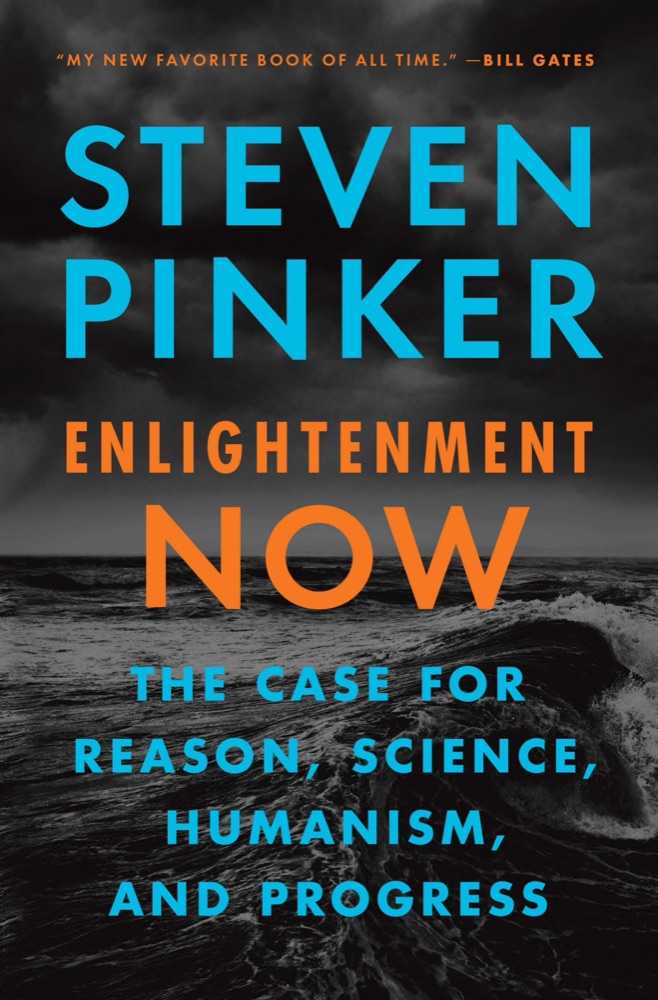 Enlightenment Now: The Case for Reason, Science, Humanism, and Progress
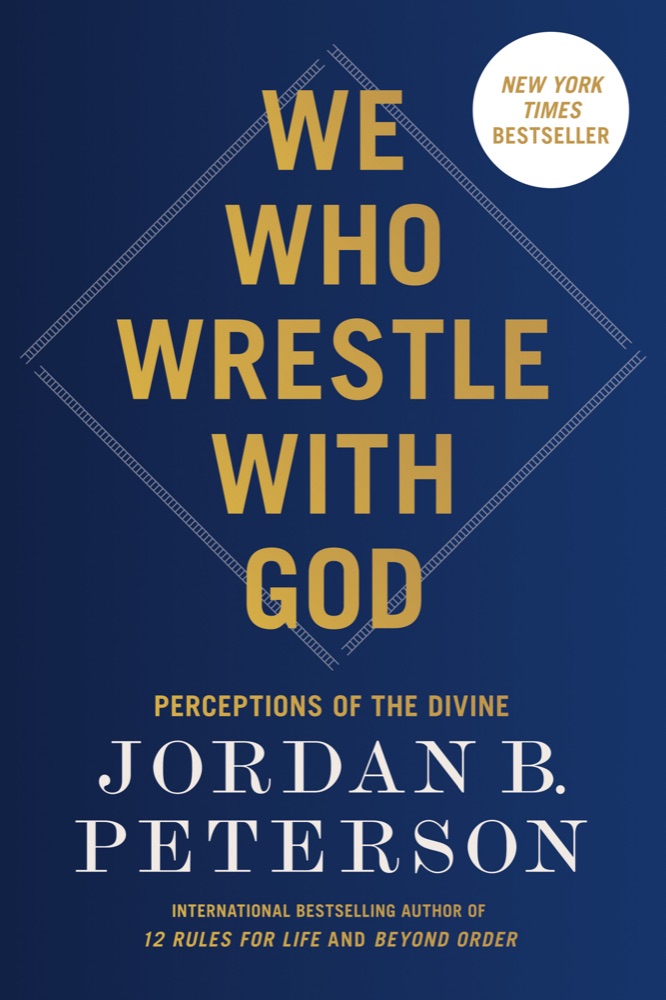 We Who Wrestle with God: Perceptions of the Divine
 Ill Fares the Land
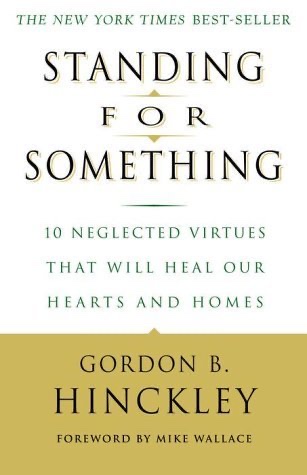 Standing for Something: 10 Neglected Virtues That Will Heal Our Hearts and Homes
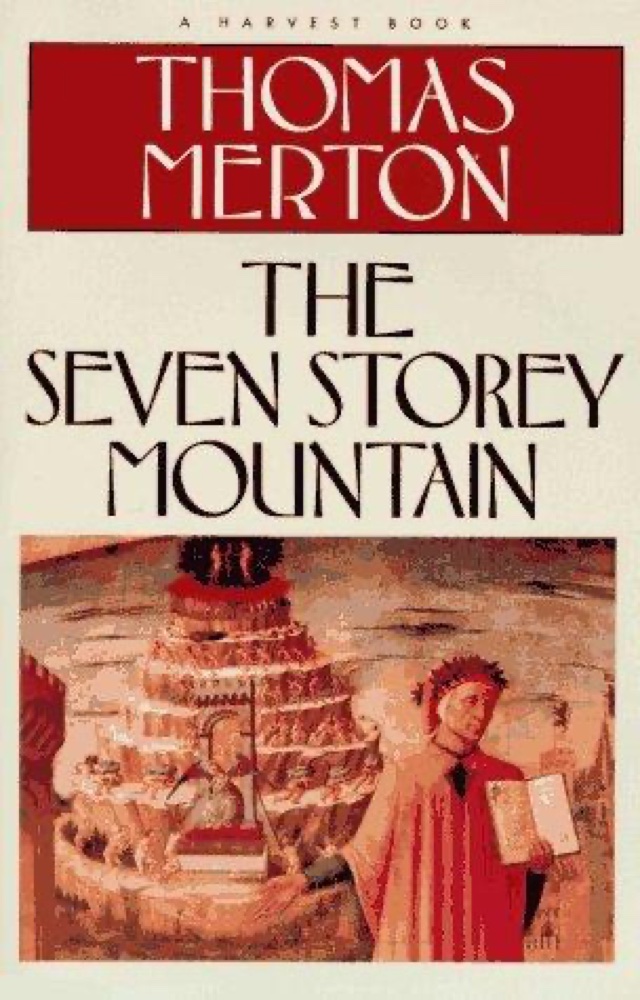 The Seven Storey Mountain
 The Golden House
 Status Anxiety
 Between the World and Me
 Tattoos on the Heart: The Power of Boundless Compassion
 A Hidden Wholeness: The Journey Toward an Undivided Life : Welcoming the soul and weaving community in a wounded world
 Missionaries
 Tribe: On Homecoming and Belonging
 The Secret Thoughts of an Unlikely Convert: An English Professor's Journey Into Christian Faith
 No Name in the Street
 Live Not by Lies: A Manual for Christian Dissidents
 How Beautiful We Were
 How Long 'til Black Future Month?
 Resident Aliens: Life in the Christian Colony
 Sacred Hunger
 The True Believer: Thoughts on the Nature of Mass Movements
 The Person You Mean to Be: How Good People Fight Bias
 Letter from the Birmingham Jail
 The Coming Insurrection
 Persian Letters