
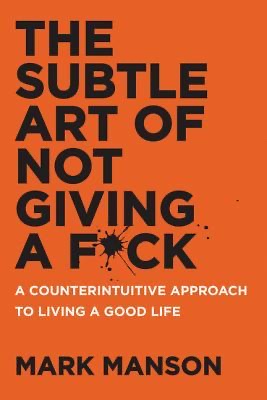
 The Subtle Art of Not Giving a F*ck: A Counterintuitive Approach to Living a Good Life
Quotes from the Book
The problem isn’t that we don’t know how not to get punched in the face. The problem is that, at some point, likely a long time ago, we got punched in face, and instead of punching back, we decided we deserved it.
95
Because pain is the universal constant of life, the opportunities to grow from that pain are constant in life. All that is required is that we don't numb it, that we don't look away. All that is required is that we engage it and find the value and meaning in it.
73
You must love someone without expecting anything in return; otherwise it’s not truly love. You must respect someone without expecting anything in return; otherwise you don’t truly respect him. You must speak honestly without expecting a pat on the back or a high-five or a gold star next to your name; otherwise you aren’t truly being honest.
56
They forgot that the world doesn’t run on information. People don’t make decisions based on truth or facts. They don’t spend their money based on data. They don’t connect with each other because of some higher philosophical truth. The world runs on feelings.
51
So, instead of looking for hope, try this: Don't hope. Don't despair, either. In fact, don't deign to believe you know anything. It's that assumption of knowing with such blind, fervent, emotional certainty that gets us into these kinds of pickles in the first place. Don't hope for better. Just be better. Be something better. Be more compassionate, more resilient, more humble, more disciplined. [...] Be a better human.
44
The pursuit of happiness is a toxic value that has long defined our culture.<...> Living well does not mean avoiding suffering; it means suffering for the right reasons.
39
Hopelessness is the root of anxiety, mental illness, and depression. It is the source of all misery and the cause of all addiction.
39
The only true form of freedom, the only ethical form of freedom, is through self-limitation. It is not the privilege of choosing everything you want in your life, but rather, choosing what you will give up in your life.
32
by experiencing our hopes, we lose them. We see that our beautiful visions for a perfect future are not so perfect, that our dreams and aspirations are themselves riddled with unexpected flaws and unforeseen sacrifices. Because the only thing that can ever truly destroy a dream is to have it come true.
29
No, the opposite of happiness is hopelessness, an endless gray horizon of resignation and indifference.3 It’s the belief that everything is fucked, so why do anything at all?
29
Self-control is an illusion. It’s an illusion that occurs when both brains are aligned and pursuing the same course of action.
28
Why don't we do things we know we should do? Because we don't feel like it. Every problem of self-control is not a problem of information or discipline or reason, but, rather, of emotion. Self-control is an emotional problem. Laziness is an emotional problem. Procrastination is an emotional problem. Underachievement is an emotional problem. Impulsiveness is an emotional problem. This sucks, because emotional problems are much harder to deal with than logical ones.
25
Ultimately, we are moved to action only by emotion. That's because action is emotion.
24
Don’t hope for better. Just be better. Be something better. Be more compassionate, more resilient, more humble, more disciplined.
23
When we deny ourselves the ability to feel pain for a purpose, we deny ourselves the ability to feel any purpose in our life at all.
23
I have tried to live my life such that in the hour of my death I would feel joy rather than fear.
22
The only true meaning in existence is the ability to form meaning
20
Science is arguably the most effective religion because it is the first religion that is able to evolve and improve upon itself.
20
If you feel okay only when life is happy and easy-breezy-beautiful Cover-Girl, then guess what? You are not free. <...> You are the prisoner of your own indulgences, enslaved by your own intolerance, crippled by your own emotional weakness. You will constantly feel a need for some external comfort or validation that may or may not ever come
18
People now had a ton of free time to sit and think and worry about all sorts of existential shit that they had never considered before.
17
The most dangerous extremists know how to dress up their childish values in the language of transaction or universal principle. A right-wing extremist will claim she desires "freedom" above all else...But what she really means is that she wants freedom from having to deal with any values that do not map unto her own...A leftie extremist will say that he wants "equality" for all, but what he really means is that he never wants anyone to feel pain, to feel harmed, or to feel inferior. He doesn't want anyone to have to face moral gaps, ever. And he's willing to cause pain and adversity to others in the name of eliminating these moral gaps.
15
fact, things were so bad in the old days that the only way to keep everyone sane was by promising them hope in an afterlife.
15
Today’s tyranny is achieved by flooding people with so much diversion, so much bullshit information and frivolous distraction, that they are unable to make smart commitments.
14
Moral gaps are where our values are born.
14
Freedom itself demands discomfort. It demands dissatisfaction. Because the freer a society becomes, the more each person will be forced to reckon and compromise with views and lifestyles and ideas that conflict with their own. The lower our tolerance for pain, the more we indulge in fake freedoms, the less we will be able to uphold the virtues necessary to allow a free, democratic society to function.
11
Our crises of hope often start with a basic sense that we do not have control over ourselves or our destiny.
11
There is no such thing as change without pain, no growth without discomfort. It’s why it is impossible to become someone new without first grieving the loss of who you used to be.
10
This is the fundamental problem of hope—not an educated Thinking Brain, but an uneducated Feeling Brain, a Feeling Brain that has adopted and accepted poor value judgments about itself and the world.
9
Did you know?
- It is Mark Manson's third book and the follow-up to The Subtle Art of Not Giving a F*ck.
- The book debuted at number one on The New York Times Best Seller list.
- It topped bestseller lists in more than a dozen countries and has been translated into dozens of languages.
- Manson structures the book around a conflict between the 'Thinking Brain' and the 'Feeling Brain.'
- He draws on philosophers including Plato, Nietzsche, and Immanuel Kant to make his arguments.
- The Harper hardcover first edition was published on May 14, 2019.
About Mark Manson
Mark Manson is an American author and blogger known for his frank, profanity-laced self-help writing. He rose to fame with the 2016 international bestseller The Subtle Art of Not Giving a F*ck.
More about the author →More by Mark Manson
The Subtle Art of Not Giving a F*ck: A Counterintuitive Approach to Living a Good Life
About the book
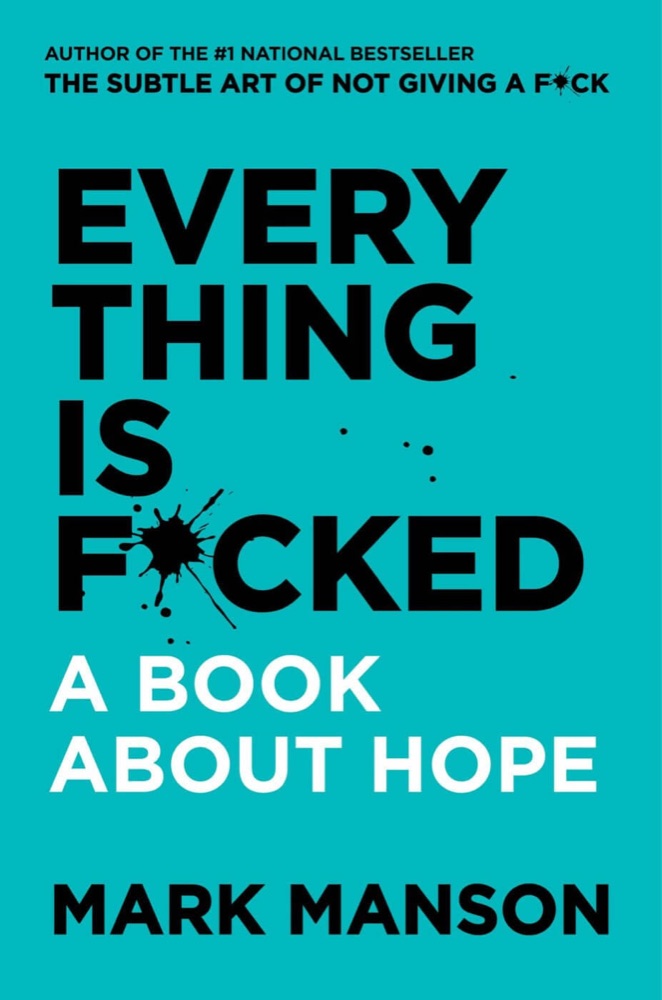
Everything Is F*cked: A Book About Hope is Mark Manson's 2019 follow-up to his blockbuster The Subtle Art of Not Giving a F*ck. Part self-help, part popular philosophy, it sets out to explain a modern paradox: why, despite unprecedented advances in health, wealth, safety, and technology, so many people feel anxious, hopeless, and angry. Manson argues that human beings need hope to function, and he examines where that hope comes from and why it so often curdles into despair or destructive ideology.
To make his case, Manson draws on psychology and on thinkers such as Plato, Nietzsche, and Immanuel Kant. He frames much of the book around a conflict between what he calls the 'Thinking Brain' and the 'Feeling Brain,' and ranges across self-control, the psychological similarity of religion and politics, our fraught relationships with technology, money, and entertainment, and the idea that too much of a good thing can be psychologically corrosive. Along the way he reconsiders conventional notions of faith, happiness, freedom, and hope itself.
The book was a major commercial success, debuting at number one on The New York Times Best Seller list and reaching the top of charts in numerous countries on the strength of Manson's prior fame. Critical reception was more mixed than for his debut, with reviewers divided over whether its blend of breezy profanity and weighty philosophy cohered; it carries an average rating of roughly 3.7 on Goodreads across more than 90,000 ratings.
Book details
- First published
- 2019
- Length
- 288 pages
- Reading time
- 5 hours
- Author
- Mark Manson
- Genre
- Nonfiction
- Goodreads rating
- 3.66 (100k ratings)
Critical reception
- Debuted at number one on The New York Times Best Seller list.
- Topped bestseller lists in numerous countries on the strength of Manson's previous success.
- Holds an average rating of about 3.7 out of 5 on Goodreads across more than 90,000 ratings, a more divided response than his debut.
Keep reading
The Subtle Art of Not Giving a F*ck: A Counterintuitive Approach to Living a Good Life
 When Things Fall Apart: Heart Advice for Difficult Times
 Notes on a Nervous Planet
 F**k It: The Ultimate Spiritual Way
 The Wisdom of Insecurity: A Message for an Age of Anxiety
 The School of Life: An Emotional Education
 Even Cowgirls Get the Blues
 12 Rules for Life: An Antidote to Chaos
 The Antidote: Happiness for People Who Can't Stand Positive Thinking
 Ethics for the New Millennium
 101 Essays That Will Change The Way You Think
 Radical Honesty : How to Transform Your Life by Telling the Truth
 The Consolations of Philosophy
 Almost Everything: Notes on Hope
 The Freedom Manifesto
 What If This Were Enough?: Essays
 Bright-Sided: How the Relentless Promotion of Positive Thinking Has Undermined America
 Loving What Is: Four Questions That Can Change Your Life
 The Comfort Book
 The Tools: Transform Your Problems into Courage, Confidence, and Creativity
 Letting Go: The Pathway To Surrender
 The Happiness Hypothesis: Finding Modern Truth in Ancient Wisdom
 We Learn Nothing
 How to Stop Worrying and Start Living
 How to Be Perfect: The Correct Answer to Every Moral Question
 Toward a Psychology of Being
 One Door Away from Heaven
 Reasons to Stay Alive
 This Is How: Proven Aid in Overcoming Shyness, Molestation, Fatness, Spinsterhood, Grief, Disease, Lushery, Decrepitude & More. For Young and Old Alike.
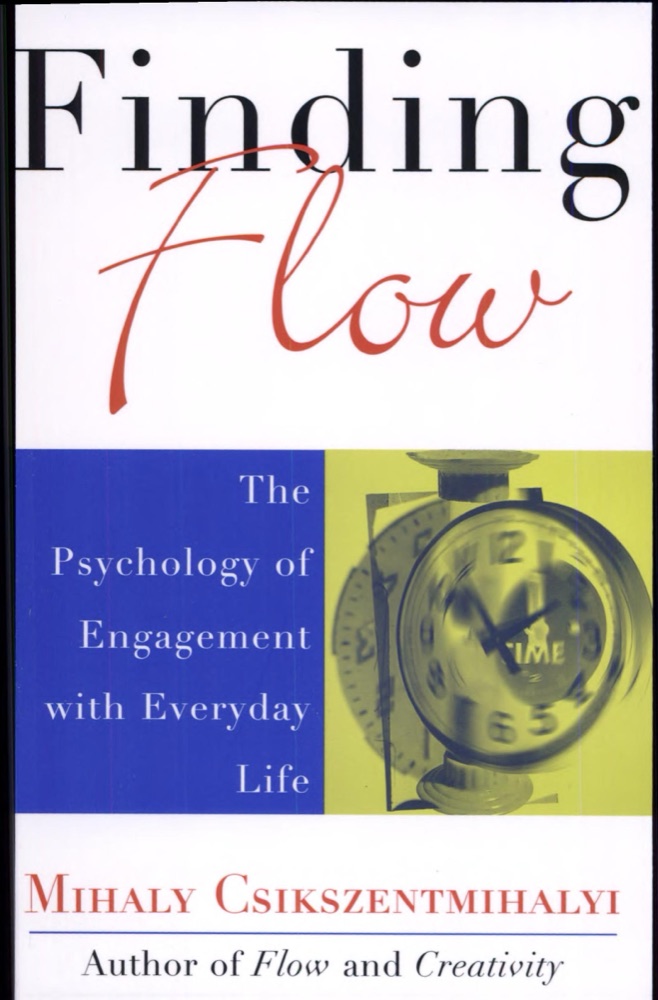 Finding Flow: The Psychology of Engagement with Everyday Life
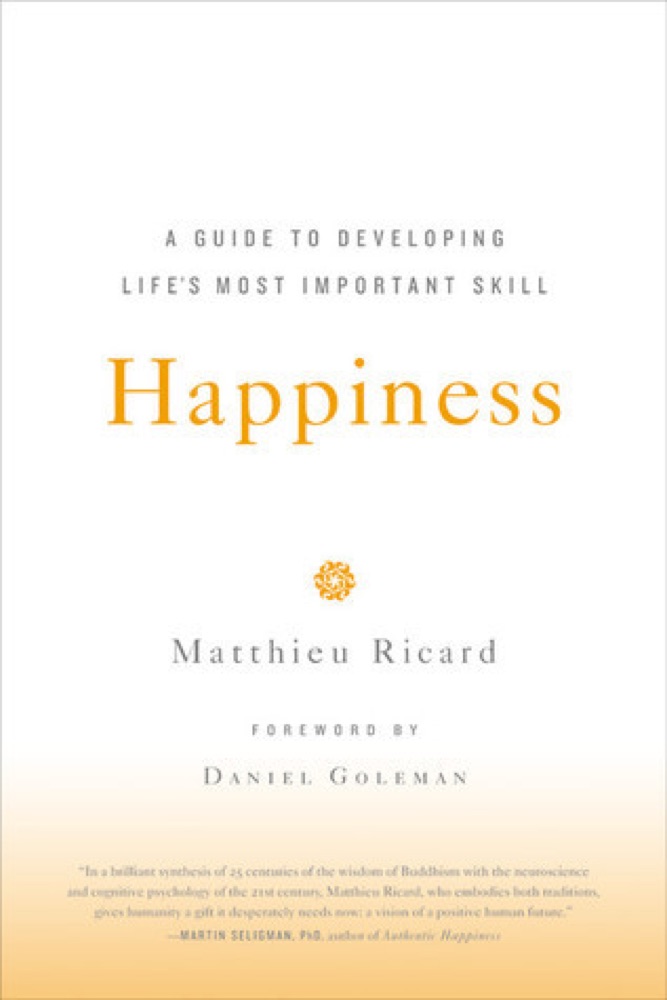 Happiness: A Guide to Developing Life's Most Important Skill
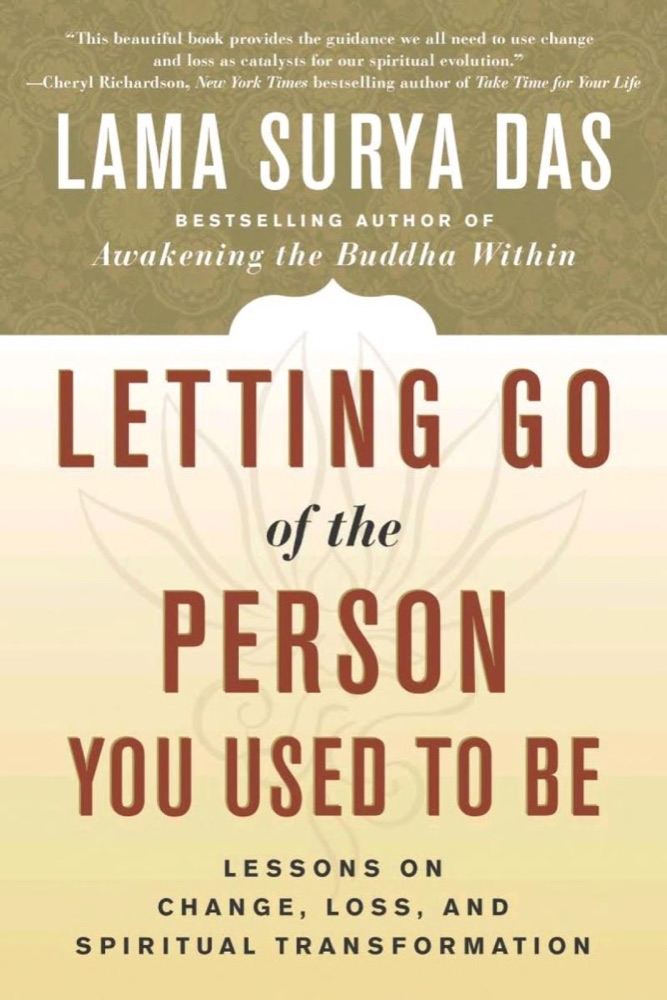 Letting Go of the Person You Used to Be: Lessons on Change, Loss, and Spiritual Transformation
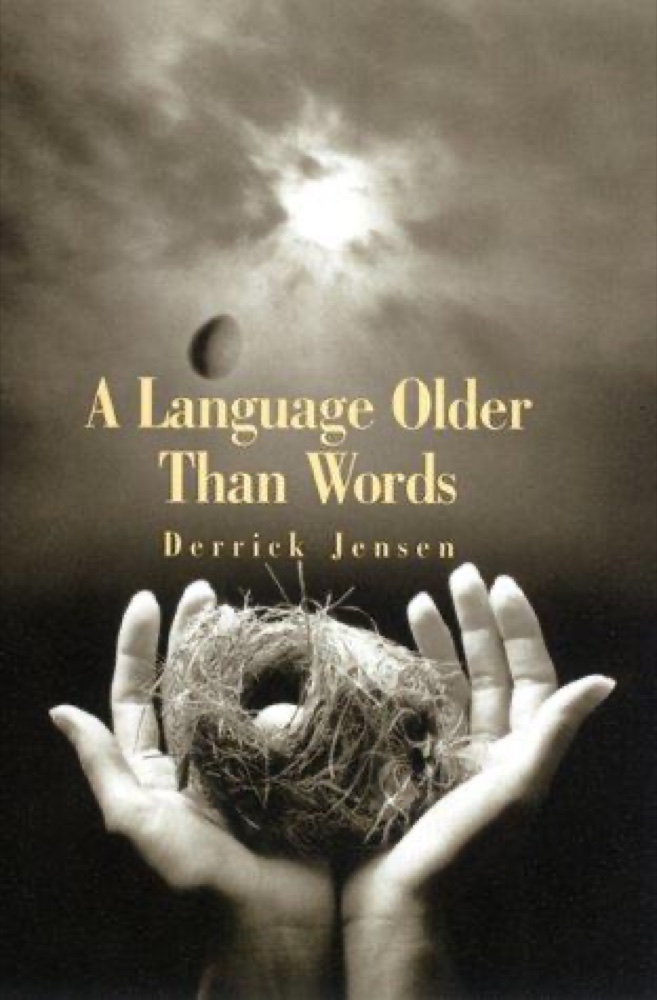 A Language Older Than Words
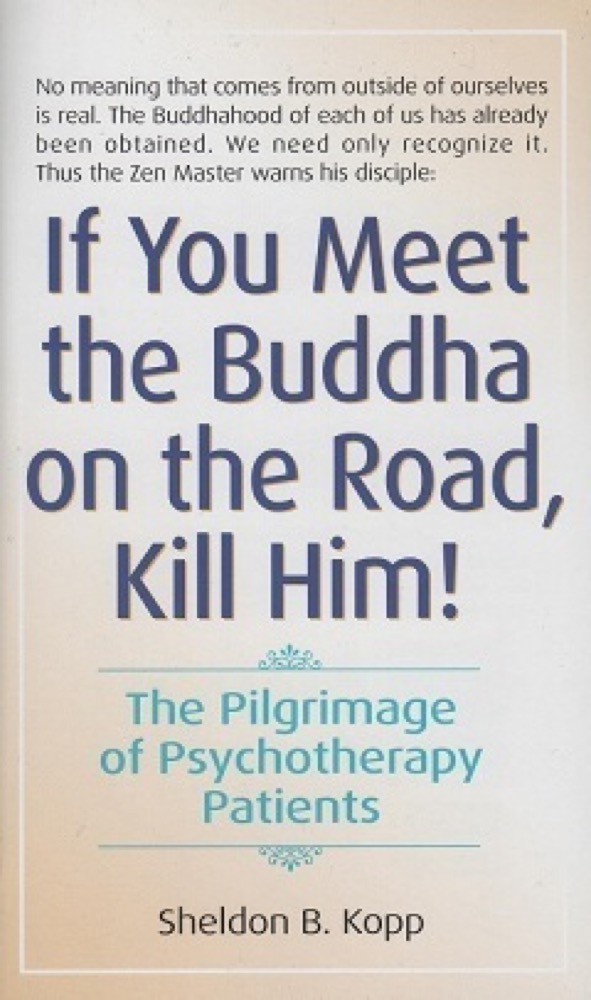 If You Meet the Buddha on the Road, Kill Him! The Pilgrimage of Psychotherapy Patients
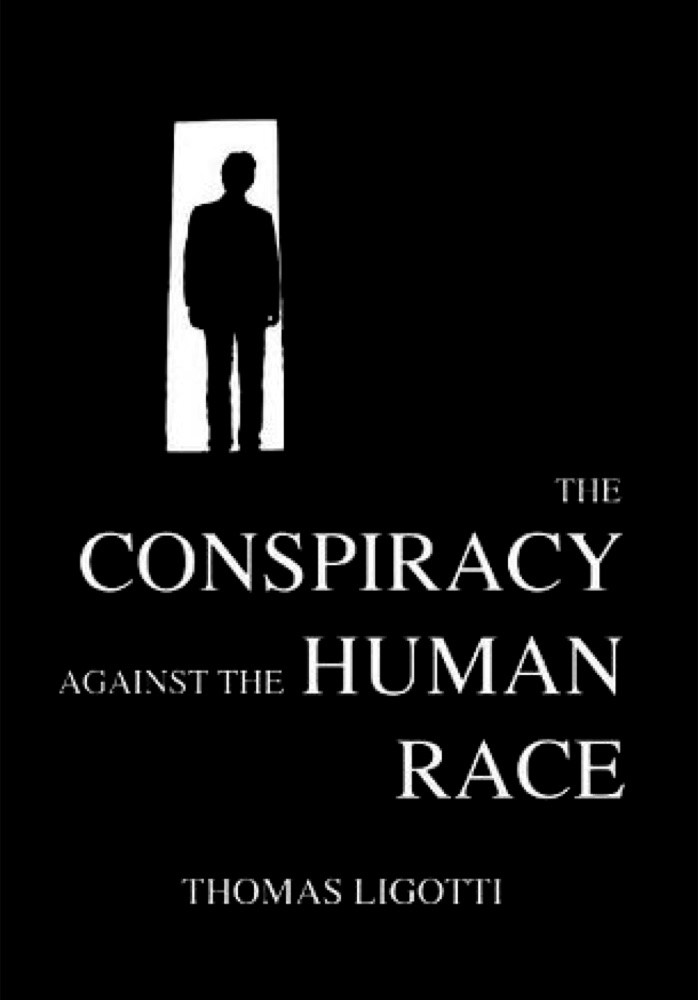 The Conspiracy Against the Human Race
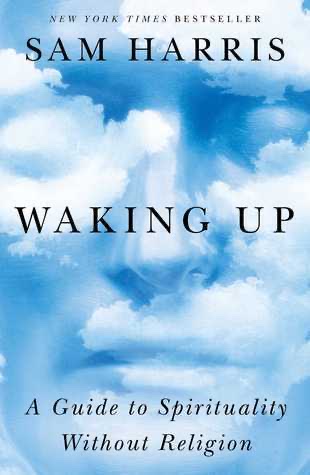 Waking Up: A Guide to Spirituality Without Religion
 The Book: On the Taboo Against Knowing Who You Are
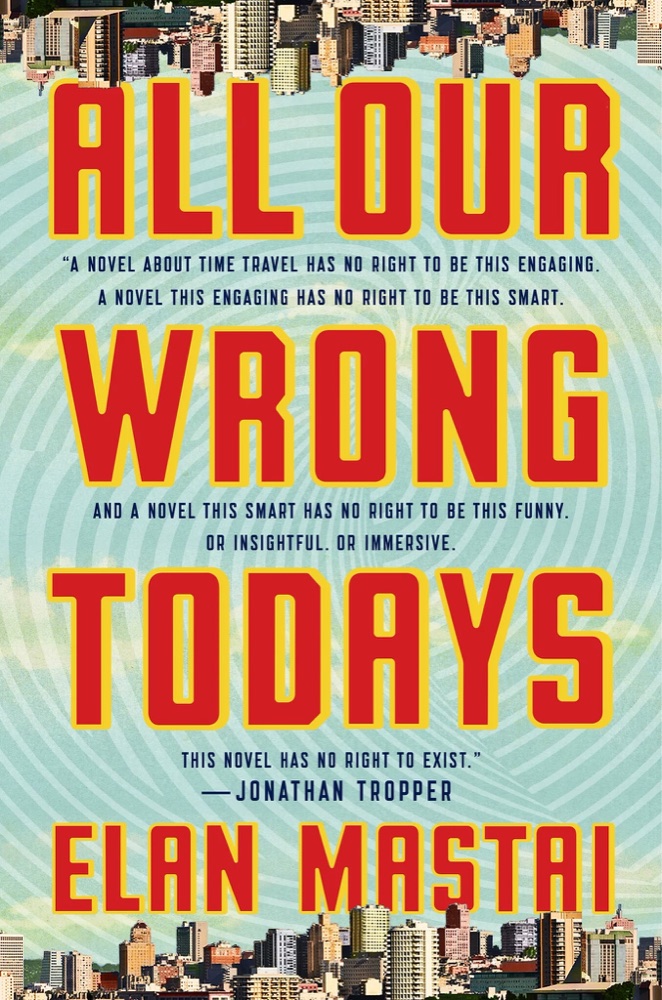 All Our Wrong Todays
 Nonviolent Communication: A Language of Life
 Maybe You Should Talk to Someone: A Therapist, Her Therapist, and Our Lives Revealed
 Freedom from the Known
 How to See Yourself As You Really Are
 Kitchen Table Wisdom: Stories that Heal
 Changes That Heal: How to Understand the Past to Ensure a Healthier Future
 No Time To Spare: Thinking About What Matters
 Living Beautifully with Uncertainty and Change
 Carry On, Warrior: Thoughts on Life Unarmed
 Happiness Is a Serious Problem: A Human Nature Repair Manual
 Your Erroneous Zones: Step-By-Step Advice for Escaping the Trap of Negative Thinking and Taking Control of Your Life
 The Gifts of Imperfection
 The Wise Heart: A Guide to the Universal Teachings of Buddhist Psychology
 Infinite Jest
 Way of the Peaceful Warrior: A Book That Changes Lives
 Stillness Is the Key
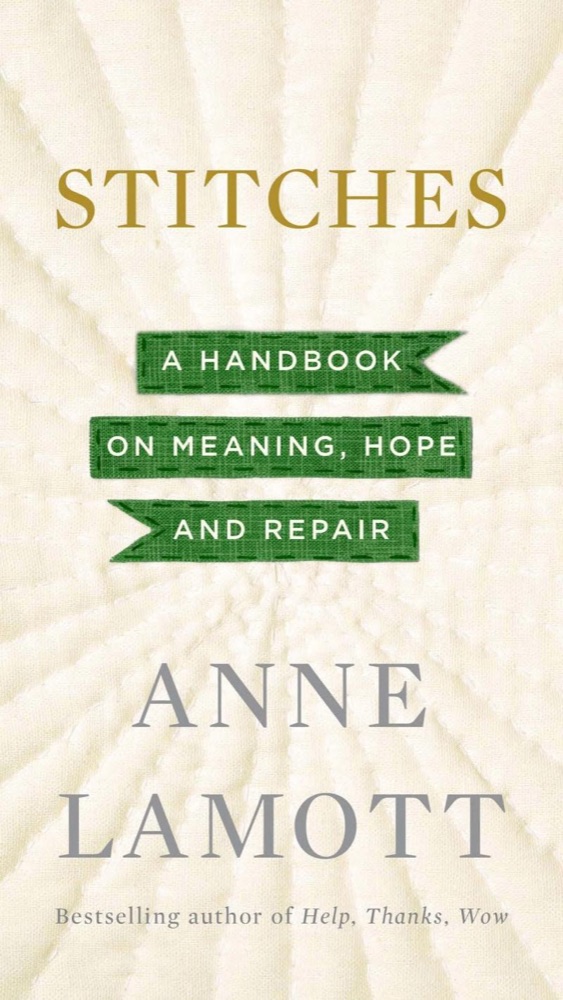 Stitches: A Handbook on Meaning, Hope, and Repair
 Genesis
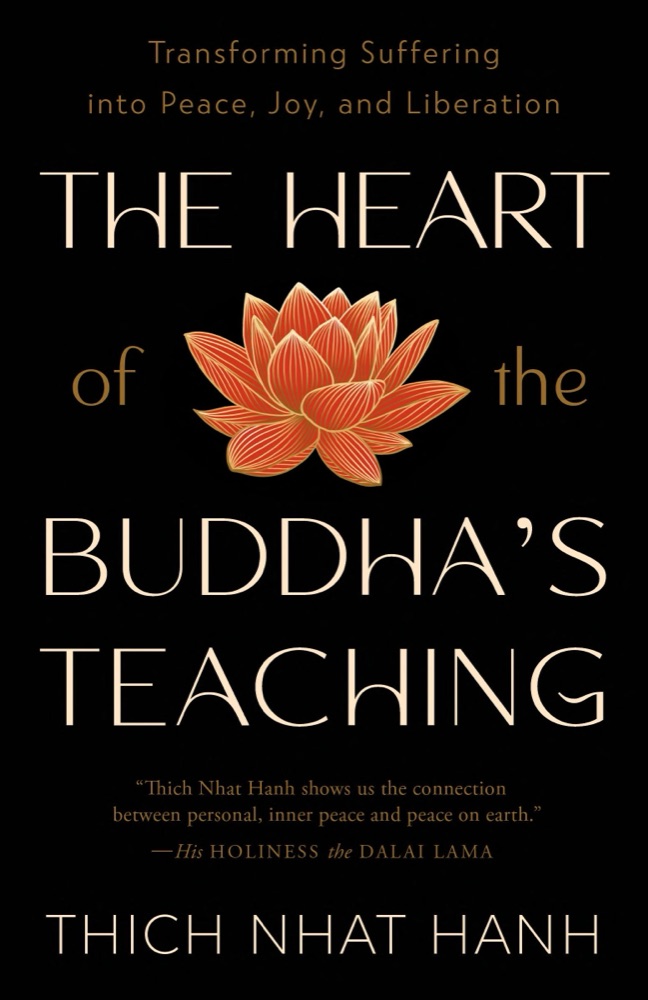 The Heart of the Buddha's Teaching: Transforming Suffering into Peace, Joy, and Liberation
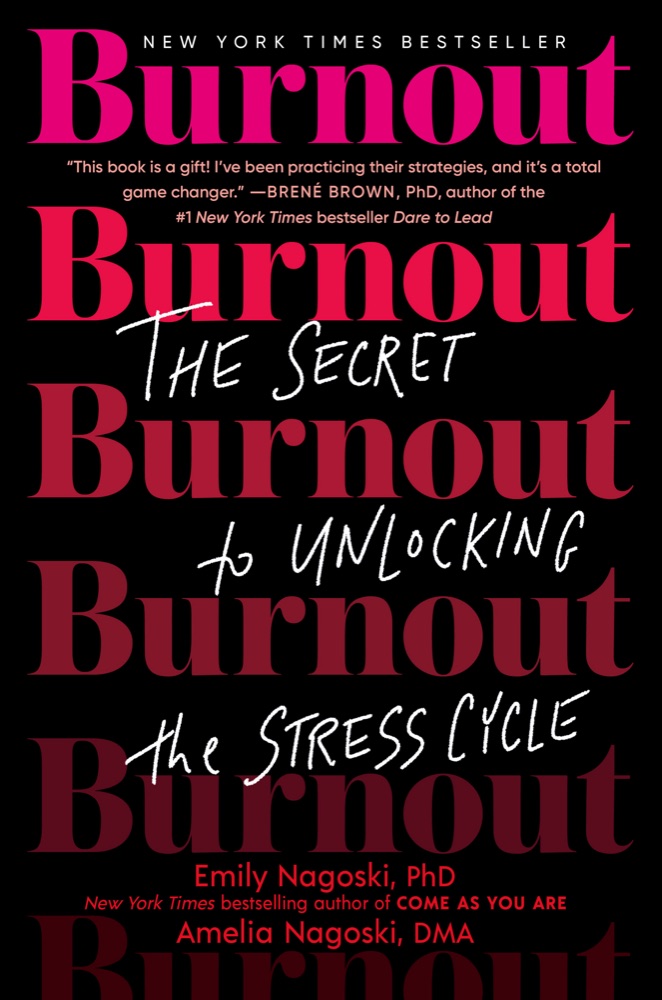 Burnout: The Secret to Unlocking the Stress Cycle