
 The Life You Can Save: How to Do Your Part to End World Poverty
Quotes from the Book
Giving up alcohol is an asceticism for the modern do-gooder, drinking being, like sex, a pleasure that humans have always indulged in, involving a loss of self-control, the renunciation of which marks the renouncer as different and separate from other people. To drink, to get drunk, is to lower yourself on purpose for the sake of good fellowship. You abandon yourself, for a time, to life and fate. You allow yourself to become stupider and less distinct. Your boundaries become blurry: you open your self and feel connected to people around you. You throw off your moral scruples, and suspect it was only those scruples that prevented the feeling of connection before. You feel more empathy for your fellow, but at the same time, because you are drunk, you render yourself unable to help him; so, to drink is to say, I am a sinner, I have chosen not to help.
8
To judge is to believe that a person is capable of doing better. It's to know that people can change their behavior, even quite radically in response to what is expected of them.
8
An extreme sense of duty seems to many people to be a kind of disease – a masochistic need for self-punishment, perhaps, or a kind of depression that makes its sufferer feel unworthy of pleasure...In fact, some do-gooders are happy, some are not. The happy ones are happy for the same reasons anyone is happy – love, work, purpose. It is do-gooders’ unhappiness that is different – a reaction not only to humiliation and lack of love and the other usual stuff, but also to knowing that the world is filled with misery, and that most people do not really notice or care, and that, try as they might, they cannot do much about either of those things. What do-gooders lack is not happiness but innocence. They lack that happy blindness that allows most people, most of the time, to shut their minds to what is unbearable. Do-gooders have forced themselves to know, and keep on knowing, that everything they do affects other people, and that sometimes (though not always) their joy is purchased with other people’s joy. And, remembering that, they open themselves to a sense of unlimited, crushing responsibility.
6
Giving without expectation of return was not thought to be a higher, more selfless act; quite the contrary, it was aggressive, it set the giver up as superior to the recipient, causing the recipient to lose face; it imposed a burden of gratitude without permitting the relief of reciprocation. Because a gift contained in itself something of the essence of the giver, a gift gave him power over the beneficiary. In some societies a gift retained, rather than passed along, could cause serious harm to the recipient—even death. In some ancient languages, the word “gift” had a second meaning: poison.
5
Trying to help is at best useless and at worst damaging; but to stop trying to help is to give up on humanity. Humanitarians are condescending hypocrites, but they are the best of us.
4
The essence of being human is that one does not seek perfection, that one is sometimes willing to commit sins for the sake of loyalty, that one does not push asceticism to the point where it makes friendly intercourse impossible, and that one is prepared in the end to be defeated and broken up by life, which is the inevitable price of fastening one's love upon other human individuals...It is too readily assumed...that the ordinary man only rejects [saintliness] because it is too difficult: in other words, that the average human being is a failed saint. It is doubtful whether this is true. Many people genuinely do not wish to be saints, and it is probable that some who achieve or aspire to sainthood have never felt much temptation to be human beings.
4
The aim of an artist is not to solve a problem irrefutably, but to make people love life in all its countless, inexhaustible manifestations.
3
Excessive altruism tended to preclude real intimacy with another person, because intimacy was a business of giving and receiving, but the overly moral person could not receive, only give.
3
do do-gooders understand that it is flawed humans, weak humans, ordinary humans, whom we love?
3
There is one circumstance in which the extremity of do-gooders looks normal, and that is war. In wartime — or in a crisis so devastating that it resembles war, such as an earthquake or a hurricane — duty expands far beyond its peacetime boundaries ... In war, what in ordinary times would be thought weirdly zealous becomes expected ... People respond to this new moral regime in different ways: some suffer under the tension of moral extremity and long for the forgiving looseness of ordinary life; others feel it was the time when they were most vividly alive, in comparison with which the rest of life seems dull and lacking in purpose... in wartime, duty takes on the glamour of freedom, because duty becomes more exciting than ordinary liberty. This is the difference between do-gooders and ordinary people: for do-gooders, it is always wartime. They always feel themselves responsible for strangers — they always feel that strangers, like compatriots in war, are their own people. They know that there are always those as urgently in need as the victims of battle, and they consider themselves conscripted by duty.
2
To drink, to get drunk, is to lower yourself on purpose for the sake of good fellowship.
2
He wasn’t good at meditation—he found serenity difficult—but discomfort came naturally.
1
He believed that a person who had not felt pain, mental or physical, was incapable of strong attachments, and that shared suffering was the mortar of community. Pain broke a man open and let other people in; suffering was at the core of what it meant to be human.
1
Nick Carraway in The Great Gatsby said, “Reserving judgment is a matter of infinite hope,” but the opposite is also true: to judge is to believe that a person is capable of doing better; it’s to know that people can change their behavior, even quite radically, in response to what is expected of them.
1
Ambivalence toward do-gooders also arises out of a deep uncertainty about how a person ought to live. Is it good to try to live as moral a life as possible—a saintly life? Or does a life like that lack some crucial human quality? Is it right to care for strangers at the expense of your own people? Is it good to bind yourself to a severe morality that constricts spontaneity and freedom? Is it possible for a person to hold himself to unforgiving standards without becoming unforgiving? Is it presumptuous, even blasphemous, for a person to imagine that he can transfigure the world—or to believe that it really matters what he does in his life when he’s only a tiny flickering speck in a vast universe? Should morality be the highest human court—the one whose ruling overrides all others?
1
At first the social worker may become too emotionally involved with his clients, so that when they fail he suffers, both because they are unhappy and because their failure is his failure, too. It’s hard to spend his days confronting devastating problems that he cannot fix—the misery and helplessness rub off on him. It may seem to him that to feel happy or spend money on himself is to betray the people he knows who are still suffering; or it may seem that his own unhappiness is a sign of his devotion. Perhaps he becomes angry, blaming systems and society for what he cannot fix himself. Gradually, he learns to be more detached. He realizes that he needs to be tough, and to develop a thick skin. But if he becomes too detached, he stops caring about his clients at all. Perhaps he withdraws into cynicism and self-defense, as he feels his ideals and his sense of potency wither. Longer-serving people in the office notice the waning of his enthusiasm, and welcome him to their gallows-humor fellowship. He retreats into apathy and jokes and drinks after work. But even with his fellow apathetics to keep him company, the situation is depressing, and he looks for a way out.
1
However much postcolonial condescension and racism and machismo there might be mixed up in an aid worker’s urge to help suffering foreigners, that seemed less awful than isolation and unrepentant selfishness.
1
the moral narcissist’s extreme humility masked a dreadful pride. Ordinary people could accept that they had faults; the moral narcissist could not.
1
A woman on the other end, who had heard about him on the local news, told him that she hoped his remaining kidney would fail quickly and kill him, because her husband had been next in line to receive a kidney and he, Paul, had given his to someone else. Paul asked the hospital to turn his phone off after that, but then someone wrote an article about him in the Philadelphia Daily News, wondering whether it was fair for him to pick his recipient, choosing who lived and who died. He couldn’t understand it—he had heard about a sick woman who lived near him, and he had helped her. How could that make people angry?
Julia had wanted to adopt since she was twelve, but when she began to look into it seriously and realized how high was the potential for utter catastrophe, she wavered. Then again, you never knew what you were going to end up with, even with biological children; having any kind of child meant opening yourself to chance and devastation.
If you try to find one charity that both makes you feel good and contributes to the quality of life of other people, you’re going to find a charity that is pretty bad at doing one of those things.
In response to this situation, the Australian philosopher Peter Singer wrote a now famous essay, “Famine, Affluence, and Morality,” in which he argued that spending money on the trappings of middle-class life rather than on famine relief, or some other form of charitable aid, was not merely stingy but depraved. His argument went like this: If you walk past a shallow pond and see a child drowning, ought you to save the child, even if it would mean muddying your clothes? Most people would say that of course you should—muddy clothes are nothing compared with a dead child. Well, he argued, children are dying all the time, so if we can save them without sacrificing anything of equal importance, particularly something as unimportant as extra clothes, we ought to do it. Most of these children are nowhere near us, but what moral difference does it make if the child is in front of us or far away? If we spend two hundred dollars on clothes that could have bought lifesaving food or medicine, we’re still responsible for a death. And, by extension, if we don’t give much of what we own and earn for the relief of suffering, then we’re responsible for many deaths. This
The need of the world was like death, she thought – everyone knew about it, but the thought was so annihilating that they had to push it out of consciousness or it would crush them.
Some do-gooders are happy, some are not. The happy ones are happy for the same reason anyone is happy—love, work, purpose. It’s do-gooders’ unhappiness that is different, a reaction to… knowing that the world is full of misery and that most people don’t really care. And that, try as they might, they cannot do much about either of those things.
What do-gooders lack is not happiness but innocence. They lack that happy blindness that allows most people most, of the time, to shut their minds to what is unbearable. Do-gooders have forced themselves to know, and keep on knowing, that everything they do effects other people. And that sometimes, though not always, their joy is purchased with other peoples’ joy. And remembering that, they open themselves up to an unlimited crushing sense of responsibility.
Do-gooders learn to codify their horror into a routine and a set of habits they can live with. They know they must do this in order to stay sane. But this partial blindness is chosen and forced and never quite convincing.
Do-gooders are different because they are willing to weigh their lives and their families in a balance with the needs of strangers. They are willing to risk the one for the sake of the other. They-like anyone else, believe that they have duties to their families. But they draw the line between family and strangers in a different place. It’s not that they value strangers more. It’s that they remember that strangers have lives and families too.
They lack that happy blindness that allows most people, most of the time, to shut their minds to what is unbearable. Do-gooders have forced themselves to know, and keep on knowing, that everything they do affects other people, and that sometimes (though not always) their joy is purchased with other people’s joy. And, remembering that, they open themselves to a sense of unlimited, crushing responsibility.
Part of the reason do-gooders seem so strange is that they’re acting on their own. They are following rules that they laid down for themselves, driven by a sense of duty they have felt since they were too small to know what duty was, much less how anybody else thought about it.
she thought that health care could be used as a means of reconciliation.
Watch on YouTube
About Larissa MacFarquhar
We have collected 30 quotes from 1 book by Larissa MacFarquhar on BookQuoters.
More about the author →About the book
How far do you really go to “do unto others”? New Yorker journalist Larissa MacFarquhar reveals the individuals who devote themselves fully to bettering the lives of strangers, even when it comes at great personal cost There are those of us who help and those who live to help. Larissa MacFarquhar digs deep into the psychological roots and existential dilemmas motivating those rare individuals practicing lives of extreme ethical commitment. The donor who offers up her kidney to a complete stranger; the activist who abandons possessions to devote himself to the cause; the foster parent who adopts dozens of children: such do-gooders inspire us but also force us to question deep-seated notions about what it means to be human. How could these do-gooders value strangers as much as their own loved ones? What does it really take to live a life of extreme virtue? Might it mean making choices as h
Book details
- First published
- 2015
- Author
- Larissa MacFarquhar
- Genre
- Nonfiction
- Goodreads rating
- 3.91 (3k ratings)
Keep reading
The Life You Can Save: How to Do Your Part to End World Poverty
 Aphorisms on Love and Hate
 The Soul of Man Under Socialism
 Ethics for the New Millennium
 How to Be Perfect: The Correct Answer to Every Moral Question
 Twelve Steps to a Compassionate Life
 Tribe: On Homecoming and Belonging
 Humankind: A Hopeful History
 We Learn Nothing
 United: Thoughts on Finding Common Ground and Advancing the Common Good
 The Autobiography of Eleanor Roosevelt
 Toward a Psychology of Being
 How Do You Live?
 Bright-Sided: How the Relentless Promotion of Positive Thinking Has Undermined America
 Life and Fate
 The Happiest Man on Earth
 The Second Mountain
 If You Meet the Buddha on the Road, Kill Him! The Pilgrimage of Psychotherapy Patients
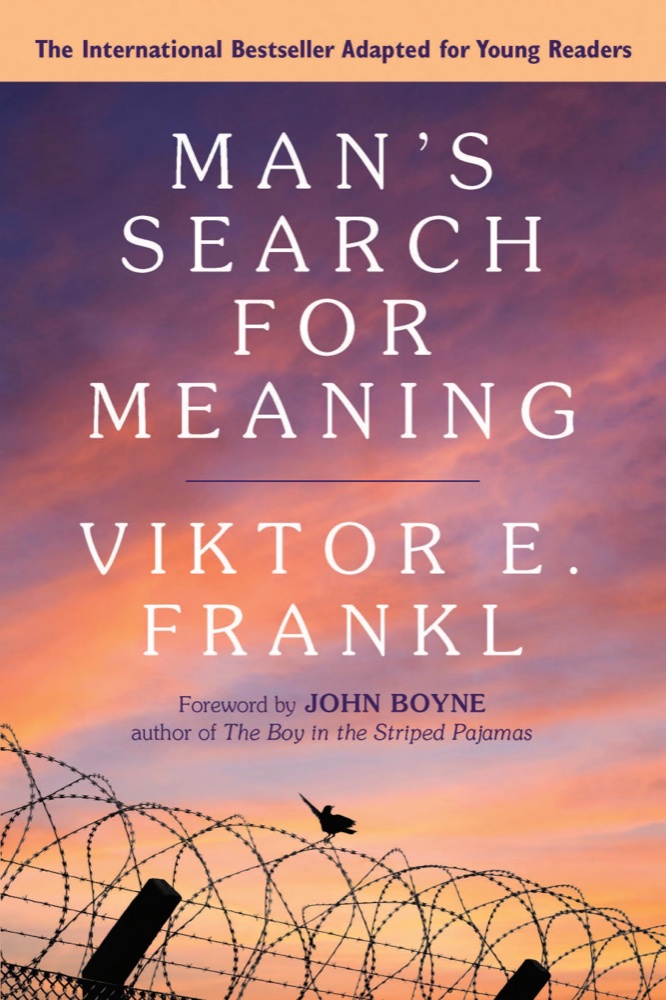 Man's Search for Meaning
 The Theory of Moral Sentiments
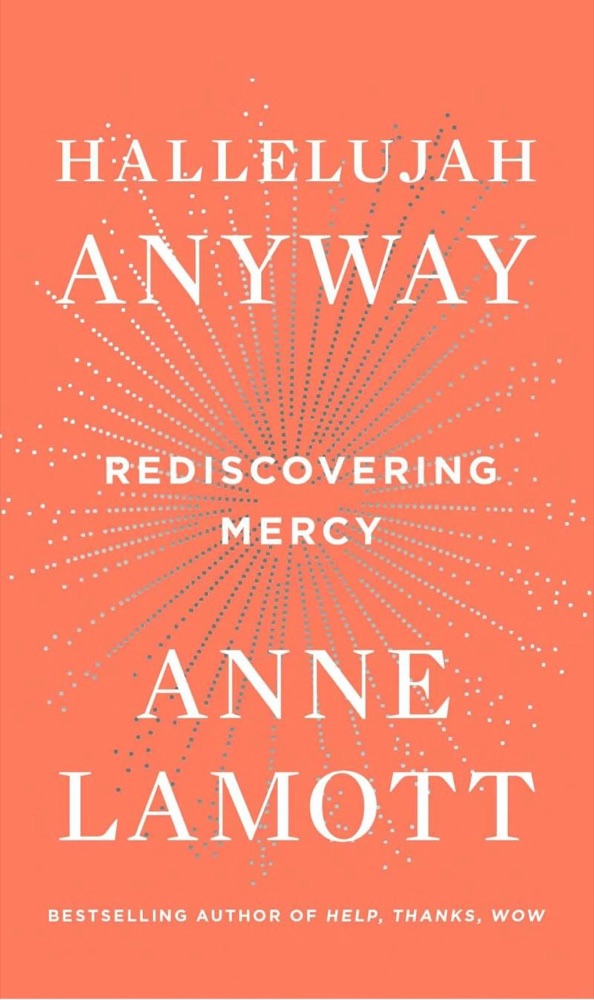 Hallelujah Anyway: Rediscovering Mercy
 The Way of All Flesh
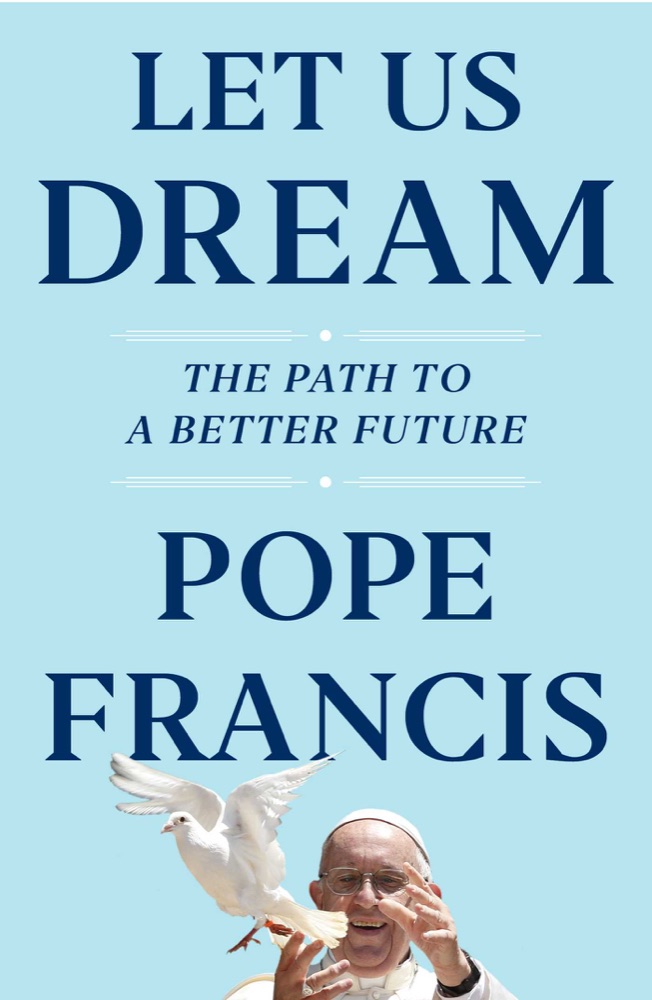 Let Us Dream: The Path to a Better Future
 The Heart and the Fist: The Education of a Humanitarian, the Making of a Navy SEAL
 Practical Ethics
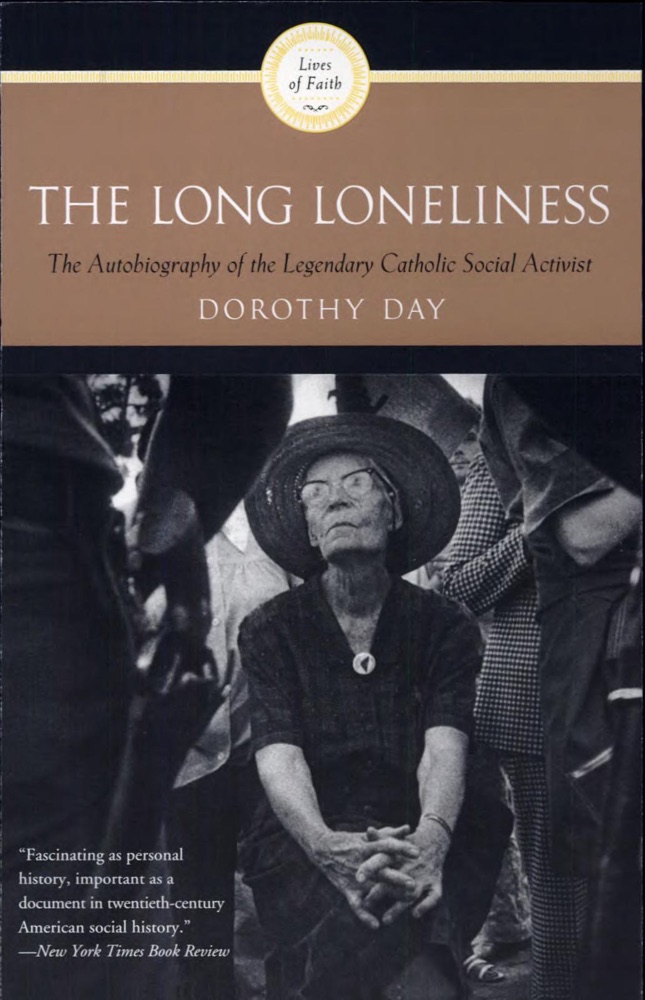 The Long Loneliness: The Autobiography of the Legendary Catholic Social Activist ― A Memoir about the Worker Movement and Spiritual Conversion
 Mutual Aid: Building Solidarity in This Crisis
 Intermezzo
 My Beloved World
 Life at the Bottom: The Worldview That Makes the Underclass
 Anthills of the Savannah
 How to See Yourself As You Really Are
 The Blue Sweater: Bridging the Gap Between Rich and Poor in an Interconnected World
 The Sympathizer
 12 Rules for Life: An Antidote to Chaos
 Changes That Heal: How to Understand the Past to Ensure a Healthier Future
 Everything Is F*cked: A Book About Hope
 Freedom
 Worm
Worm
 Life Will Be the Death of Me: . . . and you too!
 Leonard and Hungry Paul
 The Consolation of Philosophy
 The Lucifer Effect: Understanding How Good People Turn Evil
 Beyond Good and Evil
 The Nicomachean Ethics
 Be a People Person
 Nonviolent Communication: A Language of Life
 The Fall of Babel
 Have You Seen Luis Velez?
 When Nietzsche Wept
 The Happiness Hypothesis: Finding Modern Truth in Ancient Wisdom
 The Devil and Miss Prym
 The Children of Men
 People of the Lie: The Hope for Healing Human Evil
 Parable of the Talents
 Confessions of a Sociopath: A Life Spent Hiding in Plain Sight
 Any Ordinary Day
 The Sociopath Next Door