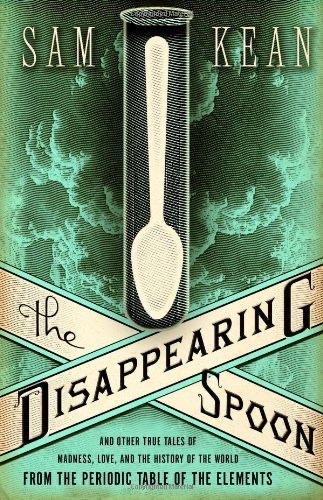
 The Disappearing Spoon: And Other True Tales of Madness, Love, and the History of the World from the Periodic Table of the Elements
Quotes from the Book
In these days before antiseptics, doctors themselves also suffered high mortality rates. Florence Nightingale, a nurse during the Crimean War (1853-1856), watched one particularly inept surgeon cut both himself and, somehow, a bystander while blundering about during an amputation. Both men contracted an infection and died, as did the patient. Nightingale commented that it was the only surgery she'd ever seen with 300 percent mortality.
Biologists summarize these hypothalamic duties as the "four F's" of animal behavior—feeding, fleeing, fighting, and, well, sexual congress.
In this thinking, the mind’s conscious, decision-making “will” is actually a by-product of whatever the unconscious brain has already decided to do. Free will is a retrospective illusion, however convincing, and we feel “urges” to do only what we’re going to do anyway. Pride alone makes us insist otherwise.
Above all, we know that there’s a physical basis for every psychological attribute we have: if just the right spot gets damaged, we can lose just about anything in our mental repertoire, no matter how sacred.
different sets of facial muscles—and therefore produce different-looking smiles. This divergence explains the difference between genuine smiles and fakey, say-cheese smiles in photographs. People have trouble faking other genuine expressions, too, like fear, surprise, or an interest in someone’s pet stories. To overcome this limitation actors either drill with a mirror and practice conjuring up facial expressions à la Laurence Olivier, or, à la Constantin Stanislavsky, they inhabit the role and replicate the character’s internal feelings so closely that the right expressions emerge naturally.) The limbic system, and the temporal lobes generally, are also closely tied up with sex. Scientists discovered this connection in a roundabout way. In the mid-1930s a rogue biologist named Heinrich Klüver started some
Confederate surgeons usually performed “circular” amputations. They made a 360-degree cut through the skin, then scrunched it up like a shirt cuff. After sawing through the muscle and bone, they inched the skin back down to wrap the stump. This method led to less scarring and infection. Union surgeons preferred “flap” amputations: doctors left two flaps of flesh hanging beside the wound to fold over after they’d sawed through. This method was quicker and provided a more comfortable stump for prosthetics. Altogether, surgeons lopped off 60,000 fingers, toes, hands, feet, and limbs during the war.
You can think about this decoupling as the converse of neurons that fire together wire together. Here, neurons out of sync fail to link.
It was the bad luck of eating patient zero.
Other people found Capgras syndrome erotic. One Frenchwoman in the 1930s had complained for years about her awkward lover; luckily, his double proved a stud. Male victims liked that their wives’ bodies seemed electrifyingly new every few weeks. (One cheeky doctor has even declared the syndrome the secret to connubial bliss, since each sexual encounter feels fresh.)
The twentieth century’s first major discovery about vision came about, once again, because of war. Russia had long coveted a warm-water port on the Pacific Ocean, so in 1904 the czar sent hundreds of thousands of troops to Manchuria and Korea to bully one away from the Japanese. These soldiers were armed with high-speed rifles whose tiny, quarter-inch bullets rocketed from the muzzle at fourteen hundred miles per hour. Fast enough to penetrate the skull but small enough to avoid messy shattering, these bullets made clean, precise wounds like worm tracks through an apple. Japanese soldiers who were shot through the back of the brain—through the vision centers, in the occipital lobe—often woke up to find themselves with tiny blind spots, as if they were wearing glasses spattered with black paint. Tatsuji Inouye, a Japanese ophthalmologist, had the uncomfortable job of calculating how much of a pension these speckled-blind soldiers should receive, based on the percentage of vision lost. Inouye could have gotten away
We crowned ourselves Homo sapiens, the wise ape, but Homo limbus might have been more apt.
B1 to harvest energy from glucose, the end result of digesting carbohydrates. Brain cells especially rely on glucose for energy, since other sugars cannot cross the blood-brain barrier. The brain also needs thiamine to make myelin sheaths and to build certain neurotransmitters.
People fluent in two languages can lose either one after trauma, since first and second languages* draw on distinct neural circuits. Language deficits can even interfere with math. We seem to have a natural “number circuit” in the parietal lobe that handles comparisons and magnitudes—the basis of most arithmetic. But we learn some things (like the times tables) linguistically, by rote memorization. So if language goes kaput, so too will those linguistically based skills. More strikingly, some people who struggle to string even three words together can sing just fine.
Rope-a-dope boxers and quarterbacks and hockey enforcers continue to shake off concussions on the theory of no blood, no harm. But each concussion effectively softens up the brain and ups the chances of more concussions. After multiple blows, neurons start to die and spongy holes open up; people’s personalities then disintegrate, leaving them depressed, diminished, suicidal. Four centuries have passed, but macho modern athletes* might as well trade pads for armor and go joust with
During dreams, the pons also dispatches a message to the spinal cord beneath it, which produces chemicals to make your muscles flaccid. This temporary paralysis prevents you from acting out nightmares by fleeing the bedroom or taking swings at werewolves. While
frontal lobes includes suppressing impulses from the parietal lobes, which are curious and capricious and, as the lobes most intimately involved with touch, want to explore everything tactilely. So when certain parts of the frontal lobe go kaput, the brain can no longer tamp down these parietal impulses, and the hand begins to flail and grab. (Neurologically, this flaring up of suppressed impulses resembles the “release” of the snout reflex in kuru victims.) And because the grasping impulse springs from the subconscious, the conscious brain can’t always interrupt it and break the hand’s grip. Hand-to-hand combat—with
a fully plastic brain “learns everything and remembers nothing.
Yet he could somehow still feel that missing four-fifths of himself—still feel pain in his invisible fingers, still feel his invisible toes twitching. “Often at night I would try with one lost hand to grope for the other,” he recalled, but the ghosts always eluded him.
These axons can shuttle information around so quickly because they’re fatter than normal axons, and because they’re sheathed in a fatty substance called myelin. Myelin acts like rubber insulation on wires and prevents the signal from petering out: in whales, giraffes, and other stretched creatures, a sheathed neuron can send a signal multiple yards with little loss of fidelity. (In contrast, diseases that fray myelin, like multiple sclerosis, destroy communication between different nodes in the brain.) In sum, you can think about the gray matter as a patchwork of chips that analyze different types of information, and about the white matter as cables that transmit information between those chips. (And before we go further, I should point out that “gray” and “white” are misnomers. Gray matter looks pinkish-tan inside a living skull, while white matter, which makes up the bulk of the brain, looks pale pink. The white and gray colors appear only after you soak the brain in preservatives. Preservatives also harden the brain, which is normally tapioca-soft. This explains why the brain you might have dissected in biology class way back when didn’t disintegrate between your fingers.)
Ale jest też inny prawdopodobny powód odmowy trepanacji królewskiej głowy - ryzyko powikłań po takim zabiegu było wysokie, a winnym z pewnością byłby przeprowadzający go lekarz'.
Whenever we read about people's lives, fictional or non-, we have to put ourselves into the minds of the characters. And honestly, my mind has never had to stretch so far, never had to work so hard, as it did to inhabit the minds of people with brain damage. They're recognizably human in so many ways, and yet still somehow off: Hamlet seems transparent next to H.M. But that's the power of stories, to reach across that divide.
This hinted at something that no one had ever suspected -- that the brain tracks moving things more easily that still things. We have a built-in bias toward detecting action. Why? Because it's probably more critical for animals to spot moving things (predators, prey, falling trees) than static things, which can wait. In fact, our vision is so biased toward movement that we don't technically see stationary objects at all. To see something stationary, our brains have to scribble our eyes subtly over its surface. Experiments have even proven that if you artificially stabilize an image on the retina with a combination of special contact lenses and microelectronics, the image will vanish.
In fact, his travelogues spend amazingly little time discussing his blindness. Only one passage stands out for its frank discussion of his handicap and how it changed his worldview. In it, Holman was reminiscing about a few rendezvous from his past. Disarmingly, he admitted that he had no idea what his paramours looked like, or even whether they were homely. Moreover, he didn't care: by abandoning the standards of the sighted world, he argues, he could tap into a more divine and more authentic beauty. Hearing a woman's voice and feeling her caresses -- and then filling in what was missing with his own fancy -- gave him more pleasure than the mere sight of a women ever had, he said, a pleasure beyond reality. "Are there any who imagine," Holman asked, "that my loss of eyesight must necessarily deny me the enjoyment of such contemplation? How much more do I pity the mental darkness which could give rise to such an error.
Bez układu limbicznego powtarzanie tych samych błędów w ogóle nie było denerwujące. Właściwie małpy przestały wykazywać jakiekolwiek emocje. Nic już ich nie gniewało, nie cieszyło, nie smuciło'.
Niemożność dostrzeżenia szerszego kontekstu to zwykły skutek uszkodzenia okolic kory przedczołowej, a dotknięci tą przypadłością pacjenci często nie mogą posunąć się dalej niż jeden czy dwa kroki na drodze do realizacji jakiegokolwiek zadania'.
Temporal lobe lesions can flip people’s sexual orientations from gay to straight (or vice versa), or redirect their sexual appetites toward inappropriate things: common side effects of Klüver-Bucy include zoophilia, coprophilia, pedophilia, and -philias so idiosyncratic they don’t have names.
So despite all the advances of neuroscience, all the fancy machines and illuminating insights, we still need our old, wet gray matter - the only place where emotion and reason come together and alchemize into what we call wisdom - to tell us how to act.
1
Watch on YouTube
About Sam Kean
We have collected 96 quotes from 4 books by Sam Kean on BookQuoters.
More about the author →More by Sam Kean
The Disappearing Spoon: And Other True Tales of Madness, Love, and the History of the World from the Periodic Table of the Elements
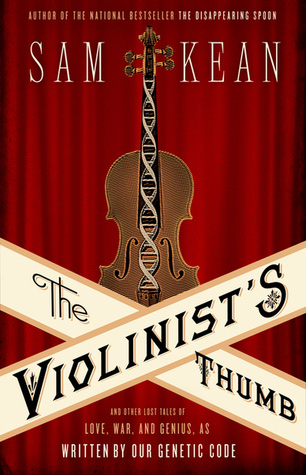 The Violinist's Thumb: And Other Lost Tales of Love, War, and Genius, as Written by Our Genetic Code
 The Icepick Surgeon: Murder, Fraud, Sabotage, Piracy, and Other Dastardly Deeds Perpetrated in the Name of Science
About the book
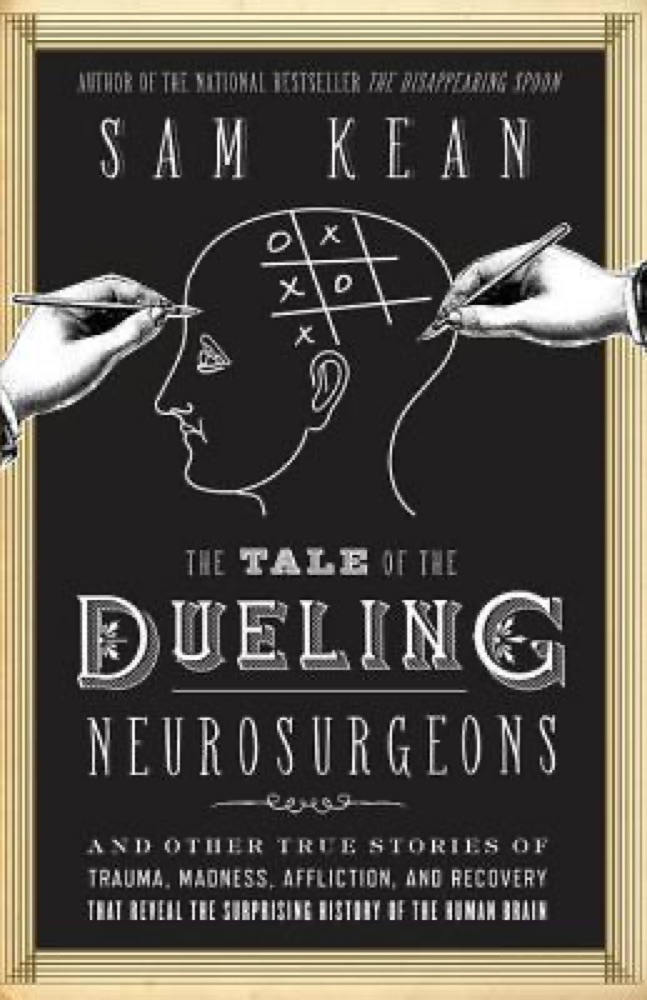
From the author of the bestseller The Disappearing Spoon, tales of the brain and the history of neuroscience. Early studies of the functions of the human brain used a simple method: wait for misfortune to strike-strokes, seizures, infectious diseases, lobotomies, horrendous accidents-and see how the victim coped. In many cases survival was miraculous, and observers could only marvel at the transformations that took place afterward, altering victims' personalities. An injury to one section can leave a person unable to recognize loved ones; some brain trauma can even make you a pathological gambler, pedophile, or liar. But a few scientists realized that these injuries were an opportunity for studying brain function at its extremes. With lucid explanations and incisive wit, Sam Kean explains the brain's secret passageways while recounting forgotten stories of common people whose struggles,
Keep reading
 An Anthropologist on Mars
 The Brain That Changes Itself: Stories of Personal Triumph from the Frontiers of Brain Science
 Behave: The Biology of Humans at Our Best and Worst
 The Tell-Tale Brain: A Neuroscientist's Quest for What Makes Us Human
 The Future of the Mind: The Scientific Quest to Understand, Enhance, and Empower the Mind
 Livewired: The Inside Story of the Ever-Changing Brain
 Descartes' Error: Emotion, Reason and the Human Brain
 Blindsight
 The Man Who Mistook His Wife for a Hat and Other Clinical Tales
 How We Decide
 Incognito: The Secret Lives of the Brain
 Consciousness and the Brain: Deciphering How the Brain Codes Our Thoughts
 Drive Your Plow Over the Bones of the Dead
 How the Mind Works
 Natural Causes: An Epidemic of Wellness, the Certainty of Dying, and Killing Ourselves to Live Longer
 Grunt: The Curious Science of Humans at War
 The Sleeping Beauties: And Other Stories of Mystery Illness
 My Stroke of Insight: A Brain Scientist's Personal Journey
 When the Air Hits Your Brain: Tales of Neurosurgery
 Patient H.M.: A Story of Memory, Madness, and Family Secrets
 Brain on Fire: My Month of Madness
 The Master and His Emissary: The Divided Brain and the Making of the Western World
 A User's Guide to the Brain: Perception, Attention, and the Four Theaters of the Brain
 Echopraxia
 Good Reasons for Bad Feelings: Insights from the Frontier of Evolutionary Psychiatry
 The Hangman's Replacement: Sprout of Disruption
 Andrew's Brain
 The Song of the Cell: An Exploration of Medicine and the New Human
 The Sorrows of an American
 Why Zebras Don't Get Ulcers
 Successful Aging: A Neuroscientist Explores the Power and Potential of Our Lives
 Galápagos
 How to Change Your Mind: The New Science of Psychedelics
 Do No Harm: Stories of Life, Death and Brain Surgery
 Mindsight: The New Science of Personal Transformation
 Understanding Media: The Extensions of Man
 In an Unspoken Voice: How the Body Releases Trauma and Restores Goodness
 Dragons of Eden: Speculations on the Evolution of Human Intelligence
 Stories of Your Life and Others
 Hallucinations
 Healing Back Pain: The Mind-Body Connection
 The Mountain in the Sea
 Why We Get Sick: The New Science of Darwinian Medicine
 Tell Me Everything: The Story of a Private Investigation
 Wired
Wired
 The Log from the Sea of Cortez
 Sphere
 A Thousand Brains: A New Theory of Intelligence
 No Self, No Problem: How Neuropsychology Is Catching Up to Buddhism
 Stiff: The Curious Lives of Human Cadavers
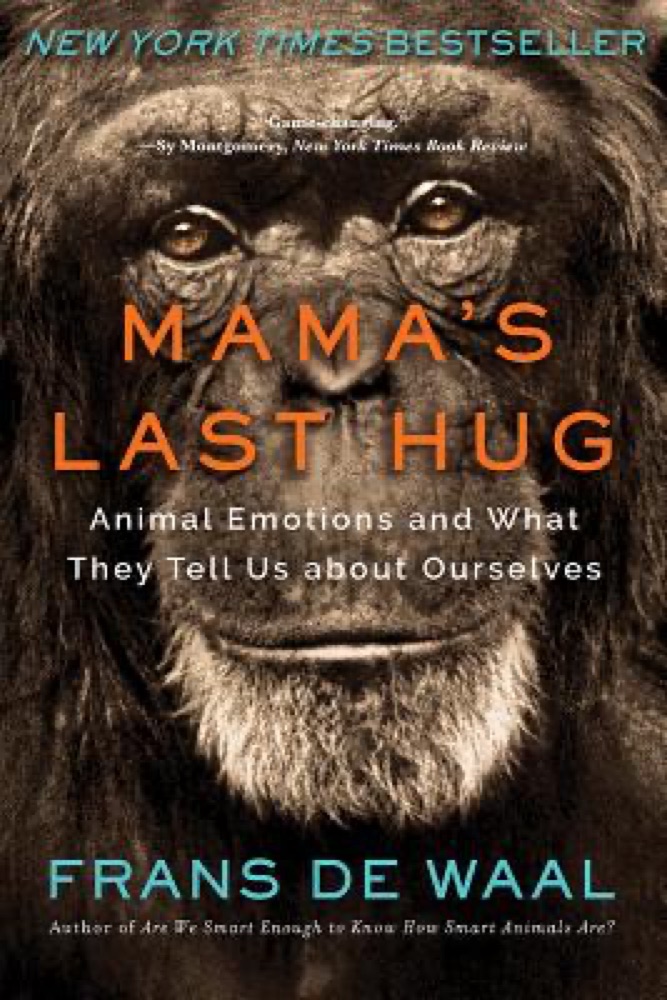 Mama's Last Hug: Animal Emotions and What They Tell Us about Ourselves
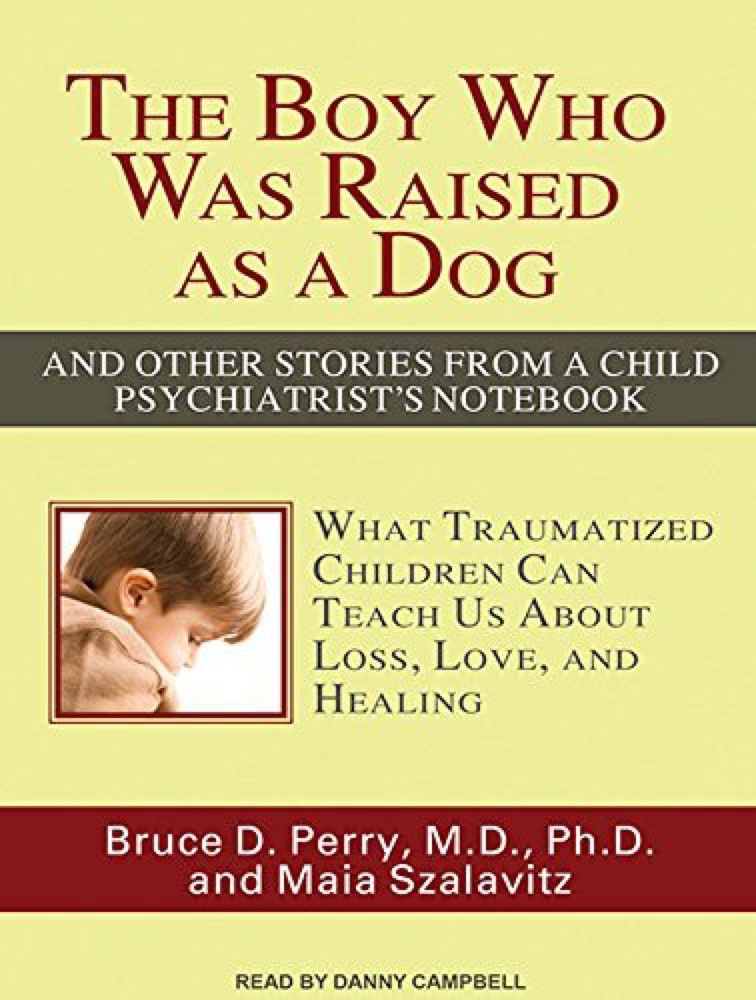 The Boy Who Was Raised as a Dog: And Other Stories from a Child Psychiatrist's Notebook
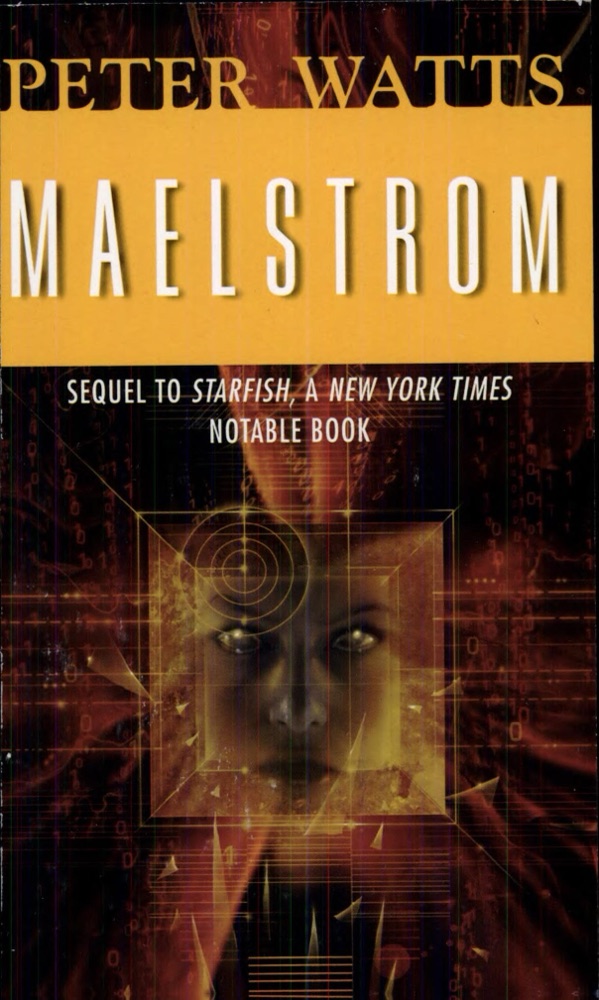 Maelstrom
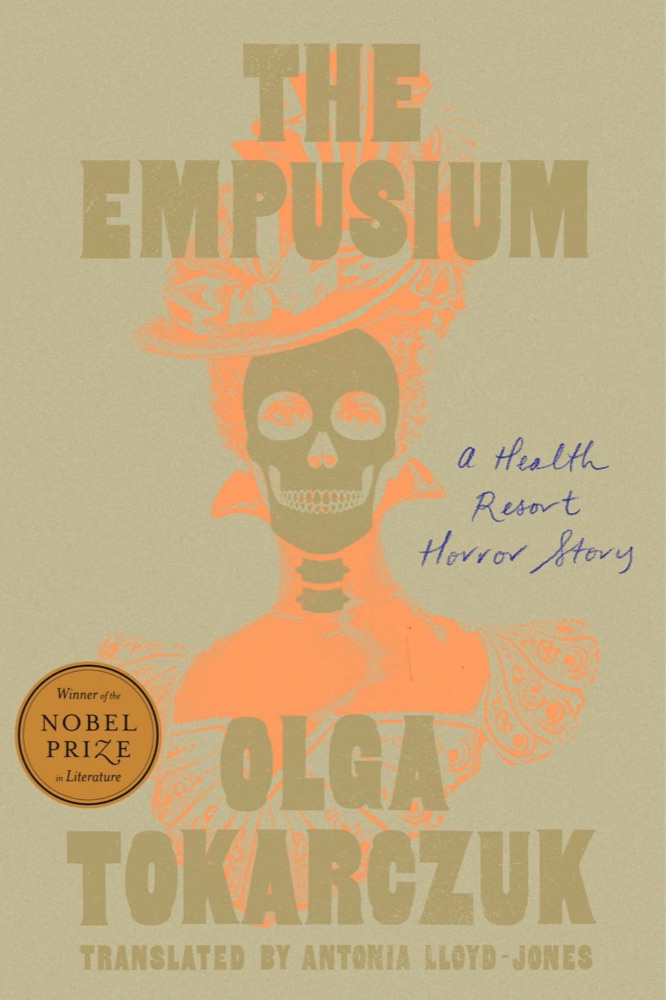 The Empusium
 The Philosopher and the Wolf
 Social Intelligence: The New Science of Human Relationships
 The Origin of Consciousness in the Breakdown of the Bicameral Mind
 Are We Smart Enough to Know How Smart Animals Are?
 Introductory Lectures on Psychoanalysis
 Drunk: How We Sipped, Danced, and Stumbled Our Way to Civilization