
 The Seven Daughters of Eve: The Science That Reveals Our Genetic Ancestry
Quotes from the Book
Myths have a very long memory.
16
Oral myths are closer to the genetic conclusions than the often ambiguous scientific evidence of archaeology.
12
The gradual colonization of the west from the Irish kingdom of Dál Riata during the first half of the first millennium AD, and the consolidation of their Gaelic kingdom in Scotland following their defeat by the Ui Neill, had an immense cultural impact in Scotland.
1
Again starting with an unusual Y-chromosome, they noticed its occurrence in a related set of surnames that were linked to branches of the Ui Neill, the clan that had held the High Kingship at Tara, and had expelled the Dál Riata to Argyll. The Ui Neill equivalent of Somerled was Niall Noigiallach, better known as Niall of the Nine Hostages, who lived in the second half of the fourth century AD. This was a time when the Romans were beginning to withdraw from mainland Britain. According to legend, Niall raided and harassed western Britain and specialized in capturing and then ransoming high-ranking hostages, hence his soubriquet. His most famous captive was one Succat, who went on to become St Patrick. Niall’s military exploits carried him over the sea to Scotland, where he fought the Picts who were trying to retake the recent Irish colonies of Dalriada. It was during a raid even further afield, in France, that an arrow from the bow of an Irish rival killed Niall on the banks of the River Loire in AD 405. Niall was succeeded in the High Kingship by his nephew, Dathi, his father’s brother’s son. This was typical of the Gaelic tradition of derbhfine, the rules of inheritance that chose the new king from among the direct male relatives of the old. This served to ensure the patrilineal inheritance of the High Kingship itself
What began as a declaration of religious independence from Rome transformed over the years into a virulent doctrine of Saxon/Teutonic racial superiority over
the Roman historian Tacitus, who wrote in AD 98, ‘For myself I accept the view that the people of Germany have never been tainted by intermarriage with other peoples and stand out as a nation peculiar, pure and unique of its kind.’ Luther himself even managed to concoct a genealogy for the Germans right back to Adam, who for Christians like Luther was the father of the human race.
The far more dependable Bede, writing from the monastery at Jarrow, completed his Ecclesiastical History of the English People in 731. It is thanks to him that we are able to differentiate between the three tribes of ‘barbarians’, namely Saxons, Angles and Jutes. According to Bede, Jutes from the Jutland peninsula of northern Denmark occupied Kent and the Isle of Wight, while Saxons from Saxony in north-west Germany settled in southern England. They eventually differentiated into the East Saxons, in Essex, the Mid-Saxons farther west (and remembered in the now vanished county of Middlesex) and the West Saxons of Wessex, which was much later divided into Hampshire, Wiltshire and Dorset. The Angles, originally located in Angeln in southern Denmark, between Saxony and Jutland, took over East Anglia, as well as the Midlands, which became Mercia, and Northumbria in the north-east.
The final withdrawal of the Roman army, some fifty years later, left England completely undefended and the population unprotected. Four centuries of occupation, during which citizens and slaves alike were forbidden even to carry arms and all weapons and military equipment were in the hands of the army, had left a population unaccustomed to warfare. That is not to say that the population was necessarily completely defenceless. Everyone must have seen this coming, and there were unknown numbers of retired veterans living in the towns and countryside. There may even have been remnants of a command structure at York and around Hadrian’s Wall. The wall was not breached by the Picts, who must, therefore, have taken to the sea to attack the North Sea coasts in the great rising of 367. There were already Germanic settlements in eastern England based on former auxiliary units of the Roman army.
Watch on YouTube
About Bryan Sykes
We have collected 13 quotes from 2 books by Bryan Sykes on BookQuoters.
More about the author →More by Bryan Sykes
The Seven Daughters of Eve: The Science That Reveals Our Genetic Ancestry
About the book
One of the world's leading geneticists, Bryan Sykes has helped thousands find their ancestry in the British Isles. Saxons, Vikings, and Celts, which resulted from a systematic ten-year DNA survey of more than 10,000 volunteers, traces the true genetic makeup of the British Isles and its descendants, taking readers from the Pontnewydd cave in North Wales to the resting place of "The Red Lady" of Paviland and the tomb of King Arthur. Genealogy has become a popular pastime of Americans interested in their heritage, and this is the perfect work for anyone interested in finding their heritage in England, Scotland, or Ireland.
Book details
- First published
- 2006
- Author
- Bryan Sykes
- Genre
- History
- Goodreads rating
- 3.86 (2k ratings)
Keep reading
 Children of Ash and Elm: A History of the Vikings
 1066 and All That: A Memorable History of England
 The Princes of Ireland
 Europe: A History
 The Horse, the Wheel, and Language: How Bronze-Age Riders from the Eurasian Steppes Shaped the Modern World
 How the Irish Saved Civilization
 A History of the World in 100 Objects
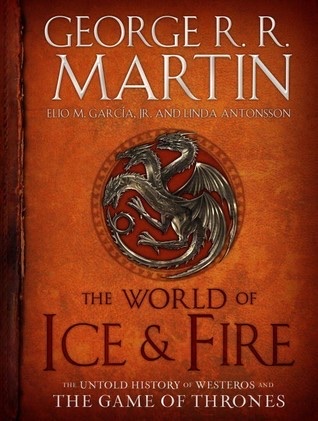 The World of Ice and Fire: The Untold History of Westeros and the Game of Thrones
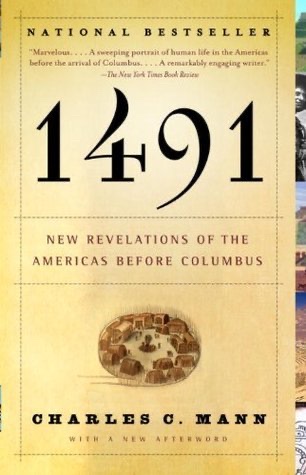 1491: New Revelations of the Americas Before Columbus
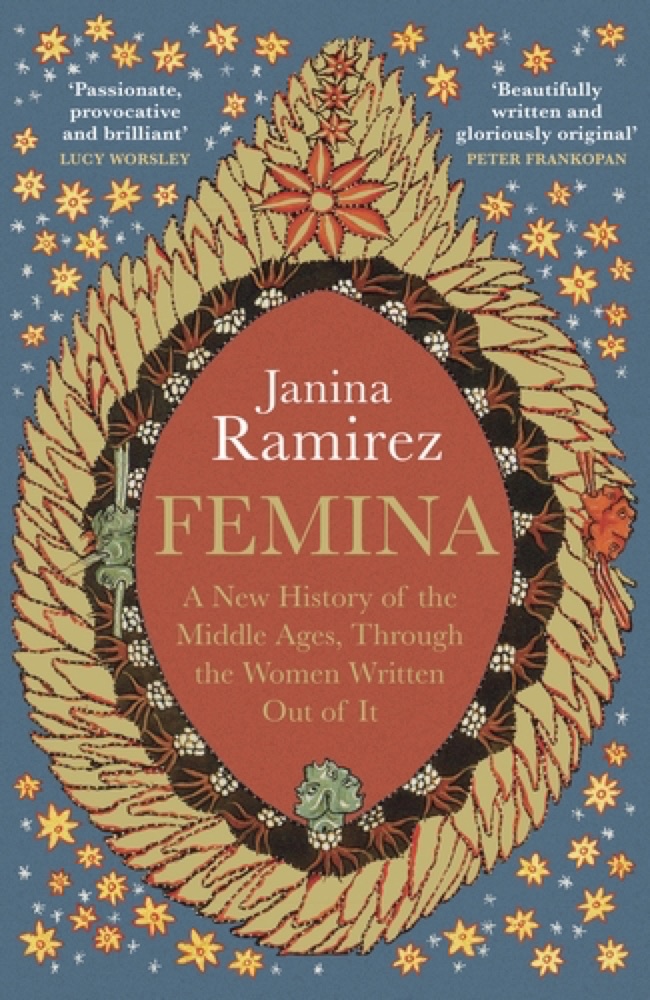 Femina: A New History of the Middle Ages, Through the Women Written Out of it
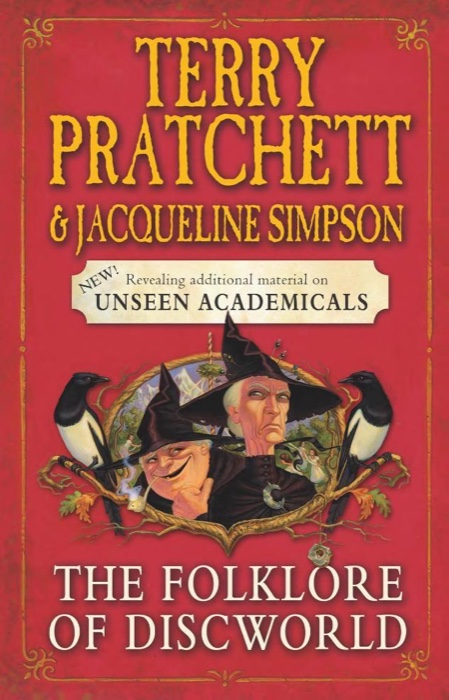 The Folklore of Discworld
 The History of the Kings of Britain
 Magicians of the Gods: The Forgotten Wisdom of Earth's Lost Civilization
 Guns, Germs, and Steel: The Fates of Human Societies
 The Histories
 Unruly: The Ridiculous History of England's Kings and Queens
 SPQR: A History of Ancient Rome
 Proto: How One Ancient Language Went Global
 The Last Kingdom
 The Crusades: The Authoritative History of the War for the Holy Land
 Civilization: The West and the Rest
 The Fall of the Roman Empire: A New History of Rome and the Barbarians
 Lords of the North
 The Flame Bearer
 Flashpoints: The Emerging Crisis in Europe
 The Norse Myths
 Danubia: A Personal History of Habsburg Europe
 The Darkening Age: The Christian Destruction of the Classical World
 A Distant Mirror: The Calamitous 14th Century
 The Dawn of Everything: A New History of Humanity
 The Invention of the Jewish People
 In the Shadow of the Sword: The Birth of Islam and the Rise of the Global Arab Empire
 Victory City
 Made in America: An Informal History of the English Language in the United States
 Imagined Communities: Reflections on the Origin and Spread of Nationalism
 The Time Traveller's Guide to Medieval England: A Handbook for Visitors to the Fourteenth Century
 The New Penguin History of The World
 Sea People: The Puzzle of Polynesia
 Morgoth's Ring
 The Violinist's Thumb: And Other Lost Tales of Love, War, and Genius, as Written by Our Genetic Code
 Salt: A World History
 The Strange Death of Europe: Immigration, Identity, Islam
 The Great Mortality: An Intimate History of the Black Death, the Most Devastating Plague of All Time
 Fingerprints of the Gods: The Evidence of Earth's Lost Civilization
 Carnage and Culture: Landmark Battles in the Rise of Western Power
 J.R.R. Tolkien: A Biography
 Our Oriental Heritage
 The Fall of Rome and the End of Civilization
 Almanac of the Dead
 Caesar and Christ
 The Discarded Image: An Introduction to Medieval and Renaissance Literature
 The Annals of Imperial Rome
 The Secret History of the Mongol Queens: How the Daughters of Genghis Khan Rescued His Empire
 A Voyage Long and Strange: Rediscovering the New World
 The Letters of J.R.R. Tolkien
 The History of the Decline and Fall of the Roman Empire Volume I
 At Home: A Short History of Private Life
 Postwar: A History of Europe Since 1945
 The Inconvenient Indian: A Curious Account of Native People in North America
 Timaeus