
 The Templars: The Rise and Spectacular Fall of God's Holy Warriors
Quotes from the Book
when Latin crusading armies arrived in the Near East to wage what essentially were frontier wars, they were not actually invading the heartlands of Islam. Instead, they were fighting for control of a land that, in some respects, was also a Muslim frontier,
6
Eleventh-century Europe was not in a state of fully fledged anarchy, but the ravening violence of feud and vendetta was commonplace, and lawlessness endemic.
3
Almost all were assured a degree of renown for their exploits, and it became common for these crusaders to be celebrated with the nickname ‘Hierosolymitani’, or ‘travellers to Jerusalem’.
3
Concepts such as love, charity, obligation and tradition all helped to shape medieval attitudes to devotion, but perhaps the most powerful conditioning influence was fear;
3
Adopting and extending the existing system of mamluk recruitment, he purchased thousands of young male slaves, drawn from Kipchak Turkish and, later, Caucasian stock. These boys were trained and indoctrinated as mamluk troops, and then at the age of eighteen freed to serve their masters within the Mamluk sultanate. This approach created a constantly self-rejuvenating military force–what one modern historian has called a ‘one-generation nobility’–because children born of mamluks were not regarded as being part of the martial elite, although they were permitted to enrol in the army’s second-tier halqa reserves.
3
When Stephen reported that the Franks by now had most likely been defeated, the emperor elected to retreat to Constantinople. At this crucial moment Byzantium failed the crusade, and the Greeks were never fully forgiven. Stephen
2
The first Latin up a ladder was Aubery Clements, marshal of France, one of Philip’s leading knights. It was said later among the Christians’ forces that, before climbing the breach, Aubery had called out defiantly: ‘Either I shall die today, or God willing, I will enter Acre.
2
Islam had, from its earliest days, embraced warfare. Muhammad himself prosecuted a series of military campaigns while subjugating Mecca, and the explosive expansion of the Muslim world during the seventh and eighth centuries was fuelled by an avowed devotional obligation to spread Islamic rule. The union of faith and violence within the Muslim religion, therefore, was more rapid and natural than that which gradually developed in Latin Christianity.
2
Come then, soldiers of Christ, be of good cheer and fear nothing, [but] fight, I beseech you, for the salvation of your souls…If you should be slain here, you will surely be among the blessed. Already the gate of the kingdom of Heaven is open to you. If you survive as victors you will shine in glory among the Christians. If, however, you wish to flee, remember that France is indeed a long distance away.
1
Zangi was now sixty-two and still in remarkably rude health.
1
Abraham and another said to have been visited by Moses, Jesus, Lot and Job (all recognised as prophets in Islam).
1
For his part, Yaghi Siyan ordered the public victimisation of Antioch’s indigenous Christian population. The Greek patriarch, who had long resided peacefully within the city, was now dangled by his ankles from the battlements and beaten with iron rods.
1
They even faced a profound communication barrier: the northern French crusader Fulcher of Chartres remarked, ‘Who ever heard such a mixture of languages in one army?
1
One remedy he pursued was the foundation of a new monastery within his county of Anjou, at Beaulieu. According to Fulk’s own testimony, he did this ‘so that monks would be joined together there and pray day and night for the redemption of [my] soul’. This idea of tapping into the spiritual energy produced in monasteries through lay patronage was still at work in 1091,
1
Byzantine Empire and the sprawling Arab-Islamic world. These long-established ‘superpowers’ were historic centres of wealth, culture and military might. As such, they tended to regard the West as little more than a barbarian backwater–the dismal homeland of savage tribesmen
1
They harboured a collective memory of a more peaceful and prosperous past; a golden age when Christian emperors ruled in God’s name, bringing order to the world in accordance with His divine will. This rather hazily imagined ideal was by no means a perfect recollection of Europe’s history, but it did encapsulate some shards of truth.
1
The once fashionable myth that crusaders were self-serving, disinherited, land-hungry younger sons must be discarded. Crusading was instead an activity that could bring spiritual and material rewards, but was in the first instance both an intimidating and extremely costly activity. Devotion inspired Europe to crusade, and in the long years to come the First Crusaders proved time and again that their most powerful weapon was a shared sense of purpose and indestructible spiritual resolution.
1
Not surprisingly, the crusaders developed an intense hatred of Greek fire. One unfortunate Turkish emir thus paid a heavy price when wounded in a skirmish beside a Frankish siege tower. He had been carrying a container of Greek fire, hoping to destroy the engine, but now a Latin knight ‘stretched him out on the ground, emptying the contents of the phial on his private parts, so that his genitals were burned’.
1
Time and again in the Middle Ages, warrior-kings, seen by their men in the thick of fighting, turned the tide of battle, assuring victory.
1
enemy than to suffer his people to be exposed to rapine,
1
The religion founded by Muhammad–Islam
The Latin Church of the eleventh century taught that every human would face a moment of judgement–the so-called ‘weighing of souls’. Purity would bring the everlasting reward of heavenly salvation
Many medieval popes seem earnestly to have believed that they had a wider duty to protect Christendom. They also expected
Issues linked to the origins and causes of the war for the Holy Land are of fundamental importance. How did two of the world’s great religions come to advocate violence in the name of God
This notion–of a direct and unbroken trail of conflict linking the medieval and modern eras–has helped to cultivate a pervasive, and almost fatalistic, acceptance that a titanic clash of civilisations is inevitable. Yet dark, brutal, even savage as they sometimes were, the crusades left no permanent marks upon western Christian or Muslim society. In truth, the war for the Holy Land had been all but forgotten by the end of the Middle Ages and was only resurrected centuries later.
the crusader wars conformed to a paradigm common to many periods of human history–the attempt to control and direct violence, ostensibly for the common good, but often to serve the interests of ruling elites.
From 969 Egypt was ruled by the Shi‘ite Fatimid dynasty, who broke free from the Sunni Abbasid rulers of Baghdad. The Fatimids built a formidable navy, with which they came to dominate Mediterranean shipping. They also constructed a new capital city north of Fustat, which they named Cairo (meaning ‘the Conqueror’), and established a rival Shi‘ite caliph (‘successor’ to the Muslim Prophet Muhammad), challenging the universal authority of the Sunni caliph in Baghdad.
Egypt often is characterised as having been a Muslim territory in the age of the crusades, but this is a misleading simplification. The region was conquered in 641 CE during the first wave of Arab Islamic expansion, but the Arab ruling elite was largely concentrated in two centres: the port city of Alexandria, founded by Alexander the Great some 1,500 years earlier; and the new settlement of Fustat, established by the Arabs at the head of the Nile Delta. Elsewhere, Egypt’s indigenous Coptic Christian population predominated. Over the centuries the Copts were Arabised in a cultural sense, for example taking on the Arabic language, but their adoption of the Islamic faith was far more gradual. Even in the twelfth century this Coptic Christian rural underclass remained.
Watch on YouTube
About Thomas Asbridge
We have collected 28 quotes from 1 book by Thomas Asbridge on BookQuoters.
More about the author →About the book
The Crusades is an authoritative, accessible single-volume history of the brutal struggle for the Holy Land in the Middle Ages. Thomas Asbridge—a renowned historian who writes with “maximum vividness” (Joan Acocella, The New Yorker )—covers the years 1095 to 1291 in this big, ambitious, readable account of one of the most fascinating periods in history. From Richard the Lionheart to the mighty Saladin, from the emperors of Byzantium to the Knights Templar, Asbridge’s book is a magnificent epic of Holy War between the Christian and Islamic worlds, full of adventure, intrigue, and sweeping grandeur .
Book details
- First published
- 2010
- Author
- Thomas Asbridge
- Genre
- History
- Goodreads rating
- 4.23 (7k ratings)
Keep reading
The Templars: The Rise and Spectacular Fall of God's Holy Warriors
 In the Shadow of the Sword: The Birth of Islam and the Rise of the Global Arab Empire
 Holy Blood, Holy Grail
 Europe: A History
 A Distant Mirror: The Calamitous 14th Century
 The Darkening Age: The Christian Destruction of the Classical World
 No god but God: The Origins, Evolution and Future of Islam
 The Looming Tower: Al-Qaeda and the Road to 9/11
 Destiny Disrupted: A History of the World Through Islamic Eyes
 The History of the Church: From Christ to Constantine
 The First Muslim: The Story of Muhammad
 The History of the Decline and Fall of the Roman Empire Volume I
 Flashpoints: The Emerging Crisis in Europe
 The Decline and Fall of the Roman Empire
 Zealot: The Life and Times of Jesus of Nazareth
 The Fall of the Roman Empire: A New History of Rome and the Barbarians
 The Histories
 A History of the World in 100 Objects
 How the Irish Saved Civilization
 The Everlasting Hatred: The Roots of Jihad
 Genghis Khan and the Making of the Modern World
 The Order
 Forged: Writing in the Name of God—Why the Bible's Authors Are Not Who We Think They Are
 No God but One: Allah or Jesus?: A Former Muslim Investigates the Evidence for Islam and Christianity
 The Great Mortality: An Intimate History of the Black Death, the Most Devastating Plague of All Time
 Children of Ash and Elm: A History of the Vikings
 The Muqaddimah: An Introduction to History
 The War of the Poor
 Killing Jesus: A History
 The Last Kingdom
 From Beirut to Jerusalem
 The Case for Christ
 The Flame Bearer
 Exodus
 The Bad-Ass Librarians of Timbuktu and Their Race to Save the World’s Most Precious Manuscripts
 Saint Thomas Aquinas
 Jesus and the Disinherited
 The White Plague
 Warriors of the Storm
 After the Prophet: The Epic Story of the Shia-Sunni Split
 Carnage and Culture: Landmark Battles in the Rise of Western Power
 A Pilgrimage to Eternity: From Canterbury to Rome in Search of a Faith
 Under the Banner of Heaven: A Story of Violent Faith
 The Tournament
 The Devils of Loudun
 The Haj
 The History of the Kings of Britain
 Danubia: A Personal History of Habsburg Europe
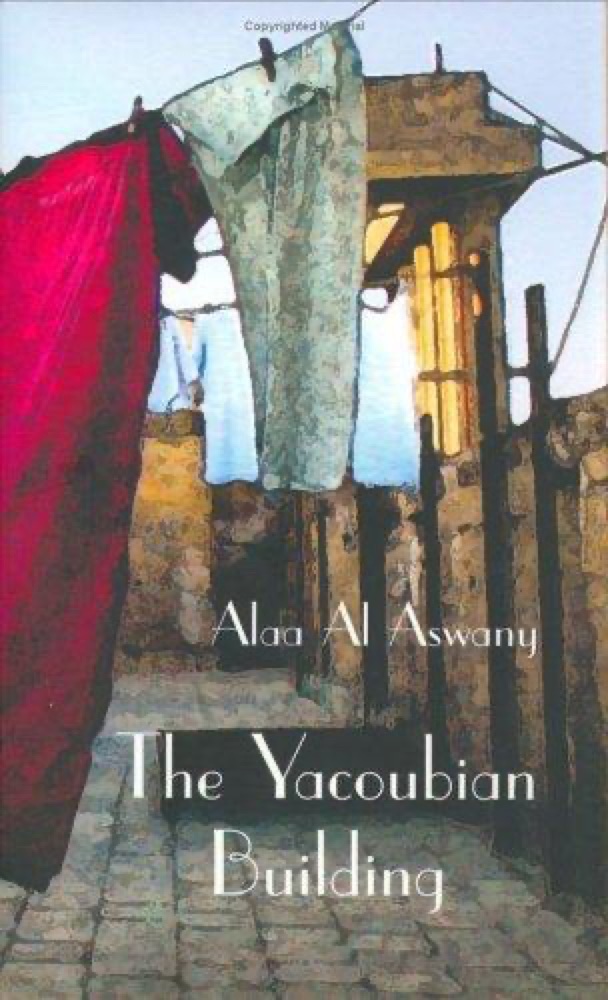 The Yacoubian Building
 Son of Hamas
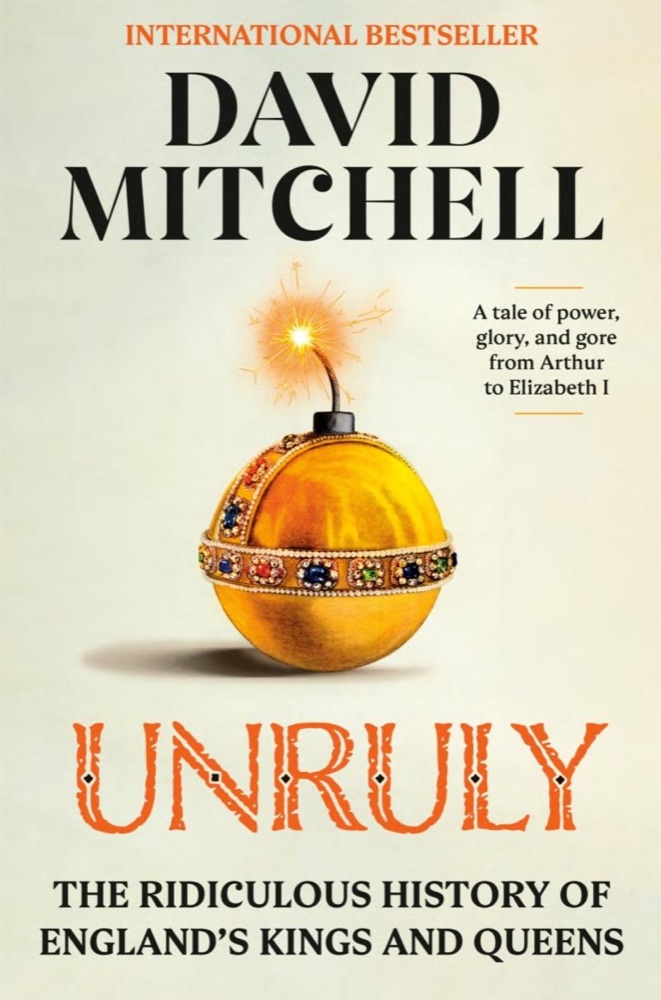 Unruly: The Ridiculous History of England's Kings and Queens
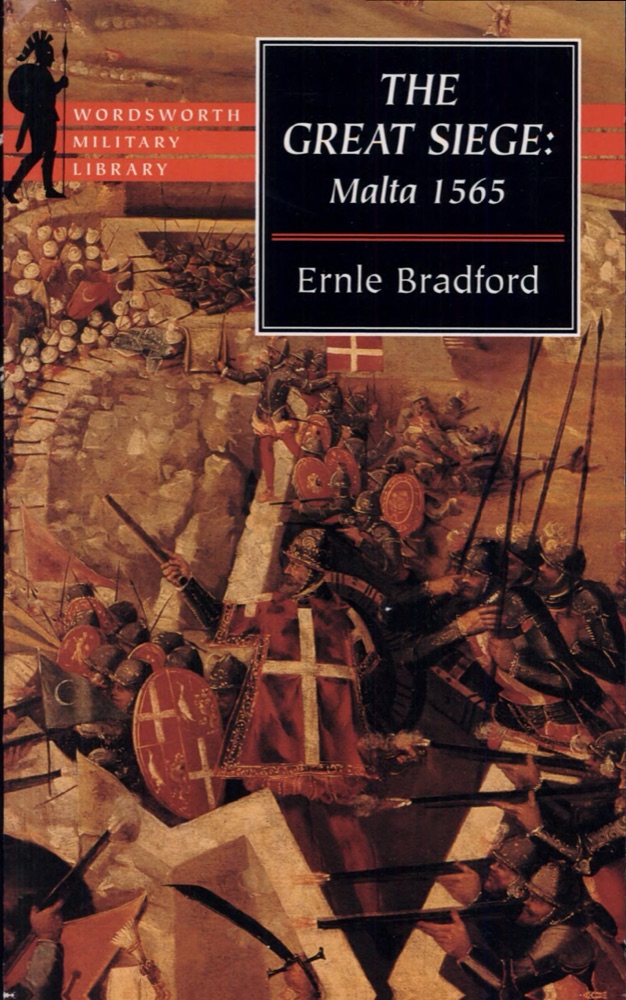 The Great Siege: Malta 1565
 The Triumph of Christianity: How a Forbidden Religion Swept the World
 Desert Queen: The Extraordinary Life of Gertrude Bell: Adventurer, Adviser to Kings, Ally of Lawrence of Arabia
 Civilization: The West and the Rest
 A Little History of Religion
 Horus Rising
 The Better Angels of Our Nature: Why Violence Has Declined
 The Source
 The Messiah Matrix