
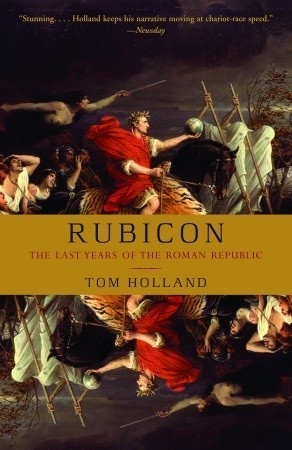
 Rubicon: The Last Years of the Roman Republic
Quotes from the Book
The supreme achievement of the Jewish and Christian scholars of the age was to craft a history of their respective faiths that cast themselves as its rightful and inevitable culmination, and left anything that might have served to contradict such an impression out of the story altogether.
8
Whatever else it may be, the Qur’an is no work of history. Startlingly, were it not for all the commentaries elucidating its mysteries, all the biographies of the Prophet, and all the sprawling collections of hadiths—none of which, in the form we have them, pre-dates the beginning of the third century after the hijra—we would have only the barest reason to associate it with a man named
7
Winners are the favourites of heaven.
6
Once the world of ideas has been transformed, reality cannot hold out for long. Georg Wilhelm Friedrich Hegel
4
Yusuf As’ar Yath’ar: the last Jewish king ever to rule in Arabia.
3
By AD 800, so redeemed was Arabic from the contempt in which it had once been held that its sound had come to rank as the very music of power, and its cursives as things of pure beauty, refined to a rare and exquisite perfection by the art of its calligraphers. Among the Arabs, the written word was on the verge of becoming a mania. One scholar, when he died in 822, left behind him a library that filled a whole six hundred trunks.
3
Venerable the scorn of the Jews for the Ishmaelites may have been; but it was nothing like so savage as their loathing for the Romans.
3
[A] history of Islam's origins cannot be written without reference to the origins of Judaism and Christianity - and [...] a history of the origins of Judaism and Christianity cannot be written without reference to the world that incubated them both. The vision of God to which both rabbis and bishops subscribed, and which Muhammad's followers inherited, did not emerge out of nowhere. The monotheisms that would end up established as state religions from the Atlantic to central Asia had ancient, and possibly unexpected, roots. To trace them is to cast a searchlight across the entire civilisation of late antiquity.
3
Kavad himself, if obliged to fight on a Jewish holy day, had been known to request his adversaries for a temporary truce.
3
stories of the Virgin being succoured by a friendly palm tree had actually been a Christian tradition for centuries, and seem in turn to have derived from a legend told by the pagan Greeks, was blithely ignored—as, of course, it was bound to be.
3
As one Saudi professor sternly tells his co-religionists, “Only the writings of a practising Muslim are worthy of our attention.
3
History, unlike faith, cannot be built upon foundations of sand.
2
Admirers who sought to praise him in heroic terms found themselves reduced to hailing his baldness: “his forehead gleams like silver.
2
The 'ulama', by tightly controlling what went into the history books, were able to propagate an understanding of their own dazzlingly rich and complex civilization that attributed almost every single thing of value within it to the Prophet, and the Prophet alone. There was no question of acknowledging the momentous roles played in the forging of Islam by countless others - be they autocrats such as Abd Al-Malik or scholars such as themselves.
2
[T]he greater the sense of awe with which a text was regarded, the more complete might be the amnesia as to the original circumstances of its composition.
2
[T]here [is] no limit to what might not be achieved by an alliance between an imperial monarchy and revelations, if truly believed to be heaven-sent, of a prophet.
2
Another woman, “whose face no one had ever seen outside the door of her house and who had never walked during the day in the city,”2 had torn off her headscarf, the better to reproach the king. Yusuf, in his fury, had ordered her daughter and granddaughter killed before her, their blood poured down her throat, and then her own head to be sent flying.
2
the rabbis of Palestine were acknowledged to hold the advantage over those of Mesopotamia in several distinctive ways: they were more open to those who were not themselves scholars; they were better able to incinerate those who displeased them with a single glare; and they were more obsessively alert to the menace posed by menstruating women.
2
In the Arab world, at any rate, to doubt the traditional account of Islam’s origins has been to risk death threats, prosecution for apostasy, or even defenestration.
2
that there existed no earthly empire so great or overweening that it might not one day be dashed to pieces
2
That there was an essential pointlessness to such contests, an unvarying and remorseless quality much like that of the desert itself, did not in any way lessen the enjoyment of those who indulged in them. The great deeds performed by a tribe’s ancestors, rehearsed as they were in glowing, if suspiciously interchangeable, verses by its poets, offered its warriors both backdrop and inspiration. Memories of ancient battles, if gilded with sufficient imagination, might serve to dignify even the most squalid scuffle. As a result, among the Arabs, past and present were barely distinguishable.
1
Of all the various features of the modern world that can be traced back to antiquity – alphabets, democracy, gladiator films – none, perhaps, has been more globally influential than the establishment, for the first time in history, of various brands of monotheism as state religions.
1
Everyone knew that Syrians were ‘natural businessmen, and the greediest of mortals’.
1
Syria was rich, exceedingly rich; and the spirit of commerce in the province had simply grown too flourishing to be pruned back.
1
Vast and implacable, like a kraken of the deep undisturbed by storms raging across the ocean surface, the apparatus of empire still coiled its prodigious tentacles, ready to flex and squeeze its victims tightly, as it had ever done.
1
Spirits flung down from heaven at the beginning of time still stalked the earth, hunting human prey;
1
Sasanian monarchy and the fabled Kayanid
1
When you encounter the unbelievers, blows to necks it shall be until, once you have routed them, you are to tighten their fetters.
1
there had been offered to the Jews a precious reassurance:
1
It is the record of a man living through an unprecedented period of upheaval, alert, in every way he can be, to the word of God, and betraying a sensibility, even as he contemplates the ruin of the universe itself, that is decidedly bookish. “That will be the Day,” so God says at one point, in a description of the looming End Times, “when We roll up the sky, as a writer rolls up his scrolls.” Such images, which occur throughout the Qur’an, suggest a man who was the polar opposite of illiterate, and who, even as he laid claim to traditions of divine inspiration that were immeasurably venerable, knew full well what he was doing.
Watch on YouTube
About Tom Holland
We have collected 45 quotes from 2 books by Tom Holland on BookQuoters.
More about the author →More by Tom Holland
Rubicon: The Last Years of the Roman Republic
About the book
The acclaimed author of Rubicon and other superb works of popular history now produces a thrillingly panoramic (and incredibly timely) account of the rise of Islam. No less significant than the collapse of the Roman Republic or the Persian invasion of Greece, the evolution of the Arab empire is one of the supreme narratives of ancient history, a story dazzlingly rich in drama, character, and achievement. Just like the Romans, the Arabs came from nowhere to carve out a stupefyingly vast dominion€”except that they achieved their conquests not over the course of centuries as the Romans did but in a matter of decades. Just like the Greeks during the Persian wars, they overcame seemingly insuperable odds to emerge triumphant against the greatest empire of the day€”not by standing on the defensive, however, but by hurling themselves against all who lay in their path.
Book details
- First published
- 2012
- Author
- Tom Holland
- Genre
- History
- Goodreads rating
- 3.90 (6k ratings)
Keep reading
 The First Muslim: The Story of Muhammad
 The Muqaddimah: An Introduction to History
 The Crusades: The Authoritative History of the War for the Holy Land
 No god but God: The Origins, Evolution and Future of Islam
 After the Prophet: The Epic Story of the Shia-Sunni Split
 The Looming Tower: Al-Qaeda and the Road to 9/11
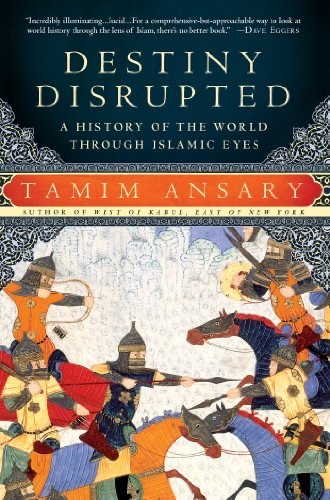 Destiny Disrupted: A History of the World Through Islamic Eyes
 The Histories
 The History of the Decline and Fall of the Roman Empire Volume I
 The Decline and Fall of the Roman Empire
 Our Oriental Heritage
 A History of the World in 100 Objects
 Moses and Monotheism
 A Distant Mirror: The Calamitous 14th Century
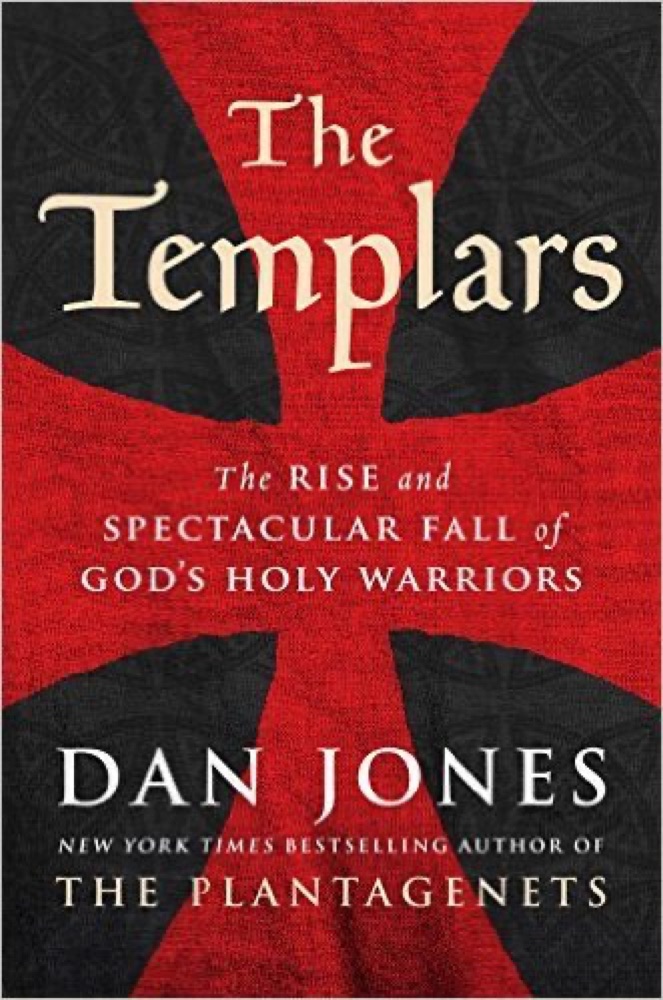 The Templars: The Rise and Spectacular Fall of God's Holy Warriors
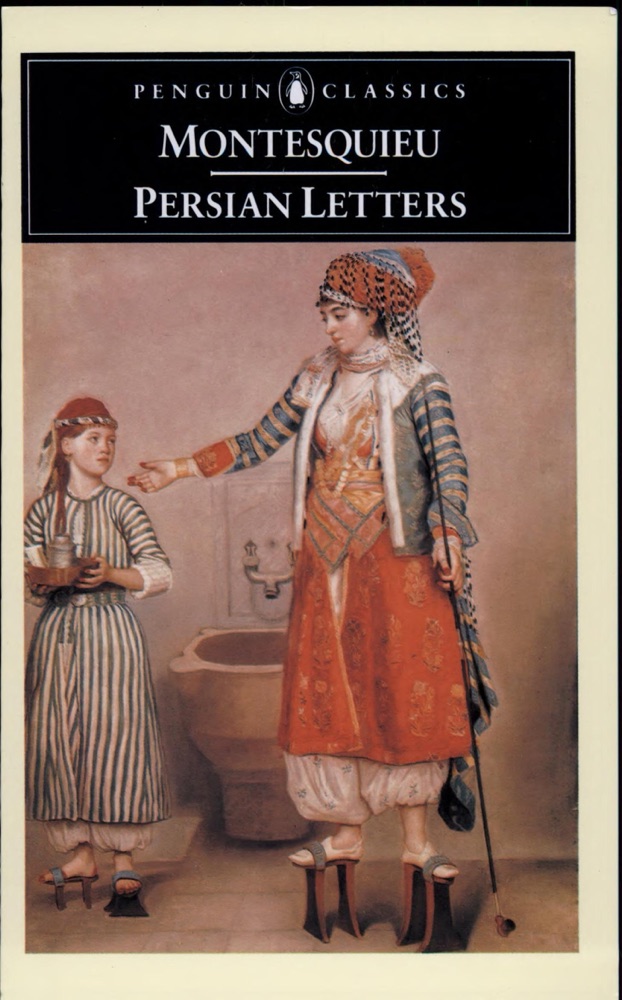 Persian Letters
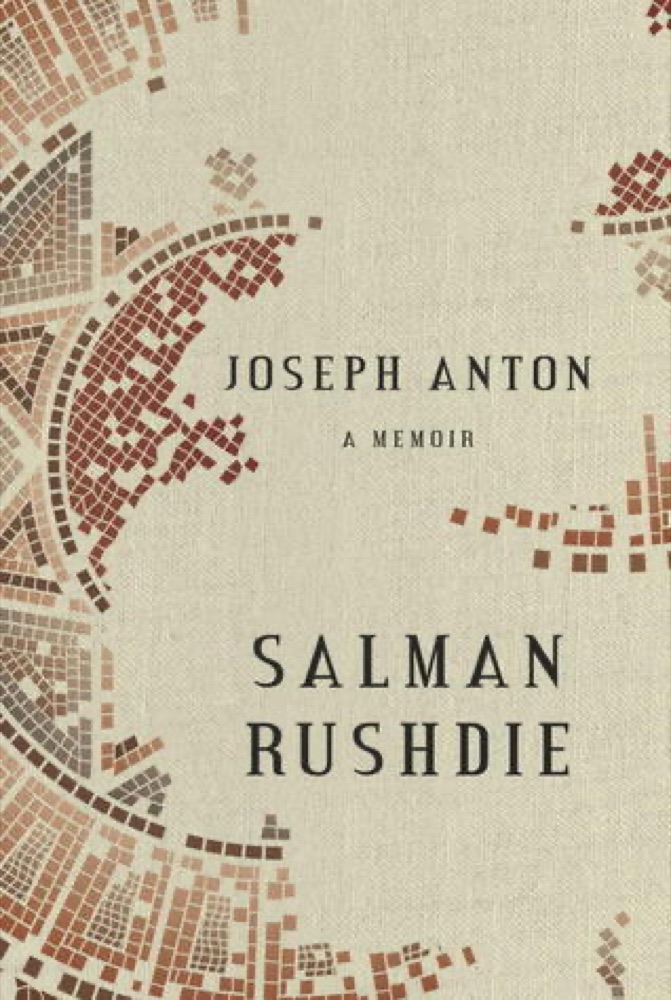 Joseph Anton: A Memoir
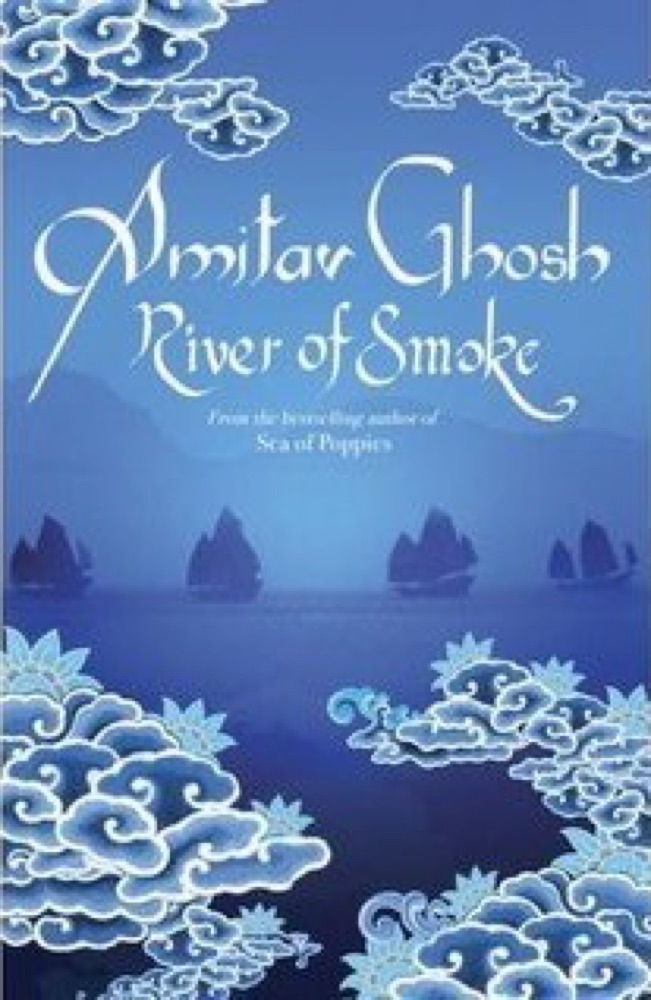 River of Smoke
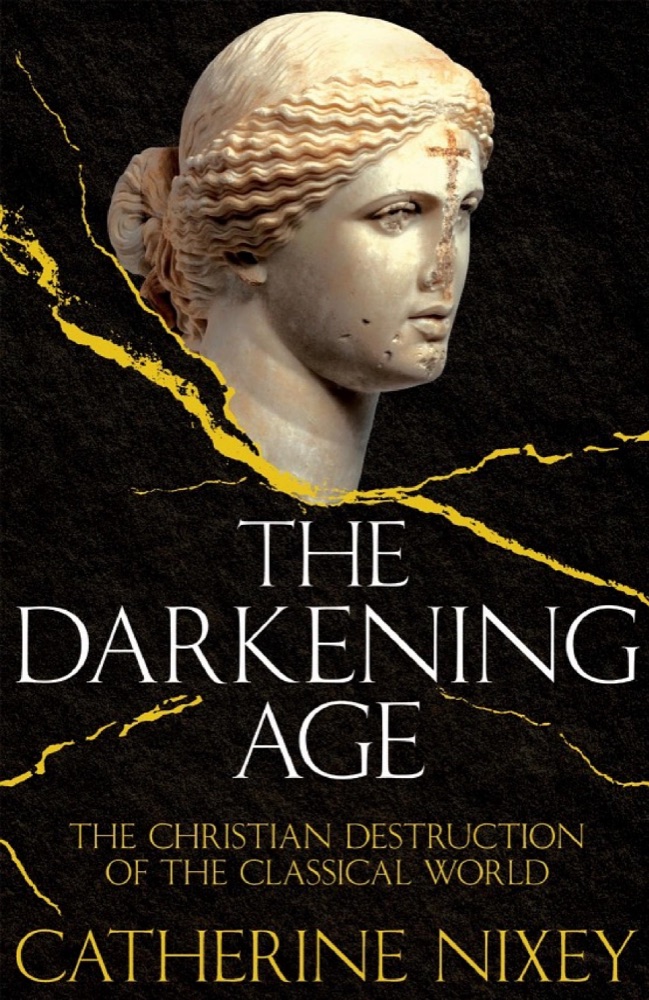 The Darkening Age: The Christian Destruction of the Classical World
 Victory City
 The Annals of Imperial Rome
 The Case for God
 The Moor's Account
 Europe: A History
 Children of Ash and Elm: A History of the Vikings
 The Warrior Prophet
 The Fall of the Roman Empire: A New History of Rome and the Barbarians
 The Arabian Nights
 The Yacoubian Building
 Exodus
 Forged: Writing in the Name of God—Why the Bible's Authors Are Not Who We Think They Are
 Julian
 Under the Banner of Heaven: A Story of Violent Faith
 Caesar and Christ
 The Enchantress of Florence
 From Beirut to Jerusalem
 The Years of Rice and Salt
 Arguably: Selected Essays
 The White Luck Warrior
 People of the Book
 How the Irish Saved Civilization
 The Source
 A History of God: The 4,000-Year Quest of Judaism, Christianity, and Islam
 A Canticle for Leibowitz
 The Grace of Kings
 House Atreides
 Romola
 Forge of Darkness
 Three Daughters of Eve
 Last First Snow
 Princess: A True Story of Life Behind the Veil in Saudi Arabia
 The Will to Battle
 Desert Queen: The Extraordinary Life of Gertrude Bell: Adventurer, Adviser to Kings, Ally of Lawrence of Arabia
 The Fall of Hyperion
 The White Plague
 The Bad-Ass Librarians of Timbuktu and Their Race to Save the World’s Most Precious Manuscripts
 Infidel
 The Blind Man's Garden
 Civilization: The West and the Rest
 The Da Vinci Code