
 The Hundred Years’ War on Palestine: A History of Settler Colonialism and Resistance, 1917–2017
Quotes from the Book
Peoples, populations, native populaces, tribes and religious communities are not nations, even though they are often spoken of as such.
8
Another historical irony: there were times in Europe when anyone who argued that all Jews belong to a nation of alien origin would have been classified at once as an anti-semite. Nowadays, anyone who dares to suggest that the people known in the world as Jews (as distinct from today's Jewish Israelis) have never been, and are still not, a people or a nation is immediately denounced as a Jew-hater.
7
If certain Jewish communities had distinctive qualities, they were due to history, not biology.
5
A Nation … is a group of persons united by a common error about their ancestry and a common dislike of their neighbors. —Karl Deutsch, Nationality and Its Alternatives, 1969
4
Behind every act in Israel's identity politics stretches, like a long black shadow, the idea of an eternal power and race.
4
Dans chaque démocratie libérale s'est élaboré un imaginaire de citoyenneté au sein duquel la projection dans l'avenir est devenue plus significative que le poids du passé. Cet imaginaire s'est traduit par des normes juridiques, et a même pénétré par la suite à l'intérieur du système éducatif étatique.[...] La souffrance du passé justifie le prix exigé de la part des citoyens dans le présent. L'héroïsme des temps qui s'éloignent promet un avenir rayonnant pour l'individu, du moins sûrement pour la nation. L'idée nationale est devenue, avec l'aide des historiens, une idéologie optimiste par nature. De là, notamment, vient son succès.
4
One of the secrets of the Muslim army's power was its relatively liberal attitude toward the religions of the defeated people-provided they were monoththeists, of course. Muhammad's commandment to treat Jews and Christians as "People of The book" gave them legal protection.
2
the Jews have always comprised significant religious communities that appeared and settled in various parts of the world, rather than an ethnos that shared a single origin and wandered in a permanent exile, does not deal directly with history.
1
Perhaps, despite everything we have been told, Judaism was simply an appealing religion that spread widely until the triumphant rise of its rivals, Christianity and Islam, and then, despite humiliation and persecution, succeeded in surviving into the modern age.
1
The construction of a new body of knowledge always bears direct connection to the ideology in which it operates. Historical insights that diverge from the narrative laid down at the inception of the nation can be accepted only when consternation about their implications is abated. This can happen when the current collective identity begins to be taken for granted and ceases to be something anxiously and nostalgically clings to a mythical past, when identity becomes the basis for living and not its purpose - that is when historiographic change can take place.
1
The inescapable and troublesome conclusion was that if there was a political entity in tenth-century Judea, it was a small tribal kingdom, and that Jerusalem was a fortified stronghold. It is possible that the tiny kingdom was ruled by a dynasty known as the House of David. An inscription discovered in Tell Dan in 1993 supports this assumption, but this kingdom of Judah was greatly inferior to the kingdom of Israel to its north, and apparently far less developed. The documents from el-Amarna, dating from the fourteenth century BCE, indicate that already there were two small city-states in the highlands of Canaan—Shechem and Jerusalem—and the Merneptah stela shows that an entity named Israel existed in northern Canaan at the end of the thirteenth century BCE. The plentiful archaeological finds unearthed in the West Bank during the 1980s reveal the material and social difference between the two mountain regions. Agriculture thrived in the fertile north, supporting dozens of settlements, whereas in the south there were only some twenty small villages in the tenth and ninth centuries BCE. The kingdom of Israel was already a stable and strong state in the ninth century, while the kingdom of Judah consolidated and grew strong only by the late eighth. There were always in Canaan two distinct, rival political entities, though they were culturally and linguistically related—variants of ancient Hebrew were spoken by the inhabitants of both.
1
The idea of heredity helped justify the claim to Palestine, that ancient Judea that the Zionists ceased to view as a sacred center from which deliverance would come, and by a bold paradigmatic shift revamped as the destined national homeland of all the Jews in the world. The historical myth required the appropriate scientific ideology, for if the Jews of modern times were not the direct descendants of the first exiles, how would they legitimize their settlement in the Holy Land, which was the exclusive homeland of Israel?
The ancient ideal of an elect holy monotheistic congregation was reinterpreted in an isolationist secular plan of action. Zionism, from its inception, was an ethnocentric nationalist movement that firmly enclosed the historical people of its own invention, and barred any voluntary civil entry into the nation its platform began to design. At the same time, any withdrawal from the people was depicted as an unforgivable offense, and assimilation as a catastrophe; an existential danger to be averted at all costs. No wonder, then, that to bind together the frangible secular Jewish identity it was not enough to write a history of the Jews, so culturally disparate, so chronologically fragmentary. Zionism had to resort to another scientific discipline: that of biology, which was conscripted to reinforce the foundation of the ancient Jewish nation.
* The well-known Marxist Beer Borochov was not free from biology. Zionist socialism shared the same conceptual mechanisms, and it too padded them with universalist rhetoric, though of a different sort. As we heard in the third chapter, Borochov regarded the Palestinian fellaheen as an integral part of the Jewish race, a population that could easily be welded into the steel structure of socialist Zionism. So did his disciples and the future founders of the State of Israel, Ben-Gurion and Yitzhak Ben-Zvi, until the Arab uprising of 1929. Initially, Borochov contended that, since the locals were as much descendants of the ancient people of Judea as were all the world's Jews, they should be taken back into the body of the nation while becoming acculturated in a secular manner. The Zionist left would never have considered admitting into the warm bosom of the Jewish people Muslim peasants of a different biological origin, but after the 1929 pogroms, these Muslim peasants became complete strangers with astonishing speed.
- The idea of heredity helped justify the claim to Palestine, that ancient Judea that the Zionists ceased to view as a sacred center from which deliverance would come, and by a bold paradigmatic shift revamped as the destined national homeland of all the Jews in the world. The historical myth required the appropriate scientific ideology, for if the Jews of modern times were not the direct descendants of the first exiles, how would they legitimize their settlement in the Holy Land, which was the exclusive homeland of Israel?
- The ancient ideal of an elect holy monotheistic congregation was reinterpreted in an isolationist secular plan of action. Zionism, from its inception, was an ethnocentric nationalist movement that firmly enclosed the historical people of its own invention, and barred any voluntary civil entry into the nation its platform began to design. At the same time, any withdrawal from the people was depicted as an unforgivable offense, and assimilation as a catastrophe; an existential danger to be averted at all costs. No wonder, then, that to bind together the frangible secular Jewish identity it was not enough to write a history of the Jews, so culturally disparate, so chronologically fragmentary. Zionism had to resort to another scientific discipline: that of biology, which was conscripted to reinforce the foundation of the ancient Jewish nation. - The idea of heredity helped justify the claim to Palestine, that ancient Judea that the Zionists ceased to view as a sacred center from which deliverance would come, and by a bold paradigmatic shift revamped as the
Mommsen did not think that the Judeans were necessarily the spiritual successors of the ancient Hebrews, and assumed that most of the Jews throughout the Roman Empire were not direct biological descendants of the inhabitants of Judea.
Watch on YouTube
About Shlomo Sand
We have collected 17 quotes from 1 book by Shlomo Sand on BookQuoters.
More about the author →About the book
A historical tour de force that demolishes the myths and taboos that have surrounded Jewish and Israeli history, offers a new account of both that demands to be read and reckoned with. Was there really a forced exile in the first century, at the hands of the Romans? Should we regard the Jewish people, throughout two millennia, as both a distinct ethnic group and a putative nation—returned at last to its Biblical homeland?
Shlomo Sand argues that most Jews actually descend from converts, whose native lands were scattered far across the Middle East and Eastern Europe. The formation of a Jewish people and then a Jewish nation out of these disparate groups could only take place under the sway of a new historiography, developing in response to the rise of nationalism throughout Europe. Beneath the biblical back fill of the nineteenth-century historians, and the twentieth-century intellectu
Book details
- First published
- 2008
- Author
- Shlomo Sand
- Genre
- History
- Goodreads rating
- 4.13 (2k ratings)
Keep reading
The Hundred Years’ War on Palestine: A History of Settler Colonialism and Resistance, 1917–2017
 Ten Myths About Israel
 The Question of Palestine
 My Promised Land: The Triumph and Tragedy of Israel
 On Palestine
 Exodus
 A Very Short History of the Israel–Palestine Conflict
 The Ethnic Cleansing of Palestine
 The Disuniting of America: Reflections on a Multicultural Society
 The Dawn of Everything: A New History of Humanity
 A History of the World in 100 Objects
 Civilization: The West and the Rest
 Perfect Victims and the Politics of Appeal
 Zealot: The Life and Times of Jesus of Nazareth
 The Strange Death of Europe: Immigration, Identity, Islam
 The Muqaddimah: An Introduction to History
 Recognizing the Stranger: On Palestine and Narrative
 How to Argue With a Racist: What Our Genes Do (and Don't) Say About Human Difference
 Orientalism
 The Origins of Totalitarianism
 O Jerusalem
 Europe: A History
 Black Rednecks and White Liberals
 From Beirut to Jerusalem
 In the Shadow of the Sword: The Birth of Islam and the Rise of the Global Arab Empire
 Flashpoints: The Emerging Crisis in Europe
 Guns, Germs, and Steel: The Fates of Human Societies
 The Message
 Moses and Monotheism
 A People's History of the United States
 No god but God: The Origins, Evolution and Future of Islam
 The Kabbalistic Murder Code
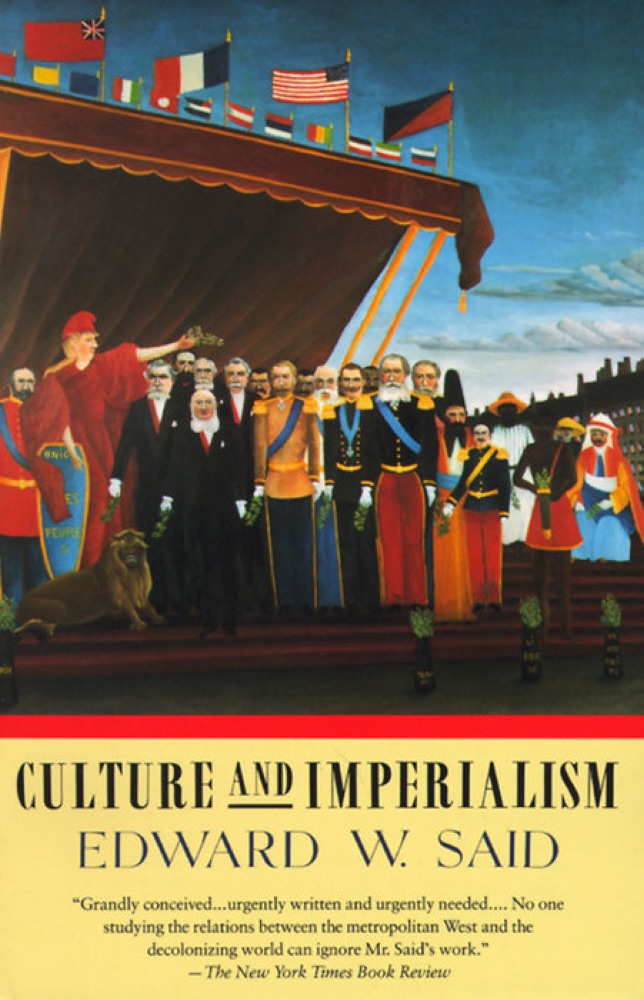 Culture and Imperialism
 Defying Hitler
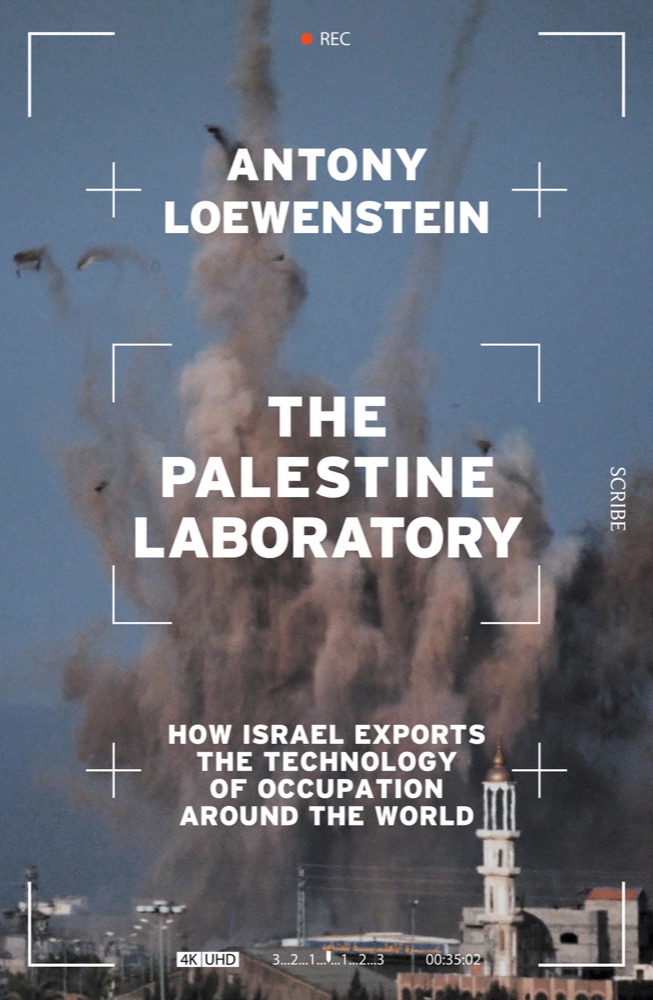 The Palestine Laboratory: How Israel Exports the Technology of Occupation Around the World
 The War on the West: An Instant NYT Bestselling History of the Modern World
 On Democracies and Death Cults: Israel and the Future of Civilization
 My Father's Paradise: A Son's Search for His Jewish Past in Kurdish Iraq
 Notes on Nationalism
 The New Penguin History of The World
 Our Oriental Heritage
 A History of God: The 4,000-Year Quest of Judaism, Christianity, and Islam
 The Better Angels of Our Nature: Why Violence Has Declined
 How Should We Then Live? The Rise and Decline of Western Thought and Culture
 The Open Society and Its Enemies - Volume One: The Spell of Plato
 Doppelganger: A Trip into the Mirror World
 Eichmann in Jerusalem: A Report on the Banality of Evil
 The Case for God
 The Inconvenient Indian: A Curious Account of Native People in North America
 The Source
 Modern Times: The World from the Twenties to the Nineties
 Superior: The Return of Race Science
 Destiny Disrupted: A History of the World Through Islamic Eyes
 Identity: The Demand for Dignity and the Politics of Resentment
 Imagined Communities: Reflections on the Origin and Spread of Nationalism
 The Lessons of History
 Arguably: Selected Essays
 The Social Conquest of Earth
 Children of Ash and Elm: A History of the Vikings
 Imperium