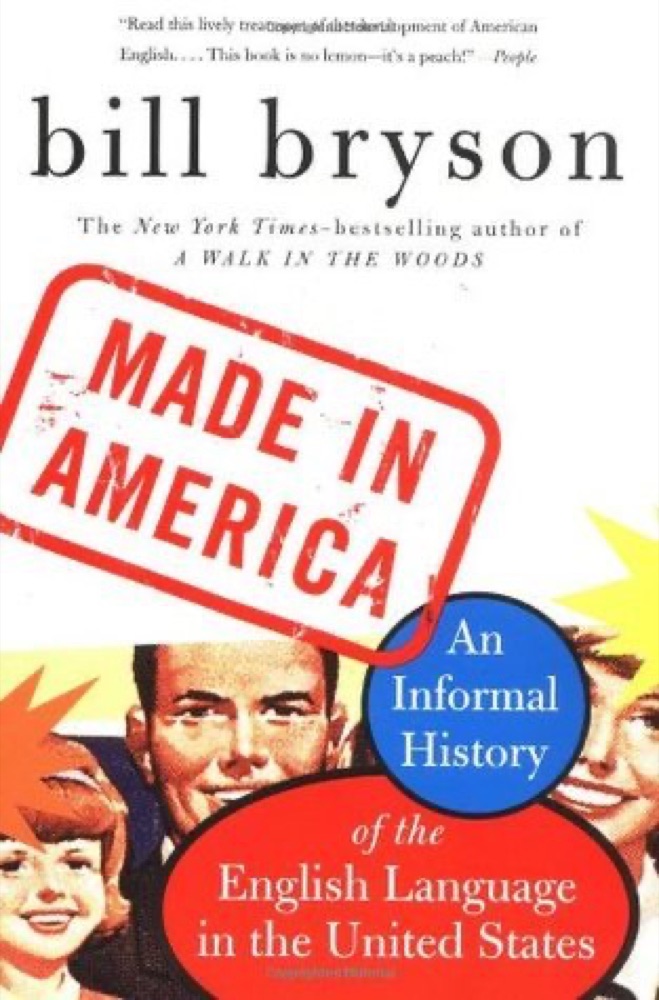

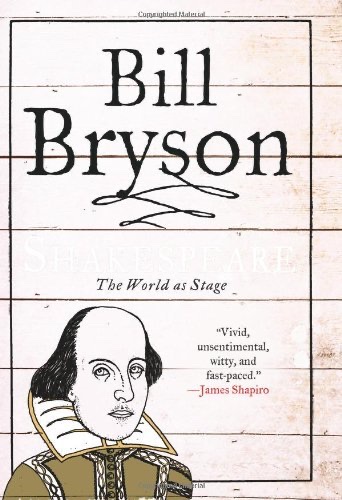
 Shakespeare: The World as Stage
Quotes from the Book
By the 1920s if you wanted to work behind a lunch counter you needed to know that 'Noah's boy' was a slice of ham (since Ham was one of Noah’s sons) and that 'burn one' or 'grease spot' designated a hamburger. 'He'll take a chance' or 'clean the kitchen' meant an order of hash, 'Adam and Eve on a raft' was two poached eggs on toast, 'cats' eyes' was tapioca pudding, 'bird seed' was cereal, 'whistleberries' were baked beans, and 'dough well done with cow to cover' was the somewhat labored way of calling for an order of toast and butter. Food that had been waiting too long was said to be 'growing a beard'. Many of these shorthand terms have since entered the mainstream, notably BLT for a bacon, lettuce, and tomato sandwich, 'over easy' and 'sunny side up' in respect of eggs, and 'hold' as in 'hold the mayo'.
14
Just a month after the completion of the Declaration of Independence, at a time when he delegates might have been expected to occupy themselves with more pressing concerns -like how they were going to win the war and escape hanging- Congress quite extraordinarily found time to debate business for a motto for the new nation. (Their choice, E Pluribus Unum, "One from Many", was taken from, of all places, a recipe for salad in an early poem by Virgil.)
13
Eenie, meenie, minie, mo” is based on a counting system that predates the Roman occupation of Britain, that may even be pre-Celtic. If so, it is a rare surviving link with the very distant past. It not only gives us a fragmentary image of how children were being amused at the time Stonehenge was built, but tells us something about how their elders counted and thought and ordered their speech.
7
Because of social strictures against even the mildest swearing, America developed a particularly rich crop of euphemistic expletives - darn, durn, goldurn, goshdad, goshdang, goshawful, blast, consarn, confound, by Jove, by jingo, great guns, by the great horn spoon (a nonce term first cited in the Biglow Papers), jo-fired, jumping Jehoshaphat, and others almost without number - but even this cautious epithets could land people in trouble as late as the 1940s.
7
Considerable thought was given in early Congresses to the possibility of renaming the country. From the start, many people recognized that United States of America was unsatisfactory. For one thing, it allowed of no convenient adjectival form. A citizen would have to be either a United Statesian or some other such clumsy locution, or an American, thereby arrogating to ourselves a title that belonged equally to the inhabitants of some three dozen other nations on two continents. Several alternatives to America were actively considered -Columbia, Appalachia, Alleghania, Freedonia or Fredonia (whose denizens would be called Freeds or Fredes)- but none mustered sufficient support to displace the existing name.
4
From that original colony sprang seven names that still feature on the landscape: Roanoke (which has the distinction of being the first Indian word borrowed by English settlers), Cape Fear, Cape Hatteras, the Chowan and Neuse Rivers, Chesapeake, and Virginia. (Previously, Virginia had been called Windgancon, meaning "what gay clothes you wear" - apparently what the locals had replied when an early reconnoitering party had asked the place's name.)
4
Fired by the oxygen of irrationality, America entered a period of grave intolerance, not just toward immigrants but toward any kind of antiestablishment behavior. The Sedition Act of 1918 made it illegal, among much else, to make critical remarks about government expenditure or even the YMCA.44 So low did standards of civil liberty fall that police routinely arrested not only almost anyone remotely suspected of sedition, but even those who came to visit them in jail.
3
As Herman Melville put it: “We are not so much a nation as a world.
3
The inhabitants of England in the age of Chaucer commonly used an expression, to be in hide and hair, meaning to be lost or beyond discovery. But then it disappears from the written record for four hundred years before resurfacing, suddenly and unexpectedly, in America in 1857 as neither hide nor hair. It is dearly unlikely that the phrase went into a linguistic coma for four centuries. So who was quietly preserving it for four hundred years, and why did it so abruptly return to prominence in the sixth decade of the nineteenth century in a country two thousand miles away?
3
Baseball remains one of the most fertile grounds for inventive wordplay in American life. Among the more notable—and on the face of it more bewildering—recent neologisms are to dial 8 for a home run and Linda Ronstadt for a good fastball. Dial 8 comes from the practice among hotels of requiring customers to dial 8 for a long-distance line. Linda Ronstadt, more complicatedly, is an allusion to her song “Blue Bayou,” the significance of which becomes less puzzling when you reflect that a good fastball “blew by you.” Baseball terms presumed to be new often are not.
2
Once there were many more in like vein—e.g., tuifu (“the ultimate in fuckups), tarfu (“things are really fucked up”), fubar (“fucked up beyond all recognition”), and fubid (“fuck you, buddy, I’m detached”).
2
If one attitude can be said to characterize America’s regard for immigration over the past two hundred years it is the belief that while immigration was unquestionably a wise and prescient thing in the case of one’s parents or grandparents, it really ought to stop now.
2
The early colonists were among the first to use the new word goodbye, contracted from God be with you and still at that time often spelled Godbwye,
2
Columbus never found Antilla or anything else he was looking for. His epochal voyage of 1492 was almost the last thing—indeed almost the only thing—that went right in his life. Within eight years, he would find himself summarily relieved of his post as Admiral of the Ocean Sea, returned to Spain in chains, and allowed to sink into such profound obscurity that we don’t know for sure where he is buried. To achieve such a precipitous fall in less than a decade required an unusual measure of incompetence and arrogance. Columbus had both.
2
The endearingly hopeless Martin Frobisher explored the Arctic region of Canada, found what he thought was gold, and carried fifteen hundred tons of it home on a dangerously overloaded boat only to be informed that it was worthless iron pyrites. Undaunted, Frobisher returned to Canada, found another source of gold, carted thirteen hundred tons of it back, and was informed, with presumed weariness on the part of the royal assayer, that it was the same stuff. After that, we hear no more of Martin Frobisher.
2
At first, the letters were arrayed in alphabetical order, an arrangement hinted at on modern keyboards by the sequences F-G-H, J-K-L and O-P, but the fact that no two other letters are alphabetical, that the most popular letters are not only banished to the periphery but given mostly to the left hand while the right is left with a sprinkling of secondary letters, punctuation marks and little-used symbols, are vivid reminders of the extent to which Sholes had to abandon common sense and order just to make the damn thing work. There is a certain piquant irony in the thought that every time you stab ineptly at the letter a with the little finger of your left hand, you are commemorating the engineering inadequacies of a nineteenth-century inventor.
2
(about Pilgrims) It would be difficult to imagine a group of people more ill-suited to a life in the wilderness. They packed as if they had misunderstood the purpose of the trip. They found room for sundials and candle snuffers, a drum, a trumpet, and a complete history of Turkey. One William Mullins packed 126 pairs of shoes and 13 pairs of boots. Yet, between them they failed to bring a single cow or horse or plough or fishing line. Among the professions represented on the Mayflower's manifest were two tailors, a printer, several merchants, a silk worker, a shopkeeper and a hatter- occupations whose importance is not immediately evident when one thinks of surviving in a hostile environment. Their military commander, Miles Standish, was so diminutive of stature that he was known to all as "Captain Shrimpe" hardly a figure to inspire awe in the savage natives from whom they confidently expected to encounter. With the uncertain exception of the little captain, probably none in the party had ever tried to bring down a wild animal. Hunting in seventeenth century Europe was a sport reserved for the aristocracy. Even those who labelled themselves farmers generally had scant practical knowledge of husbandry, since farmer in the 1600s, and for some time afterwards, signified an owner of land rather than one who worked it. They were, in short, dangerously unprepared for the rigours ahead, and they demonstrated their manifest incompetence in the most dramatic possible way: by dying in droves. Six expired in the first two weeks, eight the next month, seventeen more in February, a further thirteen in March. By April, when the Mayflower set sail back to England just fifty-four people, nearly half of them children, were left to begin the long work of turning this tenuous toe-hold into a self-sustaining colony.
1
one attitude can be said to characterize America’s regard for immigration over the past two hundred years it is the belief that while immigration was unquestionably a wise and prescient thing in the case of one’s parents or grandparents, it really ought to stop now. Succeeding generations of Americans have persuaded themselves that the country faced imminent social dislocation, and eventual ruin, at the hands of grasping foreign hordes pouring into its ports or across its borders.
1
Such assertions, I would submit, are not only an excessive distraction from the main issues, but dangerously counterproductive. They invite ridicule—and, as we have seen, there is no shortage of people who ache to provide it.
1
Thanks to all that hard work, the United States produces twice the goods and services per person that it produced in 1948. Everyone in the country could, in principle at least, work a four-hour day or a six-month year and still maintain a standard of living equivalent to that enjoyed by our parents. Almost uniquely among the developed nations, America took none of its productivity gains in additional leisure. It bought consumer items instead.48 And that, if it is any comfort to you, explains why you have a houseful of labor-saving appliances and are more tired than ever.
1
The first is the hot dog. Memorably defined by H. L. Mencken as “a cartridge filled with the sweepings of abattoirs,
1
Bathroom is first noted in 1836, though toilet paper, intriguingly, isn’t found before 1880.
1
the cathedral-like Galleria Vittorio Emanuele II in Milan, which Mark Twain found so enchanting that he declared he would happily live in it for the rest of his life. It is still probably the most beautiful shopping center in the world.
1
cockneys (which would make it one of the few instances in modern linguistics in which a manner of utterance traveled upward from the lower classes).
1
That is why, for instance, horses in New England (as in East Anglia) neigh, while those in the middle states of America (and the Midlands of England) whinny.
1
As early colonists employed odd spellings, so too they often brought unexpected pronunciations with them. This was particularly the case in Virginia, where the leading families had a special fondness for pronouncing their family names in improbable ways, so that Sclater became “Slaughter,” Munford became “Mumfud,” Randolph was “Randall,” Wyatt was “Wait,” Devereaux was “Deverecks,” Callowhill was “Carroll,” Higginson was “Hickerson,” Norsworthy was “Nazary,” and Taliaferro became a somewhat less than self-evident “Tolliver.
1
camouflage (rather oddly from camouflet, meaning “to blow smoke up someone’s nose,” a pastime that appears on the linguistic evidence to be specific to the French),
1
About Bill Bryson
We have collected 358 quotes from 13 books by Bill Bryson on BookQuoters.
More about the author →More by Bill Bryson
Shakespeare: The World as Stage
 A Short History of Nearly Everything
 At Home: A Short History of Private Life
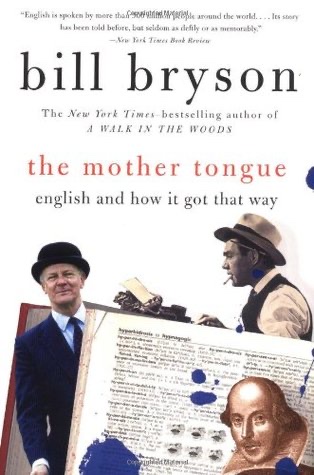 The Mother Tongue: English and How It Got That Way
About the book
This book turns away from the highways and byways of middle America for a fast, exhilarating ride along the Route 66 of American language and popular culture.
Exploding much of America's self-created self-image, Bryson de-mythologises his native land - explaining how a dusty desert hamlet with neither woods nor holly became Hollywood, how the Wild West wasn't won, why Americans say "lootenant" and "Toosday", how Americans were eating junk food long before the word itself was cooked up - as well as exposing the true origins of the G-string, the original $64,000 question and Dr Kellogg of cornflakes fame.
Book details
- First published
- 1994
- Author
- Bill Bryson
- Genre
- Nonfiction
- Goodreads rating
- 3.92 (16k ratings)
Keep reading
 The Etymologicon: A Circular Stroll through the Hidden Connections of the English Language
At Home: A Short History of Private Life
The Mother Tongue: English and How It Got That Way
The Etymologicon: A Circular Stroll through the Hidden Connections of the English Language
At Home: A Short History of Private Life
The Mother Tongue: English and How It Got That Way
 The Book of General Ignorance
 The Professor and the Madman: A Tale of Murder, Insanity and the Making of the Oxford English Dictionary
 Unfamiliar Fishes
 Mason & Dixon
 River of Smoke
 A Voyage Long and Strange: Rediscovering the New World
 The Partly Cloudy Patriot
 Mumbo Jumbo
 The Inconvenient Indian: A Curious Account of Native People in North America
 Skinny Legs and All
 American Colossus: The Triumph of Capitalism, 1865-1900
 The Know-It-All
 Welcome to Braggsville
 Following the Equator: A Journey Around the World
 These Truths: A History of the United States
 1491: New Revelations of the Americas Before Columbus
 A History of the World in 100 Objects
 One Man's Meat
 The Bonfire of the Vanities
 Assassination Vacation
 The Hemingses of Monticello: An American Family
 Boomerang: Travels in the New Third World
 Chesapeake
 One Summer: America, 1927
 The Diamond Age
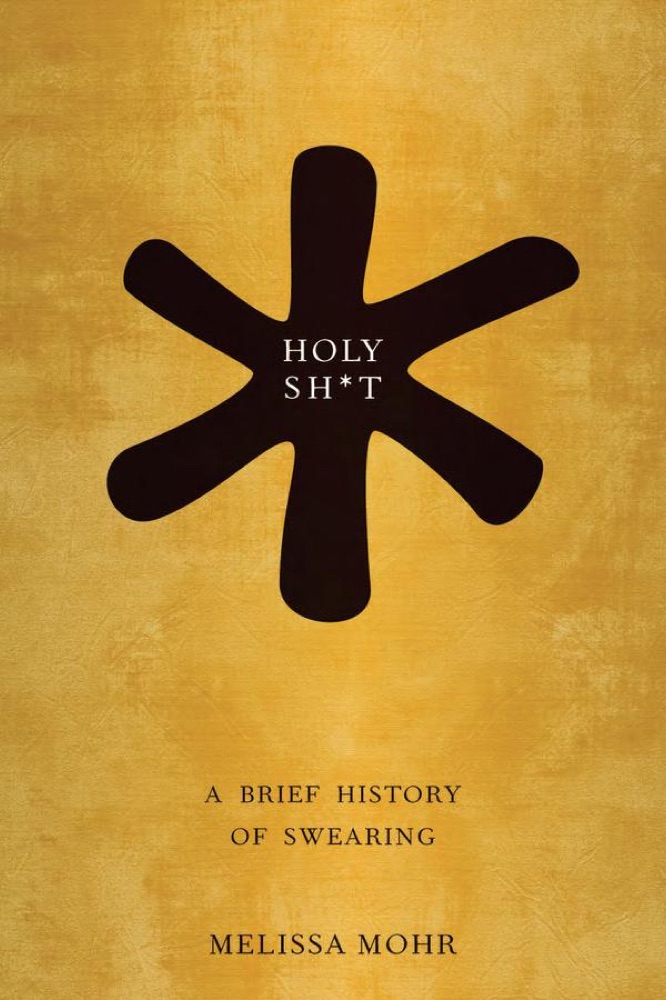 Holy Sh*t: A Brief History of Swearing
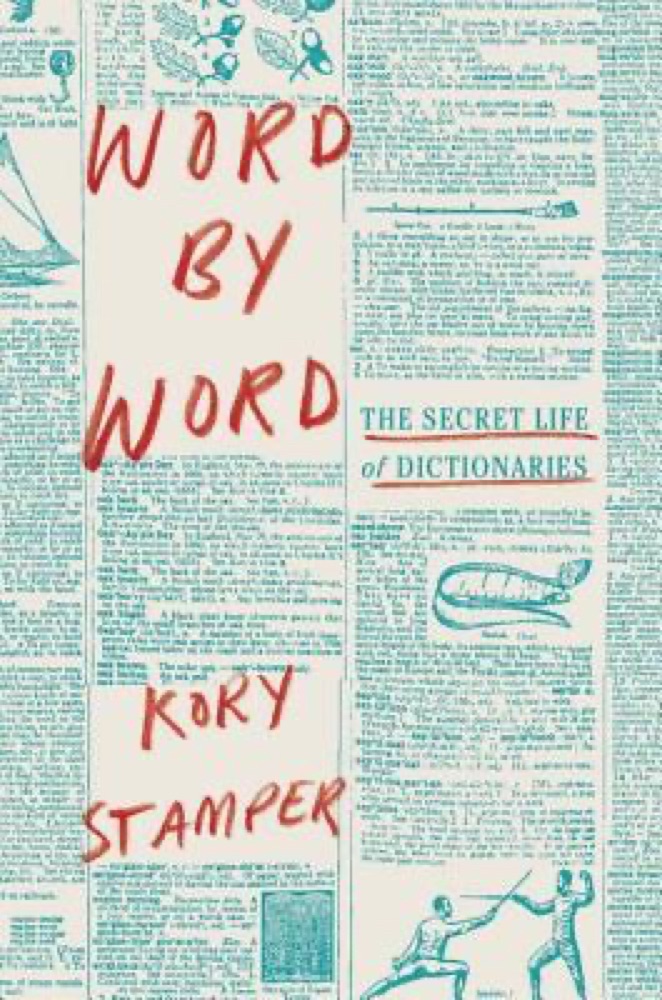 Word by Word: The Secret Life of Dictionaries
 Table for Two
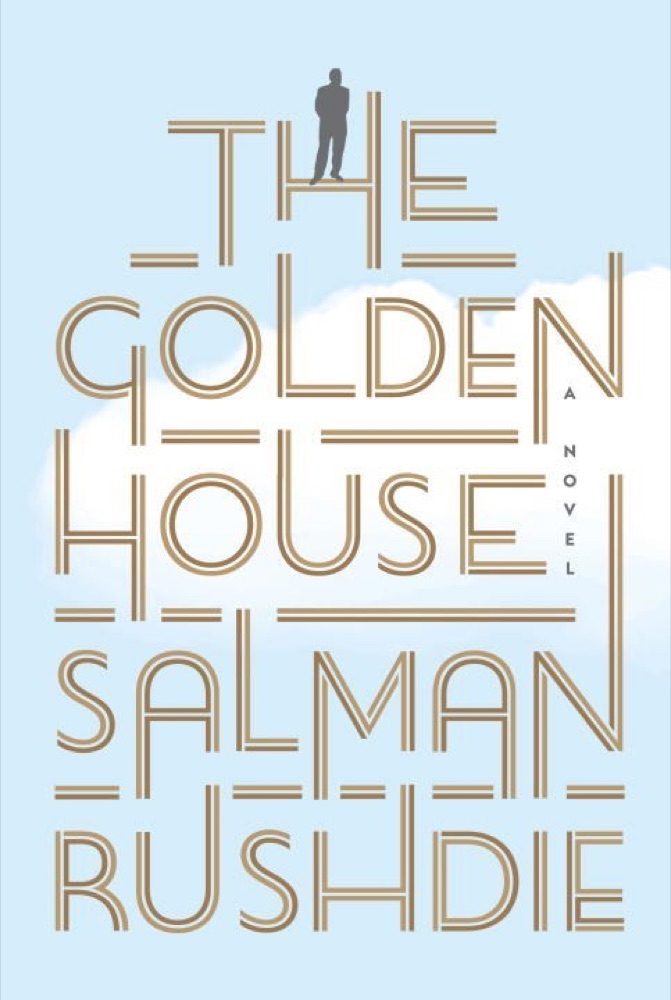 The Golden House
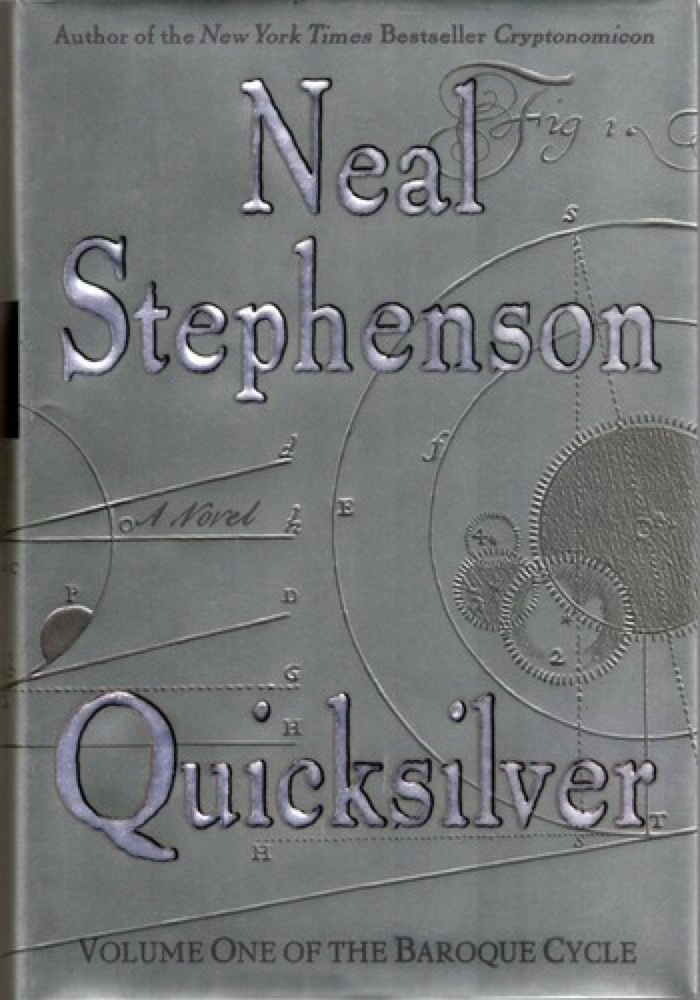 Quicksilver
 The Last Continent
 White Trash: The 400-Year Untold History of Class in America
 The Fifth Heart
 Proto: How One Ancient Language Went Global
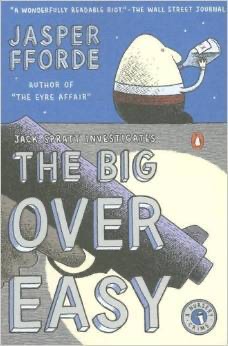 The Big Over Easy
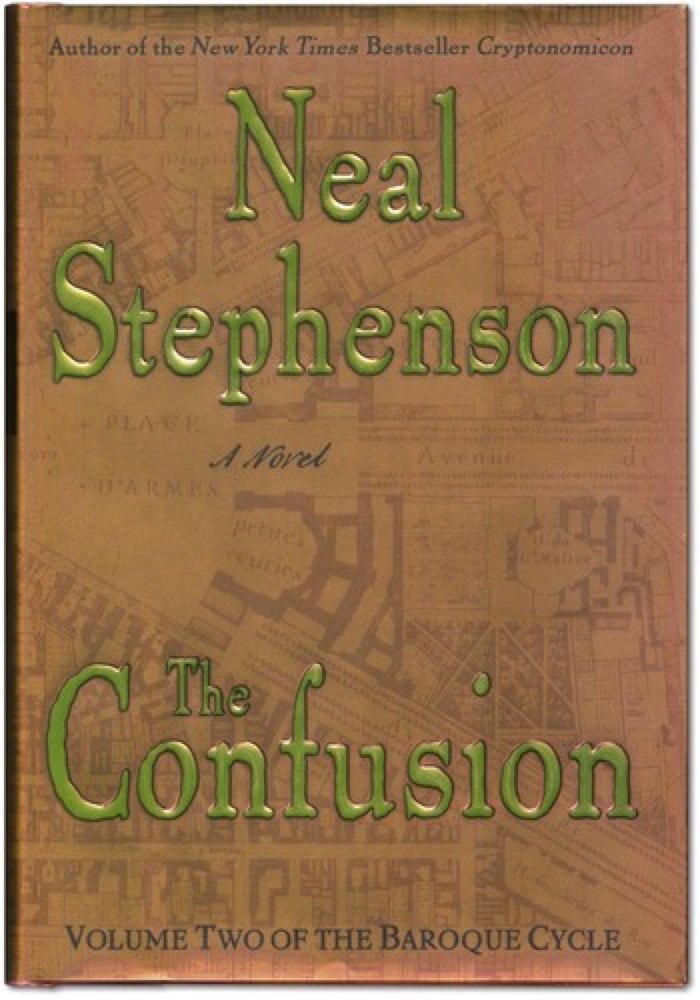 The Confusion
 Arguably: Selected Essays
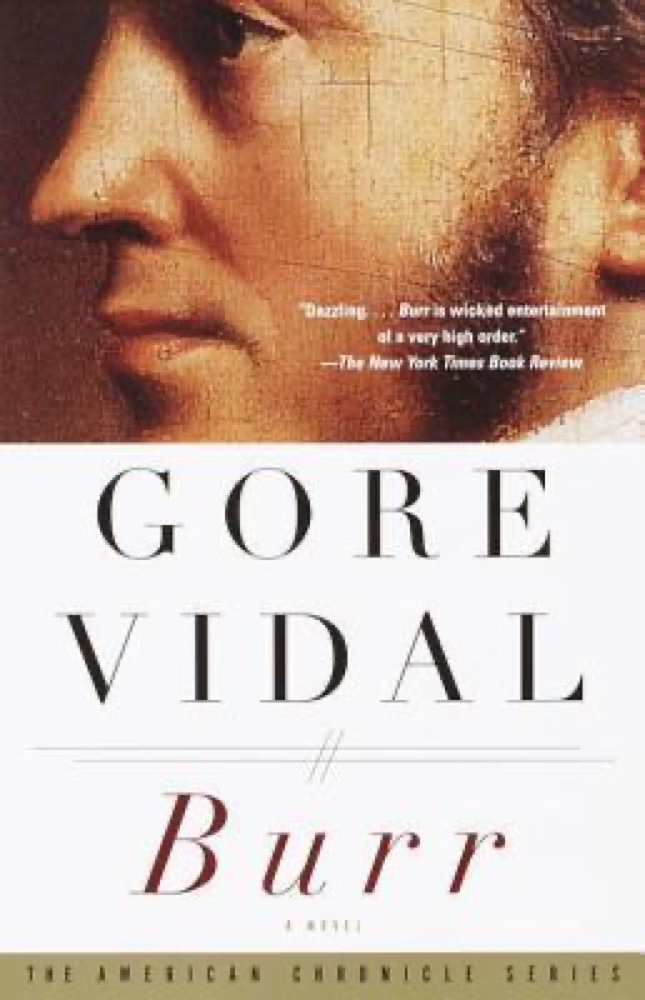 Burr
Burr
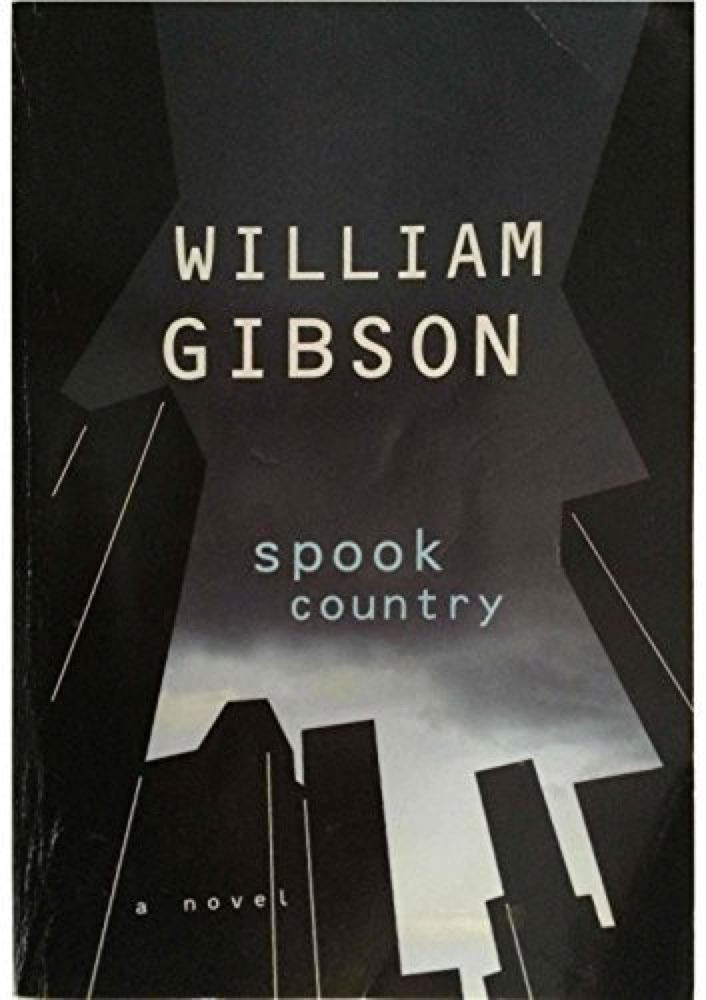 Spook Country
 From Dawn to Decadence: 500 Years of Western Cultural Life, 1500 to the Present
 The Warmth of Other Suns: The Epic Story of America's Great Migration
 Creation Lake
 Too Like the Lightning
 Billions & Billions: Thoughts on Life and Death at the Brink of the Millennium
 The Novel Habits of Happiness
 When I Was a Child I Read Books
 The Log from the Sea of Cortez
 The Fresco
 Essays of E.B. White
 Radio Free Albemuth
 Erewhon
 The Innocents Abroad
 The First Salute : View of the American Revolution
 Salt: A World History
 Hocus Pocus
 The Reivers