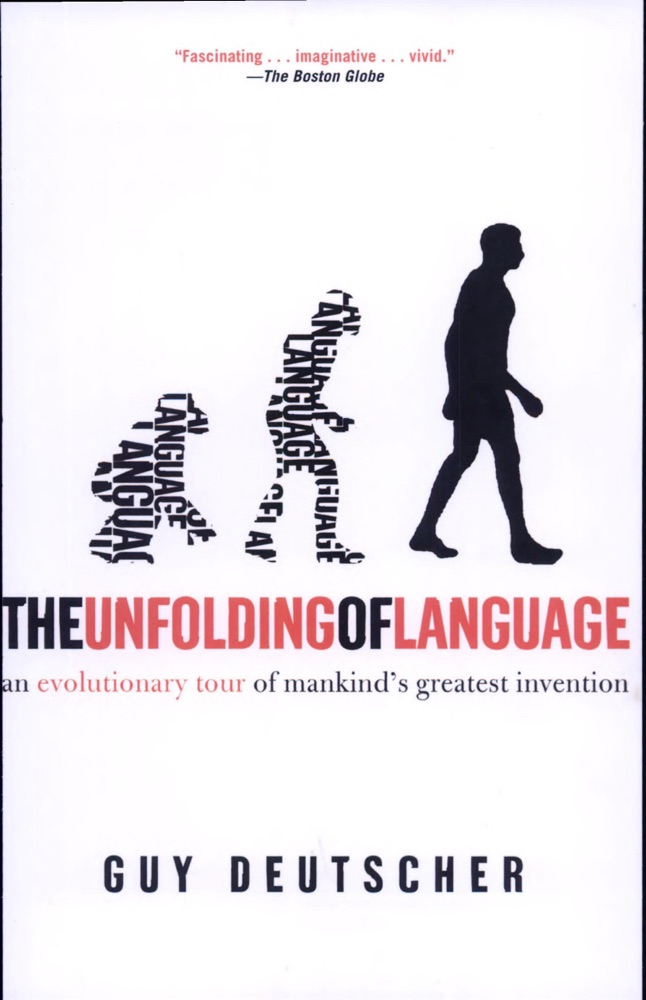
 The Unfolding of Language: An Evolutionary Tour of Mankind's Greatest Invention
Quotes from the Book
Linguists consider that on average it takes between five hundred and a thousand years for a language to become incomprehensible to its original speakers
3
Few people realise how far the steppe extends into Europe. About half of Ukraine is steppe (U kraina means ‘at the border’) and it runs right down to the northern shore of the Black Sea, leaping over the Isthmus of Perekop into Crimea. ‘When I am dead, bury me / In my beloved Ukraine, / My tomb upon a grave mound high / Amid the spreading plain,’ wrote the Ukrainian poet Taras Shevchenko.
2
Modern English-speakers can understand the Middle English of Shakespeare, who wrote in the sixteenth century, but not the Old English of Beowulf, which was composed nine hundred years earlier.
2
a language is a dialect with an army and a navy,
1
The phenomenon that scholars are attempting to understand is ephemeral: the emanations of long-vanished brains that caused long-vanished eardrums to vibrate. They are acutely aware that the rules that guide them are, with the exception of the sound laws, rules of thumb and no more. If migration has driven language change, it hasn’t been the whole story. The Scythians rode into Ukraine and India but left their language in neither.‡ The Romans got as far as Britain, but Latin stayed (mostly) in France. Whoever carried Celtic to Ireland caused barely a tremor in the Irish gene pool.
1
One archaeologist I listened to recently laughed in sheer delight as he described how dental plaque lifted from the teeth of shepherds who had lived thousands of years ago contained particles of charcoal from the smoke they had breathed in. An analysis of the particles revealed the species of tree they had burned.
1
Migration has been a constant, ‘indigenous’ is relative. Ten thousand years of human displacement have shrunk the genetic distance between populations to the point where ethnic divisions are losing meaning. The desire to belong is as strong as ever, and as it becomes harder to see the difference between ‘them’ and ‘us’, linguistic and cultural boundaries are being guarded more jealously. Language is becoming a battleground in the identity wars, and preserving our linguistic ‘purity’ a justification used by those who want to raise walls.
1
The past is a lighthouse, not a port.† † Russian proverb
1
When Jacob and his brother Wilhelm went hunting fairy tales in the German backwoods, it was partly to build a body of material in different dialects from which to reconstruct their Proto-Germanic ancestor. Among the happy by-products of their efforts were Snow White and Little Red Riding Hood.
1
If you were to represent the three hundred millennia of Homo sapiens’ existence as a twenty-four-hour clock, writing emerged at about thirty minutes to midnight. It was at that moment that history began (history, from Greek historia meaning ‘knowledge’ or ‘inquiry’, and later ‘chronicle’ or ‘account’). Everything before that we call prehistory.
1
Now, eight billion humans speak around seven thousand languages. Those languages fall into about a hundred and forty families, but most of us speak languages that belong to just five of them: Indo-European, Sino-Tibetan, Niger-Congo, Afro-Asiatic and Austronesian. Among those five, two behemoths stand out: Indo-European, whose major representative is English, and Sino-Tibetan, which includes Mandarin Chinese.
1
People who spoke of wheels and wagons could not have lived before 3500 BCE, when that technology was invented.
These particular sound transformations form part of a set known as Grimm’s Law, after Jacob Grimm. When Jacob and his brother Wilhelm went hunting fairy tales in the German backwoods, it was partly to build a body of material in different dialects from which to reconstruct their Proto-Germanic ancestor. Among the happy by-products of their efforts were Snow White and Little Red Riding Hood.
In the Bible, Judges 12:5–6, the men of Gilead identified their Ephraimite enemies by making them utter a single Hebrew word meaning ‘stream’: ‘Say now Shibboleth: and he said Sibboleth: for he could not frame to pronounce it right. Then they took him, and slew him at the passages of Jordan.
Words can moonlight too, taking on second shifts as new concepts are born and demand labels. English ‘mouse’, from Latin mus, can refer to a small rodent or a manual device for moving the cursor on your computer screen, but when the Romans used it they only meant one of those things. Much of the pleasure of etymology lies in charting the tortuous path that each word’s meaning has travelled from its root to its modern usage.
a word’s meaning can shrink, stretch or sashay over time. The English word ‘focus’, referring to the point to which attention is drawn, comes from a Latin word meaning ‘hearth’.
When we talk about languages being ‘born’ or ‘dying’, we’re defining a language as a package of communication tools that is unintelligible to users of other such packages. (Similarly, according to a standard definition in biology, species are distinct if they can’t interbreed, or strictly speaking if their offspring can’t interbreed.)
The important thing to understand about writing is that a given script can encode different languages, while a given language can be rendered in more than one script.
Did you know?
- The book traces Proto-Indo-European, the reconstructed common ancestor of languages spoken by roughly half the world's population today.
- Spinney locates the likely homeland of the language on the steppe north of the Black Sea around six thousand years ago.
- It combines historical linguistics with recent breakthroughs in ancient-DNA genetics and archaeology.
- Among the descendant tongues it discusses are the extinct Tocharian languages once spoken in western China.
- It was named a best book of 2025 by the Guardian, the Financial Times, Scientific American and Prospect.
- It was published in the UK by William Collins and in the US by Bloomsbury in 2025.
Watch on YouTube
About Laura Spinney
About the book
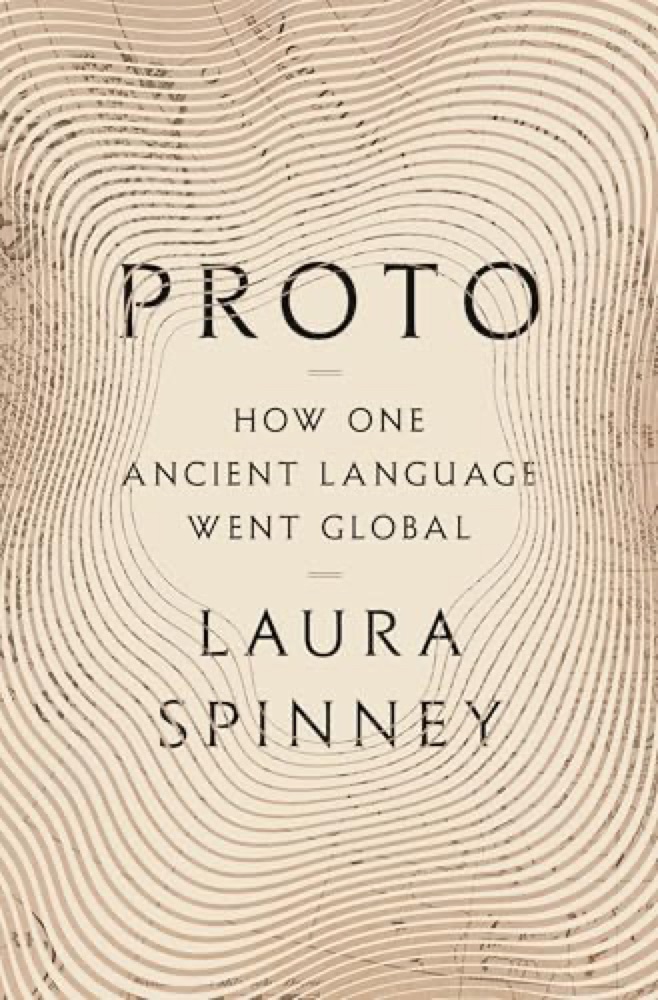
Proto: How One Ancient Language Went Global is a work of popular science and history that traces Proto-Indo-European, the reconstructed ancestor of languages spoken today by nearly half of humanity, from English and Latin to Sanskrit, Persian and the extinct Tocharian tongues of western China. Science journalist Laura Spinney follows the language from its likely cradle on the steppe near the Black Sea some six thousand years ago and charts how it fanned out east and west to seed hundreds of daughter languages.
The book braids together three disciplines that have converged on the same story: historical linguistics, archaeology, and the recent revolution in ancient-DNA genetics. Spinney travels the length of the Eurasian steppe and through the Caucasus, the Silk Roads and the Hindu Kush, meeting the linguists, archaeologists and geneticists who have reconstructed this ancient diaspora, and she is careful to present competing theories and open debates rather than a single tidy answer.
Written for the general reader, Proto was widely received as an accessible and up-to-date introduction to a fast-moving field, and it was named among the best books of 2025 by outlets including the Guardian, Financial Times, Scientific American and Prospect. Reviewers praised its breezy, well-organized synthesis while noting that its sweeping scope occasionally comes at the cost of depth in any one discipline.
Book details
- First published
- 2025
- Length
- 352 pages
- Reading time
- 21 hours
- Author
- Laura Spinney
- Genre
- History
- Goodreads rating
- 4.14 (4k ratings)
Critical reception
- Named among the best books of 2025 by the Guardian, the Financial Times, Scientific American and Prospect Magazine.
- Reviewers praised it as a breezy, well-written and up-to-date introduction to Indo-European historical linguistics for the general reader.
- Some critics noted that its ambitious scope, blending linguistics, archaeology and genetics, occasionally sacrifices depth for breadth.
- Kirkus Reviews called it a smart, dense, detailed account.
The buzz
- Kirkus ReviewsProto2025Verdict: a smart, dense, detailed account
- SlateProto by Laura Spinney is a revelatory history of human language2025Feature on how DNA, archaeology and linguistics reconstructed the language's spread
- Asian Review of BooksProto: How One Ancient Language Went Global by Laura Spinney2025Favorable review calling it a breezy, well-written overview for newcomers
Keep reading
The Unfolding of Language: An Evolutionary Tour of Mankind's Greatest Invention
 The Horse, the Wheel, and Language: How Bronze-Age Riders from the Eurasian Steppes Shaped the Modern World
 The Mother Tongue: English and How It Got That Way
 Through the Language Glass: Why the World Looks Different in Other Languages
 In the Land of Invented Languages: Esperanto Rock Stars, Klingon Poets, Loglan Lovers, and the Mad Dreamers Who Tried to Build a Perfect Language
 The Language Instinct: How the Mind Creates Language
 Confabulations
 Because Internet: Understanding the New Rules of Language
 Babel-17
 Made in America: An Informal History of the English Language in the United States
 A History of the World in 100 Objects
 Babel
Babel
 Landmarks
 The Stuff of Thought: Language as a Window into Human Nature
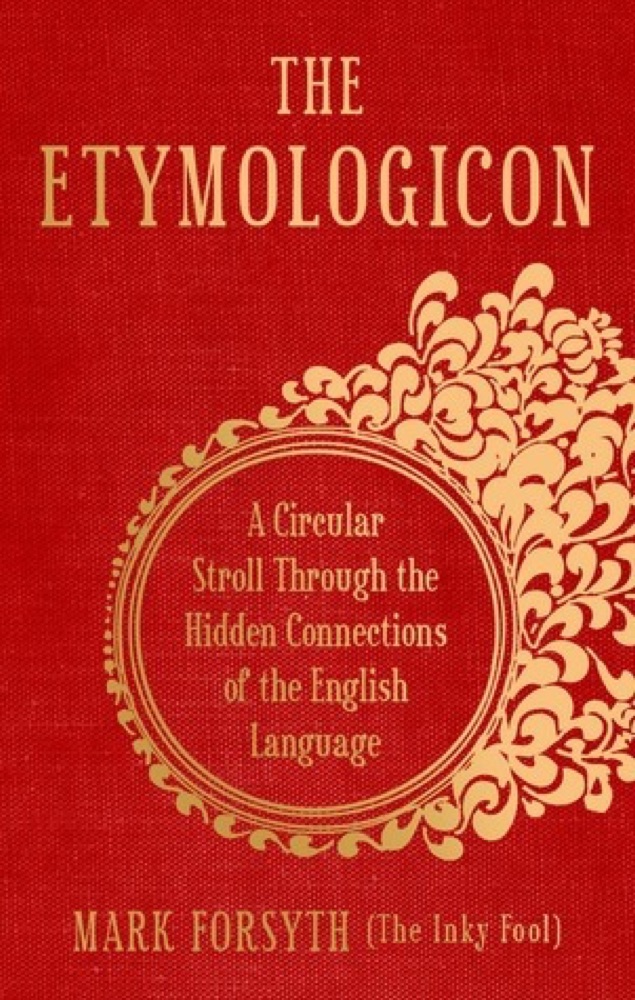 The Etymologicon: A Circular Stroll through the Hidden Connections of the English Language
 The Spell of the Sensuous: Perception and Language in a More-Than-Human World
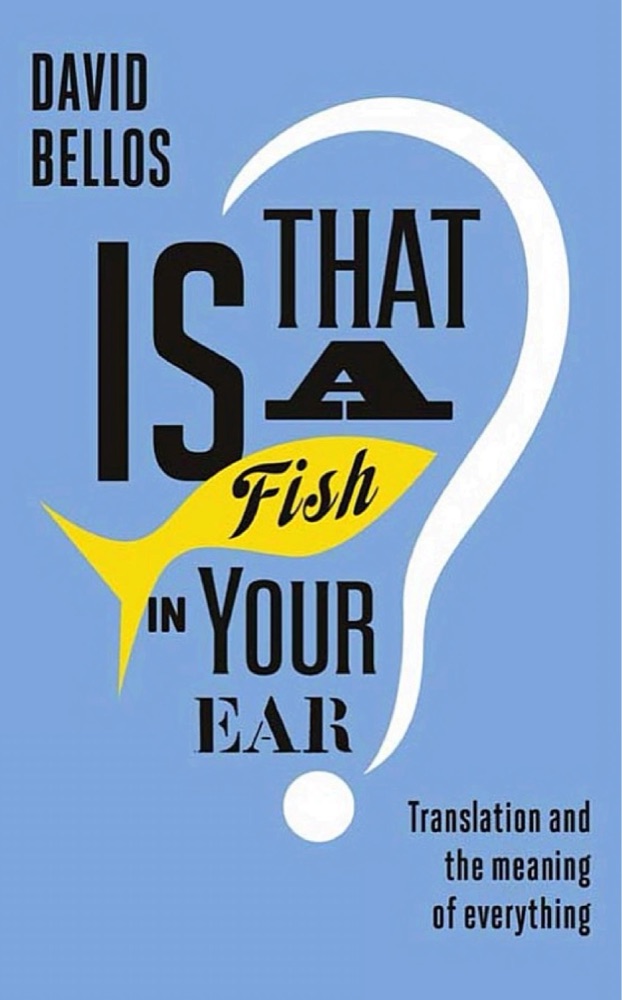 Is That a Fish in Your Ear? Translation and the Meaning of Everything
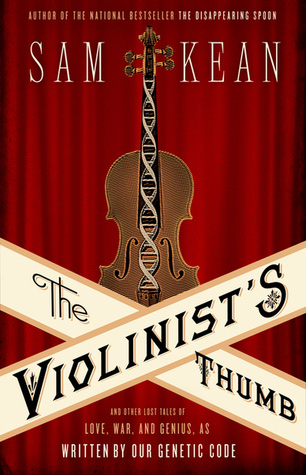 The Violinist's Thumb: And Other Lost Tales of Love, War, and Genius, as Written by Our Genetic Code
 Sea People: The Puzzle of Polynesia
 1491: New Revelations of the Americas Before Columbus
 Word by Word: The Secret Life of Dictionaries
 Philosophical Investigations
 Europe: A History
 Always Coming Home
 Lingo: A Language Spotter's Guide to Europe
 The Word Exchange
 Genome
 The Book of General Ignorance
 The Professor and the Madman: A Tale of Murder, Insanity and the Making of the Oxford English Dictionary
 Children of Ash and Elm: A History of the Vikings
 2312
2312
 The Historian's Craft: Reflections on the Nature and Uses of History and the Techniques and Methods of Those Who Write It.
 The Telling
 Billions & Billions: Thoughts on Life and Death at the Brink of the Millennium
 The Know-It-All
 Dictionary of the Khazars (Male Edition)
 The Great Fires
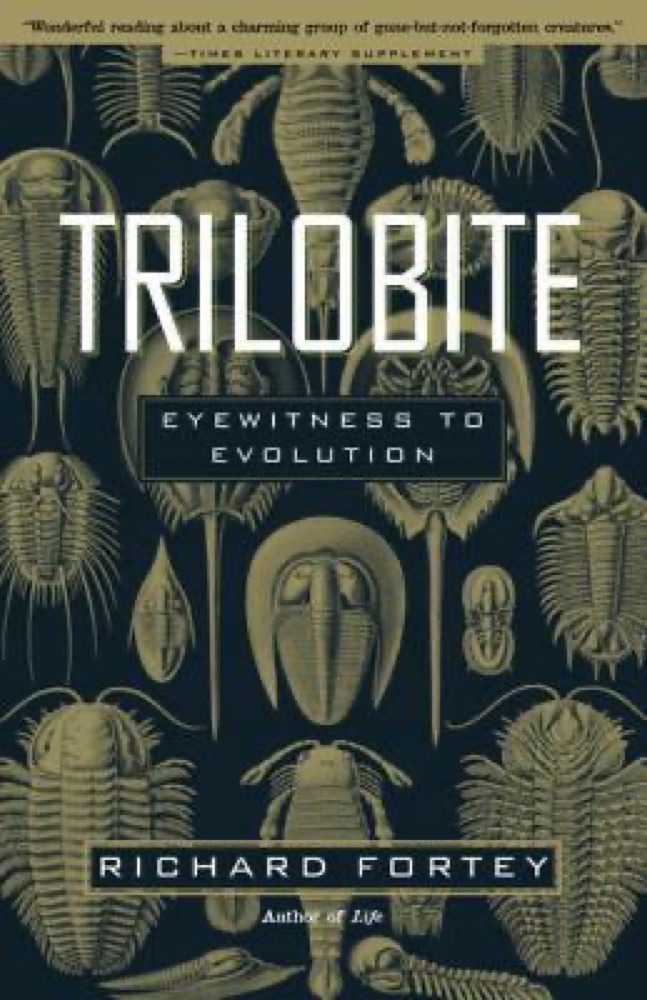 Trilobite: Eyewitness to Evolution
 The Information: A History, a Theory, a Flood
 Fluent Forever: How to Learn Any Language Fast and Never Forget It
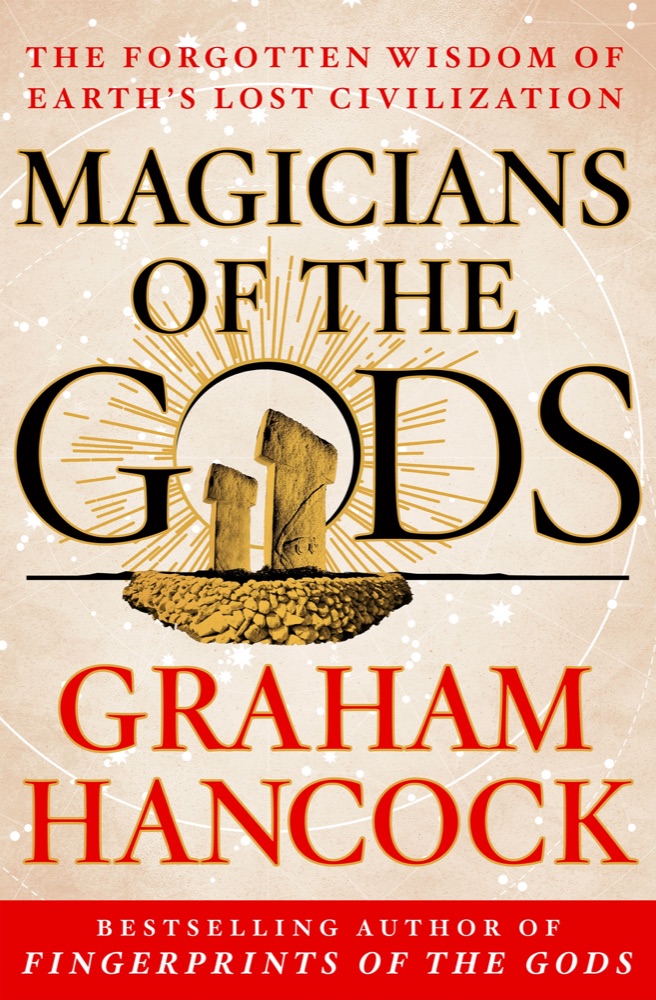 Magicians of the Gods: The Forgotten Wisdom of Earth's Lost Civilization
 The Discovery of Heaven
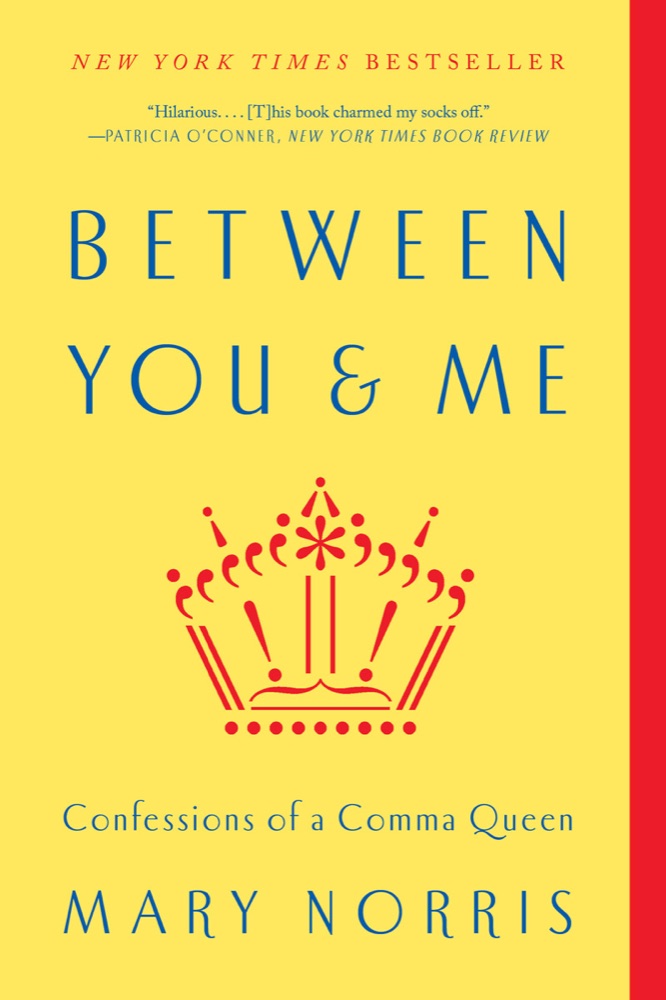 Between You & Me: Confessions of a Comma Queen
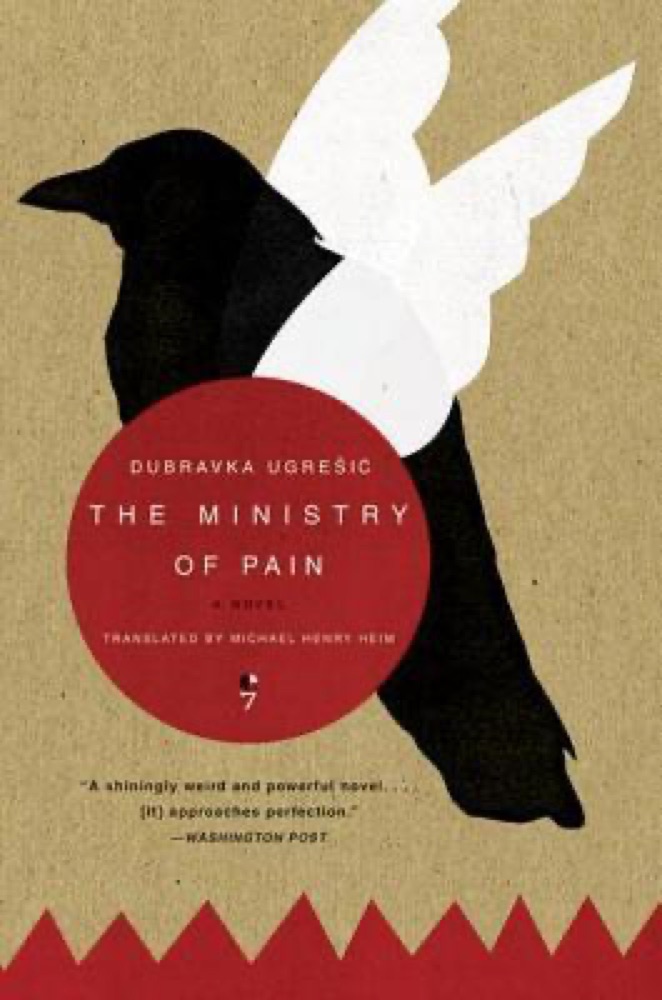 The Ministry of Pain
 Burning Questions: Essays and Occasional Pieces, 2004 to 2021
 Timaeus
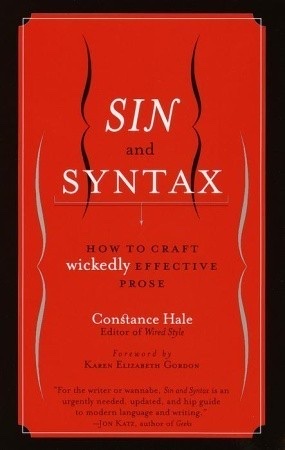 Sin and Syntax: How to Craft Wickedly Effective Prose
 Understanding Media: The Extensions of Man
 Civilization: The West and the Rest
 The Wayfinders: Why Ancient Wisdom Matters in the Modern World
 Dreyer's English: An Utterly Correct Guide to Clarity and Style
 Salt: A World History
 The Jesus Incident
 The Paper Menagerie and Other Stories
 Selected Non-Fictions
 Plainwater: Essays and Poetry
 Underland: A Deep Time Journey
 Guns, Germs, and Steel: The Fates of Human Societies
 From Dawn to Decadence: 500 Years of Western Cultural Life, 1500 to the Present
 My Father's Paradise: A Son's Search for His Jewish Past in Kurdish Iraq