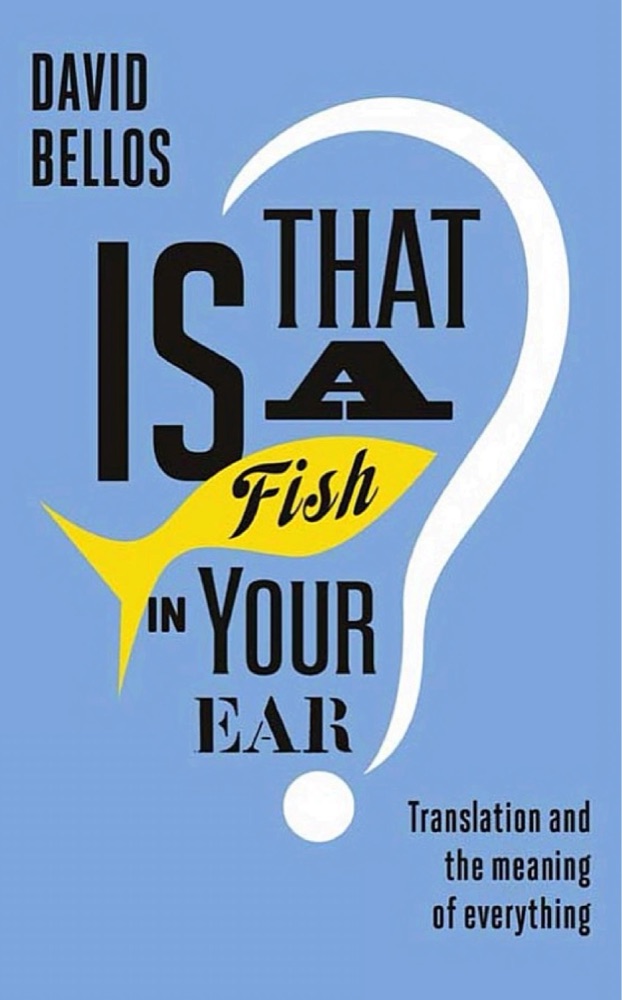

 Through the Language Glass: Why the World Looks Different in Other Languages
Quotes from the Book
It is translation, more than speech itself, which provides incontrovertible evidence of the human capacity to think and to communicate thought. We should do more of it.
10
in Israel it is said that God himself would not get promotion in any science department at the Hebrew University of Jerusalem. Why not? Because he has only one publication—and it was not written in English.
6
I express not the word for the word but the sense for the sense.
5
In English and many other languages the word for translation is a two-headed beast. A translation names a product - any work translated from some other language; whereas translation, without an article, names a process - the process by which “a translation” comes to exist.
1
Translation is the opposite of empire
1
A desire to believe (despite all evidence to the contrary) that words are at bottom the names of things is what makes the translator’s mission seem so impossible.
1
Would we have ever asked what it is that a translator ‘carries across’ the ‘language barrier’ if he or she were called a ‘turner’, ‘tongue-man’, or ‘exchanger’? Probably not.
1
In today’s world, translators into “small” languages also often see their task as defending or else improving their own tongues - or both at the same time.
Domesticating translation styles that eradicate the Frenchness of Gallic thugs have been attacked by some critics for committing “ethnocentric violence”.
Translation involves many things that do not fit common definitions.
On the other hand, linguistic borrowing between cultures in contact with one another is a fundamental fact of intercultural communication - and that is the very field of translation.
You can't talk about it easily if you don't have a word for it.
Language unification, if it ever comes, will probably not be achieved by Latin, Esperanto, Volapük, or some yet-to-be-invented “contact vehicle” but by one of the languages that possesses a big head start already. It will probably not be the language with the largest number of native speakers (currently, Mandarin Chinese) but the one with the largest number of nonnative users, which is English at the present time. This prospect terrifies and dismays many people, for a whole variety of reasons. But a world in which all intercultural communication was carried out in a single idiom would not diminish the variety of human tongues. It would just make native speakers of the international medium less sophisticated users of language than all others, since they alone would have only one language with which to think.
One big truth about translation that is often kept under wraps is that many societies did just fine by doing without.
Pero la historia de una palabra no dice mucho sobre su significado real. [...] Las etimologías oscurecen verdades esenciales sobre la forma en que utilizamos la lengua y, entre ellas, verdades sobre la traducción.
Translation is not just one thing; how best to do it depends on what you are doing it for.
Translation-based language teaching is no longer in fashion, but its ghost still inhabits a number of misconceptions about what translation is or should be.
The expression “literal meaning,” taken literally, is a contradiction in terms, an oxymoron, and a nonsense.
This way of dealing with an untranslatable by not translating it while making it pronounceable (sound translation, homophonic translation: see here) could be considered the primary, original meaning of the term literal translation.
To try to capture “all the words of a language” is as futile as trying to capture all the drops of water in a flowing river.
The real story is the other way around. Without translators, Western dictionaries would not exist.
the semantics of words is an intellectual mess.
It can be done only by guessing what the context and genre of the utterance are.
Once again, the expression uttered (in speech or writing) is not the sole or even the primary object of translation when the force of an utterance is what matters, as it always does.
Most of the time, the symptomatic meaning of an utterance is just too obvious to be noticed.
In many circumstances, formal education replaces the infant language with one that goes on to be used in adult life as the operative means of communication.
The natural way to represent the foreignness of foreign utterances is to leave them in the original, in whole or in part.
The survivor language, English, is not necessarily the best suited to the job; it’s just that nothing has yet happened to knock it out.
Among them we cannot possibly include the unfortunate but widespread idea that English is simpler than other languages.
Watch on YouTube
About David Bellos
We have collected 29 quotes from 1 book by David Bellos on BookQuoters.
More about the author →About the book
Funny and surprising on every page, Is That a Fish in Your Ear? offers readers new insight into the mystery of how we come to know what someone else means—whether we wish to understand Astérix cartoons or a foreign head of state. Using translation as his lens, David Bellos shows how much we can learn about ourselves by exploring the ways we use translation, from the historical roots of written language to the stylistic choices of Ingmar Bergman, from the United Nations General Assembly to the significance of James Cameron's Avatar.
Is That a Fish in Your Ear? ranges across human experience to describe why translation sits deep within us all, and why we need it in so many situations, from the spread of religion to our appreciation of literature; indeed, Bellos claims that all writers are by definition translators. Written with joie de vivre, reveling both in misunderstanding and commun
Book details
- First published
- 2011
- Author
- David Bellos
- Genre
- Nonfiction
- Goodreads rating
- 3.77 (3k ratings)
Keep reading
Through the Language Glass: Why the World Looks Different in Other Languages
 The Unfolding of Language: An Evolutionary Tour of Mankind's Greatest Invention
 The Mother Tongue: English and How It Got That Way
 Philosophical Investigations
 In the Land of Invented Languages: Esperanto Rock Stars, Klingon Poets, Loglan Lovers, and the Mad Dreamers Who Tried to Build a Perfect Language
 The Language Instinct: How the Mind Creates Language
 Babel
Babel
 Because Internet: Understanding the New Rules of Language
 Confabulations
 Word by Word: The Secret Life of Dictionaries
 Lingo: A Language Spotter's Guide to Europe
 Proto: How One Ancient Language Went Global
 Politics and the English Language
 Fluent in 3 Months: How Anyone at Any Age Can Learn to Speak Any Language from Anywhere in the World
 Between You & Me: Confessions of a Comma Queen
 The Stuff of Thought: Language as a Window into Human Nature
 Babel-17
 Exegetical Fallacies
 Incidental Inventions
 The Liar's Dictionary
 The Professor and the Madman: A Tale of Murder, Insanity and the Making of the Oxford English Dictionary
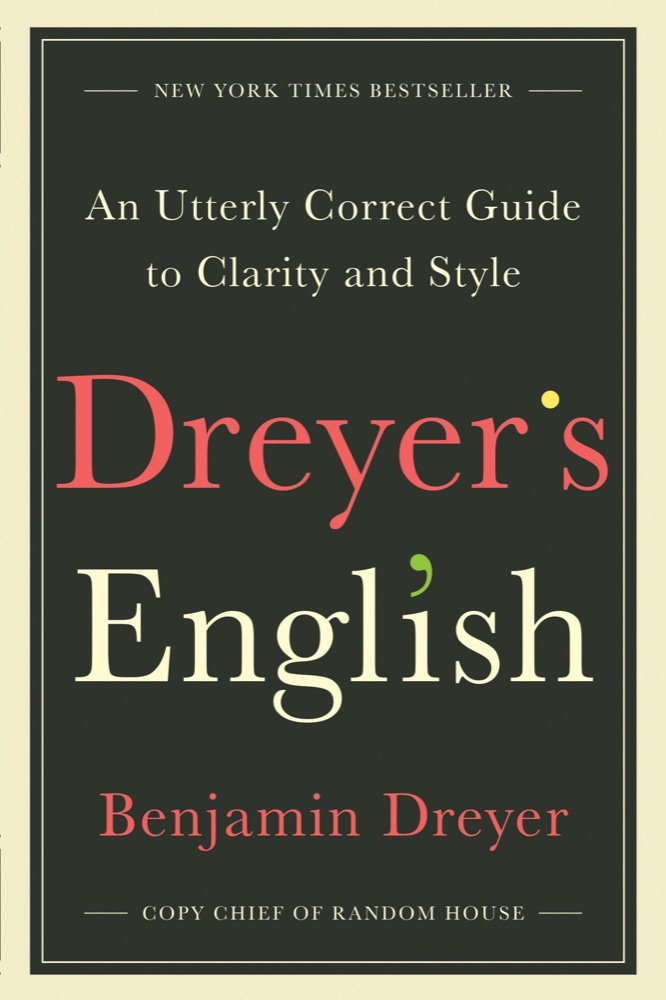 Dreyer's English: An Utterly Correct Guide to Clarity and Style
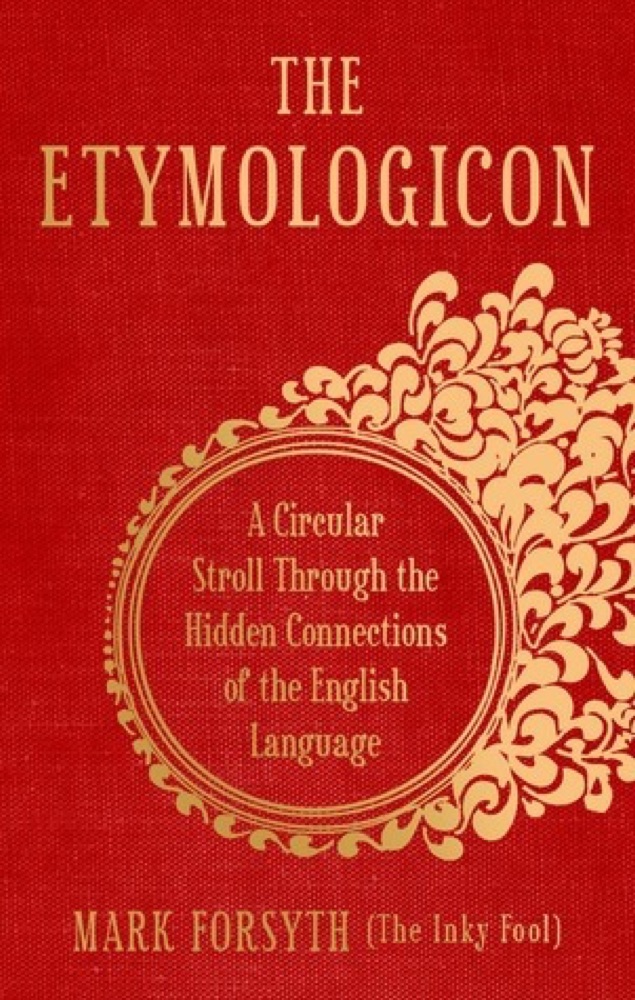 The Etymologicon: A Circular Stroll through the Hidden Connections of the English Language
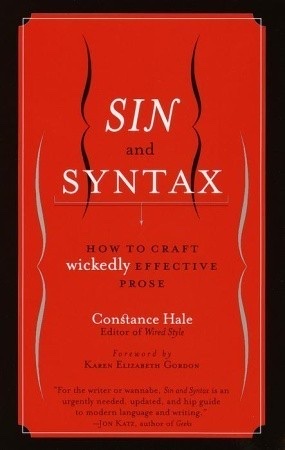 Sin and Syntax: How to Craft Wickedly Effective Prose
 Illuminations: Essays and Reflections
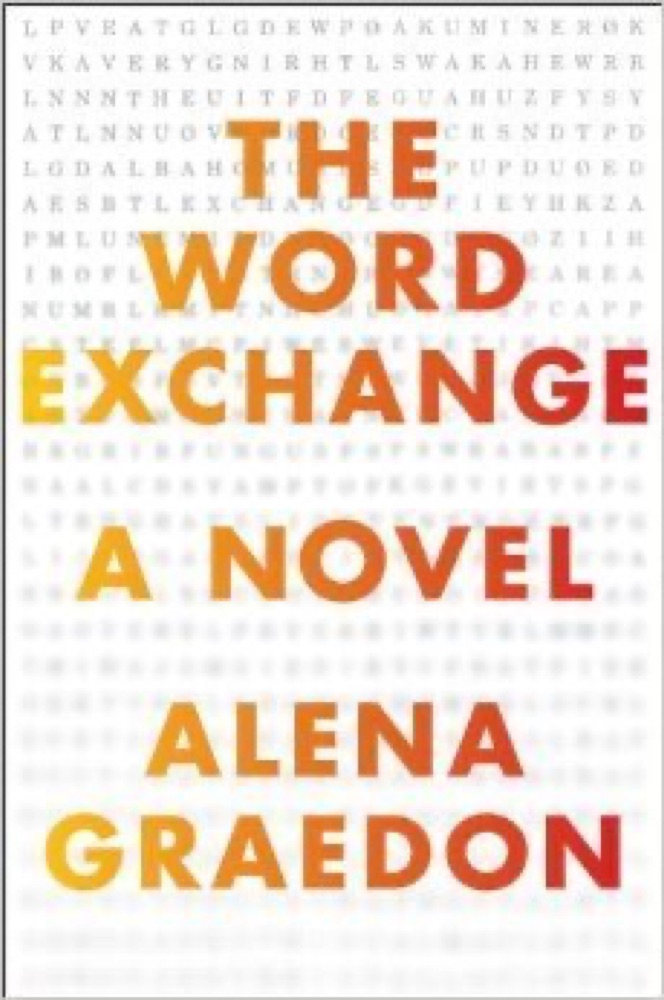 The Word Exchange
 The Master and His Emissary: The Divided Brain and the Making of the Western World
 The Elements of Style
 Course in General Linguistics
 Embassytown
 The Rhetoric & The Poetics of Aristotle
 Words That Work: It's Not What You Say, It's What People Hear
 How to Read Literature Like a Professor
 The Historian's Craft: Reflections on the Nature and Uses of History and the Techniques and Methods of Those Who Write It.
 The Elements of Eloquence: How to Turn the Perfect English Phrase
 Paris to the Moon
 The Sense of Style: The Thinking Person's Guide to Writing in the 21st Century
 InterWorld
 The Archaeology of Knowledge and The Discourse on Language
 The Telling
 The Grammarians
 The Seventh Function of Language
 Science and Sanity: An Introduction to Non-Aristotelian Systems and General Semantics
 The Blue Flower
 Reality Hunger: A Manifesto
 How to Read Literature
 A Language of Dragons
 Understanding Media: The Extensions of Man
 Fluent Forever: How to Learn Any Language Fast and Never Forget It
 Against Interpretation and Other Essays
 Landmarks
 Stranger in a Strange Land
 Selected Non-Fictions
 What the Dog Saw and Other Adventures
 The Most Human Human: What Talking with Computers Teaches Us About What It Means to Be Alive
 The Double
 Watching the English: The Hidden Rules of English Behaviour
 Where Reasons End
 The Names
 Following the Equator: A Journey Around the World