 Last Train to Istanbul
Quotes from the Book
You have certain hopes,” he began, the subject making him visibly uncomfortable. “You do this as a nostalgic trip, and nostalgia is you feel like you will see a place again. And when you see nothing is left, it’s in a way a comment on life itself. You see that life doesn’t stand still. Nothing waits for you to visit it again. The river keeps flowing. It may be smaller. But still it flows. And with it your life flows by. This is what life basically is.
1
But my son’s birth was a comeuppance. It was a stark reminder of continuity, that we are who we come from as much as who we make of ourselves.
Some 94 percent of the planet’s population speaks a mere 5 percent of its languages.
No continent has been spared. Gooniyandi in Australia is down to its last 100 speakers; Dama in Cameroon, 50 speakers; Kavalan in Thailand, 24; Xipaya in Brazil, 2; Plains Miwok in the United States, 1.
Though Aramaic’s longevity is remarkable, its fate is common. Of the roughly seven thousand languages now spoken, half are expected to vanish over the next century.
Saddam was renowned in the Arab world for his hatred of Israel. He spoke of “scorching” the country with chemical gas and paid $25,000 rewards to the families of Palestinian suicide bombers.
In Mosul, there is no difference between Kurds and Jews,” Lubayd said, exhaling a rope of smoke. “They say killing a Kurd is like killing a Jew.
Western culture is geared to success, rewarding people with money, power, and prestige. In Middle Eastern culture, it’s about being loved.
Let’s see: The Romanians are thieves. The Polish are unclean. The Yemenites—that’s our family—are peasants. The Moroccans are brutes. And the Kurds have it worst of all: They’re just morons.
Language lives. It inhales culture and history. It sprouts new limbs, sloughs off old ones. It goes through cycles of rapid growth, unremarkable periods of stable maturity, decay, and sometimes, as with Hebrew, miraculous rebirth.
In life, she had always felt helpless against abandonment. In death, she had perhaps finally asserted herself. For four short days she was the center of a family, and that was how Miryam Sabar wanted to leave the world.
The Manhattan businessman’s daughter would never have met the Kurdish shopkeeper’s son were it not for their aloneness in America.
But he sensed that Judaism’s currency in America masked a spiritual shallowness. His Jewish friends at Yale rarely went to synagogue.
America, it seemed, was a land of contradictions.
Midrash for the People.
But how could my father listen to this bearer of his own culture and not be drawn in deeper?
But he came from people who survived by keeping their heads down, and he journeyed inward. He wanted to give his people a voice, but in another way, a quieter way, a way he hoped would still count.
He took one look, went back to his car, and left, Levi recalled. He said, "This is not a police matter — politicians should take care of it.
The man shook his head and left. But Rahamim understood: Family was all Ephraim had left.
Zionism had always been a European solution to a European problem.
You must learn to read, yourself. And you must judge for yourself what you believe and what is important.
In my father’s obsession with his mother tongue, I had already glimpsed this: If you knew which levers to pull, you could stop time just long enough to save the things you loved most.
My father touched another candle to it and brought it across continents. I didn’t want it to die with me. If my children ever feel adrift, unsure of who they are, I want that candle to still be burning.
Even when she was a girl, the kitchen was a source of pride and power. A separate vestibule off the main room, it cocooned her in glorious aromas. She had proven herself a skillful and painstaking chef, famous in the family for yaprach that tickled the tongue with notes of tomato, lemon and dried sumac. Shmuel and her half brothers teased that Miryam's date-sized yaprach were tiny, like her. Miryam didn't mind the ribbing; she rolled grape leaves at half their usual size precisely so that her family would recognize them as hers, rather than her stepmother's or her aunts'.
The sense that I might have gotten my father wrong--and that I might actually be his son--came slowly.
If you knew which levers to pull, you could stop time just long enough to save the things you love most.
Watch on YouTube
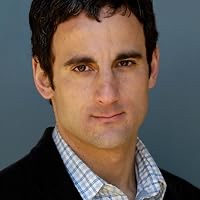
About Ariel Sabar
We have collected 26 quotes from 1 book by Ariel Sabar on BookQuoters.
More about the author →About the book
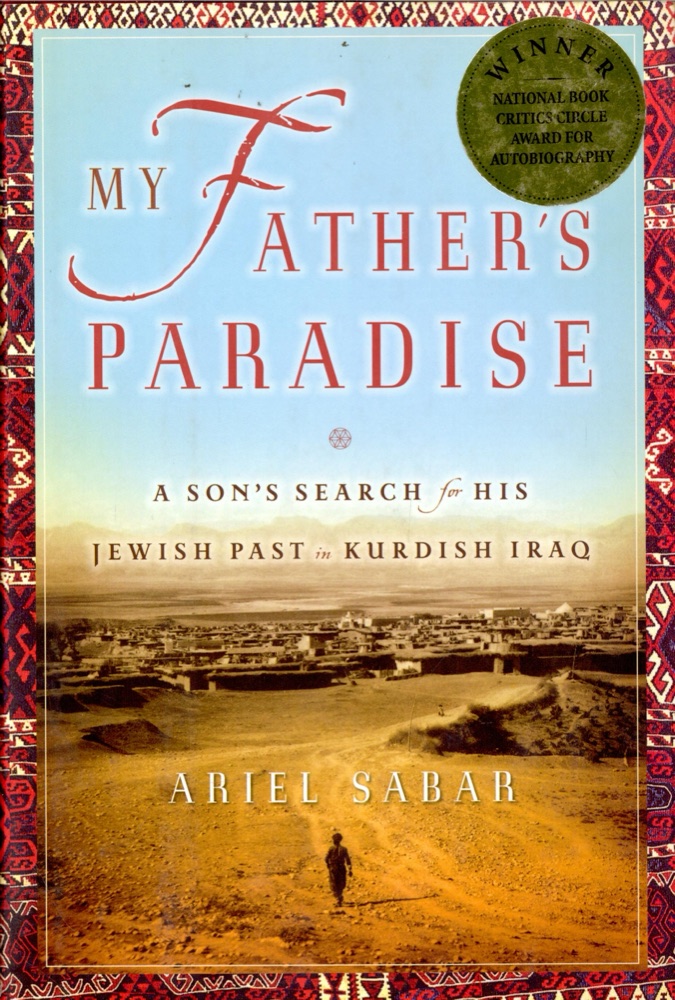
In a remote corner of the world, forgotten for nearly three thousand years, lived an enclave of Kurdish Jews so isolated that they still spoke Aramaic, the language of Jesus. Mostly illiterate, they were self-made mystics and gifted storytellers and humble peddlers who dwelt in harmony with their Muslim and Christian neighbors in the mountains of northern Iraq. To these descendants of the Lost Tribes of Israel, Yona Sabar was born.
Yona's son Ariel grew up in Los Angeles, where Yona had become an esteemed professor, dedicating his career to preserving his people’s traditions. Ariel wanted nothing to do with his father’s strange immigrant heritage—until he had a son of his own.
Ariel Sabar brings to life the ancient town of Zakho, discovering his family’s place in the sweeping saga of Middle-Eastern history. This powerful book is an improbable story of tolerance and hope set in wha
Book details
- First published
- 2008
- Author
- Ariel Sabar
- Genre
- Nonfiction
- Goodreads rating
- 4.26 (3k ratings)
Keep reading
Last Train to Istanbul
 What Strange Paradise
 The Moor's Account
 The Son
 Disoriental
 Dreams from My Father: A Story of Race and Inheritance
 People of the Book
 From Beirut to Jerusalem
 The Source
 The Refugees
 Alas, Babylon
 Homegoing
 The Blind Man's Garden
 Funny in Farsi: A Memoir of Growing Up Iranian in America
 Norwegian by Night
 The Kite Runner
 White Teeth
 The Innocents Abroad
 The Wasted Vigil
 Embassytown
 Joseph Anton: A Memoir
 The Bedlam Stacks
 Another Country
 Apeirogon
 The Reluctant Fundamentalist
 Then They Came for Me: A Family's Story of Love, Captivity, and Survival
 The Enchantress of Florence
 Infidel
 Exodus
 Daughters of Smoke and Fire
 Brother, I'm Dying
 A Bend in the River
 The Complete Saki
 The Cat's Table
 How Beautiful We Were
 Lovecraft Country
 The Map of Salt and Stars
 Welcome to Braggsville
 The Book of Salt
 The Round House
 Where the Wind Leads: A Refugee Family's Miraculous Story of Loss, Rescue, and Redemption
 River of Smoke
 Infinite Country
 Aftershocks
 Alif the Unseen
 The Pearl That Broke Its Shell
 The Son
 My Promised Land: The Triumph and Tragedy of Israel
 Our Country Friends
 Leaving Before the Rains Come
 A Guardian and a Thief
 The Yiddish Policemen's Union
 The Postcard
 Homeseeking
 The Spirit Catches You and You Fall Down: A Hmong Child, Her American Doctors, and the Collision of Two Cultures
 Mercury Pictures Presents
 The Book of My Lives
 The Hakawati
 The Dervish House
 Afterparties