
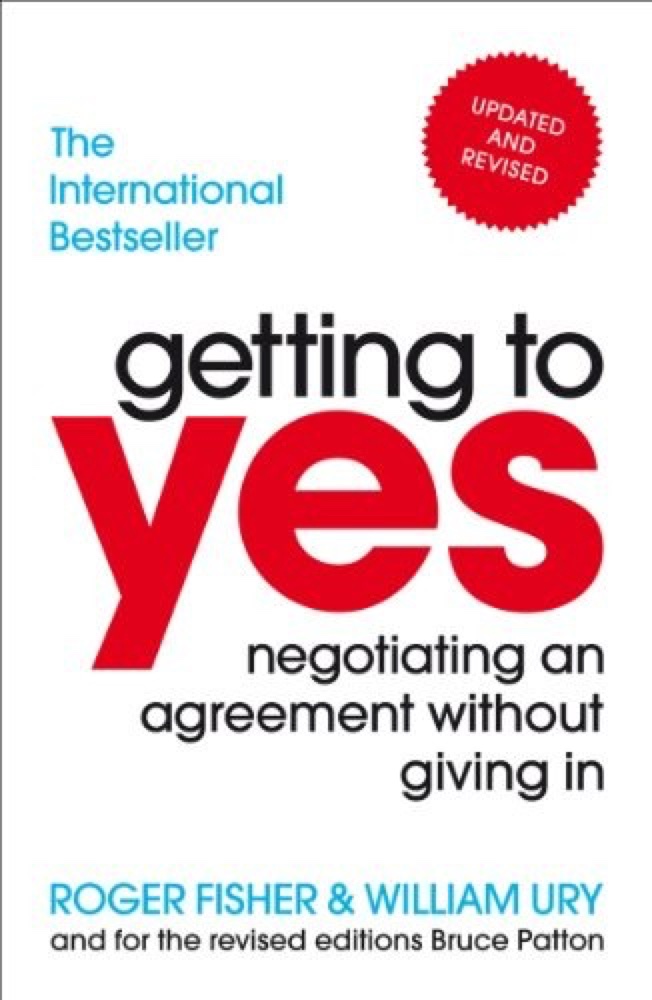
 Getting to Yes: Negotiating Agreement Without Giving In
Quotes from the Book
When you try to stop someone’s physical attack with your own physical maneuver (a block), you are pitting power against power—and the stronger party will have an advantage. But if you can sidestep the attack, you will avoid the hit, retain your balance, and remain in control of the situation.
1
Wise negotiators create a comprehensive list of what they are assuming and what they do not know prior to negotiation.
1
Your BATNA is the reality you will face if you reach no deal in the current negotiation.
John F. Kennedy once said, “Victory has a thousand fathers, but defeat is an orphan.
The Hamilton Real Estate case is a relatively simple negotiation: two parties (a buyer and a seller) are negotiating over one issue (price). Within this framework, we cover all of the following aspects of negotiating: preparing to negotiate, avoiding common negotiator mistakes, deciding whether to make the first offer, responding to the other side’s offers, structuring your initial offer, finding out how far you can push the other side, haggling effectively, claiming maximum value without sacrificing the relationship, and managing your own satisfaction.
As we hope to persuade you, people are rarely born “negotiation geniuses.” Rather, what appears to be genius actually reflects careful preparation, an understanding of the conceptual framework of negotiation, insight into how one can avoid the errors and biases that plague even experienced negotiators, and the ability to structure and execute negotiations strategically and systematically.
Investigative negotiators confront demands the same way they confront any other statement from the other party: “What can I learn from this demand? What does it tell me about the other party’s needs and interests? How can I use this information to create and capture value?
By considering the context of the negotiation, the relationships involved, and your alternatives away from the table, you will become adept at identifying when to negotiate, when to accept a deal without negotiating, and when to simply walk away.
An analysis of your BATNA is critical because it allows you to calculate your reservation value (RV), or your walk-away point in the current negotiation.
If you feel uncomfortable about refusing to answer a direct question, you can mitigate your unease by offering to answer a different, related question. Here, the idea is to be up front about your inability or unwillingness to respond to the specific question, then to offer a concession by providing other useful information.
STRATEGY 4: REFUSE TO ANSWER CERTAIN QUESTIONS. You do not need to answer every question that your counterpart asks. If he asks you to reveal your reservation value, for example, you should not feel compelled to answer. Suppose that the other party asks, “What’s the lowest price you will accept for this shipment?” One way to respond, and to defuse the awkward moment with humor, is to say: “I think you already know the answer—it happens to be the most you are willing to pay for it!” More generally, it is often acceptable to respond to a question that you do not wish to answer with one of the following remarks: • “This is a discussion that we can have later on, once we have both committed to the deal. I don’t feel comfortable divulging this information at the moment.” • “As you undoubtedly understand, we cannot share that information for strategic reasons.” • “The answer to your question depends on many other factors that we need to discuss.
Watch on YouTube
About Deepak Malhotra
We have collected 11 quotes from 1 book by Deepak Malhotra on BookQuoters.
More about the author →About the book
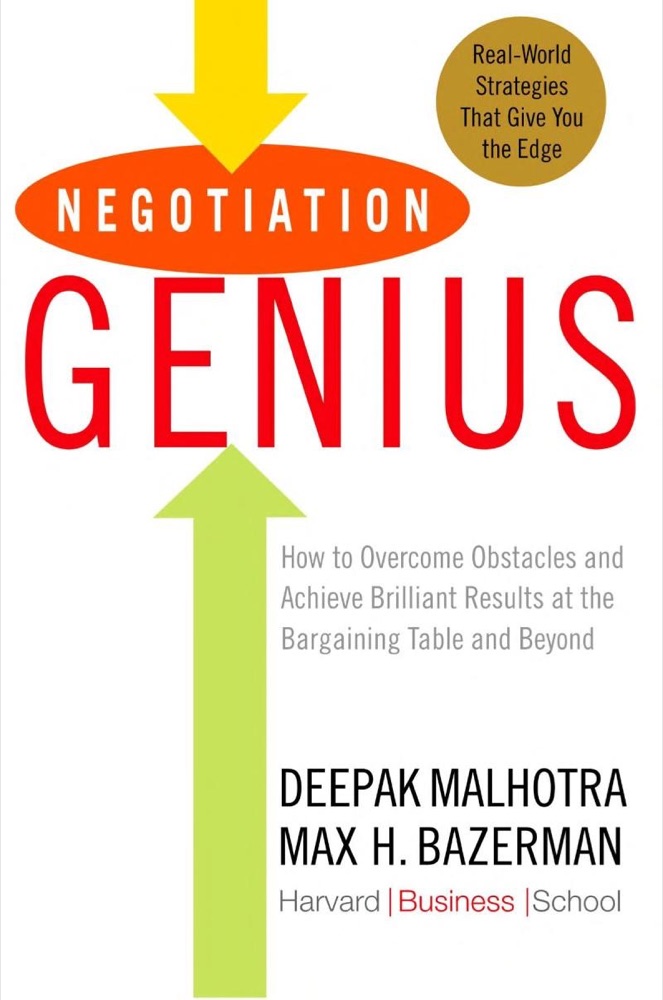
From two leaders in executive education at Harvard Business School, here are the mental habits and proven strategies you need to achieve outstanding results in any negotiation.
Whether you’ve “seen it all” or are just starting out, Negotiation Genius will dramatically improve your negotiating skills and confidence. Drawing on decades of behavioral research plus the experience of thousands of business clients, the authors take the mystery out of preparing for and executing negotiations—whether they involve multimillion-dollar deals or improving your next salary offer.
What sets negotiation geniuses apart? They are the men and women who know how
•Identify negotiation opportunities where others see no room for discussion
•Discover the truth even when the other side wants to conceal it
•Negotiate successfully from a position of weakness
•Defuse threats, ultimatums, lies, and other har
Book details
- First published
- 2007
- Author
- Deepak Malhotra
- Genre
- Nonfiction
- Goodreads rating
- 4.23 (3k ratings)
Keep reading
Getting to Yes: Negotiating Agreement Without Giving In
 Never Split the Difference: Negotiating As If Your Life Depended On It
 Getting More: How to Negotiate to Achieve Your Goals in the Real World
 Your Next Five Moves: Master the Art of Business Strategy
 The Power of a Positive No: How to Say No and Still Get to Yes
 Crucial Conversations: Tools for Talking When Stakes are High
 The Win Without Pitching Manifesto
 The Art of Thinking Clearly
 The Catalyst: How to Change Anyone's Mind
 Influence Is Your Superpower: The Science of Winning Hearts, Sparking Change, and Making Good Things Happen
 Thank You for Arguing: What Aristotle, Lincoln, and Homer Simpson Can Teach Us About the Art of Persuasion
 What I Learned Losing a Million Dollars
 Supercommunicators: How to Unlock the Secret Language of Connection
 How to Decide: Simple Tools for Making Better Choices
 To Sell is Human: The Surprising Truth About Moving Others
 If I Understood You, Would I Have This Look on My Face?: My Adventures in the Art and Science of Relating and Communicating
 Difficult Conversations: How to Discuss What Matters Most
 The Mom Test: How to talk to customers & learn if your business is a good idea when everyone is lying to you
 Principles: Life and Work
 The Hard Thing About Hard Things: Building a Business When There Are No Easy Answers―Straight Talk on the Challenges of Entrepreneurship
 The Success Principles: How to Get from Where You Are to Where You Want to Be
 The First 90 Days: Proven Strategies for Getting Up to Speed Faster and Smarter
 Be Your Future Self Now: The Science of Intentional Transformation
 Trump: The Art of the Deal
 Managing Humans: Biting and Humorous Tales of a Software Engineering Manager
 Necessary Endings: The Employees, Businesses, and Relationships That All of Us Have to Give Up in Order to Move Forward
 Amp It Up: Leading for Hypergrowth by Raising Expectations, Increasing Urgency, and Elevating Intensity
 Think Like a Freak
 Radical Candor: Be a Kickass Boss Without Losing Your Humanity
 EntreLeadership: 20 Years of Practical Business Wisdom from the Trenches
 Winning
 The Black Swan: The Impact of the Highly Improbable
 It Takes What It Takes: How to Think Neutrally and Gain Control of Your Life
 QBQ! The Question Behind the Question: Practicing Personal Accountability in Work and in Life
 The 7 Habits of Highly Effective People: Personal Workbook
 Skin in the Game: The Hidden Asymmetries in Daily Life
 Excellent Advice for Living: Wisdom I Wish I'd Known Earlier
 The Art of the Start: The Time-Tested, Battle-Hardened Guide for Anyone Starting Anything
 The Little Book of Behavioral Investing: How not to be your own worst enemy
 The 4-Hour Chef: The Simple Path to Cooking Like a Pro, Learning Anything, and Living the Good Life
 Call Sign Chaos: Learning to Lead
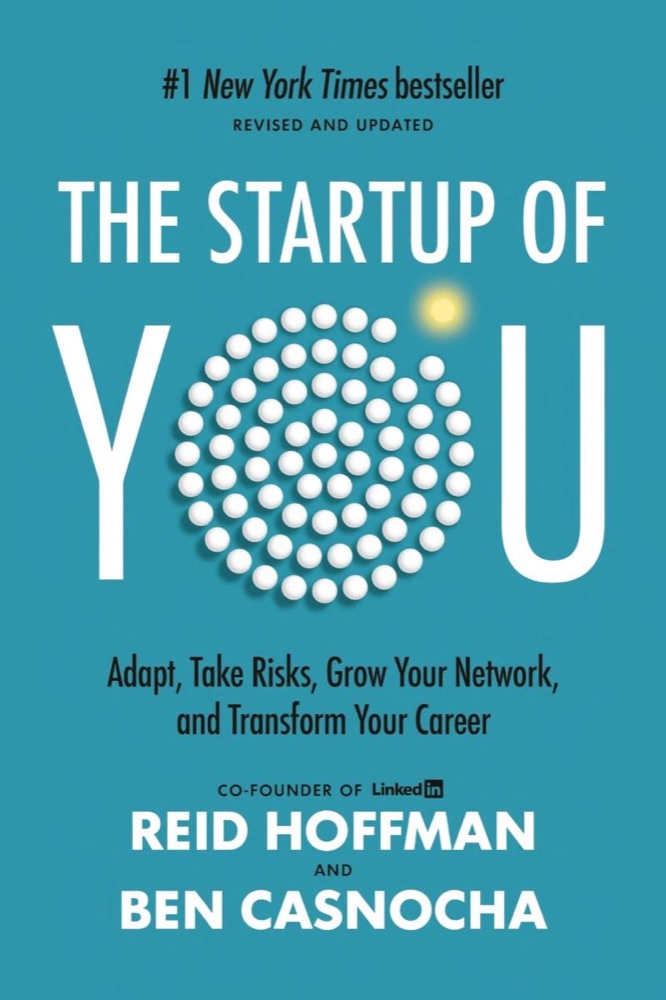 The Startup of You: Adapt to the Future, Invest in Yourself, and Transform Your Career
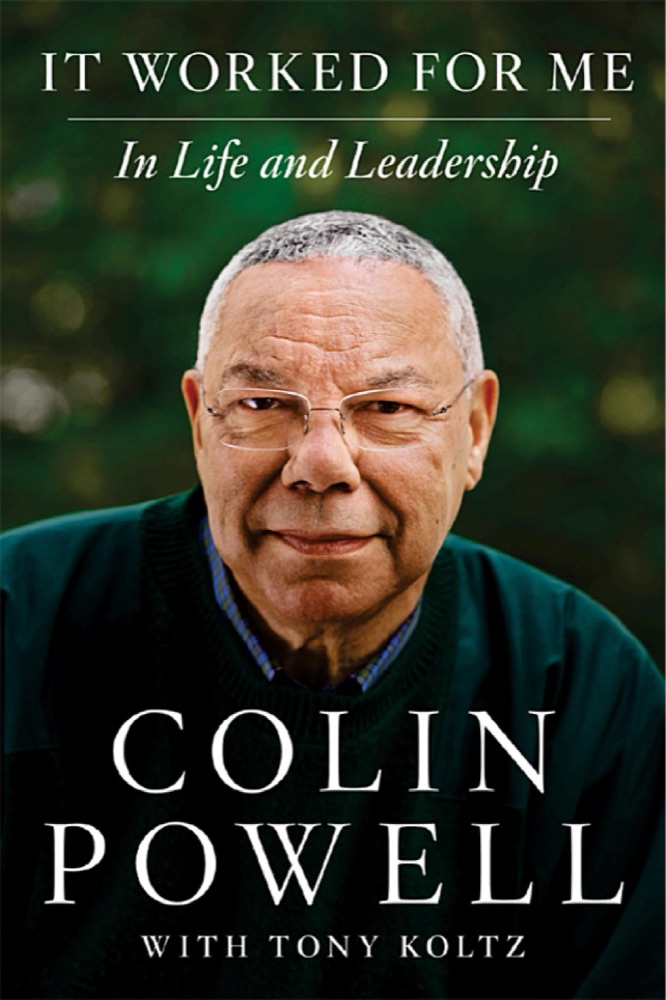 It Worked for Me: In Life and Leadership
 The Ride of a Lifetime: Lessons Learned from 15 Years as CEO of the Walt Disney Company
 Smarter Faster Better: The Secrets of Being Productive in Life and Business
 The Power of Focus
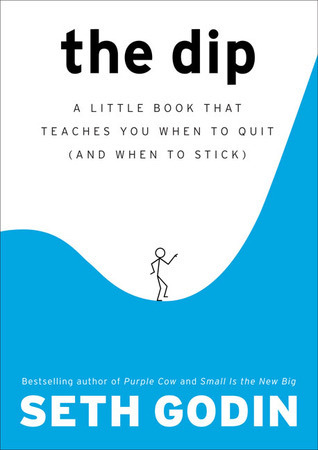 The Dip: A Little Book That Teaches You When to Quit (and When to Stick)
 What Color Is Your Parachute? A Practical Manual for Job-Hunters and Career-Changers
 The Last Lecture
 Surrounded by Idiots
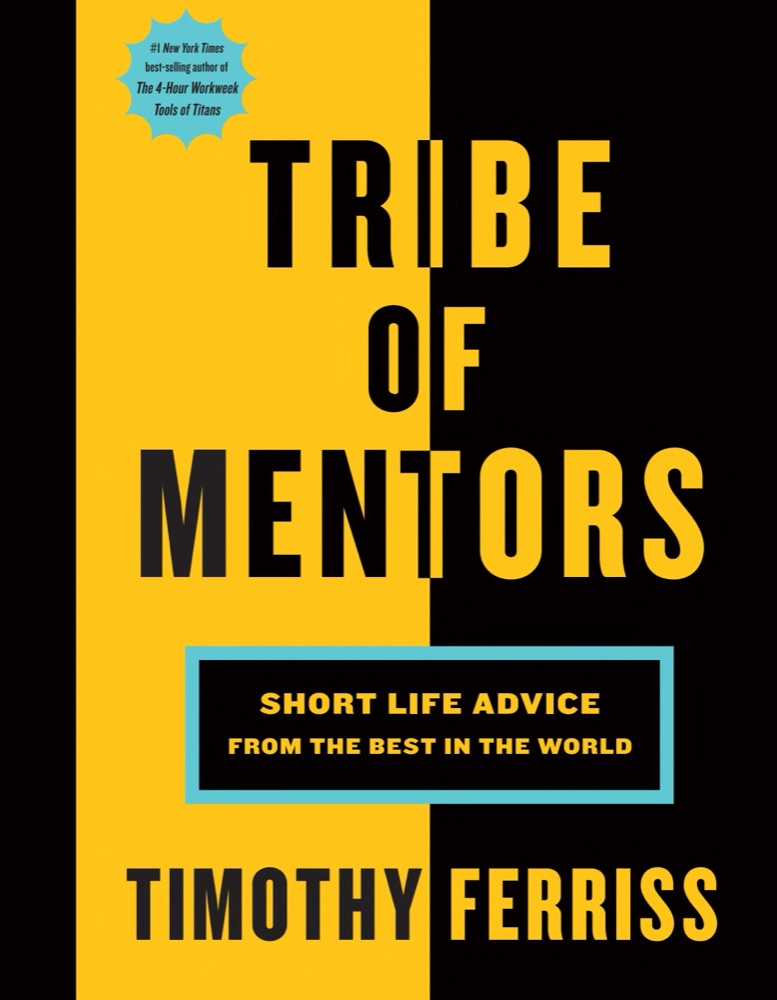 Tribe Of Mentors: Transformative Wisdom From Icons and Innovators to Help You Navigate Life's Challenges
 High Conflict: Why We Get Trapped and How We Get Out
 The 360 Degree Leader: Developing Your Influence from Anywhere in the Organization
 The Effective Executive: The Definitive Guide to Getting the Right Things Done
 The Score Takes Care of Itself: My Philosophy of Leadership
 Becoming Bulletproof: Protect Yourself, Read People, Influence Situations, and Live Fearlessly
 Invent and Wander: The Collected Writings of Jeff Bezos
 Lean Analytics: Use Data to Build a Better Startup Faster
 Tools of Titans: The Tactics, Routines, and Habits of Billionaires, Icons, and World-Class Performers
 The Gift of Fear: Survival Signals That Protect Us from Violence