
 Back Story
Quotes from the Book
A truly English protest march would see us all chanting: 'What do we want? GRADUAL CHANGE! When do we want it? IN DUE COURSE!
23
Social scientists are not universally liked or appreciated, but we are still marginally more acceptable than alcoholics and escaped lunatics.
11
Tea is still believed, by English people of all classes, to have miraculous properties. A cup of tea can cure, or at least significantly alleviate, almost all minor physical ailments and indispositions, from a headache to a scraped knee. Tea is also an essential remedy for all social and psychological ills, from a bruised ego to the trauma of a divorce or bereavement. This magical drink can be used equally effectively as a sedative or stimulant, to calm and soothe or to revive and invigorate. Whatever your mental or physical state, what you need is ‘a nice cup of tea’.
8
Native speakers can rarely explain the grammatical rules of their own language. In the same way, those who are most ‘fluent’ in the rituals, customs and traditions of a particular culture generally lack the detachment necessary to explain the ‘grammar’ of these practices in an intelligible manner. This is why we have anthropologists.
7
The understatement rule means that a debilitating and painful chronic illness must be described as ‘a bit of a nuisance’; a truly horrific experience is ‘well, not exactly what I would have chosen’; a sight of breathtaking beauty is ‘quite pretty’; an outstanding performance or achievement is ‘not bad’; an act of abominable cruelty is ‘not very friendly’, and an unforgivably stupid misjudgement is ‘not very clever’; the Antarctic is ‘rather cold’ and the Sahara ‘a bit too hot for my taste’; and any exceptionally delightful object, person or event, which in other cultures would warrant streams of superlatives, is pretty much covered by ‘nice’, or, if we wish to express more ardent approval, ‘very nice’.
5
Many of those who pontificate about "acculturation" are inclined to underestimate this element of choice. Such processes are often described in terms suggesting that the "dominant" culture is simply imposed on unwitting, passive minorities, rather than focusing on the extent to which individuals quite consciously, deliberately, cleverly and even mockingly pick and choose amongst the behaviours and customs of their host culture
4
...fine love poetry tends to be written when the object of one's affection is at a safe distance; also, it often reflects a love of words more than a love of women...
4
During the London riots in August 2011, I witnessed looters forming an orderly queue to squeeze, one at a time, through the smashed window of a shop they were looting. They even did the ‘paranoid pantomime’, deterring potential queue-jumpers with disapproving frowns, pointed coughs and raised eyebrows. And it worked. Nobody jumped the queue. Even amid rioting and mayhem – and while committing a blatant crime – the unwritten laws of queuing can be ‘enforced’ by a raised eyebrow.
3
Pardon This word is the most notorious pet hate of the upper and upper-middle classes. Jilly Cooper recalls overhearing her son telling a friend ‘Mummy says that “pardon” is a much worse word than “fuck”.’ He was quite right: to the uppers and upper-middles, using such an unmistakably lower-class term is worse than swearing. Some even refer to lower-middle-class suburbs as ‘Pardonia’. Here is a good class-test you can try: when talking to an English person, deliberately say something too quietly for them to hear you properly. A lower-middle or middle-middle person will say, ‘Pardon?’; an upper-middle will say ‘Sorry?’ (or perhaps ‘Sorry – what?’ or ‘What – sorry?’); but an upper-class and a working-class person will both just say, ‘What?’ The working-class person may drop the t – ‘Wha’?’ – but this will be the only difference. Some upper-working-class people with middle-class aspirations might say ‘pardon’, in a misguided attempt to sound ‘posh’.
3
Moderation is all very well, but only in moderation.
2
when the English say ‘Oh really? How interesting!’ they might well mean ‘I don’t believe a word of it, you lying toad’. Or they might not. They might just mean ‘I’m bored and not really listening but trying to be polite’. Or they might be genuinely surprised and truly interested. You’ll never know.
2
the myth is still widely believed, particularly among males, that men spend their conversations ‘solving the world’s problems’, while the womenfolk gossip in the kitchen. In my discussion groups and interviews, most English males initially claimed that they did not gossip, while most of the females readily admitted that they did. On further questioning, however, the difference turned out to be more a matter of semantics than practice: what the women were happy to call ‘gossip’, the men defined as ‘exchanging information’.
2
This comment seemed to reflect an assumption that a stereotype is almost by definition ‘not true’, that the truth lies somewhere else – wherever ‘beyond’ might be. I find this rather strange, as I would naturally assume that, although they are unlikely to be ‘the truth, the whole truth and nothing but’, stereotypes about English national character might possibly contain at least a grain or two of truth. They do not, after all, just come out of thin air, but must have germinated and grown from something.
2
Even the English, who understand it, are not exactly riotously amused by the understatement. At best, a well-timed, well-turned understatement only raises a slight smirk.
2
The No-name Rule In purely social situations, the difficulties are even more acute. There is no universal prescription of handshakes on initial introduction – indeed, they may be regarded as too ‘businesslike’ – and the normal business practice of giving one’s name at this point is also regarded as inappropriate. You do not go up to someone at a party (or in any other social setting where conversation with strangers is permitted, such as a pub bar-counter) and say ‘Hello, I’m John Smith,’ or even ‘Hello, I’m John.’ In fact, the only correct way to introduce yourself in such settings is not to introduce yourself at all, but to find some other way of initiating a conversation – such as a remark about the weather. The ‘brash American’ approach: ‘Hi, I’m Bill, how are you?’, particularly if accompanied by an outstretched hand and beaming smile, makes the English wince and cringe. The American tourists and visitors I spoke to during my research had been both baffled and hurt by this reaction. ‘I just don’t get it,’ said one woman. ‘You say your name and they sort of wrinkle their noses, like you’ve told them something a bit too personal and embarrassing.’ ‘That’s right,’ her husband added. ‘And then they give you this tight little smile and say, “Hello” – kind of pointedly not giving their name, to let you know you’ve made this big social booboo. What the hell is so private about a person’s name, for God’s sake?’ I ended up explaining, as kindly as I could, that the English do not want to know your name, or tell you theirs, until a much greater degree of intimacy has been established – like maybe when you marry their daughter. Rather than giving your name, I suggested, you should strike up a conversation by making a vaguely interrogative comment about the weather (or the party or pub or wherever you happen to be). This must not be done too loudly, and the tone should be light
1
Men were certainly found to be no more likely than women to discuss ‘important’ or ‘highbrow’ subjects, such as politics, work, art and cultural matters –except (and this was a striking difference) when women were present. On their own, men gossip, with no more than five per cent of conversation time devoted to non-social subjects, such as work or politics. It is only in mixed-sex groups, where there are women to impress, that the proportion of male conversation time devoted to these more ‘highbrow’ subjects increases dramatically, to between 15 and 20 per cent.
1
The reasons for our prolific understating are not hard to discover: our strict prohibitions on earnestness, gushing, emoting and boasting require almost constant use of understatement.
1
...retreat into the privacy and sanctuary of our castle-like homes, shut the door, pull up the imaginary drawbridge and avoid the issue. Home may indeed be our substitute for a Fatherland, but at another level, I would suggest that *home is what the English have instead of social skills*.
1
When the priest says ‘Lord, have mercy upon us’, you do not respond ‘Well, actually, why should he?’ You intone dutifully, ‘Christ, have mercy upon us.’ In the same way, it would be very rude to respond to ‘Ooh, isn’t it cold?’ with ‘No, actually, it’s quite mild.
1
I mentioned earlier that someone once said that the English have satire instead of revolutions (or something to that effect): we complain bitterly, and often wittily, but we do not actually do anything about it.
1
English males are allowed to express emotion. Well
anthropological mission of ‘making the strange familiar and the familiar strange’.
We may be useless at complaining, incapable of even the most basic assertiveness, at the mercy of incompetent providers of sub-standard goods but, hey, at least we are omniscient.
Nor am I saying that English conversation codes do not allow men to express emotion. English males are allowed to express emotion. Well they are allowed to express some emotions. Three, to be precise: surprise, providing it is conveyed by expletives; anger, generally communicated in the same manner; and elation/triumph, which again involves shouting and swearing. It can thus sometimes be rather hard to tell exactly which of these three permitted emotions an Englishman is attempting to express.
That is why a house is not something that you passively 'have', it is something that you 'do', something that you 'work on',
So we hold endless meetings, everyone is consulted, we discuss everything, and eventually we reach a consensus. Sometimes we even make a decision. Then we go and have a good moan about it all.
The most truly eccentric dresser in this country is the Queen, who pays no attention whatsoever to fashion
People who insist on calculating in detail exactly who had what when it comes to dividing up the bill are despised, not just because they are miserly, but because such discussions involve a prolonged breach of the money-talk taboo.
Class in England is no more determined by wealth than it is by occupation.
Watch on YouTube
About Kate Fox
We have collected 29 quotes from 1 book by Kate Fox on BookQuoters.
More about the author →About the book
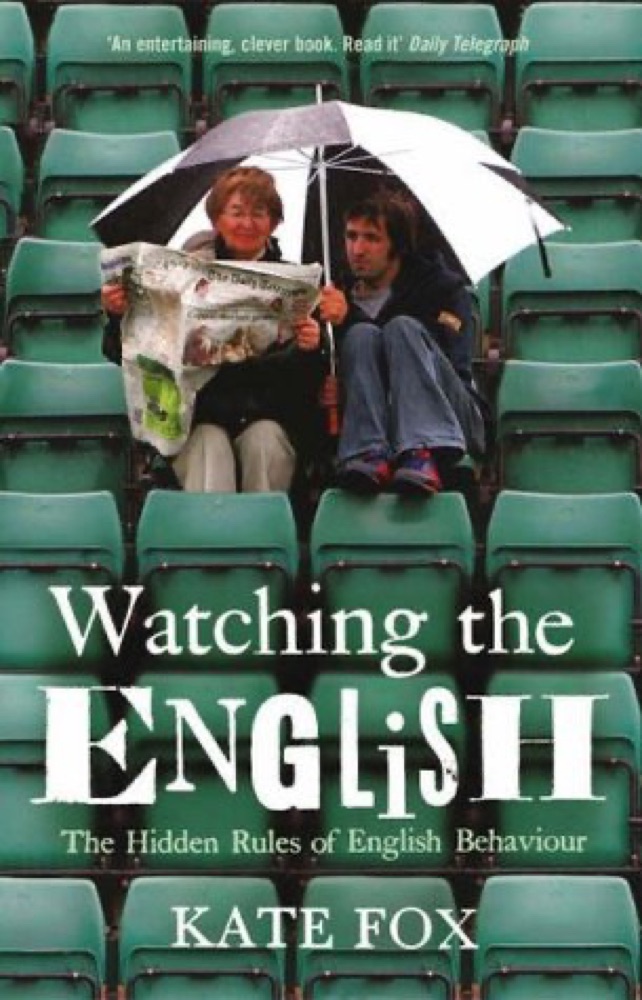
In "Watching The English" anthropologist Kate Fox takes a revealing look at the quirks, habits and foibles of the English people. She puts the English national character under her anthropological microscope, and finds a strange and fascinating culture, governed by complex sets of unspoken rules and byzantine codes of behaviour. The rules of weather-speak. The ironic-gnome rule. The reflex apology rule. The paranoid-pantomime rule. Class indicators and class anxiety tests. The money-talk taboo and many more ...
Through a mixture of anthropological analysis and her own unorthodox experiments (using herself as a reluctant guinea-pig), Kate Fox discovers what these unwritten behaviour codes tell us about Englishness.
Book details
- First published
- 2004
- Author
- Kate Fox
- Genre
- Nonfiction
- Goodreads rating
- 3.91 (12k ratings)
Keep reading
Back Story
 What's Wrong with the World
 The Fry Chronicles
 Talk to the Hand: The Utter Bloody Rudeness of the World Today, or Six Good Reasons to Stay Home and Bolt the Door
 The Mother Tongue: English and How It Got That Way
 Consider the Lobster and Other Essays
 Friday
 The Culture Map: Breaking Through the Invisible Boundaries of Global Business
 The Constant Rabbit
 Heartbreak House
 Unseen Academicals
 The Rebel Angels
 Stranger in a Strange Land
 The Midwich Cuckoos
 The Diamond Age
 Erewhon
 That Hideous Strength
 Impro: Improvisation and the Theatre
 The A.B.C. Murders
 The Day of the Scorpion
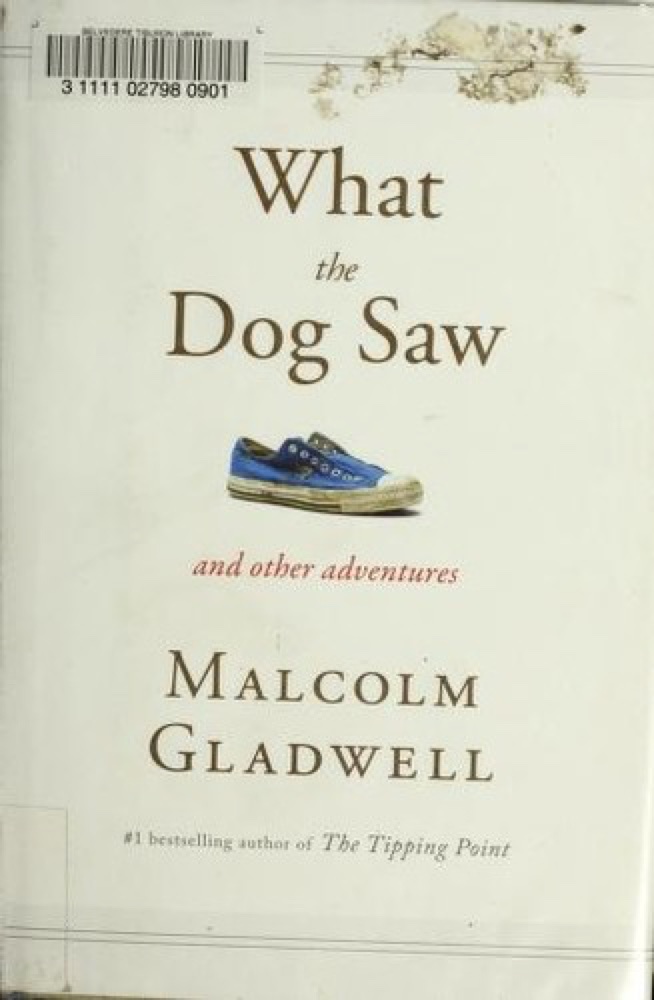 What the Dog Saw and Other Adventures
 Americanah
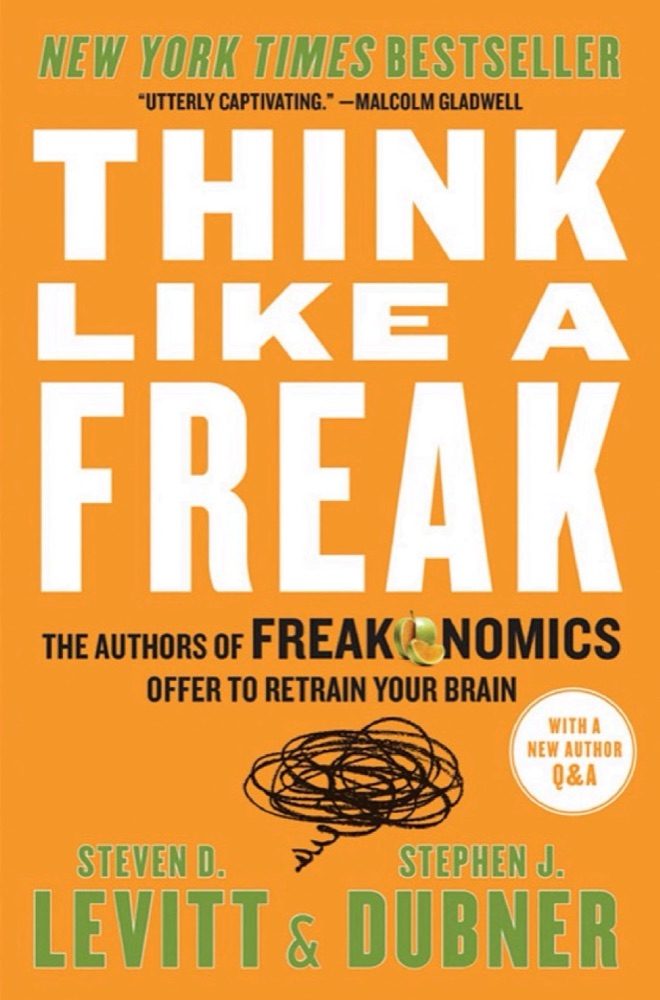 Think Like a Freak
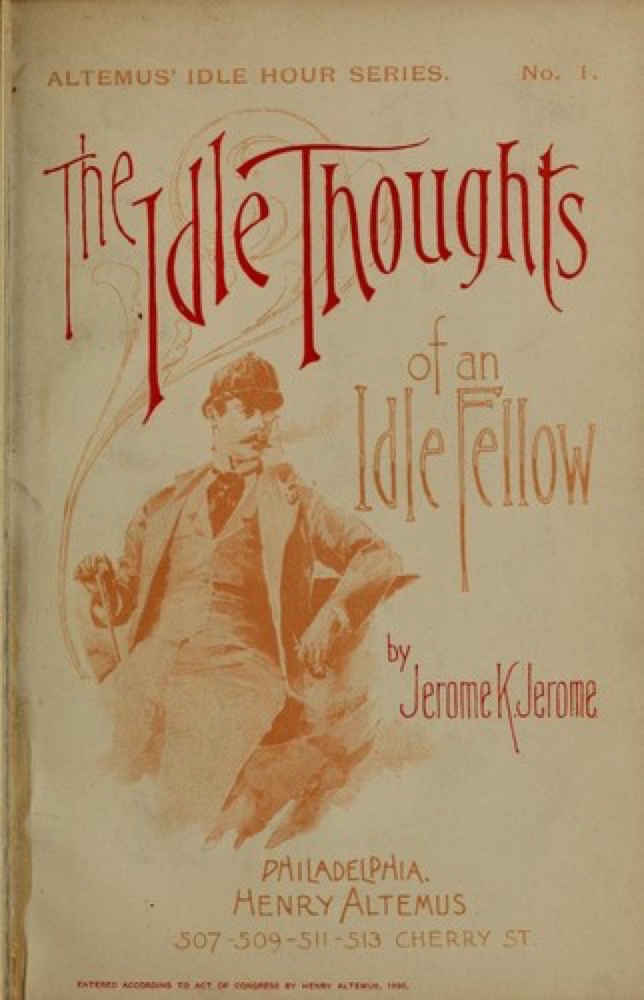 Idle Thoughts of an Idle Fellow
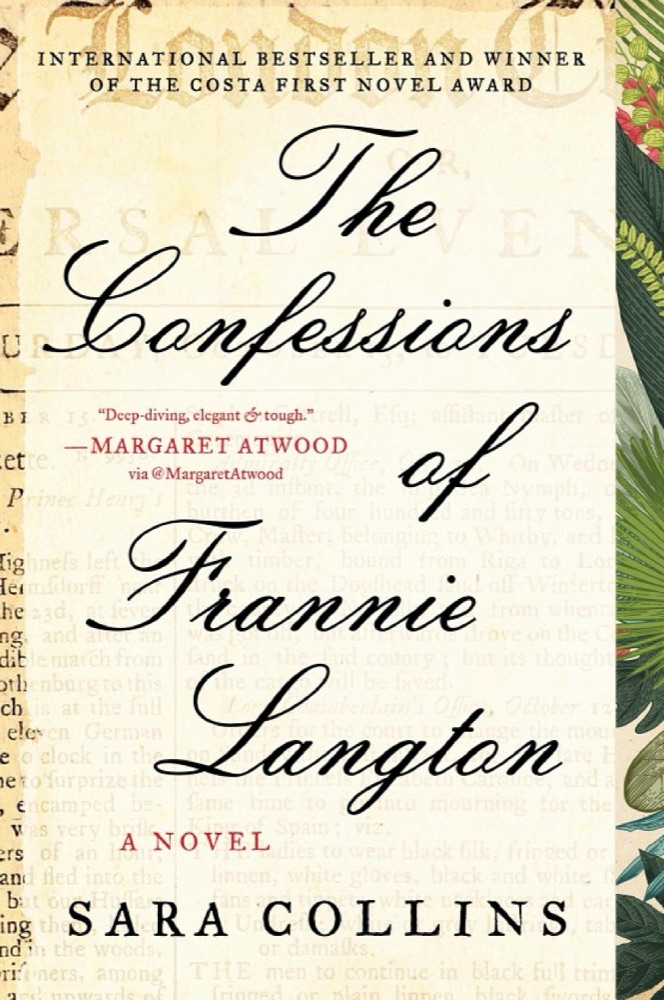 The Confessions of Frannie Langton
 A Collection of Essays
 Human, All Too Human
 House Rules
 Murder in the Mews
 The Jewel in the Crown
 The Further Adventures of An Idiot Abroad
 The Fran Lebowitz Reader
 One Man's Meat
 Elizabeth Finch
 Notes from a Small Island
 The Importance of Being Earnest
 The Imperfectionists
 Old Babes in the Wood: Stories
 Ayoade on Top
 The Art of Thinking Clearly
 Gaudy Night
 Rules of Civility
 A Language Older Than Words
 Letters to a Young Contrarian
 From Dawn to Decadence: 500 Years of Western Cultural Life, 1500 to the Present
 Word by Word: The Secret Life of Dictionaries
 Believe Me: A Memoir of Love, Death, and Jazz Chickens
 Ghostwritten
 The Eyre Affair
 Arguably: Selected Essays
 Wolf Hall
 Hitch-22: A Memoir
 Table for Two
 A Hunter-Gatherer's Guide to the 21st Century: Evolution and the Challenges of Modern Life
 Ancillary Sword
 Shibumi
 Speedboat
 No Time To Spare: Thinking About What Matters
 The Elements of Eloquence: How to Turn the Perfect English Phrase
 The Dictionary of Lost Words