 Discipline and Punish: The Birth of the Prison
Quotes from the Book
Aren't you sure of what you're saying? Are you going to change yet again, shift your position according to the questions that are put to you, and say that the objections are not really directed at the place from which you are speaking? Are you going to declare yet again that you have never been what you have been reproached with being? Are you already preparing the way out that will enable you in your next book to spring up somewhere else and declare as you're now doing: no, no, I'm not where you are lying in wait for me, but over here, laughing at you?' 'What, do you imagine that I would take so much trouble and so much pleasure in writing, do you think that I would keep so persistently to my task, if I were not preparing – with a rather shaky hand – a labyrinth into which I can venture, into which I can move my discourse, opening up underground passages, forcing it to go far from itself, finding overhangs that reduce and deform its itinerary, in which I can lose myself and appear at last to eyes that I will never have to meet again. I am no doubt not the only one who writes in order to have no face. Do not ask who I am and do not ask me to remain the same: leave it to our bureaucrats and our police to see that our papers are in order. At least spare us their morality when we write.
70
You may have killed God beneath the weight of all that you have said; but don't imagine that, with all that you are saying, you will make a man that will live longer than he.
44
Do not ask who I am and do not ask me to remain the same: leave it to our bureaucrats and our police to see that our papers are in order.
34
Discourse is not life; its time is not your time; in it, you will not be reconciled to death; you may have killed God beneath the weight of all that you have said; but don't imagine that, with all that you are saying you will make a man that will live longer than he.
18
The frontiers of a book are never clear-cut: beyond the title, the first lines, and the last full-stop, beyond its internal configuration and its autonomous form, it is caught up in a system of references to other books, other texts, other sentences: it is a node within a network.
8
The history of ideas, then, is the discipline of beginnings and ends, the description of obscure continuities and returns, the reconstitution of developments in the linear form of history. But it can also, by that very fact, describe, from one domain to another, the whole interplay of exchanges and intermediaries: it shows how scientific knowledge is diffused, gives rise to philosophical concepts, and takes form perhaps in literary works; it shows how problems, notions, themes may emigrate from the philosophical field where they were formulated to scientific or political discourses; it relates work with institutions, social customs or behaviour, techniques, and unrecorded needs and practices; it tries to revive the most elaborate forms of discourse in the concrete landscape, in the midst of the growth and development that witnessed their birth. It becomes therefore the discipline of interferences, the description of the concentric circles that surround works, underline them, relate them to one another, and insert them into whatever they are not.
8
The manifest discourse, therefore, is really no more than the repressive presence of what it does not say; and this ‘not-said’ is a hollow that undermines from within all that is said.
7
To seek in the great accumulation of the already-said the text that resembles 'in advance' a later text, to ransack history in order to rediscover the play of anticipations or echoes, to go right back to the first seeds or to go forward to the last traces, to reveal in a work its fidelity to tradition or its irreducible uniqueness, to raise or lower its stock of originality, to say that the Port -Royal grammarians invented nothing, or to discover that Cuvier had more predecessors than one thought, these are harmless enough amusements for historians who refuse to grow up.
7
Every educational system is a political means of maintaining or of modifying the appropriation of discourse, with the knowledge and the powers it carries with it.
6
[…] marginile unei cărţi nu sunt niciodată clar şi riguros trasate: dincolo de titlu, de primele rânduri şi de punctul final, mai presus de configuraţia sa internă şi de forma care îi conferă autonomie, ea se află prinsă într-un sistem de trimiteri la alte cărţi, la alte texte, la alte fraze: este un nod într-o reţea.
5
History is one way in which a society recognizes and develops a mass of documentation with which it is inextricably linked.
4
In short, the history of thought, of knowledge, of philosophy, of literature seems to be seeking, and discovering, more and more discontinuities, whereas history itself appears to be abandoning the interruption of events in favour of stable structures.
4
thus historical descriptions are necessarily ordered by the present state of knowledge, they increase with every transformation and never cease, in turn, to break with themselves
3
What is that fear which makes you seek, beyond all boundaries, ruptures, shifts, and divisions, the great historico-transcendental destiny of the Occident?
1
Quant à l’oeuvre, les problèmes qu’elle soulève sont plus difficiles encore. En apparence pourtant, quoi de plus simple ? Une somme de textes qui peuvent être dénotés par le signe d’un nom propre. Or cette dénotation (même si on laisse de côté les problèmes de l’attribution) n’est pas une fonction homogène : le nom d’un auteur dénote-t-il de la même façon un texte qu’il a lui-même publié sous son nom, un texte qu’il a présenté sous un pseudonyme, un autre qu’on aura retrouvé après sa mort à l’état d’ébauche, un autre encore qui n’est qu’un griffonnage, un carnet de notes, un « papier » ? La constitution d’une oeuvre complète ou d’un opus suppose un certain nombre de choix qu’il n’est pas facile de justifier ni même de formuler : suffit-il d’ajouter aux textes publiés par l’auteur ceux qu’il projetait de donner à l’impression, et qui ne sont restés inachevés quer par le fait de la mort ? Faut-il intégrer aussi tout ce qui est brouillon, fait de la mort ? Faut-il intégrer aussi tout ce qui est brouillon, premier dessein, corrections et ratures des livres ? Faut-il ajouter les esquisses abandonnées? Et quel status donner aux lettres, aux notes, aux conversations rapportées, aux propos transcrits par les auditeurs, bref à cet immense fourmillement de traces verbales qu’un individu laisse autour de lui au moment de mourir, et qui parlent dans un entrecroisement indéfini tant de langages différents ? En tout cas le nom « Mallarmé » ne se réfère pas de la même façon aux thèmes anglais, aux trauctions d’Edgar Poe, aux poèmes, ou aux réponses à des enquêtes ; de même, ce n’est pas le même rapport qui existe entre le nom de Nietzsche d’une part et d’autre par les autobiographies de jeunesse, les dissertations scolaires, les articles philologiques, Zarathoustra, Ecce Homo, les lettres, les dernières cartes postales signées par « Dionysos » ou « Kaiser Nietzsche », les innombrables carnets où s’enchevêtrent les notes de blanchisserie et les projets d’aphorismes. En fait, si on parle si volontiers et sans s’interroger davantage de l’« oeuvre » d’un auteur, c’est qu’on la suppose définie par une certaine fonction d’expression. On admet qu’il doit y avoir un niveau (aussi profond qu’il est nécessaire de l’imaginer) auquel l’oeuvre se révèle, en tous ses fragments, même les plus minuscules et les plus inessentiels, comme l’expression de la pensée, ou de l’expérience, ou de l’imagination, ou de l’inconscient de l’auteur, ou encore des déterminations historiques dans lesquelles il était pris. Mais on voit aussitôt qu’une pareille unité, loin d’être donné immédiatement, est constituée par une opération ; que cette opération est interprétative (puisqu’elle déchiffre, dans le texte, la transcription de quelque chose qu’il cache et qu’il manifeste à la fois); qu’enfin l’opération qui détermine l’opus, en son unité, et par conséquent l’oeuvre elle-même ne sera pas la même s’il s’agit de l’auteur du Théâtre et son double ou de l’auteur du Tractatus et donc, qu’ici et là ce n’est pas dans le même sens qu’on parlera d’une « oeuvre ». L’oeuvre ne peut être considérée ni comme unité immédiate, ni comme une unité certaine, ni comme une unité homogène.
1
— Vous n'êtes pas sûr de ce que vous dites ? Vous allez de nouveau changer, vous déplacer par rapport aux questions qu'on vous pose, dire que les objections ne pointent pas réellement vers le lieu où vous vous prononcez ? Vous vous préparez à dire encore une fois que vous n'avez jamais été ce qu'on vous reproche d'être ? Vous aménagez déjà l'issue qui vous permettra, dans votre prochain livre, de resurgir ailleurs et de narguer comme vous le faites maintenant : non, non je ne suis pas là où vous me guettez, mais ici d'où je vous regarde en riant. — Eh quoi, vous imaginez-vous que je prendrais à écrire tant de peine et tant de plaisir, croyez-vous que je m'y serais obstiné, tête baissée, si je ne préparais — d'une main un peu fébrile — le labyrinthe où m'aventurer, déplacer mon propos, lui ouvrir des souterrains, l’enfoncer loin de lui-même, lui trouver des surplombs qui résument et déforment son parcours, où me perdre et apparaître finalement à des yeux que je n'aurai jamais plus à rencontrer. Plus d'un comme moi sans doute, écrivent pour n'avoir plus de visage. Ne me demandez pas qui je suis et ne me dites pas de rester le même : c'est une morale d'état civil; elle régit nos papiers. Qu'elle nous laisse libres quand il s'agir d'écrire.
1
Watch on YouTube
About Michel Foucault
We have collected 112 quotes from 5 books by Michel Foucault on BookQuoters.
More about the author →More by Michel Foucault
Discipline and Punish: The Birth of the Prison
 Madness and Civilization: A History of Insanity in the Age of Reason
 The History of Sexuality, Volume 1: An Introduction
 The Order of Things: An Archaeology of the Human Sciences
About the book
Librarian note: an alternate cover for this edition can be found here.
Madness, sexuality, power, knowledge—are these facts of life or simply parts of speech? In a series of works of astonishing brilliance, historian Michel Foucault excavated the hidden assumptions that govern the way we live and the way we think.
The Archaeology of Knowledge begins at the level of “things said” and moves quickly to illuminate the connections between knowledge, language, and action in a style at once profound and personal. A summing up of Foucault’s own methodological assumptions, this book is also a first step toward a genealogy of the way we live now.
Challenging, at times infuriating, it is an absolutely indispensable guide to one of the most innovative thinkers of our time.
Book details
- First published
- 1969
- Author
- Michel Foucault
- Genre
- Philosophy
- Goodreads rating
- 4.11 (7k ratings)
Keep reading
 The Historian's Craft: Reflections on the Nature and Uses of History and the Techniques and Methods of Those Who Write It.
 Illuminations: Essays and Reflections
The Order of Things: An Archaeology of the Human Sciences
Illuminations: Essays and Reflections
The Order of Things: An Archaeology of the Human Sciences
 From Dawn to Decadence: 500 Years of Western Cultural Life, 1500 to the Present
 Selections from the Prison Notebooks
 Selected Non-Fictions
 Daybreak: Thoughts on the Prejudices of Morality
 Reality Hunger: A Manifesto
 Philosophical Investigations
 Labyrinths: Selected Stories and Other Writings
 Literary Theory: An Introduction
 Untimely Meditations
 The Eighteenth Brumaire of Louis Bonaparte
 The Book of Sand and Shakespeare's Memory
 A History of the World in 100 Objects
 The Discovery of India
 The Book That Broke the World
 Culture and Imperialism
 An Enquiry Concerning Human Understanding
 The Message
 What Is History?
 Genesis
 Arm of the Sphinx
 Dæmon Voices
 The Ides of March
 Myths to Live By
 Cultural Amnesia: Necessary Memories from History and the Arts
 The Book That Wouldn’t Burn
 The Crisis of the Modern World
 Gnomon
 An Essay Concerning Human Understanding
 The Essays of Ralph Waldo Emerson
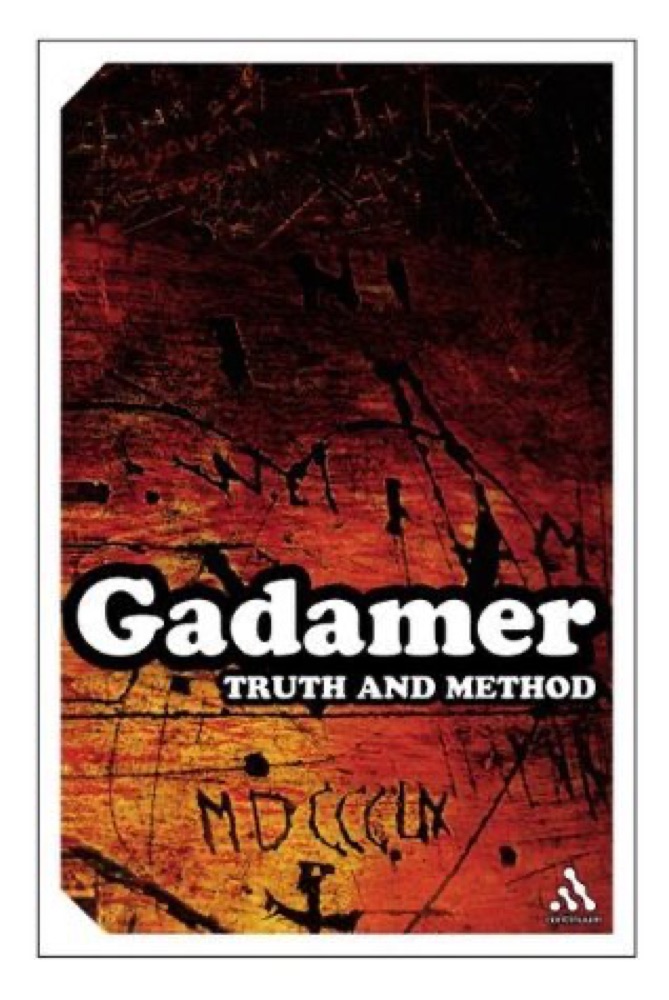 Truth and Method
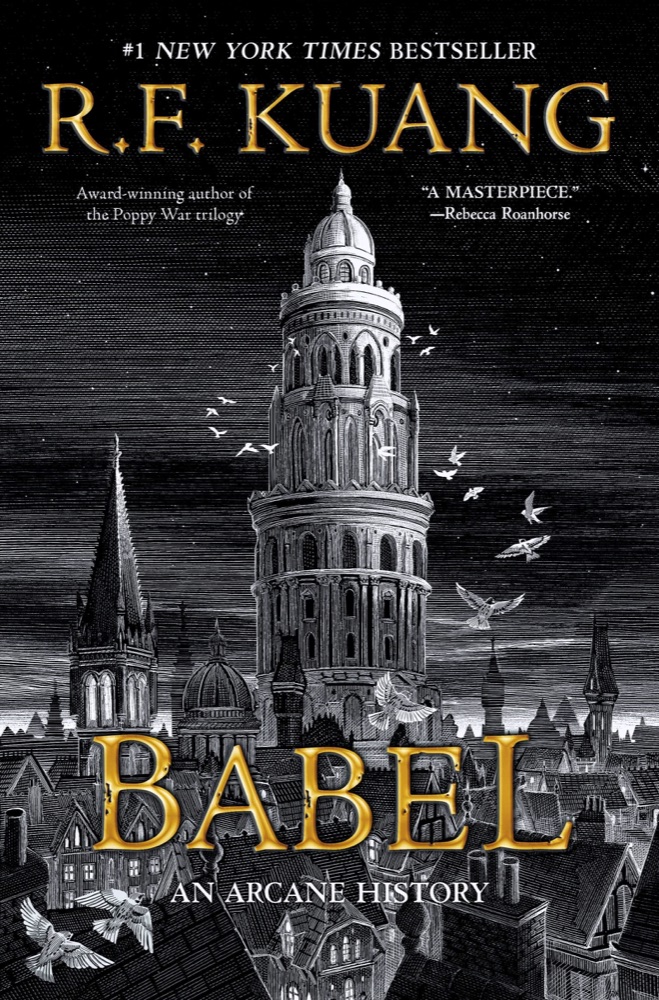 Babel
Babel
 The Will to Power
 The Story of Philosophy: The Lives and Opinions of the World's Greatest Philosophers
 Burning Questions: Essays and Occasional Pieces, 2004 to 2021
 After Virtue
 Pensées
 The Name of the Rose
 A Thousand Plateaus: Capitalism and Schizophrenia
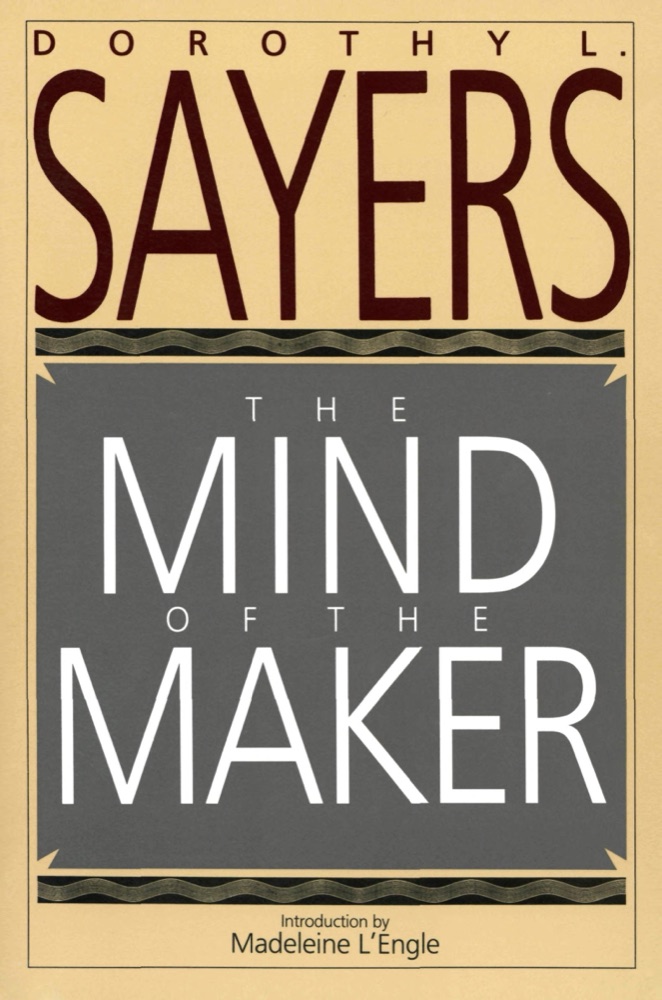 The Mind of the Maker: Dorothy L. Sayers' Witty Classic on the Trinity, Christianity, and Human Creativity
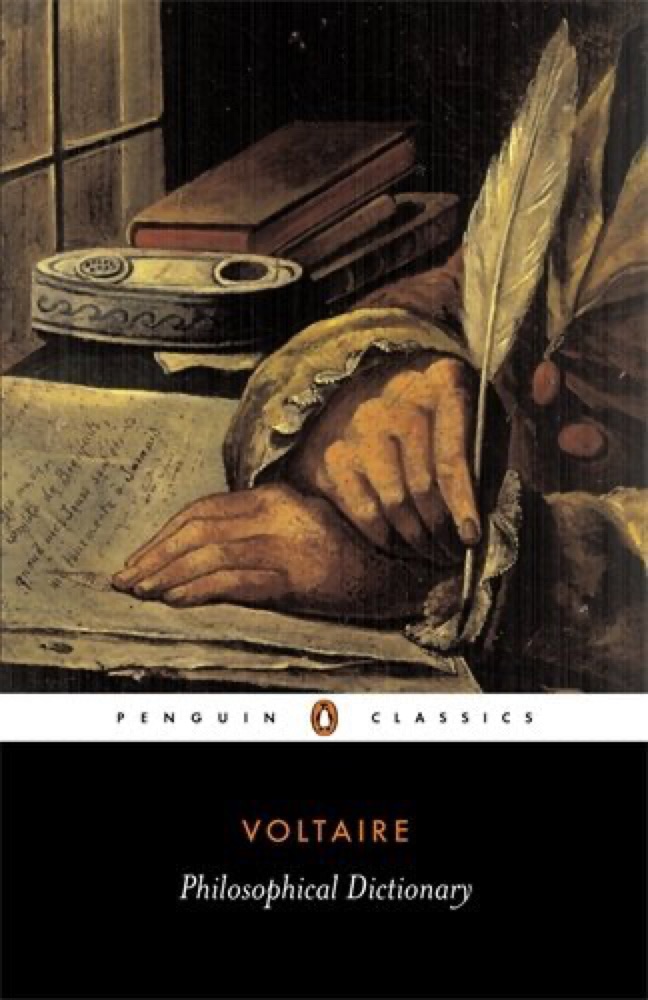 Philosophical Dictionary
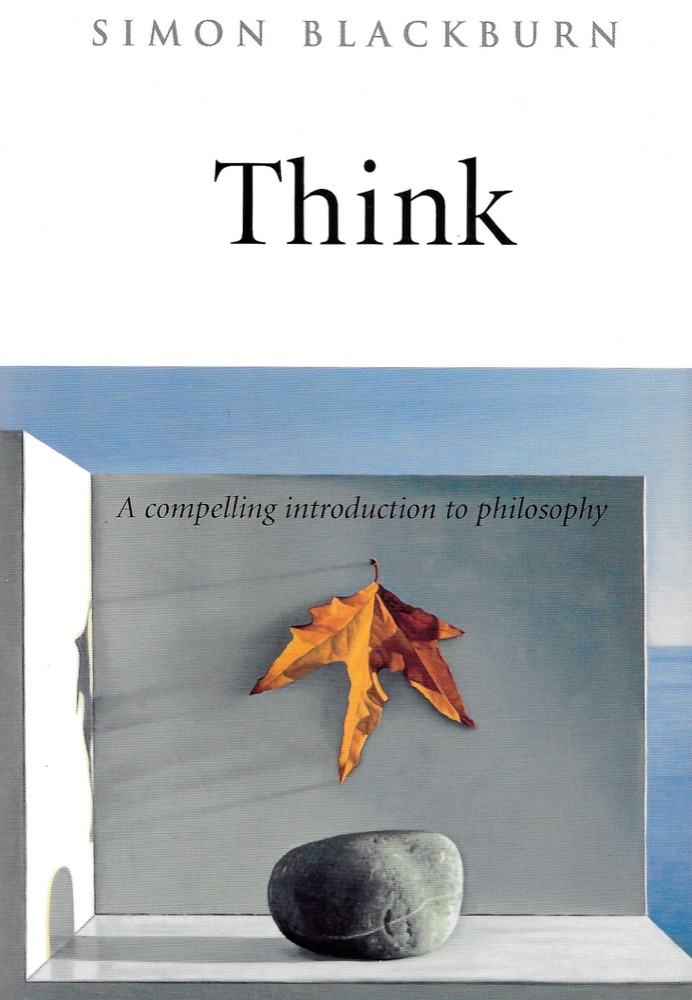 Think: A Compelling Introduction to Philosophy
 Too Like the Lightning
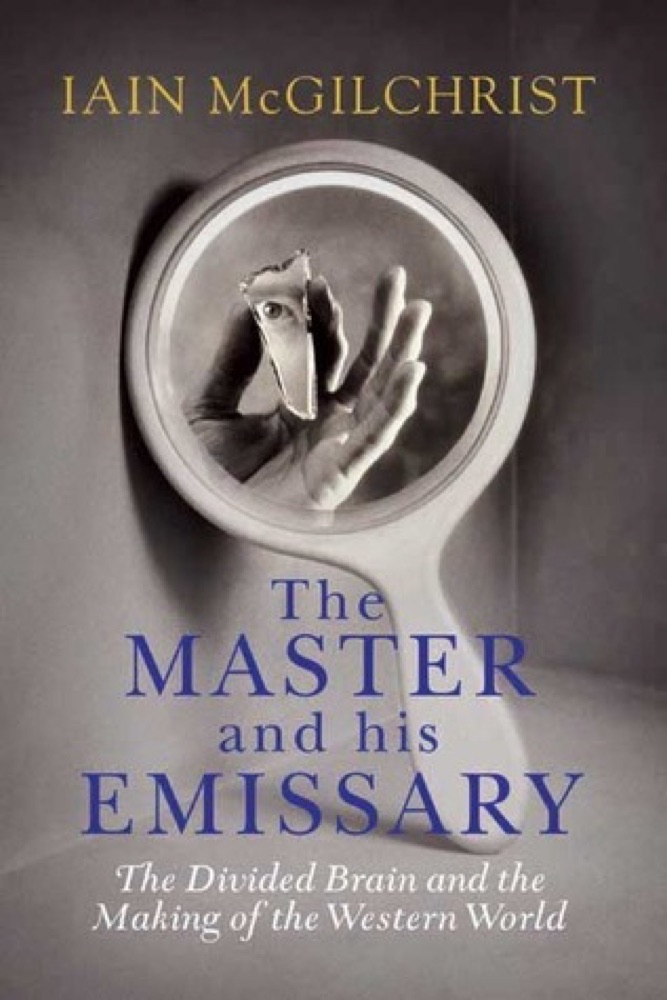 The Master and His Emissary: The Divided Brain and the Making of the Western World
 The Da Vinci Code
 The Book That Held Her Heart
The History of Sexuality, Volume 1: An Introduction
The Book That Held Her Heart
The History of Sexuality, Volume 1: An Introduction
 Discourse on Method and Meditations on First Philosophy
 Figuring
 Elizabeth Costello
 A Treatise of Human Nature
 The Swerve: How the World Became Modern
 Daniel Deronda
 Science and Sanity: An Introduction to Non-Aristotelian Systems and General Semantics
 The Arcades Project
 The Summer Without Men
 Anti-Oedipus: Capitalism and Schizophrenia
 Waterland