
 Cultural Amnesia: Necessary Memories from History and the Arts
Quotes from the Book
What would you do if you ruled the world?” The gigolo replied that he would abolish all laws. Barthes said: “Even grammar?
16
Glory to the logos, my friends! Long live dialectics! Let the party begin! May the verb be with you!
5
There are some who went off in search of unicorns, but found only rhinoceros.
4
The homosexuals are the new Jesuits.
4
Spinoza fucks Hegel up the arse! Spinoza fucks Hegel up the arse! Down with dialectics!
4
The old man rubbed his hands: ‘Ah! A meta-subject! Using language to discuss language, there’s nothing better. I adore that’.
2
Eco listens with interest to the story of a lost manuscript for which people are being killed. He sees a man walk past holding a bouquet of roses. His mind wanders for a second, and a vision of a poisoned monk flashes through it.
2
As Umberto Eco might say: for communicating, language is perfect; there could be nothing better. And yet, language doesn’t say everything. The body speaks, objects speak, history speaks, individual or collective destinies speak, life and death speak to us constantly in a thousand different ways. Man is an interpreting machine and, with a little imagination, he sees signs everywhere
2
Don’t forget that one interpretation never exhausts the sign, that polysemy is a bottomless well where we can hear an infinite number of echoes: a word’s meaning never runs dry.
1
Conversation is essentially a game of tennis played with a ball of playdough that changes shape each time it crosses the net.
1
If Barthes, along with Bachelard, is one of those who have done most to enrich criticism during the last thirty years, it is not as a theoretician of a still hazy semiology, but as the champion of a new pleasure in reading.
1
We always fail to talk about love’. He quickly scans the text – it’s about Stendhal. Simon is moved by the thought of Barthes sitting at his desk, thinking about Stendhal, about love, about Italy, completely unaware that every hour spent typing this article was bringing him closer to the moment when he would be knocked over by a laundry van.
1
He liked cock, this intellectual!
1
Kristoff knows exactly how a good lie works: it must be drowned in an ocean of truth.
With Barthes, signs no longer need to be signals: they have become clues. A seismic shift. They’re everywhere. From now on, semiology is ready to conquer the world.
Intuition is a convenient concept for dispensing with explanations, like God.
The slalom race of syntax!
L’emploi du mot „système” confirme au policier ce qu’il redoutait: il est tombé chez les gauchistes. Il sait d’expérience qu’ils n’ont que ça à la bouche: la société pourrie, la lutte des classes, le „système”...
In the provinces, being queer is worse than being Arab.
He downs the contents of his glass in a single gulp and, looking at Simon, adds: “This is as amusing as a novel.
And it was you who created us. The notion of male homosexuality didn’t exist in ancient Greece. Socrates could bugger Alcibiades without being seen as a pederast. The Greeks had a more elevated notion of the corruption of youth …
Watch on YouTube
About Laurent Binet
We have collected 21 quotes from 1 book by Laurent Binet on BookQuoters.
More about the author →About the book
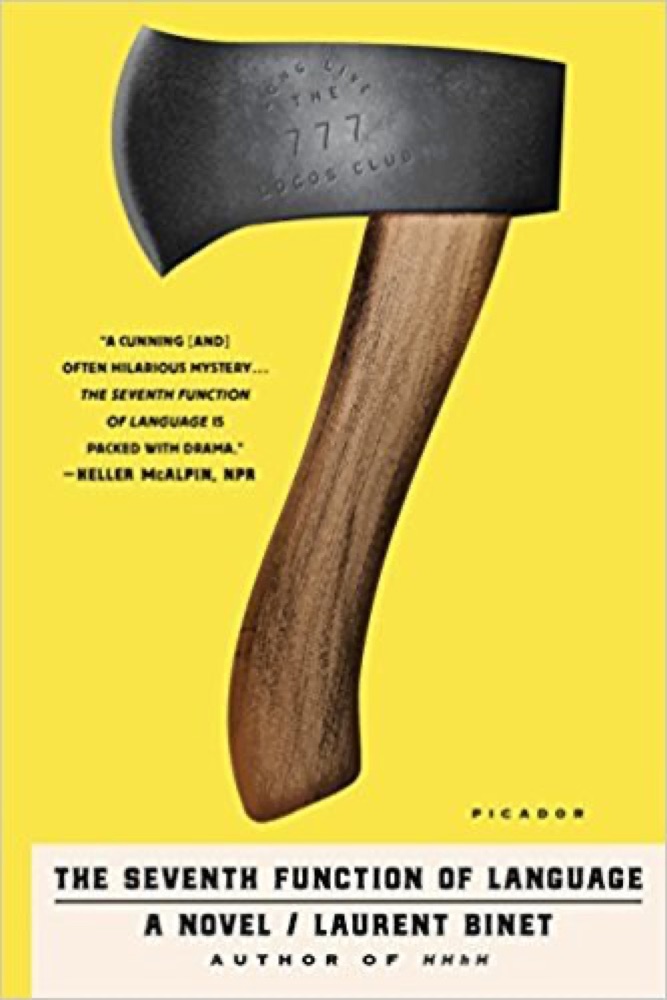
From the prizewinning author of HHhH, “the most insolent novel of the year” (L’Express) comes a romp through the French intelligentsia of the twentieth century.
Paris, 1980. The literary critic Roland Barthes dies—struck by a laundry van—after lunch with the presidential candidate François Mitterand. The world of letters mourns a tragic accident. But what if it wasn’t an accident at all? What if Barthes was . . . murdered?
In The Seventh Function of Language, Laurent Binet spins a madcap secret history of the French intelligentsia, starring such luminaries as Jacques Derrida, Umberto Eco, Gilles Deleuze, Michel Foucault, Judith Butler, and Julia Kristeva—as well as the hapless police detective Jacques Bayard, whose new case will plunge him into the depths of literary theory (starting with the French version of Roland Barthes for Dummies). Soon, Bayard finds himself in search of a l
Book details
- First published
- 2015
- Author
- Laurent Binet
- Genre
- Fiction
- Goodreads rating
- 3.76 (7k ratings)
The buzz
- The New York TimesReview in The New York Timesprofessional review (via Book Marks)
- The Washington PostReview in The Washington Postprofessional review (via Book Marks)
- The GuardianReview in The Guardianprofessional review (via Book Marks)
- NPRReview in NPRprofessional review (via Book Marks)
- Kirkus ReviewsReview in Kirkus Reviewsprofessional review (via Book Marks)
- Publishers WeeklyReview in Publishers Weeklyprofessional review (via Book Marks)
Keep reading
Cultural Amnesia: Necessary Memories from History and the Arts
 The Elementary Particles
 Crome Yellow
 Basic Writings of Nietzsche
 Skinny Legs and All
 Sexus
Sexus
 Quicksilver
 The Stories of Vladimir Nabokov
 Labyrinths: Selected Stories and Other Writings
 Eyeless in Gaza
 Twilight of the Idols/The Anti-Christ
 The Club of Queer Trades
 Hyperion
 Foucault's Pendulum
 Fall of Man in Wilmslow
 Logicomix: An Epic Search for Truth
 Pensées
 Too Like the Lightning
 Babel-17
 Dear Mr. M
 Finders Keepers
 From Dawn to Decadence: 500 Years of Western Cultural Life, 1500 to the Present
 Cocaine
 Philosophical Dictionary
 The Braindead Megaphone
 Monday or Tuesday
 Elizabeth Costello
 The Discovery of Heaven
 The Futurological Congress: From the Memoirs of Ijon Tichy
 Babel
Babel
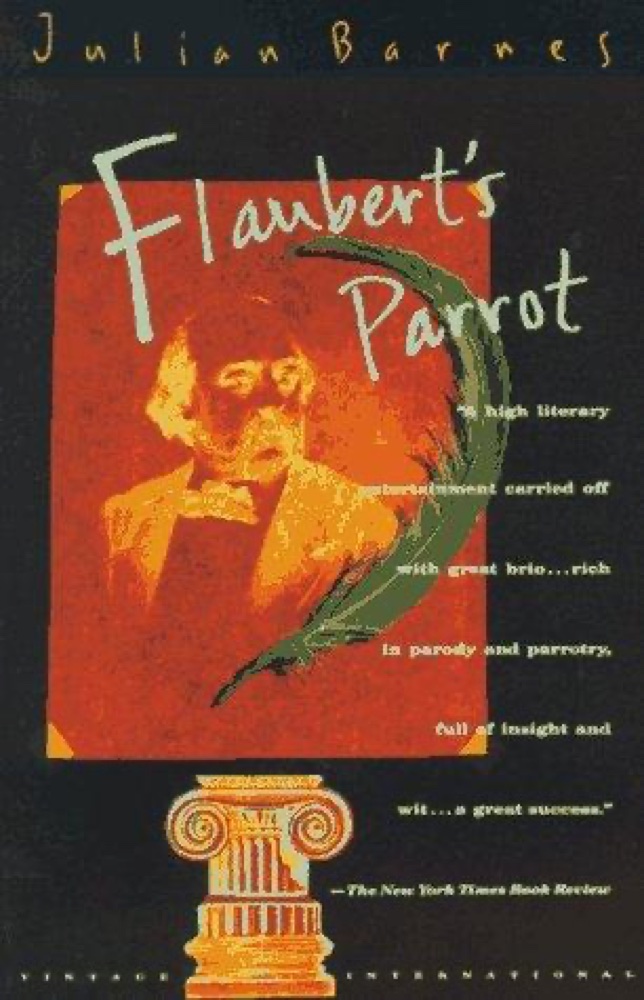 Flaubert's Parrot
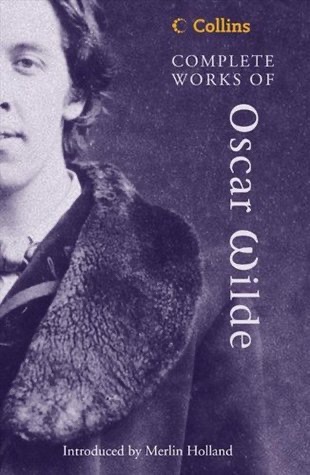 Complete Works of Oscar Wilde
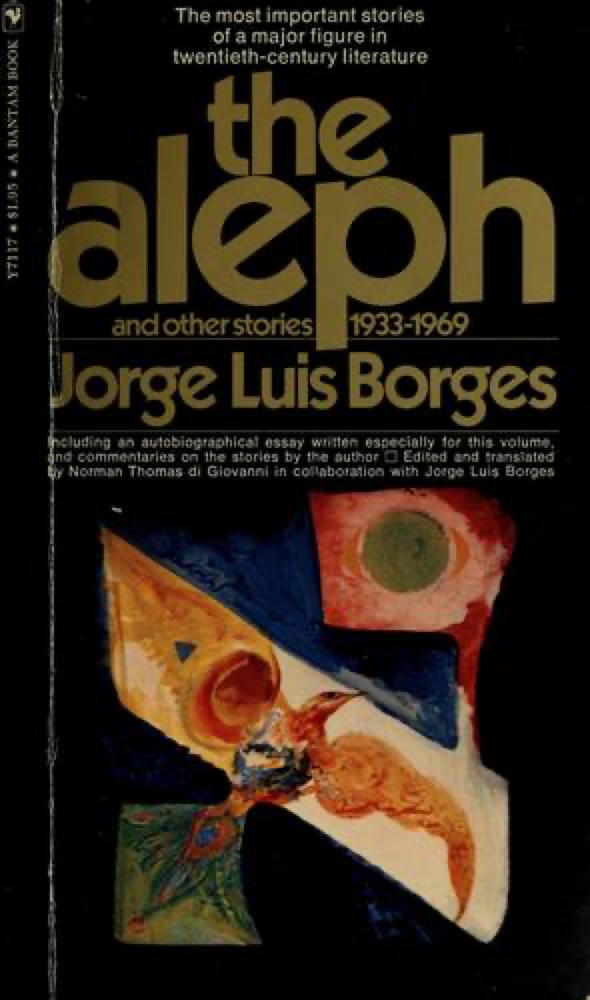 The Aleph and Other Stories
 The Man Who Laughs
 36 Arguments for the Existence of God: A Work of Fiction
 Sixty Stories
 That Hideous Strength
 Galatea 2.2
 Mythologies
 Arm of the Sphinx
 Plainwater: Essays and Poetry
 Darconville’s Cat
 Moravagine
 The Word Exchange
 Antic Hay
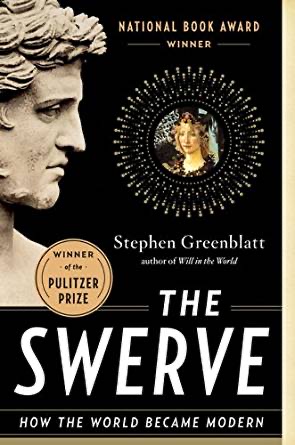 The Swerve: How the World Became Modern
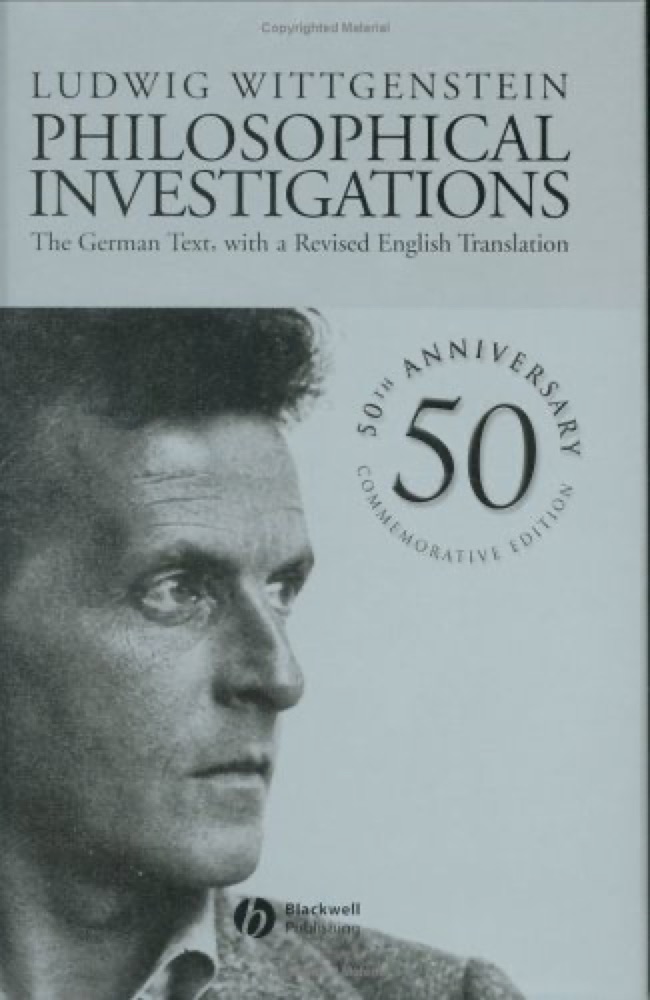 Philosophical Investigations
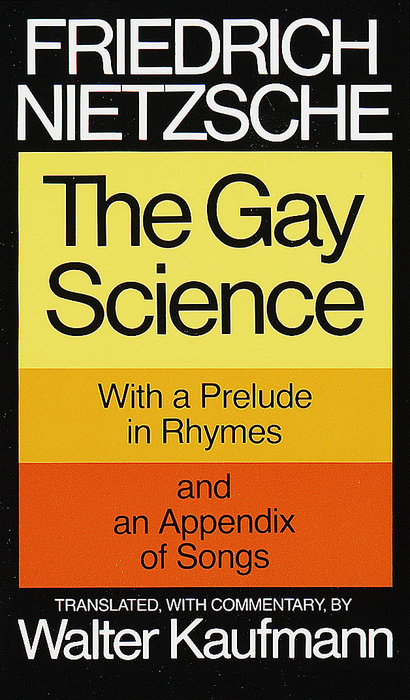 The Gay Science
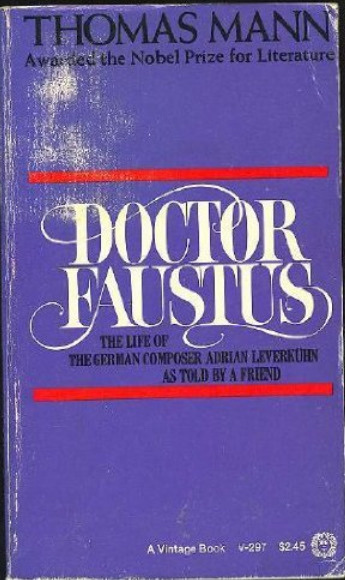 Doctor Faustus
 The Magic Mountain
 Arcadia
 Ravelstein
 Art and Lies
 Winter
 Shibumi
 The Unfolding of Language: An Evolutionary Tour of Mankind's Greatest Invention
 The Book of Laughter and Forgetting
 Hitch-22: A Memoir
 The Liar
 Cryptonomicon