
 Our Kids: The American Dream in Crisis
Quotes from the Book
People divorced from community, occupation, and association are first and foremost among the supporters of extremism.
25
Social capital may turn out to be a prerequisite for, rather than a consequence of, effective computer-mediated communication.
17
We all know that the way to get something done is to give it to a busy person.
16
Financial capital - the wherewithal for mass marketing - has steadily replaced social capital - that is, grassroots citizen networks - as the coin of the realm.
13
Social dislocation can easily breed a reactionary form of nostalgia.
12
TV-based politics is to political action as watching ER is to saving someone in distress.
7
Slavery was, in fact, a social system designed to destroy social capital among slaves and between slaves and freemen.
4
Busy people tend to forgo the one activity - TV watching _ that is most lethal to community involvement
4
If we think of politics as an industry, we might delight in its new "labour-saving efficiency", but if we think of politics as democratic deliberation, to leave people out is to miss the whole point of the exercise.
4
Serendipitous connections become less likely as increased communication narrows our tastes and interests. Knowing and caring more and more about less and less. This tendency may increase productivity in a narrow sense while decreasing social cohesion.
2
The single most common finding from a half century's research on the correlates of life satisfaction, not only in the United States but around the world, is that happiness is best predicted by the breadth and depth of one's social connections.
1
The decline in religious participation, like many of the changes in political and community involvement, is attributable largely to generational differences.
1
The timing of the Internet explosion means that it cannot possibly be causally linked to the crumbling of social connectedness described in previous chapters. Voting, giving, trusting, meeting, visiting, and so on had all begun to decline while Bill Gates was still in grade school.
1
Light-touch government works more efficiently in the presence of social capital. Police close more cases when citizens monitor neighborhood comings and goings. Child welfare departments do a better job of “family preservation” when neighbors and relatives provide social support to troubled parents. Public schools teach better when parents volunteer in classrooms and ensure that kids do their homework. When community involvement is lacking, the burdens on government employees—bureaucrats, social workers, teachers, and so forth—are that much greater and success that much more elusive.
1
The decades between the Civil War and World War I were also an epoch of rapid population growth and urbanization. Between 1870 and 1900 national population nearly doubled from 40 million to 76 million, while the population of cities tripled from 10 million to 30 million. … Year after year an endless stream of hopeful emigrants from American farms and European villages poured into the anonymous teeming cities of tenements and skyscrapers. These migrants were living now not merely in a new community, but in a setting so unfamiliar and disjointed that many doubted it deserved the term community at all. Most of the new urban dwellers were also living in a new country. In the thirty years between 1870 and 1900, nearly 12 million persons immigrated to the United States, more than had come to our shores in the previous two and a half centuries. In the following fourteen years nearly another 13 million would arrive. In 1870 one-third of all industrial workers in America were foreign born. By 1900 more than half were. In 1890, immigrant adults actually outnumbered native adults in eighteen of the twenty cities with a population over 100,000. … To those who lived through this epoch, what was most striking was simply the overwhelmingly accelerated pace of change itself. We often speak easily about the rapid pace of change in our own time. However, nothing in the experience of the average American at the end of the twentieth century matches the wrenching transformation experienced at the beginning of the century by an immigrant raised as a peasant in a Polish village little changed from the sixteenth century who within a few years was helping to construct the avant-garde skyscrapers of Louis Sullivan in the city of ‘big shoulders’ besides Lake Michigan. Even for native-born Americans, the pace of change in the last decades of the nineteenth century was extraordinary. A Bostonian Henry Adams later wrote of his own boyhood, ‘The American boy of 1854 stood nearer the year 1 than to the year 1900.
1
{The Progressives] outlook was activist and optimistic, not fatalist and despondent. The distinctive characteristic of the Progressives was their conviction that social evils would not remedy themselves and that it was foolhardy to wait passively for time's cure. As Herbert Croly put it, they did not believe that the future would take care of itself. Neither should we.
1
One consequence of performance-based pay and performance-based job security is to increase, if only implicitly, the degree of competition among peers. Teamwork stops feeling so amicable when you are subtly competing with your teammates for your livelihood.
Academic reception of the book’s thesis was nuanced and initially somewhat critical, as was perfectly appropriate. No scientific claim is ever beyond debate. And no analytical debate is ever really concluded.
Like battlefield casualties dryly reported from someone else’s distant war, these unadorned numbers scarcely convey the decimation of American community life they represent. In round numbers every single percentage-point drop represents two million fewer Americans involved in some aspect of community life every year. So, the numbers imply, we now have sixteen million fewer participants in public meetings about local affairs, eight million fewer committee members, eight million fewer local organizational leaders, and three million fewer men and women organized to work for better government than we would have had if Americans had stayed as involved in community affairs as we were in the mid-1970s.
Whatever the ups and downs of individual candidates and issues, each campaign’s efforts to get out the vote must begin at a lower base level, for every year the Grim Reaper removes another swath of the most politically engaged generation in the American electorate.
Even within demographically matched groups, people who attended more movies also attend more club meetings, more dinner parties, more church services, and more public gatherings, give more blood, and visit with friends more often.
Regular church attendees reported talking with 40 percent more people in the course of the day. These studies cannot show conclusively that churchgoing itself “produces” social connectivity—probably the causal arrow between the two points in both directions—but it is clear that religious people are unusually active social capitalists.
The dominant theme is simple: For the first two-thirds of the twentieth century a powerful tide bore Americans into ever deeper engagement in the life of their communities, but a few decades ago—silently, without warning—that tide reversed and we were overtaken by a treacherous rip current. Without at first noticing, we have been pulled apart from one another and from our communities over the last third of the century.
They are alone together
Faith communities in which people worship together are arguably the single most important repository of social capital in America. “The church is people,” says Reverend Craig McMullen, the activist co-pastor of the Dorchester Temple Baptist Church in Boston. “It’s not a building; it’s not an institution, even. It is relationships between one person and the next.”6 As a rough rule of thumb, our evidence shows, nearly half of all associational memberships in America are church related, half of all personal philanthropy is religious in character, and half of all volunteering occurs in a religious context. So how involved we are in religion today matters a lot for America’s social capital.
As a matter of fact, mankind now possesses for the first time the tools and knowledge to create whatever kind of world he wants...
Allan McBride showed in a careful content analysis of the most popular TV programs that “television programs erode social and political capital by concentrating on characters and stories that portray a way of life that weakens group attachments and social/political commitment.” Television purveys a disarmingly direct and personal view of world events in a setting dominated by entertainment values. Television privileges personalities over issues and communities of interest over communities of place. In sum, television viewing may be so strongly linked to civic disengagement because of the psychological impact of the medium itself.
The bottom line in the political industry is this: Financial capital—the wherewithal for mass marketing—has steadily replaced social capital—that is, grassroots citizen networks—as the coin of the realm.
Watch on YouTube
About Robert D. Putnam
We have collected 57 quotes from 2 books by Robert D. Putnam on BookQuoters.
More about the author →More by Robert D. Putnam
Our Kids: The American Dream in Crisis
About the book
Librarian note: An alternative cover for this ISBN can be found here.Updated to include a new chapter about the influence of social media and the Internet—the 20th anniversary edition of Bowling Alone remains a seminal work of social analysis, and its examination of what happened to our sense of community remains more relevant than ever in today’s fractured America.Twenty years, ago, Robert D. Putnam made a seemingly simple observation: once we bowled in leagues, usually after work; but no longer. This seemingly small phenomenon symbolized a significant social change that became the basis of the acclaimed bestseller, Bowling Alone, which The Washington Post called “a very important book” and Putnam, “the de Tocqueville of our generation.” Bowling Alone surveyed in detail Americans’ changing behavior over the decades, showing how we had become increasingly disconnected from family, friend
Book details
- First published
- 2000
- Author
- Robert D. Putnam
- Genre
- Nonfiction
- Goodreads rating
- 3.85 (10k ratings)
Keep reading
 Here Comes Everybody: The Power of Organizing Without Organizations
 Ill Fares the Land
 Coming Apart: The State of White America, 1960-2010
 The Evolution of Everything: How New Ideas Emerge
 The Audacity of Hope: Thoughts on Reclaiming the American Dream
 Upheaval: Turning Points for Nations in Crisis
 Twilight of the Elites: America After Meritocracy
 Tribe: On Homecoming and Belonging
 Wealth, Poverty and Politics: An International Perspective
 The View From Flyover Country: Essays by Sarah Kendzior
 The World Is Flat: A Brief History of the Twenty-first Century
 Revenge of the Tipping Point
 The Tipping Point: How Little Things Can Make a Big Difference
 Humankind: A Hopeful History
 Strangers in Their Own Land: Anger and Mourning on the American Right
 The Technological Republic: Hard Power, Soft Belief, and the Future of the West
 Elite Capture: How the Powerful Took Over Identity Politics
 The Vanishing American Adult: Our Coming-of-Age Crisis—and How to Rebuild a Culture of Self-Reliance
 Mutual Aid: Building Solidarity in This Crisis
 Occupy
 Walden Two
 Conspirators' Hierarchy: The Story of the Committee of 300
 What's Our Problem?: A Self-Help Book for Societies
 You Can't Be Neutral on a Moving Train: A Personal History of Our Times
 The Attention Merchants: The Epic Scramble to Get Inside Our Heads
 Shortest Way Home: One Mayor's Challenge and a Model for America's Future
 The Spirit Level: Why More Equal Societies Almost Always Do Better
 Anti-Intellectualism in American Life
 This Is What Inequality Looks Like
 Capital and Ideology
 Happy City: Transforming Our Lives Through Urban Design
 Social: Why Our Brains Are Wired to Connect
 Utopia for Realists: How We Can Build the Ideal World
 Amusing Ourselves to Death: Public Discourse in the Age of Show Business
 The Price of Tomorrow: Why Deflation is the Key to an Abundant Future
 Revolution
 The Mandibles: A Family, 2029–2047
 First As Tragedy, Then As Farce
 Political Order and Political Decay: From the Industrial Revolution to the Globalization of Democracy
 Let Us Dream: The Path to a Better Future
 The Rational Optimist: How Prosperity Evolves
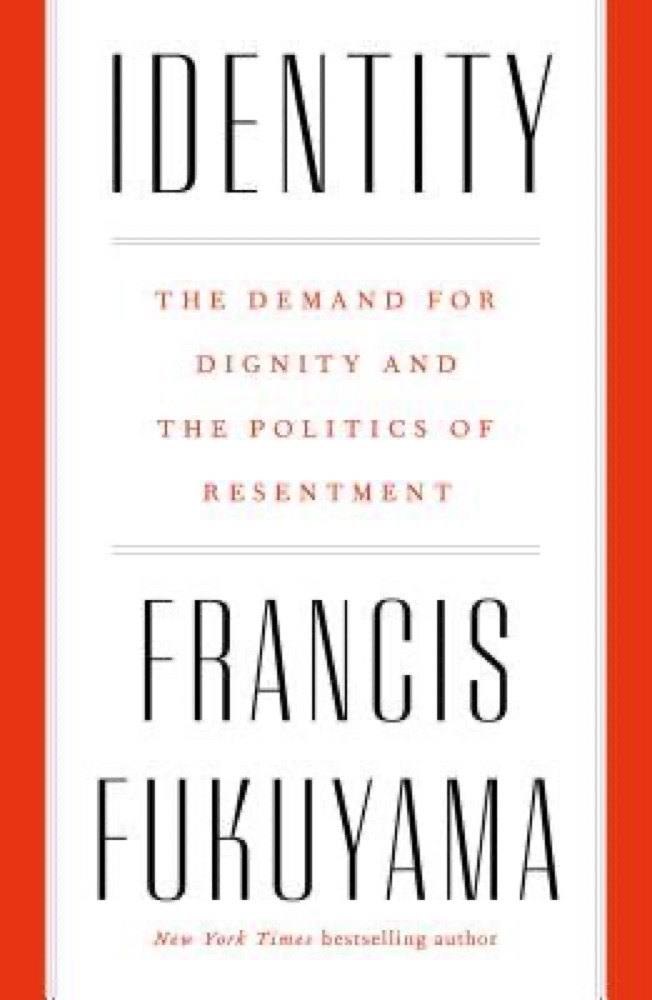 Identity: The Demand for Dignity and the Politics of Resentment
 One-Dimensional Man: Studies in the Ideology of Advanced Industrial Society
 Behold a Pale Horse
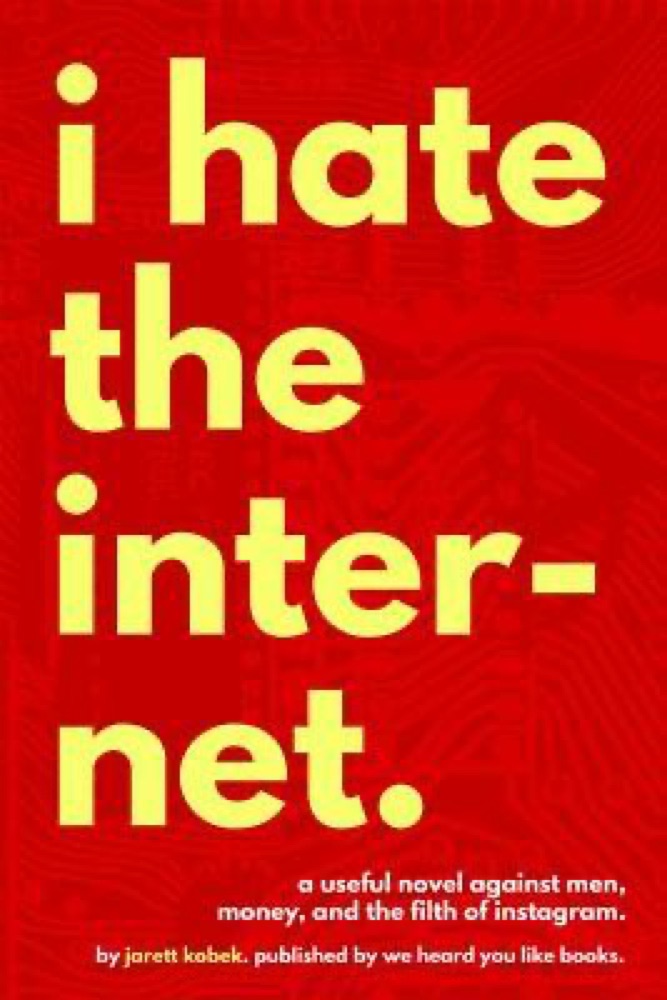 I Hate the Internet
 The Coming Insurrection
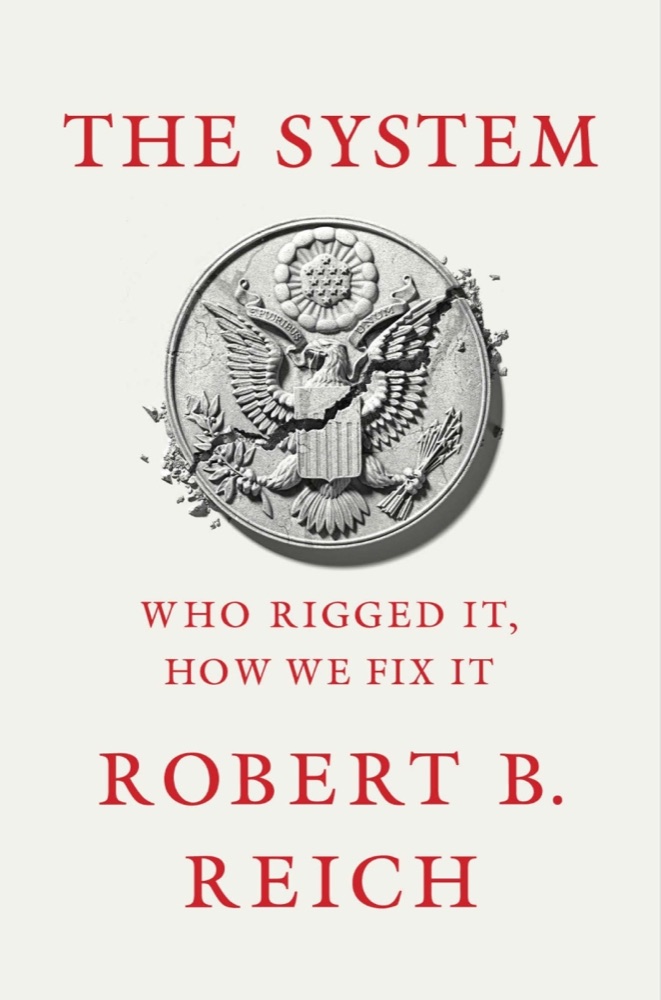 The System: Who Rigged It, How We Fix It
 Fall; or, Dodge in Hell
 Brave New World Revisited
 Capitalism, Socialism and Democracy
 The Utopia of Rules: On Technology, Stupidity, and the Secret Joys of Bureaucracy
 The Lessons of History
 The Person You Mean to Be: How Good People Fight Bias
 Enlightenment Now: The Case for Reason, Science, Humanism, and Progress
 America Alone: The End of the World As We Know It
 The Social Animal: The Hidden Sources of Love, Character, and Achievement
 You Are Not a Gadget
 My Life on the Road
 Across That Bridge: A Vision for Change and the Future of America
 Let This Radicalize You: Organizing and the Revolution of Reciprocal Care