
 Occupy
Quotes from the Book
Today the great divide is not between left and right. It’s between democracy and oligarchy.
8
Trump is the best thing ever to have happened to the new American oligarchy. In addition to his tax cuts and regulatory rollbacks, he stokes divisiveness in ways that keeps the bottom 90 percent from seeing how the oligarchy has taken over the reins of government, twisted government to its benefit, and siphoned off the economy’s benefits. His deal with the oligarchy has been simple: He’ll stoke division and tribalism so most Americans won’t see CEOs getting exorbitant pay while they’re slicing the pay of average workers, won’t pay attention to the giant tax cut that went to big corporations and the wealthy, and won’t notice a boardroom culture that tolerates financial conflicts of interest, insider trading, and the outright bribery of public officials through unlimited campaign donations.
5
The concentration of wealth in America has created an education system in which the super-rich can buy admission to college for their children, a political system in which they can buy Congress and the presidency, a health-care system in which they can buy care that others can’t, and a justice system in which they can buy their way out of jail.
5
Americans who are angry and suspicious of one another will fight over the crumbs rather than join together against those who have run off with most of the pie.
3
Socialism is the epithet they have hurled at every advance the people have made,” President Harry Truman observed. It was “what they called public power…
3
Corporations do not automatically obey laws. They weigh the size of the penalty relative to the gain from law breaking. In the age of oligarchy, laws are window dressing when penalties aren’t high enough and the people responsible for the lawbreaking are not held accountable. Unless the government prosecutes individuals or at least claws back their pay, the law is not of particular concern to the inhabitants of C-suites. Eleven years after Wall Street’s near meltdown, not a single major financial executive had been convicted or even indicted for crimes that wiped out the savings of countless Americans. Contrast this with a teenager who is imprisoned for years for selling an ounce of marijuana.
3
The way to overcome oligarchy is for the rest of us to join together and win America back. This will require a multiracial, multiethnic coalition of working-class, poor, and middle-class Americans fighting for democracy and against concentrated power and privilege, determined to rid politics of big money, end corporate welfare and crony capitalism, bust up monopolies, stop voter suppression, and strengthen the countervailing power of labor unions, employee-owned corporations, worker cooperatives, state and local banks, and grassroots politics. This agenda is neither right nor left. It is the bedrock for everything else America must do.
3
Don’t believe the system is a meritocracy in which ability and hard work are necessarily rewarded. Today the most important predictor of someone’s future income and wealth is the income and wealth of the family they’re born into.
3
Don’t assume that we’re locked in a battle between capitalism and socialism. We already have socialism—for the very rich. Most Americans are subject to harsh capitalism.
3
people with the most to lose from genuine social change have put themselves in charge of social change.
2
Power is the ability to direct or influence the behavior of others. On a large scale, power is the capacity to set the public agenda—to frame big choices, to influence legislators, and to get laws enacted or prevent them from being enacted, to assert one’s will on the world.
1
In September 2019, actress Felicity Huffman was sentenced to fourteen days in jail for shelling out $15,000 to rig her daughter’s SAT scores so she could get into a top university. In 2011, Kelley Williams-Bolar, a single black mother living in public housing in Akron, Ohio, was charged with multiple felonies and sentenced to two five-year sentences for using her father’s address to enroll her daughters in a better public school. That same year, Tanya McDowell, a homeless black mother living in Bridgeport, Connecticut, was sentenced to five years in prison for enrolling her five-year-old son in a neighboring public school.
1
Don’t separate race from class. Racial discrimination is aggravating class divides, and wider inequality is worsening racial divides.
1
The biggest political divide in America today is not between Republicans and Democrats. It’s between democracy and oligarchy. Hearing and using the same old labels prevents most people from noticing they’re being shafted.
1
Americans have clung to the meritocratic tautology that individuals are paid what they’re worth in the market, without examining changes in the legal and political institutions that define the market. This tautology is easily confused with a moral claim that people deserve what they are paid. Yet this claim is meaningful only if the system’s legal and political institutions are morally just. It has lured us into thinking nothing can or should be done to alter what people are paid because the market has decreed it. By this logic, the oligarchy is natural and inevitable.
1
Forget what you may have learned about the choice between the “free market” and government. A market cannot exist without a government to organize and enforce it. The important question is whom the market has been organized to serve.
1
First, forget politics as you’ve come to see it as electoral contests between Democrats and Republicans. Think power. The underlying contest is between a small minority who have gained power over the system and the vast majority who have little or none. Don’t assume that a U.S. president or any other head of state unilaterally makes big decisions. Look at the people who enable and encourage those decisions, and whose interests those decisions serve. Forget what you may have learned about the choice between the “free market” and government. A market cannot exist without a government to organize and enforce it. The important question is whom the market has been organized to serve. Forget the standard economic goals of higher growth and greater efficiency. The issue is who benefits from more growth and efficiency. Don’t be dazzled by “corporate social responsibility.” Most of it is public relations. Corporations won’t voluntarily sacrifice shareholder returns unless laws require them to. Even then, be skeptical of laws unless they’re enforced and backed by big penalties. Large corporations and the super-rich ignore laws when the penalties for violating them are small relative to the gains for breaking them. Fines are then simply very manageable costs of doing business. Don’t assume that we’re locked in a battle between capitalism and socialism. We already have socialism—for the very rich. Most Americans are subject to harsh capitalism. Don’t define “national competitiveness” as the profitability of large American corporations. Those corporations are now global, with no allegiance to America. Real national competitiveness lies in the productivity of the American people—which depends on their education, health, and infrastructure linking them together. You can also forget the ups and downs of the business cycle. Focus instead on systemic changes that have caused the wealth and power of a few to dramatically increase during the last forty years at the expense of the many. Forget the old idea that corporations succeed by becoming better, cheaper, or faster than their competitors. They now succeed mainly by increasing their monopoly power. Forget any traditional definition of finance. Think instead of a giant gambling casino in which bets are made on large flows of money, and bets are made on those bets (called derivatives). The biggest winners have better inside-information than anyone else. Don’t confuse attractive policy proposals with changes in the system as a whole. Even if enacted, such proposals at most mitigate systemic problems. Solving those systemic problems requires altering the allocation of power. Don’t assume society will fundamentally improve just because certain bad actors (including, say, a sociopathic president) are replaced by good ones. If systemic problems aren’t addressed, nothing important will change. Don’t assume the system is stable. It moves through vicious spirals and virtuous cycles. We are
As the theologian Reinhold Niebuhr has written, “The most common form of hypocrisy among the privileged classes is to assume that their privileges are the just payments with which society rewards specially useful or meritorious functions,” while accusing the underprivileged of “lacking what they have been denied the right to acquire.
Citizenship entails more than voting on election days. It requires ongoing engagement—knowing what needs to be done, getting the facts and understanding the arguments, and then making enough of a ruckus, and organizing and mobilizing others to join you, to do what needs to be done.
Whole Foods announced it would be cutting medical benefits for its entire part-time workforce—at a total annual savings of what Bezos himself made in two hours.
Eleven years after Wall Street’s near meltdown, not a single major financial executive had been convicted or even indicted for crimes that wiped out the savings of countless Americans. Contrast this with a teenager who is imprisoned for years for selling an ounce of marijuana. Socialism for the rich means the oligarchy is not held accountable. Harsh capitalism for the many means most Americans are at risk for events over which they have no control—such as the closing of factories across the Midwest or a Wall Street financial crisis—and have no safety nets to catch them if they fall.
Starting around 1980, a third American oligarchy emerged. Between 1980 and 2019, the share of the nation’s total household income going to the richest 1 percent more than doubled, while the earnings of the bottom 90 percent barely rose (all adjusted for inflation). CEO pay increased 940 percent, but the typical worker’s pay increased 12 percent. In the 1960s, the typical CEO of a large American company earned about twenty times as much as the typical worker; by 2019, the CEO earned three hundred times as much.
Socialism inevitably produces stagnation, corruption and often worse—such as authoritarian government officials who often have an increasing ability to interfere with both the economy and individual lives—which they frequently do to maintain power,” he wrote, adding that socialism would be “a disaster for our country.
One of man’s oldest exercises in moral philosophy,” observed economist John Kenneth Galbraith, “is the search for a superior moral justification for selfishness.
There are no longer moderates. There’s no longer a center. There’s either authoritarian populism (Trump) or democratic populism (represented in 2016 by Bernie’s “political revolution”).
2018, the stock market posted its worst annual performance since the financial crisis. The median shareholder return for the largest five hundred corporations was a negative 5.8 percent. But their top executives got raises of 5 percent or more, with the typical CEO pay reaching a record $12.4 million, according to an analysis by The Wall Street Journal.
Reform of our common life will not be led by socially responsible corporations or by enlightened CEOs. It will be led by concerned and active citizens.
Commitments to social responsibility are also conveniently reassuring to talented or privileged young people who want to do good while also doing well, and who don’t want to acknowledge the cruel joke that, as Anand Giridharadas, author of Winners Take All, has pointed out, people with the most to lose from genuine social change have put themselves in charge of social change.
Watch on YouTube
About Robert B. Reich
We have collected 28 quotes from 1 book by Robert B. Reich on BookQuoters.
More about the author →About the book
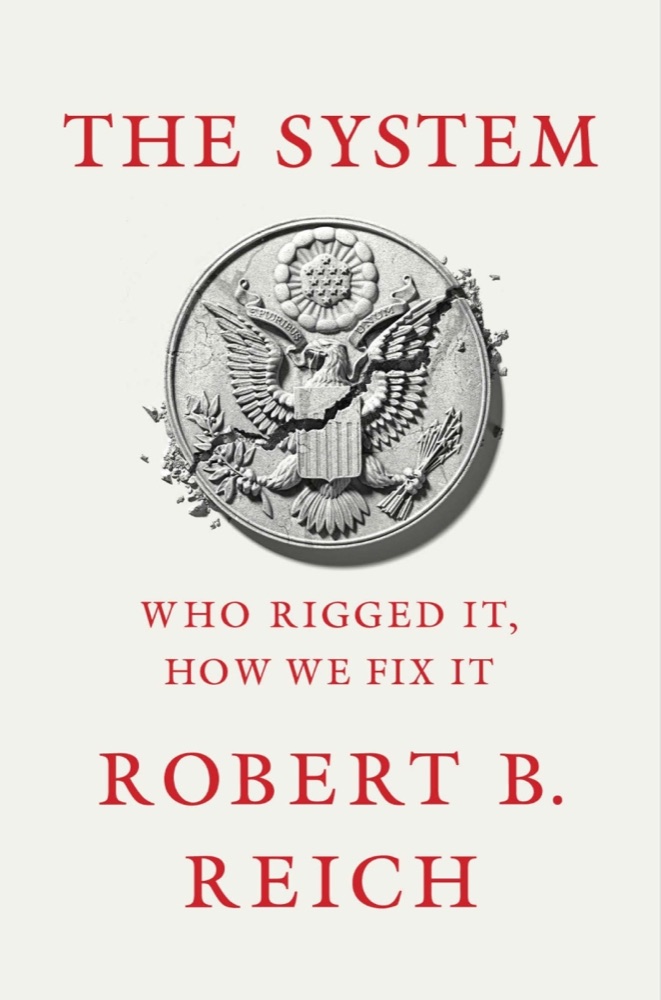
From the bestselling author of Saving Capitalism and The Common Good , comes an urgent analysis of how the "rigged" systems of American politics and power operate, how this status quo came to be, and how average citizens can enact change.There is a mounting sense that our political-economic system is no longer working, but what is the core problem and how do we remedy it? With the characteristic clarity and passion that have made him a central civil voice, bestselling author of Saving Capitalism and The Common Good Robert B. Reich shows how wealth and power have combined to install an oligarchy and undermine democracy. Reich exposes the myths of meritocracy, national competitiveness, corporate social responsibility, the “free market,” and the political “center,” all of which are used by those at the top to divert attention from their takeover of the system and to justify their accumulati
Book details
- First published
- 2020
- Author
- Robert B. Reich
- Genre
- Nonfiction
- Goodreads rating
- 4.28 (4k ratings)
Keep reading
Occupy
 Twilight of the Elites: America After Meritocracy
 America: The Farewell Tour
 23 Things They Don't Tell You About Capitalism
 Power Systems: Conversations on Global Democratic Uprisings and the New Challenges to U.S. Empire
 Evil Geniuses: The Unmaking of America
 Free to Choose: A Personal Statement
 Griftopia: Bubble Machines, Vampire Squids, and the Long Con That Is Breaking America
 A Fighting Chance
 The Tyranny of Merit: What's Become of the Common Good?
 Trumpocracy: The Corruption of the American Republic
 The Myth of the Rational Voter: Why Democracies Choose Bad Policies
 One Nation: What We Can All Do to Save America's Future
 The View From Flyover Country: Essays by Sarah Kendzior
 Ill Fares the Land
 Wealth, Poverty and Politics: An International Perspective
 Coming Apart: The State of White America, 1960-2010
 The Evolution of Everything: How New Ideas Emerge
 The Shock Doctrine: The Rise of Disaster Capitalism
 Conspirators' Hierarchy: The Story of the Committee of 300
 Naked Economics: Undressing the Dismal Science
 Capital and Ideology
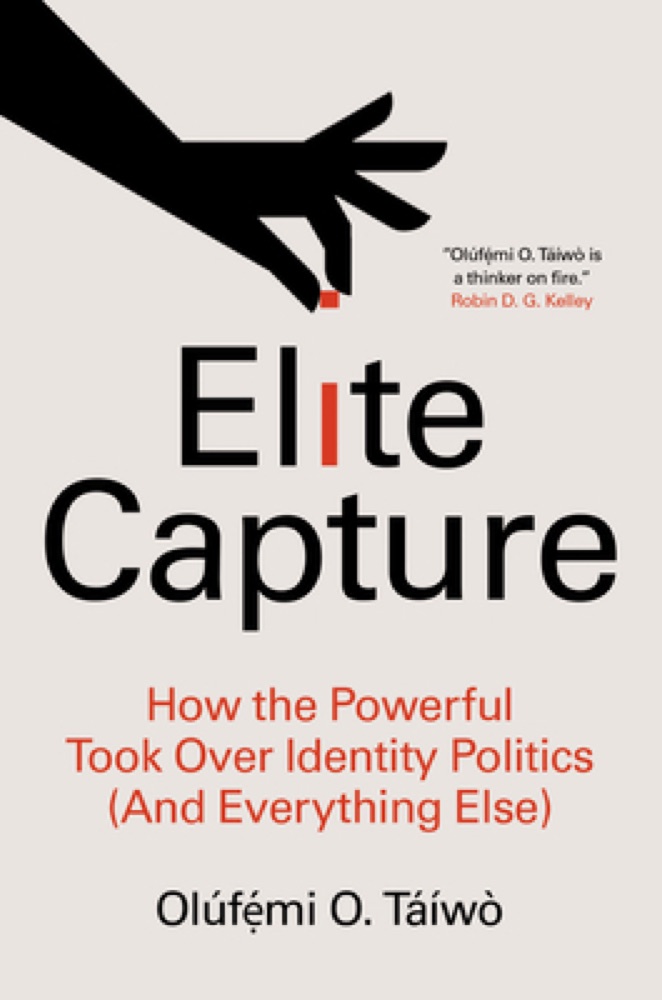 Elite Capture: How the Powerful Took Over Identity Politics
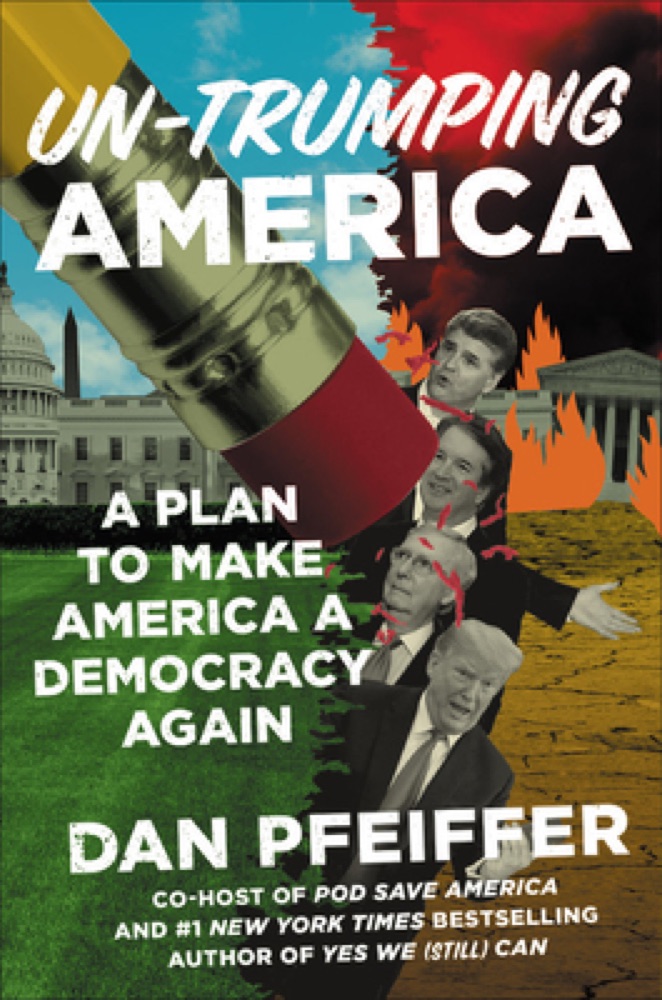 Un-Trumping America: A Plan to Make America a Democracy Again
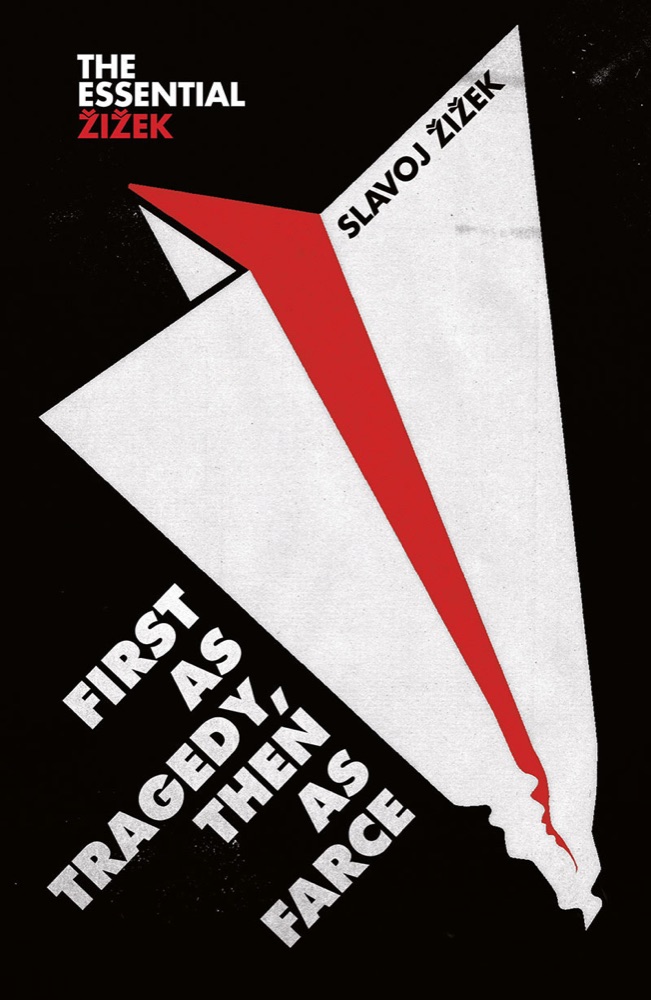 First As Tragedy, Then As Farce
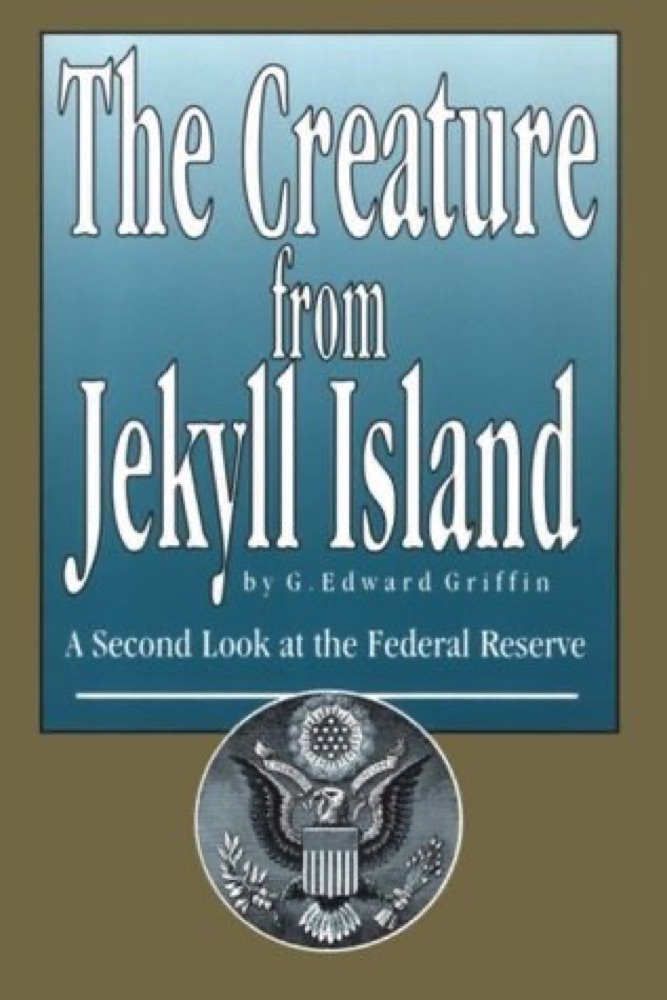 The Creature from Jekyll Island: A Second Look at the Federal Reserve
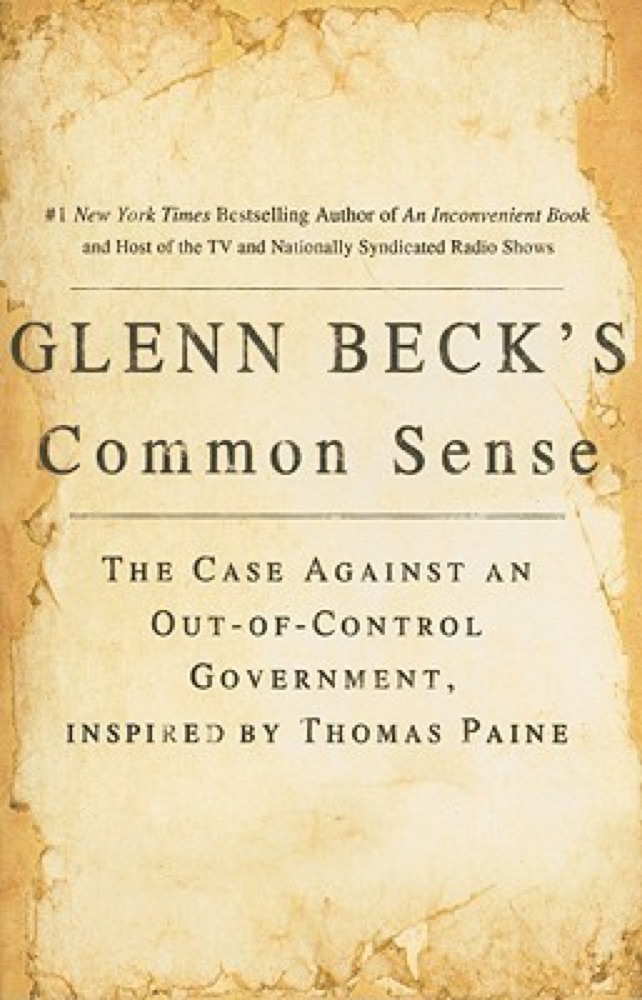 Glenn Beck's Common Sense: The Case Against an Out-of-Control Government, Inspired by Thomas Paine
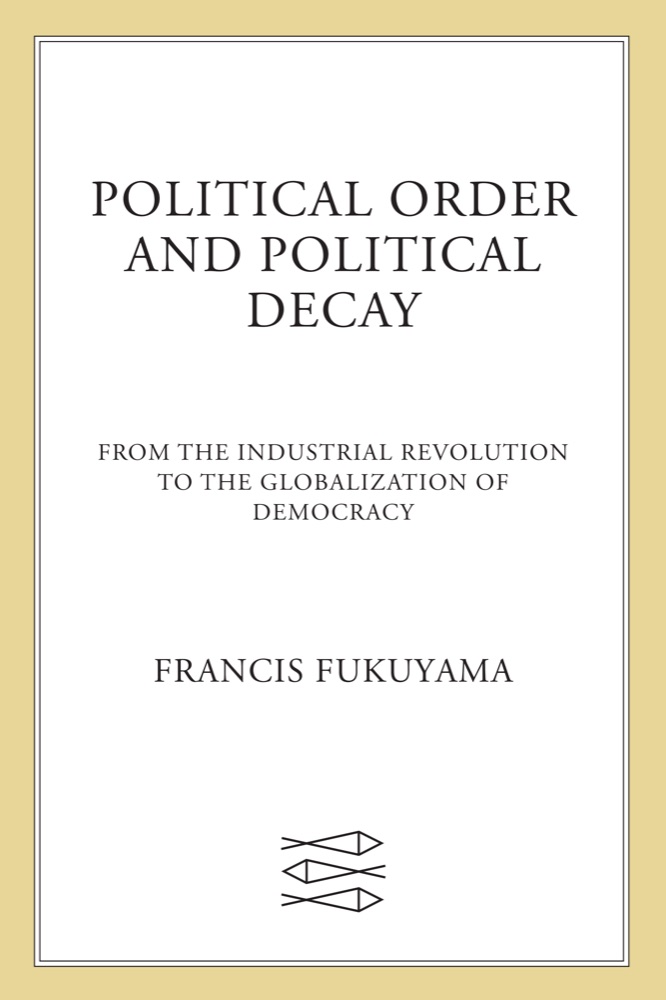 Political Order and Political Decay: From the Industrial Revolution to the Globalization of Democracy
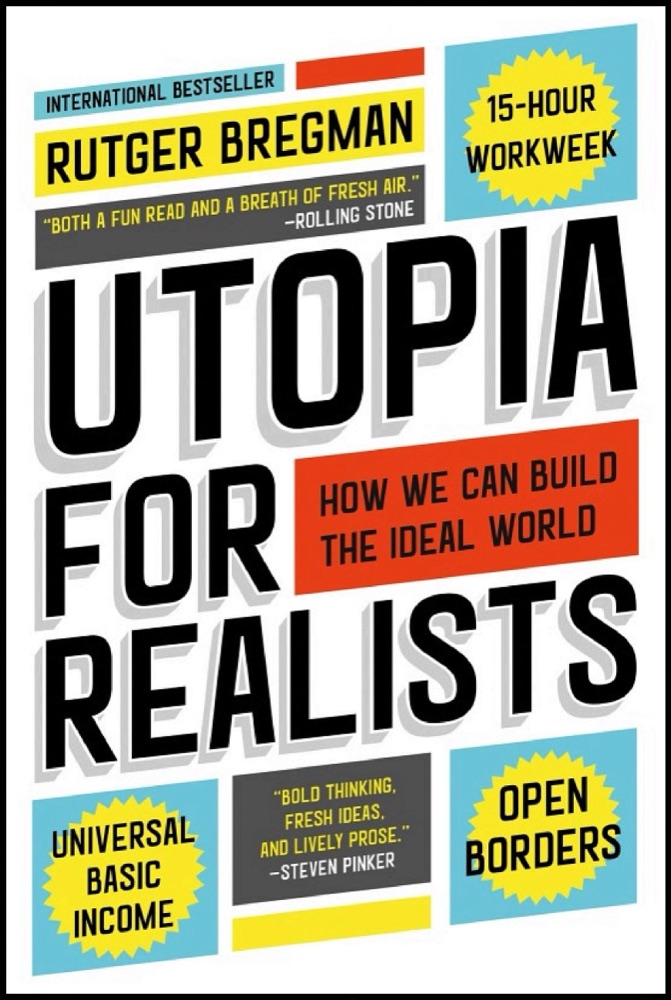 Utopia for Realists: How We Can Build the Ideal World
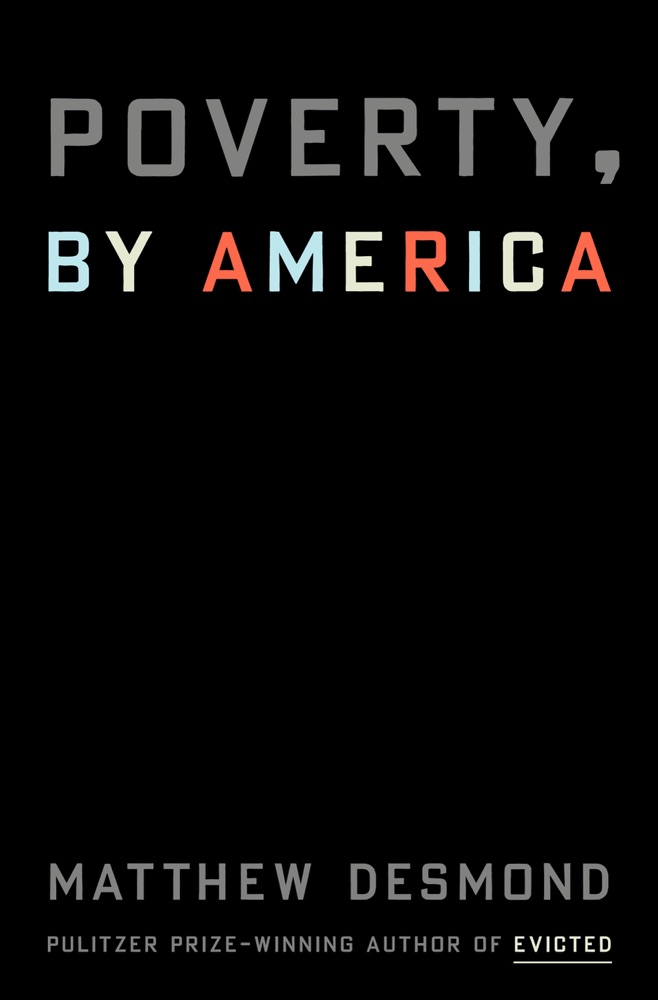 Poverty, by America
 Capital in the Twenty-First Century
 A People's History of the United States
 Capitalism: The Unknown Ideal
 Chomsky On Anarchism
 Vulture Capitalism: Corporate Crimes, Backdoor Bailouts, and the Death of Freedom
 Basic Economics: A Citizen's Guide to the Economy
 Economics in One Lesson
 Behold a Pale Horse
 The Road to Serfdom
 The Truths We Hold: An American Journey
 Capitalism and Freedom
 The Dictator's Handbook: Why Bad Behavior is Almost Always Good Politics
 Capitalism, Socialism and Democracy
 Persist
 On Tyranny: Twenty Lessons from the Twentieth Century
 The Constitution of Liberty
 America (The Book): A Citizen's Guide to Democracy Inaction
 Socialism: An Economic and Sociological Analysis
 The Audacity of Hope: Thoughts on Reclaiming the American Dream
 Give People Money: The Simple Idea to Solve Inequality and Revolutionise Our Lives
 Talking to My Daughter About the Economy: or, How Capitalism Works—and How It Fails
 Crippled America: How to Make America Great Again
 Strangers in Their Own Land: Anger and Mourning on the American Right
 Blackshirts and Reds: Rational Fascism and the Overthrow of Communism
 Parliament of Whores: A Lone Humorist Attempts to Explain the Entire U.S. Government
 Principles for Dealing with the Changing World Order: Why Nations Succeed and Fail
 The Utopia of Rules: On Technology, Stupidity, and the Secret Joys of Bureaucracy
 Liberty and Tyranny: A Conservative Manifesto
 The World Is Flat: A Brief History of the Twenty-first Century
 Walkaway