
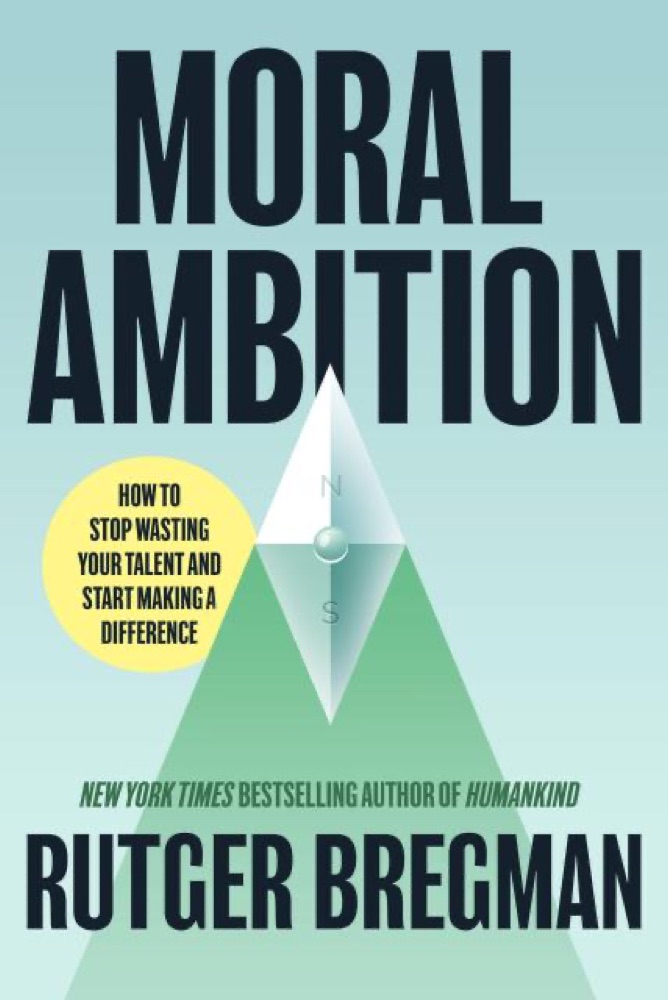
 Moral Ambition: Stop Wasting Your Talent and Start Making a Difference
Quotes from the Book
The great milestones of civilization always have the whiff of utopia about them at first. According to renowned sociologist Albert Hirschman, utopias are initially attacked on three grounds: futility (it’s not possible), danger (the risks are too great), and perversity (it will degenerate into dystopia). But Hirschman also wrote that almost as soon as a utopia becomes a reality, it often comes to be seen as utterly commonplace. Not so very long ago, democracy still seemed a glorious utopia. Many a great mind, from the philosopher Plato (427–347 B.C.) to the statesman Edmund Burke (1729–97), warned that democracy was futile (the masses were too foolish to handle it), dangerous (majority rule would be akin to playing with fire), and perverse (the “general interest” would soon be corrupted by the interests of some crafty general or other). Compare this with the arguments against basic income. It’s supposedly futile because we can’t pay for it, dangerous because people would quit working, and perverse because ultimately a minority would end up having to toil harder to support the majority.
44
Besides being blind to lots of good things, the GDP also benefits from all manner of human suffering. Gridlock, drug abuse, adultery? Goldmines for gas stations, rehab centers, and divorce attorneys. If you were the GDP, your ideal citizen would be a compulsive gambler with cancer who’s going through a drawn-out divorce that he copes with by popping fistfuls of Prozac and going berserk on Black Friday. Environmental pollution even does double duty: One company makes a mint by cutting corners while another is paid to clean up the mess. By contrast, a centuries-old tree doesn’t count until you chop it down and sell it as lumber.
42
Poverty is fundamentally about a lack of cash. It’s not about stupidity,” stresses
39
The goal of the future is full unemployment, so we can play. Arthur C. Clarke (1917–2008)
28
In the twenty-first century, the real elite are those born not in the right family or the right class but in the right country.
26
But the real crisis of our times, of my generation, is not that we don’t have it good, or even that we might be worse off later on. No, the real crisis is that we can’t come up with anything better.
23
It empowers people,” one of the social workers said about the personalized budget. “It gives choices. I think it can make a difference.” After decades of fruitless pushing, pulling, pampering, penalizing, prosecuting, and protecting, nine notorious vagrants had finally been brought in from the streets. The cost? Some £50,000 a year, including the social workers’ wages. In other words, not only did the project help thirteen people, it also cut costs considerably.5 Even the Economist had to conclude that the “most efficient way to spend money on the homeless might be to give it to them.
22
If a political party or a religious sect had even a fraction of the influence that the advertising industry has on us and our children, we’d be up in arms. But because it’s the market, we remain “neutral.
22
I’m heartened by our dissatisfaction, because dissatisfaction is a world away from indifference. The widespread nostalgia, the yearning for a past that never really was, suggests that we still have ideals, even if we have buried them alive. True progress begins with something no knowledge economy can produce: wisdom about what it means to live well. We have to do what great thinkers like John Stuart Mill, Bertrand Russell, and John Maynard Keynes were already advocating 100 years ago: to “value ends above means and prefer the good to the useful.
21
You can't pull yourself up by your bootstraps if you have no boots.
17
Instead, we should be posing a different question altogether: Which knowledge and skills do we want our children to have in 2030? Then, instead of anticipating and adapting, we’d be focusing on steering and creating. Instead of wondering what we need to do to make a living in this or that bullshit job, we could ponder how we want to make a living. This is a question no trend watcher can answer. How could they? They only follow the trends, they don’t make them. That part is up to us.
14
Even utopias need a tax clause. For example, we could start with a transactions tax to rein in the financial industry. Back in 1970, American stocks were still held for an average of five years; forty years later, it’s a mere five days.21 If we imposed a transactions tax – where you would have to pay a fee each time you buy or sell a stock – those high-frequency traders who contribute almost nothing of social value would no longer profit from split-second buying and selling of financial assets. In
13
Whether we’re searching for new dreams or rediscovering old ones, we can’t move forward without looking to the past. It’s the only place where the abstract becomes concrete, where we can see that we’re already living in the Land of Plenty. The past teaches us a simple but crucial lesson: Things could be different. The way our world is organized is not the result of some axiomatic evolution. Our current status quo could just as easily be the result of the trivial yet critical twists and turns of history.
12
The correlation between ethnic background and crime, it turns out, is precisely zero. None, nothing, nada. Youth crime, the report stated, has its origins in the neighborhood where kids grow up. In poor communities, kids from Dutch backgrounds are every bit as likely to engage in criminal activity as those from ethnic minorities.
11
If there’s one place, then, where we can intervene in a way that will pay dividends for society down the road, it’s in the classroom. Yet that’s barely happening. All the big debates in education are about format. About delivery. About didactics. Education is consistently presented as a means of adaptation – as a lubricant to help you glide more effortlessly through life. On the education conference circuit, an endless parade of trend watchers prophesy about the future and essential twenty-first-century skills, the buzzwords being “creative,” “adaptable,” and “flexible.” The focus, invariably, is on competencies, not values. On didactics, not ideals. On “problem-solving ability,” but not which problems need solving. Invariably, it all revolves around the question: Which knowledge and skills do today’s students need to get hired in tomorrow’s job market – the market of 2030? Which is precisely the wrong question. In 2030, there will likely be a high demand for savvy accountants untroubled by a conscience. If current trends hold, countries like Luxembourg, the Netherlands, and Switzerland will become even bigger tax havens, enabling multinationals to dodge taxes even more effectively, leaving developing countries with an even shorter end of the stick. If the aim of education is to roll with these kinds of trends rather than upend them, then egotism is set to be the quintessential twenty-first-century skill. Not
11
Borders are the single biggest cause of discrimination in all of world history. Inequality gaps between people living in the same country are nothing in comparison to those between separated global citizenries.
9
Free money works. Already, research has correlated unconditional cash disbursements with reductions in crime, child mortality, malnutrition, teenage pregnancy, and truancy, and with improved school performance, economic growth, and gender equality.13 “The big reason poor people are poor is because they don’t have enough money,” notes economist Charles Kenny, “and it shouldn’t come as a huge surprise that giving them money is a great way to reduce that problem.
9
Is it any wonder that the cultural archetype of my generation is the Nerd, whose apps and gadgets symbolize the hope of economic growth? “The best minds of my generation are thinking about how to make people click ads,” a former math whiz at Facebook recently lamented.
9
Not coincidentally, the countries with the shortest workweeks also have the largest number of volunteers and the most social capital.
8
True progress begins with something no knowledge economy can produce: wisdom about what it means to live well. We have to do what great thinkers like John Stuart Mill, Bertrand Russell, and John Maynard Keynes were already advocating 100 years ago: to “value ends above means and prefer the good to the useful.” We have to direct our minds to the future. To stop consuming our own discontent through polls and the relentlessly bad news media. To consider alternatives and form new collectives. To transcend this confining zeitgeist and recognize our shared idealism.
7
Take a Somalian toddler. She has a 20% probability of dying before reaching the age of five. Now compare: American frontline soldiers had a mortality rate of 6.7% in the Civil War, 1.8% in World War II, and 0.5% in the Vietnam War.30 Yet we won’t hesitate to send that Somalian toddler back if it turns out her mother isn’t a “real” refugee. Back to the Somalian child-mortality front.
7
Of course, there’s no clear line between who creates wealth and who shifts it. Lots of jobs do both. There’s no denying that the financial sector can contribute to our wealth and grease the wheels of other sectors in the process. Banks can help to spread risks and back people with bright ideas. And yet, these days, banks have become so big that much of what they do is merely shuffle wealth around, or even destroy it. Instead of growing the pie, the explosive expansion of the banking sector has increased the share it serves itself.4 Or take the legal profession. It goes without saying that the rule of law is necessary for a country to prosper. But now that the U.S. has seventeen times the number of lawyers per capita as Japan, does that make American rule of law seventeen times as effective?5 Or Americans seventeen times as protected? Far from it. Some law firms even make a practice of buying up patents for products they have no intention of producing, purely to enable them to sue people for patent infringement. Bizarrely, it’s precisely the jobs that shift money around – creating next to nothing of tangible value – that net the best salaries. It’s a fascinating, paradoxical state of affairs. How is it possible that all those agents of prosperity – the teachers, the police officers, the nurses – are paid so poorly, while the unimportant, superfluous, and even destructive shifters do so well?
7
Whether it’s the growth of the economy, audience shares, publications – slowly but surely, quality is being replaced by quantity. ... And driving it all is a force sometimes called “liberalism,” an ideology that has been all but hollowed out. ... Freedom may be our highest ideal, but ours has become an empty freedom. Our fear of moralizing in any form has made morality a taboo in the public debate. The public arena should be “neutral,” after all – yet never before has it been so paternalistic. On every street corner we’re baited to booze, binge, borrow, buy, toil, stress, and swindle. Whatever we may tell ourselves about freedom of speech, our values are suspiciously close to those touted by precisely the companies that can pay for prime-time advertising.
5
In fact, it has become increasingly profitable not to innovate. Imagine just how much progress we’ve missed out on because thousands of bright minds have frittered away their time dreaming up hyper complex financial products that are ultimately only destructive.
5
The idea that the GDP still serves as an accurate gauge of social welfare is one of the most widespread myths of our times. Even politicians who fight over everything else can always agree that the GDP must grow. Growth is good. It’s good for employment, it’s good for purchasing power, and it’s good for our government, giving it more to spend. Modern journalism would be all but lost without the GDP, wielding the latest national growth figures as a kind of government report card. A shrinking GDP spells recession and, if it really shrivels, depression. In fact, the GDP offers pretty much everything a journalist could want: hard figures, issued at regular intervals, and the chance to quote experts. Most importantly, the GDP offers a clear benchmark. Is the government doing its job? How do we as a country stack up? Has life gotten a little better? Never fear, we have the latest figures on the GDP, and they’ll tell us everything we need to know. Given our obsession with it, it’s hard to believe that just eighty years ago the GDP didn’t even exist.
5
Countless aid organizations and governments are convinced that they know what poor people need, and invest in schools, solar panels, or cattle. And, granted, better a cow than no cow. But at what cost? A Rwandan study estimated that donating one pregnant cow costs around $3,000 (including a milking workshop). That’s five years’ wages for a Rwandan.17 Or take the patchwork of courses offered to the poor: Study after study has shown that they cost a lot but achieve little, whether the objective is learning to fish, read, or run a business.18 “Poverty is fundamentally about a lack of cash. It’s not about stupidity,” stresses the economist Joseph Hanlon. “You can’t pull yourself up by your bootstraps if you have no boots.”19 The great thing about money is that people can use it to buy things they need instead of things that self-appointed experts think they need. And, as it happens, there is one category of product which poor people do not spend their free money on, and that’s alcohol and tobacco. In fact, a major study by the World Bank demonstrated that in 82% of all researched cases in Africa, Latin America, and Asia, alcohol and tobacco consumption actually declined.
5
Precisely when we should be shouldering the historic task of investing this rich, safe, and healthy existence with meaning, we’ve buried utopia instead. There’s no new dream to replace it because we can’t imagine a better world than the one we’ve got. In fact, most people in wealthy countries believe children will actually be worse off than their parents.19 But the real crisis of our times, of my generation, is not that we don’t have it good, or even that we might be worse off later on. No, the real crisis is that we can’t come up with anything better.
5
Giving away free housing, it turned out, was actually a windfall for the state budget. State economists calculated that a drifter living on the street cost the government $16,670 a year (for social services, police, courts, etc.). An apartment plus professional counseling, by contrast, cost a modest $11,000.30 The numbers are clear. Today, Utah is on course to eliminate chronic homelessness entirely, making it the first state in the U.S. to successfully address this problem. All while saving a fortune.
4
If there’s one thing that we capitalists have in common with the communists of old, it’s a pathological obsession with gainful employment. Just as Soviet-era shops employed “three clerks to sell a piece of meat,” we’ll force benefit claimants to perform pointless tasks, even if it bankrupts us.
4
Watch on YouTube
About Rutger Bregman
We have collected 67 quotes from 3 books by Rutger Bregman on BookQuoters.
More about the author →More by Rutger Bregman
Moral Ambition: Stop Wasting Your Talent and Start Making a Difference
 Humankind: A Hopeful History
About the book
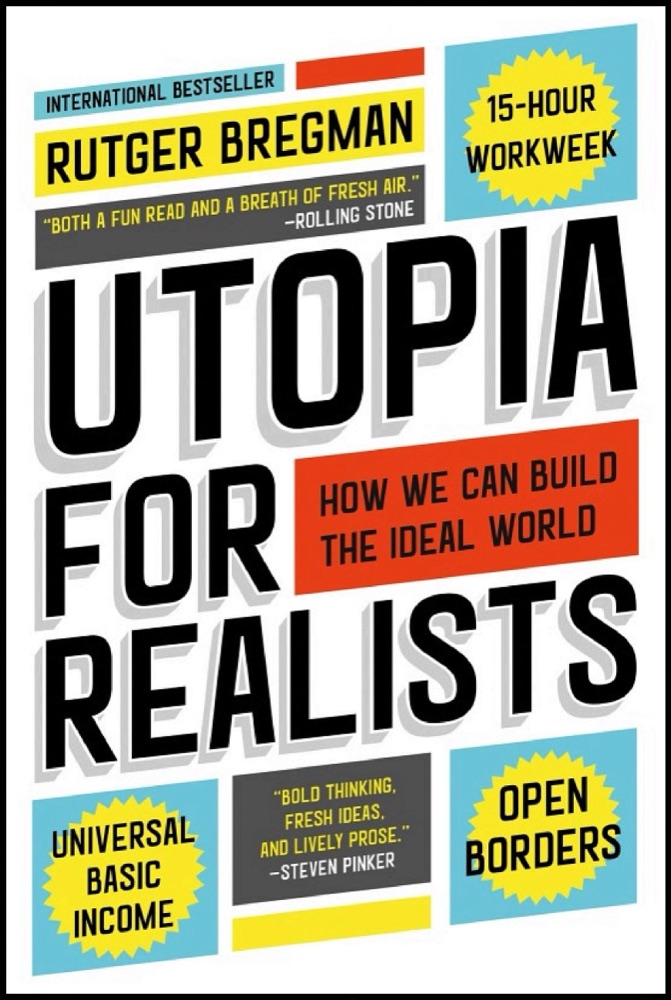
Universal basic income. A 15-hour workweek. Open borders. Does it sound too good to be true? One of Europe's leading young thinkers shows how we can build an ideal world today.
After working all day at jobs we often dislike, we buy things we don't need. Rutger Bregman, a Dutch historian, reminds us it needn't be this way—and in some places it isn't. Rutger Bregman's TED Talk about universal basic income seemed impossibly radical when he delivered it in 2014. A quarter of a million views later, the subject of that video is being seriously considered by leading economists and government leaders the world over. It's just one of the many utopian ideas that Bregman proves is possible today.
Utopia for Realists is one of those rare books that takes you by surprise and challenges what you think can happen. From a Canadian city that once completely eradicated poverty, to Richard Nixon's
Book details
- First published
- 2014
- Author
- Rutger Bregman
- Genre
- Nonfiction
- Goodreads rating
- 4.21 (44k ratings)
Keep reading
 Give People Money: The Simple Idea to Solve Inequality and Revolutionise Our Lives
 The World Is Flat: A Brief History of the Twenty-first Century
 Naked Economics: Undressing the Dismal Science
 Poor Economics: A Radical Rethinking of the Way to Fight Global Poverty
 23 Things They Don't Tell You About Capitalism
 Banker to the Poor: Micro-Lending and the Battle Against World Poverty
 Talking to My Daughter About the Economy: or, How Capitalism Works—and How It Fails
 The Rational Optimist: How Prosperity Evolves
 The Spirit Level: Why More Equal Societies Almost Always Do Better
 The Price of Tomorrow: Why Deflation is the Key to an Abundant Future
 Kids These Days: Human Capital and the Making of Millennials
 SuperFreakonomics: Global Cooling, Patriotic Prostitutes And Why Suicide Bombers Should Buy Life Insurance
 The View From Flyover Country: Essays by Sarah Kendzior
 Occupy
 I Survived Capitalism and All I Got Was This Lousy T-Shirt: Everything I Wish I Never Had to Learn About Money
 Poverty, by America
 Sacred Economics: Money, Gift, and Society in the Age of Transition
 Economics in One Lesson
 The Evolution of Everything: How New Ideas Emerge
 Small Is Beautiful: Economics as if People Mattered
 The Ministry for the Future
 Human Action: A Treatise on Economics
 Four Futures: Life After Capitalism
 On Fire: The Case for the Green New Deal
 In Praise of Idleness and Other Essays
 The Vanishing American Adult: Our Coming-of-Age Crisis—and How to Rebuild a Culture of Self-Reliance
 Basic Economics: A Citizen's Guide to the Economy
 Capitalism: A Ghost Story
 Ill Fares the Land
Humankind: A Hopeful History
Ill Fares the Land
Humankind: A Hopeful History
 Abundance: The Future Is Better Than You Think
 The Coming Insurrection
 Nickel and Dimed: On (Not) Getting by in America
 Unscripted: Life, Liberty, and the Pursuit of Entrepreneurship
 The Life You Can Save: How to Do Your Part to End World Poverty
 Endgame, Vol. 1: The Problem of Civilization
 Beyond Civilization: Humanity's Next Great Adventure
 Debt: The First 5,000 Years
 Power Systems: Conversations on Global Democratic Uprisings and the New Challenges to U.S. Empire
 A Short History of Progress
 Enlightenment Now: The Case for Reason, Science, Humanism, and Progress
 Capital in the Twenty-First Century
 Coming Apart: The State of White America, 1960-2010
 America Alone: The End of the World As We Know It
 Wealth, Poverty and Politics: An International Perspective
 Principles for Dealing with the Changing World Order: Why Nations Succeed and Fail
 Walden Two
 Upheaval: Turning Points for Nations in Crisis
 Twilight of the Elites: America After Meritocracy
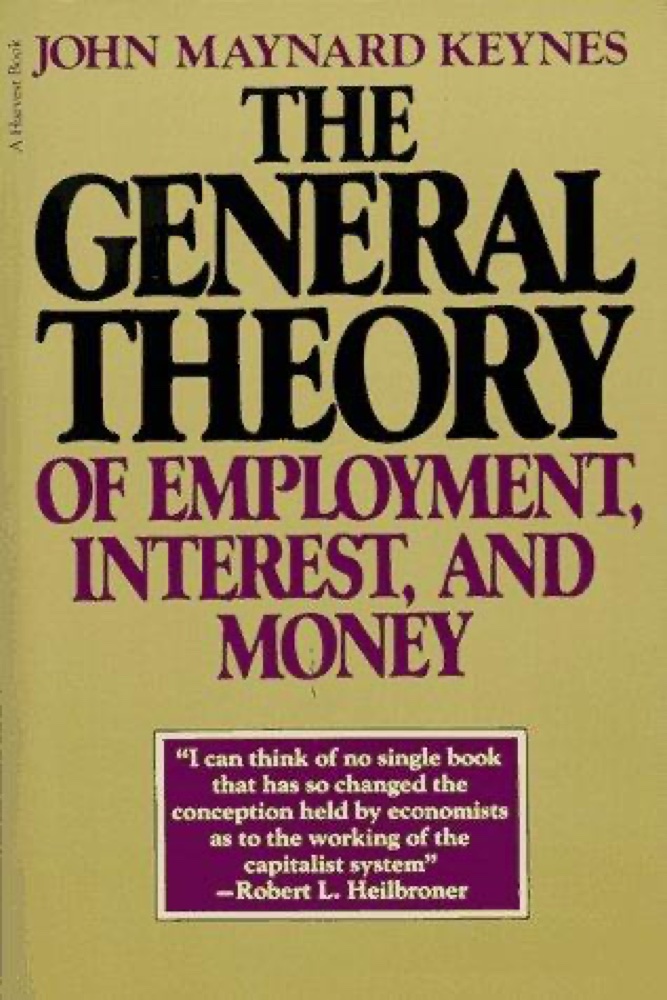 The General Theory of Employment, Interest, and Money
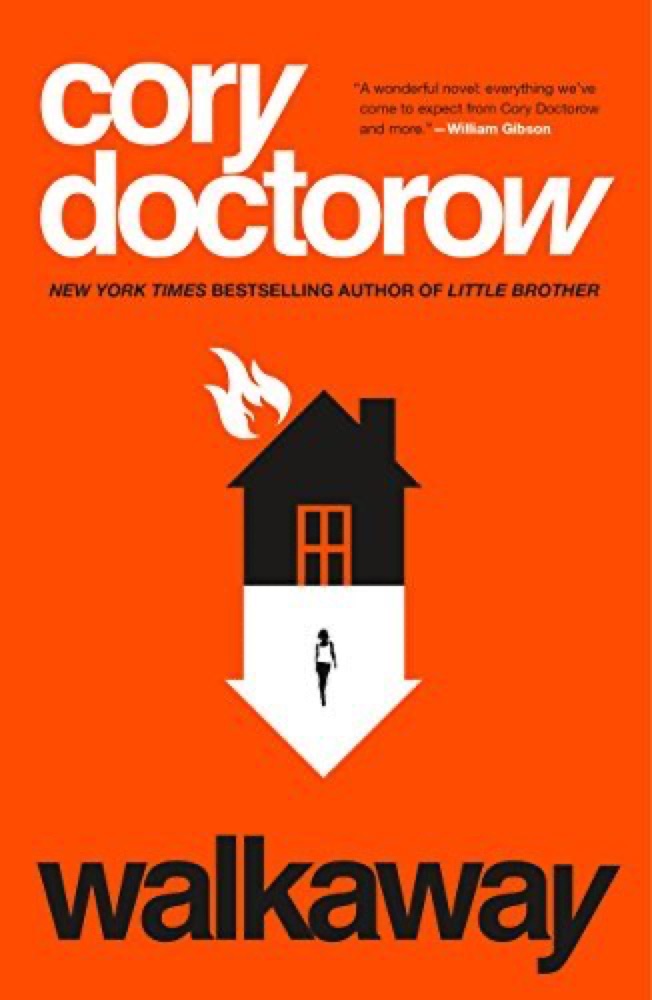 Walkaway
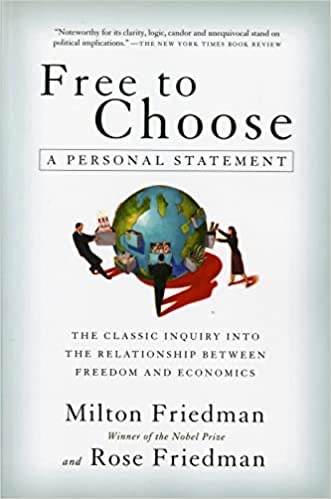 Free to Choose: A Personal Statement
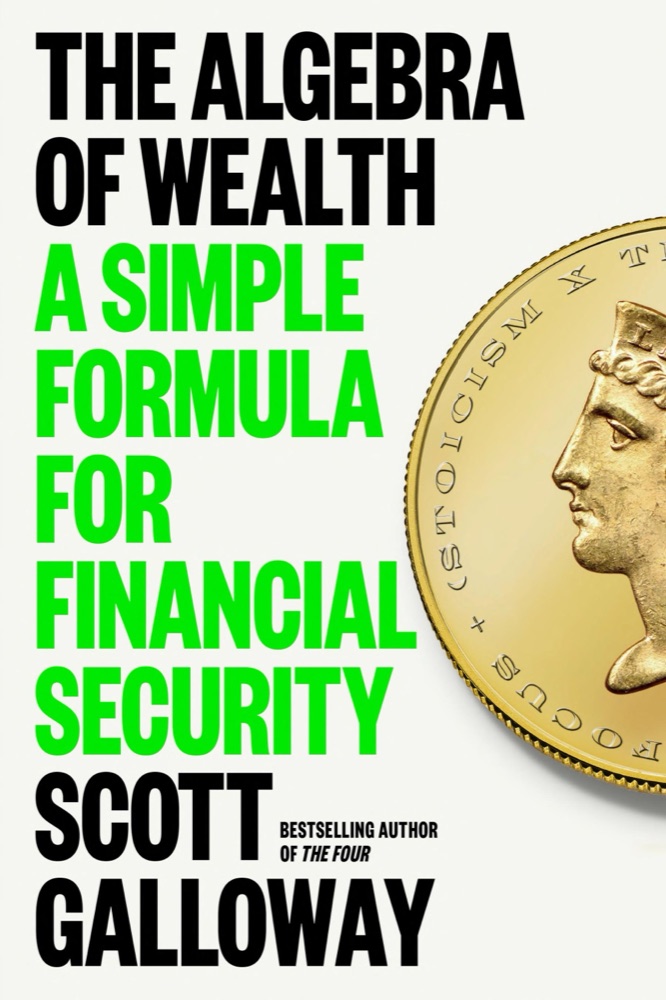 The Algebra of Wealth: A Simple Formula for Financial Security
 First As Tragedy, Then As Farce
 Conscious Capitalism
 Revolution
 Barking Up the Wrong Tree: The Surprising Science Behind Why Everything You Know About Success Is (Mostly) Wrong
 What's Our Problem?: A Self-Help Book for Societies
 The System: Who Rigged It, How We Fix It