
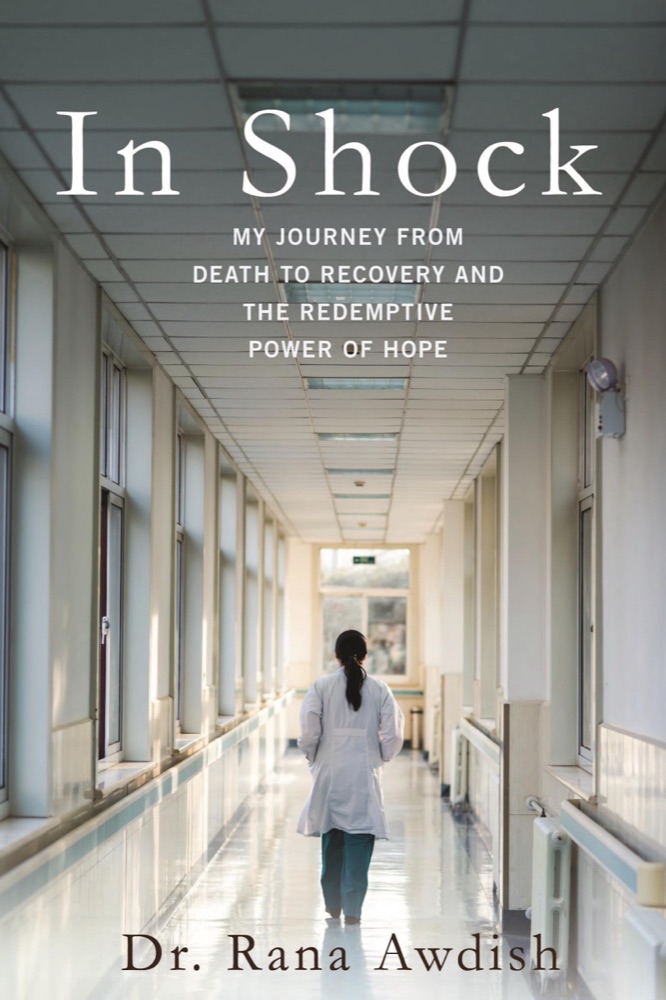
 In Shock: My Journey from Death to Recovery and the Redemptive Power of Hope
Quotes from the Book
Empathy--the ability to identify with someone else's suffering--is certainly a prerequisite for a genuine apology.
6
Thus, whatever the medical student has been taught, and even genuinely believes, about the ideals of medicine, the primacy of empathy, the value of the doctor-patient relationship--all of this is swamped once he or she steps into the wards. [...] It's no wonder that empathy gets trounced in the actual world of clinical medicine; everything that empathy requires seems to detract from daily survival.
4
Fear is a primal emotion in medicine. Every doctor can tell you of times when she or he was terrified; most can list more episodes than you might wish to hear. [...] It may be sublimated at times, it may wax and wane, but the fear of harming your patients never departs; it is inextricably linked to the practice of medicine.
3
Burnout also leads to a large swath of physicians who aren't as empathetic toward their patients as they could be.
2
But I realized that not only did I need to keep tuning my skills as a doctor, I also had to figure out a way to live with the uncertainty of medicine and its attendant anxiety.
2
To empathize with these patients, to put yourself in their shoes, may be a bit too existentially disconcerting. And so doctors unconsciously try to protect themselves by widening the moat between their own good health and their patients’ dauntingly mortal conditions
1
Neuroscientist Antonio Damasio describes emotions as the “continuous musical line of our minds, the unstoppable humming.
1
But at the most basic level, doctors need to be able to come forward with their errors and near-misses, otherwise we will never know where the problems lay.
1
The very fact that these doctors continuing to be doctors--highly successful ones--despite their errors and their accompanying assaults on their self-definion would itself be a potent lesson to the students and interns. It is possible to hold one's head up after an error, to admit that errors are part and parcel of human existence, even in medicine. It is possible to see the error as an aspect of oneself, not the defining characteristic of oneself.
1
How the sadness is handled by the physician has a powerful impact on the medical care received by the patients. If the grief is relentlessly suppressed--as in Eva's experience during residency--the result can be a numb physician who is unable to invest in a new patient. This lack of investment can lead to rote medical care--impersonal at best, shoddy at worst. At the other end of the spectrum is the doctor who is inundated with grief and can't function because of the overwhelming sorrow. Burnout is significant in both these cases, and that erodes the quality of medical care.
1
Grief ate at these doctors, distracting them from both their families and their patients. Many reported withdrawing from emotional involvement with their patients and that their patients had noticed they weren't fully present.
1
What these older physicians exhibited is termed clinical curiosity. They stroke to understand their patients in order to elucidate the underlying medical conditions. This thoroughness, patience, and dogged curiosity may have been ingrained in them because they trained at a time when they were no rapid CTs or MRIs. But even now, when these diagnostic tools are at their fingertips, these physicians maintain this approach to patients, one that serves to appreciate the dignity and uniqueness of each patient and his or her illness.
1
But while the patient does bear some responsibility, I believe that the onus falls more heavily on the doctor to be attuned to the factors--cultural, ethnic, or just personal style--that influence how patients present their symptoms.
1
I sometimes wonder whether doctors are more shame-prone than most people, or whether the medical profession itself is more shame-prone than other professions, though shame is, of course, a universal emotion. Given that we do not accept the idea of the good-enough doctor, that physicians are always striving for and expecting perfection, every doctor feels that he or she falls short to some degree. Perhaps shame and self-blame are built into the system because of an unrealistic and pervasive expectation of perfection.
These younger doctors are the immediate interface with clinical medicine for the students. The students trail their interns and residents every waking minute and absorb from them how medicine is done—how it is spoken, thought, written, performed, attired, and equipped.
Most medical students desperately want to help out on the wards—to ease some of their guilt, to “pay back” the interns and residents who are teaching them, to do some good for the patients in need they see all around them. But it’s hard to know where to start when your skills are minimal and everything is moving at breakneck speed with a paradoxically anarchic efficiency that you are sure to jam up. Indeed, the help that medical students earnestly offer often slows things down, a point that is painfully obvious to all parties involved. Although medical students eventually acclimatize somewhat to the clinical tumult, most retain that awkward sense of feeling useless, of being a constant fifth wheel. This difficulty in finding purpose, in finding a justified place in the beehive, can cause many students to unconsciously curtail their desire for engagement and hence their empathy.
Residents and interns are the grunts of the medical profession, tasked, simply, with getting everything done. The practical side of the clinical buck stops with them (even if the ultimate clinical and legal responsibility rests with the attendings), and the house staff do whatever it takes to get everything done. With their scut lists in hand, their coat pockets doubling as supply cabinets, they are the embodiment of the pragmatic. While many still retain their interest in the theories and mechanisms of disease, the overriding modus operandi is utilitarian, because unlike the electricians, housekeepers, therapists, technicians, orderlies, dietitians, even the nurses and senior doctors, their job description has no bounds.
For the researchers, sympathy is an emotion, actually feeling the patient’s feelings. Empathy is a cognition, a thought process that allows you to understand the patient’s feelings while not necessarily feeling them yourself. In fact, maintaining your own sense of self is a key part of empathy. The empathy definition might thus be reworded as the ability to stand in another’s shoes without actually leaving your own shoes. And of course the empathic doctor needs to be able to clearly communicate that understanding.
These derogatory terms, by definition, serve to distance doctor from patient, and this directly detracts from the ability to be empathic. While some of this slang seems merely callous, a lot of it derives from fear. Some of the states in which our patients live—or die—are downright terrifying. To empathize with these patients, to put yourself in their shoes, may be a bit too existentially disconcerting. And so doctors unconsciously try to protect themselves by widening the moat between their own good health and their patients' dauntingly mortal conditions.
Suddenly, I was plunged back into an avid learning environment, starting at the bottom and working my way painstakingly up the mountain. The thrill of learning and accomplishing stimulated me so much that the work was pleasurable.
Hospital life--with its byzantine array of moving parts layered atop the unpredictable rhythms of illness--is a permanent state of flux.
It can be rough going to maintain both composure and empathy in these situations, but a doctor's failure to do that is probably the number one reason why patients feel dissatisfied with their physicians and end up doctor-shopping endlessly.
In general, empathy is easier the more we can identify with someone. When we can genuinely envision ourselves in a situation, it's possible to intuit what that person's suffering might feel like.
Empathy requires being attuned to the patient's perspective and understanding how the illness is woven into this particular persons' life. Last--and this is where doctors often stumble--empathy requires being able to communicate all of this to the patient.
Neuroscientist Antonio Damasio describes emotions as the "continuous musical line of our minds, the unstoppable humming." This basso continuo thrums along while doctors make a steady stream of conscious medical decisions.
Watch on YouTube
About Danielle Ofri
We have collected 25 quotes from 1 book by Danielle Ofri on BookQuoters.
More about the author →About the book
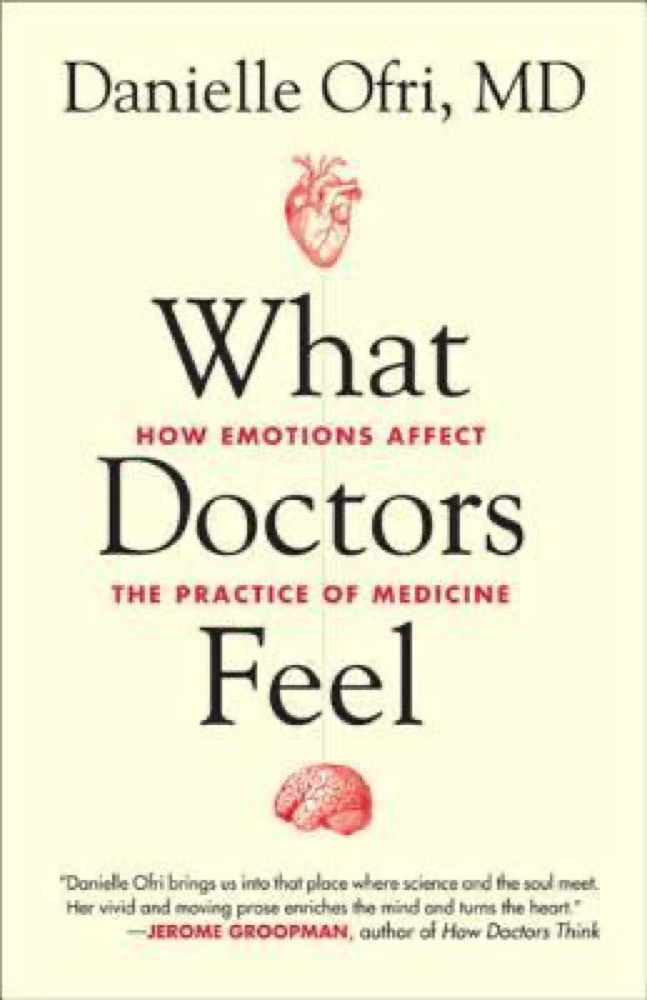
A look at the emotional side of medicine—the shame, fear, anger, anxiety, empathy, and even love that affect patient care
Physicians are assumed to be objective, rational beings, easily able to detach as they guide patients and families through some of life’s most challenging moments. But doctors’ emotional responses to the life-and-death dramas of everyday practice have a profound impact on medical care. And while much has been written about the minds and methods of the medical professionals who save our lives, precious little has been said about their emotions. In What Doctors Feel, Dr. Danielle Ofri has taken on the task of dissecting the hidden emotional responses of doctors, and how these directly influence patients.
How do the stresses of medical life—from paperwork to grueling hours to lawsuits to facing death—affect the medical care that doctors can offer their patients? Di
Book details
- First published
- 2013
- Author
- Danielle Ofri
- Genre
- Nonfiction
- Goodreads rating
- 4.19 (3k ratings)
Keep reading
In Shock: My Journey from Death to Recovery and the Redemptive Power of Hope
 Do No Harm: Stories of Life, Death and Brain Surgery
 The Invisible Kingdom: Reimagining Chronic Illness
 Doctors
 The Gift of Therapy: An Open Letter to a New Generation of Therapists and Their Patients
 The Sleeping Beauties: And Other Stories of Mystery Illness
 The Empathy Exams
 Better: A Surgeon's Notes on Performance
 Body of Work: Meditations on Mortality from the Human Anatomy Lab
 Just Like Someone Without Mental Illness Only More So
 All in Her Head: The Truth and Lies Early Medicine Taught Us About Women’s Bodies and Why It Matters Today
 Natural Causes: An Epidemic of Wellness, the Certainty of Dying, and Killing Ourselves to Live Longer
 The Physician
 Being Mortal: Medicine and What Matters in the End
 The House of God
 In an Unspoken Voice: How the Body Releases Trauma and Restores Goodness
 The Devil Wears Scrubs
 Social Intelligence: The New Science of Human Relationships
 When the Body Says No: The Cost of Hidden Stress
 Healing Back Pain: The Mind-Body Connection
 In The Blood
 Good Morning, Monster: A Therapist Shares Five Heroic Stories of Emotional Recovery
 Till The Last Breath
 A Thousand Naked Strangers: a Paramedic's Wild Ride to the Edge and Back
 The Man Who Mistook His Wife for a Hat and Other Clinical Tales
 All Is Not Forgotten
 Why Zebras Don't Get Ulcers
 Atlas of the Heart: Mapping Meaningful Connection and the Language of Human Experience
 The Center Cannot Hold: My Journey Through Madness
 The Collected Schizophrenias: Essays
 Elderhood: Redefining Aging, Transforming Medicine, Reimagining Life
 Good Reasons for Bad Feelings: Insights from the Frontier of Evolutionary Psychiatry
 My Age of Anxiety: Fear, Hope, Dread, and the Search for Peace of Mind
 A First-Rate Madness: Uncovering the Links Between Leadership and Mental Illness
 The Boy Who Was Raised as a Dog: And Other Stories from a Child Psychiatrist's Notebook
 Scattered Minds: The Origins and Healing of Attention Deficit Disorder
 Between Two Kingdoms: A Memoir of a Life Interrupted
 Hello I Want to Die Please Fix Me: Depression in the First Person
 Mountains Beyond Mountains: The Quest of Dr. Paul Farmer, A Man Who Would Cure the World
 Maybe You Should Talk to Someone: A Therapist, Her Therapist, and Our Lives Revealed
 Burned Out
 When Breath Becomes Air
 Love's Executioner and Other Tales of Psychotherapy
 The Silent Patient
 Why Has Nobody Told Me This Before?
 Monkey Mind: A Memoir of Anxiety
 Brain on Fire: My Month of Madness
 The Shaking Woman, or A History of My Nerves
 Cancer Ward
 How We Do Harm: A Doctor Breaks Ranks About Being Sick in America
 The Emperor of All Maladies: A Biography of Cancer
 Any Ordinary Day
 The Examined Life: How We Lose and Find Ourselves
 When the Air Hits Your Brain: Tales of Neurosurgery
 The Anatomy of Hope: How People Prevail in the Face of Illness
 Suspect
 A General Theory of Love
 Awakenings
 Emotional Intelligence: Why It Can Matter More Than IQ