 Origins: Fourteen Billion Years of Cosmic Evolution
Quotes from the Book
In 2002, having spent more than three years in one residence for the first time in my life, I got called for jury duty. I show up on time, ready to serve. When we get to the voir dire, the lawyer says to me, “I see you’re an astrophysicist. What’s that?” I answer, “Astrophysics is the laws of physics, applied to the universe—the Big Bang, black holes, that sort of thing.” Then he asks, “What do you teach at Princeton?” and I say, “I teach a class on the evaluation of evidence and the relative unreliability of eyewitness testimony.” Five minutes later, I’m on the street. A few years later, jury duty again. The judge states that the defendant is charged with possession of 1,700 milligrams of cocaine. It was found on his body, he was arrested, and he is now on trial. This time, after the Q&A is over, the judge asks us whether there are any questions we’d like to ask the court, and I say, “Yes, Your Honor. Why did you say he was in possession of 1,700 milligrams of cocaine? That equals 1.7 grams. The ‘thousand’ cancels with the ‘milli-’ and you get 1.7 grams, which is less than the weight of a dime.” Again I’m out on the street.
293
Down there between our legs, it's like an entertainment complex in the middle of a sewage system. Who designed that?
105
But you can’t be a scientist if you’re uncomfortable with ignorance, because scientists live at the boundary between what is known and unknown in the cosmos. This is very different from the way journalists portray us. So many articles begin, “Scientists now have to go back to the drawing board.” It’s as though we’re sitting in our offices, feet up on our desks—masters of the universe—and suddenly say, “Oops, somebody discovered something!” No. We’re always at the drawing board. If you’re not at the drawing board, you’re not making discoveries. You’re not a scientist; you’re something else. The public, on the other hand, seems to demand conclusive explanations as they leap without hesitation from statements of abject ignorance to statements of absolute certainty.
82
You know that passage in the Bible that says, “And the meek shall inherit the Earth”? Always wondered if that was mistranslated. Perhaps it actually says, “And the geek shall inherit the Earth.
36
Some molecules - ammonia, carbon dioxide, water - show up everywhere in the universe, whether life is present or not. But others pop up especially in the presence of life itself. Among the biomarkers in Earth's atmosphere are ozone-destroying chlorofluorocarbons from aerosol sprays, vapor from mineral solvents, escaped coolants from refrigerators and air conditioners, and smog from the burning of fossil fuels. No other way to read that list: sure signs of the absence of intelligence.
36
Robots are important also. If I don my pure-scientist hat, I would say just send robots; I'll stay down here and get the data. But nobody's ever given a parade for a robot. Nobody's ever named a high school after a robot. So when I don my public-educator hat, I have to recognize the elements of exploration that excite people. It's not only the discoveries and the beautiful photos that come down from the heavens; it's the vicarious participation in discovery itself.
25
There’s a fascinating frailty of the human mind that psychologists know all about, called “argument from ignorance.” This is how it goes. Remember what the “U” stands for in “UFO”? You see lights flashing in the sky. You’ve never seen anything like this before and don’t understand what it is. You say, “It’s a UFO!” The “U” stands for “unidentified.” But then you say, “I don’t know what it is; it must be aliens from outer space, visiting from another planet.” The issue here is that if you don’t know what something is, your interpretation of it should stop immediately. You don’t then say it must be X or Y or Z. That’s argument from ignorance. It’s common. I’m not blaming anybody; it may relate to our burning need to manufacture answers because we feel uncomfortable about being steeped in ignorance.
23
The four most common chemically active elements in the universe—hydrogen, oxygen, carbon, and nitrogen—are the four most common elements of life on Earth. We are not simply in the universe. The universe is in us.
21
Imagine a life-form whose brainpower is to ours as ours is to a chimpanzee’s. To such a species, our highest mental achievements would be trivial. Their toddlers, instead of learning their ABCs on Sesame Street, would learn multivariable calculus on Boolean Boulevard. Our most complex theorems, our deepest philosophies, the cherished works of our most creative artists, would be projects their schoolkids bring home for Mom and Dad to display on the refrigerator door.
21
You could also ask who’s in charge. Lots of people think, well, we’re humans; we’re the most intelligent and accomplished species; we’re in charge. Bacteria may have a different outlook: more bacteria live and work in one linear centimeter of your lower colon than all the humans who have ever lived. That’s what’s going on in your digestive tract right now. Are we in charge, or are we simply hosts for bacteria? It all depends on your outlook.
18
How do we change the way science is taught? Ask anybody how many teachers truly made a difference in their life, and you never come up with more than the fingers on one hand. You remember their names, you remember what they did, you remember how they moved in front of the classroom. You know why you remember them? Because they were passionate about the subject. You remember them because they lit a flame within you. They got you excited about a subject you didn't previously care about, because they were excited about it themselves. That's what turns people on to careers in science and engineering and mathematics. That's what we need to promote. Put that in every classroom, and it will change the world.
17
During the heat of the space race in the 1960s, the US National Aeronautics and Space Administration decided it needed a ballpoint pen to write in the zero gravity confines of its space capsules. After considerable research and development, the Astronaut Pen was developed at a cost of approximately $1 million US. The pen worked and also enjoyed some modest success as a novelty item back here on earth. The Soviet Union, faced with the same problem, used a pencil.
14
Science, enabled by engineering, empowered by NASA, tells us not only that we are in the universe but that the universe is in us. And for me, that sense of belonging elevates, not denigrates, the ego.
12
Some people think emotionally more often than they think politically. Some think politically more often than they think rationally. Others never think rationally about anything at all. No judgment implied. Just an observation.
11
Each component of this trinity of human endeavor—science, religion, and art—lays powerful claim to our feelings of wonder, which derive from an embrace of the mysterious. Where mystery is absent, there can be no wonder.
9
We conquer the Independence Day aliens by having a Macintosh laptop computer upload a software virus to the mothership (which happens to be one-fifth the mass of the Moon), thus disarming its protective force field. I don’t know about you, but back in 1996 I had trouble just uploading files to other computers within my own department, especially when the operating systems were different. There is only one solution: the entire defense system for the alien mothership must have been powered by the same release of Apple Computer’s system software as the laptop computer that delivered the virus.
9
Let’s get China to leak a memo that says they want to build military bases on Mars. We’d be on Mars in twelve months.
7
To declare that Earth must be the only planet in the universe with life would be inexcusably big-headed of us.
7
I look forward to the day when the solar system becomes our collective backyard—explored not only with robots, but with the mind, body, and soul of our species.
7
The cosmic perspective not only embraces our genetic kinship with all life on Earth but also values our chemical kinship with any yet-to-be discovered life in the universe, as well as our atomic kinship with the universe itself.
7
The options available to a creative person are ever limited by the choices offered by a philosopher.
7
Complaints about the demise of society and the “youth of today” also tend to be timeless. Consider this pronouncement, inscribed on an Assyrian tablet circa 2800 B.C.: Our earth is degenerate these days . . . bribery and corruption abound, children no longer obey their parents, every man wants to write a book, and the end of the world is evidently approaching.
6
Like it or not, war (cold or hot) is the most powerful funding driver in the public arsenal. Lofty goals such as curiosity, discovery, exploration, and science can get you money for modest-size projects, provided they resonate with the political and cultural views of the moment. But big, expensive activities are inherently long term, and require sustained investment that must survive economic fluctuations and changes in the political winds. In all eras, across time and culture, only war, greed, and the celebration of royal or religious power have fulfilled that funding requirement. Today, the power of kings is supplanted by elected governments, and the power of religion is often expressed in nonarchitectural undertakings, leaving war and greed to run the show. Sometimes those two drivers work hand in hand, as in the art of profiteering from the art of war. But war itself remains the ultimate and most compelling rationale.
5
On Friday the 13th, April 2029, an asteroid large enough to fill the Rose Bowl as though it were an egg cup will fly so close to Earth that it will dip below the altitude of our communication satellites. We did not name this asteroid Bambi. Instead, we named it Apophis, after the Egyptian god of darkness and death.
5
When you organize extraordinary missions, you attract people of extraordinary talent who might not have been inspired by or attracted to the goal of saving the world from cancer or hunger or pestilence.
5
The problem comes when religion enters the science classroom. There’s no tradition of scientists knocking down the Sunday school door, telling preachers what to teach. Scientists don’t picket churches. By and large—though it may not look this way today—science and religion have achieved peaceful coexistence for quite some time. In fact, the greatest conflicts in the world are not between religion and science; they’re between religion and religion.
4
Consider this pronouncement, inscribed on an Assyrian tablet circa 2800 B.C.: Our earth is degenerate these days . . . bribery and corruption abound, children no longer obey their parents, every man wants to write a book, and the end of the world is evidently approaching.
4
From out there on the moon, international politics look so petty. You want to grab a politician by the scruff of the neck and drag him a quarter of a million miles out and say, “Look at that!” —EDGAR MITCHELL, APOLLO 14 ASTRONAUT, 1974
4
Science literacy is being plugged into the forces that power the universe. There is no excuse for thinking that the Sun, which is a million times the size of Earth, orbits Earth.
4
Watch on YouTube
About Neil deGrasse Tyson
We have collected 183 quotes from 7 books by Neil deGrasse Tyson on BookQuoters.
More about the author →More by Neil deGrasse Tyson
Origins: Fourteen Billion Years of Cosmic Evolution
 Astrophysics for People in a Hurry
 Starry Messenger: Cosmic Perspectives on Civilization
 Death by Black Hole: And Other Cosmic Quandaries
About the book
America’s space program is at a turning point. After decades of global primacy, NASA has ended the space-shuttle program, cutting off its access to space. No astronauts will be launched in an American craft, from American soil, until the 2020s, and NASA may soon find itself eclipsed by other countries’ space programs.
With his signature wit and thought-provoking insights, Neil deGrasse Tyson—one of our foremost thinkers on all things space—illuminates the past, present, and future of space exploration and brilliantly reminds us why NASA matters now as much as ever. As Tyson reveals, exploring the space frontier can profoundly enrich many aspects of our daily lives, from education systems and the economy to national security and morale. For America to maintain its status as a global leader and a technological innovator, he explains, we must regain our enthusiasm and curiosity about w
Book details
- First published
- 2012
- Author
- Neil deGrasse Tyson
- Genre
- Nonfiction
- Goodreads rating
- 3.99 (7k ratings)
Keep reading
Death by Black Hole: And Other Cosmic Quandaries
 Pale Blue Dot: A Vision of the Human Future in Space
Astrophysics for People in a Hurry
Pale Blue Dot: A Vision of the Human Future in Space
Astrophysics for People in a Hurry
 Brief Answers to the Big Questions
Starry Messenger: Cosmic Perspectives on Civilization
Brief Answers to the Big Questions
Starry Messenger: Cosmic Perspectives on Civilization
 The Case for a Creator: A Journalist Investigates Scientific Evidence That Points Toward God
 The Future of Humanity: Terraforming Mars, Interstellar Travel, Immortality and Our Destiny Beyond Earth
 Billions & Billions: Thoughts on Life and Death at the Brink of the Millennium
 Packing for Mars: The Curious Science of Life in the Void
 The Varieties of Scientific Experience: A Personal View of the Search for God
 Bewilderment
 The Accidental Universe: The World You Thought You Knew
 A City on Mars: Can We Settle Space, Should We Settle Space, and Have We Really Thought This Through?
 Until the End of Time: Mind, Matter, and Our Search for Meaning in an Evolving Universe
 Orbital
 Delta-v
 The Grand Design
 The Three-Body Problem
 2312
2312
 A Short History of Nearly Everything
 The Fifth Science
 Death's End
 Black Holes and Baby Universes and Other Essays
 Physics of the Future: How Science Will Shape Human Destiny and Our Daily Lives by the Year 2100
 The Meaning of It All: Thoughts of a Citizen-Scientist
 Genome
 Jurassic Park
 Chariots of The Gods
 The Big Picture: On the Origins of Life, Meaning, and the Universe Itself
 To Be Taught, If Fortunate
 13 Things That Don't Make Sense: The Most Baffling Scientific Mysteries of Our Time
 The Social Conquest of Earth
 What Technology Wants
 What If?: Serious Scientific Answers to Absurd Hypothetical Questions
 The Mountain in the Sea
 The Lost World
 The Wizard and the Prophet: Two Remarkable Scientists and Their Dueling Visions to Shape Tomorrow's World
 A Universe from Nothing: Why There Is Something Rather Than Nothing
 A Devil's Chaplain: Reflections on Hope, Lies, Science, and Love
 Earth
Earth
 Echopraxia
 Soonish: Ten Emerging Technologies That'll Improve and/or Ruin Everything
 How I Killed Pluto and Why It Had It Coming
 A Brief History of Time
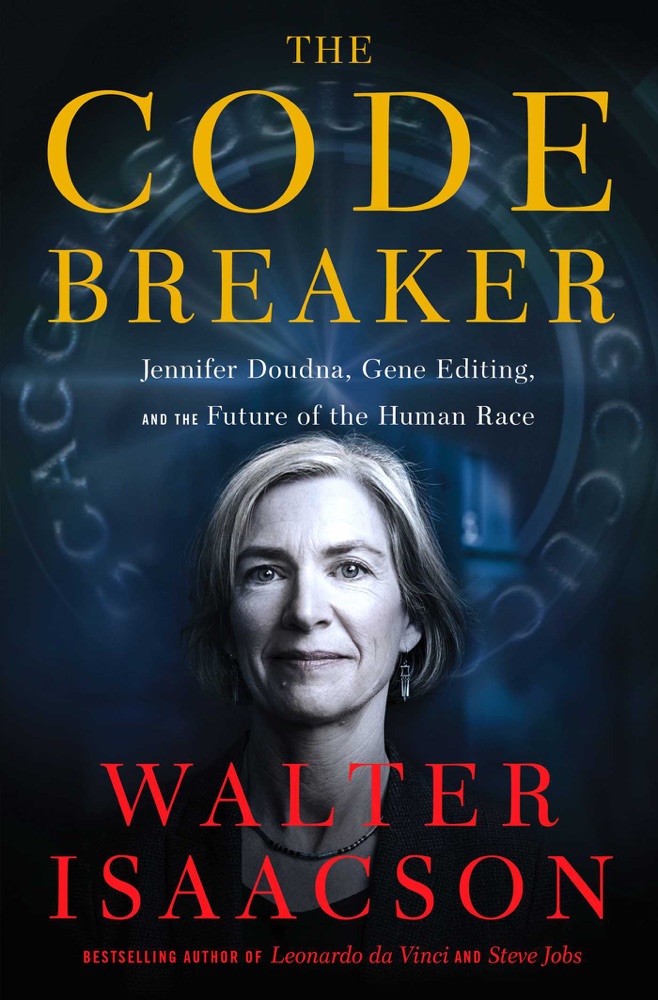 The Code Breaker: Jennifer Doudna, Gene Editing, and the Future of the Human Race
 Falter: Has the Human Game Begun to Play Itself Out?
 The Ascent of Man
 The Story of B: An Adventure of the Mind and Spirit
 Think Like a Rocket Scientist: Simple Strategies You Can Use to Make Giant Leaps in Work and Life
 Blue Remembered Earth
 On the Steel Breeze
 The Stone Gods
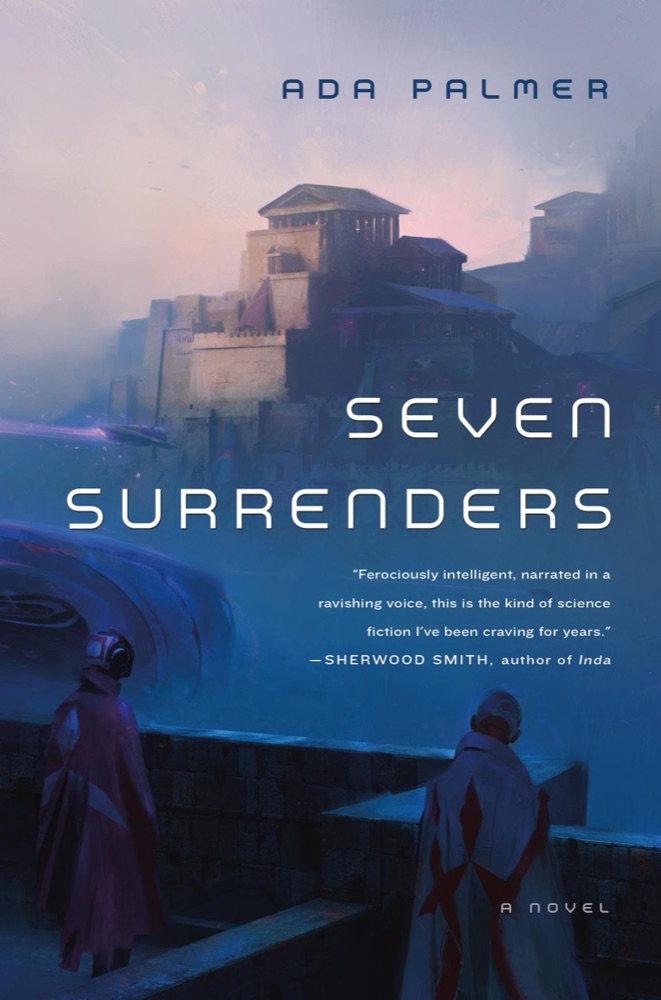 Seven Surrenders
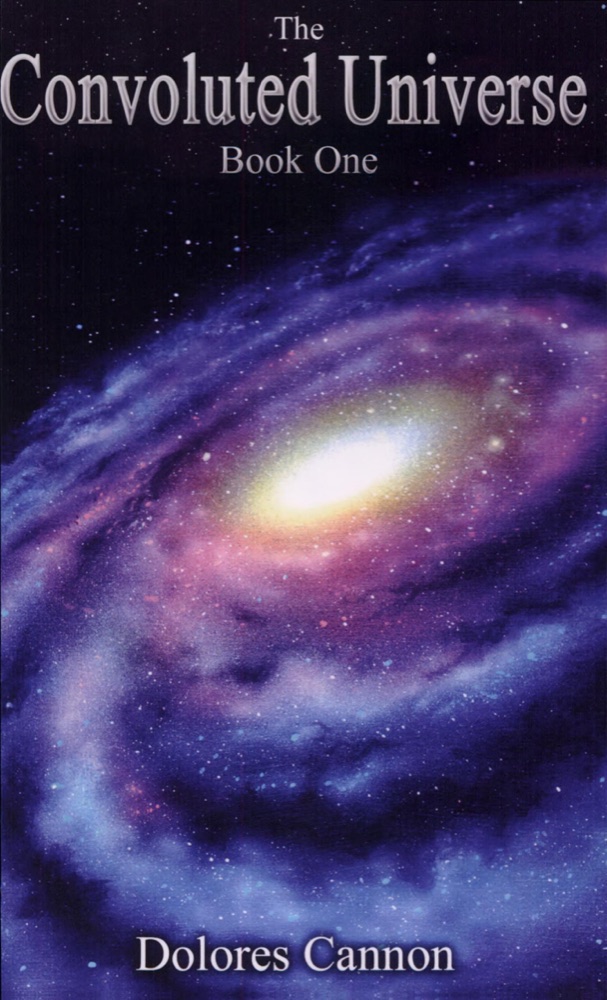 The Convoluted Universe, Book 1
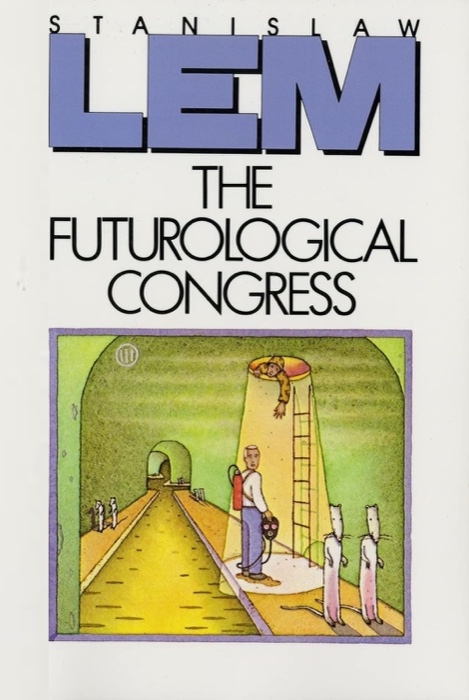 The Futurological Congress: From the Memoirs of Ijon Tichy
 The Story of More: How We Got to Climate Change and Where to Go from Here
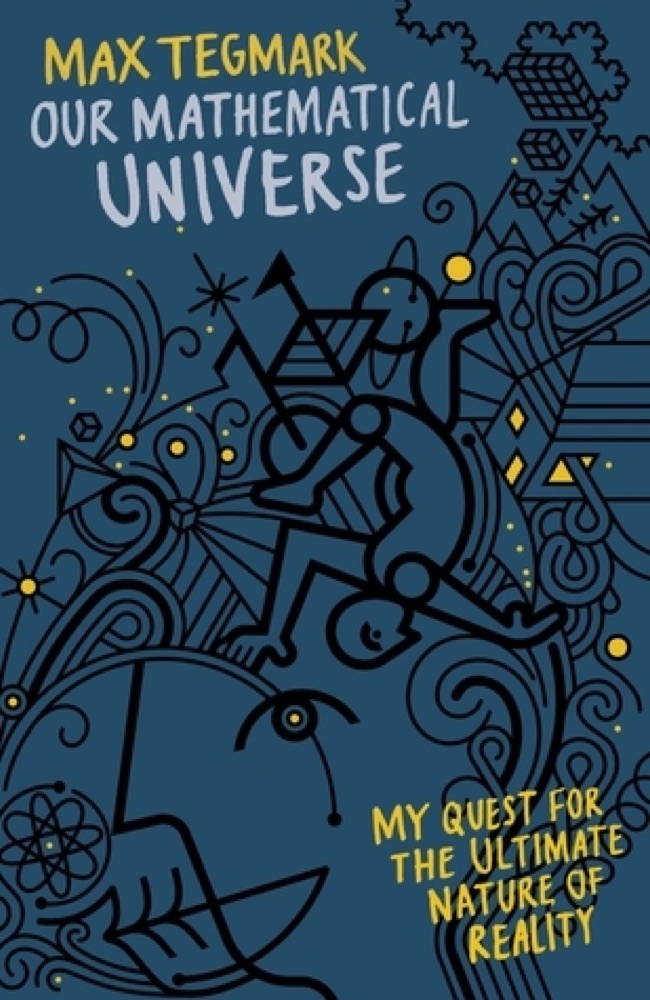 Our Mathematical Universe: My Quest for the Ultimate Nature of Reality
 Exhalation
 The Wandering Earth
 The Log from the Sea of Cortez