
 Maelstrom
Quotes from the Book
You really don’t believe that anything can have a value of its own beyond what function it serves for human beings?” Resaint said. “Value to who?” Resaint asked Halyard to imagine a planet in some remote galaxy—a lush, seething, glittering planet covered with stratospheric waterfalls, great land-sponges bouncing through the valleys, corals budding in perfect niveous hexagons, humming lichens glued to pink crystals, prismatic jellyfish breaching from the rivers, titanic lilies relying on tornadoes to spread their pollen—a planet full of complex, interconnected life but devoid of consciousness. “Are you telling me that, if an asteroid smashed into this planet and reduced every inch of its surface to dust, nothing would be lost? Because nobody in particular would miss it?” “But the universe is bloody huge—stuff like that must happen every minute. You can’t go on strike over it. Honestly it sounds to me to like your real enemy isn’t climate change or habitat loss, it’s entropy. You don’t like the idea that everything eventually crumbles. Well, it does. If you’re this worried about species extinction, wait until you hear about the heat death of the universe.” “I would be upset about the heat death of the universe too if human beings were accelerating the rate of it by a hundred times or more.” “And if a species’ position with respect to us doesn’t matter— you know, those amoebae they found that live at the bottom of the Mariana Trench, if they’re just as important as Chiu Chiu or my parents’ dog, even though nobody ever gets anywhere near them—if distance in space doesn’t matter, why should distance in time? If we don’t care about whether their lives overlap with our lives, why even worry about whether they exist simultaneously with us? Your favorite wasp—Adelo-midgy-midgy—” “Adelognathus marginatum—” “It did exist. It always will have existed. Extinction can’t take that away. It went through its nasty little routine over and over again for millions and millions of years. The show was a big success. So why is it important that it’s still running at the same time you are? Isn’t that centering the whole thing on human beings, which is exactly what we’re not supposed to be doing? I mean, for that matter—reality is all just numbers anyway, right? I mean underneath? That’s what people say now. So why are you so down on the scans? Hacks aside. Why is it so crucial that these animals exist right now in an ostensibly meat-based format, just because we do? My point is you talk about extinction as if you’re taking this enlightened post-human View from Nowhere but if we really get down to it you’re definitely taking a View from Karin Resaint two arms two legs one head born Basel Switzerland year of our lord two-thousand-and-when-ever.” But Resaint wasn’t listening anymore.
6
Resaint was disheartened to learn that Selim was, to borrow Halyard’s expression, “just another extinction industry cunt.” Leftists sometimes asserted that within a capitalist framework there could never be a solution to the extinction crisis that was untainted by profiteering and abuse, because the free market was like some malevolent AI, infinitely more devious than the humans who thought they could constrain it; but Resaint’s own proposal was simply that each of the hundred thousand wealthiest individuals on earth should be randomly assigned a vulnerable species and then informed that if their assigned species were ever to go extinct they would be executed by hanging.
2
Here, too, she observed an almost libidinal desire to relinquish autonomy, except this time in the context of various silly, infantilizing “innovations,” each product solving some non-problem—“No more browsing for hours while your dinner gets cold: let us decide what movie you’d enjoy tonight, based on your hormonal and metabolic indicators!”—like a prosthesis fitted over a perfectly healthy limb so it could shrivel from disuse inside the plastic casing. When she’d done her masters, she’d believed that artificial intelligence was about computer minds ascending into person-hood, but this was more about human minds decaying out of it.
[S]easteds themselves were supposed to be like laboratories, experimenting across the whole spectrum of political possibilities to find out which worked best for modern human beings (although so far the whole spectrum of political possibilities apparently ran from "no personal income taxes" to "no taxes of any kind whatsoever").
Global stock markets, rattled by the hacking of the unhackable, were down about a third of a percent, comparable to a rogue state testing a nuclear bomb or a major economy electing a mildly left-wing government.
On the contrary, parasitic wasps were so repugnant to the soul that they had become a classic argument against creationism: "I cannot persuade myself," wrote Darwin in 1860, "that a beneficient and omnipotent God could have designedly created the Ichneumonidae with the express intention of their feeding within the living bodies of Caterpillars." Nobody ever made remarks like that about pandas. Nobody ever said to Chiu Chiu, 'You prove there is no God who loves us.
For a while now, the smart money had been on the reforms passing--not just the smart money, in fact, but also the money of average intelligence and the money of belowaverage intelligence and even the kind of money where you find yourself wondering about the industrial pollutants this money might have been exposed to as a baby.
When she'd done her masters, she'd believed that artificial intelligence was about computer minds ascending into person-hood, but this was more about human minds decaying out of it.
The diversity of life on earth was (as far as anyone knew) the most majestic thing in the universe, and human beings were (as far as anyone knew) the only living things with the capacity to appreciate that majesty, and yet human beings were also the ones who were stamping that majesty out, not deliberately but carelessly, incidentally, leaving nothing behind but a few scans and samples that nobody would ever look at.
I even considered the United States.’ Everybody but her looked at the floor. The avoidance of any direct reference to that country – a custom adopted in the late 2020s out of sheer embarrassment – was these days so strictly observed that for Resaint it was genuinely startling to hear somebody say the words.
one of those people you sometimes find yourself dealing with who are always late because they have some sort of brain defect that makes them undercalculate how long everything will take.
After all, if the rainforest was really ‘nature’s medicine cabinet’, oozing with new penicillins and improved morphines, then the big pharmaceutical companies would have been buying up Brazil for a thousand euros an acre.
I don’t believe any individual human being has ever lived who was as remarkable as Adelognathus marginatum and the ninety-million-year evolutionary process it consummated, and I don’t believe any work of art has ever been created which is as remarkable, either. Not even close. Not even within a couple of orders of magnitude.
Pain could make a coward of you; the experience might weaken her resolve. And her resolve was to be nursed day and night. If she ever felt it slipping—if the thought of that blood lather in her windpipe ever began to frighten her—the cure was a documentary about Jane Goodall’s early years among the chimpanzees of Tanzania. She’d seen it so many times already that often just a twenty-minute refresher was enough. To be taken back to the 1960s, when it was still possible for a human being to face a wild animal without grief, without shame, without any inkling of the Black Hole gaping wider and wider—to compare that innocence with the present day, when almost every such contact was soaked through with horror and loss—that was all it took to restore to her an iron determination. Wittgenstein, when he was contemplating suicide, had summed up the mindset as “the state of not being able to get over a particular fact.” As she’d said so many times to Halyard, she wasn’t suicidal—and yet that fit her pretty well. Everything was broken. The only remaining valid actions were those taken in reaction to that fact, and they were valid only in proportion to the honesty and completeness of the reaction.
I can’t believe this!” Halyard said. “A few seconds ago you told me you’re not suicidal and now I find out that actually you have a long history of suicide attempts.” “Attempt.” “This proves I’m right.” “What do you mean?” “You say the reason you want to die is that there’s no other adequate response to what’s happening with the animals. But you didn’t start caring about the animals until pretty recently. And yet your desire to die predates that by years and years. So that proves what I’ve been saying—all this stuff about the animals is just a rationalization, it’s just ornamental, non-loadbearing, post hoc bullshit. You tried to kill yourself once, but the whole experience was a bit shambolic and demeaning, so instead of making a conventional second attempt you waited until you could come up with a gimmick that suits you better, meaning it’s some ridiculously elaborate Nietzsche Dostoevsky Master’s in Neural Systems occult ritual martyrdom thing that nobody else would ever have thought of. And this explains your whole ‘extinction is worse than the Holocaust’ manifesto. You put a low value on human existence because you put a low value on your own.
It didn’t feel—at least in this moment—as if she’d lost them. It felt—and perhaps this was a self-protective reflex, her body refusing to take another blow— as if they’d never really been down there at all.
Watch on YouTube
About Ned Beauman
We have collected 16 quotes from 1 book by Ned Beauman on BookQuoters.
More about the author →About the book
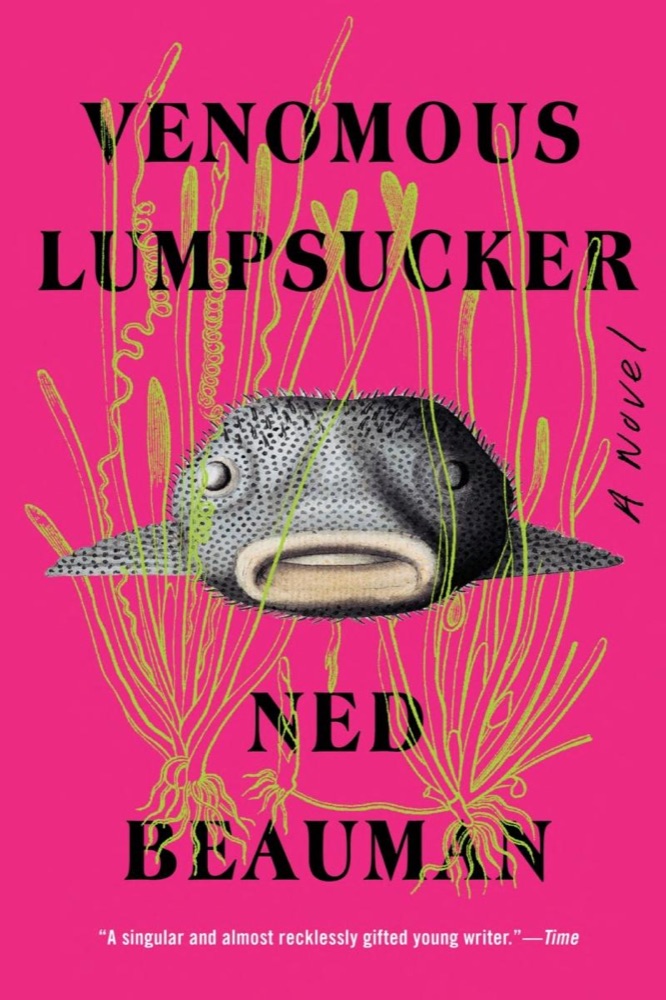
A dark and witty story of environmental collapse and runaway capitalism from the Booker-listed author of The Teleportation Accident.
The near future. Tens of thousands of species are going extinct every year. And a whole industry has sprung up around their extinctions, to help us preserve the remnants, or perhaps just assuage our guilt. For instance, the biobanks: secure archives of DNA samples, from which lost organisms might someday be resurrected . . . But then, one day, it’s all gone. A mysterious cyber-attack hits every biobank simultaneously, wiping out the last traces of the perished species. Now we’re never getting them back.
Karin Resaint and Mark Halyard are concerned with one species in particular: the venomous lumpsucker, a small, ugly bottom-feeder that happens to be the most intelligent fish on the planet. Resaint is an animal cognition scientist consumed with existe
Book details
- First published
- 2022
- Author
- Ned Beauman
- Genre
- Science Fiction
- Goodreads rating
- 3.81 (7k ratings)
Keep reading
Maelstrom
 Galápagos
 Redemption Ark
 Fall; or, Dodge in Hell
 Earth
Earth
 The Futurological Congress: From the Memoirs of Ijon Tichy
 Service Model
 The State of the Art
 Do Androids Dream of Electric Sheep?
 The Shockwave Rider
 Saturn's Children
 The Atopia Chronicles
 The Fifth Science
 The Ministry for the Future
 The Gone-Away World
 Echopraxia
 Gnomon
 Consider Phlebas
 Parasite
 Hummingbird Salamander
 Blindsight
 The Star Fraction
 Hocus Pocus
 Tiamat's Wrath
 Blue Remembered Earth
 The Lost World
 Villa Incognito
 Dragons of Eden: Speculations on the Evolution of Human Intelligence
 Genome
 The Kraken Wakes
 The Sheep Look Up
 Wild Ones: A Sometimes Dismaying, Weirdly Reassuring Story About Looking at People Looking at Animals in America
 Devolution: A Firsthand Account of the Rainier Sasquatch Massacre
 Oryx and Crake
 No One Is Talking About This
 Songs of Distant Earth
 Jurassic Park
 Shadows of Forgotten Ancestors
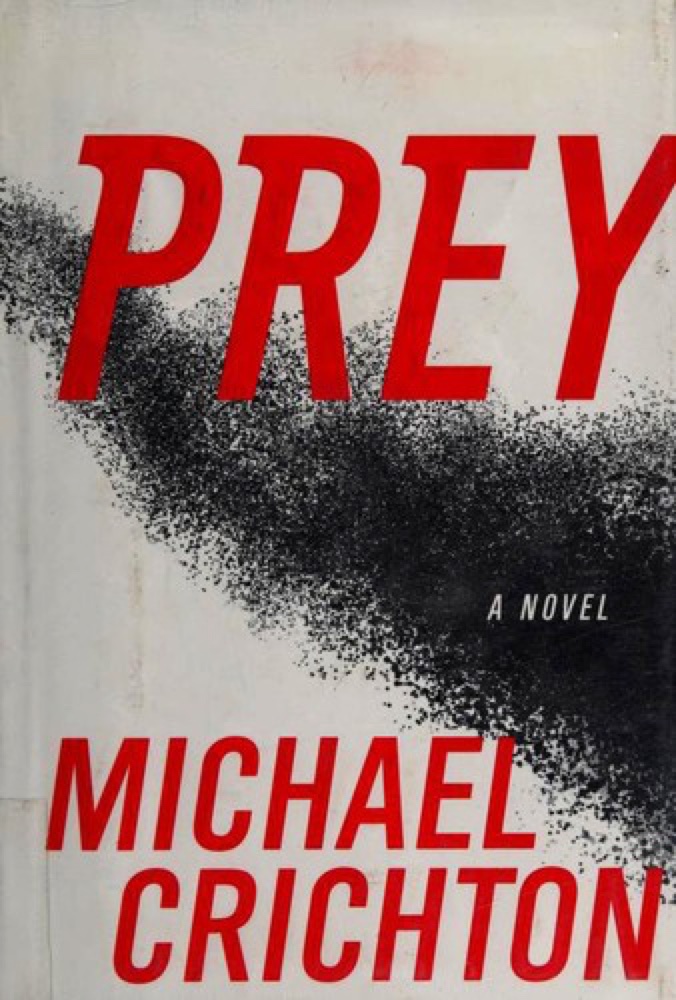 Prey
Prey
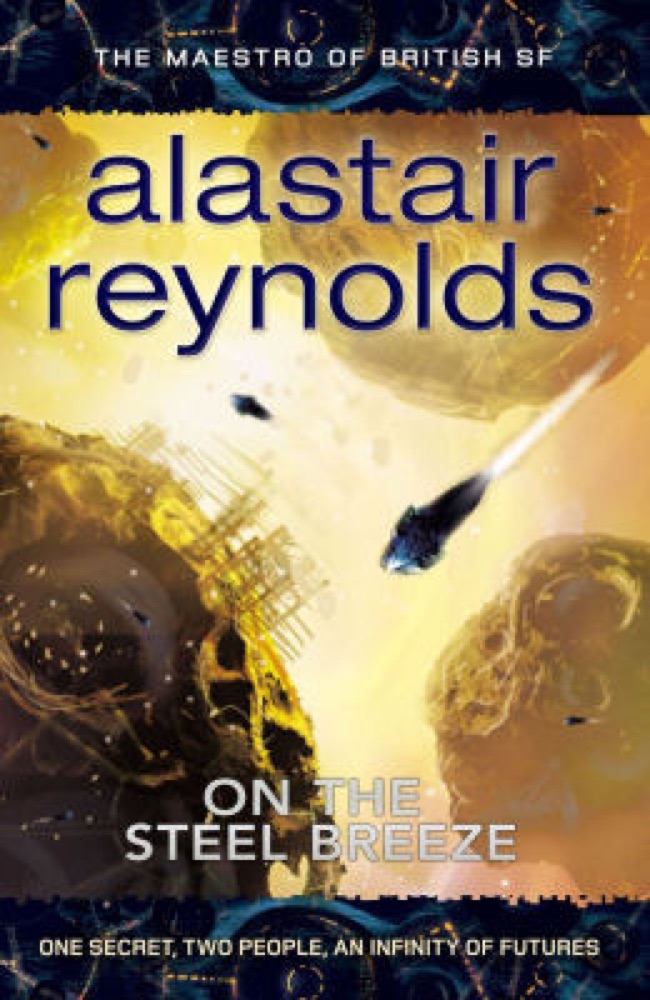 On the Steel Breeze
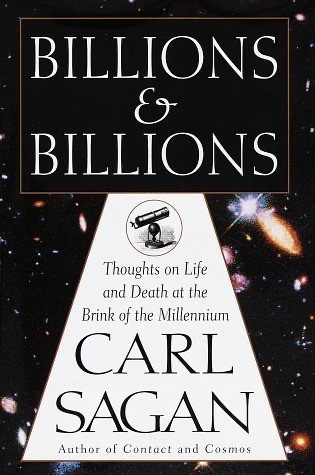 Billions & Billions: Thoughts on Life and Death at the Brink of the Millennium
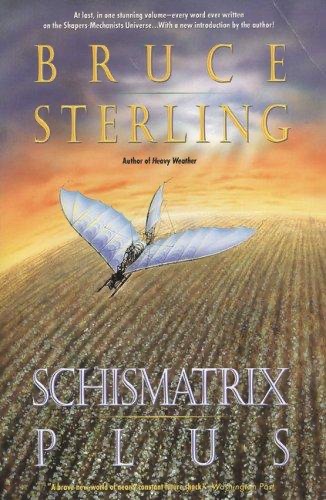 Schismatrix Plus
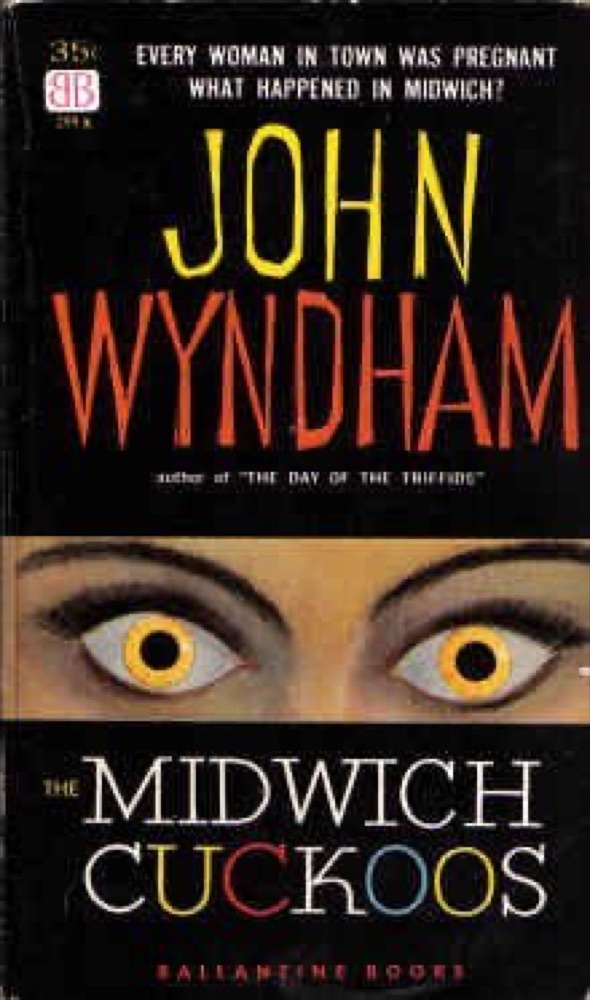 The Midwich Cuckoos
 The Mandibles: A Family, 2029–2047
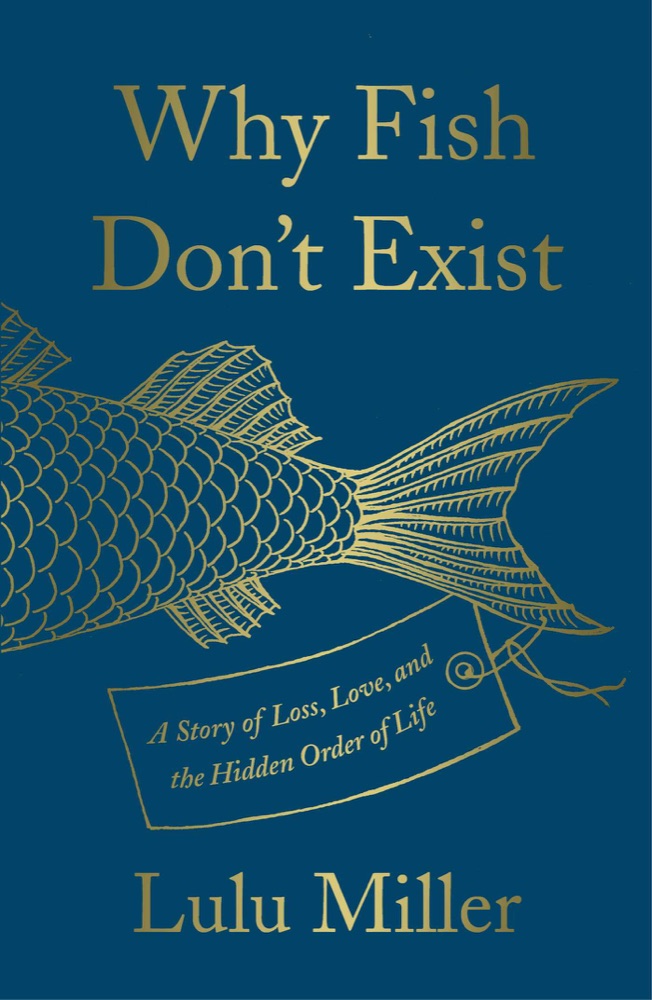 Why Fish Don’t Exist: A Story of Loss, Love, and the Hidden Order of Life
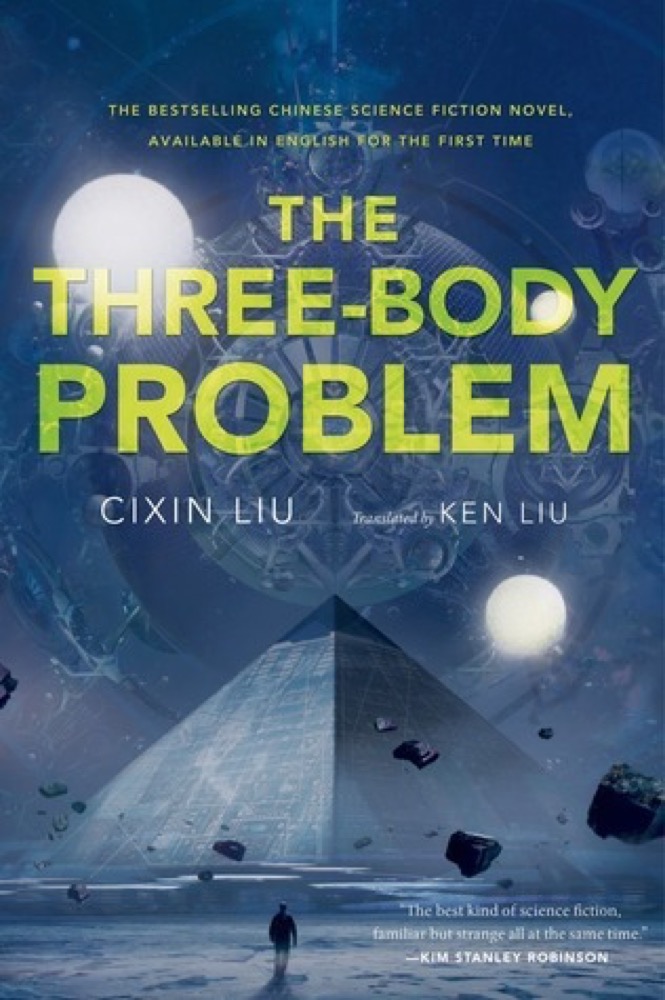 The Three-Body Problem
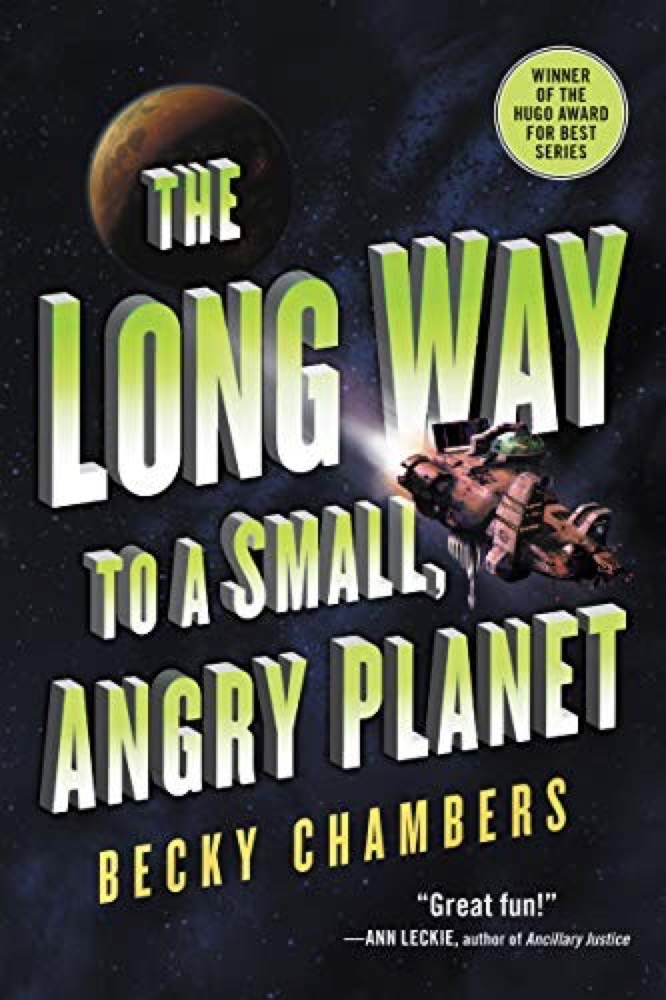 The Long Way to a Small, Angry Planet
 Death's End
 The Hangman's Replacement: Sprout of Disruption
 Fiasco
 Last Chance to See
 Seven Surrenders
 New York 2140
 Civilized to Death: What Was Lost on the Way to Modernity
 Red Mars
 Seveneves
 To Be a Machine : Adventures Among Cyborgs, Utopians, Hackers, and the Futurists Solving the Modest Problem of Death
 Blueprints Of The Afterlife
 Wanderers
 A Short History of Progress