
 The Sixth Extinction: An Unnatural History
Quotes from the Book
When you put a log on the fire, the light and heat you see is, in a literal sense, the decades of sunshine that tree basked in over its lifetime.
16
It’s] pretty clear that times of high carbon dioxide—and especially times when carbon dioxide levels rapidly rose—coincided with the mass extinctions,” writes University of Washington paleontologist and End-Permian mass extinction expert Peter Ward. “Here is the driver of extinction.
7
While the Texas oil economy relies on the truth of geology, many of its inhabitants remain stubbornly resistant to its charms.
6
The notion of the noble savage living in harmony with Nature should be dispatched to the realm of mythology where it belongs. Human beings have never lived in harmony with nature.
5
It stands to reason that, until very recently, all vertebrate life on the planet was wildlife. But astoundingly, today wildlife accounts for only 3 percent of earth’s land animals; human beings, our livestock, and our pets take up the remaining 97 percent of the biomass. This Frankenstein biosphere is due both to the explosion of industrial agriculture and to a hollowing out of wildlife itself, which has decreased in abundance by as much as 50 percent since 1970. This cull is from both direct hunting and global-scale habitat destruction: almost half of the earth’s land has been converted to farmland.
4
If we just did one thing, it wouldn’t be that big of a deal, but we’re doing everything simultaneously as hard and fast as we possibly can.
3
Clearly the story of planet Earth is not the story of Homo sapiens. Almost all of that walk would be through a forbidding landscape with no complex life on it whatsoever. Not in the deep sea, not atop the mountains, not in the tropics, nor on the endless barren granite interiors of the continents.
3
We take for granted the shape of our world and the position of the continents— the familiar geography that seems as eternal as the order of the planets. But this arrangement is temporary: it isn't how the planet has been and it isn't how it will be.
2
I think all you can say,” Saltzman said, “is that when there are severe, rapid changes in the carbon cycle, it doesn’t end well.
2
Though plant and animal life on land might strike us as the default setting for Earth, it was revolutionary for a planet whose continents had been barren for more than 4,000 million years.
2
Today humans emit a staggering 40 gigatons of carbon dioxide a year, perhaps the fastest rate of any period in the last 300 million years of earth history—a period that, you’ll note, includes the End-Permian mass extinction.
1
The modern combination of habitat destruction coupled with species introductions is, therefore, likely to result in total biodiversity loss that may be even greater than that experienced during the [End-Permian mass extinction].” The full terrifying weight of this statement will become apparent after the next chapter.
1
But our current experiment—quickly injecting huge amounts of carbon dioxide into the atmosphere—has in fact been run many times before in the geological past, and it never ends well.
1
As should be clear by now, perhaps no national project has had more of an incidentally beneficial effect on science than the Interstate Highway System has had on geology. In
1
They might have met their match in humanity, which has a tendency to destroy what it loves.
It is culture that enables us to adapt to the environment as it changes on the fly, rather than being compelled to wait around for the hammerblows of natural selection to painfully correct us.
Estimates of our future survival and of the future habitability of the planet are therefore biased by the fact that we're here to ask the question in the first place.
The last time it was four degrees warmer, there was no ice at either pole and sea level was 260 feet higher than it is today.
To future geologists, then, the huge wave of extinctions a few thousand years ago as First Peoples spread out into new continents and remote archipelagoes will be all but indinstinguishable from the current wave of destruction loosed by modernity and its growing appetites.
The decisions made in the next few years by the energy industry and the governments that regulate them will leave a record in the rocks that will last for hundreds of millions of years.
To understand what happened in the oceans at the end of the Triassic, it's useful to look at modern coral reef systems, which have shrunk by perhaps 30 percent since the early 1980s (an appalling, geologically instantaneous lightning strike).
At the end of the Ordovician there were these large temperature and sea level and oxygenation jumps from one state to another that might be akin to the kind of dislocation we seem to be heading towards.
Just as deer will never evolve to outrun hunters' bullets, mass extinctions surpass the evolutionary potential of their victims.
astoundingly, today wildlife accounts for only 3 percent of earth’s land mammals; human beings, our livestock, and our pets take up the remaining 97 percent of the biomass.
Human beings have never lived in harmony with nature.
Future humans, living in a coastal megalopolis in Baffin Island in the Canadian Arctic, might similarly marvel at the strange ancient culture 5,000 years ago that was fully aware that it was sacrificing the prospects of civilization and the welfare of the living world to satisfy its hunger for burning ancient plants and sea life buried in the rocks. But this far underestimates the eventual legacy of humanity.
In fact, if the Soviet Union and the United States both decided to unleash their entire nuclear arsenals developed over the entire course of the Cold War, in a single location, the Chicxulub impact would still be 100,000 times more powerful.
Later obsessions—like the movie and book versions of Jurassic Park—only reinforced for me the melancholy of living in a world that had lost its dragons.
... the fleet-footed pronghorns of the American West run laughably faster than any of their existing predators. But then, their speed isn't meant for existing predators. It might be a vestige of their need to escape constant harrowing pursuit by American cheetahs-- until a geological moment ago. The absence was palpable to me as I rode a train past New Mexico's Kiowa National Grassland, an American Serengeti, windswept and empty except for a lonely wandering pronghorn still running from ghosts.
Watch on YouTube
About Peter Brannen
We have collected 29 quotes from 1 book by Peter Brannen on BookQuoters.
More about the author →About the book
As new groundbreaking research suggests that climate change played a major role in the most extreme catastrophes in the planet's history, award-winning science journalist Peter Brannen takes us on a wild ride through the planet's five mass extinctions and, in the process, offers us a glimpse of our increasingly dangerous future
Our world has ended five times: it has been broiled, frozen, poison-gassed, smothered, and pelted by asteroids. In The Ends of the World, Peter Brannen dives into deep time, exploring Earth’s past dead ends, and in the process, offers us a glimpse of our possible future.
Many scientists now believe that the climate shifts of the twenty-first century have analogs in these five extinctions. Using the visible clues these devastations have left behind in the fossil record, The Ends of the World takes us inside “scenes of the crime,” from South Africa to the New
Book details
- First published
- 2017
- Author
- Peter Brannen
- Genre
- Nonfiction
- Goodreads rating
- 4.30 (6k ratings)
Keep reading
The Sixth Extinction: An Unnatural History
 Under a White Sky: The Nature of the Future
 Falter: Has the Human Game Begun to Play Itself Out?
 The World Without Us
 Eaarth: Making a Life on a Tough New Planet
 A Life on Our Planet: My Witness Statement and a Vision for the Future
 The Last Days of the Dinosaurs: An Asteroid, Extinction, and the Beginning of Our World
 The Uninhabitable Earth: Life After Warming
 The Story of More: How We Got to Climate Change and Where to Go from Here
 The Third Chimpanzee: The Evolution and Future of the Human Animal
 A Short History of Progress
 Underland: A Deep Time Journey
 Feral: Rewilding the Land, the Sea and Human Life
 The Rise and Reign of the Mammals: A New History, from the Shadow of the Dinosaurs to Us – A Bestselling Book on the Natural History of Mammalian Evolution
 Wild Ones: A Sometimes Dismaying, Weirdly Reassuring Story About Looking at People Looking at Animals in America
 Vanishing Treasures: A Bestiary of Extraordinary Endangered Creatures
 Billions & Billions: Thoughts on Life and Death at the Brink of the Millennium
 The Wandering Earth
 Mother of God: An Extraordinary Journey into the Uncharted Tributaries of the Western Amazon
 Shadows of Forgotten Ancestors
 The Lost World
 The Mushroom at the End of the World: On the Possibility of Life in Capitalist Ruins
 Scatter, Adapt, and Remember: How Humans Will Survive a Mass Extinction
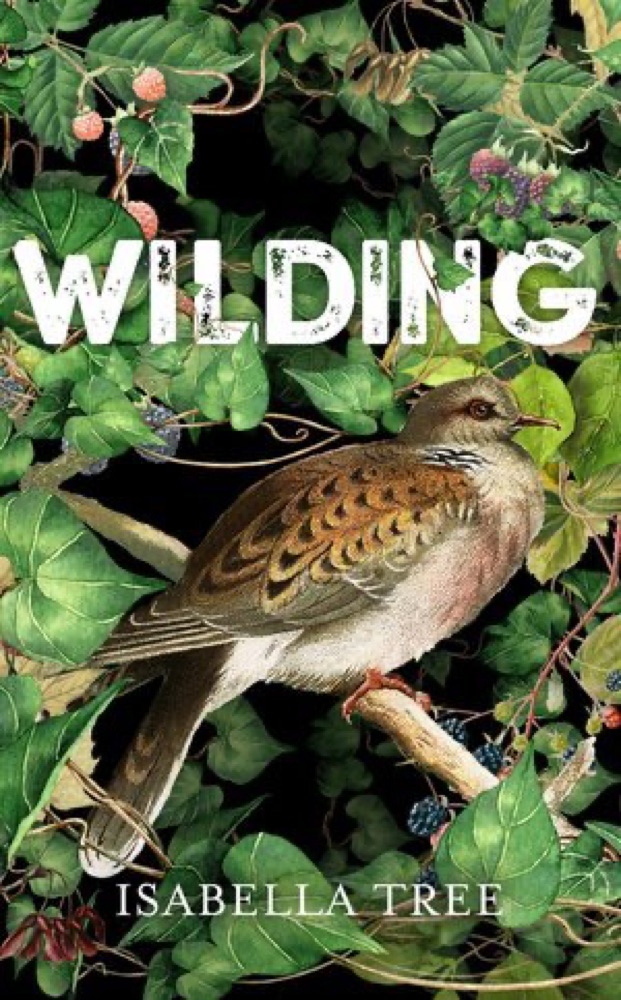 Wilding
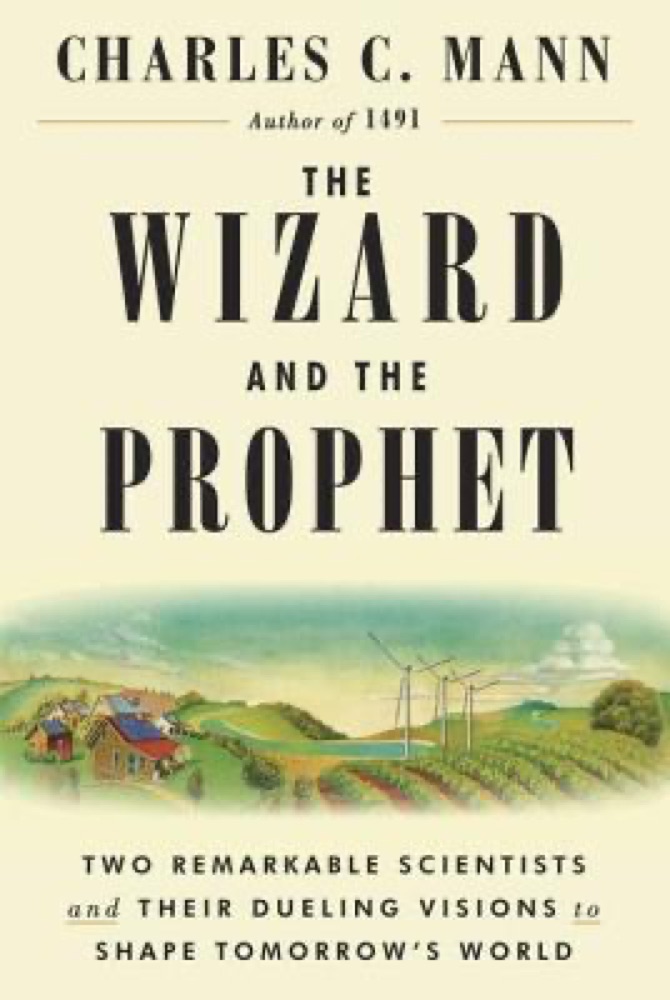 The Wizard and the Prophet: Two Remarkable Scientists and Their Dueling Visions to Shape Tomorrow's World
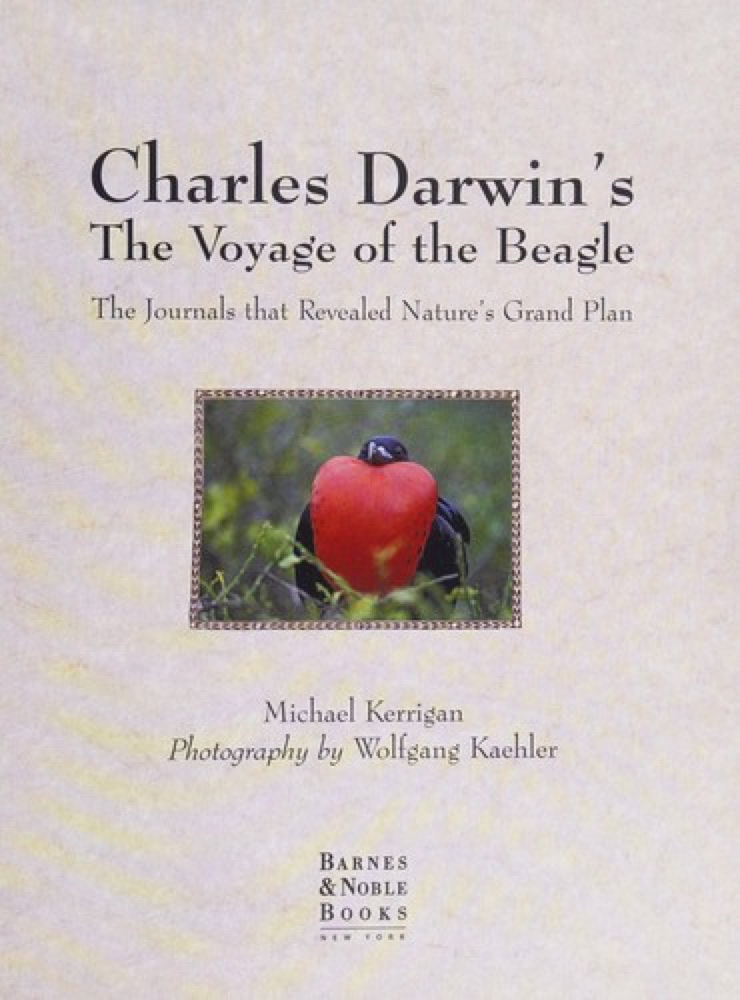 Voyage of the Beagle
 Earth
Earth
 Annals of the Former World
 A Short History of Nearly Everything
 The Immense Journey
 The Nutmeg's Curse: Parables for a Planet in Crisis
 The Dark Forest
 Death's End
 The Lost City of Z: A Tale of Deadly Obsession in the Amazon
 Venomous Lumpsucker
 Silent Spring
 Collapse: How Societies Choose to Fail or Succeed
 Jurassic Park
 The Ancestor's Tale: A Pilgrimage to the Dawn of Evolution
 2061: Odyssey Three
 Magicians of the Gods: The Forgotten Wisdom of Earth's Lost Civilization
 Devolution: A Firsthand Account of the Rainier Sasquatch Massacre
 The Earth Transformed: An Untold History
 The Overstory
 Dragons of Eden: Speculations on the Evolution of Human Intelligence
 The Lost City of the Monkey God
 All We Can Save: Truth, Courage, and Solutions for the Climate Crisis
 The Ghost Map: The Story of London's Most Terrifying Epidemic - and How It Changed Science, Cities, and the Modern World
 The Origin of Species
 Genome
 Barkskins
 Regenesis: Feeding the World Without Devouring the Planet
 The Ministry for the Future
 The Terranauts
 Ripple
 A Sand County Almanac and Sketches Here and There
 Guns, Germs, and Steel: The Fates of Human Societies
 1491: New Revelations of the Americas Before Columbus
 2312
2312
 The Forest Unseen: A Year’s Watch in Nature