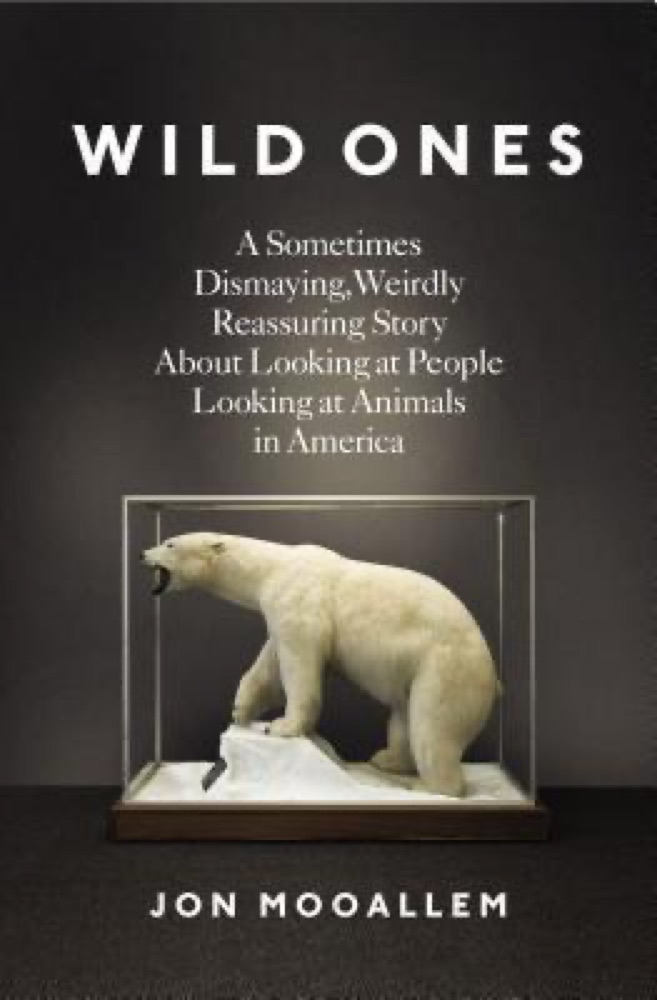
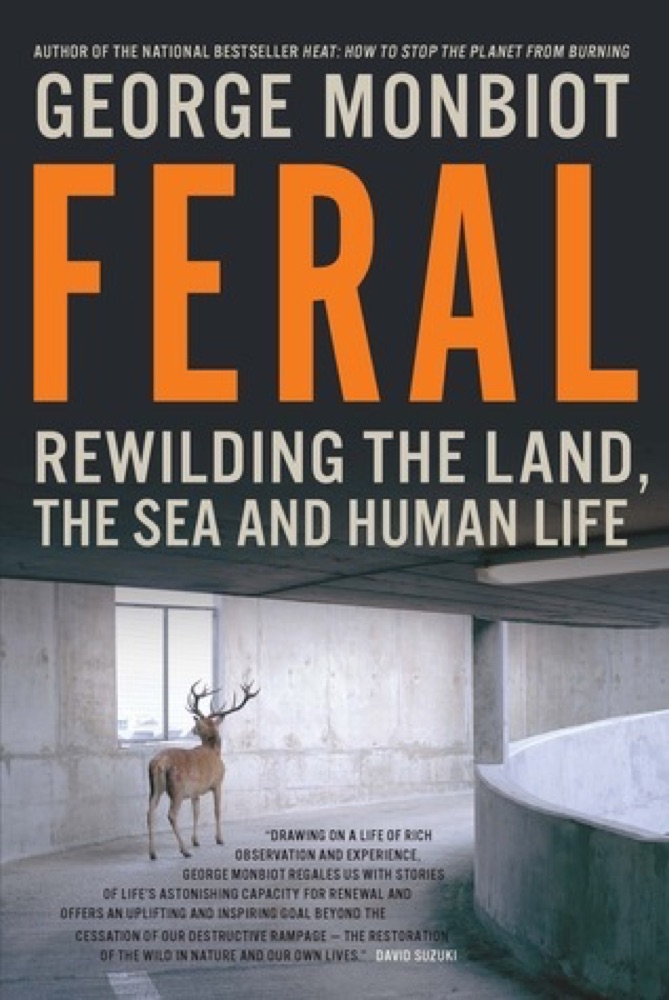
 Feral: Rewilding the Land, the Sea and Human Life
Quotes from the Book
Zoom out and what you see is one species--us--struggling to keep all others in their appropriate places, or at least in the places we've decided they ought to stay. In some areas, we want cows but not bison, or mule deer but not coyotes, or cars but not elk. Or sheep but not elk. Or bighorn sheep but not aoudad sheep. Or else we'd like wolves and cows in the *same* place. Or natural gas tankers swimming harmoniously with whales. We are everywhere in the wilderness with white gloves on, directing traffic.
7
The best of us are cursed with caring, with a bungling and undying determination to protect whatever looks like beauty, even if our vision is blurry. People keep warning me that Isla's generation will blame us for loosing so much of that precious beauty. But whatever: It's inevitable, and I'm trying to make my peace with it. It's comforting that they'll still imagine better, and it will occur to them to be angry.
2
I was relieved not to find yet another crabby and wounded ex-environmentalist, and I asked her how she was managing to live in a world that she found so discouraging. The answer wasn't reassuring. She told me about the Taoists in ancient China. "They looked around and saw they were facing the same situation, a world that was disintegrating around them. And they realized the best thing to do is do as little as possible. Don't feed any new energy into a system that's falling apart, because you don't know what that energy will wind up being spit back as." Rather than try to change society, it's better to retreat.
2
You're not what you were before," Jana told me, "but neither are you what you're going to be. The soup stage really sucks, but you just have to embrace being soup for a little while.
2
Ultimately, wildness is a matter of individual opinion, and not even the experts agree.
1
Conservation should strive to build healthy populations of animals that are “as wild as possible in a tame world.” But
1
We are everywhere in the wilderness with white gloves on, directing traffic.
1
Maybe we keep giving animal stuff to kids because their imaginations innately brim with animals, but maybe it’s the other way around. Maybe we long to see children and animals together—free creatures living in an innocence we’ve strayed from.
1
There was no way of knowing. But in the end, he told me, “I just want to be part of a generation that tries.
1
The sixth extinction and the end of Nature,” one slide read near the end. “We now live in a manmade world.” Mattoni
pretty simple stuff, rooted in the same lessons that Isla is now learning at preschool: Be considerate of others. Don’t take more than your share. Clean up your mess.
It’s not a bird project,” Brooke said. “It’s a people project. The birds are an excuse for doing something good.
My husband had Alzheimer’s,” she told me, “so our porch was a big part of our life.” By
Brooke froze; not knowing anything about geese, he worried they’d peck his son open like a bun. Instead, the birds only settled all around the little boy, put their heads down, and fell asleep. Brooke
But, as Holly Doremus writes, we’ve never asked “how much wild nature society needs, and how much society can accept.
Even pigeons were once cherished in American cities, before all the handouts and garbage we’ve given them to eat allowed their numbers to explode. In 1878, the New York Times described pigeons as “honest birds” whose “right to feed in the street” was being challenged by sparrows. In
Zoom out and what you see is one species—us—struggling to keep all others in their appropriate places, or at least in the places we’ve decided they ought to stay. In
The group called itself Greenpeace. Until then, they’d been focused on the issues of nuclear weapons and power, but they’d learned that sperm whale oil, because of its low freezing point, was still used as a lubricant in the manufacture of nuclear weapons. It seemed like madness—one species driving another extinct in order to build a tool to extinguish itself.
That is, we are not just identifying uniqueness but creating uniqueness—uniqueness that, one day, we might be similarly impressed with and feel obligated to protect. We imagine conservation as keeping essential shapes of nature locked in place. But those shapes are sometimes just projections, a zone of ever-shifting fuzziness that we’ve chosen to draw a solid line around.
In Europe, for example, certain songbirds have forked into different rural and urban species, each uniquely adapting to the habitat we’ve built around it. Around the world, all kinds of species are now shrinking—their average body size is getting smaller—because generations of human hunters have removed the biggest, fittest animals from their gene pools. And
Places to catch insects [were] rare because of urbanization. Kids play in their homes now, and a lot had forgotten about catching insects. So had I.” So, in the nineties, he designed a Nintendo game that tapped into his childhood impulse for bug hunting—a virtual world, bursting with fictional biodiversity. It now contains more than 640 precisely named “species” of critters, all of them waiting to be collected and traded with friends. Tajiri’s game is Pokémon.
A larva, for example, doesn’t just develop into a butterfly inside the pupa; it first breaks down completely into an amorphous goop, then re-forms. Mattoni called it “the soup stage.” “You’re not what you were before,” Jana told me, “but neither are you what you’re going to be. The soup stage really sucks, but you just have to embrace being soup for a while.
The point,” Jana told me, “is to keep some uniqueness in the world.” Not just for her sons, but for their sons, too.
Many of those insects have critical impacts on their ecosystems. They are the Pleistocene megafauna writ small. They chew up and decompose the dead to keep things clean and keep energy circulating through its natural cycle. They riddle the soil with holes to aerate it. They spread seeds. They pollinate a third of the foods Americans eat. They are useful, in other words. But the large majority are also characterless and ugly—not quick to draw our sympathy. And
During World War I, Hornaday had watched humanity take the high-tech artillery it was using on wild animals and turn it on itself, and he’d never really recovered from that terror. The war spoiled his faith in people’s decency and wisdom. He
I read that in the eighteenth and nineteenth centuries, passenger pigeons roosted in flocks of more than a hundred million birds. Flying in, they were said to block out the sun. One man on the Ohio River mistook the “loud rushing roar, succeeded by instant darkness,” for a tornado. Trees snapped under their weight, and when the birds finally moved on, the locals were left to trudge through the many inches of dung that had accumulated under them like a fetid snowfall.
Over the years, the gaze of entomologists gradually magnified, each generation scrutinizing what the previous one hadn’t bothered with or noticed. By the time Powell was surveying the dunes in the late seventies and early eighties, the insects he was bringing home included the minuscule and the nocturnal—because that’s what a scientist of his generation was accustomed to collecting, and what was left to be caught. The biodiversity of the dunes hadn’t expanded. But people’s perception of it had. —
Ultimately, it’s easy to imagine Thomas Jefferson as an early American George Costanza, a seething nebbish quick to take umbrage but never quite able to respond convincingly.
The phenomenon that Powell stumbled onto has a name: shifting baselines syndrome... Every generation of scientist accepts the oceans as it inherits them... when the next generation of scientists start their careers, they don't see the oceans as depleted; that depleted condition becomes their baseline, against which they'll measure any subsequent losses in their lifetimes... All of us adopt the natural world we encounter in childhood as our psychological baseline -- an expectation of how things should be --and gauge the changes we see against that norm... It also can leave us , the public, unsure how to feel about conservation's supposedly feel-good success stories.
Watch on YouTube
About Jon Mooallem
We have collected 29 quotes from 1 book by Jon Mooallem on BookQuoters.
More about the author →About the book
A New York Times Notable Book of 2013Journalist Jon Mooallem has watched his little daughter’s world overflow with animals butterfly pajamas, appliquéd owls—while the actual world she’s inheriting slides into a great storm of extinction. Half of all species could disappear by the end of the century, and scientists now concede that most of America’s endangered animals will survive only if conservationists keep rigging the world around them in their favor. So Mooallem ventures into the field, often taking his daughter with him, to move beyond childlike fascination and make those creatures feel more real. Wild Ones is a tour through our environmental moment and the eccentric cultural history of people and wild animals in America that inflects it—from Thomas Jefferson’s celebrations of early abundance to the turn-of the-last-century origins of the teddy bear to the whale-loving hippies of th
Book details
- First published
- 2013
- Author
- Jon Mooallem
- Genre
- Nonfiction
- Goodreads rating
- 4.05 (3k ratings)
Keep reading
Feral: Rewilding the Land, the Sea and Human Life
 Vanishing Treasures: A Bestiary of Extraordinary Endangered Creatures
 Last Chance to See
 Martin Marten
 Wilding
 Under a White Sky: The Nature of the Future
 The Lost World
 Devolution: A Firsthand Account of the Rainier Sasquatch Massacre
 Vesper Flights
 Elephant Whisperer
 A Sand County Almanac and Sketches Here and There
 The Story of More: How We Got to Climate Change and Where to Go from Here
 A Life on Our Planet: My Witness Statement and a Vision for the Future
 The Genius of Birds
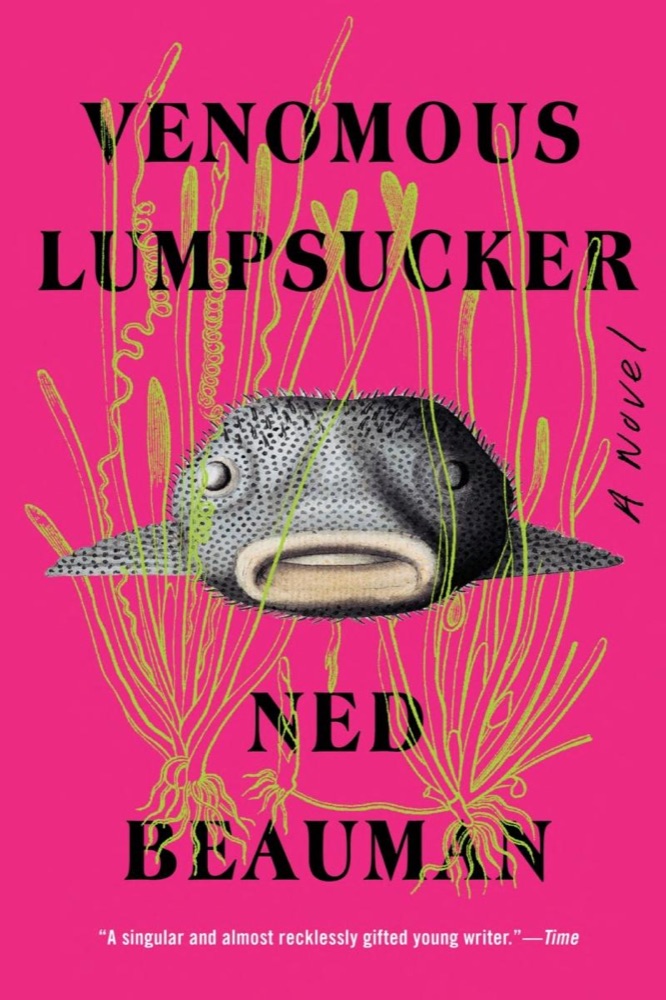 Venomous Lumpsucker
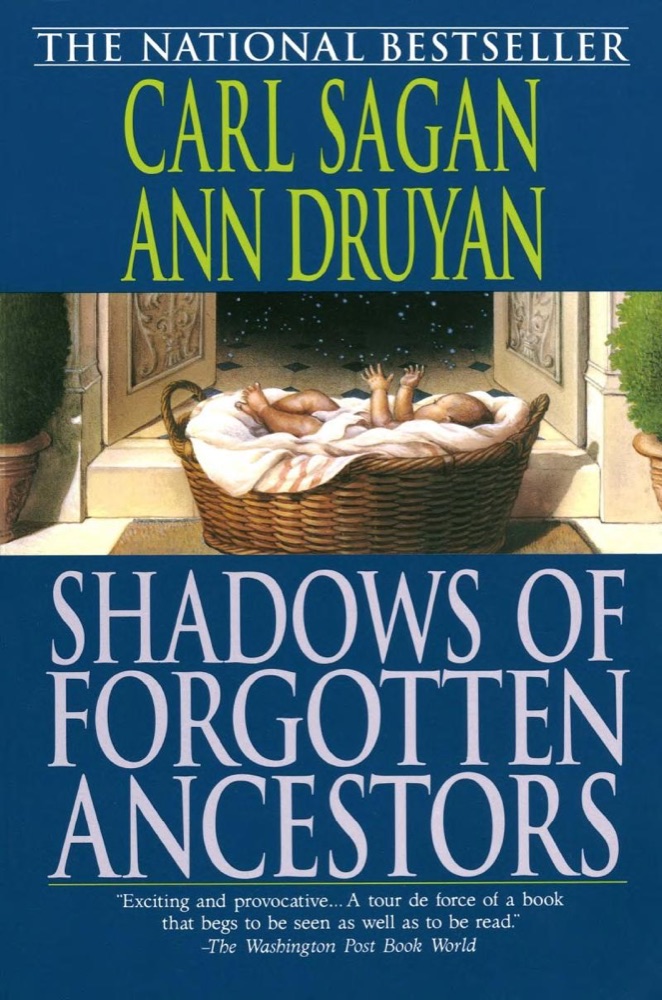 Shadows of Forgotten Ancestors
 Falter: Has the Human Game Begun to Play Itself Out?
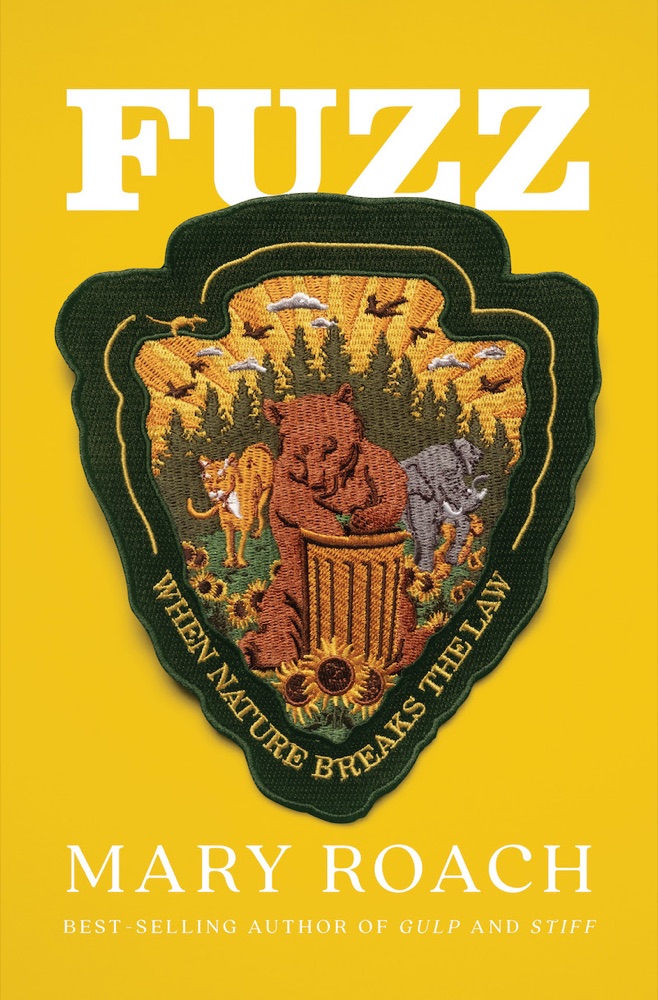 Fuzz: When Nature Breaks the Law
 Why Fish Don’t Exist: A Story of Loss, Love, and the Hidden Order of Life
 How Far the Light Reaches: A Life in Ten Sea Creatures
 Galápagos
 Semiosis
 The World Without Us
 The Log from the Sea of Cortez
 Earth
Earth
 Hummingbird Salamander
 H is for Hawk
 Oryx and Crake
 Turtle Diary
 Pocket Apocalypse
 Billions & Billions: Thoughts on Life and Death at the Brink of the Millennium
 The Fifth Science
 The Place of Tides
 Undeniable: Evolution and the Science of Creation
 The Last Days of the Dinosaurs: An Asteroid, Extinction, and the Beginning of Our World
 The World-Ending Fire: The Essential Wendell Berry
 All We Can Save: Truth, Courage, and Solutions for the Climate Crisis
 The Sixth Extinction: An Unnatural History
 The Gone-Away World
 A Hunter-Gatherer's Guide to the 21st Century: Evolution and the Challenges of Modern Life
 Small Wonder
 Maelstrom
 A Children's Bible
 Gathering Moss: A Natural and Cultural History of Mosses
 The Midwich Cuckoos
 Hocus Pocus
 The Long Way to a Small, Angry Planet
 Creation Lake
 The Overstory
 The Sheep Look Up
 Hollow Kingdom
 Wanderers
 The Zookeeper's Wife
 Barkskins
 Prey
Prey
 Memoirs of a Polar Bear
 Sea of Tranquility
 The Shockwave Rider
 Mother of God: An Extraordinary Journey into the Uncharted Tributaries of the Western Amazon
 Silent Spring