
 The Future of the Mind: The Scientific Quest to Understand, Enhance, and Empower the Mind
Quotes from the Book
In general, we’re least aware of what our minds do best.
25
We shouldn't let our envy of distinguished masters of the arts distract us from the wonder of how each of us gets new ideas. Perhaps we hold on to our superstitions about creativity in order to make our own deficiencies seem more excusable. For when we tell ourselves that masterful abilities are simply unexplainable, we're also comforting ourselves by saying that those superheroes come endowed with all the qualities we don't possess. Our failures are therefore no fault of our own, nor are those heroes' virtues to their credit, either. If it isn't learned, it isn't earned. When we actually meet the heroes whom our culture views as great, we don't find any singular propensities––only combinations of ingredients quite common in themselves. Most of these heroes are intensely motivated, but so are many other people. They're usually very proficient in some field--but in itself we simply call this craftmanship or expertise. They often have enough self-confidence to stand up to the scorn of peers--but in itself, we might just call that stubbornness. They surely think of things in some novel ways, but so does everyone from time to time. And as for what we call "intelligence", my view is that each person who can speak coherently already has the better part of what our heroes have. Then what makes genius appear to stand apart, if we each have most of what it takes? I suspect that genius needs one thing more: in order to accumulate outstanding qualities, one needs unusually effective ways to learn. It's not enough to learn a lot; one also has to manage what one learns. Those masters have, beneath the surface of their mastery, some special knacks of "higher-order" expertise, which help them organize and apply the things they learn. It is those hidden tricks of mental management that produce the systems that create those works of genius. Why do certain people learn so many more and better skills? These all-important differences could begin with early accidents. One child works out clever ways to arrange some blocks in rows and stacks; a second child plays at rearranging how it thinks. Everyone can praise the first child's castles and towers, but no one can see what the second child has done, and one may even get the false impression of a lack of industry. But if the second child persists in seeking better ways to learn, this can lead to silent growth in which some better ways to learn may lead to better ways to learn to learn. Then, later, we'll observe an awesome, qualitative change, with no apparent cause--and give to it some empty name like talent, aptitude, or gift.
14
Papert's Principle: Some of the most crucial steps in mental growth are based not simply on acquiring new skills, but on acquiring new administrative ways to use what one already knows.
13
The art of a great painting is not in any one idea, nor in a multitude of separate tricks for placing all those pigment spots, but in the great network of relationships among its parts. Similarly, the agents, raw, that make our minds are by themselves as valueless as aimless, scattered daubs of paint. What counts is what we make of them.
3
There is not the slightest reason to doubt that brains are anything other than machines with enormous parts that work in perfect accord with physical laws.
1
Watch on YouTube
About Marvin Minsky
We have collected 5 quotes from 1 book by Marvin Minsky on BookQuoters.
More about the author →About the book
Marvin Minsky -- one of the fathers of computer science and cofounder of the Artificial Intelligence Laboratory at MIT -- gives a revolutionary answer to the age-old "How does the mind work?" Minsky brilliantly portrays the mind as a "society" of tiny components that are themselves mindless. Mirroring his theory, Minsky boldly casts The Society of Mind as an intellectual puzzle whose pieces are assembled along the way. Each chapter -- on a self-contained page -- corresponds to a piece in the puzzle. As the pages turn, a unified theory of the mind emerges, like a mosaic. Ingenious, amusing, and easy to read, The Society of Mind is an adventure in imagination.
Book details
- First published
- 1985
- Author
- Marvin Minsky
- Genre
- Nonfiction
- Goodreads rating
- 4.04 (3k ratings)
Keep reading
The Future of the Mind: The Scientific Quest to Understand, Enhance, and Empower the Mind
 How the Mind Works
 The Social Animal: The Hidden Sources of Love, Character, and Achievement
 A Thousand Brains: A New Theory of Intelligence
 Incognito: The Secret Lives of the Brain
 The Tell-Tale Brain: A Neuroscientist's Quest for What Makes Us Human
 From Bacteria to Bach and Back: The Evolution of Minds
 Blink: The Power of Thinking Without Thinking
 The Art of Creative Thinking
 The Master and His Emissary: The Divided Brain and the Making of the Western World
 A Whole New Mind: Why Right-Brainers Will Rule the Future
 Mastery
 Imagine: How Creativity Works
 The Element: How Finding Your Passion Changes Everything
 The Master Key System
 The Brain That Changes Itself: Stories of Personal Triumph from the Frontiers of Brain Science
 How We Learn: Why Brains Learn Better Than Any Machine . . . for Now
 How We Decide
 No Self, No Problem: How Neuropsychology Is Catching Up to Buddhism
 Thinking, Fast and Slow
 Mastermind: How to Think Like Sherlock Holmes
 Descartes' Error: Emotion, Reason and the Human Brain
 The New Drawing on the Right Side of the Brain
 The Singularity is Near: When Humans Transcend Biology
 Consciousness and the Brain: Deciphering How the Brain Codes Our Thoughts
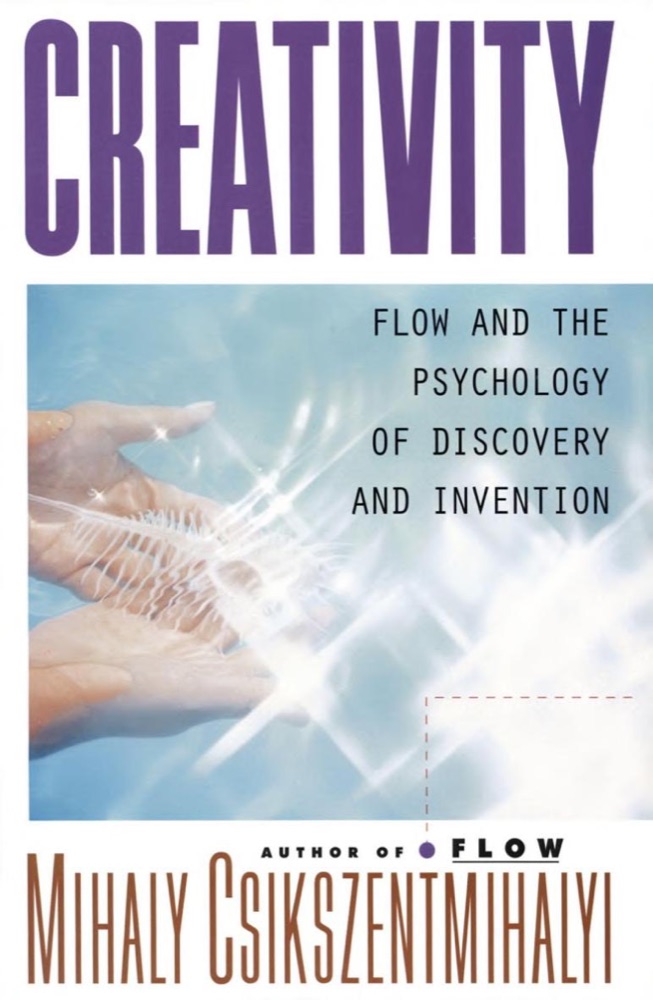 Creativity: Flow and the Psychology of Discovery and Invention
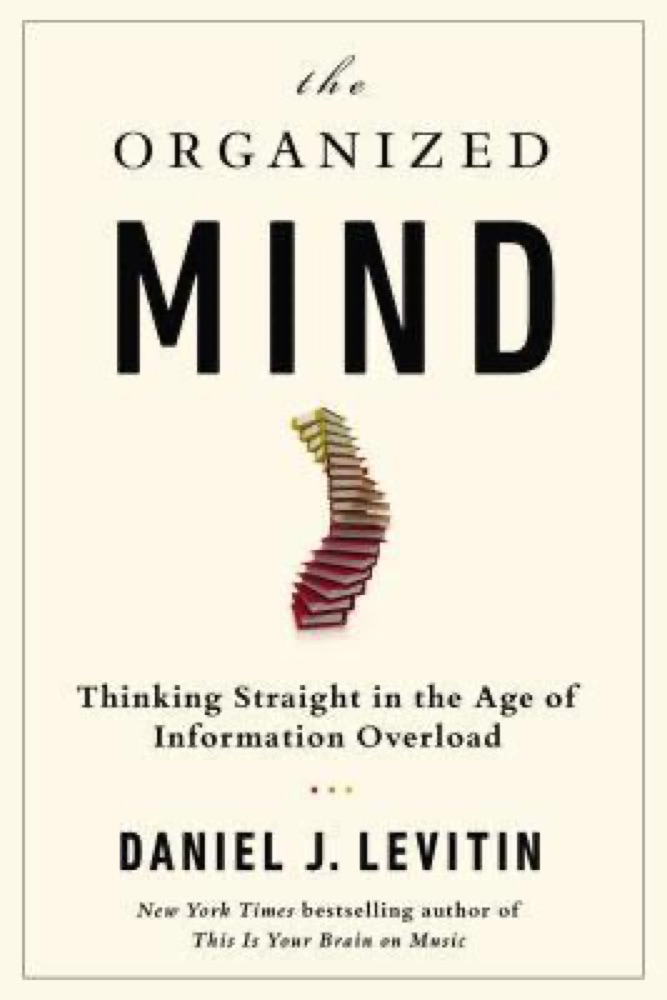 The Organized Mind: Thinking Straight in the Age of Information Overload
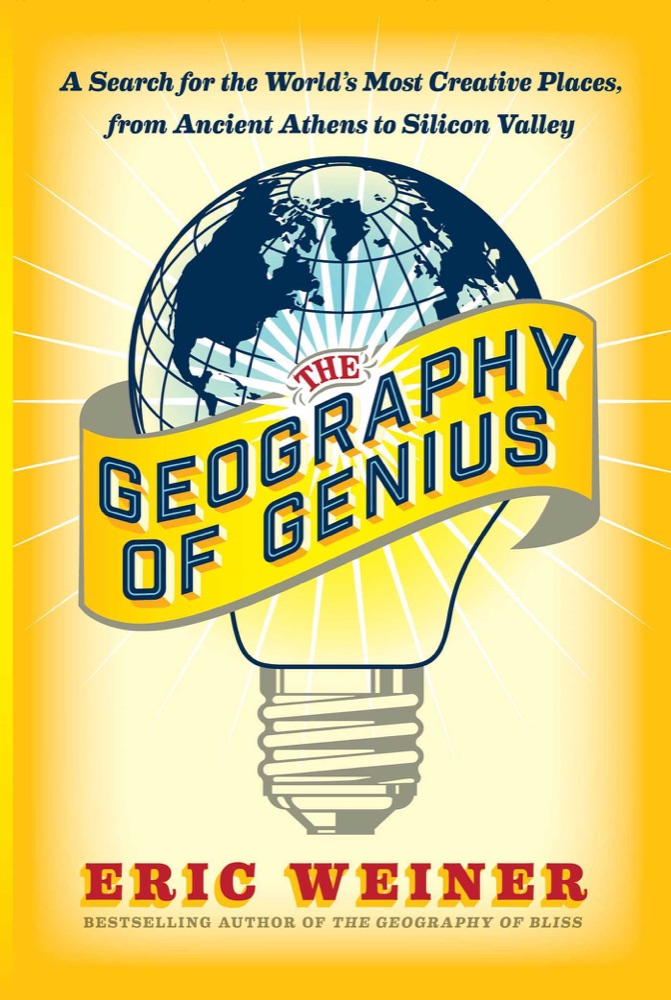 The Geography of Genius: A Search for the World's Most Creative Places from Ancient Athens to Silicon Valley
 The Art of Thinking Clearly
 Moonwalking with Einstein: The Art and Science of Remembering Everything
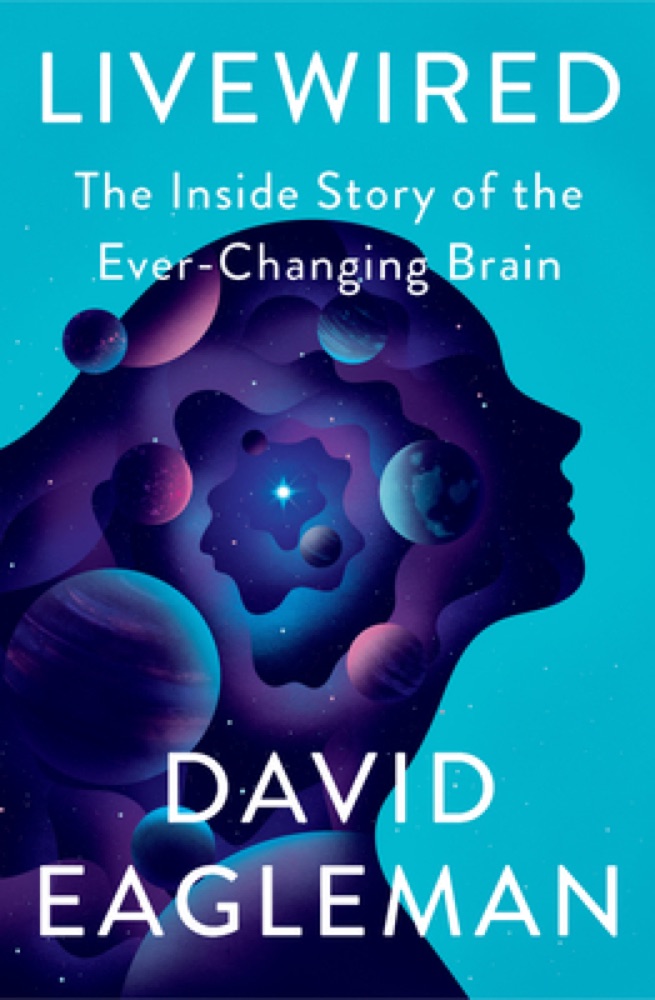 Livewired: The Inside Story of the Ever-Changing Brain
 Gödel, Escher, Bach: An Eternal Golden Braid
 The New Psycho-Cybernetics: The Original Science of Self-Improvement and Success That Has Changed the Lives of 30 Million People
 Curious: The Desire to Know and Why Your Future Depends On It
 The Big Picture: On the Origins of Life, Meaning, and the Universe Itself
 Range: Why Generalists Triumph in a Specialized World
 The Origin of Consciousness in the Breakdown of the Bicameral Mind
 God's Debris: A Thought Experiment
 Emotional Design: Why We Love (or Hate) Everyday Things
 Superintelligence: Paths, Dangers, Strategies
 Psych: The Story of the Human Mind
 My Inventions
 Flow: The Psychology of Optimal Experience
 Think Like a Rocket Scientist: Simple Strategies You Can Use to Make Giant Leaps in Work and Life
 The Science of Mind
 Stumbling on Happiness
 Peak: Secrets from the New Science of Expertise
 The Grand Design
 Alchemy: The Surprising Power of Ideas That Don't Make Sense
 Where Good Ideas Come From: The Natural History of Innovation
 You Are Now Less Dumb: How to Conquer Mob Mentality, How to Buy Happiness, and All the Other Ways to Outsmart Yourself
 Zen and the Art of Motorcycle Maintenance
 Superforecasting: The Art and Science of Prediction
 The Fifth Discipline: The Art & Practice of The Learning Organization
 The Ascent of Man
 A Devil's Chaplain: Reflections on Hope, Lies, Science, and Love
 The Science of Storytelling
 Emotional Intelligence: Why It Can Matter More Than IQ
 Black Box Thinking: Why Some People Never Learn from Their Mistakes - But Some Do