
 Collapse: How Societies Choose to Fail or Succeed
Quotes from the Book
Perhaps climatic change fanned problems whose embers were already glowing, but it was the failure to keep the rapacious magnate class under control that was the ultimate cause of the regular crises.
1
In this age of mounting violence and insecurity, it was perhaps not surprising that ties between villages weakened, communities became introverted and levels of trust plummeted dramatically. Societies atomised and disintegrated, leading to fragmentation that encouraged differentiation along ethnic and other grounds. Research has suggested that these breakdowns developed into long-term issues which are still prevalent today in many parts of West Africa, and explain low levels of co-operation, low levels of trust and poor economic performance.
For example, regions in the Americas that were well suited to cash crops that required intensive farming and benefited from large pools of labour became places with high levels of inequality and limited distribution of rights among the population. Locations better suited to less intensive forms of agricultural production on the other hand - regions that favoured the growing of wheat, for example - proved to be more egalitarian, with better distribution of rights among the population. The short explanation for this is that crops that required lower labour input produced smaller profits and therefore meant there was less to fight over, and more reason to co-operate. This is one of the reasons why it is possible to identify a strong relationship between a country's socio-economic development and its distance from the equator.
18 per cent of total global deaths in 2018 were caused by the effects of fossil-fuel pollution.
Thank you Katarina, Flora, Francis and Luke: you are all a lot older than when I started this book.
Data about the persecution of Jews in Europe drawn from almost a thousand cities between 1100 and 1800 shows that a decrease in the average growing-season temperature of about one-third of 1 degree Celsius is correlated with a rise in the probability of Jews being attacked in the subsequent five-year period – with those living in and near locations with poor soil quality and weaker institutions more likely still to be the victims of violence during times of food shortages and higher prices.
Pliny the Elder, writing not long afterwards, noted sadly that too many people undermine nature with the sole purpose of self-enrichment; it should hardly come as a surprise, therefore, that the earth should occasionally show its displeasure, through disasters such as earthquakes.
Watch on YouTube
About Peter Frankopan
We have collected 7 quotes from 1 book by Peter Frankopan on BookQuoters.
More about the author →About the book
A revolutionary new history that reveals how climate change has dramatically shaped the development—and demise—of civilizations across time
Global warming is one of the greatest dangers mankind faces today. Even as temperatures increase, sea levels rise, and natural disasters escalate, our current environmental crisis feels difficult to predict and understand. But climate change and its effects on us are not new. In a bold narrative that spans centuries and continents, Peter Frankopan argues that nature has always played a fundamental role in the writing of history. From the fall of the Moche civilization in South America that came about because of the cyclical pressures of El Niño to volcanic eruptions in Iceland that affected Egypt and helped bring the Ottoman empire to its knees, climate change and its influences have always been with us.
Frankopan explains how the Vikings emerg
Book details
- First published
- 2023
- Author
- Peter Frankopan
- Genre
- History
- Goodreads rating
- 3.90 (3k ratings)
The buzz
- The Wall Street JournalReview in The Wall Street Journalprofessional review (via Book Marks)
- The GuardianReview in The Guardianprofessional review (via Book Marks)
- The AtlanticReview in The Atlanticprofessional review (via Book Marks)
- The Times Literary SupplementReview in The Times Literary Supplementprofessional review (via Book Marks)
- The TimesReview in The Timesprofessional review (via Book Marks)
- Kirkus ReviewsReview in Kirkus Reviewsprofessional review (via Book Marks)
Keep reading
Collapse: How Societies Choose to Fail or Succeed
 A Short History of Progress
 Guns, Germs, and Steel: The Fates of Human Societies
 The Nutmeg's Curse: Parables for a Planet in Crisis
 Falter: Has the Human Game Begun to Play Itself Out?
 The Uninhabitable Earth: Life After Warming
 The Ends of the World
 The Lost City of the Monkey God
 The Ghost Map: The Story of London's Most Terrifying Epidemic - and How It Changed Science, Cities, and the Modern World
 Eaarth: Making a Life on a Tough New Planet
 The Wizard and the Prophet: Two Remarkable Scientists and Their Dueling Visions to Shape Tomorrow's World
 Under a White Sky: The Nature of the Future
 A Distant Mirror: The Calamitous 14th Century
 The Story of More: How We Got to Climate Change and Where to Go from Here
 On Fire: The Case for the Green New Deal
 Upheaval: Turning Points for Nations in Crisis
 The New Penguin History of The World
 The World Without Us
 Ill Fares the Land
 The Ministry for the Future
 The Rational Optimist: How Prosperity Evolves
 The Evolution of Everything: How New Ideas Emerge
 Small Is Beautiful: Economics as if People Mattered
 The Lost City of Z: A Tale of Deadly Obsession in the Amazon
 Regenesis: Feeding the World Without Devouring the Planet
 Blue Mars
 The Revenge Of Geography: What the Map Tells Us About Coming Conflicts and the Battle Against Fate
 Principles for Dealing with the Changing World Order: Why Nations Succeed and Fail
 Capital and Ideology
 Flashpoints: The Emerging Crisis in Europe
 The Strange Death of Europe: Immigration, Identity, Islam
 1491: New Revelations of the Americas Before Columbus
 Gun Island
 The Wretched of the Earth
 The World-Ending Fire: The Essential Wendell Berry
 Barkskins
 Civilized to Death: What Was Lost on the Way to Modernity
 Open Veins of Latin America: Five Centuries of the Pillage of a Continent
 Endgame, Vol. 1: The Problem of Civilization
 The Sixth Extinction: An Unnatural History
 The Great Transformation: The Political and Economic Origins of Our Time
 Feral: Rewilding the Land, the Sea and Human Life
 The Spirit Level: Why More Equal Societies Almost Always Do Better
 The Shock Doctrine: The Rise of Disaster Capitalism
 This Changes Everything: Capitalism vs. The Climate
 Enlightenment Now: The Case for Reason, Science, Humanism, and Progress
 The Sheep Look Up
 Billions & Billions: Thoughts on Life and Death at the Brink of the Millennium
 Civilization: The West and the Rest
 New York 2140
 The Dawn of Everything: A New History of Humanity
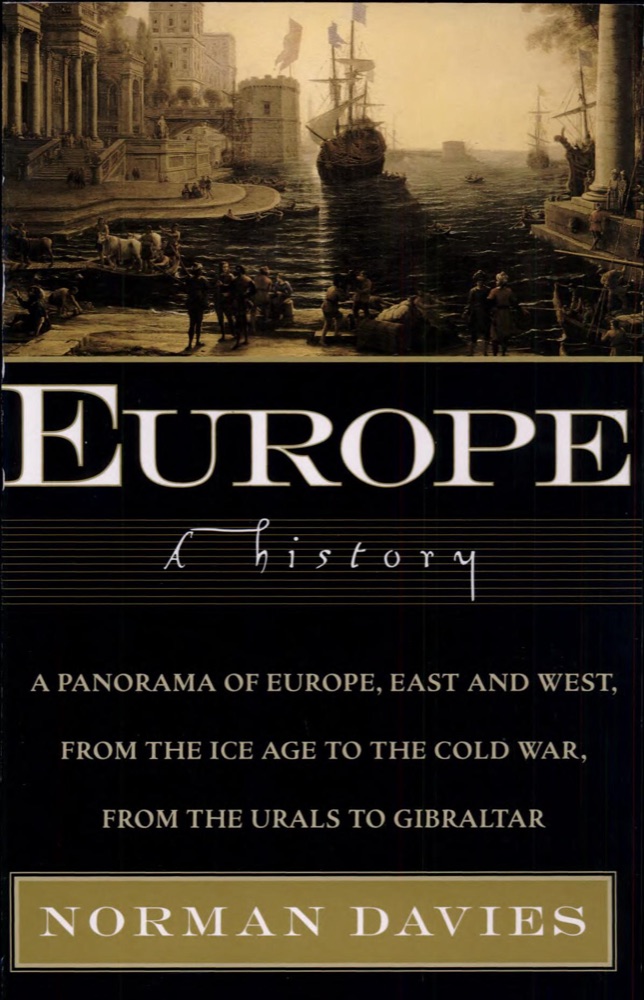 Europe: A History
 Sapiens: A Brief History of Humankind
 Talking to My Daughter About the Economy: or, How Capitalism Works—and How It Fails
 Capitalism: A Ghost Story
 The Age of Revolution, 1789–1848
 The Mushroom at the End of the World: On the Possibility of Life in Capitalist Ruins
 The Climate Book: The Facts and the Solutions
 Humankind: A Hopeful History
 The Lessons of History