
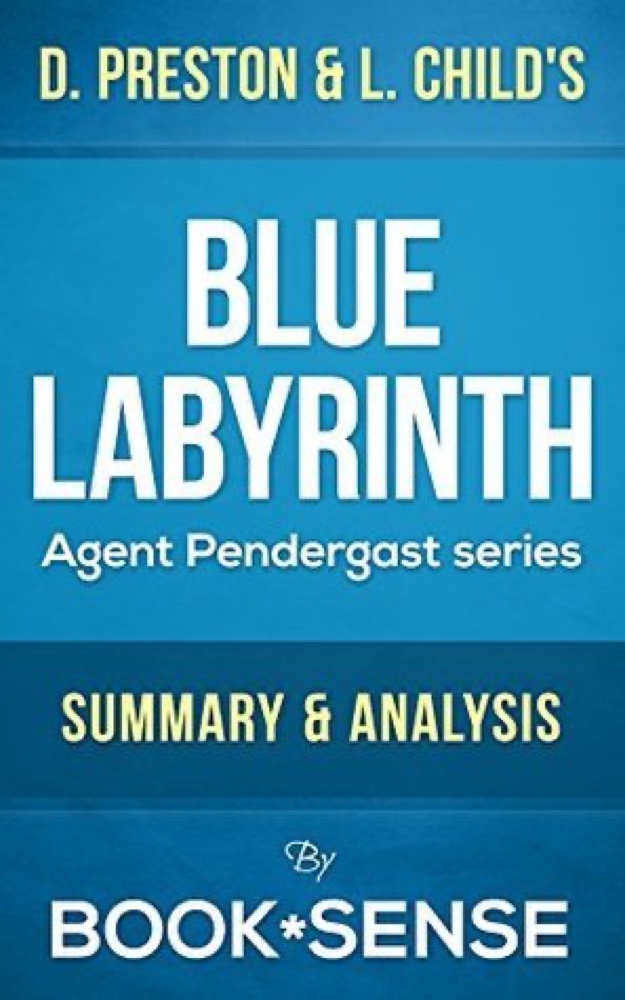
 Blue Labyrinth
Quotes from the Book
People need history in order to know themselves, to build a sense of identity and pride, continuity, community, and hope for the future.
15
I would ask the reader to pause for a moment and ponder the statistics. Statistics are mere numbers; they need to be translated into human experience. What would a 90 percent mortality rate mean to the survivors and their society? The Black Death in Europe at its worst carried off 30 to 60 percent of the population. That was devastating enough. But the mortality rate wasn’t high enough to destroy European civilization. A 90 percent mortality rate is high enough: It does not just kill people; it annihilates societies; it destroys languages, religions, histories, and cultures. It chokes off the transmission of knowledge from one generation to the next. The survivors are deprived of that vital human connection to their past; they are robbed of their stories, their music and dance, their spiritual practices and beliefs—they are stripped of their very identity.
13
No civilization has survived forever. All move toward dissolution, one after the other, like waves of the sea falling upon the shore. None, including ours, is exempt from the universal fate.
6
We live in a world gone crazy for resources. Everybody on Google Earth can look at this place now. If you don’t move to protect it, it will disappear. Everything in the world is vulnerable.
6
People need history in order to know themselves,
4
One might say that modern Honduran history began in 1873, when Jules Verne introduced Americans to the banana in his novel Around the World in 80 Days, where he praised it as being “as healthy as bread and as succulent as cream.
4
Global warming has opened the southern door of the United States not just to leish but to many other diseases. The big ones now entering our country include Zika, West Nile virus, chikungunya, and dengue fever. Even diseases like cholera, Ebola, Lyme, babesiosis, and bubonic plague will potentially infect more people as global warming accelerates.
4
A 90 percent mortality rate is high enough: It does not just kill people; it annihilates societies; it destroys languages, religions, histories, and cultures. It chokes off the transmission of knowledge from one generation to the next.
3
Sometimes, a society can see its end approaching from afar and still not be able to adapt, like the Maya; at other times, the curtain drops without warning and the show is over.
3
The tree crowns were packed together like puffballs, displaying every possible hue, tint, and shade of green. Chartreuse, emerald, lime, aquamarine, teal, bottle, glaucous, asparagus, olive, celadon, jade, malachite—mere words are inadequate to express the chromatic infinities.
2
The world’s last great pandemic was the Spanish flu outbreak in 1918 that killed a hundred million people—about 5 percent of the world’s population. If a pandemic like that were to happen again, it would spread faster and might be impossible to contain. According to the Bill & Melinda Gates Foundation, in such a pandemic “the death toll could reach 360 million”—even with the full deployment of vaccines and powerful modern drugs. The Gates Foundation estimated that the pandemic would also devastate the world financially, precipitating a three-trillion-dollar economic collapse. This is not scaremongering: Most epidemiologists believe such a pandemic will eventually happen.
2
The ultimate offense was the idea that Europeans “discovered” the New World to begin with, as if the people living here didn’t exist before Europeans saw them.
2
This was a Third World disease attacking First World people. The world is now divided into Third and First, not Old and New. Pathogens once confined to the Third World are now making deadly inroads into the First. This is the future trajectory of disease on planet Earth.
2
It seems that leishmaniasis, a disease that has troubled the human race since time immemorial, has in the twenty-first century come into its own. Anthony Fauci, director of the National Institute of Allergy and Infectious Diseases at the NIH, told our team bluntly that, by going into the jungle and getting leishmaniasis, “You got a really cold jolt of what it’s like for the bottom billion people on earth.” We were, he said, confronted in a very dramatic way with what many people have to live with their entire lives. If there’s a silver lining to our ordeal, he told us, “it’s that you’ll now be telling your story, calling attention to what is a very prevalent, very serious disease.” If leish continues to spread as predicted in the United States, by the end of the century it may no longer be confined to the “bottom billion” in faraway lands. It will be in our own backyards. Global warming has opened the southern door of the United States not just to leish but to many other diseases. The big ones now entering our country include Zika, West Nile virus, chikungunya, and dengue fever. Even diseases like cholera, Ebola, Lyme, babesiosis, and bubonic plague will potentially infect more people as global warming accelerates.
1
They were destroyed for the same reason the pots found in the Cave of the Glowing Skulls had been ritually “killed”; ancient people engaged in this ceremonial destruction at gravesites so that objects could journey with the deceased to the afterworld. This was true not just of pots and artifacts, but also involved the ritual destruction of sacred buildings, and even roads. In the American Southwest, for example, parts of the great Anasazi road system and its way stations were closed in the thirteenth century by burning brush and smashing sacred pots along its length, when the ancestral Pueblo people abandoned the region.
1
A series of droughts between AD 760 and 800 seem to have been the trigger for famine that hit the common people disproportionately hard. It was the last straw for a society teetering on the edge of alienation and conflict.
1
But all was not well; a creeping rot—environmental, economic, and social—had been undermining its society for some time and would eventually lead to destruction.
1
When the team excavated, they uncovered the shattered ruins of a fortress, over fifteen centuries old, with massive walls and eight towers, matching the description in the Koran. They also figured out what had happened: The constant removal of water from the watering hole undermined the fortress, which one day collapsed into a sinkhole and was buried by drifting sands. The legend recorded in the Koran was based on a real event.
1
In the most deadly variety of smallpox, the hemorrhagic form, called the bloody pox or black pox, the skin turns a deep purple or takes on a charred look, and comes off in sheets. The victim often “bleeds out,” blood pouring from every orifice in the body. It is extremely contagious. Unlike most other viruses, smallpox can survive and remain virulent for months or years outside the body in clothing, blankets, and sickrooms.
1
Diamond writes: “We have to wonder why the kings and nobles failed to recognize and solve these seemingly obvious problems undermining their society. Their attention was evidently focused on their short-term concerns of enriching themselves, waging wars, erecting monuments, competing with each other, and extracting enough food from the peasants to support all those activities.” (If this sounds familiar, I would note that archaeology is thick with cautionary tales that speak directly to the twenty-first century.)
1
To put that statistic into personal terms, make a list of the nineteen people closest to you: All but one will die. (This
1
If a pandemic like that were to happen again, it would spread faster and might be impossible to contain. According to the Bill & Melinda Gates Foundation, in such a pandemic “the death toll could reach 360 million”—even with the full deployment of vaccines and powerful modern drugs. The Gates Foundation estimated that the pandemic would also devastate the world financially, precipitating a three-trillion-dollar economic collapse. This is not scaremongering: Most epidemiologists believe such a pandemic will eventually happen.
According to the Bill & Melinda Gates Foundation, in such a pandemic “the death toll could reach 360 million”—even with the full deployment of vaccines and powerful modern drugs. The Gates Foundation estimated that the pandemic would also devastate the world financially, precipitating a three-trillion-dollar economic collapse. This is not scaremongering: Most epidemiologists believe such a pandemic will eventually happen.
Modern travel has given infectious disease new ways to spread. Bubonic plague in the fourteenth century traveled from Central Asia to the Levant and Europe by horse, camel, and boat; the Zika virus in the twenty-first century jumped from Yap Island in Micronesia to French Polynesia, Brazil, the Caribbean, and Central America by 2015, all by plane.
The big ones now entering our country include Zika, West Nile virus, chikungunya, and dengue fever. Even diseases like cholera, Ebola, Lyme, babesiosis, and bubonic plague will potentially infect more people as global warming accelerates.
The world is now divided into Third and First, not Old and New. Pathogens once confined to the Third World are now making deadly inroads into the First. This is the future trajectory of disease on planet Earth. Pathogens have no boundaries; they are the ultimate travelers; they go wherever there’s human fuel.
It is tempting to argue that if Europeans hadn’t arrived in the New World, these deadly pandemics would not have happened. But the meeting of the Old World and the New was inevitable. If Europeans hadn’t carried disease to the New World, Asians or Africans would have; or New World mariners would have eventually reached the Old.
The Black Death in Europe at its worst carried off 30 to 60 percent of the population. That was devastating enough. But the mortality rate wasn’t high enough to destroy European civilization. A 90 percent mortality rate is high enough: It does not just kill people; it annihilates societies; it destroys languages, religions, histories, and cultures. It chokes off the transmission of knowledge from one generation to the next. The survivors are deprived of that vital human connection to their past; they are robbed of their stories, their music and dance, their spiritual practices and beliefs—they are stripped of their very identity.
This genetic resistance, by the way, should not be confused with acquired immunity. Acquired immunity is when a body gets rid of a pathogen and afterward maintains a state of high alert for that same microbe.
Watch on YouTube
About Douglas Preston
We have collected 136 quotes from 12 books by Douglas Preston on BookQuoters.
More about the author →More by Douglas Preston
All books by Douglas Preston →
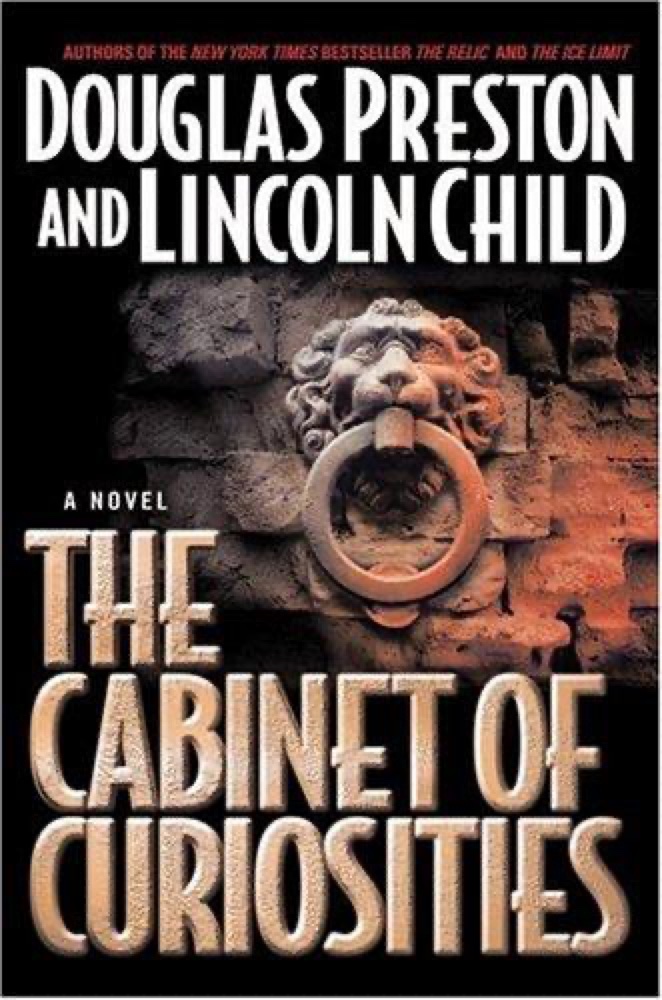
About the book
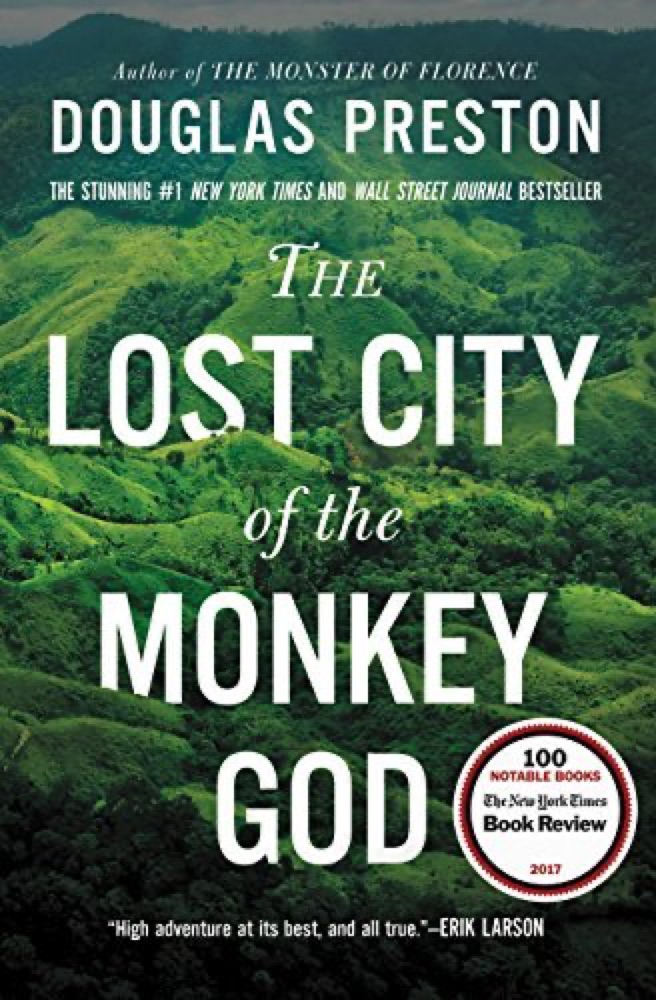
A five-hundred-year-old legend. An ancient curse. A stunning medical mystery. And a pioneering journey into the unknown heart of the world's densest jungle. Since the days of conquistador Hernán Cortés, rumors have circulated about a lost city of immense wealth hidden somewhere in the Honduran interior, called the White City or the Lost City of the Monkey God. Indigenous tribes speak of ancestors who fled there to escape the Spanish invaders, and they warn that anyone who enters this sacred city will fall ill and die. In 1940, swashbuckling journalist Theodore Morde returned from the rainforest with hundreds of artifacts and an electrifying story of having found the Lost City of the Monkey God-but then committed suicide without revealing its location.Three quarters of a century later, author Doug Preston joined a team of scientists on a groundbreaking new quest. In 2012 he climbed aboar
Book details
- First published
- 2017
- Author
- Douglas Preston
- Genre
- Nonfiction
- Goodreads rating
- 3.93 (64k ratings)
The buzz
- The New York TimesReview in The New York Timesprofessional review (via Book Marks)
- The Wall Street JournalReview in The Wall Street Journalprofessional review (via Book Marks)
- LA Review of BooksReview in LA Review of Booksprofessional review (via Book Marks)
- The Boston GlobeReview in The Boston Globeprofessional review (via Book Marks)
- UsatodayReview in Usatodayprofessional review (via Book Marks)
- ChicagotribuneReview in Chicagotribuneprofessional review (via Book Marks)
Keep reading
 The Ghost Map: The Story of London's Most Terrifying Epidemic - and How It Changed Science, Cities, and the Modern World
 1491: New Revelations of the Americas Before Columbus
 The Great Influenza: The Story of the Deadliest Pandemic in History
 A Short History of Progress
 Guns, Germs, and Steel: The Fates of Human Societies
 Get Well Soon: History's Worst Plagues and the Heroes Who Fought Them
 Billions & Billions: Thoughts on Life and Death at the Brink of the Millennium
 The Nutmeg's Curse: Parables for a Planet in Crisis
 Collapse: How Societies Choose to Fail or Succeed
 The Coming Plague: Newly Emerging Diseases in a World Out of Balance
 The Ministry for the Future
 Spillover: Animal Infections and the Next Human Pandemic
 The World Without Us
 Civilization: The West and the Rest
 The Hot Zone: The Terrifying True Story of the Origins of the Ebola Virus
 The Lost City of Z: A Tale of Deadly Obsession in the Amazon
 The Great Mortality: An Intimate History of the Black Death, the Most Devastating Plague of All Time
 Illness as Metaphor and AIDS and Its Metaphors
 A History of the World in 100 Objects
 Open Veins of Latin America: Five Centuries of the Pillage of a Continent
 The Lost World
 Almanac of the Dead
 Falter: Has the Human Game Begun to Play Itself Out?
 The Wizard and the Prophet: Two Remarkable Scientists and Their Dueling Visions to Shape Tomorrow's World
 Wastelands: Stories of the Apocalypse
 Magicians of the Gods: The Forgotten Wisdom of Earth's Lost Civilization
 Genome
 The New Penguin History of The World
 The Sheep Look Up
 Four Lost Cities: A Secret History of the Urban Age
 The Third Chimpanzee: The Evolution and Future of the Human Animal
 Devolution: A Firsthand Account of the Rainier Sasquatch Massacre
 The Sixth Extinction: An Unnatural History
 Homo Deus: A History of Tomorrow
 Everything Is Tuberculosis: The History and Persistence of Our Deadliest Infection
 Ripple
 Civilized to Death: What Was Lost on the Way to Modernity
 Imperium
 The Earth Transformed: An Untold History
 Galápagos
 Europe: A History
 Wanderers
 Sapiens: A Brief History of Humankind
 Voyage of the Beagle
 The Ends of the World
 The Shadow of the Sun
 Victory City
 Maelstrom
 The Wretched of the Earth
 Endgame, Vol. 1: The Problem of Civilization
 The Western Lands
 The Social Conquest of Earth
 Earth
Earth
 New York 2140
 The Wandering Earth
 Persepolis Rising
 On Call: A Doctor's Journey in Public Service
 Ishmael: An Adventure of the Mind and Spirit
 Hummingbird Salamander
 Revenge of the Tipping Point