
 There Are No Grown-ups: A Midlife Coming-of-Age Story
Quotes from the Book
When I ask French parents what they most want for their children, they say things like "to feel comfortable in their own skin" and "to find their path in the world." They want their kids to develop their own tastes and opinions. In fact, French parents worry if their kids are too docile. They want them to have character. But they believe that children can achieve these goals only if they respect boundaries and have self-control. So alongside character, there has to be cadre.
27
The French believe that kids feel confident when they're able to do things for themselves, and do those things well. After children have learned to talk, adults don't praise them for saying just anything. They praise them for saying interesting things, and for speaking well.
21
Within a few hours of meeting him, I realized that "love at first sight" just means feeling immediately and extremely calm with someone.
19
Yet the French have managed to be involved without becoming obsessive. They assume that even good parents aren't at the constant service of their children, and that there's no need to feel guilty about this. "For me, the evenings are for the parents." one Parisian mother tells me. "My daughter can be with us if she wants, but it's adult time.
13
There are so few years to just be a child.
11
Autonomy is something fundamental that your child needs. (Francoise Dolto said that by age six, a child should be able to do everything at home that concerns him.)
9
My first intervention is to say, when your baby is born, just don't jump on your kid at night," Cohen says, "Give your baby a chance to self-soothe, don't automatically respond, even from birth.
9
Like the French, he starts babies off on vegetables and fruits rather than bland cereals. He's not obsessed with allergies. He talks about "rhythm" and teaching kids to handle frustration. He values calm. And he gives real weight to the parents' own quality of life, not just to the child's welfare.
7
[French] Parents see it as their job to bring the child around to appreciating this [food]. They believe that just as they must teach a child how to sleep, how to wait, and how to say bonjour, they must teach her how to eat.
6
But in real life, the ideal Parisian woman is calm, discreet, a bit remote, and extremely decisive.
6
In the United States, a four-year-old American kid isn’t obliged to greet me when he walks into my house. He gets to skulk in under the umbrella of his parents’ greeting. And in an American context, that’s supposed to be fine with me. I don’t need the child’s acknowledgment because I don’t quite count him as a full person; he’s in a separate kids’ realm. I might hear all about how gifted he is, but he never actually speaks to me. When I’m at a family luncheon back in the United States, I’m struck that the cousins and stepcousins at the table, who range in age from five to fourteen, don’t say anything at all to me unless I pry it out of them. Some can only muster one-word responses to my questions. Even the teenagers aren’t used to expressing themselves with confidence to a grown-up they don’t know well. Part of what the French obsession with bonjour reveals is that, in France, kids don’t get to have this shadowy presence. The child greets, therefore he is. Just as any adult who walks into my house has to acknowledge me, any child who walks in must acknowledge me, too. “Greeting is essentially recognizing someone as a person,” says Benoît, the professor. “People feel injured if they’re not greeted by children that way.
5
When I tell her about the expression "MILF" ("Mom I'd like to Fuck"), she thinks it's hilarious. There's no French-language equivalent. In France, there's no a priori reason why a woman wouldn't be sexy just because she happens to have children. It's not uncommon to hear a Frenchman say that being a mother gives a woman an appealing air of plentitude (happiness and fulness of spirit).
5
One rule on the handout was that parents should not hold, rock, or nurse a baby to sleep in the evenings, in order to help him learn the difference between day and night. Another instruction for week-old babies was that if they cried between midnight and five A.M., parents should reswaddle, pat, rediaper, or walk the baby around, but that the mother should offer the breast only if the baby continued crying after that. An additional instruction was that, from the child’s birth, the mothers should distinguish between when their babies were crying and when they were just whimpering in their sleep. In other words, before picking up a noisy baby, the mother should pause to make sure he’s awake.
4
Awakening is about introducing a child to sensory experiences, including tastes. It doesn't always require the parent's active involvement. It can come from staring at the sky, smelling dinner as it's being prepared, or playing alone on a blanket. It's a way of sharpening the child's senses and preparing him to distinguish between different experiences. It's the first step toward teaching him to be a cultivated adult who knows how to enjoy himself. Awakening is a kind of training for children in how to profiter - to soak up the pleasure and richness of the moment.
4
Frenchwomen don’t see pregnancy as a free pass to overeat, in part because they haven’t been denying themselves the foods they love—or secretly binging on those foods—for most of their adult lives. “Too often, American women eat on the sly, and the result is much more guilt than pleasure,” Mireille Guiliano explains in her intelligent book French Women Don’t Get Fat. “Pretending such pleasures don’t exist, or trying to eliminate them from your diet for an extended time, will probably lead to weight gain.
4
French parents are very concerned about their kids. They know about pedophiles, allergies, and choking hazards. They take reasonable precautions. But they aren't panicked about their children's well-being. This calmer outlook makes them better at both establishing boundaries and giving their kids some autonomy.
4
French parents don’t just think these separations are good for parents. They also genuinely believe that they’re important for kids, who must understand that their parents have their own pleasures. “Thus the child understands that he is not the center of the world, and this is essential for his development
3
It turns out that to be a different kind of parent, you don’t just need a different parenting philosophy. You need a very different view of what a child actually is.
3
Another phrase that adults use a lot with children is “I don’t agree,” as in, “I don’t agree with you pitching your peas on the floor.” Parents say this in a serious tone, while looking directly at the child. “I don’t agree” is also more than just “no.” It establishes the adult as another mind, which the child must consider. And it credits the child with having his own view about the peas, even if this view is being overruled. Pitching the peas is cast as something the child has rationally decided to do, so he can decide to do otherwise, too.
3
French parents do offer a few sleep tips. They almost all say that in the early months, they kept their babies with them in the light during the day, even for naps, and put them to bed in the dark at night. And almost all say that, from birth, they carefully “observed” their babies, and then followed the babies’ own “rhythms.” French parents talk so much about rhythm, you’d think they were starting rock bands, not raising kids. “From zero to six months, the best is to respect the rhythms of their sleep,” explains Alexandra, the mother whose babies slept through the night practically from birth.
3
One day I have a revelation. ‘I think we’re actually quite compatible,’ I tell him. ‘You’re irritable, and I’m irritating.
3
You don’t say, “I’m sorry,”’ he says. ‘Getting injections, and experiencing pain, is part of life. There’s no reason to apologize for that.’ He seems to be channelling Rousseau, who said, ‘If by too much care you spare them every kind of discomfort, you are preparing great miseries for them.’ (I’m not sure what Rousseau thought about suppositories.)
3
When I describe this scene to Michel Cohen, the French pediatrician in New York, he knows immediately what I’m talking about. He says these mothers are speaking loudly to flaunt what good parents they are. The practice of narrated play is so common that Cohen included a section in his parenting book called Stimulation, which essentially tells mothers to cut it out. “Periods of playing and laughing should alternate naturally with periods of peace and quiet,” Cohen writes. “You don’t have to talk, sing, or entertain constantly.” Whatever your view on whether this intensive supervision is good for kids, it seems to make child care less pleasant for mothers.2 Just watching it is exhausting
2
The child must not invade the parents’ whole universe . . . for family balance, the parents also need personal space,
2
The French magazine Parents says that if a baby is scared of strangers, his mother should warn him that a visitor will be coming over soon. Then, when the doorbell rings, ‘Tell him that the guest is here. Take a few seconds before opening the door . . . if he doesn’t cry when he sees the stranger, don’t forget to congratulate him.’ I hear of several cases where, upon bringing a baby home from the maternity hospital, the parents give the baby a tour of the house.9 French parents often tell babies what they’re doing to them: I’m picking you up, I’m changing your nappy, I’m going to give you a bath. This isn’t just to make soothing sounds; it’s to convey information. And since the baby is a person like any other, parents are often quite polite about all this. (Plus it’s apparently never too early to start instilling good manners.)
2
Give willingly, refuse unwillingly,” he writes in Émile. “But let your refusal be irrevocable. Let no entreaties move you; let your ‘no,’ once uttered, be a wall of brass, against which the child may exhaust his strength some five or six times, but in the end he will try no more to overthrow it. Thus you will make him patient, equable, calm and resigned, even when he does not get all he wants.
2
Babies are designed to cry when they need something and mothers are designed to respond.
2
Walter Mischel says the worst-case scenario for a kid from eighteen to twenty-four months of age is "the child is busy and the child is happy, and the mother comes along with a forkful of spinach... "The mothers who really foul it up are the ones who are coming in when the child is busy and doesn't want or need them, and are not there when the child is eager to have them. So becoming alert to that is absolutely critical.
2
The couple is the most important. It’s the only thing that you chose in your life. Your children, you didn’t choose. You chose your husband. So, you’re going to make your life with him.
1
I want my kids to be self-reliant, resilient, and happy. I just don't want to let go of their hands.
1
Watch on YouTube
About Pamela Druckerman
More by Pamela Druckerman
There Are No Grown-ups: A Midlife Coming-of-Age Story
About the book
The secret behind France's astonishingly well-behaved children. When American journalist Pamela Druckerman has a baby in Paris, she doesn't aspire to become a "French parent." French parenting isn't a known thing, like French fashion or French cheese. Even French parents themselves insist they aren't doing anything special.
Yet, the French children Druckerman knows sleep through the night at two or three months old while those of her American friends take a year or more. French kids eat well-rounded meals that are more likely to include braised leeks than chicken nuggets. And while her American friends spend their visits resolving spats between their kids, her French friends sip coffee while the kids play.
Motherhood itself is a whole different experience in France. There's no role model, as there is in America, for the harried new mom with no life of her own. French mothers assume
Book details
- First published
- 2012
- Author
- Pamela Druckerman
- Genre
- Nonfiction
- Goodreads rating
- 4.02 (81k ratings)
Keep reading
![The Book You Wish Your Parents Had Read [and Your Children Will Be Glad That You Did]](/i/book/g/63/the-book-you-wish-your-parents-had-read-and-your-children-will-be-glad-that-you-did.jpg) The Book You Wish Your Parents Had Read [and Your Children Will Be Glad That You Did]
The Book You Wish Your Parents Had Read [and Your Children Will Be Glad That You Did]
 How to Talk So Kids Will Listen & Listen So Kids Will Talk
 The Collapse of Parenting: How We Hurt Our Kids When We Treat Them Like Grown-Ups
 Boundaries with Kids: How Healthy Choices Grow Healthy Children
 The Danish Way of Parenting: What the Happiest People in the World Know About Raising Confident, Capable Kids
 Cribsheet: A Data-Driven Guide to Better, More Relaxed Parenting, from Birth to Preschool
 Between Parent and Child
 Parent Effectiveness Training: The Proven Program for Raising Responsible Children
 Simplicity Parenting: Using the Extraordinary Power of Less to Raise Calmer, Happier, and More Secure Kids
 Confessions of a Scary Mommy: An Honest and Irreverent Look at Motherhood - The Good, The Bad, and the Scary
 Hold On, But Don't Hold Still
 How to Talk So Little Kids Will Listen: A Survival Guide to Life with Children Ages 2-7
 All Joy and No Fun: The Paradox of Modern Parenthood
 Momma Cusses
 I Can Barely Take Care of Myself: Tales From a Happy Life Without Kids
 Montessori from the Start: The Child at Home, from Birth to Age Three
 Free-Range Kids: Giving Our Children the Freedom We Had Without Going Nuts With Worry
 A Beautiful Day in the Neighborhood: The Poetry of Mister Rogers
 The Gift of Failure: How the Best Parents Learn to Let Go So Their Children Can Succeed
 How to Raise an Adult: Break Free of the Overparenting Trap and Prepare Your Kid for Success
 The Blessing of a Skinned Knee: Using Jewish Teachings to Raise Self-Reliant Children
 Shepherding a Child's Heart
 The Conscious Parent: Transforming Ourselves, Empowering Our Children
 The Awakened Family: A Revolution in Parenting
 House Rules
 The Wild and Free Family: Forging Your Own Path to a Life Full of Wonder, Adventure, and Connection
 Playful Parenting: An Exciting New Approach to Raising Children That Will Help You Nurture Close Connections, Solve Behavior Problems, and Encourage Confidence
 NurtureShock: New Thinking About Children
 Loving the Little Years: Motherhood in the Trenches
 Summerhill: A Radical Approach to Child Rearing
 Some Assembly Required: A Journal of My Son's First Son
 Raising a Secure Child: How Circle of Security Parenting Can Help You Nurture Your Child's Attachment, Emotional Resilience, and Freedom to Explore
 Scattered Minds: The Origins and Healing of Attention Deficit Disorder
 To Have and to Hold: Motherhood, Marriage, and the Modern Dilemma
 Bad Mother: A Chronicle of Maternal Crimes, Minor Calamities, and Occasional Moments of Grace
 Toddlers Are A**holes: It's Not Your Fault
 Battle Hymn of the Tiger Mother
 Toxic Parents: Overcoming Their Hurtful Legacy and Reclaiming Your Life
 Essential Labor: Mothering as Social Change
 Dear Girls: Intimate Tales, Untold Secrets, & Advice for Living Your Best Life
 Mom & Me & Mom
 Things My Son Needs to Know About the World
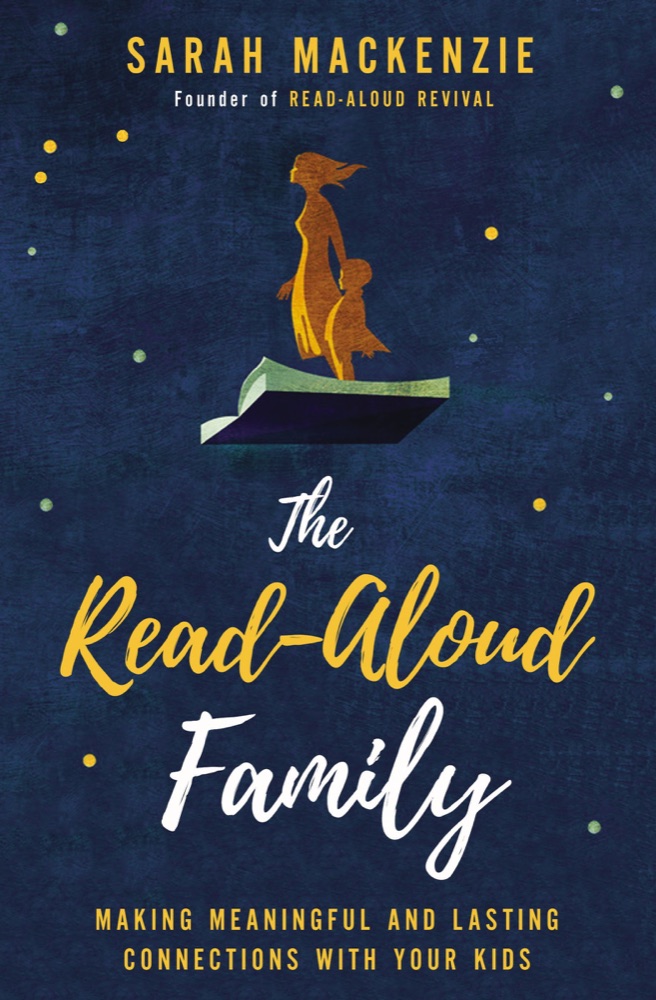 The Read-Aloud Family: Making Meaningful and Lasting Connections with Your Kids
 Saga, Vol. 1
 Mrs Funnybones
 Glitter and Glue
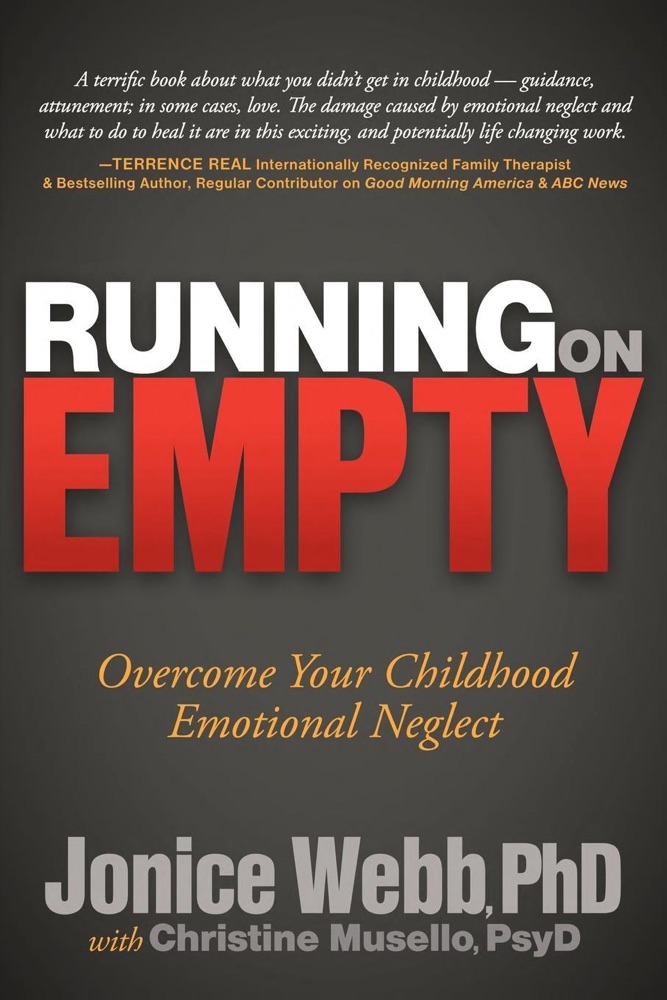 Running on Empty: Overcome Your Childhood Emotional Neglect
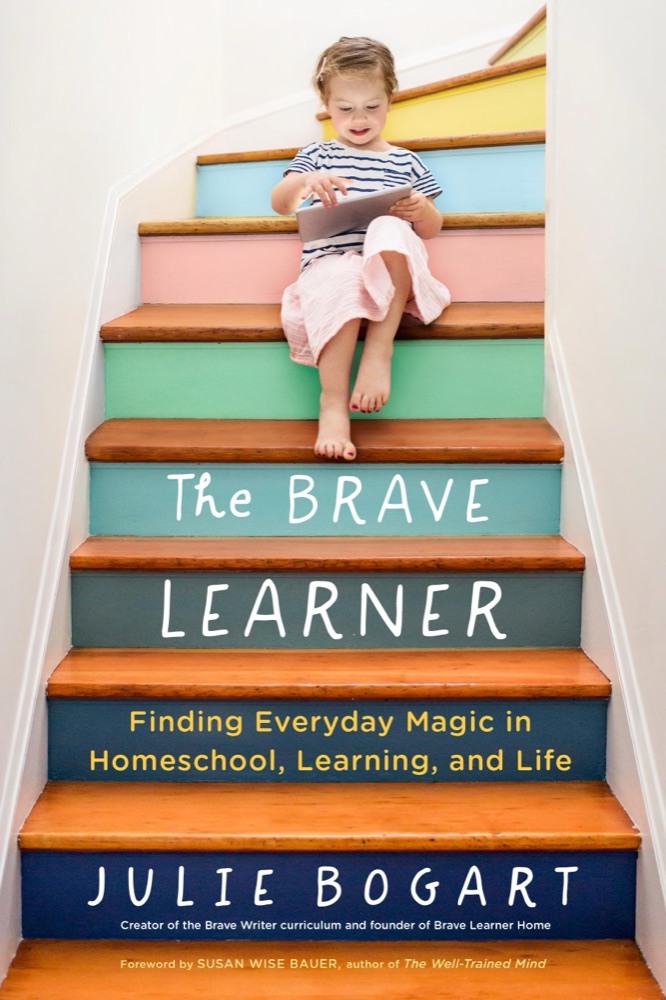 The Brave Learner: Finding Everyday Magic in Homeschool, Learning, and Life
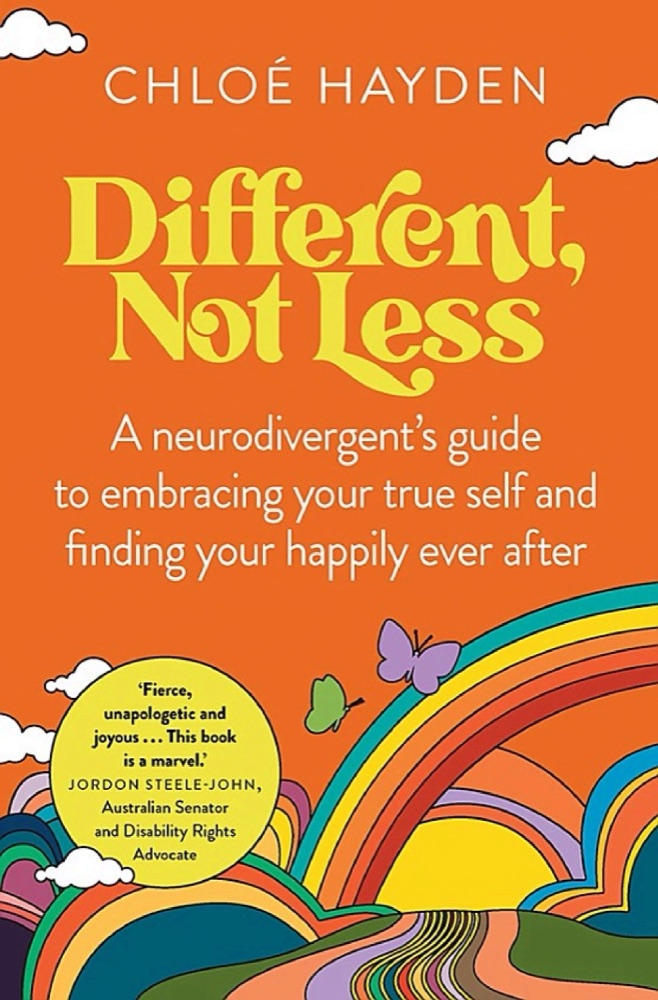 Different, Not Less: A Neurodivergent's Guide to Embracing Your True Self and Finding Your Happily Ever After
 This Is Not a Book About Benedict Cumberbatch: The Joy of Loving Something--Anything--Like Your Life Depends On It
 Someone Could Get Hurt: A Memoir of Twenty-First-Century Parenthood
 For Your Own Good: Hidden Cruelty in Child-Rearing and the Roots of Violence
 Joan Is Okay
 The Provence Cure for the Brokenhearted
 The Nature of Jade
 The Vanishing American Adult: Our Coming-of-Age Crisis—and How to Rebuild a Culture of Self-Reliance
 Down Among the Sticks and Bones
 The Fortunes of Indigo Skye