
 The Proud Tower: A Portrait of the World Before the War, 1890-1914
Quotes from the Book
There are fights that you may lose without losing your honor; what makes you lose your honor is not to fight. -Jaques Jaujard
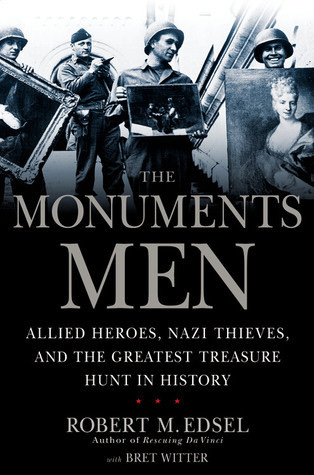
The thought came back to him, as it often did: To save the culture of your allies is a small thing. To cherish the culture of your enemy, to risk your life and the life of other men to save it, to give it all back to them as soon as the battle was won … it was unheard of, but that was exactly what Walker Hancock and the other Monuments Men intended to do.
If, in time of peace, our museums and art galleries are important to the community, in time of war they are doubly valuable. For then, when the petty and the trivial fall way and we are face to face with final and lasting values, we… must summon to our defense all our intellectual and spiritual resources. We must guard jealously all we have inherited from a long past, all we are capable of creating in a trying present, and all we are determined to preserve in a foreseeable future. Art is the imperishable and dynamic expression of these aims. It is, and always has been, the visible evidence of the activity of free minds.…
War did not come like a hurricane, Rorimer realized, destroying everything in its path. It came like a tornado, touching down in patches, taking with it one life while leaving the next person unharmed.
Destiny is not one push, she thought as she waited to cross a quiet street on that cold Paris evening years later, but a thousand small moments that through insight and hard work you line up in the right direction, like the magnet does the metal shavings.
To save the culture of your allies is a small thing. To cherish the culture of your enemy, to risk your life and the life of other men to save it, to give it all back to them as soon as the battle was won… it was unheard of, but that is exactly what Walker Hancock and the other Monuments Men intended to do.
It matters little that you are afraid if you manage to hide it. You are then at the edge of courage. (one of Jaujard's philosophies)
When I am billeted a German home even for one night I go out and search for the chickens and rabbits or pets and give them water and food if possible. Generally the family has pulled out too rapidly to care for such things. I suppose the stern and the cruel ones rule the world. If so, I shall be content to try to live each day within the limits of my conscience and let great plaudits go to those who are willing to pay the price for it.
There’s one good thing about being in the bomb disposal unit: No superior officer is ever looking over your shoulder.
Possessed by the grasp of quality and connoisseurship, he knew and measured the worth of man’s visible heritage and determined, in the midst of constant change, to preserve and enhance that heritage so that it might be visible to anyone with eyes to see.”30
Writing now makes me feel as if I had lost at least one of my senses. I can't hear you or see you and I wonder if you hear me. One thing is quite sure. I love you. Yours, George.
I think we got some work done, back at the start, because nobody knew us, nobody bothered us - and we had no money.
When the Nazis took Paris, the director of the Toledo Museum of Art wrote to David Finley, director of the not yet opened National Gallery of Art in Washington, D.C., to encourage the creation of a national plan, saying, “I know [the possibility of invasion] is remote at the moment, but it was once remote in France.
That was the secret, he believed, to success in any endeavor: to be a careful, knowledgeable, and efficient observer of the world, and to act in accordance with what you saw.
Winston Churchill had grasped Eisenhower’s hand and told him, with tears in his eyes, “I am with you to the end, and if it fails we will go down together.
He had no idea that the world was entering an economic depression, or that hard times bring recriminations and blame. Privately, Harry's parents worried not just about the economy, but about the rising tide of nationalism and anti- Semitism.
had sold his soul, and that is something you can never repurchase at any price.
General Patton, upon seeing the Roman ruins at Agrigento, remarked to a local expert, “Seventh Army didn’t cause that destruction, did it, sir?” The man replied, “No sir, that happened in the last war.” “What war was that?” “The Second Punic War.”5
It is amazing how the world can change, he thought, during the life span of a fruitcake.
Here, Mortimer Wheeler thought, is power. And a reminder of our mortality.
Those who had benefited from the false stories of Altaussee had been working behind the scenes to defeat the petition. Without
There are fights that you may lose without losing your honor; what makes you lose your honor is not to fight them.”19
I suppose the stern and the cruel ones rule the world. If so, I shall be content to try to live each day within the limits of my conscience and let great plaudits go to those who are willing to pay the price for it.”7
But was art worth a life, Taper wanted to know. Like all Monuments Men, it was a question that haunted him. “I had that choice,” Leonard said. “I chose to remove the bombs. It was worth the reward.” “What reward?” “When I finished, I got to sit in Chartres Cathedral, the cathedral I had helped save, for almost an hour. Alone.
At a point where the destruction widened out, leaving a vast field of broken lintels and cornerstones, some GIs had posted a sign with a quote from Hitler: “Gebt mir fünf Jahre und Ihr werdet Deutschland nicht wiedererkennen.” Below was the English translation: “Give me five years & you will not recognize Germany again.
World War II had exposed millions of young American men and women to the art and architecture of Europe and Asia and almost overnight created an interest in and appreciation for the arts that would normally require generations to nurture.
A good start, a willingness—even eagerness—to work beyond the call of duty, a sense of fair play, and a recognition of opportunities before and when they arrive.
He was a modernizer, in other words, who never forgot the importance of the individual people behind the machines. His
An expert and a precisionist makes his analysis first, he always said, then his decision.3
Since the 1300s, this job had been performed by members of a small group of families, all living in the hills near the mine. Over the centuries humans grew larger, but the miners stayed the same size, until they eventually seemed dwarfed by the demands of the mine and their time underground (diet and inbreeding were more likely causes). Even in the early twentieth century, this small isolated community spoke a dialect last popular in the Middle Ages. They explored their tunnels with acetylene torches, and wore the white linen suits and peaked caps of medieval miners.
Watch on YouTube
About Robert M. Edsel
We have collected 30 quotes from 1 book by Robert M. Edsel on BookQuoters.
More about the author →Book details
- Author
- Robert M. Edsel
- Genre
- Historical
- Goodreads rating
- 3.81 (53k ratings) →
Keep reading
The Proud Tower: A Portrait of the World Before the War, 1890-1914
 Fall of Giants
 The Winds of War
 Clear and Present Danger
 The Wars
 Once An Eagle
 Sackett's Land
 Closing the Ring
 Call for the Dead
 The Splendid and the Vile: A Saga of Churchill, Family, and Defiance During the Blitz
 The World of Yesterday
 Alas, Babylon
 Tigerman
 Band of Brothers: E Company, 506th Regiment, 101st Airborne from Normandy to Hitler's Eagle's Nest
 The Honourable Schoolboy
 History of the Peloponnesian War
 The Spy Who Came In from the Cold
 The Affair
 Debt of Honor
 Hawaii
 The Will to Battle
 Persepolis Rising
 The Wall of Storms
 The Hunt for Red October
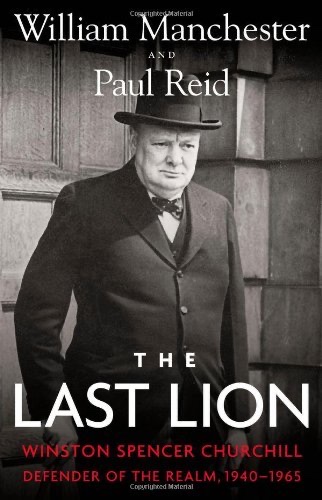 The Last Lion 3: Winston Spencer Churchill: Defender of the Realm, 1940-1965
 The Ministry of Fear
 Queen of Fire
 Winter of the World
 Under the Same Stars
 The Once and Future King
 Arm of the Sphinx
 Agent Zigzag: A True Story of Nazi Espionage, Love, and Betrayal
 The Autobiography of Eleanor Roosevelt
 Earth Abides
 Into the Silence: The Great War, Mallory and the Conquest of Everest
 TransAtlantic
 The Paris Vendetta
 A Great Reckoning
 The Son
 The Guns of August
 Taiko: An Epic Novel of War and Glory in Feudal Japan
 The Dinosaur Lords
 I Am Pilgrim
 Babylon's Ashes
 Eifelheim
 A Promised Land
 A Time of Torment
 The Brutal Telling
 First Lord's Fury
 Courage Is Calling: Fortune Favors the Brave
 The Unvanquished
 The Sympathizer
 The Last of the Mohicans
 The Path Between the Seas: The Creation of the Panama Canal, 1870-1914
 The Measure of the Magic
 Reamde
 Black Hawk Down
 Going After Cacciato
 Churchill: The Power of Words
 The Secret Agent