
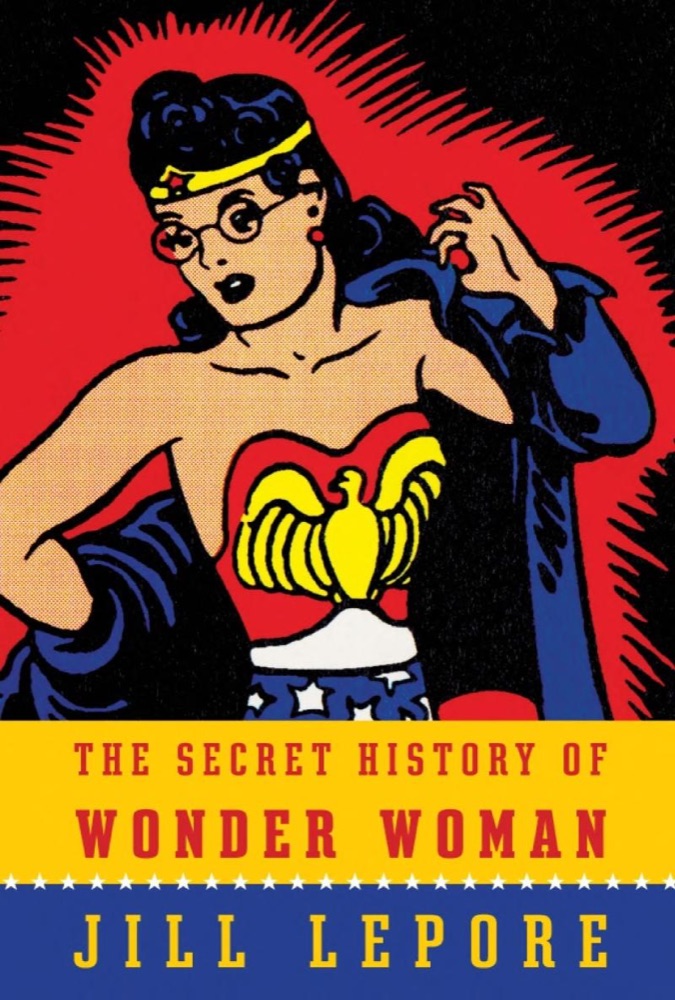
 The Secret History of Wonder Woman
Quotes from the Book
The past is an inheritance, a gift and a burden. It can’t be shirked. You carry it everywhere. There’s nothing for it but to get to know it.
23
History isn’t only a subject; it’s also a method. My method is, generally, to let the dead speak for themselves. I’ve pressed their words between these pages, like flowers, for their beauty, or like insects, for their hideousness. The work of the historian is not the work of the critic or of the moralist; it is the work of the sleuth and the storyteller, the philosopher and the scientist, the keeper of tales, the sayer of sooth, the teller of truth.
15
No nation can be freer than its most oppressed, richer than its poorest, wiser than its most ignorant.
13
Men talk of the Negro problem,” he began. “There is no Negro problem,” he said, his voice rising. “The problem is whether the American people have loyalty enough, honor enough, patriotism enough, to live up to their own Constitution.
6
In one of the most wrenching tragedies in American history—a chronicle not lacking for tragedy—the Confederacy had lost the war, but it had won the peace.
5
That the revival of Christianity coincided with the fiftieth anniversary of the Declaration, an anniversary made all the more mystical when the news spread that both Jefferson and Adams had died that very day, July 4, 1826, as if by the hand of God, meant that the Declaration itself took on a religious cast. The self-evident, secular truths of the Declaration of Independence became, to evangelical Americans, the truths of revealed religion.
5
The work of the historian is not the work of the critic or of the moralist; it is the work of the sleuth and the storyteller, the philosopher and the scientist, the keeper of tales, the sayer of sooth, the teller of truth.
5
the question of every rising and setting of the sun, on rainy days and snowy days, on clear days and cloudy days, at the clap of every thunderstorm. Can a political society really be governed by reflection and election, by reason and truth, rather than by accident and violence, by prejudice and deceit? Is there any arrangement of government—any constitution—by which it’s possible for a people to rule themselves, justly and fairly, and as equals, through the exercise of judgment and care?
5
The last peace had created the conditions for the next war. Out of want came fear, out of fear came fury.
4
Theodore Roosevelt declared in 1908, “because when all is said and done it is the mother, and the mother only, who is a better citizen even than the soldier who fights for his country.
4
The United States was founded during the most secular era in American history, either before or since. In the late eighteenth century, church membership was low, and anticlerical feeling was high. It is no accident that the Constitution does not mention God. Philadelphia physician Benjamin Rush wondered, politely, whether this error might be corrected, assuming it to have been an oversight. “Perhaps an acknowledgement might be made of his goodness or of his providence in the proposed amendments,” he urged.27 No correction was made.
4
The Electoral College was a concession to slave owners, an affair of both mathematical and political calculation.
4
Adams and Jefferson lived in an age of quantification. It began with the measurement of time. Time used to be a wheel that turned, and turned again; during the scientific revolution, time became a line. Time, the easiest quantity to measure, became the engine of every empirical inquiry: an axis, an arrow. This new use and understanding of time contributed to the idea of progress—if time is a line instead of a circle, things can get better and even better, instead of forever rising and falling in endless cycles, like the seasons. The idea of progress animated American independence and animated, too, the advance of capitalism. The quantification of time led to the quantification of everything else: the counting of people, the measurement of their labor, and the calculation of profit as a function of time.
4
In 1880, clerks made up less than 5 percent of the nation’s workforce, nearly all of them men; by 1910, more than four million Americans worked in offices, and half were women. By 1920, most Americans lived and worked in cities.
3
In 1937, Supreme Court Justice Hugo Black would observe, with grim dismay, that, over the course of fifty years, “only one half of one percent of the Fourteenth Amendment cases that came before the court had anything to do with African Americans or former slaves, while over half of the cases were about protecting the rights of corporations.
3
Hours before Washington’s inauguration was scheduled to take place, a special congressional committee decided that it might be fitting for the president to rest his hand on a Bible while taking the oath of office. Unfortunately, no one in Federal Hall had a copy of the Bible on hand. There followed a mad dash to find one.
3
Before the revival began, a scant one in ten Americans were church members; by the time it ended, that ratio had risen to eight in ten.
3
Barbarians are no more marvelous to us than we are to them, nor for better cause,” Montaigne wrote. “Each man calls barbarism whatever is not his own practice.
3
To write something down is to make a fossil record of a mind.
3
Most of what once existed is gone... Nature takes one toll, malice another... most of what historians study survives because it was purposely kept... (it) is called the historical record, & it is maddeningly uneven, asymmetrical, & unfair.
3
One ever feels his two-ness,—an American, a Negro; two souls, two thoughts, two unreconciled strivings; two warring ideals in one dark body, whose dogged strength alone keeps it from being torn asunder.
3
The omitting the Word will be regarded as an Endeavour to conceal a principle of which we are ashamed.
3
In 1787, then, when Alexander Hamilton asked “whether societies of men are really capable or not of establishing good government from reflection and choice, or whether they are forever destined to depend for their political constitutions on accident and force,” that was the kind of question a scientist asks before beginning an experiment. Time alone would tell. But time has passed. The beginning has come to an end. What, then, is the verdict of history? This book attempts to answer that question
3
the United States is founded on a set of ideas, but Americans have become so divided that they no longer agree, if they ever did, about what those ideas are, or were.
3
We must disenthrall ourselves, and then we shall save our country. —Abraham Lincoln, 1862
3
After Benjamin Franklin read Jefferson’s draft, he picked up his quill, scratched out the words “sacred & undeniable,” and suggested that “these truths” were, instead, “self-evident.” This was more than a quibble. Truths that are sacred and undeniable are God-given and divine, the stuff of religion. Truths that are self-evident are laws of nature, empirical and observable, the stuff of science. This divide has nearly rent the Republic apart.
2
Washington's Farewell Address consists of a series of warnings about the danger of disunion. The North and the South, the East and the West, ought not to consider their interests separate or competing, Washington urged, "your union ought to be considered as a main prop of your liberty." Parties, he warned, were the "worst enemy" of every government, agitating "the community with ill-founded jealousies and false alarms," kindling "the animosity of one part against another," and even fomenting "riot and insurrection". As to the size of the Republic, "Is there a doubt whether a common government can embrace so large a sphere? Let experience solve it." The American experiment must go on. But it could only thrive if the citizens were supported by religion and morality, and if they were well educated. "Promote, then, as an object of primary importance, institutions for the general diffusion of knowledge," he urged. "In proportion as the structure of a government gives force to public opinion, it is essential that the public opinion should be enlightened.
2
In the primitive simplicity of their minds they are more easily victimized by a large than by a small lie, since they sometimes tell petty lies themselves but would be ashamed to tell big ones.
2
Lange, who had been stricken by polio at the age of seven and walked with a painful limp, had become famous for the achingly sympathetic photographs she’d taken for the Farm Security Administration during the Depression. “Cripples know about each other,” she said of her ability to capture suffering on film.
2
The only way to answer the question “Are things getting better or are they getting worse?” is to discover whether modern man knows more or is wiser than his ancestors, Weaver argued. And his answer to this question was no. With the scientific revolution, “facts”—particular explanations for how the world works—had replaced “truth”—a general understanding of the meaning of its existence.
2
Watch on YouTube
About Jill Lepore
We have collected 57 quotes from 2 books by Jill Lepore on BookQuoters.
More about the author →More by Jill Lepore
The Secret History of Wonder Woman
About the book
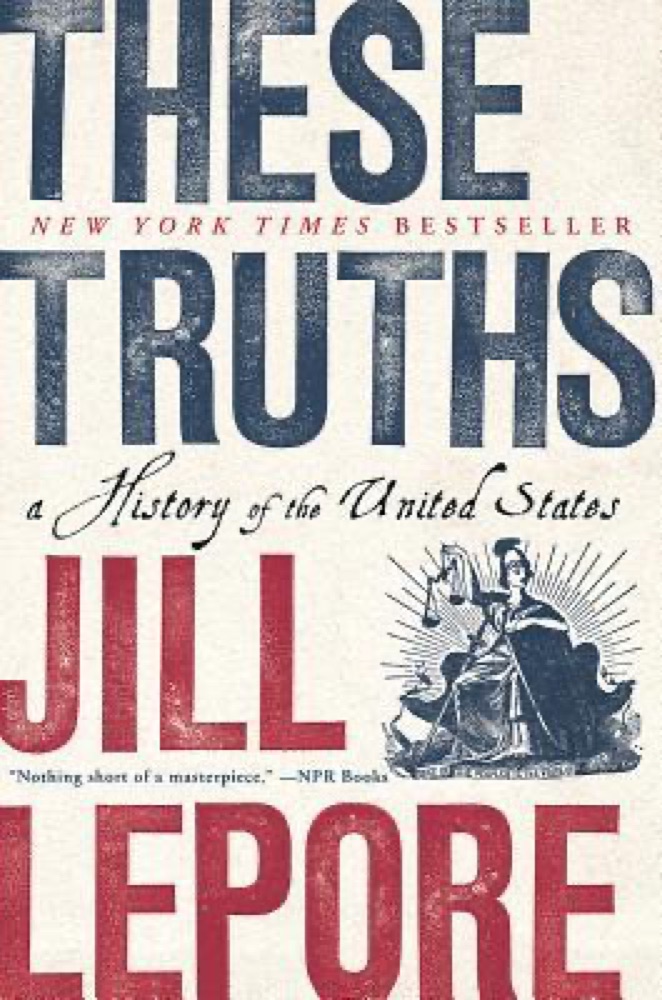
Widely hailed for its “sweeping, sobering account of the American past” (New York Times Book Review), Jill Lepore’s one-volume history of America places truth itself—a devotion to facts, proof, and evidence—at the center of the nation’s history. The American experiment rests on three ideas—“these truths,” Jefferson called them—political equality, natural rights, and the sovereignty of the people. But has the nation, and democracy itself, delivered on that promise?
These Truths tells this uniquely American story, beginning in 1492, asking whether the course of events over more than five centuries has proven the nation’s truths, or belied them. To answer that question, Lepore wrestles with the state of American politics, the legacy of slavery, the persistence of inequality, and the nature of technological change. “A nation born in contradiction… will fight, forever, over the meaning o
Book details
- First published
- 2018
- Author
- Jill Lepore
- Genre
- History
- Goodreads rating
- 4.40 (14k ratings)
The buzz
- The Washington PostReview in The Washington Postprofessional review (via Book Marks)
- NPRReview in NPRprofessional review (via Book Marks)
- The Times Literary SupplementReview in The Times Literary Supplementprofessional review (via Book Marks)
- LA Review of BooksReview in LA Review of Booksprofessional review (via Book Marks)
- The Boston GlobeReview in The Boston Globeprofessional review (via Book Marks)
- Star TribuneReview in Star Tribuneprofessional review (via Book Marks)
Keep reading
 The American Spirit: Who We Are and What We Stand For
 The Soul of America: The Battle for Our Better Angels
 A People's History of the United States
 Four Hundred Souls: A Community History of African America, 1619-2019
 The Small and the Mighty: Twelve Unsung Americans Who Changed the Course of History, from the Founding to the Civil Rights Movement
 The Lessons of History
 Reflections on the Revolution in France
 The Untold History of The United States
 Democracy in America
 The Hemingses of Monticello: An American Family
 What Unites Us: Reflections on Patriotism
 From Dawn to Decadence: 500 Years of Western Cultural Life, 1500 to the Present
 Notes of a Native Son
 The 5000 Year Leap: A Miracle That Changed the World
 Founding Brothers: The Revolutionary Generation
 The Greatest Sentence Ever Written
 We Were Eight Years in Power: An American Tragedy
 Burr
Burr
 Black Reconstruction in America 1860-1880
 You Can't Be Neutral on a Moving Train: A Personal History of Our Times
 The 1619 Project: A New Origin Story
 Rights of Man
 John Adams
 How the Word Is Passed: A Reckoning with the History of Slavery Across America
 The First Salute : View of the American Revolution
 The Discovery of India
 The Message
 The Muqaddimah: An Introduction to History
 Behold a Pale Horse
 The Radicalism of the American Revolution
 Arguably: Selected Essays
 Civil Disobedience
 Edge of Eternity
 Where Do We Go from Here: Chaos or Community?
 The Audacity of Hope: Thoughts on Reclaiming the American Dream
 De la Démocratie en Amérique, tome II
 Common Sense
 On Tyranny: Twenty Lessons from the Twentieth Century
 No Name in the Street
 Conspirators' Hierarchy: The Story of the Committee of 300
 Simple Justice: The History of Brown v. Board of Education and Black America's Struggle for Equality
 Why We Can't Wait
 Battle Cry of Freedom
 The Federalist Papers
 Glenn Beck's Common Sense: The Case Against an Out-of-Control Government, Inspired by Thomas Paine
 Destiny of the Republic: A Tale of Madness, Medicine and the Murder of a President
 One Nation: What We Can All Do to Save America's Future
 The Revolution: A Manifesto
 American Colossus: The Triumph of Capitalism, 1865-1900
 Civil Disobedience and Other Essays
 Profiles in Courage
 The Education of Henry Adams
 When I Was a Child I Read Books
 Lies My Teacher Told Me: Everything Your American History Textbook Got Wrong
 Across That Bridge: A Vision for Change and the Future of America
 Witness
 The Golden House
 A History of the World in 100 Objects
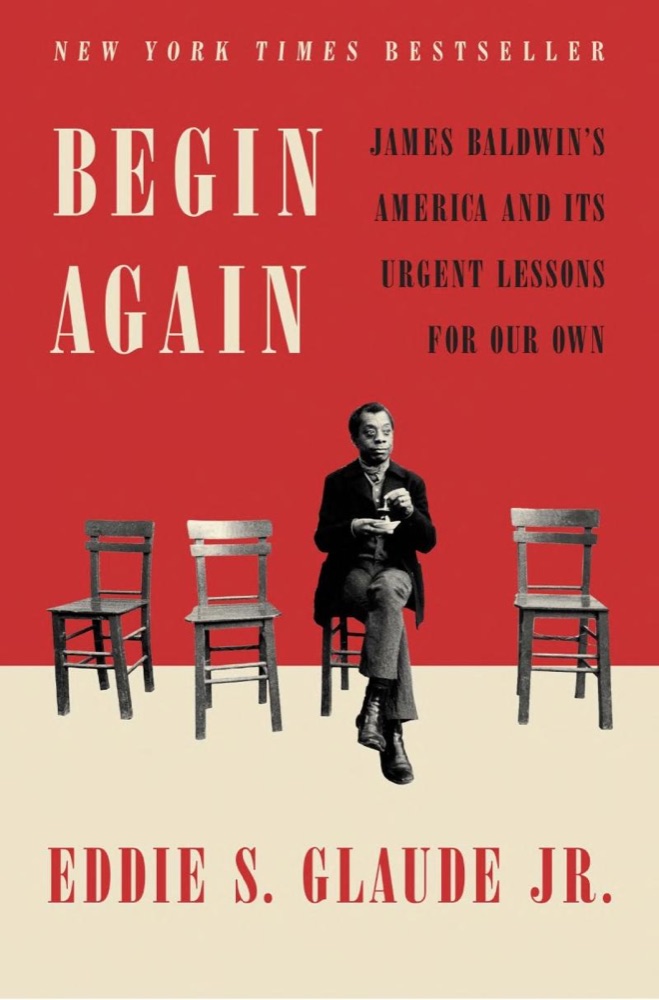 Begin Again: James Baldwin's America and Its Urgent Lessons for Our Own