
 An Army at Dawn: The War in North Africa, 1942-1943
Quotes from the Book
In the first half of 1944, battle casualty rates for every 1,000 bomber crewmen serving six months in combat included 712 killed or missing and 175 wounded: 89 percent. By one calculation, barely one in four U.S. airmen completed twenty-five missions over Germany, a minimum quota that was soon raised to thirty and then thirty-five on the assumption that the liberation of France and Belgium and the attenuation of German airpower made flying less lethal.
4
Churchill composed his own aphorism, much quoted: “There is only one thing worse than fighting with allies, and that is fighting without them.
3
Twelve years and four months after it began, the Thousand-Year Reich had ended. Humanity would require decades, perhaps centuries, to parse the regime’s inhumanity, and to comprehend how a narcissistic beerhall demagogue had wrecked a nation, a continent, and nearly a world. “Never in history has such ruination—physical and moral—been associated with the name of one man, the chief instigator of the most profound collapse of civilization in modern times,” wrote Hitler’s biographer Ian Kershaw.
3
Once again, airborne forces appeared to be coins burning a hole in the pockets of Allied commanders, coins that simply had to be spent. Soldiers soon mocked the operation as VARSITY BLUNDER, and burial squads with pruning saws and ladders took two days to cut down all the dead.
2
A communiqué approved by the three leaders on Sunday morning affirmed their “sacred obligation” to maintain in peace the same Allied unity that had prevailed in war. A “declaration on liberated Europe” within the statement also endorsed “a world order under law” and “the right of all peoples to choose the form of government under which they will live.
2
His animating principle, as the official history explained, was “that in order to destroy anything it is necessary to destroy everything.” By the late fall of 1944, Harris claimed that forty-five of sixty listed German cities had been “virtually destroyed,” at a rate of more than two each month, with a dwindling number awaiting evisceration.
2
Men were forced to discard their overcoats because they lacked the strength to wear them,” a staff officer noted. “Their hands are so numb that they have to help one another on with their equipment.” Riflemen
2
Operation PENGUIN. Fourteen V-2s would be fired on average every day in coming months, although they had an annoying tendency to break up in flight. Unlike the V-1, the V-2 could not be defended against—at Mach 5, it was simply too fast.
2
Yet Allied unity remained the central principle of his command and he would go to great lengths to preserve it, including self-delusion. “The team is working well,” he wrote Marshall in September.
2
Among the Allied casualties was Ernie Pyle. “If I ever was brave, I ain’t any more,” he wrote a friend. “I’m so indifferent to everything I don’t even give a damn that I’m in Paris.” The war had become “a flat, black depression without highlights, a revulsion of the mind and an exhaustion of the spirit.” In a final column from Europe, he told his readers, “I have had all I can take for a while. I’ve been twenty-nine months overseas since this war started; have written around seven hundred thousand words about it.… The hurt has finally become too great.” Arriving at Bradley’s headquarters on September 2—“worn out, thin, and badly in need of a shave,” one officer reported—he said goodbye, then sailed home on the Queen Elizabeth, her decks crowded with other wounded. “I feel like I’m running out,” he confessed to another writer. Eight months later, while covering the Pacific war, he would be killed by a Japanese bullet in the head.
2
Whatever shortcomings vexed the Allied high command, they paled when stacked against the German fiasco. Dozens of tanks, assault guns, and artillery pieces stood immobile for lack of fuel.
2
Brittany reflected an inflexible adherence to the OVERLORD plan. “We must take Brest in order to maintain the illusion of the fact that the U.S. Army cannot be beaten,” Bradley told Patton, who agreed. The war ended with not a single cargo ship or troopship having berthed at Brest, which bombs and a half million American shells knocked to rubble.
2
Matthew Ridgway to command the XVIII Airborne Corps, Gavin had taken over the 82nd in mid-August. At thirty-seven he would be not only the youngest major general in the U.S. Army during World War II, but also the youngest division commander since the Civil War. That achievement was all the more remarkable given his start in life. Gavin was an orphan (he later concluded that his mother had been
2
Power,” as John Adams had written, “always thinks it has a great soul.
1
Clutching a map and a field phone, Second Lieutenant Murphy leaped onto a burning tank destroyer and for an hour repulsed the enemy with a .50-caliber machine gun while calling in artillery salvos. He “killed them in the draws, in the meadows, in the woods,” a sergeant reported; the dead included a dozen Germans “huddled like partridges” in a nearby ditch. “Things seemed to slow down for me,” Murphy later said. “Things became very clarified.” De Lattre described the action as “the bravest thing man had ever done in battle,” but Murphy reflected that “there is no exhilaration at being alive.” He would receive the Medal of Honor. At last an Allied preponderance began to crush the pocket.
1
Slovik was arrested in October after living for weeks with a Canadian unit. Offered amnesty if he went to the front, he refused, vowing, “I’ll run away again if I have to.” He was convicted following a two-hour court-martial in the Hürtgen Forest on November 11. From a jail cell in Paris he appealed his death sentence to Eisenhower in a six-paragraph clemency plea. “How can I tell you how humbley sorry I am for the sins I’ve comitted.… I beg of you deeply and sincerely for the sake of my dear wife and mother back home to have mercy on me,” he wrote, according to the author William Bradford Huie. “I Remain Yours for Victory, Pvt. Eddie D. Slovik.” Unfortunately for the condemned, the supreme commander reviewed the petition at the nadir of the Bulge, on December 23, during a session in his Versailles office known as “the Hanging Hour.” Eisenhower not only affirmed the sentence, but decreed that as a lesson to shirkers it be carried out by Slovik’s putative unit, the 109th Infantry Regiment, in General Dutch Cota’s 28th Division.
1
At 7:30 A.M. on Wednesday, January 31, a U.S. Army weapons carrier clanked up to a gray farmhouse with orange shutters outside Ste.-Marie-aux-Mines, an Alsatian town long celebrated for mineralogy, fifteen miles northwest of Colmar. A scrawny, handcuffed twenty-four-year-old private from Michigan named Eddie D. Slovik stepped from the rear bay, escorted by four MPs. A Vosges snowstorm had delayed their journey from Paris through the Saverne Gap, and Private Slovik was late for his own execution. No task gripped Eisenhower with more urgency than clearing the Colmar Pocket to expel the enemy from Alsace and shore up the Allied right wing. But first, a dozen riflemen were to discharge a single, vengeful volley in the high-walled garden of 86 Rue du Général Bourgeois.
1
Yalta can be seen as neither the portal to Roosevelt’s “world of justice and equity” nor a disgraceful capitulation to red fascism but, rather, an intricate nexus of compromises by East and West. Roosevelt “largely followed through on earlier plans, and gained most of what he wished,” the historian Robert Dallek concluded,
1
At the American cemetery in Henri-Chapelle, fifteen miles east of Liège, grave diggers with backhoes worked around the clock to bury as many as five hundred GIs a day. Each was interred in a hole five feet deep, two feet wide, and six and a half feet long, but only after their overshoes had been removed for reuse. One dog tag was placed in the dead man’s mouth, the other tacked to a cross or a Star of David atop the grave. Those whose tags had been lost first went to a morgue tent for photographs and dental charting. Fingertips were cleaned and injected with fluid to enhance prints, while technicians searched for laundry marks, tattoos, and other identifying clues, all to avoid conceding that here was yet another mother’s son known but to God.
1
While British Bomber Command believed in leveling entire cities, the Americans considered themselves “precision bombers,” a term that implied attacks exclusively against military targets out of revulsion at indiscriminately killing civilians. But because the skies of central Europe were chronically overcast, half of Eighth Air Force’s bomb tonnage was dropped using “blind bombing” radar techniques; often, as few as one out of ten bombs fell within half a mile of an obscured target. Even when conditions were ideal for bombardiers—this was the case in roughly one sortie of seven—less than a third of all bombs detonated within a thousand feet of the aiming point. The term “precision bombing,” Spaatz conceded, was intended “in a relative, not a literal sense.” Bad weather also caused frequent diversions to secondary targets such as rail yards, a practice that amounted to emptying bomb bays over city centers.
1
War happens inside a man,” Eric Sevareid concluded. “It happens to one man alone. It can never be communicated.… A million martyred lives leave an empty place at only one family table.
1
A soldier in the 5th Division wrote home, “They say cleanliness is next to Godliness. I say it’s next to impossible.… If I am killed and go to hell it can’t be any worse than infantry combat.
1
and it was said that the soldiers “all had the same expression because they had no expression at all.
1
Had the generals seen the battlefield clearly, reclaiming Schmidt would have been the least of their concerns.
1
Senior officers in First Army would spend the rest of their lives trying to explain the tactical logic behind the Hürtgen battle plan. “All we could do was sit back and pray to God that nothing would happen,” General Thorson, the operations officer, later lamented. “It was a horrible business, the forest.… We had the bear by the tail, and we just couldn’t turn loose.
1
He had long recognized that his task was not to be a field marshal, but rather to orchestrate a fractious multinational coalition, to be “chairman of the board”—the phrase was his—of the largest martial enterprise on earth. The master politician Franklin Roosevelt had chosen him as supreme commander from among thirteen hundred U.S. Army generals because he was not only a “natural leader,” in the president’s judgment, but also a military man with exceptional political instincts.
1
The most desperate need was for ammunition, which was expended at a rate exceeding two tons every minute of every hour of every day, despite incessant rationing in the second half of 1944. By late September, fewer than four rounds per day were available for the largest guns, such as the 8-inch howitzer. By early October, ammunition shortfalls were “truly critical” across the front, with many Third Army tubes down to a single shell per day—Patton wanted sixty—and 12th Army Group reported that supplies of artillery ammunition had “reached a state of almost complete collapse.
1
MARKET GARDEN proved “an epic cock-up,” as a British major averred, a poor plan with deficient intelligence, haphazard execution, and indifferent generalship
1
MARKET GARDEN had won a sixty-five-mile salient that crossed five major water barriers but led nowhere. Without turning the German flank or gaining a bridgehead over the Neder Rijn, 21st Army Group had nearly doubled the perimeter to be outposted, from 150 to 280 miles. That task would entangle most of Second Army, as well as the two committed U.S. airborne divisions, which, with Eisenhower’s tacit approval, would be stuck helping the British hold this soggy landscape until mid-November, eating British oxtail soup and heavy puddings, drinking British rum, and smoking British cigarettes considered so foul that some GIs preferred to inhale torn strips of Stars and Stripes.
1
Red Ball moved over 400,000 tons in three months, and eventually was supplemented by other routes with names like White Ball, Red Lion, and Green Diamond. But as one major general in Paris lamented, “It was the greatest killer of trucks that I could imagine.
1
Watch on YouTube
About Rick Atkinson
We have collected 79 quotes from 3 books by Rick Atkinson on BookQuoters.
More about the author →More by Rick Atkinson
An Army at Dawn: The War in North Africa, 1942-1943
 The Day of Battle: The War in Sicily and Italy, 1943-1944
About the book
The magnificent conclusion to Rick Atkinson's acclaimed Liberation Trilogy about the Allied triumph in Europe during World War II
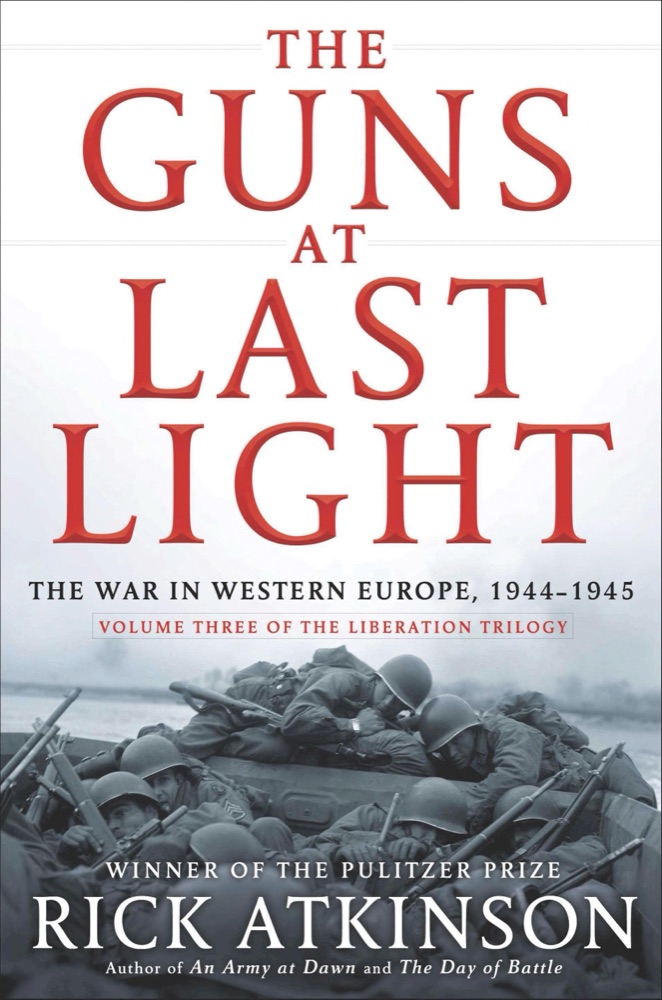
It is the twentieth century's unrivaled epic: at a staggering price, the United States and its allies liberated Europe and vanquished Hitler. In the first two volumes of his bestselling Liberation Trilogy, Rick Atkinson recounted how the American-led coalition fought through North Africa and Italy to the threshold of victory. Now, in The Guns at Last Light, he tells the most dramatic story of all―the titanic battle for Western Europe.
D-Day marked the commencement of the final campaign of the European war, and Atkinson's riveting account of that bold gamble sets the pace for the masterly narrative that follows. The brutal fight in Normandy, the liberation of Paris, the disaster that was Operation Market Garden, the horrific Battle of the Bulge, and final
Book details
- First published
- 2013
- Author
- Rick Atkinson
- Genre
- History
- Goodreads rating
- 4.49 (11k ratings)
Keep reading
 The Second World War
The Day of Battle: The War in Sicily and Italy, 1943-1944
An Army at Dawn: The War in North Africa, 1942-1943
The Second World War
The Day of Battle: The War in Sicily and Italy, 1943-1944
An Army at Dawn: The War in North Africa, 1942-1943
 The Guns of August
 Band of Brothers: E Company, 506th Regiment, 101st Airborne from Normandy to Hitler's Eagle's Nest
 D-Day, June 6, 1944: The Battle for the Normandy Beaches
 The Coldest Winter: America and the Korean War
 Mr. Lincoln's Army
 Citizens of London: The Americans who Stood with Britain in its Darkest, Finest Hour
 The Splendid and the Vile: A Saga of Churchill, Family, and Defiance During the Blitz
 The Winter Fortress: The Epic Mission to Sabotage Hitler's Atomic Bomb
 The Winds of War
 Ghost Soldiers: The Epic Account of World War II's Greatest Rescue Mission
 Vietnam: An Epic Tragedy, 1945-1975
 The Greatest Generation
 This Kind of War: A Study in Unpreparedness
 We Were Soldiers Once... and Young: Ia Drang - The Battle that Changed the War in Vietnam
 The Candy Bombers: The Untold Story of the Berlin Airlift and America's Finest Hour
 Closing the Ring
 Pacific Crucible: War at Sea in the Pacific, 1941-1942
 Flyboys: A True Story of Courage
 Dead Wake: The Last Crossing of the Lusitania
 Black Hawk Down
 The Civil War, Vol. 3: Red River to Appomattox
 The Monuments Men: Allied Heroes, Nazi Thieves, and the Greatest Treasure Hunt in History
 Berlin Diary: The Journal of a Foreign Correspondent 1934-1941
 Stalingrad: The Fateful Siege, 1942–1943
 Precipice
 Storm of Steel
 Agent Zigzag: A True Story of Nazi Espionage, Love, and Betrayal
 Beyond Band of Brothers: The War Memoirs of Major Dick Winters
 The Third Reich at War
 Stilwell and the American Experience in China, 1911-45
 The First Salute : View of the American Revolution
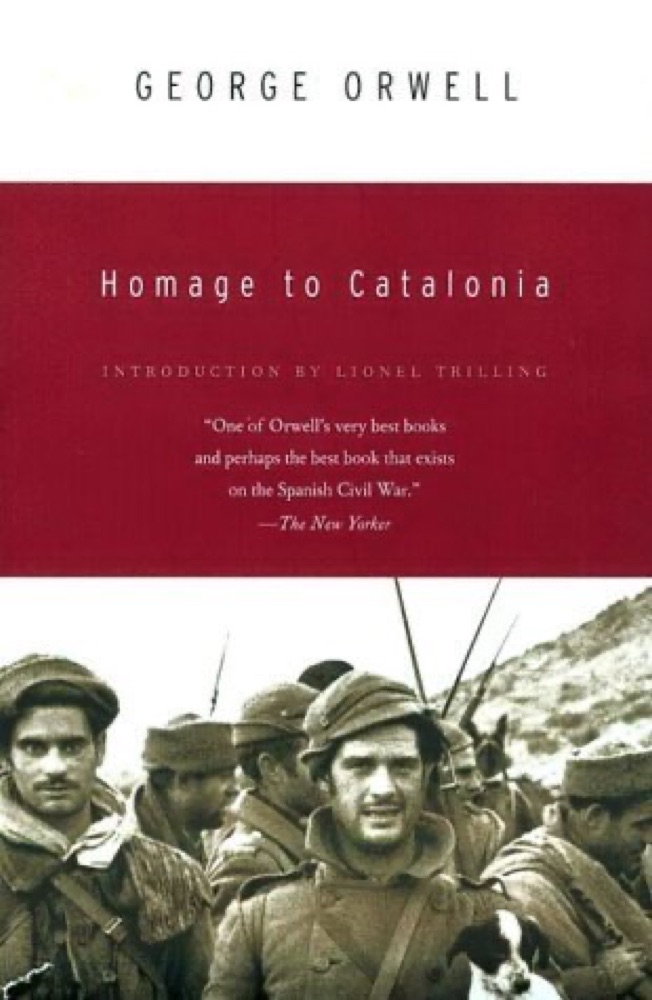 Homage to Catalonia
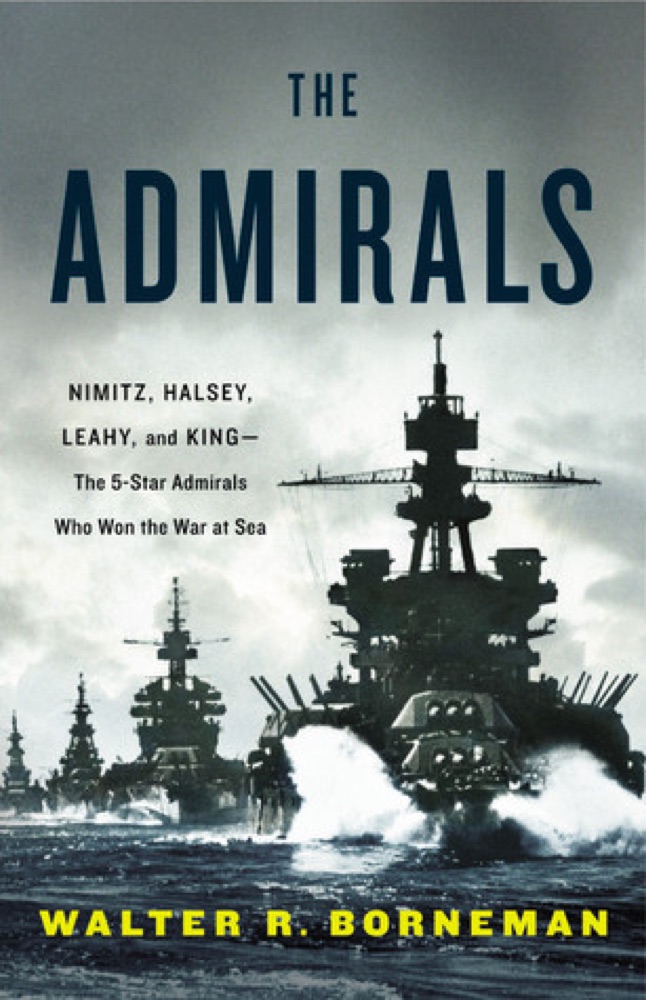 The Admirals: Nimitz, Halsey, Leahy, and King—the Five-Star Admirals Who Won the War at Sea
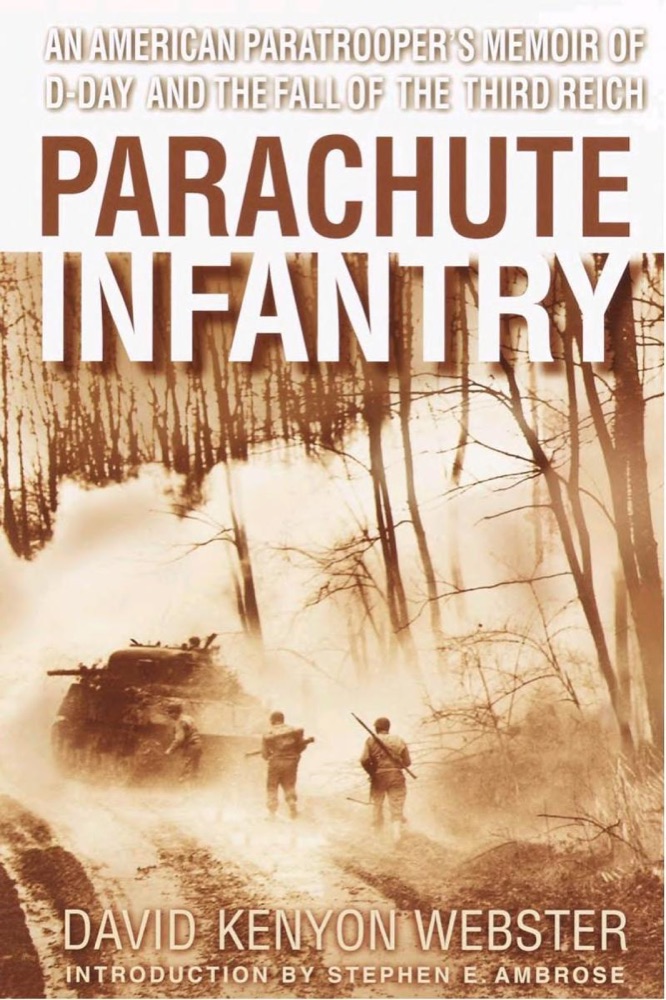 Parachute Infantry: An American Paratrooper's Memoir of D-Day and the Fall of the Third Reich
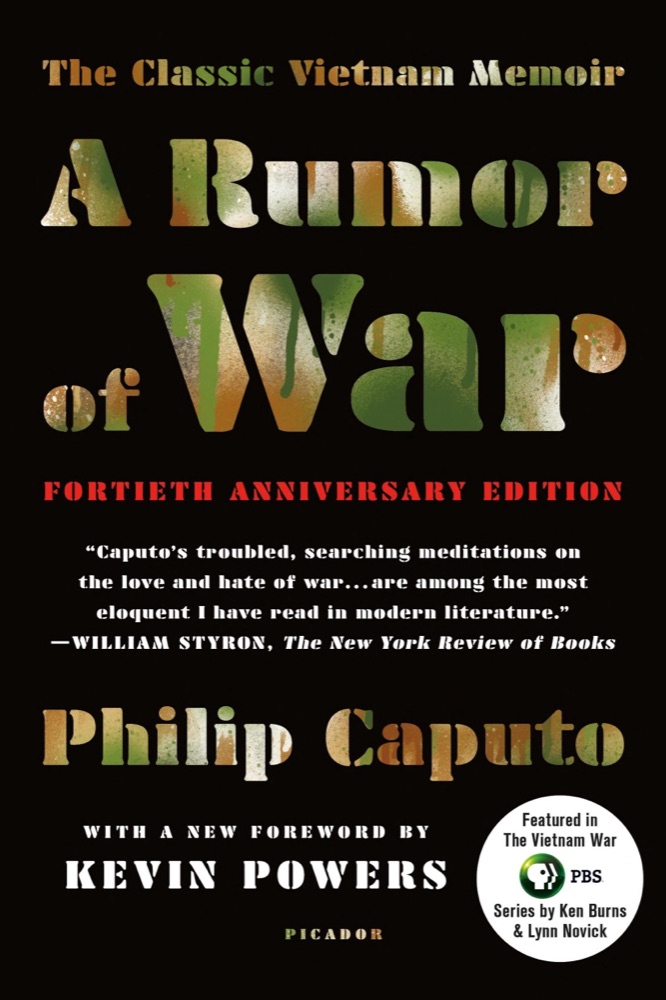 A Rumor of War: The Classic Vietnam Memoir
 The Looking Glass War
 Dispatches
 The Killer Angels
 D-Day Girls: The Spies Who Armed the Resistance, Sabotaged the Nazis, and Helped Win World War II
 With the Old Breed: At Peleliu and Okinawa
 War and Remembrance
 Diplomats & Admirals: From Failed Negotiations and Tragic Misjudgments to Powerful Leaders and Heroic Deeds, the Untold Story of the Pacific War from Pearl Harbor to Midway
 April 1865: The Month That Saved America
 War
War
 The Last Lion: Winston Spencer Churchill: Alone, 1932-40
 Into the Silence: The Great War, Mallory and the Conquest of Everest
 The Last Stand of the Tin Can Sailors: The Extraordinary World War II Story of the U.S. Navy's Finest Hour
 War Is a Racket
 The Enemy
 Epitaph for a Spy
 Memoirs of General W.T. Sherman
 The Last Lion 3: Winston Spencer Churchill: Defender of the Realm, 1940-1965
 The Moon Is Down
 Bomb: The Race to Build—and Steal—the World's Most Dangerous Weapon
 Fall of Giants
 All Quiet on the Western Front
 Flags of Our Fathers