
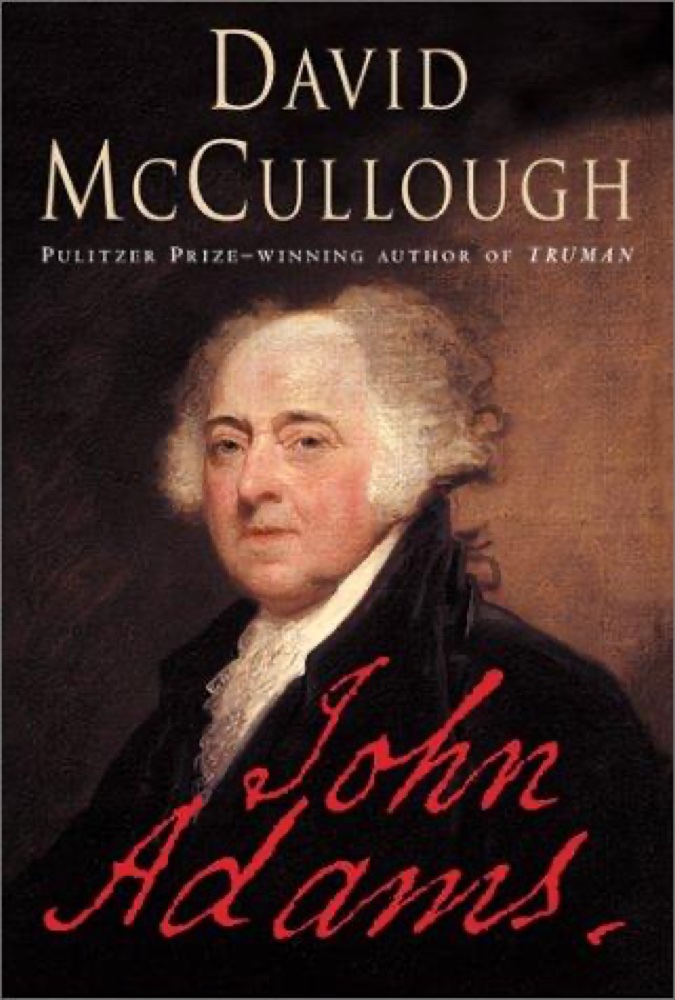
 John Adams
Quotes from the Book
The year 1776, celebrated as the birth year of the nation and for the signing of the Declaration of Independence, was for those who carried the fight for independence forward a year of all-too-few victories, of sustained suffering, disease, hunger, desertion, cowardice, disillusionment, defeat, terrible discouragement, and fear, as they would never forget, but also of phenomenal courage and bedrock devotion to country, and that, too they would never forget.
36
There are no people on earth in whom a spirit of enthusiastic zeal is so readily kindled, and burns so remarkably, as Americans
19
In truth, the situation was worse than they realized, and no one perceived this as clearly as Washington. Seeing things as they were, and not as he would wish them to be, was one of his salient strengths.
17
It was a day and age that saw no reason why one could not learn whatever was required - learn vitally anything - by the close study of books.
14
a leader must look and act the part.
11
In fact, the Americans of 1776 enjoyed a higher standard of living than any people in the world.
10
I lament the want of a liberal education. I feel the mist of ignorance to surround me - Nathanael Greene
10
Strange it was that the British commander-in-chief, known for his chronic gambling, seemed to give no thought to how his American opponent might play his hand. O
9
A people unused to restraint must be led, they will not be drove.
9
Once, during the Siege of Boston, when almost nothing was going right and General Schuyler had written from Albany to bemoan his troubles, Washington had replied that he understood but that “we must bear up against them, and make the best of mankind as they are, since we cannot have them as we wish.” It was such resolve and an acceptance of mankind and circumstances as they were, not as he wished them to be, that continued to carry Washington through. “I will not however despair,” he now wrote to Governor William Livingston.
9
(“It seemed to be the principle employment of both armies to look at each other with spyglasses,” wrote the eminent Loyalist Peter Oliver, former chief justice of the province.)
9
as the Sword was the last resort for the preservation of our liberties, so it ought to be the first thing laid aside when those liberties are firmly established
9
determined, America must raise an empire of permanent duration, supported upon the grand pillars of Truth, Freedom, and Religion, encouraged by the smiles of Justice and defended by her own patriotic sons. . . . Permit me then to recommend from the sincerity of my heart, ready at all times to bleed in my country’s cause, a Declaration of Independence, and call upon the world and the great God who governs it to witness the necessity, propriety and rectitude thereof. The
8
And if his youth was obvious, the Glorious Cause was to a large degree a young man’s cause. The commander in chief of the army, George Washington, was himself only forty-three. John Hancock, the President of the Continental Congress, was thirty-nine, John Adams, forty, Thomas Jefferson, thirty-two, younger even than the young Rhode Island general. In such times many were being cast in roles seemingly beyond their experience or capacities, and Washington had quickly judged Nathanael Greene to be “an object of confidence.
8
IN PHILADELPHIA, the same day as the British landing on Staten Island, July 2, 1776, the Continental Congress, in a momentous decision, voted to “dissolve the connection” with Great Britain. The news reached New York four days later, on July 6, and at once spontaneous celebrations broke out. “The whole choir of our officers . . . went to a public house to testify our joy at the happy news of Independence. We spent the afternoon merrily,” recorded Isaac Bangs. A letter from John Hancock to Washington, as well as the complete text of the Declaration, followed two days later: That our affairs may take a more favorable turn [Hancock wrote], the Congress have judged it necessary to dissolve the connection between Great Britain and the American colonies, and to declare them free and independent states; as you will perceive by the enclosed Declaration, which I am directed to transmit to you, and to request you will have it proclaimed at the head of the army in the way you shall think most proper.
8
Lord Chatham, the King of Prussia, nay, Alexander the Great, never gained more in one campaign than the noble lord has lost-he has lost a whole continent.
8
Indeed, bribery, favoritism, and corruption in a great variety of forms were rampant not only in politics, but in all levels of society.
8
The people—why the people are magnificent: in their carriages, which are numerous, in their house furniture, which is fine, in their pride and conceit, which are inimitable, in their profaneness, which is intolerable, in the want of principle, which is prevalent, in their Toryism, which is insufferable.
7
Many, like Henry Knox, saw at once that with the enemy massing for battle so close at hand and independence at last declared by Congress, the war had entered an entirely new stage. The lines were drawn now as never before, the stakes far higher. “The eyes of all America are upon us,” Knox wrote. “As we play our part posterity will bless or curse us.” By renouncing their allegiance to the King, the delegates at Philadelphia had committed treason and embarked on a course from which there could be no turning back. “We are in the very midst of a revolution,” wrote John Adams, “the most complete, unexpected and remarkable of any in the history of nations.
7
Washington insisted—possibly to rally his own resolve—that they must never lose sight of “the goodness of our cause.” Difficulties were not insurmountable. “Perseverance and spirit have done wonders in all ages.
6
To the British and those Loyalists who had taken refuge in Boston, they were simply “the rebels,” or “the country people,” undeserving the words “American” or “army.” General John Burgoyne disdainfully dubbed them “a preposterous parade,” a “rabble in arms.
6
The town, although it had “suffered greatly,” was not in as bad shape as he had expected, he wrote to John Hancock, “and I have a particular pleasure in being able to inform you, sir, that your house has received no damage worth mentioning.” Other fine houses had been much abused by the British, windows broken, furnishings smashed or stolen, books destroyed. But at Hancock’s Beacon Hill mansion all was in order, as General Sullivan also attested, and there was a certain irony in this, since the house had been occupied and maintained by the belligerent General James Grant, who had wanted to lay waste to every town on the New England coast. “Though I believe,” wrote Sullivan, “the brave general had made free with some of the articles in the [wine] cellar.
6
Perseverance and spirit have done wonders in all ages.
5
but in small units the men began marching off for Newburyport, north of Boston, from where they would sail by sloop and schooner to the mouth of the Kennebec. He
4
Heaven hath decreed that tottering empire Britain to irretrievable ruin and thanks to God, since Providence hath so determined, America must raise an empire of permanent duration, supported upon the grand pillars of Truth, Freedom, and Religion, encouraged by the smiles of Justice and defended by her own patriotic sons. . . . Permit me then to recommend from the sincerity of my heart, ready at all times to bleed in my country’s cause, a Declaration of Independence, and call upon the world and the great God who governs it to witness the necessity, propriety and rectitude thereof. The
4
We want great men who, when fortune frowns, will not be discouraged. ~Colonel Henry Knox
4
Farmers and soldiers knew about the weather. Weather could be the great determiner between failure and success, the great test of one's staying power.
4
Crucial to Lee’s plan was the defense of that part of Long Island directly across the East River and particularly the imposing river bluffs near the tiny hamlet called Brooklyn, which was also spelled Breucklyn, Brucklyn, Broucklyn, Brookland, or Brookline, and amounted to no more than seven or eight houses and an old Dutch church that stood in the middle of the Jamaica Road, the main road inland from the Brooklyn ferry landing.
4
Did you know?
- The book serves as a companion to McCullough's earlier biography "John Adams."
- It focuses on military events of the Revolution rather than the political developments in the Continental Congress.
- An Illustrated Edition was released in 2007 featuring 140 images and 37 removable replica reproductions of source documents.
- The narrative covers key episodes including the fortification of Dorchester Heights, the Battle of Long Island, and the crossing of the Delaware to Trenton.
- It was selected for the U.S. Air Force Chief of Staff's Professional Reading Program in 2005 and 2006.
About David McCullough
David McCullough (1933-2022) was an American author and historian renowned for his narrative nonfiction. He won the Pulitzer Prize for Biography twice, for "Truman" and "John Adams," as well as two National Book Awards and the Presidential Medal of Freedom.
More about the author →
About the book
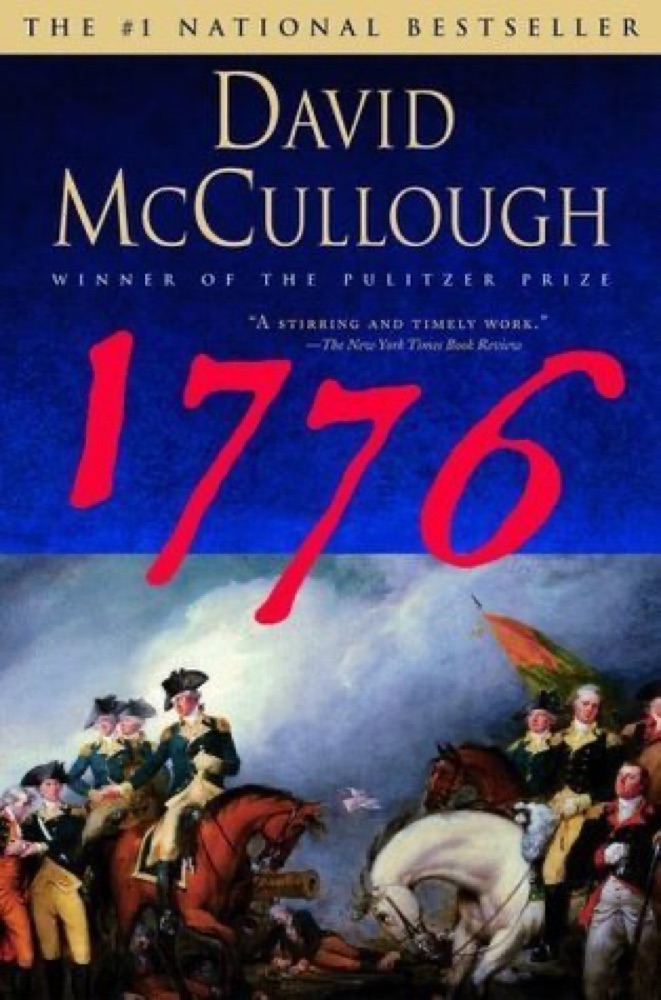
David McCullough's "1776" is a narrative history of the pivotal year of the American Revolutionary War, tracing the military campaign from the British siege of Boston through the disastrous American defeats around New York to the army's desperate winter crossing of the Delaware and the surprise victory at Trenton. Rather than focusing on the political debates of the Continental Congress, the book centers on the soldiers and commanders in the field, following George Washington and the fragile Continental Army alongside their British counterparts.
Drawing heavily on diaries, letters, and contemporary documents from both American and British participants, McCullough emphasizes themes of leadership, endurance, and the sheer contingency of the war's outcome. The narrative dwells on how close the Revolution came to collapse and how the resolve of Washington and ordinary soldiers carried a poorly equipped army through its darkest months.
Published in 2005, "1776" was a major commercial success, reaching the top of bestseller lists and reaching a wide general readership. Critics praised McCullough's vivid storytelling and his use of primary sources, with reviewers calling it a stirring and accessible account; the book was selected for the U.S. Air Force Chief of Staff's Professional Reading Program in 2005 and 2006.
Book details
- First published
- 2005
- Length
- 386 pages
- Reading time
- 8 hours
- Author
- David McCullough
- Genre
- History
- Goodreads rating
- 4.11 (253k ratings)
Critical reception
- Became a New York Times bestseller upon release in 2005.
- The New York Times praised it as a stirring and timely work that engages both Revolutionary War enthusiasts and general readers.
- Kirkus Reviews called it a sterling account, highlighting McCullough's use of diaries and correspondence from ordinary soldiers on both sides.
Keep reading
 Revolutionary Summer: The Birth of American Independence
 The First Salute : View of the American Revolution
 Founding Brothers: The Revolutionary Generation
 Undaunted Courage: The Pioneering First Mission to Explore America's Wild Frontier
 His Excellency: George Washington
 The Civil War, Vol. 3: Red River to Appomattox
John Adams
The Civil War, Vol. 3: Red River to Appomattox
John Adams
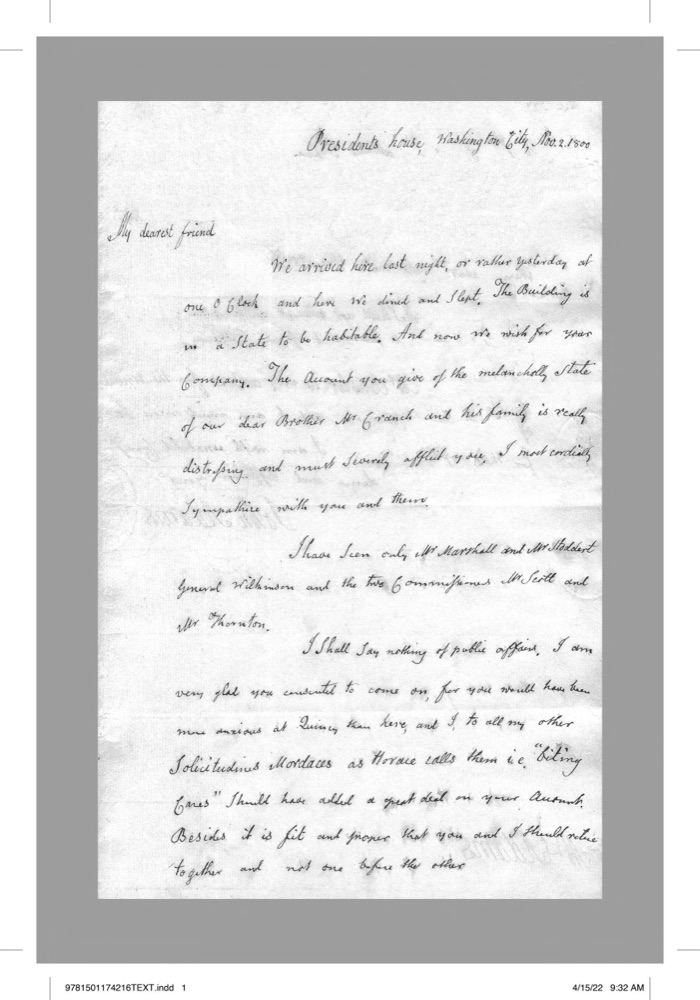 The American Spirit: Who We Are and What We Stand For
 Burr
Burr
 Mr. Lincoln's Army
 These Truths: A History of the United States
 April 1865: The Month That Saved America
 The Small and the Mighty: Twelve Unsung Americans Who Changed the Course of History, from the Founding to the Civil Rights Movement
 Battle Cry of Freedom
 The Proud Tower: A Portrait of the World Before the War, 1890-1914
 Chesapeake
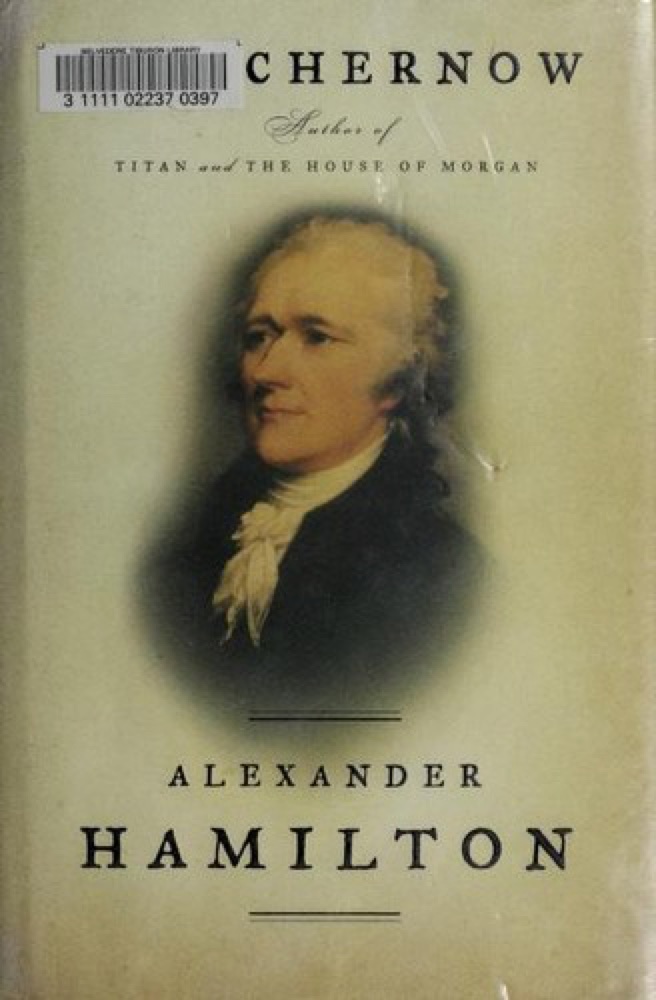 Alexander Hamilton
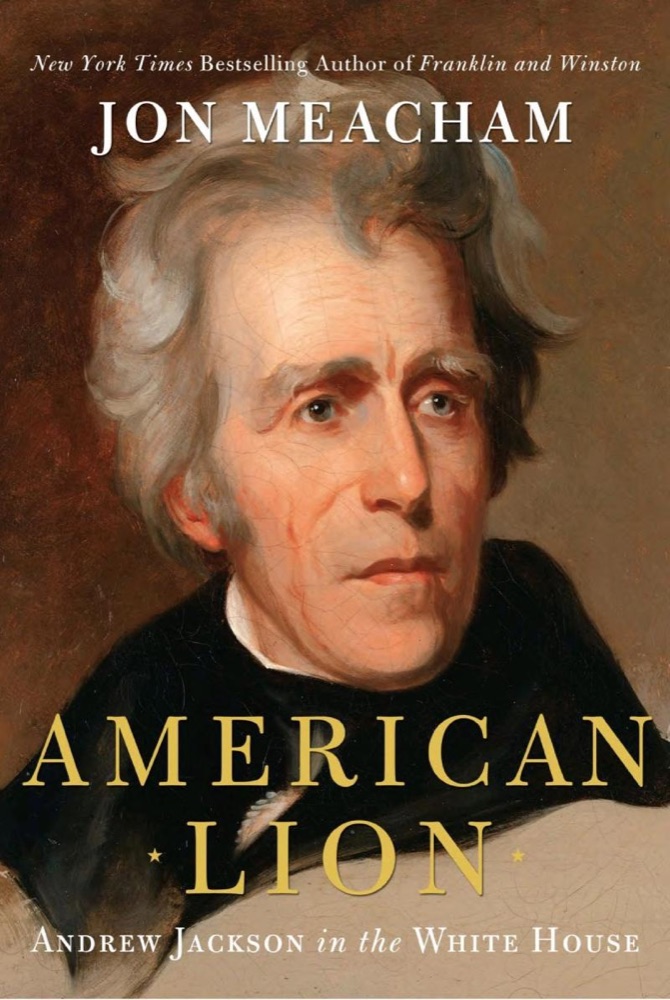 American Lion: Andrew Jackson in the White House
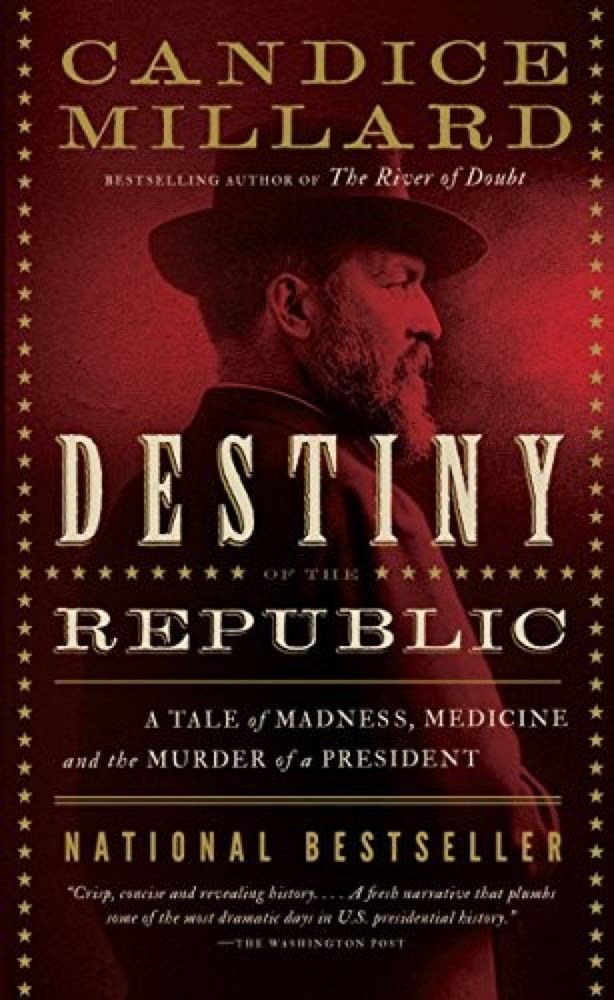 Destiny of the Republic: A Tale of Madness, Medicine and the Murder of a President
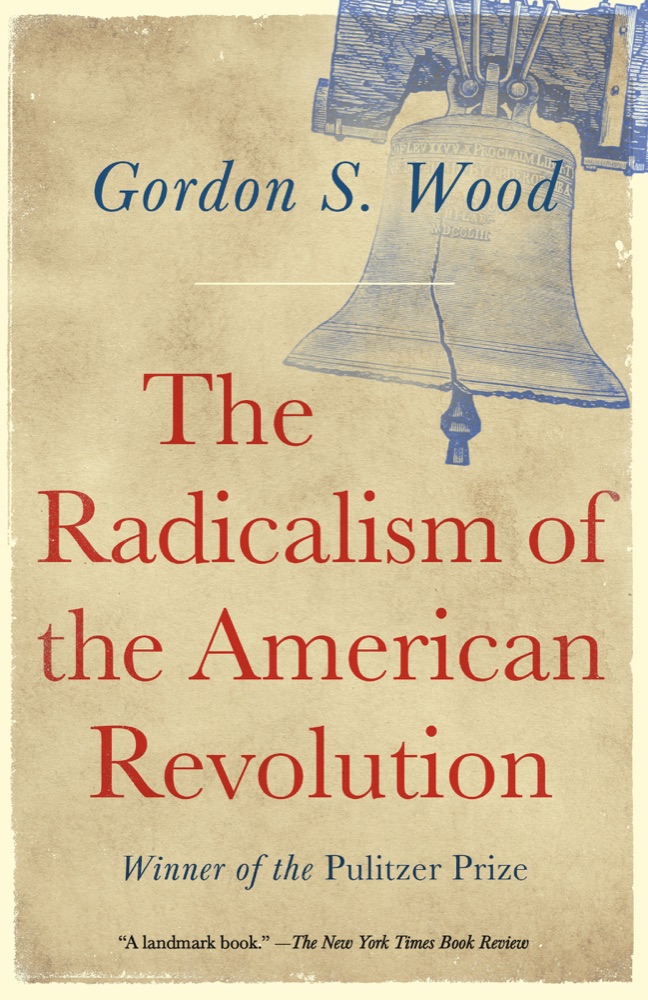 The Radicalism of the American Revolution
 Washington's Crossing
 The Path to Power
 The Soul of America: The Battle for Our Better Angels
 Team of Rivals: The Political Genius of Abraham Lincoln
 Profiles in Courage
 The Best and the Brightest
 American Colossus: The Triumph of Capitalism, 1865-1900
 Truman
 The Wager: A Tale of Shipwreck, Mutiny and Murder
 The Splendid and the Vile: A Saga of Churchill, Family, and Defiance During the Blitz
 The Hemingses of Monticello: An American Family
 Closing the Ring
 The Monuments Men: Allied Heroes, Nazi Thieves, and the Greatest Treasure Hunt in History
 Clear and Present Danger
 Becoming Madam Secretary
 The Coldest Winter: America and the Korean War
 The Last of the Mohicans
 The Winds of War
 The March of Folly: From Troy to Vietnam
 The Autobiography of Eleanor Roosevelt
 Killing Kennedy: The End of Camelot
 Reflections on the Revolution in France
 Benjamin Franklin: An American Life
 River of Smoke
 The Last Lion: Winston Spencer Churchill: Alone, 1932-40
 Democracy in America
 The Rise of Theodore Roosevelt
 The Federalist Papers
 A Promised Land
 Sackett's Land
 Executive Orders
 Hawaii
 The Plot Against America
 Gulliver's Travels
 The Covenant
 This Kind of War: A Study in Unpreparedness
 Essays of E.B. White
 The Black Jacobins: Toussaint L'Ouverture and the San Domingo Revolution
 Civil Disobedience
 Memoirs of General W.T. Sherman