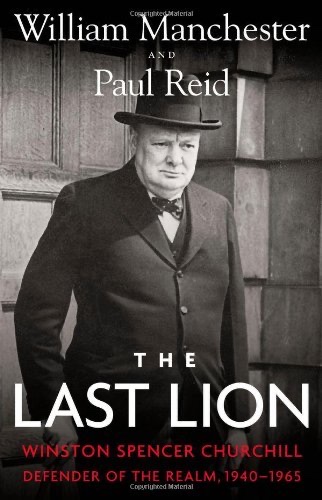
 The Last Lion 3: Winston Spencer Churchill: Defender of the Realm, 1940-1965
Quotes from the Book
Hitler showed the evil that could be done by the art of rhetoric. Churchill showed how it could help to save humanity. It has been said that the difference between Hitler’s speeches and Churchill’s speeches was that Hitler made you think he could do anything; Churchill made you think you could do anything.
11
The key thing is to be "Conservative in principle but Liberal in sympathy".
6
Never in the field of human conflict has so much been owed by so many to so few.
5
He is the resounding human rebuttal to all Marxist historians who think history is the story of vast and impersonal economic forces. The point of the Churchill Factor is that one man can make all the difference.
3
Churchill knew instinctively what was wrong with communism—that it repressed liberty; that it replaced individual discretion with state control; that it entailed the curtailment of democracy, and therefore that it was tyrannous.
2
David Lloyd George had been to Germany, and been so dazzled by the Führer that he compared him to George Washington. Hitler was a ‘born leader’, declared the befuddled former British Prime Minister. He wished that Britain had ‘a man of his supreme quality at the head of affairs in our country today’. This from the hero of the First World War! The man who had led Britain to victory over the Kaiser!
2
Take the one about the time he was sitting next to a clean-living Methodist bishop—at a reception, allegedly, in Canada—when a good-looking young waitress came up and offered them both a glass of sherry from a tray. Churchill took one. But the bishop said, ‘Young lady, I would rather commit adultery than take an intoxicating beverage.’ At which point Churchill beckoned the girl, and said, ‘Come back, lassie, I didn’t know we had a choice.
2
There was one thing the public could say for certain about Churchill: that there was nothing that he was going to ask the British armed forces to do that he would not have done himself.
1
These days we dimly believe that the Second World War was won with Russian blood and American money; and though that is in some ways true, it is also true that, without Churchill, Hitler would almost certainly have won.
1
(Never in the field of human conflict has) So much been owed by So many to So few. If you want a classic ascending tricolon, then try his peerless line from 1942, after the victory at El Alamein. Now this is not the end. It is not even the beginning of the end. But it is, perhaps, the end of the beginning. When he uncorks this one at the
1
Churchill decides from very early on that he will create a political position that is somehow above left and right, embodying the best points of both sides and thereby incarnating the will of the nation. He thinks of himself as a gigantic keystone in the arch, with all the lesser stones logically induced to support his position. He has a kind of semi-ideology to go with it—a leftish Toryism: imperialist, romantic, but on the side of the working man.
1
First Lord of the Admiralty, long enough to engineer what an anti-Churchillian would say was an epic and unparalleled military disaster—a feat of incompetent generalship that made the Charge of the Light Brigade look positively slick. It was an attempt to outflank the stalemate on the Western Front that not only ended in humiliation for the British armed forces; it cost the lives of so many Australians and New Zealanders that to this day their 1915 expedition to Turkey is the number-one source of pom-bashing and general anti-British feeling among Antipodeans.
1
Defeat is one thing, disgrace is another
By the time he came into Downing Street in May 1940 he had written and read so much history as to have a unique understanding of events, to see them in context, and to see what England must do.
Churchill. His epic career intersected with the Middle East at several key points (and remember that he is credited with pioneering the very term Middle East); but the most important was his role as Colonial Secretary. He was a little surprised to be offered the post, at the end of 1920; but it is easy to see why Lloyd George thought he was the right man for the job. He had shown immense energy and dynamism as Minister for Munitions—equipping Britain with the tanks, planes and other technology that helped win the war. As Secretary of State for War he had been masterly in his demobilisation strategy: quelling mutinies by ensuring that those who had served the longest were the first to be reunited with their families. He had shown his gifts of charm and persuasion in the pre-war Ulster talks—and those gifts would be needed in spades. The First World War had left some snortingly difficult problems, and especially in the Middle East. — THE POST OF Colonial Secretary might sound less grand than that of Foreign Secretary—a role still occupied by that most superior person, George Nathaniel Curzon. But that is to forget the scale of the British Empire in 1921. The First World War was not meant to be an acquisitive conflict;
When the Labour benches cheered, the Tories were still plotting to get rid of him.
The child is father to the man, and gingery young Churchill was a pretty runty sort of kid.
Their most important contribution to civilisation is that they were both neglectful of the child.
If ever you wanted a 12-cylinder, 6-litre entire combustible world consumer, that man is Churchill.
He was the large protruding nail on which destiny snagged her coat.
on a stool amid his guffawing comrades, ‘I stand for
The Commission pressed Churchill: when did he imagine that this would be
Watch on YouTube
About Boris Johnson
We have collected 22 quotes from 1 book by Boris Johnson on BookQuoters.
More about the author →About the book
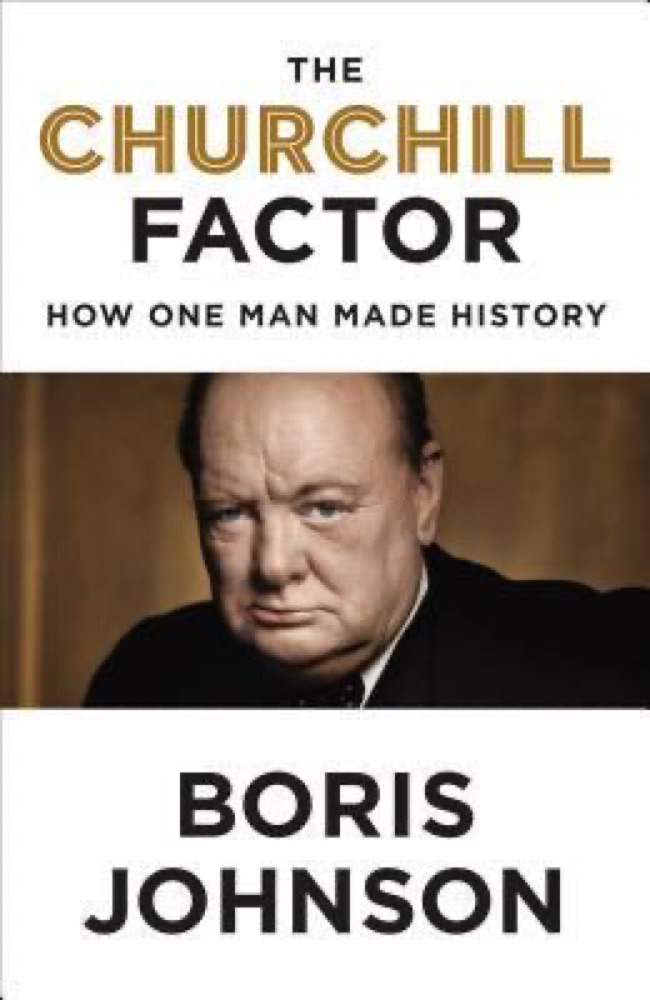
From London’s inimitable mayor, Boris Johnson, the story of how Churchill’s eccentric genius shaped not only his world but our own.
On the fiftieth anniversary of Churchill’s death, Boris Johnson celebrates the singular brilliance of one of the most important leaders of the twentieth century. Taking on the myths and misconceptions along with the outsized reality, he portrays—with characteristic wit and passion—a man of contagious bravery, breathtaking eloquence, matchless strategizing, and deep humanity.
Fearless on the battlefield, Churchill had to be ordered by the king to stay out of action on D-Day; he pioneered aerial bombing and few could match his experience in organizing violence on a colossal scale, yet he hated war and scorned politicians who had not experienced its horrors. He was the most famous journalist of his time and perhaps the greatest orator of all time, despite
Book details
- First published
- 2014
- Author
- Boris Johnson
- Genre
- History
- Goodreads rating
- 4.05 (10k ratings)
Keep reading
The Last Lion 3: Winston Spencer Churchill: Defender of the Realm, 1940-1965
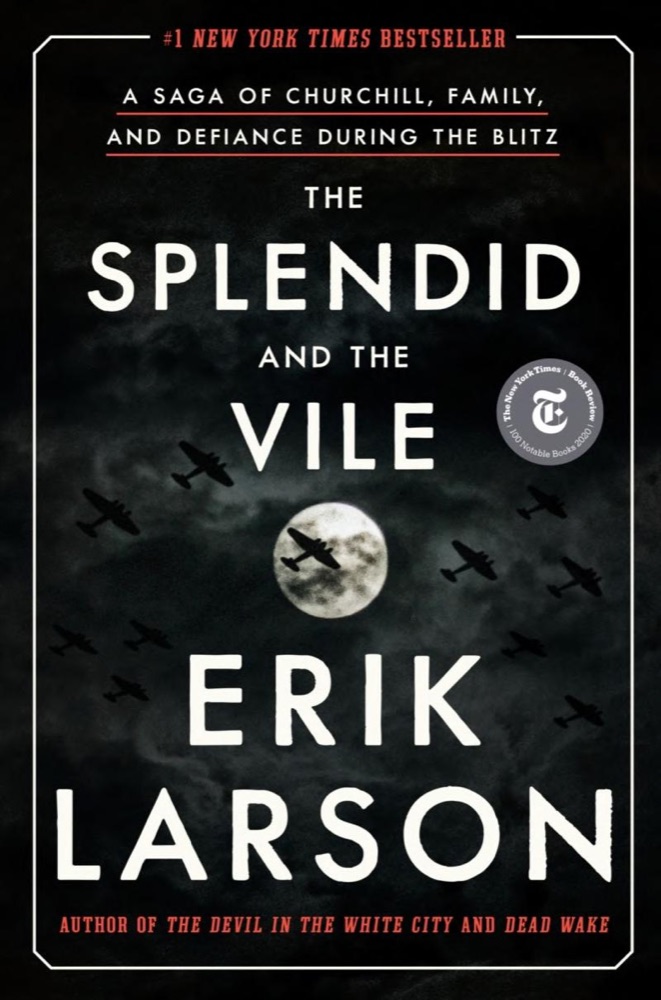 The Splendid and the Vile: A Saga of Churchill, Family, and Defiance During the Blitz
 The Last Lion: Winston Spencer Churchill: Alone, 1932-40
 The Winds of War
 Closing the Ring
 Precipice
 The Guns of August
 The Proud Tower: A Portrait of the World Before the War, 1890-1914
 Truman
 Fall of Giants
 The Coldest Winter: America and the Korean War
 Churchill: The Power of Words
 Executive Orders
 The Rise of Theodore Roosevelt
 The Black Wolf
 The Second World War
 The Best and the Brightest
 Stilwell and the American Experience in China, 1911-45
 The Rise and Fall of the Third Reich: A History of Nazi Germany
 Winter of the World
 The Monuments Men: Allied Heroes, Nazi Thieves, and the Greatest Treasure Hunt in History
 Agent Zigzag: A True Story of Nazi Espionage, Love, and Betrayal
 American Prometheus: The Triumph and Tragedy of J. Robert Oppenheimer
 Koba the Dread: Laughter and the Twenty Million
 It Can't Happen Here
 Tigerman
 The Path to Power
 Modern Times: The World from the Twenties to the Nineties
 Into the Silence: The Great War, Mallory and the Conquest of Everest
 1776
1776
 The Spy Who Came In from the Cold
 The Looking Glass War
 The Autobiography of Eleanor Roosevelt
 The Will to Battle
 The Bonfire of the Vanities
 The Invisible Bridge: The Fall of Nixon and the Rise of Reagan
 Before the Storm: Barry Goldwater and the Unmaking of the American Consensus
 The Honourable Schoolboy
 Desert Queen: The Extraordinary Life of Gertrude Bell: Adventurer, Adviser to Kings, Ally of Lawrence of Arabia
 The Redbreast
 Casino Royale
 Fascism: A Warning
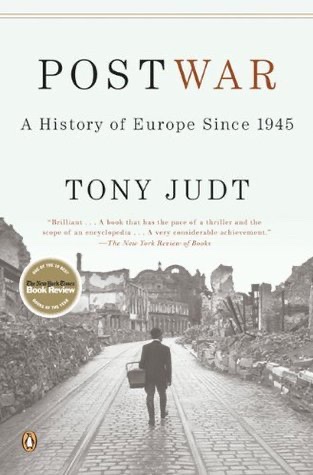 Postwar: A History of Europe Since 1945
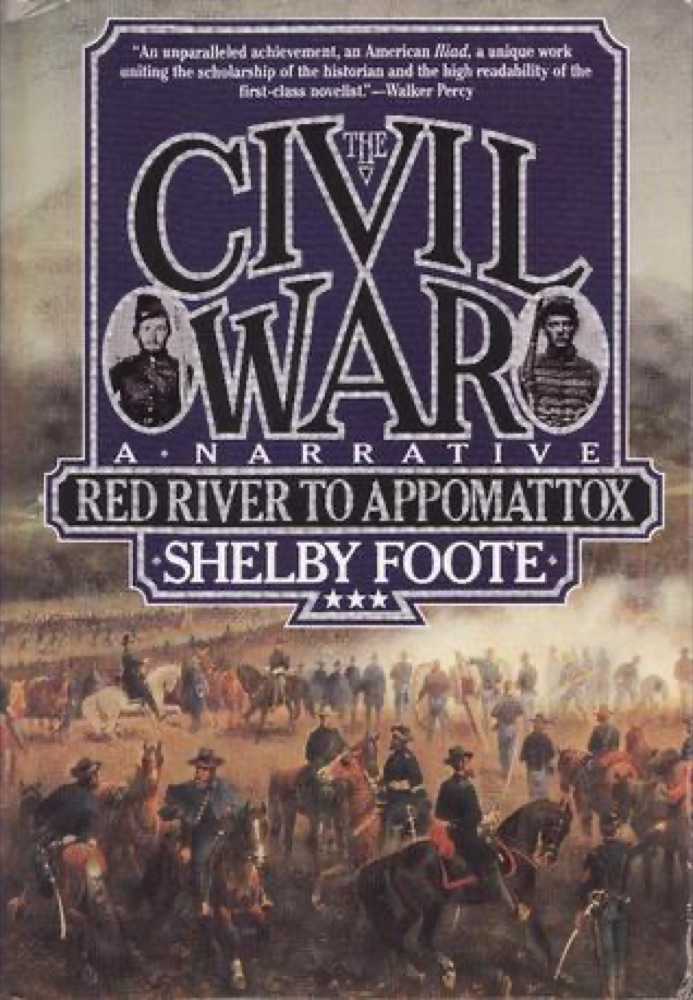 The Civil War, Vol. 3: Red River to Appomattox
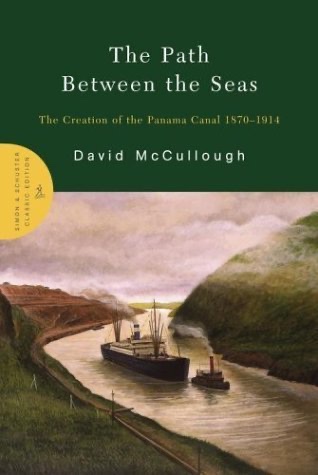 The Path Between the Seas: The Creation of the Panama Canal, 1870-1914
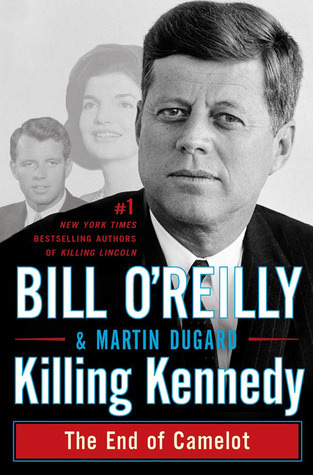 Killing Kennedy: The End of Camelot
 Dominion
 The Guns at Last Light: The War in Western Europe, 1944-1945
 Citizens of London: The Americans who Stood with Britain in its Darkest, Finest Hour
 The Fall of the Roman Empire: A New History of Rome and the Barbarians
 The Ministry of Fear
 Founding Brothers: The Revolutionary Generation
 The Untold History of The United States
 Master of the Senate
 Berlin Diary: The Journal of a Foreign Correspondent 1934-1941
 American Colossus: The Triumph of Capitalism, 1865-1900
 The Greatest Generation
 Felix Holt: The Radical
 Avenger
 The Warden