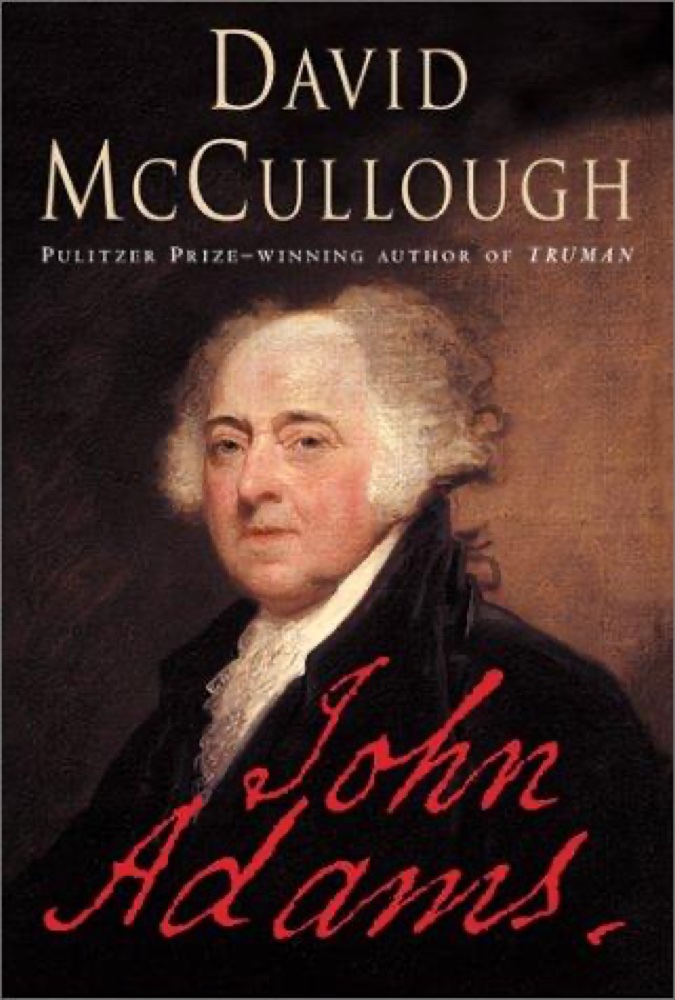
 John Adams
Quotes from the Book
To the majority of those on the job his presence had been magical. Years afterward, the wife of one of the steam-shovel engineers, Mrs. Rose van Hardevald, would recall, "We saw him...on the end of the train. Jan got small flags for the children, and told us about when the train would pass...Mr. Roosevelt flashed us one of his well-known toothy smiles and waved his hat at the children..." In an instant, she said, she understood her husband's faith in the man. "And I was more certain than ever that we ourselves would not leave until it [the canal] was finished." Two years before, they had been living in Wyoming on a lonely stop on the Union Pacific. When her husband heard of the work at Panama, he had immediately wanted to go, because, he told her, "With Teddy Roosevelt, anything is possible." At the time neither of them had known quite where Panama was located.
But no statistic conveyed a true picture of Panama rain. It had to be seen, to be felt, smelled; it had to be heard to be appreciated. The effect was much as though the heavens had opened and the air had turned instantly liquid.
A lie,” he was once heard to declare on the floor of the Senate, “is an abomination unto the Lord and an ever-present help in time of need.
patience which I assure you requires more force of character than does action.
You won’t get fired if you do something, you will if you don’t do anything. Do something if it is wrong, for you can correct that, but there is no way to correct nothing.
Far better it is to dare mighty things, to win glorious triumphs, even though checkered by failure, than to take rank with those poor spirits who neither enjoy much nor suffer much, because they live in the gray twilight that knows not victory or defeat.
One had only to look at the map to see that Panama was the proper place for the canal. The route was already well established, there was a railroad, there were thriving cities at each end. Only at Panama could a sea-level canal be built. It was really no great issue at all. Naturally there were problems. There were always problems. There had been large, formidable problems at Suez, and to many respected authorities they too had seemed insurmountable. But as time passed, as the work moved ahead at Suez, indeed as difficulties increased, men of genius had come forth to meet and conquer those difficulties. The same would happen again. For every challenge there would be a man of genius capable of meeting and conquering it. One must trust to inspiration. As for the money, there was money aplenty in France just waiting for the opening of the subscription books.
Seen under the microscope, Stegomyia is a creature of striking beauty. Its general color is dark gray, but the thorax is marked with a silvery-white lyre-shaped pattern; the abdomen is banded with silvery-white stripes and the six-jointed legs are striped alternately with black and pure white. Among mosquitoes Stegomyia is the height of elegance.
The experience at Suez was little help. Probably they would have been better off in the long run had there been no Suez Canal in their past.
In truth, the color line, of which almost nothing was said in print, cut through every facet of daily life in the Zone, and it was as clearly drawn and as closely observed as anywhere in the Deep South or the most rigid colonial enclaves in Africa.
Far better it is to dare mighty things, to win glorious triumphs, even though checkered by failure, than to take rank with those poor spirits who neither enjoy much nor suffer much, because they live in the gray twilight that knows not victory or defeat. —THEODORE ROOSEVELT
when you have something important to do, if there are two of you, you have one too many.
The world requires at least ten years to understand a new idea, however important or simple it may be. —SIR RONALD ROSS
By the time he went to work for James J. Hill in 1889, he had survived Mexican fevers, Indian attack, Upper Michigan mosquitoes, and Canadian blizzards. He had been treed by wolves on one occasion; he
Later, following the funeral, he took all the family’s horses, including his own, up into one of the mountain ravines and shot them.
The level of the Pacific was not twenty feet higher than that of the Atlantic, as had been the accepted view for centuries. Sea level was sea level, the same on both sides. The difference was in the size of their tides. (The tides on the Pacific are tremendous, eighteen to twenty feet, while on the Caribbean there is little or no tide, barely more than a foot. When Balboa stood at last on the Pacific shore, he had seen no rush of lordly breakers, but an ugly brown mud flat reaching away for a mile and more, because he had arrived when the tide was out.)
his recreational passion at Sagamore Hill that summer of 1903 was the so-called point-to-point “obstacle walk,” the one rule, the only rule, being that the participant must go up and over, or through, every obstacle, never around it.
The newspapers in Bogotá, all closely tied to the party in power, the Liberals, took little notice of Wyse’s presence in the capital. That the visit was one of the utmost importance to the future of Colombia, that Wyse was there in fact to settle the basic contract to build a Panama canal, a contract that could mean a world of difference to Colombia for centuries to come, or more immediately help solve the country’s dire financial troubles, was in no way suggested.
You are facing one of the greatest decisions of your career. You must choose between Shonts and Gorgas. If you fall back upon the old methods of sanitation, you will fail, just as the French failed. If you back up Gorgas and his ideas and let him pursue his campaign against the mosquitoes, you will get your canal.
Bright but not distinctive as an undergraduate, he had gone to Harvard Law School and finished in the same class as Justice Holmes. But the law bored him—as it had Ferdinand de Lesseps, as it had Roosevelt—so he had decided to be an engineer, “that I may lead a good and useful life.
We must bear the atmosphere of the hour,” the President said. “It will pass away.” And like many of McKinley’s instinctive responses, it was the right one.
For a West Point graduate to abandon his appointed task in the face of adversity or personal discomfort was all but inconceivable.
He always kept three books at hand—one scientific, one of classical literature or history, one light fiction—which he took up in turn, giving each exactly twenty minutes according to a pocket watch placed on the table beside his chair. In this fashion, he said, he was able to remember what he read.
Panama still more extraordinary machines would work an even more astonishing success. The wonderful thing was that the American dredges did
At one point an elderly resident Frenchman told him that if he persisted with his plan there would not be trees enough on the Isthmus to make the crosses to put over the graves of his laborers.
is vintage Bunau-Varilla: My only reply to such critics is that they have not the
For country, science, and glory. —Motto of the École Polytechnique
mendacity.” He then introduced his son to the President,
Watch on YouTube
About David McCullough
We have collected 259 quotes from 11 books by David McCullough on BookQuoters.
More about the author →More by David McCullough
John Adams
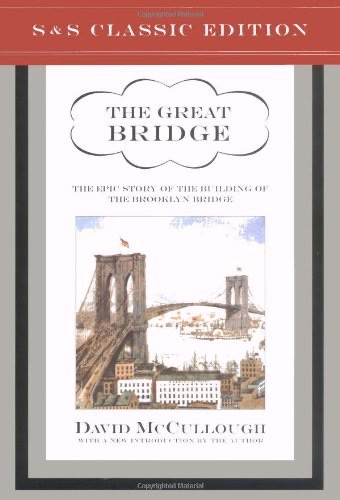 The Great Bridge: The Epic Story of the Building of the Brooklyn Bridge
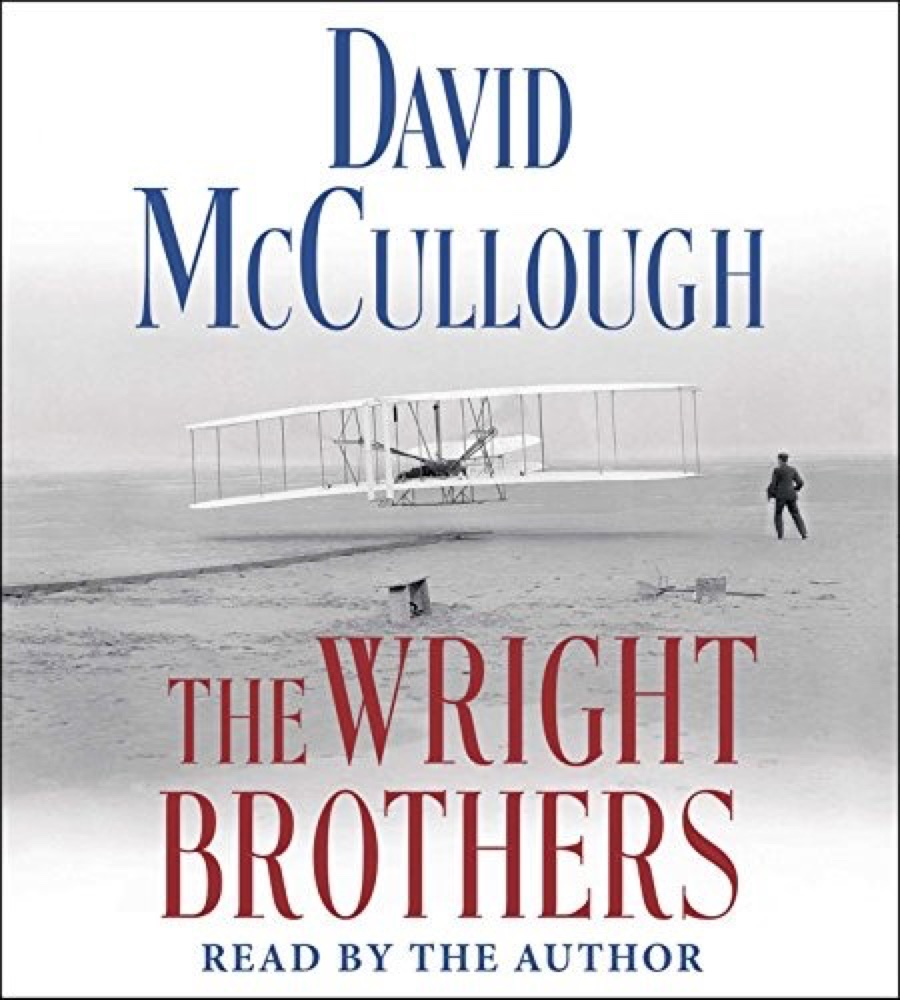 The Wright Brothers
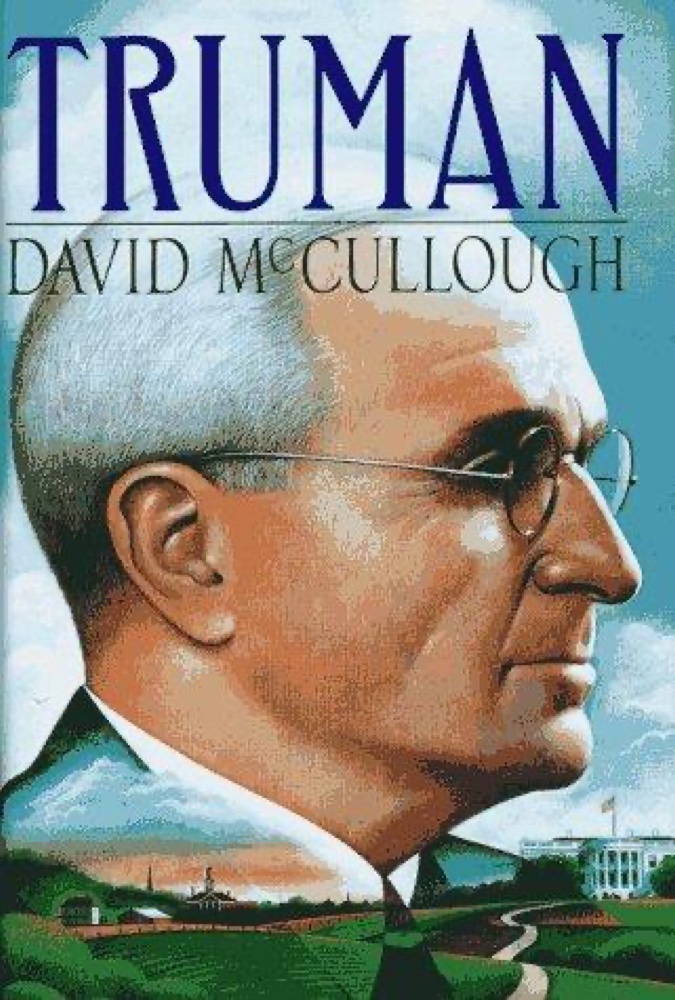 Truman
Book details
- Author
- David McCullough
- Genre
- Historical
- Goodreads rating
- 4.22 (24k ratings) →
Keep reading
 American Colossus: The Triumph of Capitalism, 1865-1900
 The Proud Tower: A Portrait of the World Before the War, 1890-1914
 The River of Doubt: Theodore Roosevelt's Darkest Journey
 Life on the Mississippi
 Alas, Babylon
 Executive Orders
 The Winds of War
 The Path to Power
 The Monuments Men: Allied Heroes, Nazi Thieves, and the Greatest Treasure Hunt in History
 Hawaii
 Clear and Present Danger
 River of Smoke
 Kon-Tiki
 Dead Wake: The Last Crossing of the Lusitania
 The Mysterious Island
 Precipice
 Destiny of the Republic: A Tale of Madness, Medicine and the Murder of a President
 Closing the Ring
 Mason & Dixon
 Essays of E.B. White
 Fall of Giants
 Quicksilver
 The Autobiography of Eleanor Roosevelt
Truman
The Autobiography of Eleanor Roosevelt
Truman
 The Rise of Theodore Roosevelt
 The Splendid and the Vile: A Saga of Churchill, Family, and Defiance During the Blitz
 Crooked River
 A Bend in the River
 The Last Lion 3: Winston Spencer Churchill: Defender of the Realm, 1940-1965
 Ripple
 The Last Lion: Winston Spencer Churchill: Alone, 1932-40
 The Worst Journey in the World
 Winter of the World
 The Bedlam Stacks
 The First Salute : View of the American Revolution
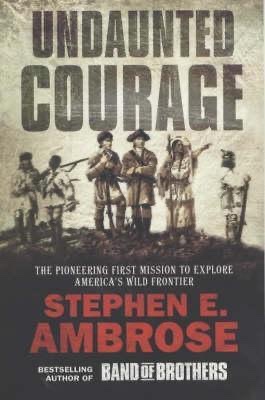 Undaunted Courage: The Pioneering First Mission to Explore America's Wild Frontier
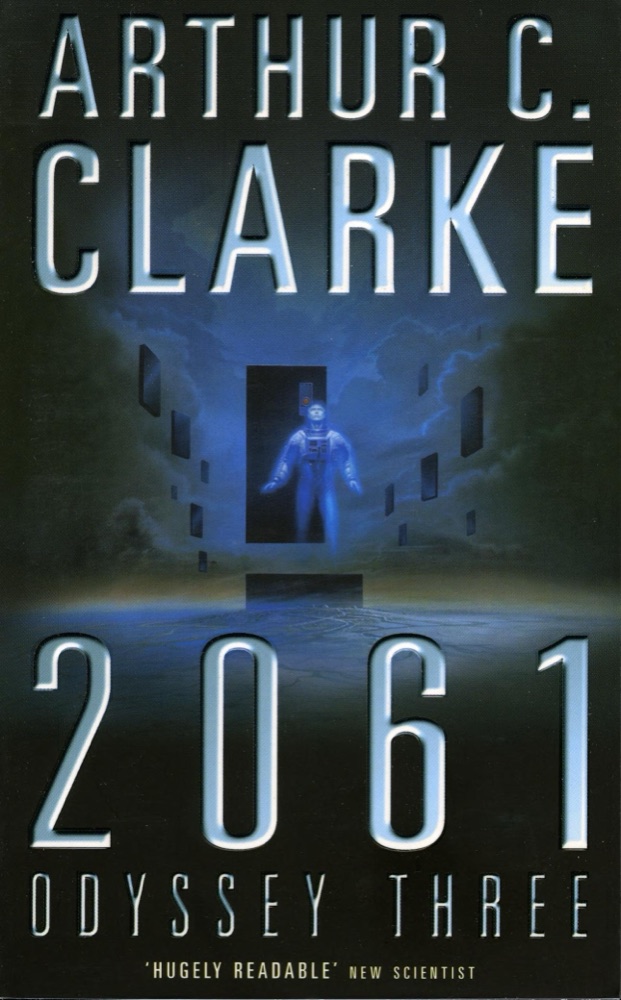 2061: Odyssey Three
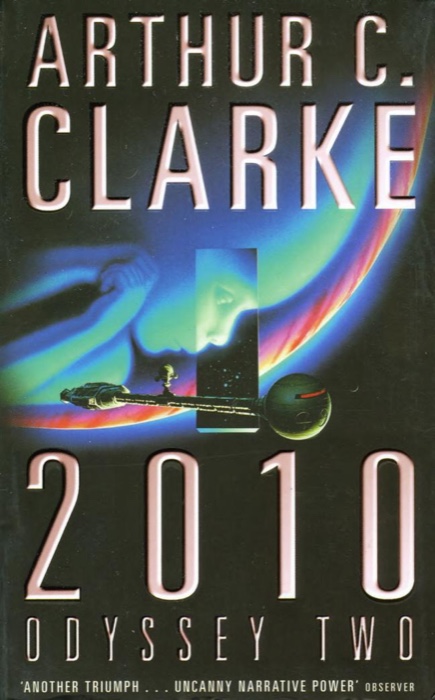 2010: Odyssey Two
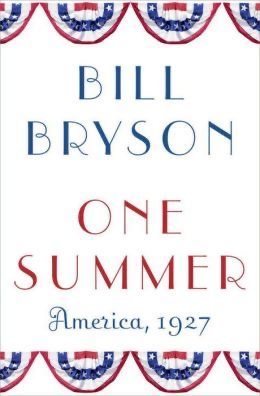 One Summer: America, 1927
 Table for Two
 Rendezvous with Rama
 The Bully Pulpit: Theodore Roosevelt, William Howard Taft, and the Golden Age of Journalism
 The Honourable Schoolboy
 My Early Life, 1874-1904
 Lost Horizon
 Foundation and Empire
 The Wager: A Tale of Shipwreck, Mutiny and Murder
 Edge of Eternity
 Tigerman
 New York
 Debt of Honor
 Around the World in Eighty Days
 The Wars
 King Solomon's Mines
 Antarctica
 The Prize: The Epic Quest for Oil, Money, and Power
 The Histories
 Roughing It
 Following the Equator: A Journey Around the World