
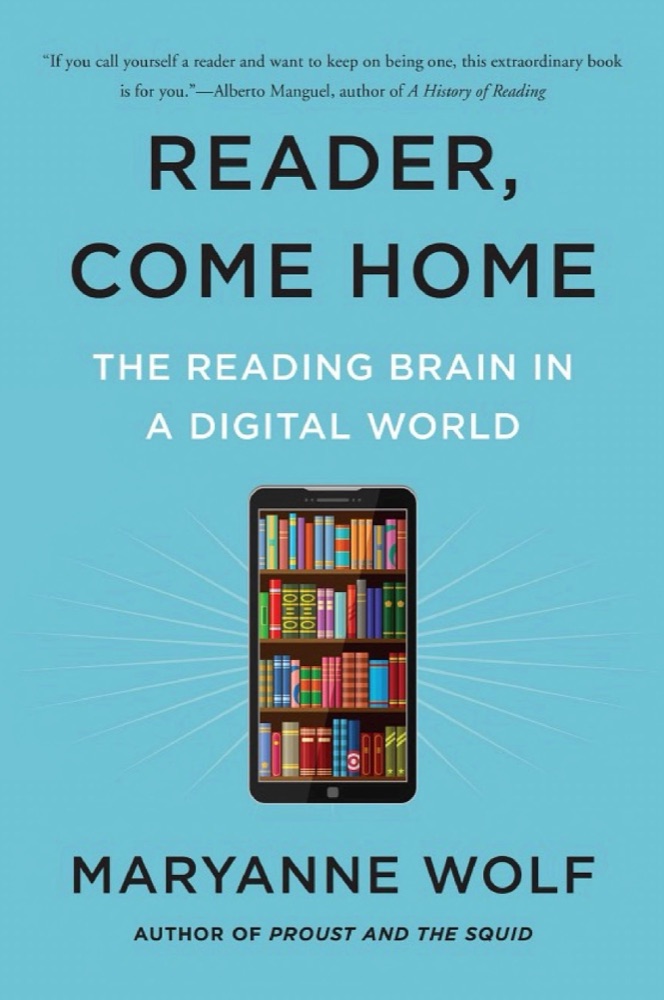
 Reader, Come Home: The Reading Brain in a Digital World
Quotes from the Book
When we pass over into how a knight thinks, how a heroine behaves, and how an evildoer can regret or deny wrongdoing, we never come back quite the same; sometimes we're inspired, sometimes saddened, but we are always enriched. Through this exposure we learn both the commonality and the uniqueness of our own thoughts -- that we are individuals, but not alone.
10
Learning to read begins the first time an infant is held and read a story. How often this happens, or fails to happen, in the first five years of childhood turns out to be one of the best predictors of later reading.
8
WE WERE NEVER BORN TO READ. HUMAN BEINGS invented reading only a few thousand years ago. And with this invention, we rearranged the very organization of our brain, which in turn expanded the ways we were able to think, which altered the intellectual evolution of our species.
7
The world of fantasy presents a conceptually perfect holding environment who are just leaving the more concrete stages of cognitive processing.... as fluent comprehending readers learn to enter into the lives of imagined heroes and heroines, along the Mississippi or through a wardrobe portal.
5
There are few more powerful mirrors of the human brain's astonishing ability to rearrange itself to learn a new intellectual function than the act of reading. Underlying the brain's ability to learn reading lies its protean capacity to make new connections among structures and circuits originally devoted to other more basic brain processes that have enjoyed a longer existence in human evolution, such as vision and spoken language. [...] we come into the world programmed with the capacity to change what is given to us by nature, so that we can go beyond it. We are, it would seem from the start, genetically poised for breakthroughs.
5
Comprehension processes [for young readers] grow.... [when] they leave the surface layers of text to explore the wondrous terrain that lies beneath it. The reading expert Richard Vacca describes this shift as a development from "fluent decoders" to "strategic readers"--"readers who know how to activate prior knowledge before, during and after reading, to decide what's important in a text"....
4
Indeed, as some historians observe, the changing relationships of readers to text over time can be seen as one index of the history of thought.
4
We now know that groups of neurons create new connections and pathways among themselves every time we acquire a new skill. Computer scientists use the term "open architecture" to describe a system that is versatile enough to change--or rearrange--to accommodate the varying demands on it.
3
Biologically and intellectually, reading allows the species to go “beyond the information given” to create endless thoughts most beautiful and wonderful.
3
inflexible muteness of written words doomed the dialogic process Socrates saw as the heart of education.
2
The end of reading development doesn’t exist; the unending story of reading moves ever forward, leaving the eye, the tongue, the word, the author for a new place from which the “truth breaks forth, fresh and green,” changing the brain and the reader every time.
2
Both Proust and Monet used pieces of information to render a composite that made a more vivid impression than if they had created a perfect reproduction. In so doing, both artist and novelist are examples of Emily Dickinson’s enigmatic charge to “tell all the Truth, but tell it slant—/Success in Circuit lies.
1
Ultimately, Socrates did not fear reading. He feared superfluity of knowledge and its corollary—superficial understanding. Reading by the untutored represented an irreversible, invisible loss of control over knowledge. As Socrates put it, “Once a thing is put in writing, the composition, whatever it may be, drifts all over the place, getting into the hands not only of those who understand it, but equally of those who have no business with it; it doesn’t know how to address the right people, and not address the wrong. And when it is ill treated and unfairly abused it always needs its parents to come to its help,
1
One of these fabled memory techniques required the person to associate physical spaces—like the interiors of imagined libraries and temples—with the things to be recalled.
1
Egyptian and some other early systems were written in the boustrophedon style (Greek for “the turning around of the ox”) in which one line moves from left to right and then right to left, the way oxen plow a field. Instead of scanning in one linear direction as we do today, the eye just moves down a notch at the end of a line and continues to read in the other direction. Egyptians also wrote from top to bottom or vice versa, depending on the architecture of the structure they were inscribing.
1
all human behaviors are based on multiple cognitive processes, which are based on the rapid integration of information from very specific neurological structures, which rely on billions of neurons capable of trillions of possible connections, which are programmed in large part by genes.
1
First, what makes up an alphabet and what separates it from the vestiges of a previous syllabary, or logosyllabary? Responses to that question prepare us to explore the second, larger question: are there significant intellectual resources unique to the alphabet-reading brain?
1
So much of a child’s life is lived for others. . . . All the reading I did as a child, behind closed doors, sitting on the bed while the darkness fell around me, was an act of reclamation. This and only this I did for myself. This was the way to make my life my own.
1
There are perhaps no days of our childhood we lived so fully as those . . . we spent with a favorite book. Everything that filled them for others, so it seemed, and that we dismissed as a vulgar obstacle to a divine pleasure: the game for which a friend would come to fetch us at the most interesting passage; the troublesome bee or sun ray that forced us to lift our eyes from the page or to change position; the provisions for the afternoon snack that we had been made to take along and that we left beside us on the bench without touching, while above our head the sun was diminishing in force in the blue sky; the dinner we had to return home for, and during which we thought only of going up immediately afterward to finish the interrupted chapter, all those things with which reading should have kept us from feeling anything but annoyance, on the contrary they have engraved in us so sweet a memory (so much more precious to our present judgment than what we read then with such love), that if we still happen today to leaf through those books of another time, it is for no other reason than that they are the only calendars we have kept of days that have vanished, and we hope to see reflected on their pages the dwellings and the ponds which no longer exist.
1
Reading is a neuronally and intellectually circuitous act, enriched as much by the unpredictable indirections of a reader’s inferences and thoughts, as by the direct message to the eye from the text.
When you learn to read you will be born again . . . and you will never be quite so alone again. —RUMER GODDEN
Unbeknownst to them or their families, children who grow up in environments with few or no literacy experiences are already playing catch-up when they enter kindergarten and the primary grades. It is not simply a matter of the number of words unheard and unlearned. When words are not heard, concepts are not learned. When syntactic forms are never encountered, there is less knowledge about the relationship of events in a story. When story forms are never known, there is less ability to infer and to predict. When cultural traditions and the feelings of others are never experienced, there is less understanding of what other people feel.
Watch on YouTube
About Maryanne Wolf
We have collected 52 quotes from 2 books by Maryanne Wolf on BookQuoters.
More about the author →More by Maryanne Wolf
Reader, Come Home: The Reading Brain in a Digital World
About the book
The act of reading is a miracle. Every new reader's brain possesses the extraordinary capacity to rearrange itself beyond its original abilities in order to understand written symbols. But how does the brain learn to read? As world-renowned cognitive neuroscientist and scholar of reading Maryanne Wolf explains in this impassioned book, we taught our brain to read only a few thousand years ago, and in the process changed the intellectual evolution of our species. Wolf tells us that the brain that examined tiny clay tablets in the cuneiform script of the Sumerians is configured differently from the brain that reads alphabets or of one literate in today's technology. There are critical implications to such an evolving brain. Just as writing reduced the need for memory, the proliferation of information and the particular requirements of digital culture may short-circuit some of written langu
Book details
- First published
- 2007
- Author
- Maryanne Wolf
- Genre
- Nonfiction
- Goodreads rating
- 3.85 (8k ratings)
Keep reading
Reader, Come Home: The Reading Brain in a Digital World
 What We See When We Read
 The Enchanted Hour: The Miraculous Power of Reading Aloud in the Age of Distraction – A Neuroscience Guide for Parents on Brain Development and Family Bonds
 How to Read a Book: The Classic Guide to Intelligent Reading
 The Read-Aloud Handbook
 Lectures on Literature
 How We Learn: Why Brains Learn Better Than Any Machine . . . for Now
 How Reading Changed My Life
 The Year of Reading Dangerously
 The Medium is the Massage
 The Wave in the Mind: Talks and Essays on the Writer, the Reader and the Imagination
 Honey for a Child's Heart
 The Information: A History, a Theory, a Flood
 Reading Like a Writer: A Guide for People Who Love Books and for Those Who Want to Write Them
 Education of a Wandering Man: A Memoir
 An Experiment in Criticism
 The Master and His Emissary: The Divided Brain and the Making of the Western World
 Consciousness and the Brain: Deciphering How the Brain Codes Our Thoughts
 How Should One Read a Book?
 How to Read Literature Like a Professor
 The Brain That Changes Itself: Stories of Personal Triumph from the Frontiers of Brain Science
 The Book Whisperer: Awakening the Inner Reader in Every Child
 The Cat Who Saved Books
 The Social Animal: The Hidden Sources of Love, Character, and Achievement
 The Origin of Consciousness in the Breakdown of the Bicameral Mind
 The Future of the Mind: The Scientific Quest to Understand, Enhance, and Empower the Mind
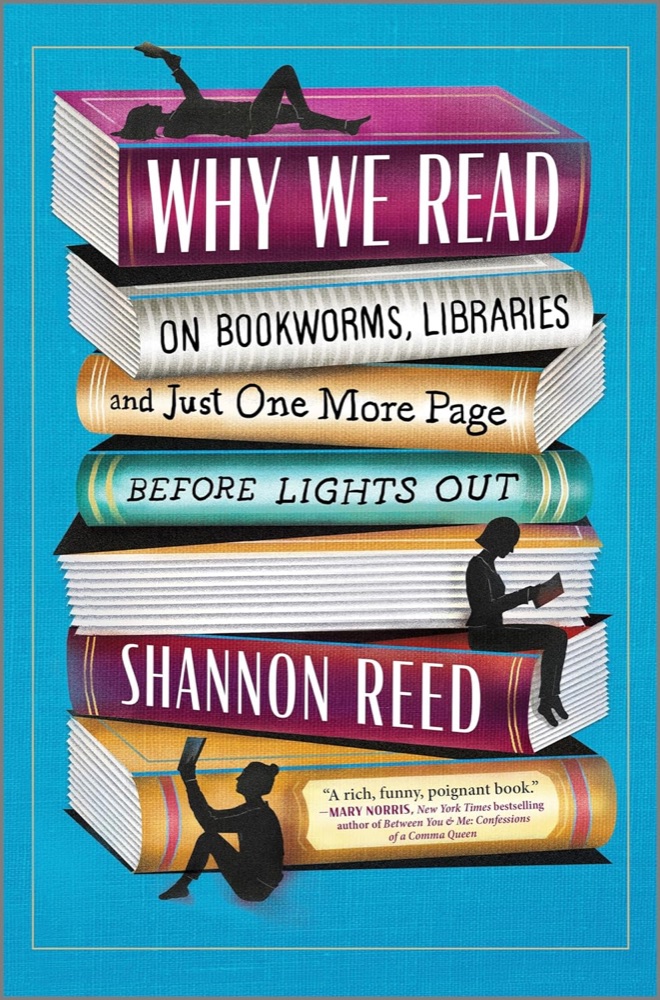 Why We Read: On Bookworms, Libraries, and Just One More Page Before Lights Out
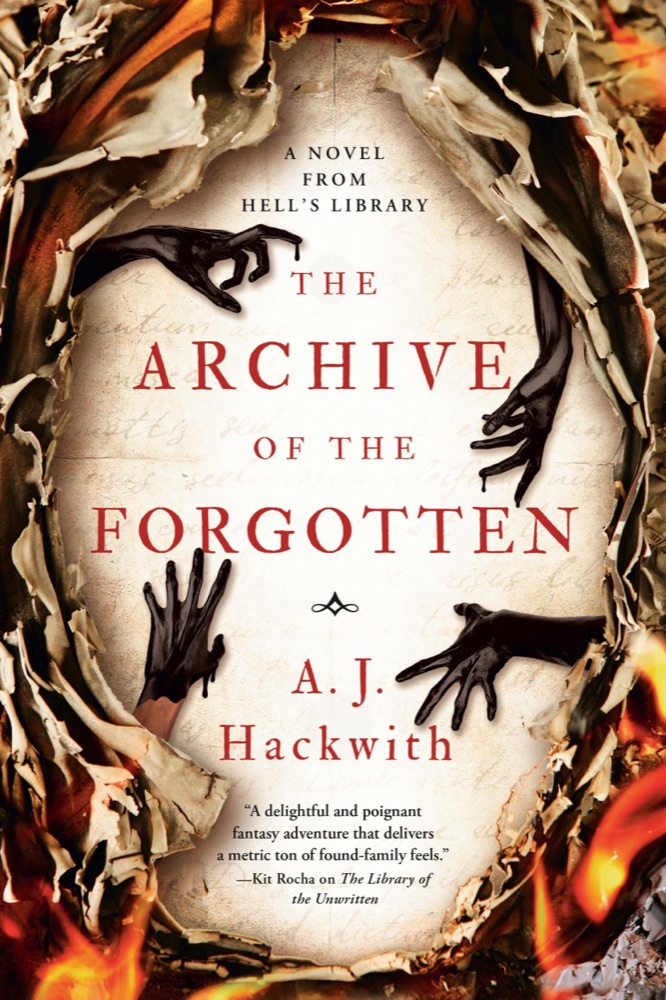 The Archive of the Forgotten
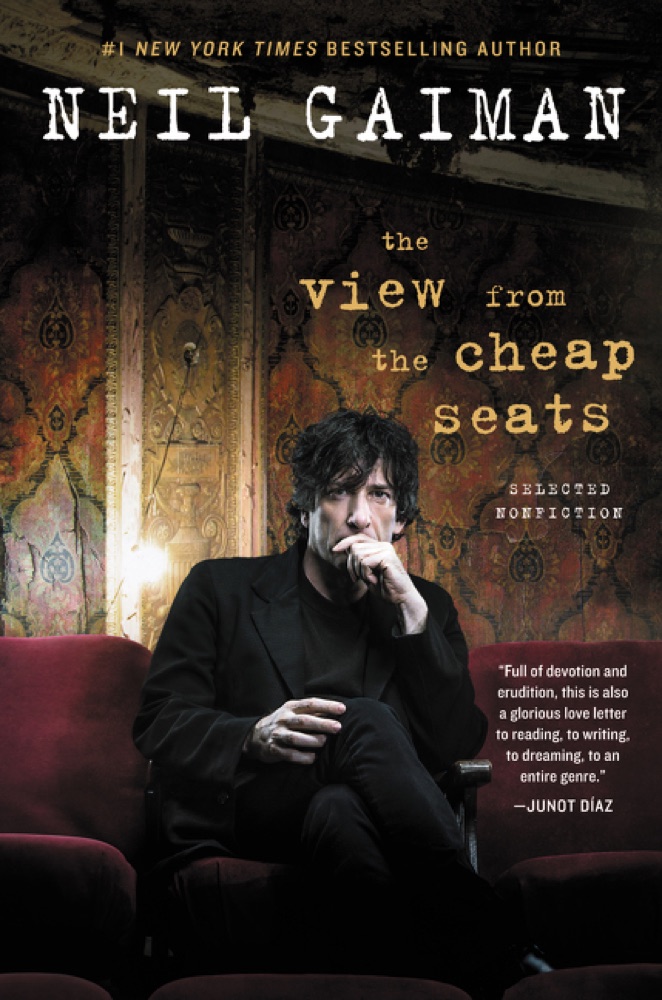 The View from the Cheap Seats: Selected Nonfiction
 The Language Instinct: How the Mind Creates Language
 Books for Living
 The Spell of the Sensuous: Perception and Language in a More-Than-Human World
 The Science of Storytelling
 The Sense of Style: The Thinking Person's Guide to Writing in the 21st Century
 The Stuff of Thought: Language as a Window into Human Nature
 The Book of Form and Emptiness
 Selected Non-Fictions
 The Book That Wouldn’t Burn
 From Bacteria to Bach and Back: The Evolution of Minds
 How to Talk About Books You Haven't Read
 The Rabbit Back Literature Society
 Understanding Media: The Extensions of Man
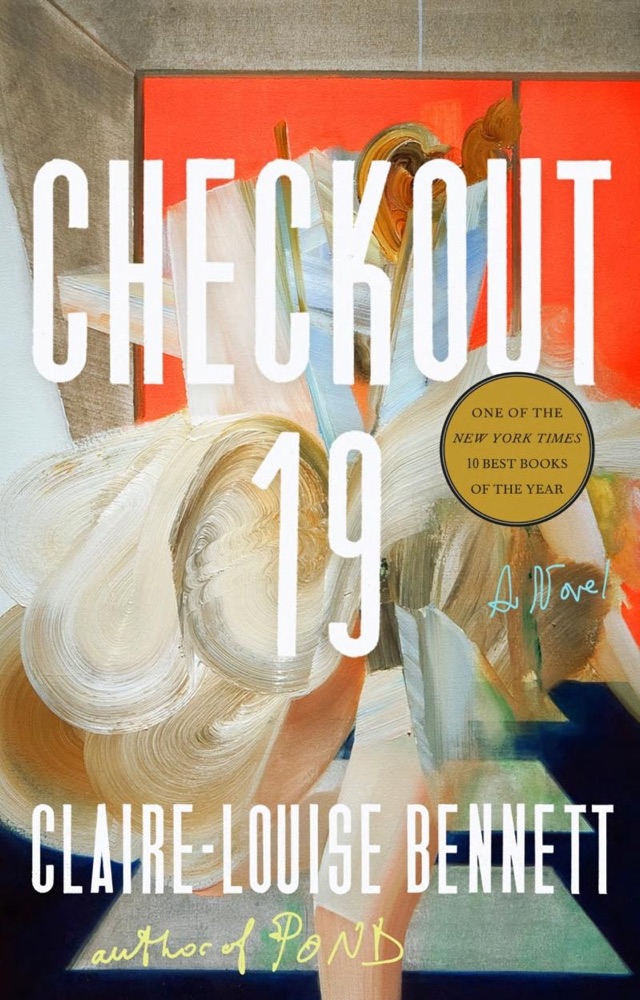 Checkout 19
 The Word Exchange
 The Door-to-Door Bookstore
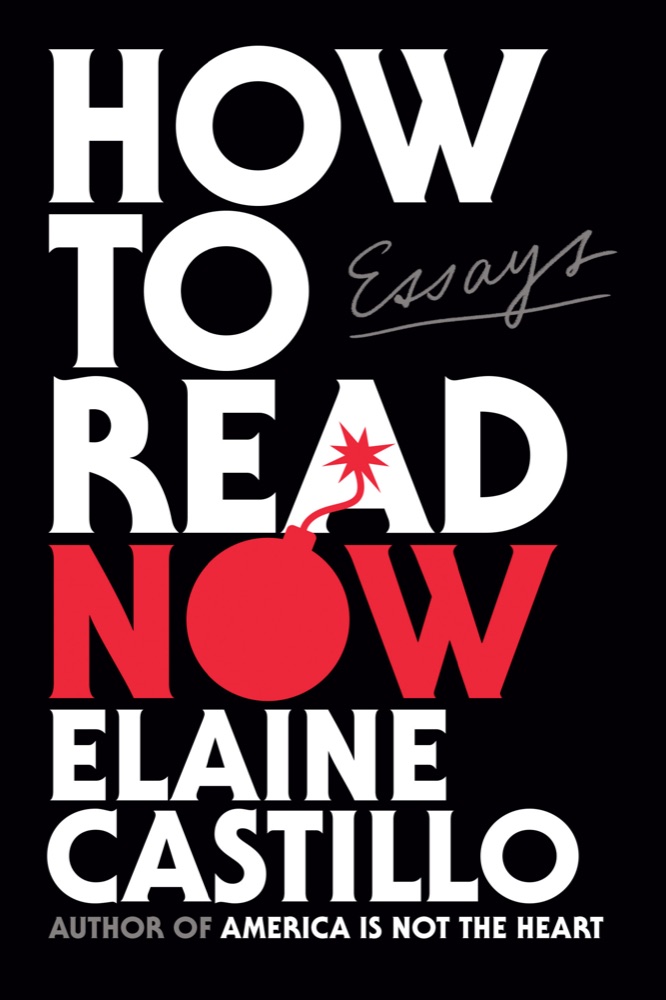 How to Read Now
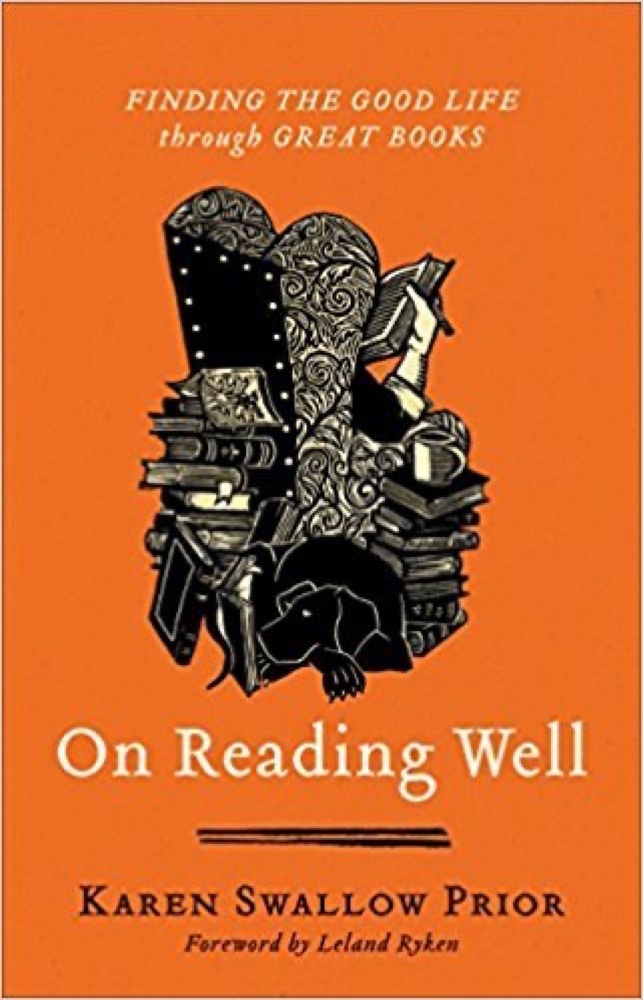 On Reading Well: Finding the Good Life through Great Books
 Moonwalking with Einstein: The Art and Science of Remembering Everything
 The Language of the Night: Essays on Writing, Science Fiction, and Fantasy
 Burning Questions: Essays and Occasional Pieces, 2004 to 2021
 Packing My Library: An Elegy and Ten Digressions
 How to Read Literature
 Aspects of the Novel
 The Writer's Journey: Mythic Structure for Writers
 The Tell-Tale Brain: A Neuroscientist's Quest for What Makes Us Human
 The Hero's Journey: Joseph Campbell on His Life & Work
 Illuminations: Essays and Reflections
 A Thousand Brains: A New Theory of Intelligence
 The Paper Menagerie and Other Stories
 Lit!: A Christian Guide to Reading Books