
 An Unquiet Mind: A Memoir of Moods and Madness
Quotes from the Book
When people are suicidal, their thinking is paralyzed, their options appear spare or nonexistent, their mood is despairing, and hopelessness permeates their entire mental domain. The future cannot be separated from the present, and the present is painful beyond solace. ‘This is my last experiment,’ wrote a young chemist in his suicide note. ‘If there is any eternal torment worse than mine I’ll have to be shown.
319
Suicide is not a blot on anyone’s name; it is a tragedy
139
Each way to suicide is its own: intensely private, unknowable, and terrible. Suicide will have seemed to its perpetrator the last and best of bad possibilities, and any attempt by the living to chart this final terrain of life can be only a sketch, maddeningly incomplete
138
It is tempting when looking at the life of anyone who has committed suicide to read into the decision to die a vastly complex web of reasons; and, of course, such complexity is warranted. No one illness or event causes suicide; and certainly no one knows all, or perhaps even most, of the motivations behind the killing of the self. But psychopathology is almost always there, and its deadliness is fierce. Love, success, and friendship are not always enough to counter the pain and destructiveness of severe mental illness
130
The awareness of the damage done by severe mental illness—to the individual himself and to others—and fears that it may return again play a decisive role in many suicides
77
I wish I could explain it so someone could understand it. I'm afraid it's something I can't put into words. There's just this heavy, overwhelming despair - dreading everything. Dreading life. Empty inside, to the point of numbness. It's like there's something already dead inside. My whole being has been pulling back into that void for months.
75
...Time does not heal, It makes a half-stitched scar That can be broken and again you feel Grief as total as in its first hour. -Elizabeth Jennings
62
I had tried years earlier to kill myself, and nearly died in the attempt, but did not consider it either a selfish or a not-selfish thing to have done. It was simply the end of what I could bear, the last afternoon of having to imagine waking up the next morning only to start all over again with a thick mind and black imaginings. It was the final outcome of a bad disease, a disease it seemed to me I would never get the better of. No amount of love from or for other people0and there was a lot-could help. No advantage of a caring family and fabulous job was enough to overcome the pain and hopelessness I felt; no passionate or romantic love, however strong, could make a difference. Nothing alive and warm could make its way in through my carapace. I knew my life to be a shambles, and I believed-incontestably-that my family, friends, and patients would be better off without me. There wasn't much of me left anymore, anyway, and I thought my death would free up the wasted energies and well-meant efforts that were being wasted on my behalf.
44
Suicide Note: The calm, Cool face of the river Asked me for a kiss. -Langston Hughes
42
Look to the living, love them, and hold on.
38
Looking at suicide—the sheer numbers, the pain leading up to it, and the suffering left behind—is harrowing. For every moment of exuberance in the science, or in the success of governments, there is a matching and terrible reality of the deaths themselves: the young deaths, the violent deaths, the unnecessary deaths
32
The horror of profound depression, and the hopelessness that usually accompanies it, are hard to imagine for those who have not experienced them. Because the despair is private, it is resistant to clear and compelling description. Novelist William Styron, however, in recounting his struggle with suicidal depression, captures vividly the heavy, inescapable pain that can lead to suicide: What I had begun to discover is that, mysteriously and in ways that are totally remote from normal experience, the gray drizzle of horror induced by depression takes on the quality of physical pain. But it is not an immediately identifiable pain, like that of a broken limb. It may be more accurate to say that despair, owing to some evil trick played upon the sick brain by the inhabiting psyche, comes to resemble the diabolical discomfort of being imprisoned in a fiercely overheated room. And because no breeze stirs this cauldron, because there is no escape from this smothering confinement, it is entirely natural that the victim begins to think ceaselessly of oblivion.
31
Conditions of thought, memory, and desire, persuaded by impulse and irrationality, are influenced as well by personal aesthetics and private meanings.
23
Four thousand years ago, an Egyptian wrote out his despair onto papyrus in the form of a narrative and four short-versed poems. This document, now in the Berlin Museum, is thought by British psychiatrist Chris Thomas to be the first suicide note [...] "Death is before me today As a man longs to see his house When he has spent years in captivity.
18
Often, people want both to live and to die; ambivalence saturates the suicidal act.
18
Everyone has good cause for suicide, or at least it seems that way to those who search for it.
11
Because the privacy of my nightmare had been of my own designing, no one close to me had any real idea of the psychological company I had been keeping.
5
This apparent calm before the storm may reflect different things: The suicidal patients may be experiencing a genuine calm in the midst of recovery but then switch precipitously into a severe depression or a mixed state. They may, on the other hand, be calmer because, having decided to kill themselves, they are relieved of the anxiety and pain entailed in having to continue to live. They may also be deliberately deceiving their doctors and families in order to secure the circumstances that will allow them to commit suicide.
4
Beliefs about suicide varied considerably in ancient Greece. The Stoics and Epicureans believed strongly in the individual’s right to choose the means and time of his death. Others were less accepting of the idea. In Thebes and Athens, suicide was not against the law, but those who killed themselves were denied funeral rites and the hand that had been used for the act was severed from the arm. Aristotle regarded suicide as an act of cowardice, as well as an act against the state; so, too, did Pythagoras.
3
Morbidly afraid of water, he then drowned himself in his swimming pool. Not too far away, consistent with a lifetime of dark humor, he left out a copy of the book Don’t Go Near the Water.
2
Disconcertingly, one of the highest-risk periods for suicide is when patients are actually recovering from depression.
1
Parents also seriously underestimate the extent of depression in their adolescent children.
1
The mental pain of the suicidal condition is engulfing and unbearable.
Serotonin, a chemical found in plants as well as in ancient invertebrate nervous systems, is widespread in the bodies and brains of mammals, including humans. It acts in diverse ways: it controls the diameter of blood vessels, affects pain perception, influences the gut, plays a role in the body’s inflammatory responses, and causes platelets to clump. More significant from a psychiatric and psychological perspective, however, serotonin is deeply implicated in the roots of depression, sleep regulation, aggression, and suicide.
They may, on the other hand, be calmer because, having decided to kill themselves, they are relieved of the anxiety and pain entailed in having to continue to live. They may also be deliberately deceiving their doctors and families in order to secure the circumstances that will allow them to commit suicide.
Only once did Wilson talk in public about the pain of his depression. On May 7 [less than two weeks before he killed himself] he scrapped a prepared text on children and violence, and instead began revealing his own illness to a group of psychiatrists and other professionals at a meeting of the D.C. Mental Health Association. “We can talk about me being a politician, but we can also talk about me as a person who deals with depression, a very painful, very difficult disease … [that] leads to a great feeling of being lost, of a hole in your body,” he said. He told them the disease was particularly deadly in the black community, where people played “Russian roulette” with their lives, and said, “I believe that more people are dying of depression than are dying of AIDS, heart trouble, high blood pressure, anything else, simply because I believe depression brings on all of those diseases.” The audience was stunned, but according to association director Anita Sheldon, none of the people who came up to Wilson afterward talked to him about his illness.
Another is the common use of print or visual media to present case histories of adolescents who have attempted or committed suicide. The purpose is to teach students how to identify friends who may be at risk for suicidal behavior. However, the method may have a paradoxical effect in that students may closely identify with the problems portrayed by the case examples and may come to see suicide as the logical solution to their own problems.
In the year following the 1991 publication of Final Exit, Derek Humphry’s best-selling book, which presented in detail a variety of ways to commit suicide (including, prominently, suffocation by plastic bag), suicidal asphyxiations involving plastic bags increased by 31 percent. Peter Marzuk and his colleagues at Cornell University Medical College in New York noted that although the total number of suicides did not increase, the publicity surrounding this particularly lethal method may have had a deadly impact on impulsive and ambivalent individuals. They suggest, “with good cause, that clinicians include in their assessments of suicide risk questions not only about actions of potential concern, such as writing suicide notes or drawing up wills, but whether patients have obtained and read literature about euthanasia or assisted suicide.
One study, for instance, compared written clinical observations made on patients shortly before they committed suicide with clinical observations made on patients of comparable ages and diagnoses who did not commit suicide. Counterintuitively, those who killed themselves had been assessed by their doctors as calmer and “in better spirits” than those who did not. In fact, nearly one-third of hospitalized psychiatric patients “look normal” to their doctors, family members, or friends in the minutes or hours just before suicide.
Watch on YouTube
About Kay Redfield Jamison
We have collected 80 quotes from 3 books by Kay Redfield Jamison on BookQuoters.
More about the author →More by Kay Redfield Jamison
An Unquiet Mind: A Memoir of Moods and Madness
 Touched with Fire: Manic-Depressive Illness and the Artistic Temperament
About the book
Critical reading for parents, educators, and anyone wanting to understand the tragic epidemic of suicide—"a powerful book [that] will change people's lives—and, doubtless, save a few" (Newsday).
The first major book in a quarter century on suicide—and its terrible pull on the young in particular—Night Falls Fast is tragically timely: suicide has become one of the most common killers of Americans between the ages of fifteen and forty-five.
From the author of the best-selling memoir, An Unquiet Mind—and an internationally acknowledged authority on depression—Dr. Jamison has also known suicide firsthand: after years of struggling with manic-depression, she tried at age twenty-eight to kill herself. Weaving together a historical and scientific exploration of the subject with personal essays on individual suicides, she brings not only her remarkable compassion and literary skill but a
Book details
- First published
- 1999
- Author
- Kay Redfield Jamison
- Genre
- Nonfiction
- Goodreads rating
- 4.12 (7k ratings)
Keep reading
 Darkness Visible: A Memoir of Madness
 Hello I Want to Die Please Fix Me: Depression in the First Person
 A Mother's Reckoning: Living in the Aftermath of Tragedy
 Shoot the Damn Dog: A Memoir of Depression
 The Noonday Demon: An Atlas of Depression
 The Hilarious World of Depression
 Lost Connections: Uncovering the Real Causes of Depression - and the Unexpected Solutions
An Unquiet Mind: A Memoir of Moods and Madness
Lost Connections: Uncovering the Real Causes of Depression - and the Unexpected Solutions
An Unquiet Mind: A Memoir of Moods and Madness
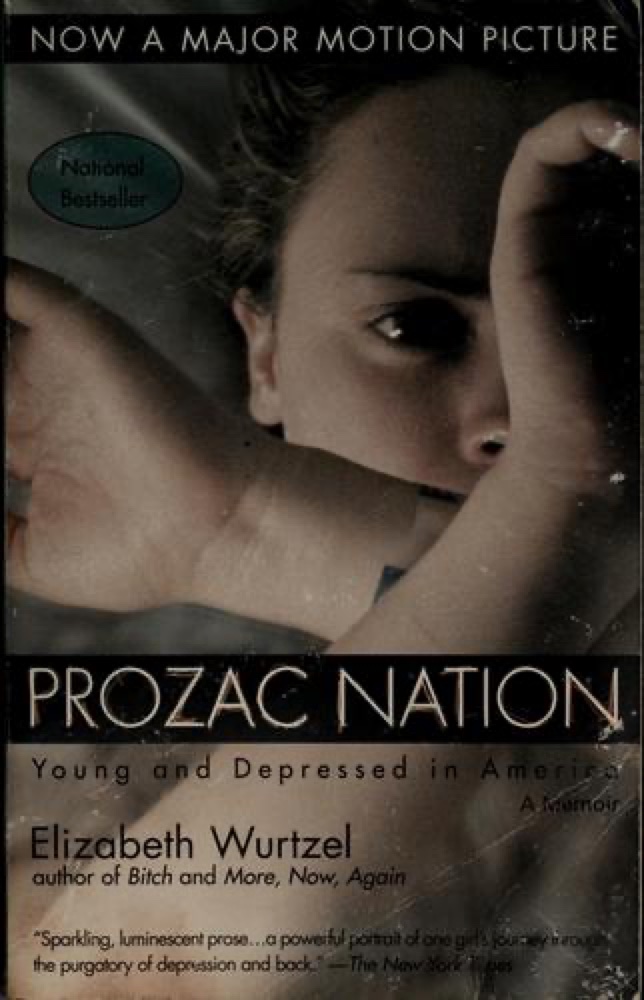 Prozac Nation
 I Don't Want to Talk About It: Overcoming the Secret Legacy of Male Depression
 Loud in the House of Myself: Memoir of a Strange Girl
 Grief Is for People
 The Valedictorian of Being Dead: The True Story of Dying Ten Times to Live
 The Center Cannot Hold: My Journey Through Madness
 The Asylum for Wayward Victorian Girls
 I've never been (Un)happier
 Imagine Me Gone
 A Widow's Story
 The Setting Sun
 Crash Into Me
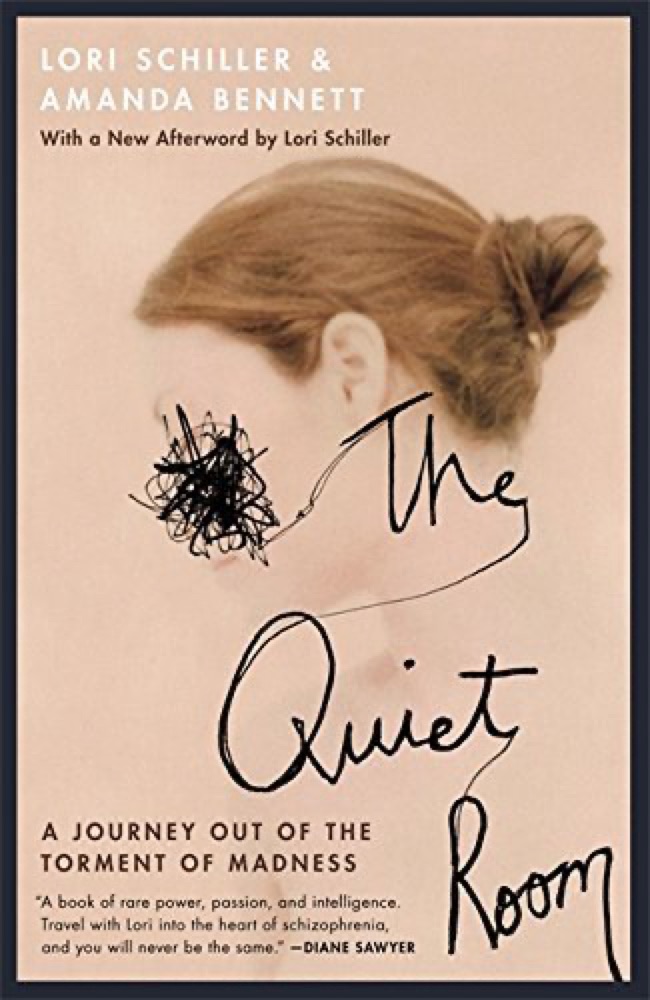 The Quiet Room: A Journey Out of the Torment of Madness
 Committed: On Meaning and Madwomen
 10 Minutes 38 Seconds in This Strange World
 Reasons to Stay Alive
 The Collected Schizophrenias: Essays
 A First-Rate Madness: Uncovering the Links Between Leadership and Mental Illness
 Suicide Notes
 What I'd Rather Not Think About
 Get Me Out of Here: My Recovery from Borderline Personality Disorder
 Just Like Someone Without Mental Illness Only More So
 Hollywood Park
 The Examined Life: How We Lose and Find Ourselves
 Sliver of Truth
 A Matter of Death and Life
 Feeling Good: The New Mood Therapy
 Love's Executioner and Other Tales of Psychotherapy
 In Shock: My Journey from Death to Recovery and the Redemptive Power of Hope
 Briefly Perfectly Human: Making an Authentic Life by Getting Real About the End
 The Story of the Lost Child
 The Second Coming
 Underground: The Tokyo Gas Attack and the Japanese Psyche
 Girl, Interrupted
 Coup de Grâce
 Man's Search for Himself
 Natural Causes: An Epidemic of Wellness, the Certainty of Dying, and Killing Ourselves to Live Longer
 Wasted: A Memoir of Anorexia and Bulimia
 The Red Parts
 Cursed Bunny
 Skin Game
 The First Time She Drowned
 Robicheaux
 Dear Friend, from My Life I Write to You in Your Life
 Killing Yourself to Live: 85% of a True Story
 Stella Maris
 Brain on Fire: My Month of Madness
 The Silent Patient
 Piercing: A Novel
 Suicide Watch
 The Loser