
 Gold Boy, Emerald Girl
Quotes from the Book
To say we know a person is to write that person off.
31
I am aware that, every time I have a conversation with a book, I benefit from someone's decision against silence.
23
Isolation, I was reminded again and again, is a danger. But what if one's real context is in books? Some days, going from one book to another, preoccupied with thoughts that were of no importance, I would feel a rare moment of serenity: all that could not be solved in my life was merely a trifle as long as I kept it at a distance. Between that suspended life and myself were these dead people and imagined characters. One could spend one's days among them as a child arranges a circle of stuffed animals when the darkness of night closes in.
15
When we feel haunted, it is the pull of our own home we're experiencing, but a more upsetting possibility is that the past has become homeless, and we are offering it a place to inhabit in the present.
13
What a long way it is from one life to another, yet why write if not for that distance.
11
Life can be reset, it seems to say; time can be separated. But that logic appears to me as unlikely as traveling to another place to become a different person. Altered sceneries are at best distractions, or else new settings for old habits. What one carries from one point to another, geographically or temporally, is one’s self. Even the most inconsistent person is consistently himself.
9
Once in a while I get an email from someone I have met briefly. "You may not remember me," these emails often begin, the hope to be remembered expressed by the acceptance of having already been forgotten.
8
Much of what one does--to avoid suffering, to seek happiness, to stay healthy--is to keep a safe space for one's private language.
6
Sometimes I imagine that writing is a survey I carry out, asking everyone I encounter, in reality or in fiction: How much of your life is lived to be known by others? To be understood? How much of your life is lived to know and understand others? But like all surveys the questions are simplifications. How much does one trust others to be known, to be understood; how much does one believe in the possibilities of one person’s knowing and understanding another.
5
Only by fully preparing oneself for people's absence can one be at ease with their presence. A recluse, I have begun to understand, is not a person for whom a connection with another person is unattainable or meaningless, but one who feels she must abstain from people because a connection is an affliction, or worse, an addiction. It has not occurred to me, until I met Trevor, to ask: 'Will I see you again?' What had precluded me from asking is this: 'Perhaps I won't see you again, and if so, goodbye for now and goodbye forever.
5
After the second of two hospital stays following a difficult time, I went to a program for those whose lives have fallen apart. Often someone would say—weeping, shaking, or dry eyed—that he or she wished to go back in time and make everything right again. I wished, too, that life could be reset, but reset from when? From each point I could go to an earlier point: warning signs neglected, mistakes aggregated, but it was useless to do so, as I often ended up with the violent wish that I had never been born. I was quiet most of the time, until I was told I was evasive and not making progress. But my pain was my private matter, I thought; if I could understand and articulate my problems I wouldn’t have been there in the first place. Do you want to share anything, I was prompted when I had little to offer. By then I felt my hope had run out. I saw the revolving door admitting new people and letting old people out into the world; similar stories were told with the same remorse and despair; the lectures were on the third repeat. What if I were stuck forever in that basement room? I broke down and could feel a collective sigh: my tears seemed to prove that finally I intended to cooperate. I had only wanted to stay invisible, but there as elsewhere invisibility is a luxury.
5
This need for recognition and glory must have its roots in human loneliness.
5
I have spent much of my life turning away from the scripts given to me, in China and in America; my refusal to be defined by the will of others is my one and only political statement.
4
For years I have had the belief that all my questions will be answered by the books I'm reading. Books, however, only lead to other books.
3
Often I think that writing is a futile effort; so is reading; so is living. Loneliness is the inability to speak with another in one’s private language. That emptiness is filled with public language or romanticized connections. But one must be cautious when assuming meaning. A moment of recognition between two people only highlights the inadequacy of language. What can be spoken does not sustain; what cannot be spoken undermines.
3
To say we know a person is to write that person off. This is at times life’s necessity. We run out of time or patience or curiosity; or we depart, willingly or not, from the situation that makes investigation possible and necessary. A person written off may become a character - depending on the charity of memory.
3
You have to understand, she said, a suicide attempt is selfish. Someone close to me said it was irresponsible; another said manipulative. Yes, I know what you mean, I said to each of them. Understanding cannot be willed into existence. Without understanding one should not talk about feeling. One does not have the capacity to feel another person’s feelings fully - a fact of life, democratic to all, except when someone takes advantage of this fact to form a judgment. One never kills oneself from knowledge or understanding, but always out of feelings.
3
To kill time - an English phrase that still chills me: time can be killed but only by frivolous matters and purposeless activities. No one thinks of suicide as a courageous endeavor to kill time.
3
Nabokov once answered a question he must have been tired of being asked: "My private tragedy, which cannot, indeed should not, be anybody's concern, is that I had to abandon my natural language." That something is called a tragedy, however, means it is no longer personal. One weeps out of private pain, but only when the audience swarms in to claim understanding and empathy do they call it tragedy. One's grief belongs to oneself; one's tragedy, to others.
3
Unsent letters carry a kind of cruelty. A letter is written as a space shared by two people; by not sending it, its writer claims the power to include and exclude the recipient simultaneously. Out of cowardice or control an act is performed in the name of caring or discretion. Unsent letters should never be written. But what difference is there between an unsent and an unwritten letter? The truth is already there. Self-imposed silence speaks, too, though not to communicate but to punish.
3
People who have not experienced a suicidal urge miss a crucial point. It is not that one wants to end one's life, but that the only way to end the pain - that eternal fight against one's melodrama so that it does not transgress - is to wipe out the body. I distrust judgments - Mann's or anyone's - on suicide. They are, in the end, judgments on feelings.
3
The word immune (from the Latin immunis, in- + munia, services, obligations) is among my favorites in the English language, the possession of immunity—to illnesses, to follies, to love and loneliness and troubling thoughts and unalleviated pains—a trait that I have desired for my characters and myself, knowing all the while the futility of such a wish. Only the lifeless can be immune to life.
3
There is a difference between being remembered and being caught by the mesh of one's mind.
3
Tragedy and comedy involve an audience, so they must give--sharing themselves to elicit tears and laughter. Melodrama is not such a strategist. It meets no one's expectation but its internal need to feel.
3
Reading, however, is a kind of private freedom: out of time, out of place.
2
A gilmpse into the depth of other people’s misfortunes makes us cling to the hope that the suffering is measurable. There are more sorrowful sorrows, more despondent despondencies. When we recognize another’s suffering, we cannot avoid confronting our own, from which we escape to the thought of measurability. Well, at least, we emphasize. Our capacity to console extends only to what we can do to console ourselves.
2
Patient stated that she felt like a burden to loved ones" - much later, when I read the notes from the emergency room, I did not have any recollection of the conversation. 'A burden to loved ones': this language must have been provided to me. I would never use the phrase in my thinking or writing. But my resistance has little to do with avoiding a platitude. To say a burden is to grant oneself weight in other people's lives: to call them loved ones is to fake one's ability to love. One does not always want to subject oneself to self-interrogation imposed by a cliché.
2
A real person, open-ended, can only be approached as a hypothesis. A character in fiction is demanded to be accountable. Some characters are more willing to offer a context. The young women in Jane Austen's novels, for instance, seek happiness and suffer when happiness is made unavailable, by situation, chance, or folly.
2
What one carries from one point to another, geographically or temporally, is one’s self. Even the most inconsistent person is consistently himself.
1
I wished that life could be reset, but reset from when?
1
Watch on YouTube
About Yiyun Li
We have collected 130 quotes from 5 books by Yiyun Li on BookQuoters.
More about the author →More by Yiyun Li
About the book
What a long way it is from one life to another, yet why write if not for that distance?
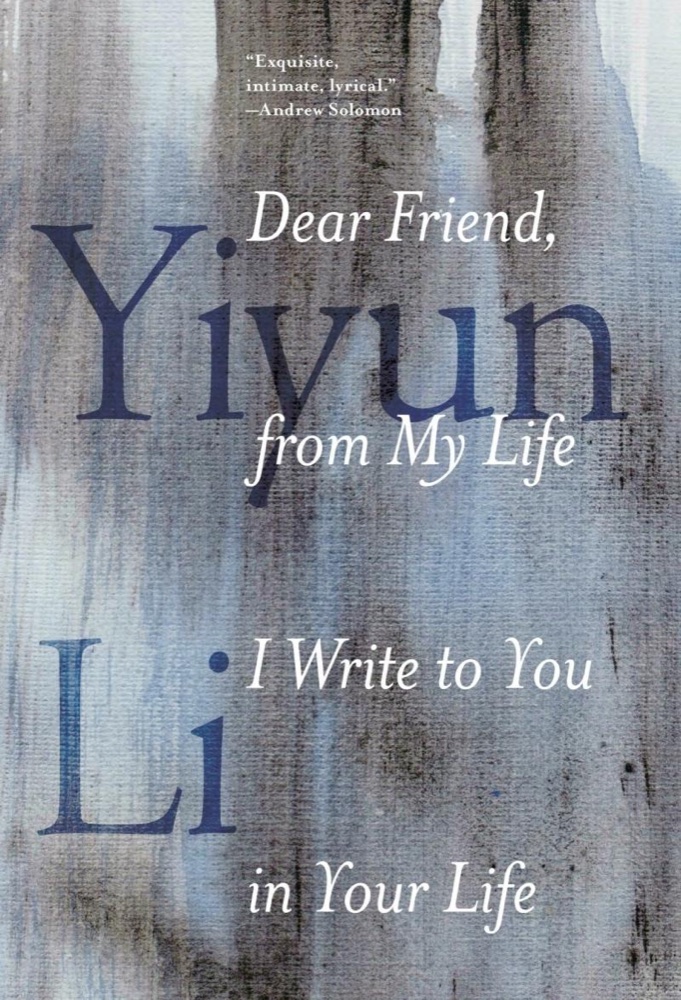
Startlingly original and shining with quiet wisdom, this is a luminous account of a life lived with books. Written over two years while the author battled suicidal depression, Dear Friend, from My Life I Write to You in Your Life is a painful and yet richly affirming examination of what makes life worth living.
Yiyun Li grew up in China and has spent her adult life as an immigrant in a country not her own. She has been a scientist, an author, a mother, a daughter and through it all she has been sustained by a profound connection with the writers and books she loves. From William Trevor and Katherine Mansfield to Soren Kierkegaard and Philip Larkin, Dear Friend is a journey through the deepest themes that bind these writers together.
Interweaving personal experiences with a wide-ranging hom
The buzz
- The New York TimesReview in The New York Timesprofessional review (via Book Marks)
- The Washington PostReview in The Washington Postprofessional review (via Book Marks)
- NPRReview in NPRprofessional review (via Book Marks)
- LA Review of BooksReview in LA Review of Booksprofessional review (via Book Marks)
- The Boston GlobeReview in The Boston Globeprofessional review (via Book Marks)
- FtReview in Ftprofessional review (via Book Marks)
Keep reading
 No One Writes Back
 Why Be Happy When You Could Be Normal?
 The Faraway Nearby
 Journal of a Solitude
 Grief Is for People
 Blueberries: Essays Concerning Understanding
 A Widow's Story
 How to Write an Autobiographical Novel
 The Book of Goose
 On Connection
 The Story of the Lost Child
 Night Train to Lisbon
 Make It Scream, Make It Burn
 An Unnecessary Woman
 Anthropology of an American Girl
 The Book of Dreams
 Biography of X
 I'm Thinking of Ending Things
 Tolstoy and the Purple Chair: My Year of Magical Reading
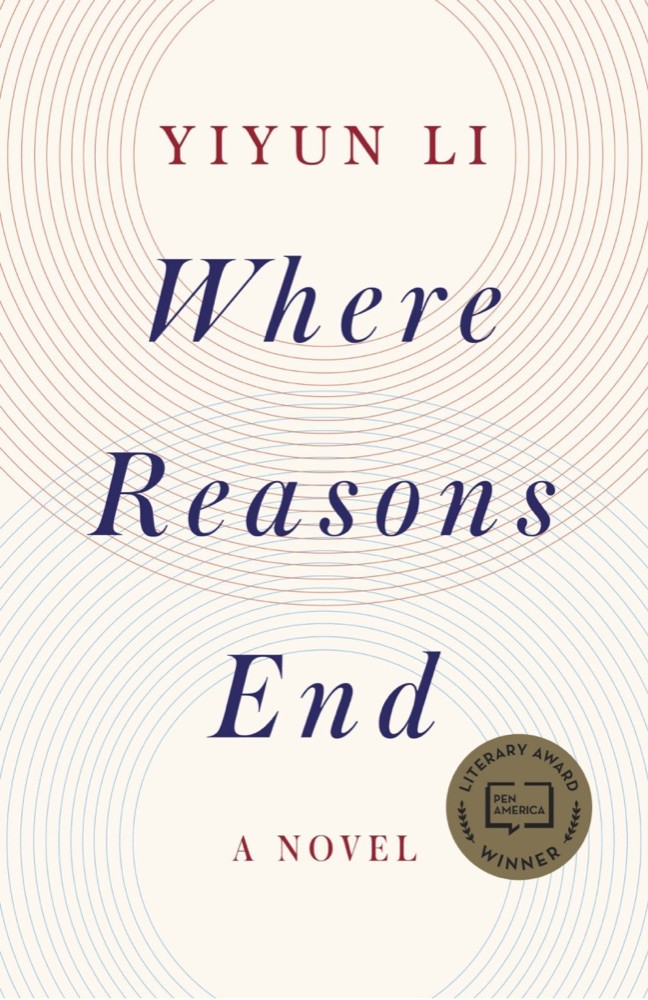 Where Reasons End
 The Friend
 Embers
 Identity
 Inheritance: A Memoir of Genealogy, Paternity, and Love
 Outline
 These Precious Days: Essays
 Seven Types of Ambiguity
 Here I Am
 The Summer Without Men
 The Cost of Living: A Working Autobiography
 Dream Count
 Spring
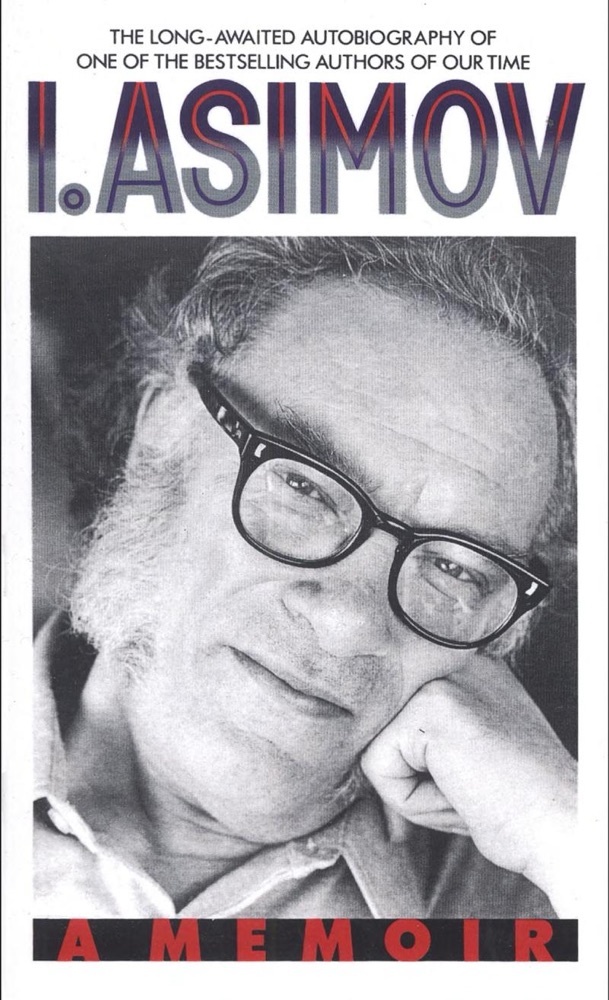 I. Asimov: A Memoir
 How to Be Alone
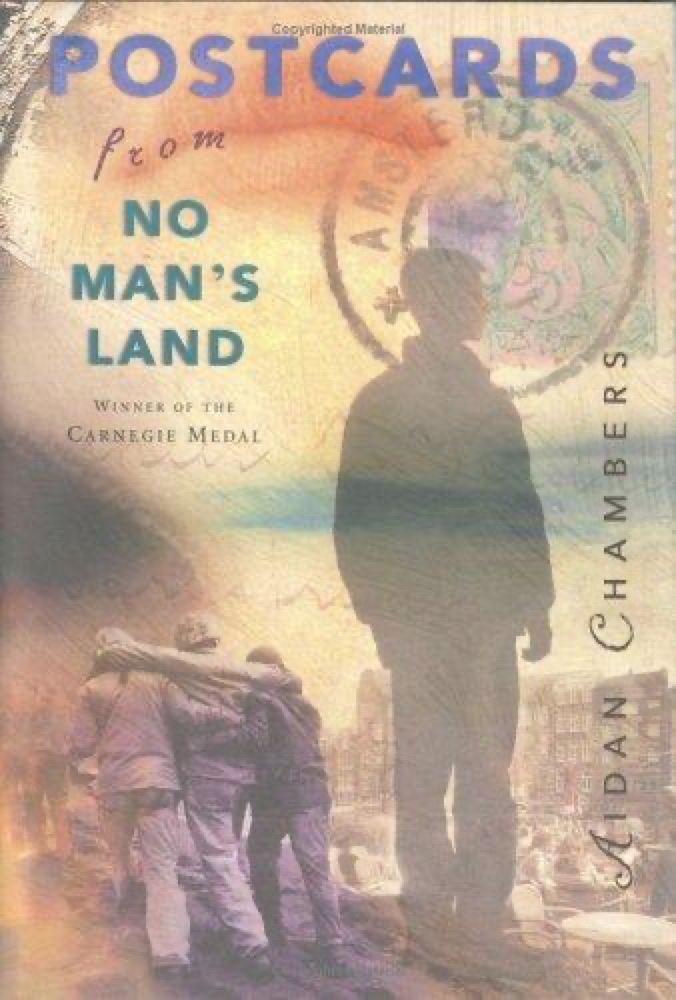 Postcards from No Man's Land
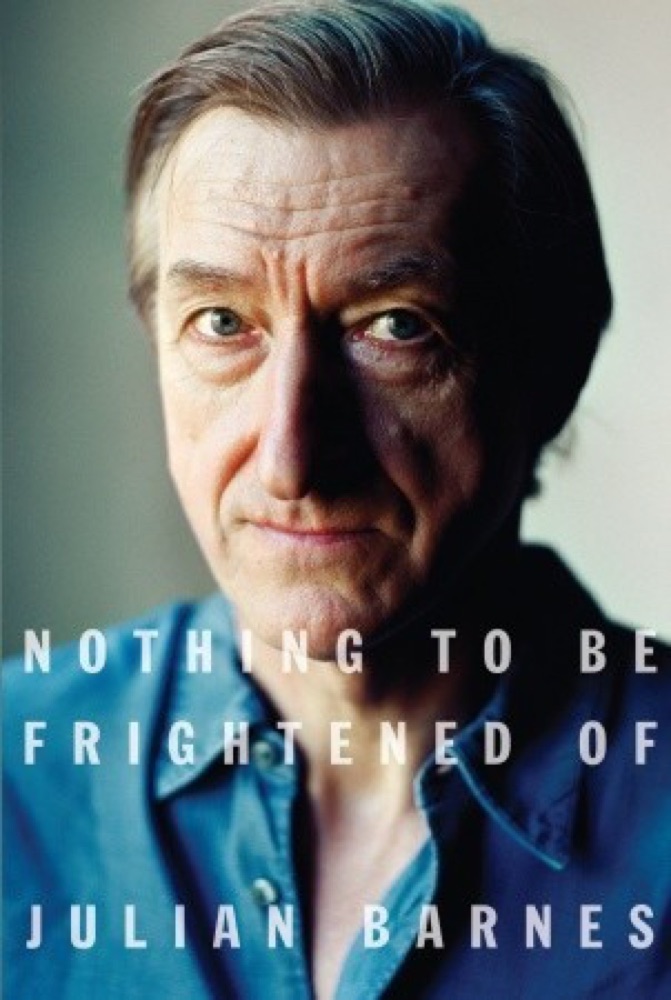 Nothing to Be Frightened Of
 The Zahir
 My Friends
 In the Dream House
 The Journals of Sylvia Plath
 Flights
 Things in Nature Merely Grow
 First Person Singular: Stories
 The Reader
 Asymmetry
 Under the Net
 The Argonauts
 Creatures of a Day: And Other Tales of Psychotherapy
 The Fall
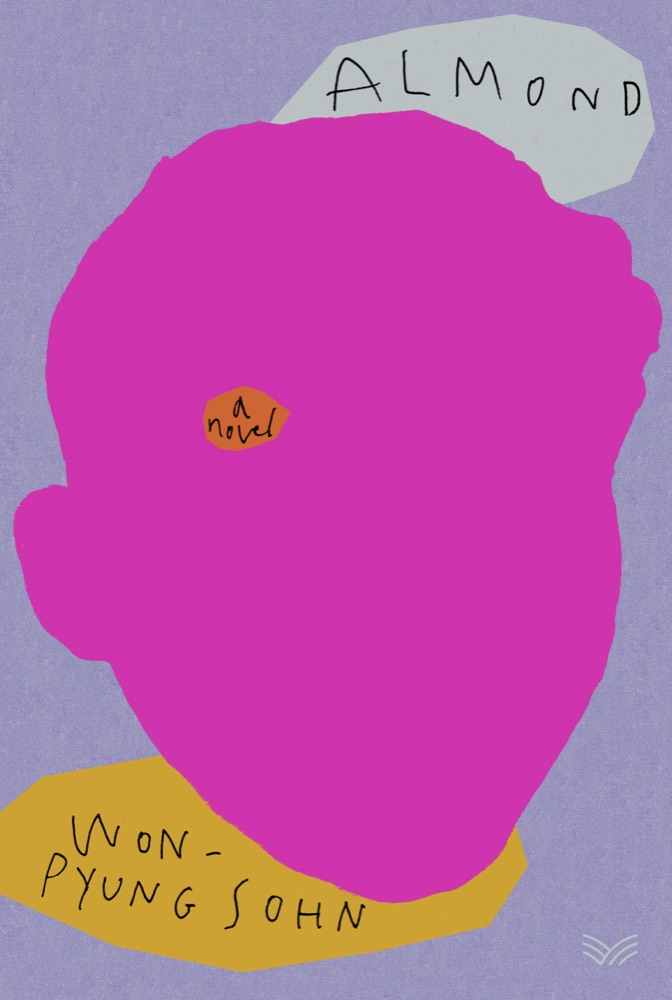 Almond
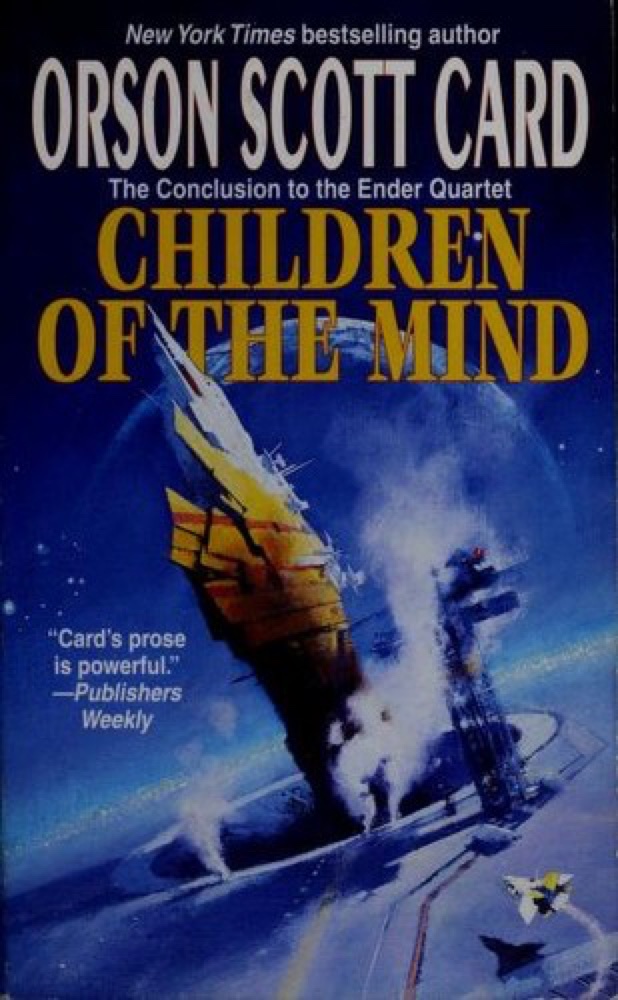 Children of the Mind
 Toward Eternity
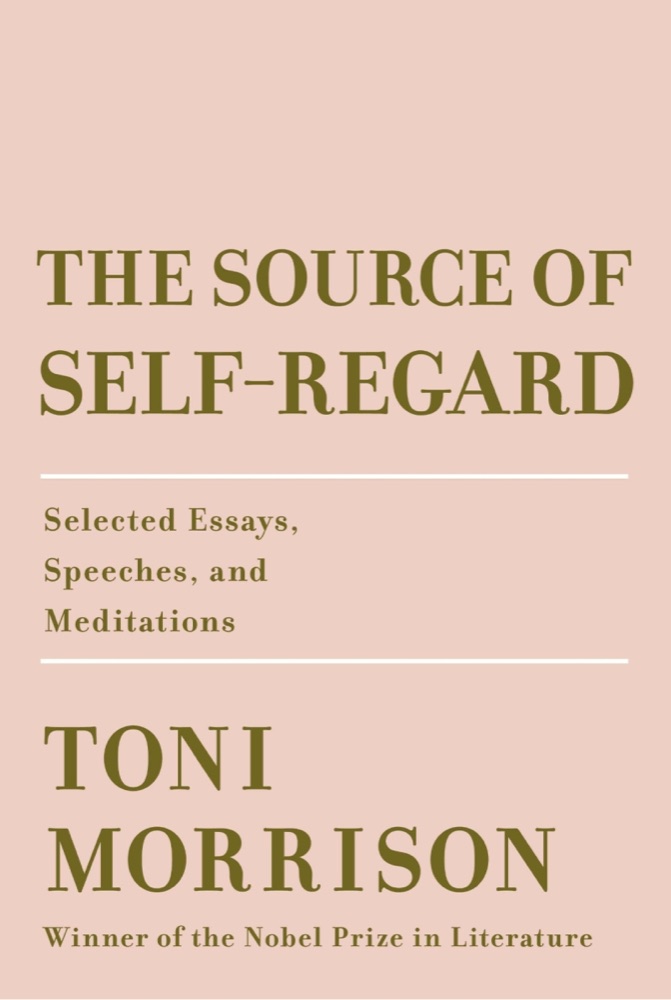 The Source of Self-Regard: Selected Essays, Speeches, and Meditations
 The Book That Broke the World
 Oranges Are Not the Only Fruit
 The Shadow of the Wind
 Encyclopedia of an Ordinary Life
 Just Above My Head
 The Year of Magical Thinking
 1Q84
1Q84