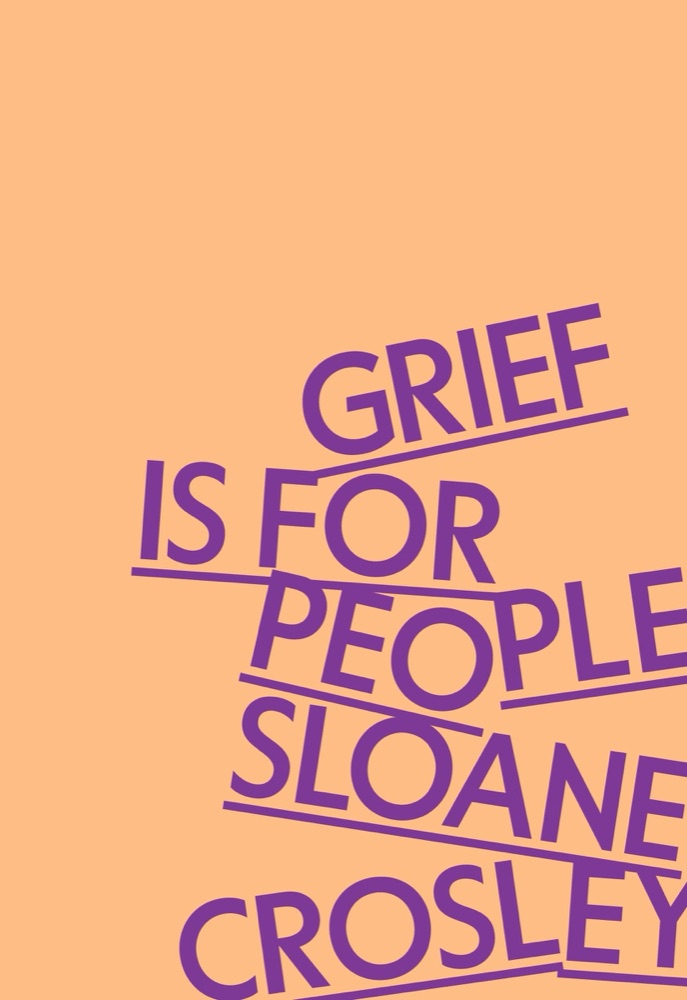

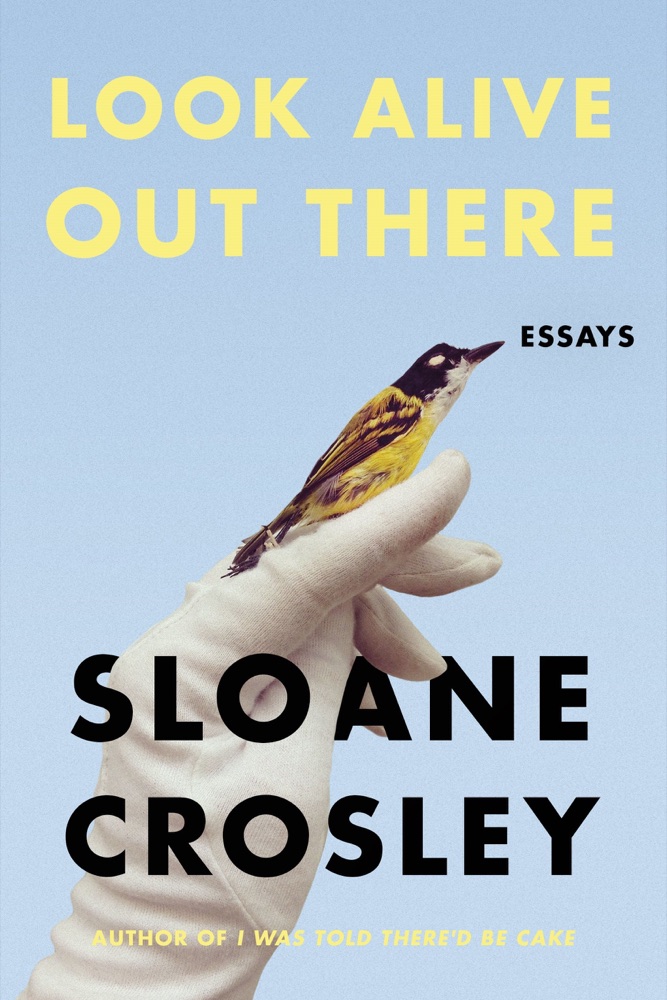
 Look Alive Out There
Quotes from the Book
Heavy is the enchantment of places you know you will never see again.
12
Human beings are the only animals that experience denial. All creatures will try to survive under attack, will burrow when under siege or limp through the forest. But they recognize trouble when it hits. Not one fish, in the history of fish, having gotten its fins chewed off, needs another fish's perspective: I don't know, Tom, that looks pretty bad. Denial is humankind'a specialty, our handy aversion. We are so allergic to our own mortality; we'll do anything to make it not so. Denial is also the weirdest stage of grief because it so closely mimics stupidity. But it can't be helped.
9
While I wait for the police to come, I call Russell to confess what happened. He is my favorite person, the one who somehow sees me both as I want to be seen and as I actually am, the one whose belief in me over the years has been the most earned (he is not my parent), the most pure (he is not my boyfriend), and the most forgiving (he is my friend).
9
Time only pushes wounds aside. Regular life becomes insistent and crowds out the loss. Usually, this is a good thing. So much of healing is the recognition that not all your tissue got damaged in the accident.
8
How will he know you loved him," she asks, "unless you try to destroy yourself?
8
Anger is a cousin of intelligence. If you are not revolted by certain things, you have no boundaries. If you have no boundaries, you have no self-knowledge. If you have no self-knowledge, you have no taste, and if you have no taste, why are you here?
7
It's impossible to predict how much you'll miss something when it's gone, to game grief in advance. We fend off the worry that we're taking our lives for granted by feeding ourselves the lie that we understand the value if their components.
7
Perhaps if I knew more about God, I would know it’s blasphemous to want answers, and perhaps if I knew more about philosophy, I would know it’s foolish to suggest there are answers.
6
In The Year of Magical Thinking, Didion writes: “A single person is missing for you, and the whole world is empty.
6
You become numb when you swallow too much sadness at once. The reason it feels like no boundaries have been crossed is because the concept of boundaries has been obliterated. Maybe there is no such thing as an emergency. Maybe our days are not a mixture of upbeat and downbeat songs, but notes in the same maudlin song. You just haven't hit the bridge yet. Keep humming, you'll get there.
6
By living, I am, by default, leaving him.
5
Thomas Merton wrote, “The more you try to avoid suffering, the more you suffer, because smaller and more insignificant things begin to torture you, in proportion to your fear of being hurt. The one who does most to avoid suffering is, in the end, the one who suffers most.
5
It’s unpredictable, this stage of grief. Just when you think you have a handle on it, a crack opens up where the crazy gets in. The pain is a weather system that builds and expands, occasionally touching down, like lightning. If you have ever thrown your back out while brushing your teeth, you’re familiar with the sensation.
5
The problem is that our capacity to handle something shocking in the short term can make things indistinguishable in the long term. You become numb when you swallow too much sadness at once.
4
Denial is also the weirdest stage of grief because it so closely mimics stupidity.
4
I find I cannot have an interaction with a new person, a person you would have adored, without wondering if I am meeting the friend you needed. Is this the person for whom you would have lived just a little longer? Is this the person who would have shown you how to keep going? What if I was the wrong friend for you? What if we were all the wrong people for you?
4
Sometimes I was lonely, sometimes I was just alone. This is the kind of distinction people make after breakups, as if loneliness is what happens to you after you fail to be alone.
4
Human beings are solid things made out of delicate materials. Perhaps that is why we like jewelry as much as we do, because jewelry is our inverse- delicate things made out of solid materials.
4
But I will never forget how casually she referred to reality as "waking life". Not "consciousness" or "daytime" or plain "life," but a state on par with dreaming. I thought about that conversation a lot during those first weeks of spring, when the only thing that made my life a life was that I was awake for it.
3
To mourn the death of a friend is to feel as if you are walking around with a vase, knowing you have to set it down but nowhere is obvious. Others will assure you that there’s no right way to do this. Put it anywhere. But you know better. You know that if you put your grief in a place that’s too prominent or too hidden, you will take it back when no one’s looking. This is why I spend my nights looking into the restaurant. I fantasize about keeping Russell in front of me for a little longer, asking him questions, knowing nothing either of us says will change the outcome. Each time the restaurant closes. Each time he drops me off at my door. Each time he walks off into the dark. And then he’s gone. And I am still holding this vase.
2
Dying / Is an art, like everything else," wrote Plath, whose lifelong flirtation with death went too far one fateful February morning. And art is nothing if not subjective. In the same vein, when I think of Virginia Woolf, it is not merely as a helpless participant in the morbid fascination that has sprung up around these two writers--but of the windows of time of their deaths. The time it took Woolf to fill her pockets with rocks. The selection of those rocks. When does a suicide begin? When do we start counting? At the riverbank or in the river? In the kitchen the night before or the next morning? Rilke warned the "we must learn to die: That is all of life. To prepare gradually the masterpiece of a proud and supreme death, of a death where chance plays no part, of a well-made, beatific, and enthusiastic death of the kind the saints knew to shape." That's nice. But it's hard to throw something like that together at the last minute. What gruesome work suicide makes of grief! Sometimes I conflate blame and action, sometimes I separate them as if in a moral centrifuge, sometimes I think it doesn't matter either way.
2
How difficult it is to love someone who was so wrong and who will never be right again.
2
Perhaps this is the plainest definition of anxiety: mourning what isn't gone yet. Anxiety is an ever-present stage of grief, a shadow attached to the heels of its more infamous siblings.
2
The miracle of life is not that we have it, it’s that most of us wake up every day and agree to fight for it, to hold it in our arms even when it squirms to get away. It’s a miracle, a genuine miracle, that the reverse doesn’t happen more often.
2
But there was never going to be a version of the story in which it wasn't my missing jewelry and my dead friend. You can ignore grief. You push it around your plate. But you can't give it away.
2
Suicide is a tax on human consciousness.
2
Alas, I am not on her side. I am not on the side of the living, or the group Iris Murdoch called "the unbereaved." Here, in the small hours of grief, I am not to be trusted. I am no one's friend.
1
In "Goodbye to All That," Joan Didion writes, "It is easy to see the beginnings of things, and harder to see the ends." ... this resonates. I remember every detail of my first ... but not of my last because I didn't know it would be my last.
1
I dwell too much. I hold on to things I shouldn't, to people I shouldn't. If you don't change, change will find you in its most unruly form. It will press down on your vulnerabilities until they squish out the edges. Life needs volunteers or else it will start calling on people at random.
1
And no one is obliged to learn something from loss. This is a horrible thing we do to the newly stricken, encouraging them to remember the good times while they are still in the fetal position...The most practical thing I have learned is the power of the present tense. The past is quicksand and the future is unknowable, but in the present, you get to float. Nothing is missing, nothing is hypothetical.
1
Watch on YouTube
About Sloane Crosley
We have collected 42 quotes from 2 books by Sloane Crosley on BookQuoters.
More about the author →More by Sloane Crosley
Look Alive Out There
About the book
Following the death of her closest friend, Sloane Crosley explores multiple kinds of loss in this disarmingly witty and poignant memoir.
Grief Is for People is a deeply moving and surprisingly suspenseful portrait of friendship and a book about loss packed with verve for life. Sloane Crosley is one of our most renowned observers of contemporary behavior, and now the pathos that has been ever present in her trademark wit is on full display. After the pain and confusion of losing her closest friend to suicide, Crosley looks for answers in friends, philosophy, and art, hoping for a framework more useful than the unavoidable stages of grief.
Book details
- First published
- 2024
- Author
- Sloane Crosley
- Genre
- Biography
- Goodreads rating
- 3.83 (18k ratings)
The buzz
- The New York TimesReview in The New York Timesprofessional review (via Book Marks)
- The Washington PostReview in The Washington Postprofessional review (via Book Marks)
- The Wall Street JournalReview in The Wall Street Journalprofessional review (via Book Marks)
- NPRReview in NPRprofessional review (via Book Marks)
- The TimesReview in The Timesprofessional review (via Book Marks)
- The Boston GlobeReview in The Boston Globeprofessional review (via Book Marks)
Keep reading
 Notes on Grief
 On Grief and Grieving: Finding the Meaning of Grief Through the Five Stages of Loss
 Levels of Life
 Anthropology of an American Girl
 A Grief Observed
 A Widow's Story
 Let's Take the Long Way Home: A Memoir of Friendship
 Lost & Found: A Memoir
 The Friend
 Night Side of the River
 The Year of Magical Thinking
 Goodbye Days
 A Matter of Death and Life
 Any Ordinary Day
 First Person Singular: Stories
 How To Talk To A Widower
 Creatures of a Day: And Other Tales of Psychotherapy
 Between Two Kingdoms: A Memoir of a Life Interrupted
 Things in Nature Merely Grow
 Biography of X
 The Shock of the Fall
 You Could Make This Place Beautiful
 Imagine Me Gone
 Dear Friend, from My Life I Write to You in Your Life
 The Book of Goose
 A Thousand Broken Pieces
 It's OK That You're Not OK
 How to Make Friends with the Dark
 Journal of a Solitude
 These Silent Woods
 Kafka on the Shore
 Why Be Happy When You Could Be Normal?
 Our Wives Under the Sea
 Life Will Be the Death of Me: . . . and you too!
 The Silent Patient
 Maybe You Should Talk to Someone: A Therapist, Her Therapist, and Our Lives Revealed
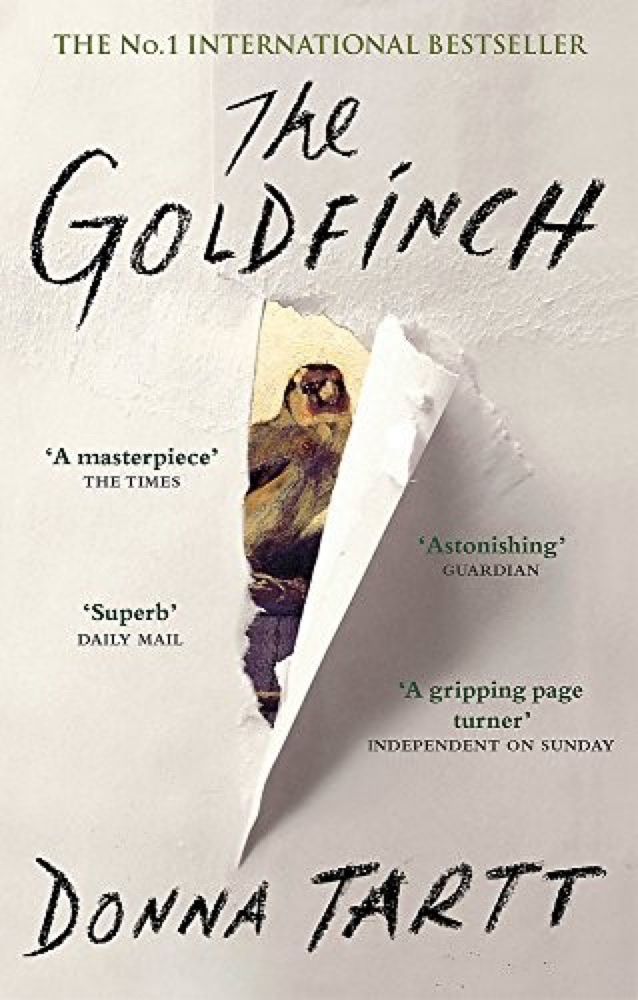 The Goldfinch
 Hollywood Park
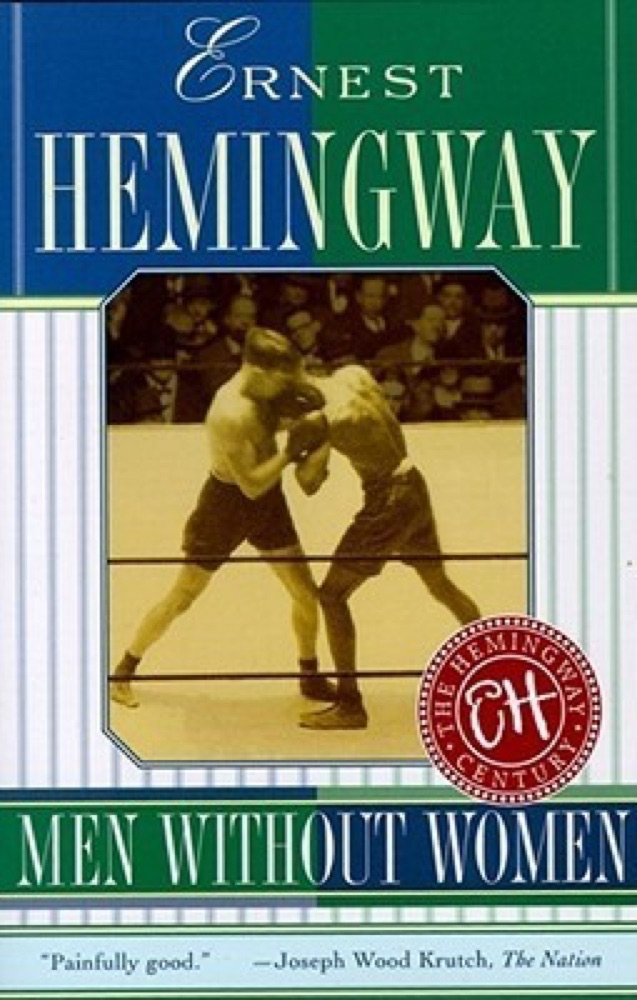 Men Without Women
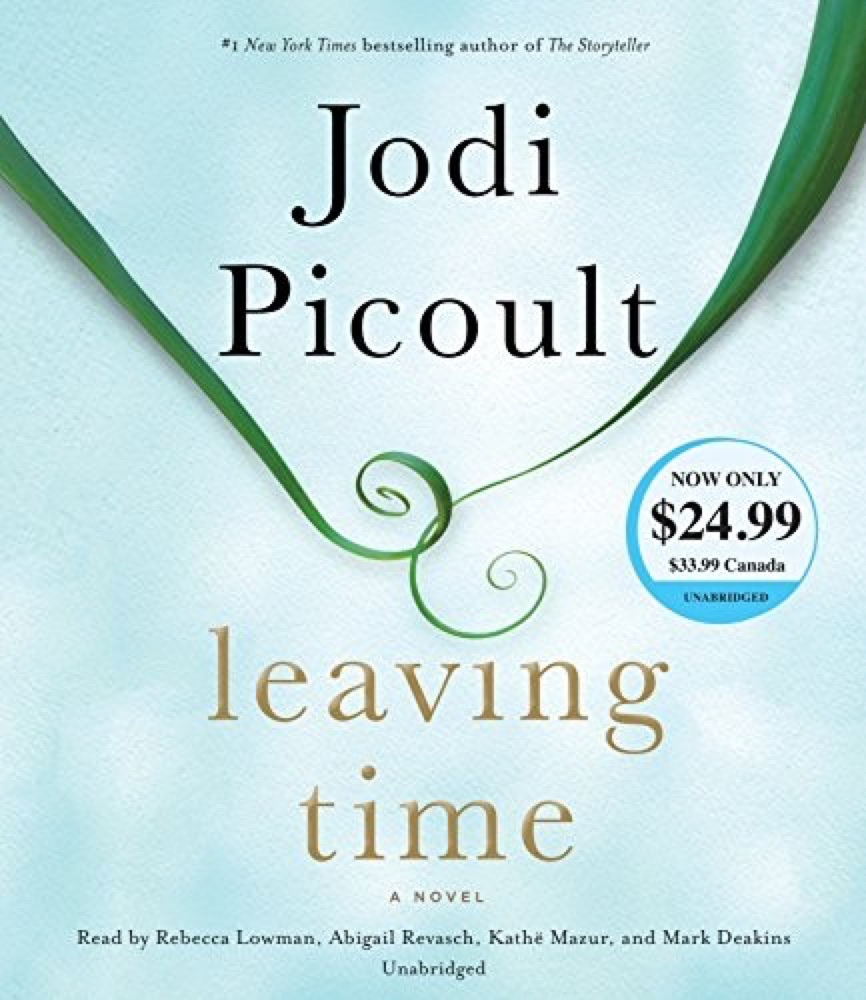 Leaving Time
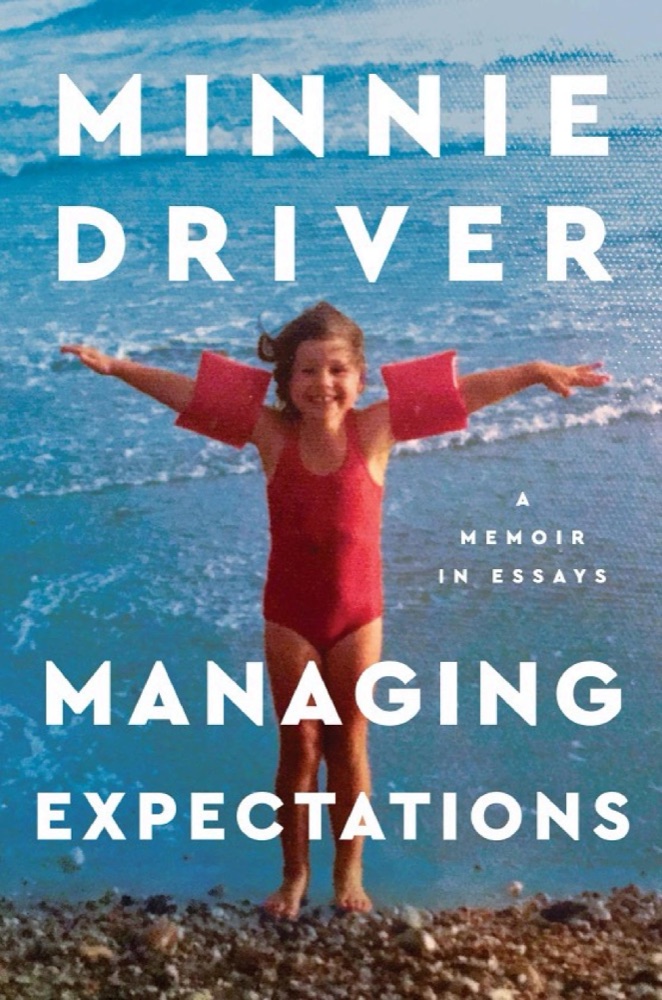 Managing Expectations: A Memoir in Essays – A Poignant Collection of Personal Stories on Acting, Failure, and Motherhood's Joy
 The Reader
 Life After God
 Beautiful Ugly
 Seven Types of Ambiguity
 Adultery
 Life After Death
 The Island of Missing Trees
 Briefly Perfectly Human: Making an Authentic Life by Getting Real About the End
 Mending the Mind
 Shadow Man
 No One Writes Back
 Make It Scream, Make It Burn
 If Cats Disappeared from the World
 Life of Pi
 The Return
 Tell Me More: Stories About the 12 Hardest Things I'm Learning to Say
 Say Goodbye for Now
 You Better Be Lightning