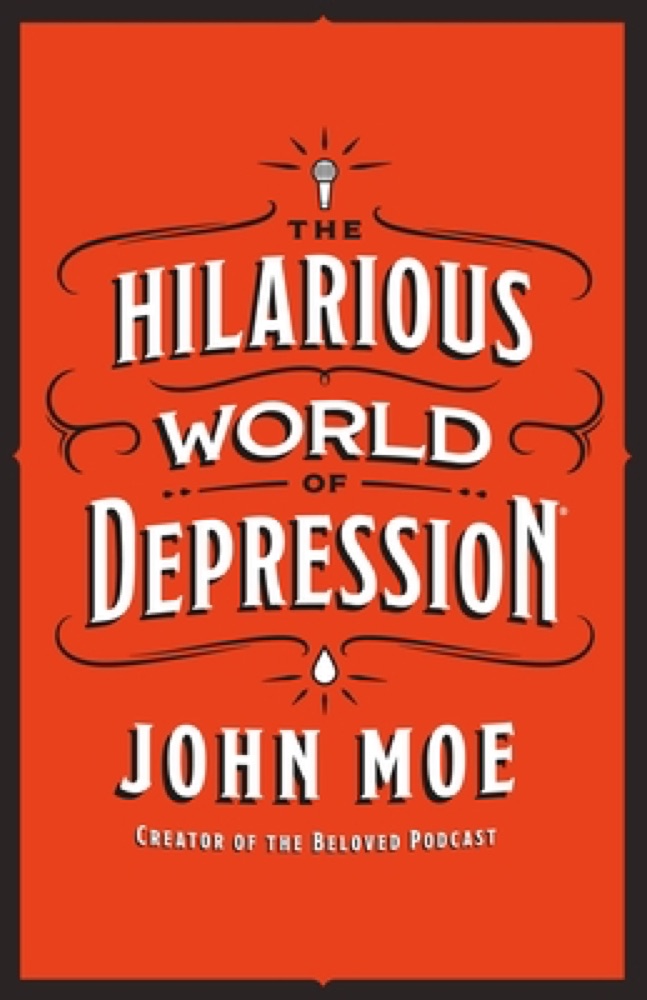
 The Noonday Demon: An Atlas of Depression
Quotes from the Book
Depression is good at making you think it’s not even there and that you are the problem. Depression wants you to think you made a choice to be this way.
13
What do you have to be stressed about?” the normies might have said, if I ever talked about these things with normal people. “You have a family, a house, a car, a good job. Just deal with it!” As if I could simply do that. As if I chose this. As if I looked at the options available to me and they were clearly labeled “Perseverance” and “Freaking the Fuck Out All the Time” and calmly said, “Mmm, yes, I select option B.
11
Trauma occurs when something happens that’s too horrible for your brain to deal with, so you just store it away. Over time, the horrible thing, which is still there, starts coming out in a variety of ugly ways, causing mental problems that you don’t even associate with the trauma because it happened so long ago.
10
Here’s the weird part: even when I was in the darkest and most despairing times of my depression, I still found depression funny. It was funny to me that the illness distorted my view of the real world like a funhouse mirror. It was funny that I could be immobilized by something that had no basis in a broken bone or bacteria or any tangible factor. And when other people, especially comedians and writers, shared their experiences with depression and those experiences were resonant with my own, I could laugh because we were all getting fooled together. I laughed in the same way an audience laughs at a particularly good trick pulled off by a magician. “We’ve all been deceived, but we don’t know how!
10
Depression steals your ability to feel happy and proud even at the moments you should be happiest and proudest.
7
I suspect that people with depression are fixated on the possibility of ambition being rewarded with happiness. Probably more than most people are. That’s because ambition about the future is a way of avoiding looking at a past that’s often pretty bleak or a future that is terrifying. This isn’t to say that getting a better job or a pile of money can’t be really great. They often are. Achievements or windfalls can often wipe out a particular cause of worry or dread, maybe even wipe out that worry forever. But then you get used to that new version of normal, the novelty wears off, and you’re left with the same brain you’ve always had, and that’s when depression emerges from dormancy.
7
Only decades later would it dawn on me that normal people who never deal with depression have a sense of self-worth automatically. Just by being a person on the earth, they feel themselves worthy of respect and love and all that other cool stuff.
6
If more people understand the reality of mental illness and get disabused of the Hollywood myths about it, the stigma about getting help will diminish, and then we’ll live in a healthier society.
6
Depression lies,” said Jenny Lawson . “Because every single time, it says, ‘You’ll never come out of this again. You are absolutely worthless, your family is better off without you.’ And then I remind myself depression lies. Those things are lies.
6
Only by being useful or talented, and receiving external recognition, would I achieve personhood. I couldn’t imagine a world where I was a worthwhile person by dint of mere existence; I felt like I needed to earn it and prove it every day. Don’t worry, this feeling went away after only several decades.
5
Talking about depression is great and healthy, but that doesn’t mean it’s not exhausting.
4
Comedy, much of the time, is built on disorder. Comedy is intoxicating to a young mind in distress. You see these famous people pointing out the ridiculousness of a world that you’ve never been able to make sense of. Comedians offer the hope, the chance, however slim, that it’s not you that’s broken but the world. And they dress up in cool clothes! And hang out with various late-night hosts named Jimmy! And they make people laugh, and those people then love them. I can’t say for certain that depression leads people to a career in comedy, but it seems like the path is smoothly paved and well lit. Comedian Solomon Georgio came to the United States as a refugee from Ethiopia when he was three years old, and his family relied on comedy early on for entertainment and education. “We all loved comedy because that’s one of the few things that we comprehended when we didn’t speak the language,” he says. “Surprisingly, standup comedy, too, which, even though we didn’t know what was going on, you kind of see a rhythm and you know people are being entertained and laughing along. So we watched a lot of old television. Three Stooges, I Love Lucy, and, like, slapstick. We just immediately started watching and enjoying. So you can only imagine how disappointed I was when I met my first white person in real life and I was like, ‘Oh, you’re not like the Three Stooges. I can’t slap you and poke you in the eye. You guys aren’t doing any of that stuff out here. Okay.
4
For saddies, encouragement is revelatory. Rather than making their resolve stronger, it will implant a resolve where none had been. “Because this person believes in me,” the saddie thinks, “and this person is not me, they may have a point.
3
Depression does its damage and then it hides, covering its tracks, making you think that it is not an illness, that you’re just bad and weird.
3
I want to share all this in one place because if we talk, things get better, and more people we love might stick around so we can love them more.
3
there is nothing more intoxicating for a depressed person with an alcoholic parent in his past than being told you are loved and wanted.
3
The body might be expending very little actual energy, but the mind is running a marathon combined with an obstacle course. Are you depressed and find yourself tired all the time? That may be because you do a decathlon every day.
2
Depressed people have an urge to make good things into ugly messes to better match their state of mind.
2
I didn’t know that depression isn’t a mood. It’s a set of conditions that cause a whole series of thoughts and behaviors to happen over a long period of time, often things that are wildly different from one another.
2
It wasn’t you. You didn’t choose this. No one would ever choose this. It’s not your fault.
1
There is reason for optimism when one moves from ignorance to understanding but no guarantees.
1
bit is about how an intrusive suicidal ideation can show up when you least expect it, how true deep despair appears out of nowhere. That is terrifying because it feels like a killer on the loose.
1
I didn’t want to die, but I wanted to take my brain out of my head for a while.
1
There was another reason, too, one I didn't tell her. And this will make perfect sense to people who have dealt with depression and make absolutely no sense to people who never have: I didn't want to waste the doctor's time. I knew for a fact that I could not be helped, so let that appointment go to someone with solvable problems. Reader, the whole point of a doctor is to know more than you do, assess a problem, and then help you. Seeing people and trying to help them is the entirety of their job, and thus if you are a person, you are worthy of being seen. You are worthy of help. "I'm not going to a doctor. I mean, what if they put me on pills and I become a zombie or something? Plus, it's a copay." Our co-pay at the time was $10. I was not worth $10. "If you don't love yourself enough to go do this, do you at least love me and the kids?" Oof. "Yes.
1
One of the first issues I wanted to tackle was this habit of converting stress into bleak, goth-eyeliner-wearing despair.
1
it makes sense when you think about the confluence of puberty hormones, stress from academics and the emergence of primitive appalling forms of dating, depression starts in your junior high.
1
Novelist John Green, author of The Fault in Our Stars among many other megaselling books, has struggled with [depression] for many years. "There is this weird perpetual hope," he told me, "not just among people with mental illness-- I don't know if it's American or if it's human or what-- but there does seem to be this perpetual hope that if I just get this one thing that my life is missing, the hole inside of me will be filled.
1
By applying actual words with significant specific diagnostic meanings to much lighter circumstances, people are robbing and devaluing people with mental illness.
1
Yes, there is discrimination against people with mental illness and, yes, it can be a scary thing to talk about. But the hunger to do so is there, and by being open yourself you can get that conversation out on the dance floor.
1
Finding a therapist is a bit like dating. You might have to have some very boring or weird or tense meetings before you find someone you connect with. I’d had good therapists in the past, briefly, but all I ever took away from therapy was a somewhat clearer understanding of how messed up I was. That’s helpful, sure, but it’s not really progress. Like knowing the brand of refrigerator you’re locked in. And this was not the fault of the therapists I had seen, who were all trained pros and good at their jobs. It was my fault, or Clinny D’s fault. I never wanted to go all that deep in therapy because that’s where the monsters were. I’m talking about the really really bad memories, the deep bruises, the scars, the events that significantly shape a person through injury. Trauma. Rather than tackle the past, I was willing to settle for a tense ceasefire with it, letting my life be like Middle East countries that hate each other. There would be car bombings, but a homeland is a homeland. I mean, depression doesn’t even want you to get up, take a shower, and brush your teeth, so something like figuring out how your own mind works feels about as easy as taking a bus to Mars.
1
Watch on YouTube
About John Moe
About the book
For years John Moe, critically-acclaimed public radio personality and host of The Hilarious World of Depression podcast, struggled with depression; it plagued his family and claimed the life of his brother in 2007. As Moe came to terms with his own illness, he began to see similar patterns of behavior and coping mechanisms surfacing in conversations with others, including high-profile comedians who'd struggled with the disease. Moe saw that there was tremendous comfort and community in open dialogue about these shared experiences and that humor had a unique power. Thus was born the podcast The Hilarious World of Depression.
Inspired by the immediate success of the podcast, Moe has written a remarkable investigation of the disease, part memoir of his own journey, part treasure trove of laugh-out-loud stories and insights drawn from years of interviews with some of the most brilliant mi
Book details
- First published
- 2020
- Author
- John Moe
- Genre
- Nonfiction
- Goodreads rating
- 4.16 (6k ratings)
The buzz
- The New York TimesReview in The New York Timesprofessional review (via Book Marks)
- Kirkus ReviewsReview in Kirkus Reviewsprofessional review (via Book Marks)
- Publishers WeeklyReview in Publishers Weeklyprofessional review (via Book Marks)
- BooklistReview in Booklistprofessional review (via Book Marks)
Keep reading
The Noonday Demon: An Atlas of Depression
 Hello I Want to Die Please Fix Me: Depression in the First Person
 Shoot the Damn Dog: A Memoir of Depression
 I've never been (Un)happier
 Lost Connections: Uncovering the Real Causes of Depression - and the Unexpected Solutions
 Prozac Nation
 Feeling Good: The New Mood Therapy
 An Unquiet Mind: A Memoir of Moods and Madness
 Broken
 Reasons to Stay Alive
 Just Like Someone Without Mental Illness Only More So
 Furiously Happy: A Funny Book About Horrible Things
 The Center Cannot Hold: My Journey Through Madness
 The Mindful Way through Depression: Freeing Yourself from Chronic Unhappiness
 Darkness Visible: A Memoir of Madness
 Attempting Normal
 More, Now, Again: A Memoir of Addiction
 Wishful Drinking
 Loud in the House of Myself: Memoir of a Strange Girl
 I Don't Want to Talk About It: Overcoming the Secret Legacy of Male Depression
 No One Asked for This: Essays
 Words on Bathroom Walls
 The Valedictorian of Being Dead: The True Story of Dying Ten Times to Live
![[Don't] Call Me Crazy](/i/book/g/b2/dont-call-me-crazy.jpg) [Don't] Call Me Crazy
[Don't] Call Me Crazy
 Night Falls Fast: Understanding Suicide
 Unfuck Your Brain: Using Science to Get Over Anxiety, Depression, Anger, Freak-Outs, and Triggers
 Good Morning, Monster: A Therapist Shares Five Heroic Stories of Emotional Recovery
 The Opposite of Butterfly Hunting: The Tragedy and The Glory of Growing Up
 I'm Fine...And Other Lies
 Leaving Isn't the Hardest Thing
 Hyperbole and a Half: Unfortunate Situations, Flawed Coping Mechanisms, Mayhem, and Other Things That Happened
 The Color of Everything: A Journey to Quiet the Chaos Within
 Why Has Nobody Told Me This Before?
 First, We Make the Beast Beautiful: A New Story About Anxiety
 What My Bones Know
 The Collected Schizophrenias: Essays
 Ten Steps to Nanette
 It's Kind of a Funny Story
 Notes on a Nervous Planet
 Why Zebras Don't Get Ulcers
 Get Me Out of Here: My Recovery from Borderline Personality Disorder
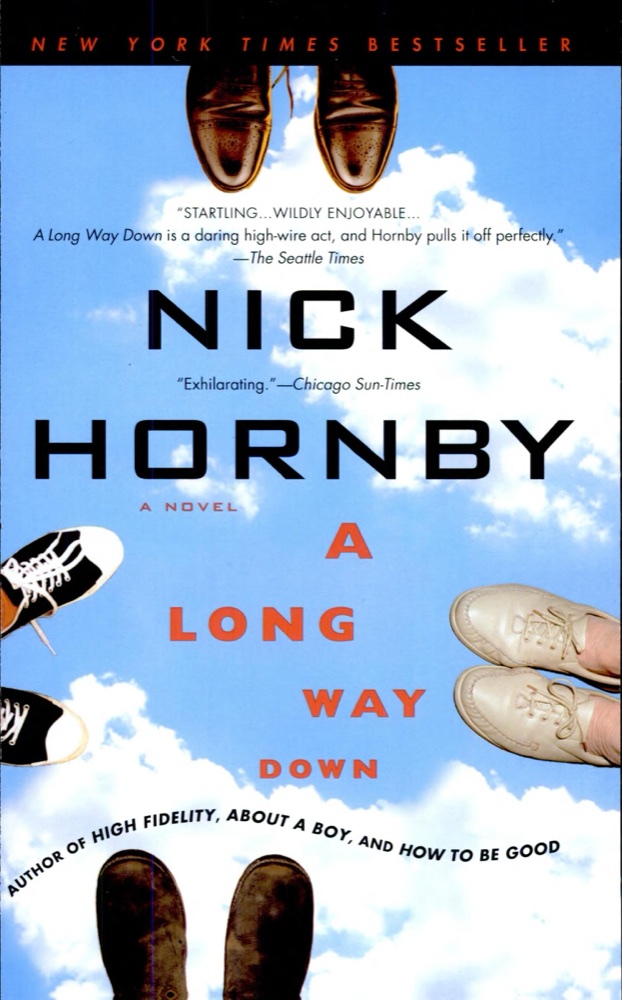 A Long Way Down
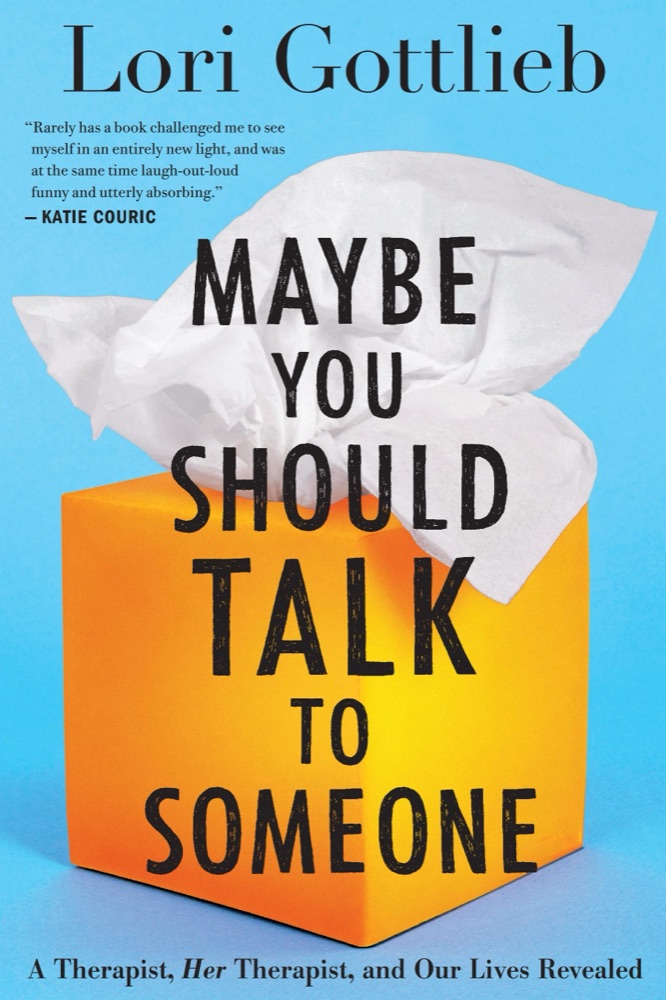 Maybe You Should Talk to Someone: A Therapist, Her Therapist, and Our Lives Revealed
 Scar Tissue
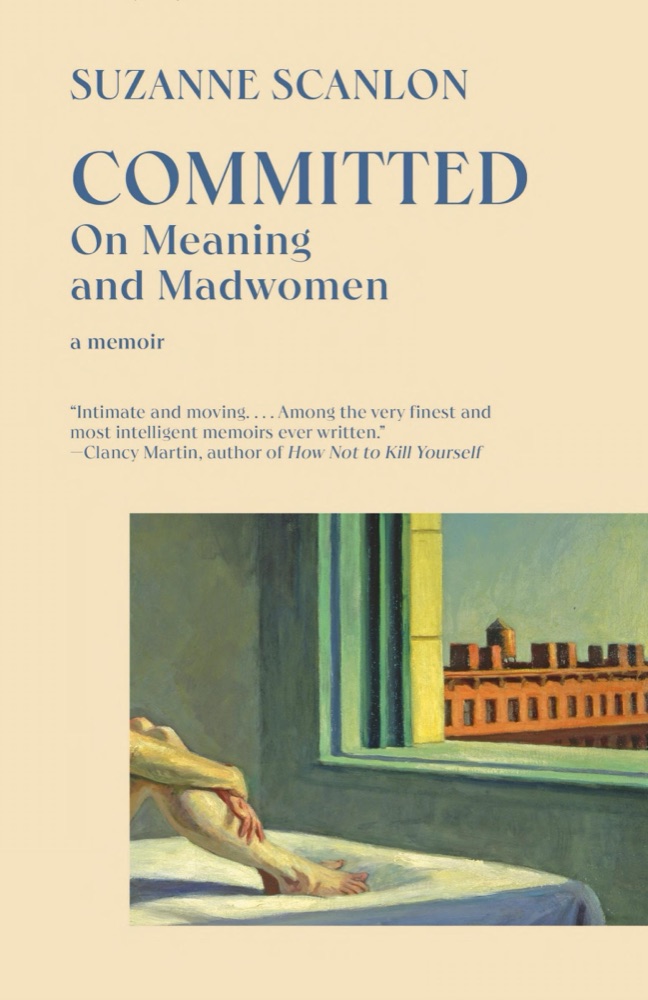 Committed: On Meaning and Madwomen
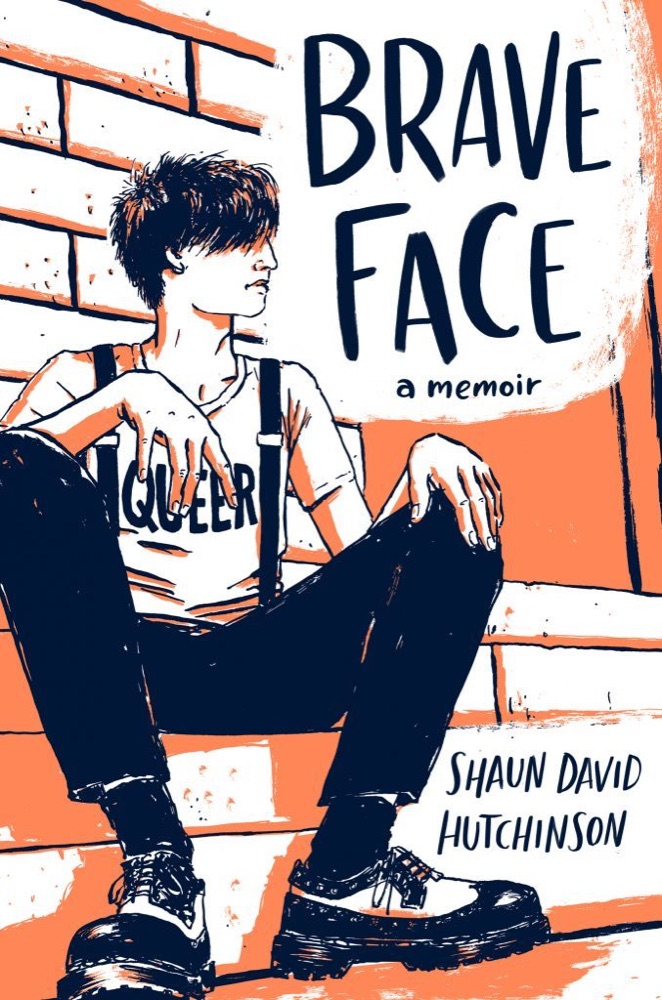 Brave Face
 I Really Didn't Think This Through: Tales from My So-Called Adult Life
 Hollywood Park
![It's Not OK to Feel Blue [and other lies]](/i/book/g/ed/its-not-ok-to-feel-blue-and-other-lies.jpg) It's Not OK to Feel Blue [and other lies]
It's Not OK to Feel Blue [and other lies]
 Any Ordinary Day
 The Quiet Room: A Journey Out of the Torment of Madness
 The Examined Life: How We Lose and Find Ourselves
 Life Will Be the Death of Me: . . . and you too!
 Killing Yourself to Live: 85% of a True Story
 Unbearable Lightness: A Story of Loss and Gain
 Wasted: A Memoir of Anorexia and Bulimia
 Conviction
 My Heart and Other Black Holes
 Suicide Notes
 The Memory of Light