
 In the Heart of the Sea: The Tragedy of the Whaleship Essex
Quotes from the Book
The moment any of them gave up on the difficult work of living with their neighbors--and all of the compromise, frustration, and delay that inevitably entailed--they risked losing everything.
11
In the end, both sides wanted what the Pilgrims had been looking for in 1620: a place unfettered by obligations to others. But from the moment Massasoit decided to become the Pilgrims’ ally, New England belonged to no single group. For peace and for survival, others must be accommodated. The moment any of them gave up on the difficult work of living with their neighbors—and all of the compromise, frustration, and delay that inevitably entailed—they risked losing everything. It was a lesson that Bradford and Massasoit had learned over the course of more than three long decades. That it could be so quickly forgotten by their children remains a lesson for us today.
7
The Pilgrims had come to America not to conquer a continent but to re-create their modest communities in Scrooby and in Leiden. When they arrived at Plymouth in December 1620 and found it emptied of people, it seemed as if God had given them exactly what they were looking for. But as they quickly discovered during that first terrifying fall and winter, New England was far from uninhabited. There were still plenty of Native people, and to ignore or anger them was to risk annihilation. The Pilgrims’ religious beliefs played a dominant role in the decades ahead, but it was their deepening relationship with the Indians that turned them into Americans. By forcing the English to improvise, the Indians prevented Plymouth Colony from ossifying into a monolithic cult of religious extremism. For their part, the Indians were profoundly influenced by the English and quickly created a new and dynamic culture full of Native and Western influences. For a nation that has come to recognize that one of its greatest strengths is its diversity, the first fifty years of Plymouth Colony stand as a model of what America might have been from the very beginning.
4
yield. In April, Bradford had decided that each household should be assigned its own plot to cultivate, with the understanding that each family kept whatever it grew. The change in attitude was stunning. Families were now willing to work much harder than they had ever worked before. In previous years, the men had tended the fields while the women tended the children at home. “The women now went willingly into the field,” Bradford wrote, “and took their little ones with them to set corn.” The Pilgrims had stumbled on the power of capitalism.
4
The Pilgrims’ descendants have proven to be, if nothing else, fruitful. In 2002 it was estimated that there were approximately 35 million descendants of the Mayflower passengers in the United States, which represents roughly 10 percent of the total U.S. population.
3
By doing their best to destroy the Native people who had welcomed and sustained their forefathers, New Englanders had destroyed their forefathers’ way of life.
3
It has been estimated that at least a thousand Indians were sold into slavery during King Philip’s War, with over half the slaves coming from Plymouth Colony alone. By the end of the war, Mount Hope, once the crowded Native heart of the colony, was virtually empty of inhabitants. Fifty-six years after the sailing of the Mayflower, the Pilgrims’ children had not only defeated the Pokanokets in a devastating war, they had taken conscious, methodical measures to purge the land of its people.
3
During the forty-five months of World War II, the United States lost just under 1 percent of its adult male population; during the Civil War the casualty rate was somewhere between 4 and 5 percent; during the fourteen months of King Philip’s War, Plymouth Colony lost close to 8 percent of its men. But the English losses appear almost inconsequential when compared to those of the Indians. Of a total Native population of approximately 20,000, at least 2,000 had been killed in battle or died of their injuries; 3,000 had died of sickness and starvation, 1,000 had been shipped out of the country as slaves, while an estimated 2,000 eventually fled to either the Iroquois to the west or the Abenakis to the north. Overall, the Native American population of southern New England had sustained a loss of somewhere between 60 and 80 percent.
3
Atrocities were expected in both European and Native conflicts. And yet, the English had to admit that compared to what was typical of European wars, the Indians had conducted themselves with surprising restraint.
3
No longer mindful of the debt they owed the Pokanokets, without whom their parents would never have endured their first year in America, some of the Pilgrims’ children were less willing to treat Native leaders with the tolerance and respect their parents had once afforded Massasoit.
3
They were too focused on their own inner lives to appreciate the subtleties of character that might have alerted them to the true motives of those who did not share in their beliefs. Time and time again during their preparations to sail for America, the Pilgrims demonstrated an extraordinary talent for getting duped.
3
Faint not, poor soul, in God still trust; Fear not the things thou suffer must; For, whom he loves he doth chastise, And then all tears wipes from their eyes. William Bradford Plymouth Colony Governor
3
A Puritan believed it was necessary to venture back to the absolute beginning of Christianity, before the church had been corrupted by centuries of laxity and abuse, to locate divine truth.
3
For all they had suffered during those first terrible winters in America, their best years were behind them, in Leiden. Never again would they know the same rapturous sense of divine fellowship that had first launched them on this quest.
2
Countless Victorian-era engravings notwithstanding, the Pilgrims did not spend the day sitting around a long table draped with a white linen cloth, clasping each other’s hands in prayer as a few curious Indians looked on. Instead of an English affair, the First Thanksgiving soon became an overwhelmingly Native celebration when Massasoit and a hundred Pokanokets (more than twice the entire English population of Plymouth) arrived at the settlement with five freshly killed deer. Even if all the Pilgrims’ furniture was brought out into the sunshine, most of the celebrants stood, squatted, or sat on the ground as they clustered around outdoor fires, where the deer and birds turned on wooden spits and where pottages—stews into which varieties of meats and vegetables were thrown—simmered invitingly.
2
As Smith later wrote, much of the suffering that lay ahead for the Pilgrims could easily have been avoided if they had seen fit to pay for his services or, at the very least, consult his map. “[S]uch humorists [i.e., fanatics] will never believe…,” he wrote, “till they be beaten with their own rod.
2
Philip’s local squabble with Plymouth Colony had mutated into a regionwide war that, on a percentage basis, had done nearly as much as the plagues of 1616–19 to decimate New England’s Native population.
2
THE PILGRIMS HAD BEEN DRIVEN by fiercely held spiritual beliefs. They had sailed across a vast and dangerous ocean to a wilderness where, against impossible odds, they had made a home. The purity of the Old Comers’ purpose and the magnitude of their accomplishments could never again be repeated. From the start, the second generation suffered under the assumption that, as their ministers never tired of reminding them, they were “the degenerate plant of a strange vine.” Where their mothers and fathers had once stood before their congregations and testified to the working of grace within them, the children of the Saints felt no such fervor.
2
In April, Bradford had decided that each household should be assigned its own plot to cultivate, with the understanding that each family kept whatever it grew. The change in attitude was stunning. Families were now willing to work much harder than they had ever worked before. In previous years, the men had tended the fields while the women tended the children at home. “The women now went willingly into the field,” Bradford wrote, “and took their little ones with them to set corn.” The Pilgrims had stumbled on the power of capitalism. Although the fortunes of the colony still teetered precariously in the years ahead, the inhabitants never again starved.
2
Stephen Hopkins was making his second trip to America. Eleven years earlier in 1609 he had sailed on the Sea Venture for Virginia, only to become shipwrecked in Bermudaan incident that became the basis for Shakespeare’s The Tempest.
2
The Puritans believed that the identity of the Saints had long since been determined by God. This meant that there was nothing a person could do to win salvation. But instead of being a reason to forsake all hope, what was known as predestination became a powerful goad to action. No one could be entirely sure as to who was one of the elect, and yet, if a person was saved, he or she naturally lived a godly life. As a result, the Puritans were constantly comparing their own actions to those of others, since their conduct might indicate whether or not they were saved.
2
Without Massasoit’s help, the Pilgrims would never have survived the first year, and they remained steadfast supporters of the sachem to the very end. For his part, Massasoit realized almost from the start that his own fortunes were linked to those of the English.
2
It was now clear that no matter how it was done in England, Plymouth played by its own, God-ordained rules, and everyone—Separatist or Anglican—was expected to conform. It seems never to have occurred to the Pilgrims that this was just the kind of intolerant attitude that had forced them to leave England. For them, it was not a question of liberty and freedom—those concepts, so near and dear to their descendants in the following century, were completely alien to their worldview—but rather a question of right and wrong. As far as they were concerned, King James and his bishops were wrong, and they were right, and as long as they had the ability to live as the Bible dictated, they would do so.
1
It seems never to have occurred to the Pilgrims that this was just the kind of intolerant attitude that had forced them to leave England. For them, it was not a question of liberty and freedom—those concepts, so near and dear to their descendants in the following century, were completely alien to their worldview—but rather a question of right and wrong. As far as they were concerned, King James and his bishops were wrong, and they were right, and as long as they had the ability to live as the Bible dictated, they would do so.
1
That Church according to Church is too brave, too cunning, and too good to be true is beside the point. America was destined to become a nation of self-fashioned and self-promoting men. What makes his story so special, I believe, is that he shows us how the nightmare of wilderness warfare might one day give rise to a society that promises liberty and justice for all.
1
Some Englishmen privately admitted that if the Narragansetts had chosen to join Philip in July, all would have been lost. As the Nipmucks assailed them from the west, the far more powerful Narragansetts might have stormed up from the south, and Boston would have been overrun by a massive pan-Indian army. But instead of acknowledging the debt they owed the Narragansetts, the Puritans resolved to wipe them out.
1
It may have been true that from a strictly legal standpoint there was nothing wrong with how Winslow and the other Plymouth officials acquired large amounts of Pokanoket land. And yet, from a practical and moral standpoint, the process removed the Indians from their territory as effectively—and as cheaply—as driving them off at gunpoint
1
In 1634, smallpox and influenza ravaged both the Indians and the English in the region. William Brewster, whose family had managed to survive the first terrible winter unscathed, lost two daughters, Fear and Patience, now married to Isaac Allerton and Thomas Prence, respectively.
1
Watch on YouTube
About Nathaniel Philbrick
We have collected 78 quotes from 4 books by Nathaniel Philbrick on BookQuoters.
More about the author →More by Nathaniel Philbrick
In the Heart of the Sea: The Tragedy of the Whaleship Essex
 The Last Stand: Custer, Sitting Bull, and the Battle of the Little Bighorn
 Why Read Moby-Dick?
About the book
HOW DID AMERICA BEGIN?
This simple question launches acclaimed author Nathaniel Philbrick on an extraordinary journey to understand the truth behind our most sacred national myth: the voyage of the Mayflower and the settlement of Plymouth Colony. As Philbrick reveals in this electrifying new book, the story of the Pilgrims does not end with the First Thanksgiving; instead, it is a fifty-five-year epic that is at once tragic and heroic, and still carries meaning for us today.
Book details
- First published
- 2006
- Author
- Nathaniel Philbrick
- Genre
- History
- Goodreads rating
- 3.89 (47k ratings)
Keep reading
 Of Plymouth Plantation, 1620-1647
 Unfamiliar Fishes
 A Voyage Long and Strange: Rediscovering the New World
 1491: New Revelations of the Americas Before Columbus
 Chesapeake
 Undaunted Courage: The Pioneering First Mission to Explore America's Wild Frontier
 The Hemingses of Monticello: An American Family
 The Warmth of Other Suns: The Epic Story of America's Great Migration
 Revolutionary Summer: The Birth of American Independence
 An Indigenous Peoples' History of the United States
 1776
1776
 The Inconvenient Indian: A Curious Account of Native People in North America
 Nathaniel's Nutmeg: How One Man's Courage Changed the Course of History
 The First Salute : View of the American Revolution
 Made in America: An Informal History of the English Language in the United States
 Bury My Heart at Wounded Knee: An Indian History of the American West
 The Wager: A Tale of Shipwreck, Mutiny and Murder
 Shaman
 Almanac of the Dead
 Four Hundred Souls: A Community History of African America, 1619-2019
 The Radicalism of the American Revolution
 1066 and All That: A Memorable History of England
In the Heart of the Sea: The Tragedy of the Whaleship Essex
1066 and All That: A Memorable History of England
In the Heart of the Sea: The Tragedy of the Whaleship Essex
 The Last of the Mohicans
 Black AF History: The Un-Whitewashed Story of America
 The Love Songs of W.E.B. Du Bois
 Prairie Fires: The American Dreams of Laura Ingalls Wilder
 Becoming Kin: An Indigenous Call to Unforgetting the Past and Reimagining Our Future
 These Truths: A History of the United States
 The Moor's Account
 Blood Done Sign My Name: A True Story
 Under the Banner of Heaven: A Story of Violent Faith
 Lies My Teacher Told Me: Everything Your American History Textbook Got Wrong
 Children of Ash and Elm: A History of the Vikings
 Short Nights of the Shadow Catcher: The Epic Life and Immortal Photographs of Edward Curtis
 The Water Dancer
 The 1619 Project: A New Origin Story
 Skeletons on the Zahara: A True Story of Survival
 A Distant Mirror: The Calamitous 14th Century
 White Trash: The 400-Year Untold History of Class in America
 The Day the World Came to Town: 9/11 in Gander, Newfoundland
 River of Smoke
 The End of the Myth: From the Frontier to the Border Wall in the Mind of America
 Founding Brothers: The Revolutionary Generation
 The Wisdom of the Native Americans: Including The Soul of an Indian and Other Writings of Ohiyesa and the Great Speeches of Red Jacket, Chief Joseph, and Chief Seattle
 John Adams
 Henry David Thoreau: A Week, Walden, The Maine Woods, Cape Cod
 The Histories
 The Other Slavery: The Uncovered Story of Indian Enslavement in America
 At Home: A Short History of Private Life
 Julian Comstock: A Story of 22nd-Century America
 Truth Telling: Seven Conversations about Indigenous Life in Canada
 Neither Wolf Nor Dog: On Forgotten Roads with an Indian Elder
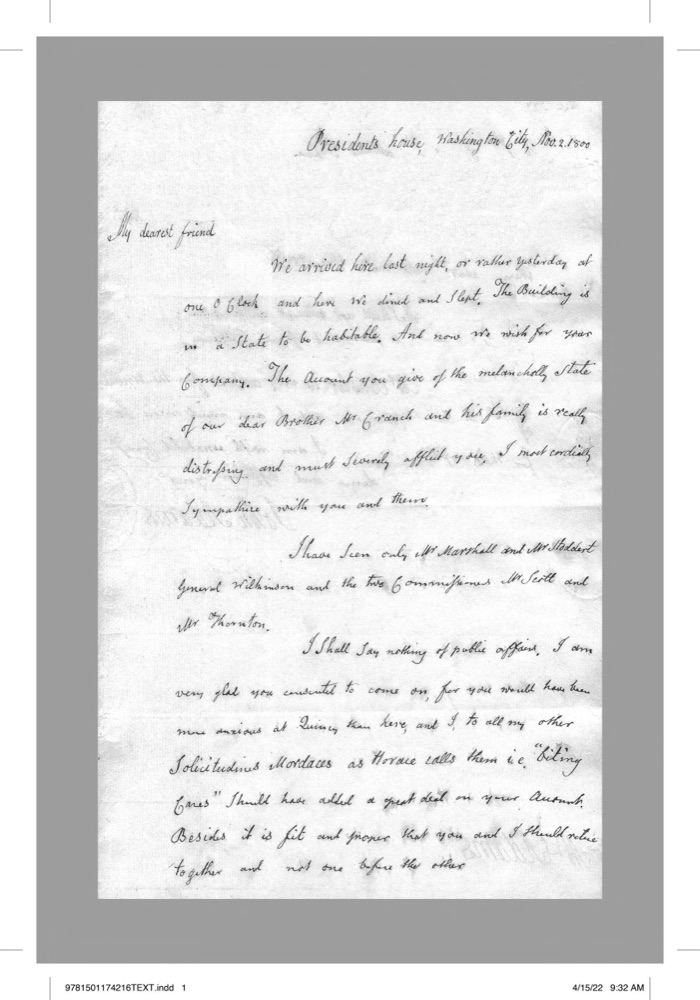 The American Spirit: Who We Are and What We Stand For
 The Deerslayer
 One of Ours
 Paul Revere's Ride
 The Small and the Mighty: Twelve Unsung Americans Who Changed the Course of History, from the Founding to the Civil Rights Movement