
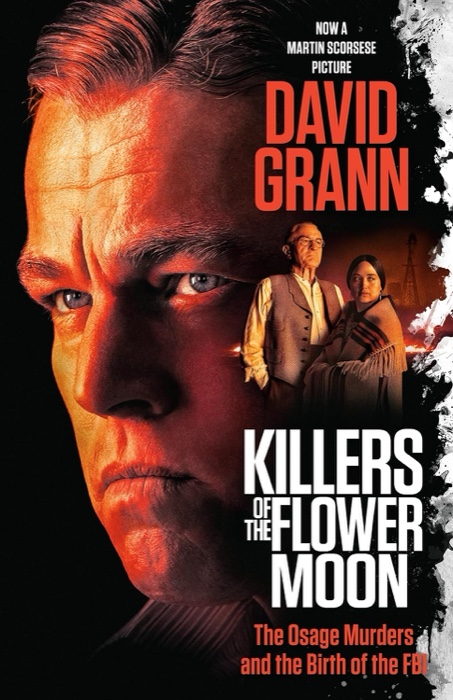
 Killers of the Flower Moon: The Osage Murders and the Birth of the FBI
Quotes from the Book
Empires preserve their power with the stories that they tell, but just as critical are the stories they don’t—the dark silences they impose, the pages they tear out.
85
We all impose some coherence—some meaning—on the chaotic events of our existence. We rummage through the raw images of our memories, selecting, burnishing, erasing. We emerge as the heroes of our stories, allowing us to live with what we have done—or haven’t done.
48
The authors rarely depicted themselves or their companions as the agents of an imperialist system. They were consumed with their own daily struggles and ambitions—with working the ship, with gaining promotions and securing money for their families, and, ultimately, with survival. But it is precisely such unthinking complicity that allows empires to endure. Indeed, these imperial structures require it: thousands and thousands of ordinary people, innocent or not, serving—and even sacrificing themselves for—a system many of them rarely question.
28
Persons who have not experienced the hardships we have met with,” Bulkeley wrote, “will wonder how people can be so inhuman to see their fellow creatures starving before their faces, and afford ’em no relief. But hunger is void of all compassion.
24
Presence of mind, and courage in distress, Are more than armies to procure success.
21
Death is at all times solemn, but never so much so as at sea,” one sailor recalled. “The man is near you—at your side—you hear his voice, and in an instant he is gone, and nothing but a vacancy shows his loss….There is always an empty berth in the forecastle, and one man wanting when the small night watch is mustered. There is one less to take the wheel, and one less to lay out with you upon the yard. You miss his form, and the sound of his voice, for habit had made them almost necessary to you, and each of your senses feels the loss.
15
A “scuttlebutt” was a water cask around which the seamen gossiped while waiting for their rations. A ship was “three sheets to the wind” when the lines to the sails broke and the vessel pitched drunkenly out of control. To “turn a blind eye” became a popular expression after Vice-Admiral Nelson deliberately placed his telescope against his blind eye to ignore his superior’s signal flag to retreat.
15
Indeed these imperial structures require it: thousands and thousands of ordinary people, innocent or not, serving - and even sacrificing themselves for - a system many of them rarely question.
13
Just as people tailor their stories to serve their interests - revising, erasing, embroidering - so do nations. After all the grim and troubling narratives about the Wager disaster, and after all the death and destruction, the empire had finally found its mythic tale of the sea.
11
(When ailing seamen were shielded belowdecks from the adverse elements outside, they were said to be “under the weather.”)
9
To “toe the line” derives from when boys on a ship were forced to stand still for inspection with their toes on a deck seam. To “pipe down” was the boatswain’s whistle for everyone to be quiet at night, and “piping hot” was his call for meals.
7
Yet they were compelled onward by that mysterious narcotic: hope.
6
Sir Walter Raleigh had envisioned: “Whosoever commands the seas commands the trade of the world; whosoever commands the trade of the world commands the riches of the world.
6
During Ferdinand Magellan’s expedition—the first to circumnavigate the globe, in 1522—a scribe onboard wrote that the pilots “will not speak of the longitude.” Longitudinal lines, which run perpendicular to the parallels of latitude, have no fixed reference point, like the equator. And so navigators must establish their own demarcation—their home port or some other arbitrary line—from which to gauge how far east or west they are. (Today, Greenwich, England, is designated the prime meridian, marking zero degrees longitude.)
6
As Samuel Johnson once observed, “No man will be a sailor who has contrivance enough to get himself into a jail; for being in a ship is being in a jail, with the chance of being drowned.
5
each man’s life depended on the performance of the others. They were akin to the cells in a human body; a single malignant one could destroy them all.
4
It is impossible to know for sure what transpired behind the scenes, but there were certainly reasons for the Admiralty to want the case to disappear. Ferreting out and documenting all the incontrovertible facts of what had happened on the island—the marauding, the stealing, the whippings, the murders—would have undercut the central claim on which the British Empire tried to justify its rule of other peoples: namely, that its imperial forces, its civilization, were inherently superior. That its officers were gentlemen, not brutes.
4
As the writer Janet Malcolm once observed, “The law is the guardian of the ideal of unmediated truth, truth stripped bare of the ornament of narration….The story that can best withstand the attrition of the rules of evidence is the story that wins.
4
the poet John Dryden: Presence of mind, and courage in distress, Are more than armies to procure success.
4
In 1757, Admiral John Byng would be executed after being found guilty of failing to “do his utmost” during battle, prompting Voltaire to remark in Candide that the English believed it proper to “kill an admiral from time to time in order to encourage the others.
4
By portraying the natives as both magnificent and less than human, Europeans tried to pretend that their brutal mission of conquest was somehow righteous and heroic.
4
We rummage through the raw images of our memories, selecting, burnishing, erasing. We emerge as the heroes of our stories, allowing us to live with what we have done - or haven't done.
3
Bulkeley observed that some Kawésqar women dove deeper than thirty feet. “Their agility in diving, and their continuance under water for so long a time as they generally do, will be thought impossible by persons who have not been eye-witnesses,” he wrote. Byron thought that “it seems as if Providence had endowed this people with a kind of amphibious nature.
3
In a lethal, floating chess game, these pieces were deployed around the globe to achieve what Sir Walter Raleigh had envisioned: “Whosoever commands the seas commands the trade of the world; whosoever commands the trade of the world commands the riches of the world.
3
In September 1740, during an imperial conflict with Spain, the Wager, carrying some 250 officers and crew, had embarked from Portsmouth in a squadron on a secret mission: to capture a treasure-filled Spanish galleon known as “the prize of all the oceans.” Near Cape Horn, at the tip of South America, the squadron had been engulfed by a hurricane, and the Wager was believed to have sunk with all its souls. But 283 days after the ship had last been reported seen, these men miraculously emerged in Brazil.
3
Was God seeing the things they did out here? Bulkeley still sought solace from The Christian’s Pattern, but a passage in it warned, “Hadst thou a clear conscience, thou could not fear death. It were better to avoid sin than to flee death.” Yet was it a sin to want to live?
3
nautical language was so pervasive that it was adopted by those on terra firma. To “toe the line” derives from when boys on a ship were forced to stand still for inspection with their toes on a deck seam. To “pipe down” was the boatswain’s whistle for everyone to be quiet at night, and “piping hot” was his call for meals. A “scuttlebutt” was a water cask around which the seamen gossiped while waiting for their rations. A ship was “three sheets to the wind” when the lines to the sails broke and the vessel pitched drunkenly out of control. To “turn a blind eye” became a popular expression after Vice-Admiral Nelson deliberately placed his telescope against his blind eye to ignore his superior’s signal flag to retreat.
3
Did you know?
- The book recounts the real 1741 wreck of HMS Wager off the coast of Patagonia during a British expedition against Spain.
- Surviving crew members split into rival factions that made separate journeys back to England and gave conflicting accounts.
- The dispute led to a Royal Navy court-martial in which mutiny and murder were among the issues at stake.
- It debuted at number one on the New York Times nonfiction bestseller list and stayed on the list for many weeks.
- Martin Scorsese and Leonardo DiCaprio acquired the screen rights for an Apple film adaptation.
- Grann drew on the survivors' own journals and Admiralty documents to reconstruct the events.
Watch on YouTube
About David Grann
David Grann is an American journalist, a longtime staff writer for The New Yorker, and the bestselling author of narrative nonfiction including "Killers of the Flower Moon" and "The Lost City of Z."
More about the author →More by David Grann
Killers of the Flower Moon: The Osage Murders and the Birth of the FBI
 The Lost City of Z: A Tale of Deadly Obsession in the Amazon
About the book
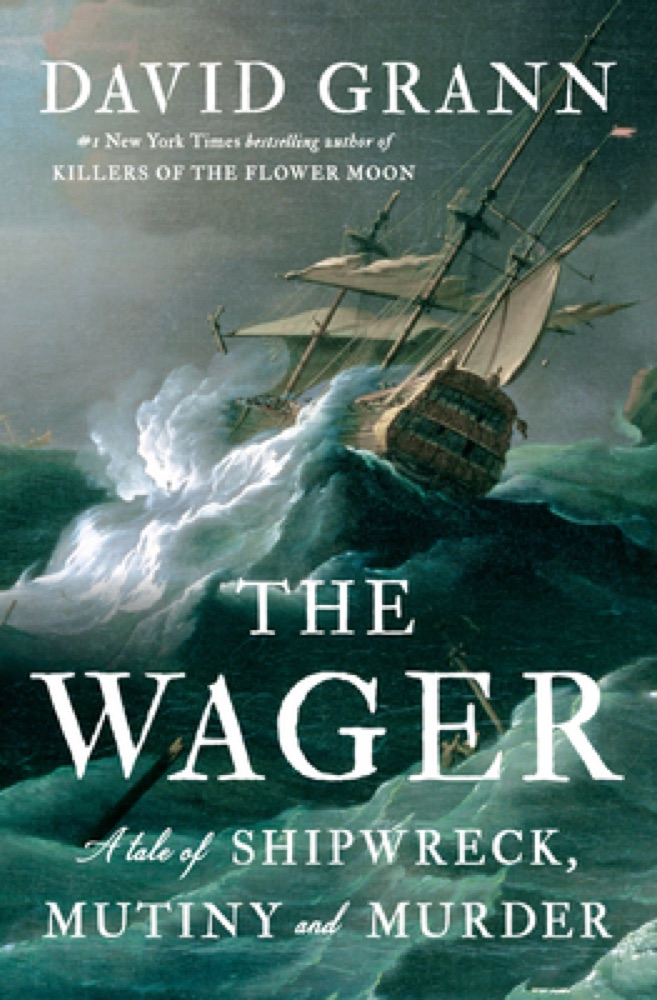
"The Wager" is David Grann's narrative history of HMS Wager, a British man-of-war that set out in 1740 as part of a squadron pursuing a Spanish treasure galleon and was wrecked in 1741 on a desolate island off the coast of Patagonia. Drawing on the sailors' own journals and Admiralty records, Grann reconstructs how the stranded crew descended into starvation, factionalism and violence, and how two rival groups eventually made separate, near-impossible voyages back to civilization. When the survivors reached England, their competing accounts triggered a court-martial in which the charges included mutiny and murder.
At its core the book examines the fragility of order and the question of who controls the official story. Grann uses the castaways' contradictory testimonies to probe themes of authority and obedience, the thin line between civilization and savagery under extreme duress, and the self-serving narratives that empires construct to justify themselves. The wreck becomes a lens on the brutality of the British Navy and the imperial ambitions of the eighteenth century.
Published by Doubleday in April 2023, "The Wager" debuted at number one on the New York Times nonfiction bestseller list and remained on the list for many weeks. It won the 2023 Goodreads Choice Award for Best History and Biography, was longlisted for the Baillie Gifford Prize, and appeared on numerous best-of-the-year lists. Critics widely praised Grann's pacing and detail, and Martin Scorsese and Leonardo DiCaprio acquired the film rights for Apple.
Book details
- First published
- 2023
- Length
- 352 pages
- Reading time
- 8 hours
- Author
- David Grann
- Genre
- Nonfiction
- Goodreads rating
- 4.17 (229k ratings)
Critical reception
- Debuted at number one on the New York Times nonfiction bestseller list and remained on it for many weeks.
- Won the 2023 Goodreads Choice Award for Best History & Biography and was longlisted for the Baillie Gifford Prize.
- Named one of Barack Obama's favorite books of 2023.
- Reviewers including Kirkus and Publishers Weekly praised its absorbing pacing and vivid detail of life at sea.
The buzz
- The New York TimesReview in The New York Timesprofessional review (via Book Marks)
- The Washington PostReview in The Washington Postprofessional review (via Book Marks)
- The Wall Street JournalReview in The Wall Street Journalprofessional review (via Book Marks)
- The GuardianReview in The Guardianprofessional review (via Book Marks)
- Los Angeles TimesReview in Los Angeles Timesprofessional review (via Book Marks)
- The Times Literary SupplementReview in The Times Literary Supplementprofessional review (via Book Marks)
Keep reading
 Endurance: Shackleton's Incredible Voyage
 Two Years Before the Mast: A Sailor's Life at Sea
 The Mysterious Island
 The First Salute : View of the American Revolution
 Pirate Hunters: Treasure, Obsession, and the Search for a Legendary Pirate Ship
 Dead Wake: The Last Crossing of the Lusitania
 The Nutmeg of Consolation
 Nathaniel's Nutmeg: How One Man's Courage Changed the Course of History
 In the Heart of the Sea: The Tragedy of the Whaleship Essex
 River of Smoke
 Sea of Poppies
 TransAtlantic
 Ninety-Three
 The Wall of Storms
 The Will to Battle
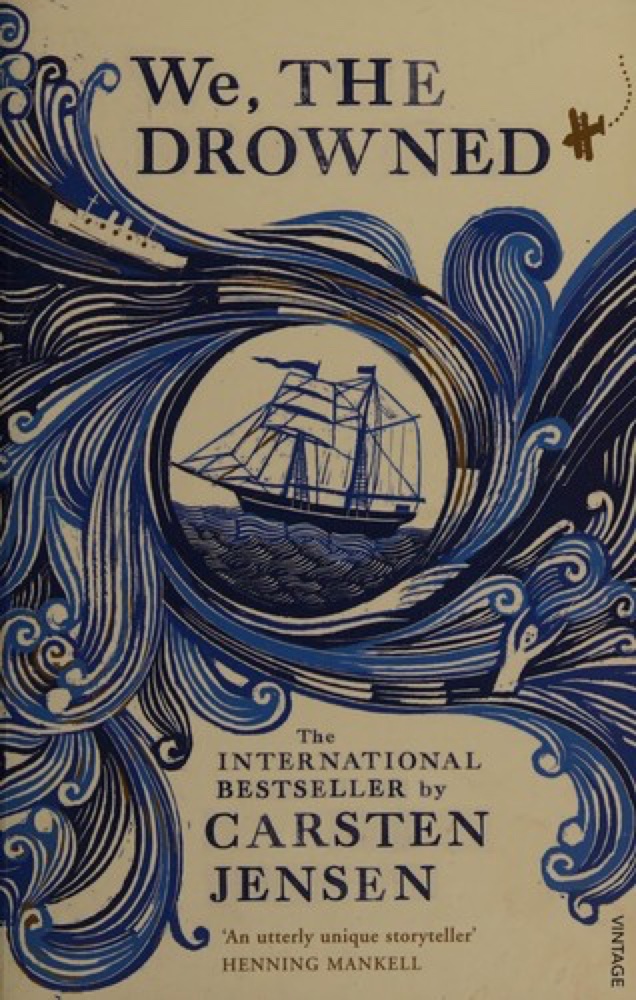 We, the Drowned
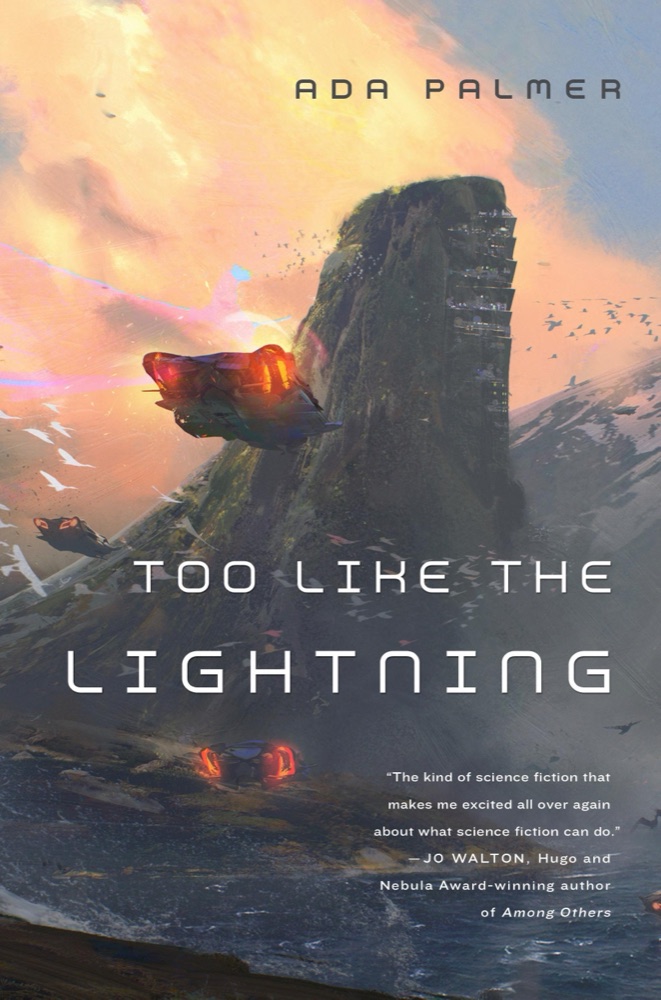 Too Like the Lightning
 The Sailor Who Fell from Grace with the Sea
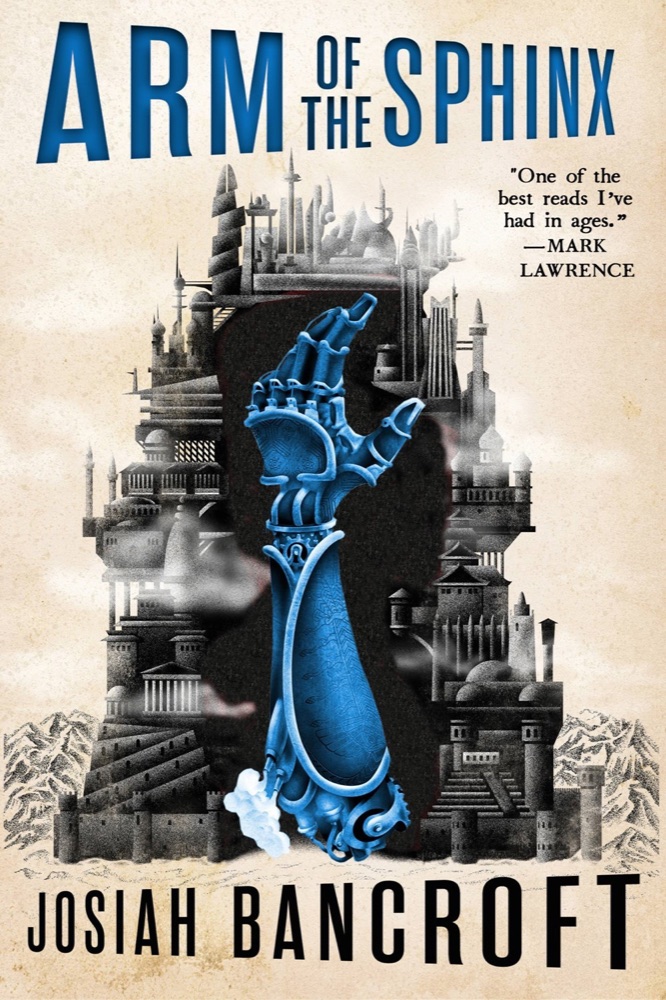 Arm of the Sphinx
 The Enchantress of Florence
 The Water Dancer
 The Monuments Men: Allied Heroes, Nazi Thieves, and the Greatest Treasure Hunt in History
 The Cat's Table
 The Moor's Account
 The Last Stand: Custer, Sitting Bull, and the Battle of the Little Bighorn
 The Histories
 Babylon's Ashes
 Speaking Bones
 A Distant Mirror: The Calamitous 14th Century
 The Path Between the Seas: The Creation of the Panama Canal, 1870-1914
 The Mirror & the Light
 Sackett's Land
 Kon-Tiki
 Gulliver's Travels
 The Underground Railroad
 Empire of Silence
 Pacific Crucible: War at Sea in the Pacific, 1941-1942
 Victory City
 The Devil and the Dark Water
 Elizabeth I
 Toll the Hounds
 The Last of the Mohicans
 Quicksilver
 The Kingdom on the Waves
 The Splendid and the Vile: A Saga of Churchill, Family, and Defiance During the Blitz
 Chesapeake
 Deadhouse Gates
 The Ministry of Fear
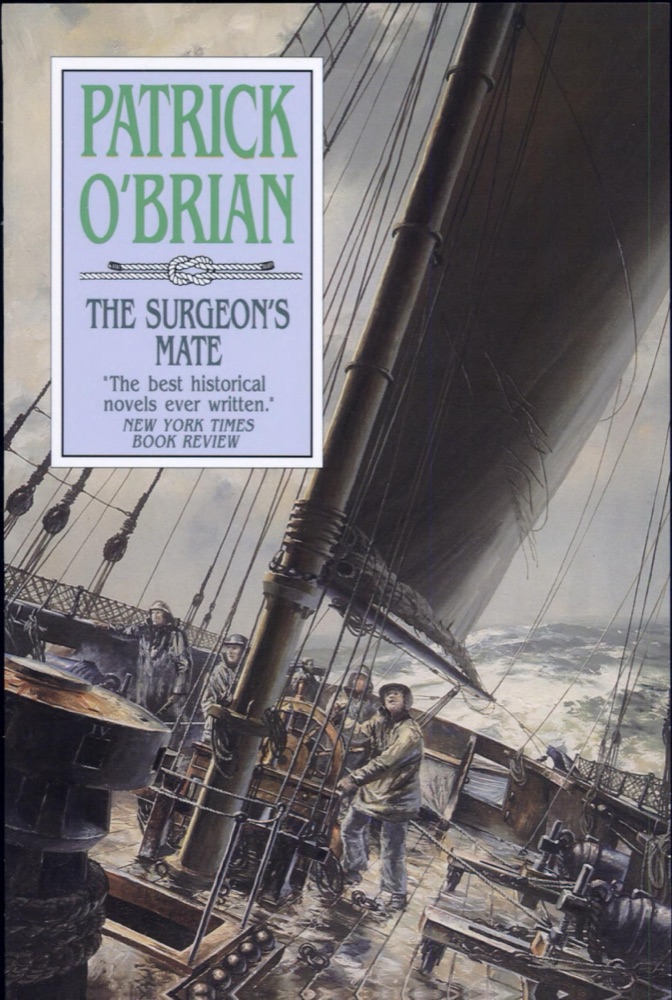 The Surgeon's Mate
 The Honourable Schoolboy
 The Monster Baru Cormorant
 Nostromo
 The System of the World
 Forge of Darkness
 1776
1776
 Kolyma Tales
 The Confessions of Frannie Langton
 Following the Equator: A Journey Around the World
 Post Captain