 The Path Between the Seas: The Creation of the Panama Canal, 1870-1914
Quotes from the Book
Our obligations to our country never cease but with our lives. - John Adams
The longer I live, the more I read, the more patiently I think and the more anxiously I inquire, the less I seem to know...do justly. Love mercy. Walk humbly. This is enough.
When a friend of Abigail and John Adams was killed at Bunker Hill, Abigail's response was to write a letter to her husband and include these words, "My bursting heart must find vent at my pen.
You've got to marinate your head, in that time and culture. You've got to become them." (Speaking about researching, and reading, and immersing yourself in History)
So, it was done, the break was made, in words at least: on July 2, 1776, in Philadelphia, the American colonies declared independence. If not all thirteen clocks had struck as one, twelve had, and with the other silent, the effect was the same. It was John Adams, more than anyone, who had made it happen. Further, he seems to have understood more clearly than any what a momentous day it was and in the privacy of two long letters to Abigail, he poured out his feelings as did no one else: The second day of July 1776 will be the most memorable epocha in the history of America. I am apt to believe that it will be celebrated by succeeding generations as the great anniversary festival. It ought to be commemorated as the Day of Deliverance by solemn acts of devotion to God Almighty. It ought to be solemnized with pomp and parade, with shows, games, sports, guns, bells, bonfires, and illuminations from one end of this continent to the other from this time forward forever more.
According to Adams, Jefferson proposed that he, Adams, do the writing [pf the Declaration of Independence], but that he declined, telling Jefferson he must do it. Why?" Jefferson asked, as Adams would recount. Reasons enough," Adams said. What can be your reasons?" Reason first: you are a Virginian and a Virginian ought to appear at the head of this business. Reason second: I am obnoxious, suspected and unpopular. You are very much otherwise. Reason third: You can write ten times better than I can.
You have overburdened your argument with ostentatious erudition." Spoken by Abigail Adams
I must study politics and war that my sons may have liberty to study mathematics and philosophy. My sons ought to study mathematics and philosophy, geography, natural history, naval architecture, navigation, commerce, and agriculture in order to give their children a right to study paintings, poetry, music, architecture, statuary, tapestry, and porcelain.
The source of our suffering has been our timidity. We have been afraid to think....Let us dare to read, think, speak, write.
They shall not be expected to acknowledge us until we have acknowledged ourselves.
We cannot insure success, but we can deserve it.
...avarice and stinginess [are] not frugality
Government is nothing more than the combined force of society or the united power of the multitude for the peace, order, safety, good, and happiness of the people... There is no king or queen bee distinguished from all the others by size or figure or beauty and variety of colors in the human hive. No man has yet produced any revelation from heaven in his favor, any divine communication to govern his fellow men. Nature throws us all into the world equal and alike... The preservation of liberty depends upon the intellectual and moral character of the people. As long as knowledge and virtue are diffused generally among the body of a nation it is impossible they should be enslaved. Ambition is one of the more ungovernable passions of the human heart. The love of power is insatiable and uncontrollable... There is a danger from all men. The only maxim of a free government ought to be to trust no man living wth power to endanger public liberty.
I've always been dissatisfied, I know that. But lately I find that I reek of discontentment. It fills my throat, and it floods my brain. And sometimes I fear there is no longer a dream, but only the discontentment.
let no girl, no gun, no cards, no flutes, no violins, no dress, no tobacco, no laziness decoy you from your books.
The only way to compose myself and collect my thoughts," he wrote in his diary,"is to set down at my table, place my diary before me, and take my pen into my hand.
Adams was both a devout Christian and an independent thinker, and he saw no conflict in that.
The more Adams thought about the future of his country, the more convinced he became that it rested on education. Before any great things are accomplished, he wrote to a correspondent, a memorable change must be made in the system of education and knowledge must become so general as to raise the lower ranks of society nearer to the higher. The education of a nation instead of being confined to a few schools and universities for the instruction of the few, must become the national care and expense for the formation of the many.
It has been the will of Heaven," the essay began, "that we should be thrown into existence at a period when the greatest philosophers and lawgivers of antiquity would have wished to live... a period when a coincidence of circumstances without example has afforded to thirteen colonies at once an opportunity of beginning government anew from the foundation and building as they choose. How few of the human race have ever had the opportunity of choosing a system of government for themselves and their children? How few have ever had anything more of choice in government than in climate?
As time would prove, he had written one of the great, enduring documents of the American Revolution. The constitution of the Commonwealth of Massachusetts is the oldest functioning written constitution in the world.
What was surprising--and would largely be forgotten as time went on--was how well Adams had done. Despite the malicious attacks on him, the furor over the Alien and Sedition Acts, unpopular taxes, betrayals by his own cabinet, the disarray of the Federalists, and the final treachery of Hamilton, he had, in fact, come very close to winning in the electoral count. With a difference of only 250 votes in New York City, Adams would have won an electoral count of 71 to 61. So another of the ironies of 1800 was that Jefferson, the apostle of agrarian America who loathed cities, owed his ultimate political triumph to New York.
Adams lay peacefully, his mind clear, by all signs. Then late in the afternoon, according to several who were present in the room, he stirred and whispered clearly enough to be understood, "Thomas Jefferson survives.
Before any great things are accomplished, he wrote to a correspondent, a memorable change must be made in the system of education and knowledge must become so general as to raise the lower ranks of society nearer to the higher. The education of a nation instead of being confined to a few schools and universities for the instruction of the few, must become the national care and expense for the formation of the many.
Morality only is eternal. All the rest is balloon and bubble from the cradle to the grave.
Writing again, he stressed that the events of war are always uncertain. Then, paraphrasing a favorite line from the popular play Cato by Joseph Addison - a line that General Washington, too, would often call upon - Adams told her, "We cannot insure success, but we can deserve it.
Every line from you exhilarates my spirits and gives me a glow of pleasure, but your kind congratulations are solid comfort to my heart. The little strength of mind and the considerable strenght of body that I once possessed appear to be all gone, but while I breathe I shall be your friend.
Honesty, sincerity, and openness, I esteem essential marks of a good mind,
She was particularly curious about the Viginians, wondering if, as slaveholders, they had the necessary commitment to the cause of freedom. "I have," she wrote, "sometimes been ready to think that the passions for liberty cannot be equally strong in the breasts of those who have been accustomed to deprive their fellow creature of theirs." What she felt about those in Massachusetts who owned slaves, including her own father, she did not say, but she need not have--John knew her mind on the subject. Writing to him during the First Congress, she had been unmistakably clear: "I wish most sincerely there was not a slave in the province. It always seemed a most iniquitous scheme to me--[to] fight ourselves for what we are daily robbing and plundering from those who have as good a right to freedom as we have.
That the hand of God was involved in the birth of the new nation he had no doubt. "It is the will of heaven that the two countries should be sundered forever." If the people now were to have "unbounded power," and as the people were quite capable of corruption as "the great," and thus high risks were involved, he would submit all his hopes and fears to an overruling providence, "in which unfashionable as the faith may be, I firmly believe.
Did you know?
- The book won the 2002 Pulitzer Prize for Biography or Autobiography.
- It draws on more than one thousand surviving letters between John and Abigail Adams, nearly half of them previously unpublished.
- McCullough described the correspondence of John and Abigail Adams as one of the great love stories of American history.
- It was adapted into a 2008 HBO miniseries starring Paul Giamatti as Adams.
- The book also won the 2002 Ambassador Book Award for Biography or Autobiography.
- McCullough said the problem with Adams was that most Americans knew nothing about him.
About David McCullough
David McCullough (1933-2022) was an American author and historian celebrated for his narrative works of popular history. He won two Pulitzer Prizes, for John Adams and Truman, as well as the Presidential Medal of Freedom.
More about the author →More by David McCullough
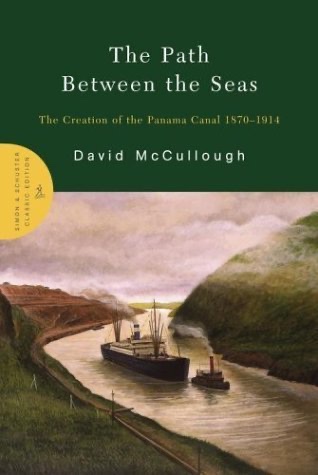
The Path Between the Seas: The Creation of the Panama Canal, 1870-1914
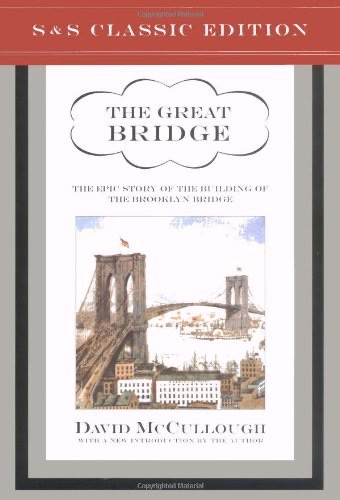 The Great Bridge: The Epic Story of the Building of the Brooklyn Bridge
 The Wright Brothers
 Truman
About the book
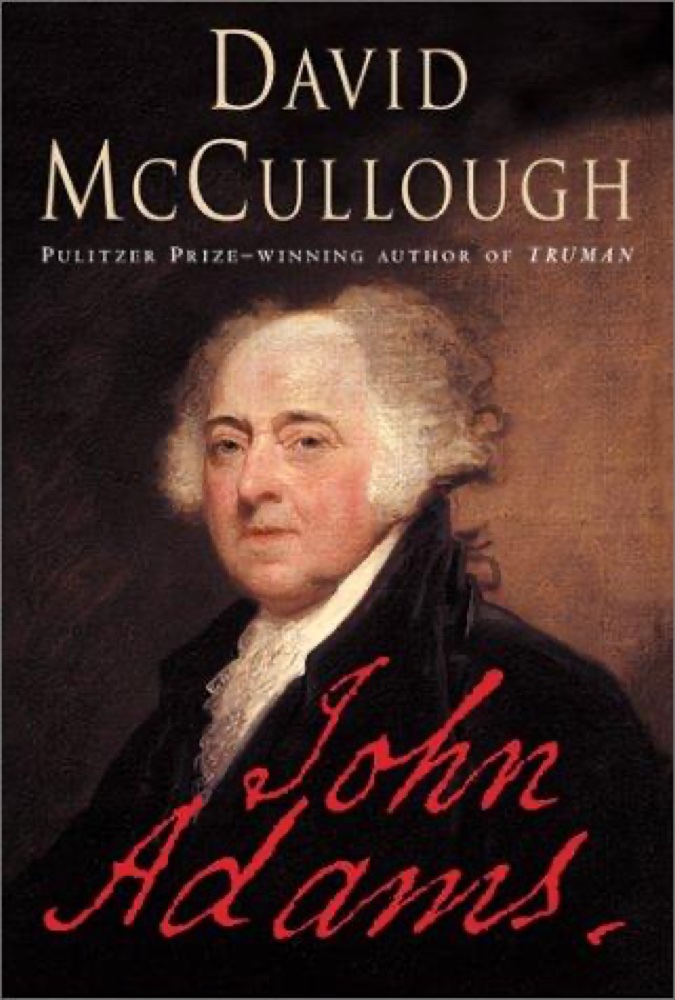
John Adams is David McCullough's sweeping biography of the second president of the United States, tracing his life from a Massachusetts farm boy and Boston lawyer to Founding Father, diplomat, vice president, and president. Drawing on Adams's voluminous correspondence, the book follows his central role in the American Revolution, his years abroad in France and Britain, and his often turbulent political career, restoring a figure McCullough felt most Americans knew little about.
At the heart of the book is Adams's marriage to Abigail Adams, whose surviving letters, many previously unpublished, McCullough uses to portray one of the great partnerships and love stories in American history. The narrative also renders Adams's complicated, lifelong friendship and rivalry with Thomas Jefferson, a relationship that spanned revolution, estrangement, and reconciliation, culminating in the two men dying on the same day, July 4, 1826.
Published in 2001, the biography became an enormous bestseller and was praised for its narrative storytelling, winning the 2002 Pulitzer Prize for Biography or Autobiography. Its portrait of Adams as a brilliant, honest, and fiercely independent patriot helped revive popular interest in him, and the book was later adapted into an acclaimed HBO miniseries in 2008.
Book details
- First published
- 2001
- Length
- 751 pages
- Reading time
- 46 hours
- Author
- David McCullough
- Genre
- Literature
- Goodreads rating
- 4.09 (382k ratings) →
Movie & TV adaptations
- IMDb
If you liked this, read…
- 1TrumanMcCullough's other Pulitzer-winning presidential biography in the same narrative style.
- 2Alexander HamiltonRon Chernow's landmark biography of another founding-era figure.
- 3Thomas Jefferson: The Art of PowerJon Meacham's life of Adams's great friend and rival.
Keep reading
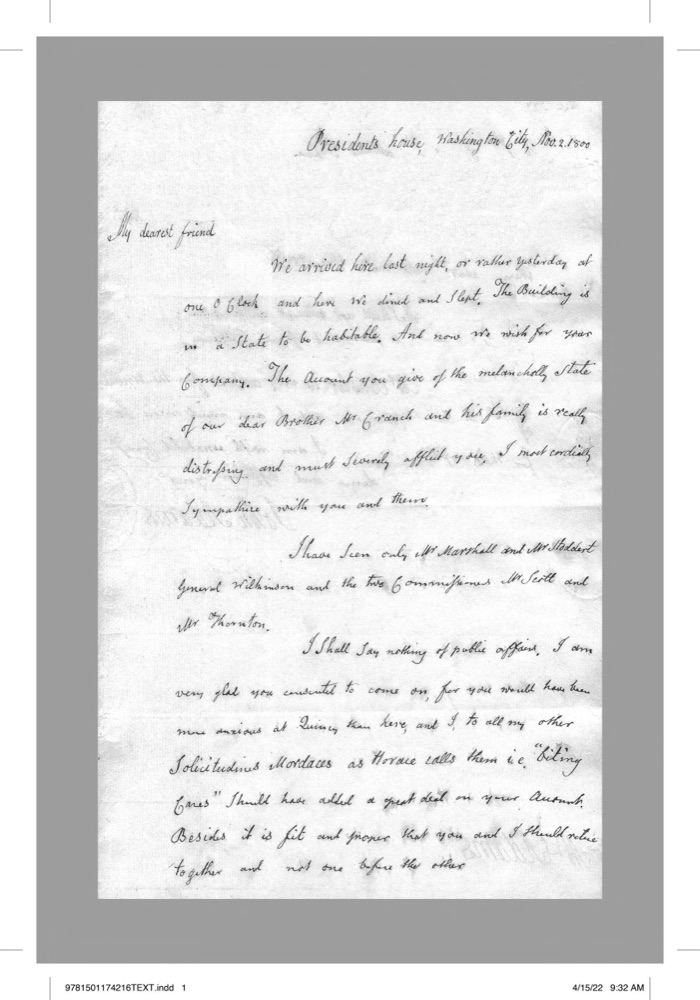 The American Spirit: Who We Are and What We Stand For
 Burr
Burr
 The Autobiography of Benjamin Franklin
 March
March
 These Truths: A History of the United States
 The Education of Henry Adams
 John Quincy Adams: A Public Life, a Private Life
 Dictator
 The Virginian
 Killing Kennedy: The End of Camelot
 The Autobiography of Eleanor Roosevelt
 Civil Disobedience
 Self-Reliance and Other Essays
 The Kingdom on the Waves
 A Connecticut Yankee in King Arthur's Court
 Founding Brothers: The Revolutionary Generation
 Self-Reliance: An Excerpt from Collected Essays, First Series
 The Ides of March
 Democracy in America
 The Essays of Ralph Waldo Emerson
 A Promised Land
 1776
1776
 Essays of E.B. White
 Walden and other writings
 Don Juan
 Reflections on the Revolution in France
 Hawaii
 The Dream of Scipio
Truman
The Dream of Scipio
Truman
 The History of Tom Jones, a Foundling
 New York
 Destiny of the Republic: A Tale of Madness, Medicine and the Murder of a President
 Mason & Dixon
 David Copperfield
 Walden & Civil Disobedience
 Babbitt
 Radio Free Albemuth
 The Republic
 The Fountainhead
 Faith of the Fallen
 Children of Dune
 One Man's Meat
 Madame Tussaud
 The Small and the Mighty: Twelve Unsung Americans Who Changed the Course of History, from the Founding to the Civil Rights Movement
 Abraham Lincoln: Vampire Hunter
 Promises to Keep: On Life and Politics
 Benjamin Franklin: An American Life
 Bleak House
 Profiles in Courage
 The Story of My Experiments With Truth
 A Great Reckoning
 That Hideous Strength
 A Lesson Before Dying
 Wide Awake
 Hell and Other Destinations: A 21st-Century Memoir
 The Autobiography of Martin Luther King, Jr.
 James
James
 Once An Eagle
 The Proud Tower: A Portrait of the World Before the War, 1890-1914