
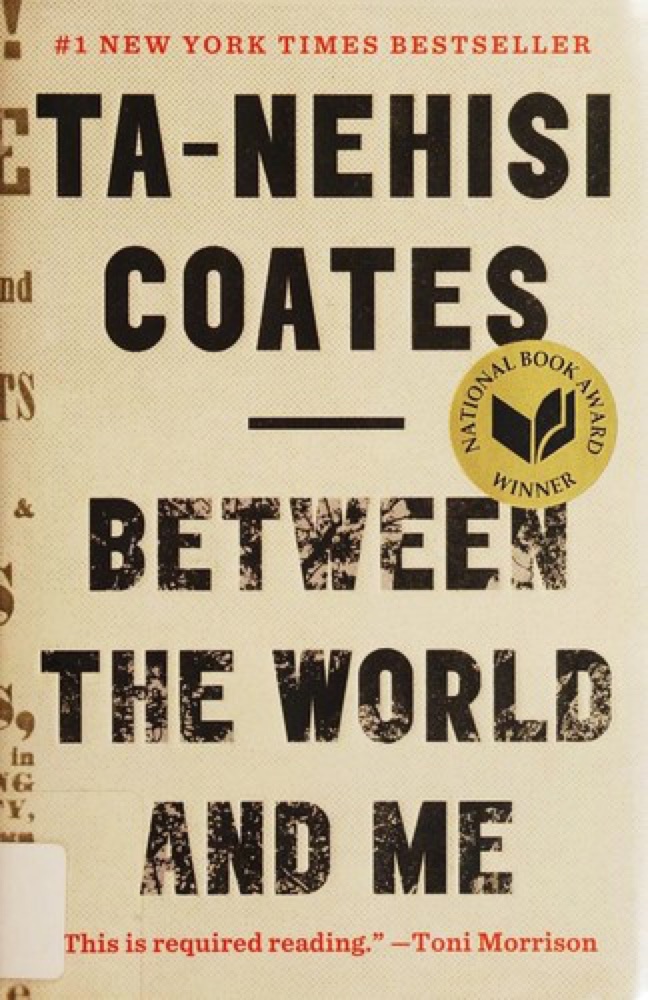
 Between the World and Me
Quotes from the Book
The masters could not bring water to boil, harness to horse or strap their own drawers without us. We were better than them. We had to be. Sloth was literal death for us, while for them it was the whole ambition of their lives.
59
They knew our names and they knew our parents. But they did not know us, because not knowing was essential to their power. To sell a child right from under his mother, you must know that mother only in the thinnest way possible. To strip a man down, condemn him to be beaten, flayed alive, then anointed with salt water, you cannot feel him the way you feel your own. You cannot see yourself in him, lest your hand be stayed, and your hand must never be stayed, because the moment it is, the Tasked will see that you see them, and thus see yourself. In that moment of profound understanding, you are all done, because you cannot rule as is needed.
52
I was young and love to me was a fuse that was lit, not a garden that was grown. Love was not concerned with any deep knowledge of its object, of their wants and dreams, but mainly with the joy felt in their presence and the sickness felt in their departure.
41
All of these fanatics were white. They took slavery as a personal insult or affront, a stain upon their name. They had seen women carried off to fancy, or watched as a father was stripped and beaten in front of his child, or seen whole families pinned like hogs into rail-cars, steam-boats, and jails. Slavery humiliated them, because it offended a basic sense of goodness that they believed themselves to possess. And when their cousins perpetrated the base practice, it served to remind them how easily they might do the same. They scorned their barbaric brethren, but they were brethren all the same. So their opposition was a kind of vanity, a hatred of slavery that far outranked any love of the slave.
34
But we must tell our stories, and not be ensnared by them.
30
It’s a cruel thing to do to children, to raise them as though they are siblings, and then set them against each other so that one shall be queen and the other shall be a footstool.
22
Slavery is everyday longing, is being born into a world of forbidden victuals and tantalizing untouchables—the land around you, the clothes you hem, the biscuits you bake. You bury the longing, because you know where it must lead.
21
There was no peace in slavery, for every day under the rule of another is a day of war.
16
It's like summer wear the world out, and by October everyone is just ready for a nap
14
I had dreams back then. Big dumb dreams. Dead and gone.” “And what do you dream of now?” she asked. “After what I just came up from?” I said. “Breathing. I just dream of breathing.
13
Bored whites were barbarian whites. While they played at aristocrats, we were their well-appointed and stoic attendants. But when they tired of dignity, the bottom fell out. New games were anointed and we were but pieces on the board. It was terrifying. There was no limit to what they might do at this end of the tether, nor what my father would allow them to do.
13
The tree of our family was parted - branches here, roots there - parted for their lumber.
12
Time would come when gold would outweigh blood. But this was still Virginia of old, where a dubious God held that those who would offer a man for sale were somehow more honorable than those who effected that sale.
12
But I was a boy, seeing in him what boys can’t help but see in their fathers—a mold in which their own manhood might be cast.
12
The masters could not bring water to boil, harness a horse, nor strap their own drawers without us. We were better than them—we had to be. Sloth was literal death for us, while for them it was the whole ambition of their lives.
10
Keep your end of the yard clean and leave the justice to the Lord.
10
Blessed, for we do not bear the weight of pretending pure. I will say that is has taken some time for me to get that. Had to lose some folk and truly understand what that loss mean. But having been down, and having seen my share of those who are up, I tell you, Robert Ross, I would live down here among my losses, among the muck and mess of it, before I would ever live among those who are in their own kind of muck, but are so blinded by it they fancy it pure. Ain't no pure, Robert. Ain't no clean.
9
I felt a great rage, not simply because I knew they had been taken but because I knew how they had been taken, how they had been parted from eacch other, how I was born and made by this great parting. Better than before, I understood the whole dimensions of this crime, the entirety of the theft, the small moments, the tenderness, the quarrels and corrections, all stolen, so that men such as my father might live as gods.
9
And by then, I well knew what would be done upon that land, how the sin of theft would be multiplied by the sin of bondage.
9
Breathing. I just dream of breathing
9
For memory is the chariot, and memory is the way, and memory is the bridge from the curse of slavery to the boon of freedom.
8
I have so rarely been afforded the right of farewell,
8
I was of the age when it was natural to seek out a wife, but by then I had seen tasking women promised to tasking men, and then seen how such “promises” were kept. I remember how these young couples would hold one another, each morning before going to their separate tasks, how they would clasp hands at night, sitting on the steps of their quarters, how they would fight and draw knives, kill each other, before being without each other, kill each other, because Natchez-way was worse than death, was living death, an agony of knowing that somewhere in the vastness of America, the one whom you loved most was parted from you, never again to meet in this shackled, fallen world. That was the love the Tasked made, and it was that love that occupied my thoughts when time came to tend to Maynard—how families formed in the shadow and quick, and then turned to dust with the white wave of a hand.
8
As I learned the house, and began to read, and began to see more of the Quality, I saw that just as the fields and its workers were the engine of everything, the house itself would have been lost without those who tasked within it. My father, like all the masters, built an entire apparatus to disguise this weakness, to hide how prostrate they truly were. The tunnel, where I first entered the house, was the only entrance that the Tasked were allowed to use, and this was not only for the masters’ exaltation but to hide us, for the tunnel was but one of the many engineering marvels built into Lockless so as to make it appear powered by some imperceptible energy. There were dumbwaiters that made the sumptuous supper appear from nothing, levers that seemed to magically retrieve the right bottle of wine hidden deep in the manor’s bowels, cots in the sleeping quarters, drawn under the canopy bed, because those charged with emptying the chamber-pot must be hidden even more than the chamber-pot itself. The magic wall that slid away from me that first day and opened the gleaming world of the house hid back stairways that led down into the Warrens, the engine-room of Lockless, where no guest would ever visit. And when we did appear in the polite areas of the house, as we did during the soirées, we were made to appear in such appealing dress and grooming so that one could imagine that we were not slaves at all but mystical ornaments, a portion of the manor’s charm. But I now knew the truth—that Maynard’s folly, though more profane, was unoriginal. The masters could not bring water to boil, harness a horse, nor strap their own drawers without us. We were better than them—we had to be. Sloth was literal death for us, while for them it was the whole ambition of their lives. It occurred to me then that even my own intelligence was unexceptional, for you could not set eyes anywhere on Lockless and not see the genius in its makers—genius in the hands that carved out the columns of the portico, genius in the songs that evoked, even in the whites, the deepest of joys and sorrows, genius in the men who made the fiddle strings whine and trill at their dances, genius in the bouquet of flavors served up from the kitchen, genius in all our lost, genius in Big John. Genius in my mother.
8
There is always a part of us that does not want to win, wants to stay down in the low and familiar.
7
...I had adjusted to it by then. And that, alone, is the worst of it: that a man could feel his violation as natural." - Hiram Walker
7
would live down here among my losses, among the muck and mess of it, before I would ever live among those who are in their own kind of muck, but are so blinded by it they fancy it pure. Ain’t no pure, Robert. Ain’t no clean.
7
The low whites, men such as our own Harlan, were tolerated publicly by the Quality, but spurned in private; their names were spat out at banquets, their children mocked in the parlors, their wives and daughters seduced and discarded. They were a degraded and downtrodden nation enduring the boot of the Quality, solely for the right to put a boot of their own to the Tasked.
7
So many of us who went, went with dignity and respect. And it occurred to me how absurd it was to cling to morality when surrounded by people who had none.
6
For it is not simply by slavery that you are captured, but by a kind of fraud, which paints its executors as guardians at the gate, staving off African savagery, when it is they themselves who are savages, who are Mordred, who are the Dragon, in Camelot’s clothes. And at that moment of revelation, of understanding, running is not a thought, not even as a dream, but a need, no different than the need to flee a burning house.
6
Did you know?
- It was the debut novel of Ta-Nehisi Coates, who was previously known primarily for nonfiction and journalism.
- It was the first book selected for the revived Oprah's Book Club, with Oprah Winfrey praising it highly.
- It debuted at number one on the New York Times fiction bestseller list.
- The protagonist's supernatural ability is called "conduction," powered by memory.
- The character Moses in the novel is revealed to be the historical figure Harriet Tubman.
About Ta-Nehisi Coates
Ta-Nehisi Coates is an American author and journalist known for his writing on race and American history, including the National Book Award-winning "Between the World and Me." "The Water Dancer" (2019) is his debut novel.
More about the author →More by Ta-Nehisi Coates
About the book
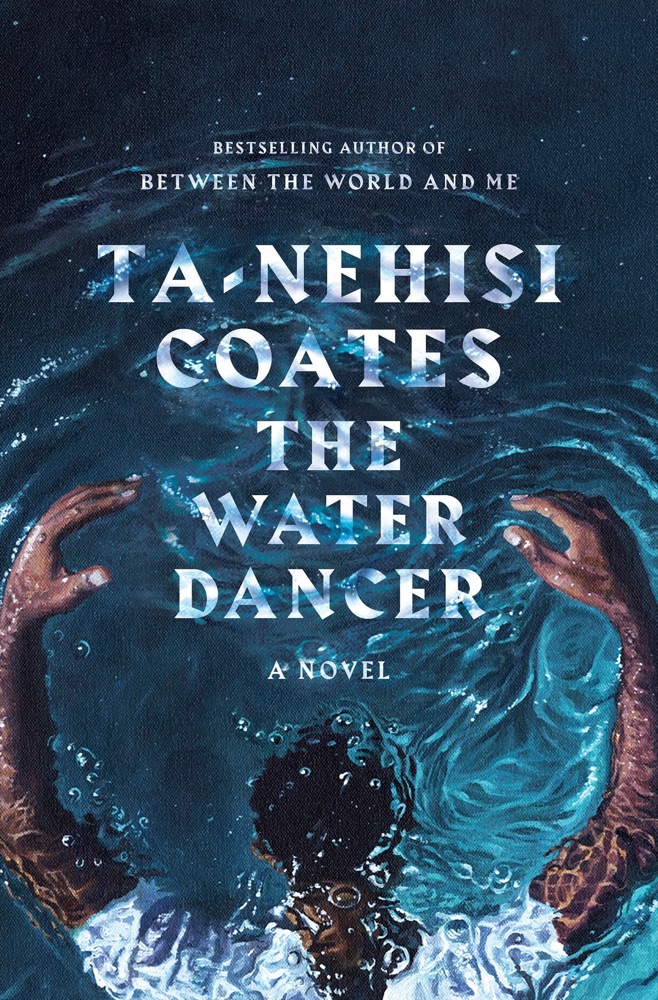
"The Water Dancer" is the debut novel of Ta-Nehisi Coates, set in the antebellum South. It follows Hiram Walker, a young enslaved man born on a declining Virginia tobacco plantation called Lockless, who possesses a perfect, photographic memory yet cannot remember his own mother, who was sold away when he was a boy. After a near-drowning in a river, Hiram discovers he has a mysterious power called "conduction" that can transport people across great distances, a gift that draws him into the secret work of the Underground Railroad.
Blending historical fiction with magical realism, the novel explores memory as both a wound and a source of liberation, alongside the psychological violence of slavery, the meaning of family and kinship, and the longing for freedom. The conduction power is rooted in ancestral memory and the loss of those who were sold away, tying the supernatural directly to the novel's themes of remembrance and reclamation.
Released in 2019, the book debuted at number one on the New York Times fiction bestseller list and was the first selection of the relaunched Oprah's Book Club, with Oprah Winfrey praising it highly. Critics responded to its lyrical prose and ambitious reimagining of the Underground Railroad, though reception was mixed on the balance between its historical and fantastical elements. It marked Coates's first work of fiction after his acclaimed nonfiction, including "Between the World and Me."
Key characters
- Hiram WalkerEnslaved narrator with a photographic memory and the power of conduction
- SophiaEnslaved woman whom Hiram loves and tries to escape with
- ThenaHardened older enslaved woman who becomes a mother figure to Hiram
- Corrine QuinnWealthy white woman secretly working as an agent of the Underground
- MaynardHiram's white half-brother and the heir to Lockless
- RoseHiram's mother, a gifted dancer who was sold away when he was young
- Harriet Tubman (Moses)Underground Railroad conductor who shares Hiram's power
Book details
- First published
- 2019
- Length
- 407 pages
- Reading time
- 8 hours
- Author
- Ta-Nehisi Coates
- Genre
- Historical
- Goodreads rating
- 4.06 (121k ratings)
- First line
- “And I could only have seen her there on the stone bridge, a dancer wreathed in ghostly blue, because that was the way they would have taken her back when I was young, back when the Virginia earth was still red as brick and red with life.”
Critical reception
- Debuted at number one on the New York Times fiction bestseller list.
- Selected as the first book for the relaunched Oprah's Book Club, with Oprah Winfrey praising it highly.
- Critics praised its lyrical prose while offering mixed responses to its blend of historical and fantastical elements.
Keep reading
 Incidents in the Life of a Slave Girl
 Homegoing
 The Underground Railroad
 Men We Reaped
 The Love Songs of W.E.B. Du Bois
 Dreams from My Father: A Story of Race and Inheritance
 Kindred
 My Bondage and My Freedom
 James
James
 The Son
 Whiskey When We're Dry
 A Thousand Moons
 Powers
 The Prophets
 Burn Down Master's House
 March
March
 The Sweetness of Water
 Blood Done Sign My Name: A True Story
 Washington Black
 All God's Children Need Traveling Shoes
 The Heart of a Woman
 The Unvanquished
 Fire Shut Up in My Bones: A Memoir
 Twelve Years a Slave
 The Reivers
 Underground Airlines
 The Sea Keeper's Daughters
Between the World and Me
The Sea Keeper's Daughters
Between the World and Me
 The Pox Party
 The Damnation Game
 The Book of Negroes
 The Prince of Tides
 Soul of the Fire
 Native Son
 How Beautiful We Were
 The Heretic's Daughter
 The Lords of Discipline
 A Bend in the River
 The Tunnel
 Varina
 The Last Mortal Bond
 The Beautiful Struggle: A Father, Two Sons and an Unlikely Road to Manhood
 The Naked and the Dead
 Queen of Fire
 A Song to Drown Rivers
 Shadow & Claw
 The Confessions of Nat Turner
 The Brutal Telling
 Absalom, Absalom!
 Uncle Tom's Cabin
 Seven Pillars of Wisdom: A Triumph
 Bastard Out of Carolina
 The Bone Tree
 The Nickel Boys
 Caleb's Crossing
 The Wars
 The Memoirs of Cleopatra
 Indian Horse
 The Hour I First Believed
 The Burning Soul