
 The 1619 Project: A New Origin Story
Quotes from the Book
When you turn an election into a three-ring circus, there’s always a chance that the dancing bear will win.
44
Poor whites are still taught to hate—but not to hate those who are keeping them in line. Lyndon Johnson knew this when he quipped, “If you can convince the lowest white man he’s better than the best colored man, he won’t notice you’re picking his pocket. Hell, give him somebody to look down on, and he’ll empty his pockets for you.” We
28
How does a culture that prizes equality of opportunity explain, or indeed accommodate, its persistently marginalized people?
27
If this book accomplishes anything it will be to have exposed a number of myths about the American dream, to have disabused readers of the notion that upward mobility is a function of the founders’ ingenious plan, or that Jacksonian democracy was liberating, or that the Confederacy was about states’ rights rather than preserving class and racial distinctions.
17
Americans lack any deeper appreciation of class. Beyond white anger and ignorance is a far more complicated history of class identity that dates back to America’s colonial period and British notions of poverty.
17
We know, for instance, that Americans have forcefully resisted extending the right to vote; those in power have disenfranchised blacks, women, and the poor in myriad ways. We know, too, that women historically have had fewer civil protections than corporations. Instead of a thoroughgoing democracy, Americans have settled for democratic stagecraft: high-sounding rhetoric, magnified, and political leaders dressing down at barbecues or heading out to hunt game.
14
Historical mythmaking is made possible only by forgetting.
10
Instead of a thoroughgoing democracy, Americans have settled for democratic stagecraft.
10
This is why Paine was careful to downplay the distinction between the rich and the poor. He wanted his American readers to focus on distant kings, not local grandees. He wanted them to break with the Crown, not to disturb the class order.
9
First known as “waste people,” and later “white trash,” marginalized Americans were stigmatized for their inability to be productive, to own property, or to produce healthy and upwardly mobile children—the sense of uplift on which the American dream is predicated. The American solution to poverty and social backwardness was not what we might expect. Well into the twentieth century, expulsion and even sterilization sounded rational to those who wished to reduce the burden of “loser” people on the larger economy. In
9
Throughout its history, the United States has always had a class system. It is not only directed by the top 1 percent and supported by a contented middle class. We can no longer ignore the stagnant, expendable bottom layers of society in explaining the national identity. The
8
We need to stop thinking that some Americans are the real Americans, the deserving, the talented, the most patriotic and hardworking, while others can be dismissed as less deserving of the American dream.
7
British colonists promoted a dual agenda: one involved reducing poverty back in England, and the other called for transporting the idle and unproductive to the New World. After
7
The theatrical performance of politicians who profess to speak for an "American People" do nothing to highlight the history of poverty.
7
In this sense, what Hakluyt foresaw in a colonized America was one giant workhouse. This cannot be emphasized enough.
7
Many people----women especially----remain trapped in the poverty into which they were born. The successful person from this background is the exception. The American dream is a double-edged sword in that those who are able to carve out their own destiny are also hard-pressed not to condemn those who get struck between the cracks.
6
For most Americans of the eighteenth century, it was assumed impossible for a servant to shed his lowly origins; the meaner sort, as one newspaper insisted, could never “wash out the stain of servility.” There were fears that the meaner sort were treading too close on the heels of those above them.
6
For much of American history, the worst classes were seen as extrusions of the worst land: scrubby, barren, and swampy wasteland. Home ownership remains today the measure of social mobility.
6
Stories of unity tamp down our discontents and mask even our most palpable divisions. And when these divisions are class based, as they almost always are, a pronounced form of amnesia sets in. Americans do not like to talk about class. It is not supposed to be important in our history. It is not who we are.
5
At all times, white trash remind us of one of the American nation’s uncomfortable truths: the poor are always with us. A preoccupation with penalizing poor whites reveals an uneasy tension between what Americans are taught to think the country promises—the dream of upward mobility—and the less appealing truth that class barriers almost invariably make that dream unobtainable. Of course, the intersection of race and class remains an undeniable part of the overall story. The
5
To modern conservatives, women are first and foremost breeders.
4
Today as well we have a large unbalanced electorate that is regularly convinced to vote against its collective self-interest. These people are told that East Coast college professors brainwash the young and that Hollywood liberals make fun of them and have nothing in common with them and hate America and wish to impose an abhorrent, godless lifestyle.
4
He was able to prove that the South had surrendered ninety-seven million acres to erosion (an area larger than the two Carolinas and Georgia); it had squandered the chances of millions of people by tolerating poverty and illiteracy; and it had ignored human potential by refusing to provide technological training, or even basic services, to its people. The overwhelming power of Odum’s data undercut (what Odum himself called) Gone with the Wind nostalgia—the collective self-image elite southerners had cultivated.
4
The innocuous-sounding term “fertility treatment” enables the wealthy to breed their own kind, buying sperm and eggs at “baby centers” around the country. Abortion and birth control, meanwhile, are for evangelical conservatives a violation of God’s will that all people should be fruitful and multiply, and yet this same fear of unnatural methods of reproduction does not engender opposition to fertility clinics. Antiabortion activists, like eugenicists, think that the state has the right to intervene in the breeding habits of poor single women. Poor
4
By 1770, fewer than 10 percent of white Virginians laid claim to over half the land in the colony; a small upper echelon of large planters each owned slaves in the hundreds. More than half of white men owned no land at all, working as tenants or hired laborers, or contracted as servants.
4
The vagrant, the squatter, had been redrawn, yet qualitatively he/she remained the same: a piece of white trash on the margins of rural society. Observers recognized how the moving mass of undesirables in the constantly expanding West challenged democracy’s central principle. California was a wake-up call. Anxious southerners focused attention not only on their slave society and slave economy, but on the ever-growing numbers of poor whites who made the permanently unequal top-down social order perfectly obvious. Who really spoke of equality among whites anymore? No one of any note. Let us put it plainly: on the path to disunion, the roadside was strewn with white trash.
4
An astute observer wrote in 1924 that American voters preferred to “cherish the unrealities they have absorbed” based upon “the primal instinct to defeat the side they hate or fear.
3
Unlike Adam Smith’s invisible hand of the free market, Wilson’s dark hand represented the dangers of an unregulated economy: downward mobility and the ruin of countless lives.
3
Watch on YouTube
About Nancy Isenberg
We have collected 28 quotes from 1 book by Nancy Isenberg on BookQuoters.
More about the author →About the book
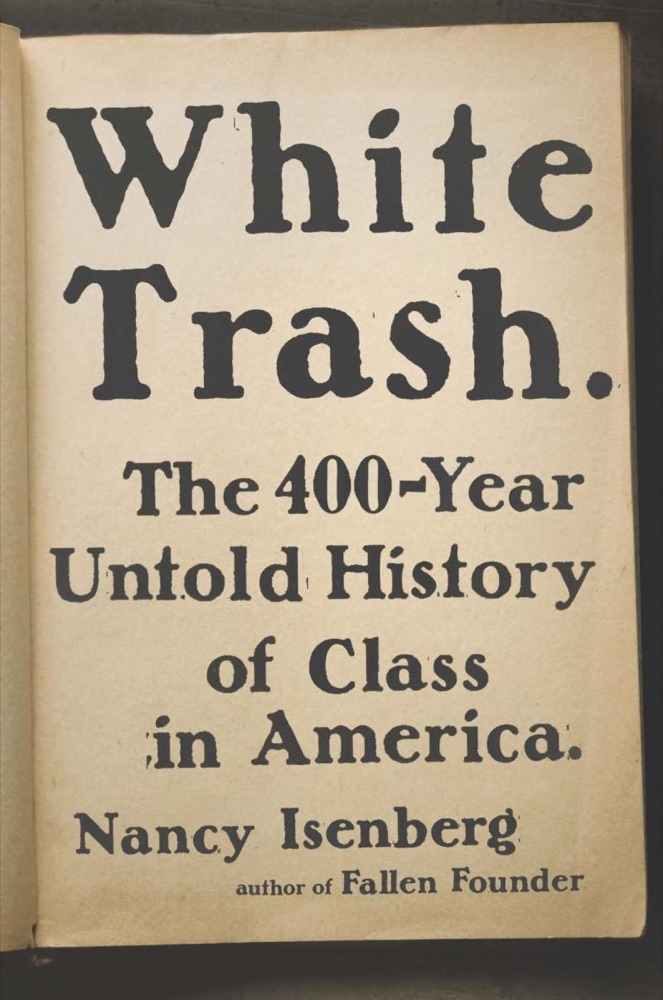
In her groundbreaking history of the class system in America, extending from colonial times to the present, Nancy Isenberg takes on our comforting myths about equality, uncovering the crucial legacy of the ever-present, always embarrassing––if occasionally entertaining––"poor white trash."
The wretched and landless poor have existed from the time of the earliest British colonial settlement. They were alternately known as “waste people,” “offals,” “rubbish,” “lazy lubbers,” and “crackers.” By the 1850s, the downtrodden included so-called “clay eaters” and “sandhillers,” known for prematurely aged children distinguished by their yellowish skin, ragged clothing, and listless minds.
Surveying political rhetoric and policy, popular literature and scientific theories over four hundred years, Isenberg upends assumptions about America’s supposedly class-free society––where liberty and hard
Book details
- First published
- 2016
- Author
- Nancy Isenberg
- Genre
- History
- Goodreads rating
- 3.77 (26k ratings)
The buzz
- The New York TimesReview in The New York Timesprofessional review (via Book Marks)
- The Washington PostReview in The Washington Postprofessional review (via Book Marks)
- TimeReview in Timeprofessional review (via Book Marks)
- SlateReview in Slateprofessional review (via Book Marks)
- MobileReview in Mobileprofessional review (via Book Marks)
- Post GazetteReview in Post Gazetteprofessional review (via Book Marks)
Keep reading
The 1619 Project: A New Origin Story
 Deer Hunting with Jesus: Dispatches from America's Class War
 A People's History of the United States
 We Were Eight Years in Power: An American Tragedy
 The Sum of Us: What Racism Costs Everyone and How We Can Prosper Together
 Wealth, Poverty and Politics: An International Perspective
 Four Hundred Souls: A Community History of African America, 1619-2019
 The View From Flyover Country: Essays by Sarah Kendzior
 The Warmth of Other Suns: The Epic Story of America's Great Migration
 Strangers in Their Own Land: Anger and Mourning on the American Right
 Coming Apart: The State of White America, 1960-2010
 America: The Farewell Tour
 Poverty, by America
 No Name in the Street
 The End of the Myth: From the Frontier to the Border Wall in the Mind of America
 The Inconvenient Indian: A Curious Account of Native People in North America
 The Hemingses of Monticello: An American Family
 A Colony in a Nation
 The Audacity of Hope: Thoughts on Reclaiming the American Dream
 Black Reconstruction in America 1860-1880
 Stony the Road: Reconstruction, White Supremacy, and the Rise of Jim Crow
 These Truths: A History of the United States
 The Committed
 The Disuniting of America: Reflections on a Multicultural Society
 Black AF History: The Un-Whitewashed Story of America
 Black Rednecks and White Liberals
 The Wretched of the Earth
 Evil Geniuses: The Unmaking of America
 Twilight of the Elites: America After Meritocracy
 White Rage: The Unspoken Truth of Our Racial Divide
 Nobody Knows My Name
 Go Back to Where You Came From: And Other Helpful Recommendations on How to Become American
 Where Do We Go from Here: Chaos or Community?
 Life at the Bottom: The Worldview That Makes the Underclass
 Becoming Madam Secretary
 Myth America: Historians Take On the Biggest Legends and Lies About Our Past
 The Radicalism of the American Revolution
 Lies My Teacher Told Me: Everything Your American History Textbook Got Wrong
 Why We Can't Wait
 The Small and the Mighty: Twelve Unsung Americans Who Changed the Course of History, from the Founding to the Civil Rights Movement
 Empire of Illusion: The End of Literacy and the Triumph of Spectacle
 Occupy
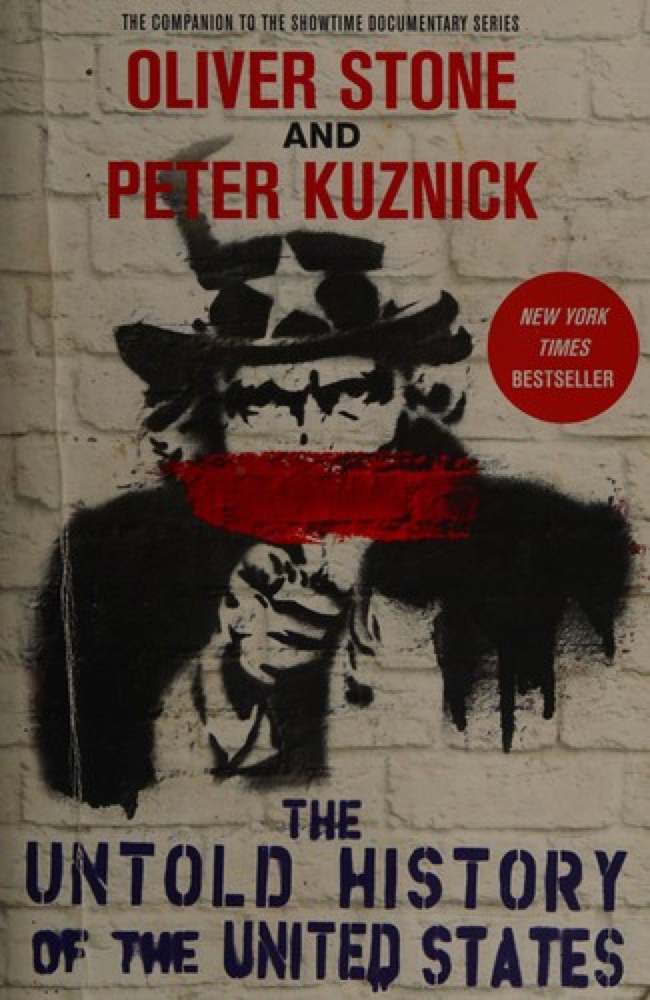 The Untold History of The United States
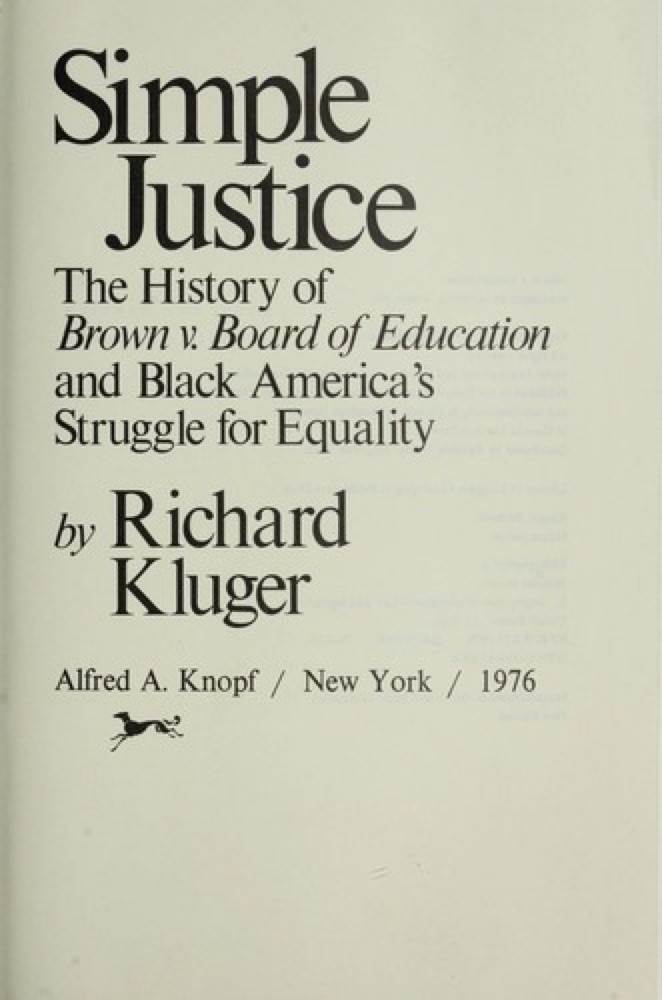 Simple Justice: The History of Brown v. Board of Education and Black America's Struggle for Equality
 The Black Jacobins: Toussaint L'Ouverture and the San Domingo Revolution
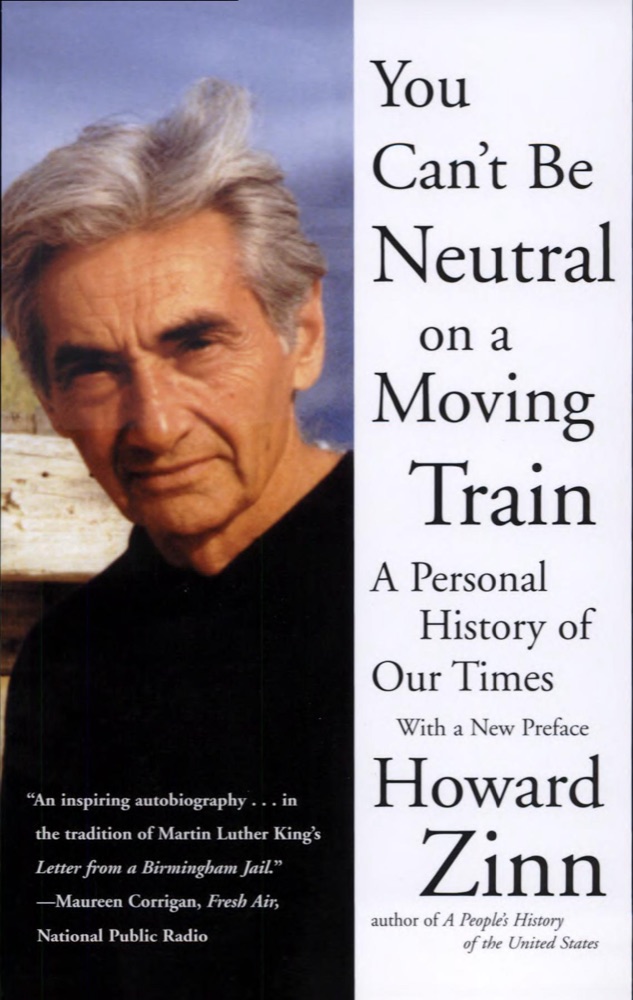 You Can't Be Neutral on a Moving Train: A Personal History of Our Times
 America (The Book): A Citizen's Guide to Democracy Inaction
 What White People Can Do Next: From Allyship to Coalition – An Empowering Guide to Interrogating Whiteness and Creating Justice
 Elite Capture: How the Powerful Took Over Identity Politics
 Edge of Eternity
 The Half Has Never Been Told: Slavery and the Making of American Capitalism
 The Lessons of History
 Open Veins of Latin America: Five Centuries of the Pillage of a Continent
 White Like Me: Reflections On Race From A Privileged Son
 Ill Fares the Land
 The Soul of America: The Battle for Our Better Angels
 Behold a Pale Horse
 Identity: The Demand for Dignity and the Politics of Resentment
 The System: Who Rigged It, How We Fix It
 We Gon' Be Alright: Notes on Race and Resegregation