
 The Boys in the Boat: Nine Americans and Their Epic Quest for Gold at the 1936 Berlin Olympics
Quotes from the Book
It reminds us that as ordinary as we might be, we can, if we choose, take the harder road, walk forth bravely under the indifferent stars. We can hazard the ravages of chance. We can choose to endure what seems unendurable, and thereby open up the possibility of prevailing. We can awaken to the world as it is, and, seeing it with eyes wide open, we can nevertheless embrace hope rather than despair.
24
To appreciate beauty is to experience humility—to recognize that something larger and more powerful than oneself is at work in the environment. And humility, it turns out, is key to recognizing that in order to survive, you must adapt yourself to the environment, that it won't adapt to your needs.
20
Death was the rule, life the exception. Life was at best a transitory dream, set in a universe that was entirely indifferent to his fate.
20
When all is said and done I think the story tells us that hope is the heroes domain, not the fools. Because we dare to hope, even when doing so might undo us. We leave the worlds we create behind us, swirling in our wakes, eternal and effervescent with the beauty of our aspirations.
9
Aghast at their predicament, Parrado fell to his knees in the snow and took in a staggering realization. Death was the rule, life the exception. Life was at best a transitory dream, set in a universe that was entirely indifferent to his fate. Whether to cling to that fragile dream, Parrado realized then and there, was up to him as it is up to all of us, moment by moment. Whether to embrace what we are all thrust into, squealing with astonishment and rage, or to fall back into the comfortable, dark, quiet realm of the insentient. Nando Parrado decided to fight for the dream. Charles Stanton, it appears, after all his heroic efforts to aid his fellow travelers, had chosen to slip back into the darkness.
7
...heroes are sometimes the most ordinary -seeming people. It reminds us that as ordinary as we might be, we can, if we choose, take the harder road, walk forth bravely under the indifferent stars. We can hazard the ravages of chance. We can choose to endure what seems unendurable, and thereby open up the possibility of prevailing. We can awaken to the world as it is, and seeing it with eyes wide open, we can nevertheless embrace hope rather than despair.
6
But it occurred to me that any one of the sixteen-wheelers racing by on the interstate could have carried all of the Donner Party over the crest of the mountains in about seven minutes. I
6
They emblazoned the cotton with the words “California Republic.” Above that they drew a star and what they intended to be the figure of a grizzly bear. Then they ran the flag up the pole. The Mexican Californians who had gathered around, suddenly foreigners in their own land, looked up, pondered it silently, and wondered why the Americans had chosen a pig as the symbol of their ascension to power. The
6
One of those neighbors recalled a particular day during the bitterly cold winter of 1839–40. Elizabeth Graves had come by to deliver some butter, and, finding the neighbor with a newborn infant, she stayed for several hours to help with the household chores. As in every frontier community, the women of Lacon and Sparland lived within a kind of mutual-aid society—a circle of women with whom they could share burdens and confidences in a way that they could not share them with the men in their lives.
3
In the fireplace, nestled among the ashes, a large cast-iron Dutch oven stood always at the ready. It was a vessel from which Sarah had likely served and eaten a thousand meals. For as long as she could remember, it had served for uses as varied as stewing venison, baking salt-rising bread, and soaking her father’s frostbitten feet on winter nights.
3
Under normal circumstances, at sea level, the eye can absorb UVB rays without damage. But with every thousand feet in elevation gain, the strength of ultraviolet rays increases by 5 percent. So at the elevation of Donner Lake, for instance, UVB rays are approximately 30 percent stronger than at sea level.
3
As John Leach points out in Survival Psychology, science has long recognized that under some circumstances people are able “to die gently, and often suddenly, through no organic cause.” In other words, we are able, sometimes, to will ourselves to death, or at least to cease willing ourselves to live.
2
In the first half of the century, depending partly on where they lived, and how well, between a fifth and a third of all children died before the age of ten.
2
Polk was determined to defend and expand his executive powers against any congressional interference. He was also at times stubborn and narrow-minded. Historian Bernard DeVoto said of him that he was “pompous, suspicious, and secretive; he had no humor; he could be vindictive; and he saw spooks and villains.” And apparently he counted anyone who disagreed with him about Mexico and California as primary among the spooks and villains.
2
When Sarah told them that Jay was dead, the Fosters wasted no time. They asked Sarah point-blank if they might eat him. Sarah must, by now, have been beyond any expectation of sympathy from her companions. She must in fact have been beyond any expectation of any sort of mercy from the indifferent Fates. She looked at the Fosters and said simply, “You cannot hurt him now,” and continued up the trail with Mary Ann. The Fosters went on to where Jay’s body lay and began to butcher it, severing his legs and arms from his trunk, packing onto their backs as many pieces of him as they could carry.
2
Children fell under wagon wheels and were crushed to death or crippled for life. They wandered off into the tall grass and were never seen again. Occasionally they were abducted by Native Americans. Much more frequently they drowned when swept away by rivers their families were trying to ford. Drowning incidents were so common, in fact, that some mothers wrote their children’s names in indelible ink on labels and sewed the labels into their children’s clothes. It didn’t prevent them from drowning, but it sometimes allowed a grieving mother to identify a body that had been in the water too long. Children were bitten by rattlesnakes, struck by lightning, trampled by unruly oxen or horses, pummeled by hailstones as large as turkey eggs, and shot by the nearly daily accidental discharges of the guns that their fathers carried. They died of measles, diphtheria, whooping cough, influenza, tuberculosis, typhoid fever, malaria, infected cuts, food poisoning, mumps, and smallpox. Perhaps the only break that mothers on the Platte River Road had that summer was that it wasn’t yet 1849, when Asiatic cholera would kill thousands along this same stretch of trail, the graves in some places averaging one every two hundred feet.
2
If this were to be a republic, they figured it ought to have a flag. They emblazoned the cotton with the words “California Republic.” Above that they drew a star and what they intended to be the figure of a grizzly bear. Then they ran the flag up the pole. The Mexican Californians who had gathered around, suddenly foreigners in their own land, looked up, pondered it silently, and wondered why the Americans had chosen a pig as the symbol of their ascension to power.
2
Overall, Donner Party men died at nearly twice the rate of women (56.6 percent of the males, 29.4 percent of the females). They died much sooner, too. Fourteen Donner Party males died before the first female did. And it was men in their prime years who died earliest and in the largest numbers. Of twenty-one men between the ages of twenty and thirty-nine, 66 percent died; of thirty women in the same age group, only 14 percent died.
2
Bones have their secrets, but they tell no lies.
2
But I think what Sarah’s story tells us is that there were in fact heroes in the Donner Party, and that heroes are sometimes the most ordinary-seeming people. It reminds us that as ordinary as we might be, we can, if we choose, take the harder road, walk forth bravely under the indifferent stars. We can hazard the ravages of chance. We can choose to endure what seems unendurable, and thereby open up the possibility of prevailing. We can awaken to the world as it is, and, seeing it with eyes wide open, we can nevertheless embrace hope rather than despair. When all is said and done, I think the story tells us that hope is the hero’s domain, not the fool’s.
2
The smells of wood smoke, of frying bacon, of coffee, and of baking pies melded together and drifted among the wagons.
2
Clyman thought that the proposed shortcut saved little distance and promised much harder traveling than the proven route. They sat by a campfire in the sagebrush that night and argued about it. In the morning they argued some more. But Hastings
2
They were having a hard time walking normally now, staggering as if drunk at times and needing to stop to rest every quarter of a mile or so.
2
On November 25, 2006, thirty-five-year-old James Kim and his wife, Kati, and their two daughters found themselves snowbound in their Saab station wagon after making a wrong turn onto a logging road in Oregon’s Coast Range.
2
Modern disaster psychologists have found that bold, decisive leadership greatly improves any group’s ability to survive the early stages of an impending catastrophe.
1
On May 13, President James K. Polk signed a bill declaring that a state of war existed between the United States and Mexico.
1
Most simply ignored both the Mexican government and its requirements and thus became California’s original illegal immigrants.
1
Watch on YouTube
About Daniel James Brown
We have collected 74 quotes from 3 books by Daniel James Brown on BookQuoters.
More about the author →More by Daniel James Brown
The Boys in the Boat: Nine Americans and Their Epic Quest for Gold at the 1936 Berlin Olympics
 Facing the Mountain: A True Story of Japanese American Heroes in World War II
About the book
In April of 1846, twenty-one-year-old Sarah Graves, intent on a better future, set out west from Illinois with her new husband, her parents, and eight siblings. Seven months later, after joining a party of emigrants led by George Donner, they reached the Sierra Nevada Mountains as the first heavy snows of the season closed the pass ahead of them. In early December, starving and desperate, Sarah and fourteen others set out for California on snowshoes and, over the next thirty-two days, endured almost unfathomable hardships and horrors.
In this gripping narrative, Daniel James Brown sheds new light on one of the most infamous events in American history. Following every painful footstep of Sarah's journey with the Donner Party, Brown produces a tale both spellbinding and richly informative.
Book details
- First published
- 2009
- Author
- Daniel James Brown
- Genre
- Nonfiction
- Goodreads rating
- 4.25 (42k ratings)
Keep reading
 Prairie Fires: The American Dreams of Laura Ingalls Wilder
 One of Ours
 The Night Watchman
 Barkskins
 Days Without End
 TransAtlantic
 One for the Blackbird, One for the Crow
 The Burning Soul
 The Sweetness of Water
 Gold Fame Citrus
 Independent People
 Little Heaven
 The Quick and the Dead
 Kolyma Tales
 The Known World
 The Adventures of China Iron
 Sometimes a Great Notion
 O Pioneers!
 House Made of Dawn
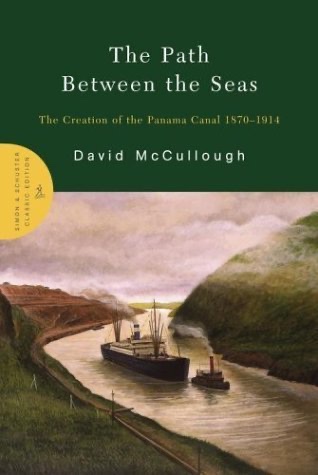 The Path Between the Seas: The Creation of the Panama Canal, 1870-1914
 River of Smoke
 Devolution: A Firsthand Account of the Rainier Sasquatch Massacre
 Where Late the Sweet Birds Sang
 The Long Way Home
 The Underground Railroad
 Mohawk
 Whiskey When We're Dry
 The Wars
 Roughing It
 State of Wonder
 Undaunted Courage: The Pioneering First Mission to Explore America's Wild Frontier
 The Water Knife
 Wandering Stars
 Dragon Seed
 The Last Stand: Custer, Sitting Bull, and the Battle of the Little Bighorn
 The Life and Times of the Thunderbolt Kid
 Speaking Bones
 A Thousand Moons
 The Whisper Man
 Alas, Babylon
 Shadow Country
 Julian Comstock: A Story of 22nd-Century America
 Wastelands: Stories of the Apocalypse
 A Bend in the River
 The Sea Keeper's Daughters
 Familiaris
 The Reivers
 Wayfaring Stranger
 The Log from the Sea of Cortez
 Shadows on the Rock
 The Bedlam Stacks
 Bury My Heart at Wounded Knee: An Indian History of the American West
 Lorna Doone
 The Naked and the Dead
 The Passage
 A Fatal Grace
 The Shipping News
 The Warmth of Other Suns: The Epic Story of America's Great Migration
 The Monkey Wrench Gang