
 How We Survived Communism and Even Laughed
Quotes from the Book
Europe has another meaning for me. Every time I mention that word, I see the Bosnian family in front of me, living far away from whatever they call home and eating their own wonderful food because that's all that is left for them. The fact remains that after fifty years, it was possible to have another war in Europe; that it was possible to change borders; that genocide is still possible even today.
6
The individual citizen had no chance to voice his protest or his opinion, not even his fear. He could only leave the country - and so people did. Those who used 'I' instead of 'we' in their language had to escape. It was this fatal difference in grammar that divided them from the rest of their compatriots. As a consequence of this 'us', no civic society developed. The little there was, in the form of small, isolated, and marginalised groups, was soon swallowed up by the national homogenisation that did not permit any differences, any individualism. As under communism, individualism was punished - individuals speaking out against the war, or against nationalism, were singled out as 'traitors'. How does a person who is a product of a totalitarian society learn responsibility, individuality, initiative? by saying 'no'. But this begins with saying 'I', thinking 'I' and doing 'I' - in public as well as in private. Individuality, the first-person singular, always existed under communism, it was just exiled from public and political life and exercised in private. Thus the terrible hypocrisy with which we learned to live in order to survive is having its backlash now: it is very difficult to connect the private and public 'I'; to start believing that an individual opinion, initiative, or vote could make a difference. There is still too big a danger that the citizen will withdraw into an anonymous, safe 'us'.
1
People were forced to jump from a village into a city, to make the giant leap from feudalism to communism, without the time or education to develop a civic society vandal its values and habits, from the concept of private property to huma rights, from democracy to toilet paper.
Should we not, must we not ask, then, what is Europe after Bosnia
Nobody would doubt for one moment that my husband is a rich foreigner - why in the world would I marry a poor one? My marriage also means that I have escaped the common destiny of my people: the war, poverty, insecurity, unemployment, disappointment, political confusion, low wages, and the feeling that time is running out fast and you can't be certain if the future will bring anything better.
If you asked a child riding a broomstick what it was doing, the child would answer, without hesitation: 'I am riding a horse.' For that child, a stick is a horse. It is as if by merely calling something by another name, you are able to transform it into what you want it to be. By usurping God's power, you create an illusion of an instant Paradise. And no one has yet told the infant Eastern Europe that a wooden stick is not a horse.
Faced with their confused glances and naive questions, I saw that there indeed was, between the writers and that public, however benevolent and sympathetic, a visible barrier. The audience simply did not have enough background information to comprehend what the writers sitting in front of them on the podium were saying. Confronted with such a lack of understanding, I felt that I had no other choice but to hang on to 'my' group, the writers from Eastern Europe. At least they knew what I was talking about; at least we understood each other's problems, if that was of any comfort to a single one of us. And in any case, even if I had loudly screamed that I didn't want to belong to any group at all, the audience would have put me with them. Perhaps for the first time I became aware of how tired I was of constantly being pushed back into 'my place' every time I made an attempt to break out of it.
Even at his age he knew that there are basically two categories of people in a society: those who have, and those who have not. But according to the egalitarian principles of any communist society, those 'haves' should share with the 'have nots.' And because there is not much to share anyway, in the end that egalitarianism boils down to the equal distribution of poverty.
It was hard to force people to give up their rights to apartments, and predictably, this radical Utopian ideal failed. But it does illustrate how the concept of social injustice in a communist society works: those who have are exceptions, and they should feel guilty and ashamed - the others are entitled to have, too, because it has been promised to them.
Watch on YouTube
About Slavenka Drakulić
We have collected 29 quotes from 2 books by Slavenka Drakulić on BookQuoters.
More about the author →More by Slavenka Drakulić
How We Survived Communism and Even Laughed
About the book
Croatian journalist, novelist, and essayist Slavenka Drakulić notes that Eastern Europeans are so anxious to become like their Western counterparts that every city and town has a Cafe Europa that is a pale imitation of similar establishments in cities like Paris and Rome. She presents here a collection of essays that explore life in various Eastern European countries since the fall of communism. As a citizen of Croatia (formerly part of Yugoslavia) living now in Vienna with her Swedish husband, she writes knowingly as a survivor of a communist regime, as one who realizes that pitfalls still lie ahead for nations emerging from the Soviet yoke. In Albania, she observes rage everywhere in people who seem to want to smash all vestiges of the Hoxha regime. In Romania, she comments on the execrable state in which public toilets are maintained: “[T]he standard of Romanian toilets reflects the n
Book details
- First published
- 1996
- Author
- Slavenka Drakulić
- Genre
- Nonfiction
- Goodreads rating
- 3.95 (3k ratings)
Keep reading
 Free: A Child and a Country at the End of History
How We Survived Communism and Even Laughed
Free: A Child and a Country at the End of History
How We Survived Communism and Even Laughed
 Border: A Journey to the Edge of Europe
 Secondhand Time: The Last of the Soviets
 The Strange Death of Europe: Immigration, Identity, Islam
 Imperium
 Postwar: A History of Europe Since 1945
 The Gulag Archipelago 1918-1956
 Flashpoints: The Emerging Crisis in Europe
 The Dawn of Everything: A New History of Humanity
 Blue Mars
 A People's History of the United States
 Upheaval: Turning Points for Nations in Crisis
 The Committed
 The Girl Who Smiled Beads: A Story of War and What Comes After
 Everything Flows
 Disoriental
 Understanding Power: The Indispensable Chomsky
 What's Left?
 The Road to Serfdom
 No Name in the Street
 Witness
 The Wretched of the Earth
 Creation Lake
 Petals of Blood
 You Can't Be Neutral on a Moving Train: A Personal History of Our Times
 Europe: A History
 I Must Betray You
 Ill Fares the Land
 The Message
 They Thought They Were Free: The Germans 1933-45
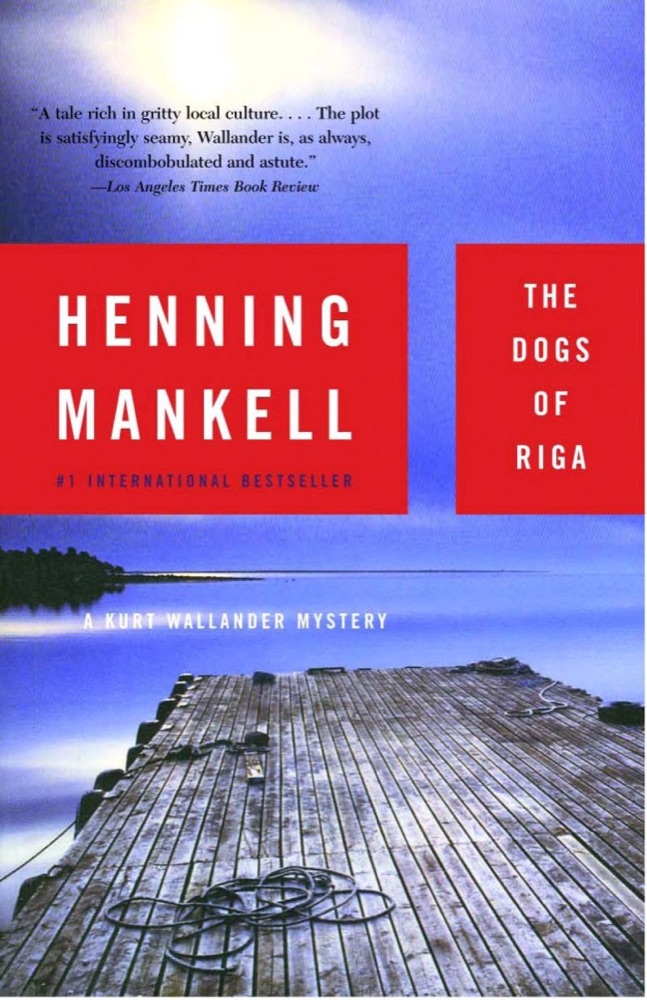 The Dogs of Riga
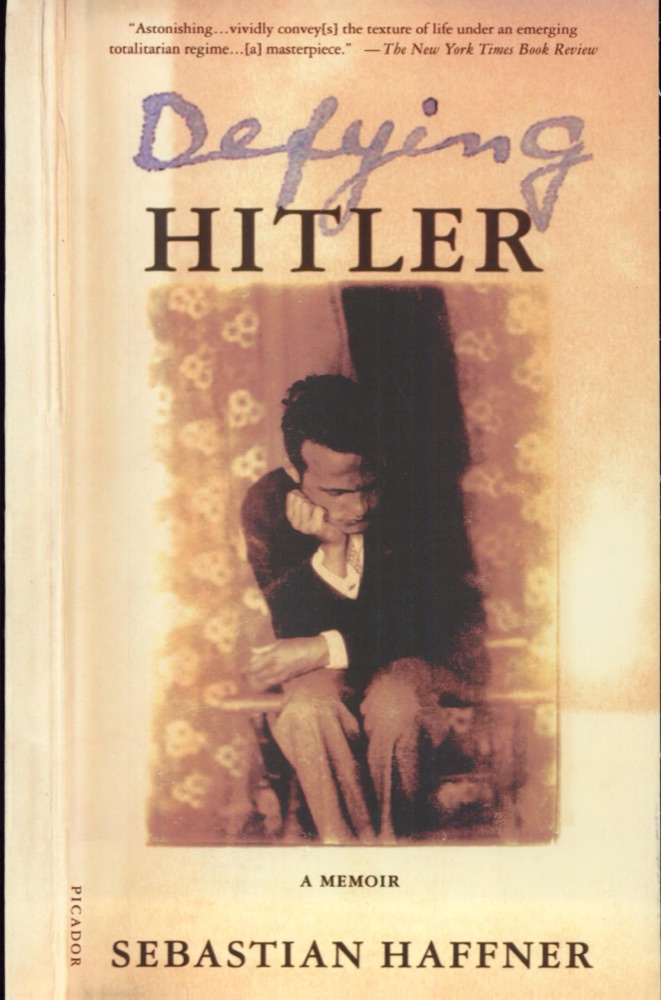 Defying Hitler
 The Book of My Lives
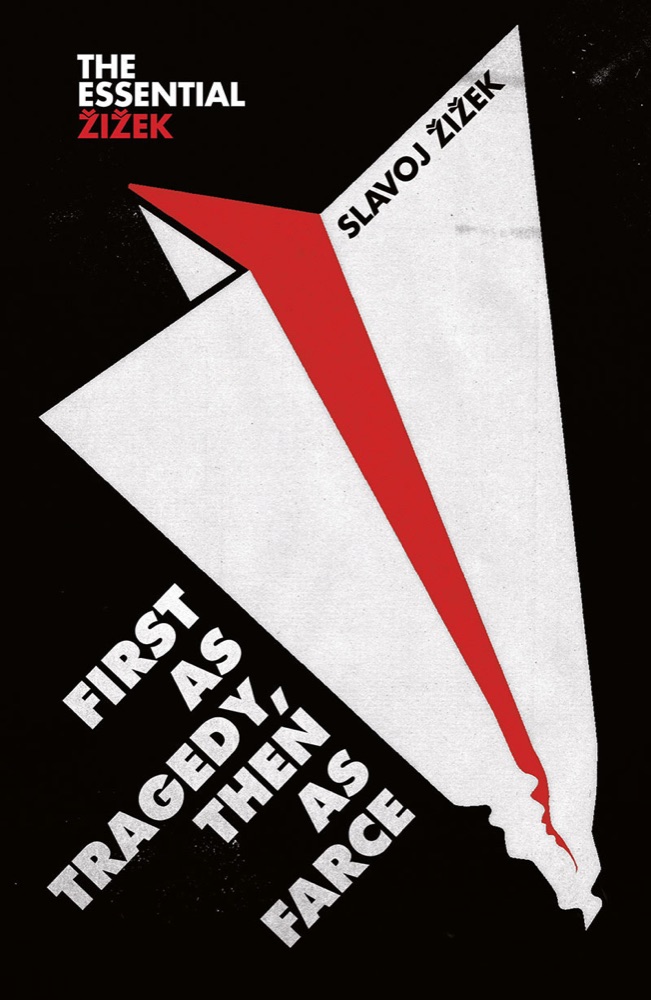 First As Tragedy, Then As Farce
 The Coming Insurrection
 One Day, Everyone Will Have Always Been Against This
 Power Systems: Conversations on Global Democratic Uprisings and the New Challenges to U.S. Empire
 The Refugees
 Revolution
 A Woman in Berlin: Eight Weeks in the Conquered City: A Diary
 Infinite Country
 The Ministry of Pain
 The Ministry for the Future
 A Small Place
 How Should We Then Live? The Rise and Decline of Western Thought and Culture
 America Alone: The End of the World As We Know It
 Dear America: Notes of an Undocumented Citizen
 Babel
Babel
 Freedom
 Green Mars
 The View From Flyover Country: Essays by Sarah Kendzior
 Girl at War
 The War on the West: An Instant NYT Bestselling History of the Modern World
 A Russian Journal
 The Golden House
 The Lives of Others
 The Girl with Seven Names: A North Korean Defector’s Story
 The Dispossessed
 Nobody Knows My Name