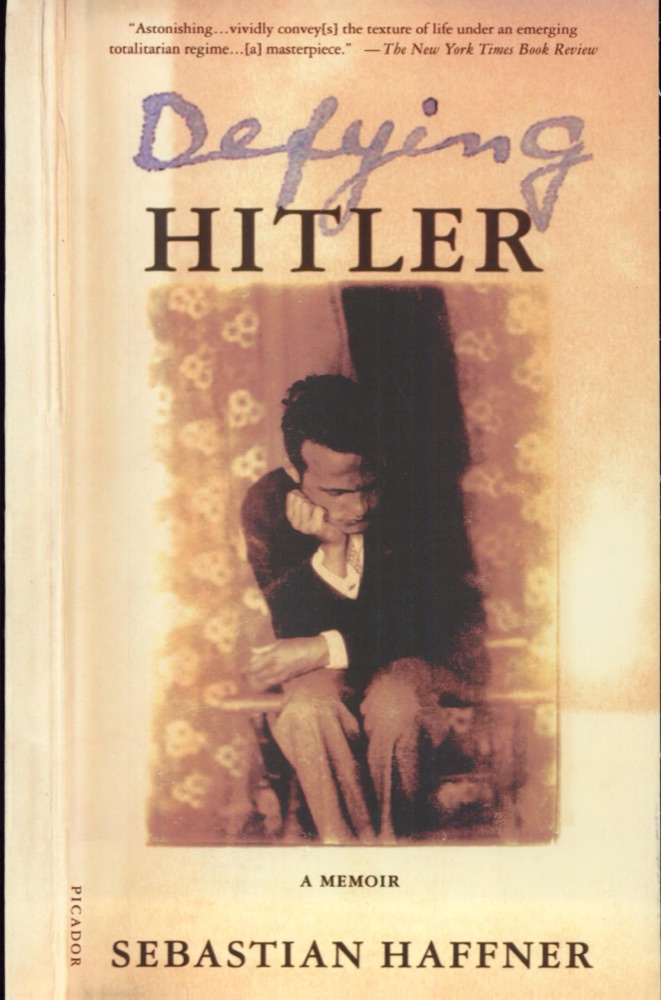
 They Thought They Were Free: The Germans 1933-45
Quotes from the Book
One cannot overstate the childishness of the ideas that feed and stir the masses. Real ideas must as a rule be simplified to the level of a child’s understanding if they are to arouse the masses to historic actions.
13
It may seem a paradox, but it is none the less the simple truth, to say that on the contrary, the decisive historical events take place among us, the anonymous masses. The most powerful dictators, ministers and generals are powerless against the simultaneous mass decisions taken individually and almost unconsciously by the population at large.
8
The most important part of individual life, which cannot be subsumed in communal life, is love. So comradeship has its special weapon against love: smut.
7
A childish illusion, fixed in the minds of all children born in a certain decade and hammered home for four years, can easily reappear as a deadly serious political ideology twenty years later.
6
Can such a man, you ask, be a leader of the masses? Surprisingly, the answer is yes. The masses — by which I mean not the proletariat, but the anonymous collective body into which all of us, high and low, amalgamate at certain moments — react most strongly to someone who least resembles them. Normality coupled with talent may make a politician popular. But to provoke extremes of love and hate, to be worshipped like a god or loathed like the devil, is given only to a truly exceptional person who is poles apart from the masses, be it far above or far below them. If my experience of Germany has taught me anything, it is this: Rathenau and Hitler are the two men who excited the imagination of the German masses to the utmost; the one by his ineffable culture, the other by his ineffable vileness. Both, and this is decisive, came from inaccessible regions, from some sort of “beyond.” The one from a sphere of sublime spirituality where the cultures of three millennia and two continents hold a symposium; the other from a jungle far below the depths plumbed by the basest penny dreadfuls, from an underworld where demons rise from a brewed-up stench of petty-bourgeois back rooms, doss-houses, barrack latrines, and the hangman’s yard. From their different “beyonds” they both drew
6
Comradeship always sets the cultural tone at the lowest possible level, accessible to everyone. It cannot tolerate discussion; in the chemical solution of comradeship, discussion immediately takes on the color of whining and grumbling. It becomes a mortal sin. Comradeship admits no thoughts, just mass feelings of the most primitive sort
5
Mass assemblies are quite incapable of independent action. Decisions that influence the course of history arise out of the individual experiences of thousands or millions of individuals.
4
It is this lack of self-reliance that opens the possibility of immense catastrophes of civilization such as the rule of the Nazis in Germany.
4
Saint Marx, in whom one had always believed, had not helped. Saint Hitler was obviously more powerful. So let’s destroy the images of Saint Marx on the altars and replace them with images of Saint Hitler. Let us learn to pray: “It is the Jews’ fault” rather than “It is the capitalists’ fault.” Perhaps that will redeem us.
4
What happened was a nightmarish reversal of normal circumstances: robbers and murderers acting as the police force, enjoying the full panoply of state power, their victims treated as criminals, proscribed and condemned to death in advance.
4
The truly Nazi generation was formed by those born in the decade from 1900 to 1910, who experienced war as a great game and were untouched by its realities.
4
To start with the essential point, comradeship completely destroys the sense of responsibility for oneself, be it in the civilian or, worse still, the religious sense. A man bedded in comradeship is relieved of all personal worries, and of the rigors of the struggle for life. He has his bed in the barracks, his meals, and his uniform. His daily life is prescribed from morning to night. He need not concern himself with anything. He lives, not under the severe rule of “each for himself,” but in the generous softness of “one for all and all for one.” It is one of the most unpleasant falsehoods that the laws of comradeship are harder than those of ordinary civilian life. On the contrary, they are of a debilitating softness, and they are justified only for soldiers in the field, for men facing death. Only the threat of death justifies and makes this egregious dispensation from responsibility acceptable. Indeed, it is a familiar story that brave soldiers, who have been too long bedded on the soft cushions of comradeship, often find it impossible to cope with the harshness of civilian life. It is even worse that comradeship relieves men of responsibility for their actions, before themselves, before God, before their consciences. They do what all their comrades do. They have no choice. They have no time for thought (except when they unfortunately wake up at night). Their comrades are their conscience and give absolution for everything, provided they do what everybody else does.
3
It was at this time that, invisibly and unnoticed, the Germans divided into those who later became Nazis and those who would remain non-Nazis.
3
They had never learned to live from within themselves, how to make an ordinary private life great, beautiful, and worthwhile, how to enjoy it and make it interesting. So they regarded the end of the political tension and the return of private liberty not as a gift, but as a deprivation. They were bored, their minds strayed to silly thoughts, and they began to sulk. In the end they waited eagerly for the first disturbance, the first setback or incident, so that they could put this period of peace behind them and set out on some new collective adventure.
3
It took me quite a while to realize that my youthful excitability was right and my father’s wealth of experience was wrong; that there are things that cannot be dealt with by calm skepticism.
3
Clearly historical events have varying degrees of intensity. Some may almost fail to impinge on true reality, that is, on the central, most personal part of a person's life. Others can wreak such havoc there that nothing is left standing. The usual way in which history is written fails to reveal this. '1890: Wilhelm II dismisses Bismark.' Certainly a key event in German history, but scarcely an event at all in the biography of any German outside its small circle of protagonists. Life went on as before. No family was torn apart, no friendship broke up, no one fled their country. Not even a rendezvous was missed or an opera performance cancelled. Those in love, whether happily or not, remained so; the poor remained poor and the rich rich. Now compare that with '1933: Hindenburg sends for Hitler.' An earthquake shatters sixty - six million lives. Official academic history has nothing to tell us about the differences in intensity of historical occurrences. To learn about that, you must read biographies, not those of statesmen but the all too rare ones of unknown individuals. There you will see that one historical event passes over the private (real) lives of people like a cloud over a lake. Nothing stirs, there is only a fleeting shadow. Another event whips up the lake as if in a thunderstorm. For a while it is scarcely recognisable. A third may, perhaps, drain the lake completely. I believe history is misunderstood if this aspect is forgotton (and it is usually forgotton).
2
Apart from the terror, the unsettling and depressing aspect of this first murderous declaration of intent was that it triggered a flood of arguments and discussions all over Germany, not about anti-Semitism but about the “Jewish question.” This is a trick the Nazis have since successfully repeated many times on other “questions” and in international affairs. By publicly threatening a person, an ethnic group, a nation, or a region with death and destruction, they provoke a general discussion not about their own existence, but about the right of their victims to exist. In this way that right is put in question.
2
European history knows two forms of terror. The first is the uncontrollable explosion of bloodlust in a victorious mass uprising. The other is cold, calculated cruelty committed by a victorious state as a demonstration of power and intimidation. The two forms of terror normally correspond to revolution and repression. The first is revolutionary. It justifies itself by the rage and fever of the moment, a temporary madness. The second is repressive. It justifies itself by the preceding revolutionary atrocities.
2
If my experience of Germany has taught me anything, it is this: Rathenau and Hitler are the two men who excited the imagination of the German masses to the utmost; the one by his ineffable culture, the other by his ineffable vileness.
2
the slow approach of the dreaded event; the confusion of the forces opposed to it and their hopeless adherence to the rules of the game, which the enemy daily infringes; the one-sidedness of the contest; the sense of hovering between “peace and stability” and “civil war
2
When I think about it, I have to say that by 1919 even the Hitler Youth had almost been formed. For example, in our school class we had started a club called the Rennbund Altpreussen (Old Prussia Athletics Club), and took as its motto “Anti-Spartacus, for Sport and Politics.” The politics consisted in occasionally beating up a few unfortunates, who were in favor of the revolution, on the way to school. Sports were the main occupation. We organized athletics championships in the school grounds or public stadia. These gave us the pleasurable sensation of being decidedly anti-Spartacist. We felt very important and patriotic, and ran races for the fatherland. What was that, if not an embryonic Hitler Youth? In truth, certain characteristics later added by Hitler’s personal idiosyncrasies were lacking, anti-Semitism for one. Our Jewish schoolmates ran with the same anti-Spartacist and patriotic zeal as everyone else. Indeed, our best runner was Jewish. I can testify that they did nothing to undermine national unity. During
2
We - that indefinite we - with no name, no party, no argument and no power
1
Today it is quite clear that Nazi anti-Semitism had nothing to do with the virtues or vices of the Jews. [ ] It is something new in the history of the world: an attempt to deny humans the solidarity of every species that enables it to survive; to turn human predatory instincts, that are normally directed against other animals, against members of their own species, and to make a whole nation into a pack of hunting hounds. Once the violence and readiness to kill that lies beneath the surface of human nature has been awakened and turned against other humans, and even made into a duty, it is a simpler matter to change the target. That can be clearly seen today; instead of "Jews", one can just say as easily say "Czechs" or "Poles" or anyone else.
1
The older generation had become uncertain and timid in its ideals and convictions and began to focus on “youth,” with thoughts of abdication, flattery, and high expectations.
1
para sobrevivir en la lucha por la existencia; la pretensión de dirigir los instintos depredadores del hombre, que normalmente sólo apuntan contra el mundo animal, contra miembros de su propia especie y de «azuzar» a toda una nación contra determinadas personas, como si fuera una manada de perros. Una vez despierto el instinto básico y perpetuo para asesinar al prójimo y transformado incluso en obligación, el hecho de cambiar de objeto se reduce a un detalle sin importancia.
1
Los nazis han atragantado a los alemanes con el acohol de la camaradería, cosa que ellos en parte deseaban, hasta el delirium tremens. Han convertido a todos los alemanes en camaradas y los han aficionado a esa droga desde la edad más temprana: en las Juventudes Hitlerianas, las SA, el ejército del Reich, en miles de campamentos y federaciones, extirpándoles algo irreemplazable, algo que no puede ser compensado con la felicidad propia de la camaradería.
1
guerra extraña, claro está, en la que todas las victorias se lograban mediante cánticos y desfiles. Las SA, las SS, las Juventudes Hitlerianas, el Frente por el Trabajo o lo que fuera desfilaban por las calles cantando «¿Ves cómo amanece por el Este?» o «Las landas de la marca de Brandenburgo», «formaban» en algún sitio, escuchaban un discurso, miles de voces tronaban al grito de «Heil» y ya con eso había caído otro enemigo.
1
Yo no «amo» a Alemania, del mismo modo que no me «amo» a mí mismo. Si hay un país al que ame, ése es Francia, pero también podría querer a cualquier otra nación con más facilidad que a la mía propia, aunque no existieran los nazis. Sin embargo, el país de uno desempeña un papel muy distinto y mucho más insustituible que el de la nación amada, puesto que es precisamente eso: el propio país. Si se pierde, casi se pierde también el derecho a amar a otra nación. Desaparecen todas las condiciones que hacen posible ese hermoso juego de la hospitalidad nacional, es decir, del intercambio, de las invitaciones recíprocas, del aprender a entender al otro, de enorgullecerse ante el otro; en tal caso uno se convierte sin más en un «sans-patrie», en un hombre sin sombra,
1
El caso es que yo en modo alguno me consideraba nacionalista. El nacionalismo de club deportivo que imperó durante la guerra mundial y que hoy alimenta el espíritu de los nazis, la alegría ávida e infantil que supone el hecho de ver el propio país representado en el mapa como una mancha de color cada vez más y más grande, la sensación de triunfo por las «victorias» conseguidas, el placer ante la humillación y el sometimiento ajenos, el gozoso paladeo del temor que uno inspira, el autobombo nacional al estilo de los «maestros cantores», la manipulación onanista en torno al pensamiento «alemán», al sentimiento «alemán», a la lealtad «alemana», el hombre «alemán», «¡sé alemán!»... hacía tiempo que todo eso me parecía simplemente asqueroso y repugnante, no había nada a lo me viese obligado a renunciar.
1
Watch on YouTube
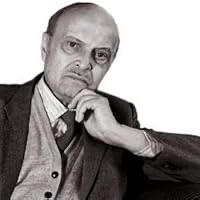
About Sebastian Haffner
We have collected 29 quotes from 1 book by Sebastian Haffner on BookQuoters.
More about the author →About the book
Written in 1939 and unpublished until 2000, Sebastian Haffner's memoir of the rise of Nazism in Germany offers a unique portrait of the lives of ordinary German citizens between the wars. Covering 1907 to 1933, his eyewitness account provides a portrait of a country in constant flux: from the rise of the First Corps, the right-wing voluntary military force set up in 1918 to suppress Communism and precursor to the Nazi storm troopers, to the Hitler Youth movement; from the apocalyptic year of 1923 when inflation crippled the country to Hitler's rise to power. This fascinating personal history elucidates how the average German grappled with a rapidly changing society, while chronicling day-to-day changes in attitudes, beliefs, politics, and prejudices.
Book details
- First published
- 2000
- Author
- Sebastian Haffner
- Genre
- History
- Goodreads rating
- 4.35 (6k ratings)
Keep reading
They Thought They Were Free: The Germans 1933-45
 The Rise and Fall of the Third Reich: A History of Nazi Germany
 Modern Times: The World from the Twenties to the Nineties
 The Origins of Totalitarianism
 I Will Bear Witness 1933-41 A Diary of the Nazi Years
 Eichmann in Jerusalem: A Report on the Banality of Evil
 Berlin Diary: The Journal of a Foreign Correspondent 1934-1941
 Bloodlands: Europe Between Hitler and Stalin
 Koba the Dread: Laughter and the Twenty Million
 Fascism: A Warning
 Brave New World Revisited
 No Name in the Street
 Homage to Catalonia
 History of the Russian Revolution
 The Strange Death of Europe: Immigration, Identity, Islam
 On Tyranny: Twenty Lessons from the Twentieth Century
 What's Left?
 Arguably: Selected Essays
 The Captive Mind
 The Gulag Archipelago 1918-1956
 In the Garden of Beasts: Love, Terror, and an American Family in Hitler's Berlin
 The Prague Cemetery
 The Light of Days: The Untold Story of Women Resistance Fighters in Hitler's Ghettos
 You Can't Be Neutral on a Moving Train: A Personal History of Our Times
 The Untold History of The United States
 If This Is a Man / The Truce
 A Quiet Flame
 The Road to Serfdom
 Crowds and Power
 The Last Lion: Winston Spencer Churchill: Alone, 1932-40
 The Revolt of the Masses
 Postwar: A History of Europe Since 1945
 Still Alive: A Holocaust Girlhood Remembered
 One Day, Everyone Will Have Always Been Against This
 A Collection of Essays
 Conspirators' Hierarchy: The Story of the Committee of 300
 The Will to Battle
 From Dawn to Decadence: 500 Years of Western Cultural Life, 1500 to the Present
 Under the Same Stars
 Brave New World / Brave New World Revisited
 Witness
 The Eighteenth Brumaire of Louis Bonaparte
 Darkness at Noon
 The Winds of War
 Quotations from Chairman Mao Tsetung
 First As Tragedy, Then As Farce
 A People's History of the United States
 Flashpoints: The Emerging Crisis in Europe
 Imperium
 The War of the Poor
 Resistance, Rebellion and Death: Essays
 Survival in Auschwitz
 The Third Reich at War
 Closing the Ring
 Selections from the Prison Notebooks
 How Should We Then Live? The Rise and Decline of Western Thought and Culture
 A Distant Mirror: The Calamitous 14th Century
 The Postcard
 Minima Moralia: Reflections on a Damaged Life
 Doppelganger: A Trip into the Mirror World