 Disability Visibility: First-Person Stories from the Twenty-first Century
Quotes from the Book
Mainstream ideas of “healing” deeply believe in ableist ideas that you’re either sick or well, fixed or broken, and that nobody would want to be in a disabled or sick or mad bodymind. Unsurprisingly and unfortunately, these ableist ideas often carry over into healing spaces that call themselves “alternative” or “liberatory.” The healing may be acupuncture and herbs, not pills and surgery, but assumptions in both places abound that disabled and sick folks are sad people longing to be “normal,” that cure is always the goal, and that disabled people are objects who have no knowledge of our bodies. And deep in both the medical-industrial complex and “alternative” forms of healing that have not confronted their ableism is the idea that disabled people can’t be healers.
21
It [i.e. disability justice] means we are not left behind; we are beloved, kindred, needed.
20
It’s not about self-care—it’s about collective care. Collective care means shifting our organizations to be ones where people feel fine if they get sick, cry, have needs, start late because the bus broke down, move slower, ones where there’s food at meetings, people work from home—and these aren’t things we apologize for. It is the way we do the work, which centers disabled-femme-of-color ways of being in the world, where many of us have often worked from our sickbeds, our kid beds, or our too-crazy-to-go-out-today beds. Where we actually care for each other and don’t leave each other behind. Which is what we started with, right?
15
Many of us who are disabled are not particularly likable or popular in general or amid the abled. Ableism means that we—with our panic attacks, our trauma, our triggers, our nagging need for fat seating or wheelchair access, our crankiness at inaccessibility, again, our staying home—are seen as pains in the ass, not particularly cool or sexy or interesting. Ableism, again, insists on either the supercrip (able to keep up with able-bodied club spaces, meetings, and jobs with little or no access needs) or the pathetic cripple. Ableism and poverty and racism mean that many of us are indeed in bad moods. Psychic difference and neurodivergence also mean that we may be blunt, depressed, or “hard to deal with” by the tenants of an ableist world.
15
Recently, Stacey Milbern brought up the concept of “crip doulas”—other disabled people who help bring you into disability community or into a different kind of disability than you may have experienced before. The more seasoned disabled person who comes and sits with your new crip self and lets you know the hacks you might need, holds space for your feelings, and shares the community’s stories. She mentioned that it’s telling that there’s not even a word for this in mainstream English. We wondered together: How would it change people’s experiences of disability and their fear of becoming disabled if this were a word, and a way of being? What if this was a rite of passage, a form of emotional labor folks knew of—this space of helping people transition? I have done this with hundreds of people. What if this is something we could all do for each other? How would our movements change? Our lives? Our beliefs about what we can do?
13
Inclusion without power or leadership is tokenism.
11
Is understanding that disabled people have a full-time job managing their disabilities and the medical-industrial complex and the world—so regular expectations about work, energy, and life can go right out the window.
11
A Disability Justice framework understands that all bodies are unique and essential, that all bodies have strengths and needs that must be met.
11
Too often self-care in our organizational cultures gets translated to our individual responsibility to leave work early, go home - alone - and go take a bath, go to the gym, eat some food and go to sleep. So we do all of that 'self-care' to return to organizational cultures where we reproduce the systems we are trying to break.
9
To me, one quality of disability justice culture is that it is simultaneously beautiful and practical. Poetry and dance are as valuable as a blog post about access hacks - because they're equally important and interdependent.
9
Disabled Cherokee scholar Qwo-Li Driskill has remarked that in precontact Cherokee, there are many words for people with different kinds of bodies, illnesses, and what would be seen as impairments; none of those words are negative or view those sick or disabled people as defective or not as good as normatively bodied people.9 With the arrival of white settler colonialism, things changed, and not in a good way. For many sick and disabled Black, Indigenous, and brown people under transatlantic enslavement, colonial invasion, and forced labor, there was no such thing as state-funded care. Instead, if we were too sick or disabled to work, we were often killed, sold, or left to die, because we were not making factory or plantation owners money. Sick, disabled, Mad, Deaf, and neurodivergent people’s care and treatment varied according to our race, class, gender, and location, but for the most part, at best, we were able to evade capture and find ways of caring for ourselves or being cared for by our families, nations, or communities—from our Black and brown communities to disabled communities.
8
Disability Justice allowed me to understand that me writing from my sickbed wasn't me being week or uncool or not a real writer but a time-honoured crip creative practice. And that understanding allowed me to finally write from a disabled space, for and about sick and disabled people, including myself, without feeling like I was writing about boring, private things that no one would understand.
7
For years awaiting this apocalypse, I have worried that as sick and disabled people, we will be the ones abandoned when our cities flood. But I am dreaming the biggest disabled dream of my life—dreaming not just of a revolutionary movement in which we are not abandoned but of a movement in which we lead the way. With all of our crazy, adaptive-deviced, loving kinship and commitment to each other, we will leave no one behind as we roll, limp, stim, sign, and move in a million ways towards cocreating the decolonial living future. I am dreaming like my life depends on it. Because it does.
6
If white healers slap “healing justice” on their work but are still using the healing traditions of some folks’ cultures that aren’t their own, are primarily working and treating white middle-class and upper-class people, are unaware or don’t recognize that HJ was created by Black and brown femmes, are not working with a critical stance and understanding of how colonization, racism, and ableism are healing issues … it ain’t healing justice.
6
People’s fear of accessing care didn’t come out of nowhere. It came out of generations and centuries where needed care meant being locked up, losing your human and civil rights, and being subject to abuse.
6
Fair trade emotional economics are consensual. In a fair trade femme care emotional labor economy, there would no unconsensual expectations of automatic caretaking/mommying. People would ask first and be prepared to receive a yes, no, or maybe. I ask if you can offer care or support; you think about whether you’ve got spoons and offer an honest yes, no, or maybe. In this paradigm, it’s the person offering care’s job to figure out and keep figuring out what kind of care and support they can offer. It’s the person receiving care’s job to figure out what they need and what they can accept, under what circumstances.
5
Access is complex. It is more than just having a ramp or getting disabled folks/crips into the meeting. Access is a constant process that doesn’t stop. It is hard and even when you have help, it can be impossible to figure out alone.
5
It's not about self-care - it's about collective care. Collective care means shifting our organizations to be ones where people feel fine if they get sick, cry, have needs, start late because the bus broke down, more slower, ones where there's food at meetings, people work from home - and these aren't things we apologize for.
4
I’ve noticed tons of abled activists will happily add “ableism” to the list of stuff they’re against (you know, like that big sign in front of the club in my town that says “No racism, sexism, homophobia, transphobia, ableism”) or throw around the word “disability justice” in the list of “justices” in their manifesto. But then nothing else changes: all their organizing is still run the exact same inaccessible way, with the ten-mile-long marches, workshops that urge people to “get out of your seats and move!” and lack of inclusion of any disabled issues or organizing strategies. And of course none of them think they’re ableist.
4
Grief is an important part of the work. So many of the movements I’ve been a part of in my lifetime—the movements against wars in Afghanistan/Iraq and against Islamophobic racist violence here on Turtle Island, movements for sex work justice and for missing and murdered Indigenous women, movements led by and for trans women of color, movements for Black lives, movements by and for disabled folks and for survivors of abuse—involve a lot of grieving and remembering people we love who have been murdered, died, or been hurt/abused/gone through really horrible shit.
4
Everyone I know longs for healing. It’s just hard to get. The good kind of healing: healing that is affordable, has childcare and no stairs, doesn’t misgender us or disrespect our disabilities or sex work, believes us when we’re hurt and listens when we say what we need, understands that we are the first and last authority on our own bodies and minds.
4
At the risk of seeming like a Christian, or a Che Guevara poster, love is bigger, huger, more complex, and more ultimate than petty fucked-up desirability politics. We all deserve love. Love as an action verb. Love in full inclusion, in centrality, in not being forgotten. Being loved for our disabilities, our weirdness, not despite them. Love in action is when we strategize to create cross-disability access spaces. When we refuse to abandon each other. When we, as disabled people, fight for the access needs of sibling crips. I’ve seen able-bodied organizers be confused by this. Why am I fighting so hard for fragrance-free space or a ramp, if it’s not something I personally need? When disabled people get free, everyone gets free. More access makes everything more accessible for everybody.
4
One of the central loves of my life is coaching and supporting other writers. Specifically, writers who identify as BIPOC, sick/Mad/disabled, queer/trans, femme, working-class/poor, or some or all of the above. I want marginalized writers to get our writing in the world, and I believe in sharing the skills I’ve gained over the past two decades of being a working writer, writing teacher and editor to help us get there.
3
I love the care and mutual aid we give each other in queer, trans, sick and disabled and working class and queer and trans Black, Indigenous, and people of color (QTBIPOC) communities. As a sick and disabled, working-class, brown femme, I wouldn’t be alive without communities of care, and neither would most people I love. Some of my fiercest love is reserved for how femmes and sick and disabled queers show up for each other when every able-bodied person “forgets” about us. Sick and disabled folks will get up from where we’ve been projectile vomiting for the past eight hours to drive a spare Effexor to their friend’s house who just ran out. We do this because we love each other, and because we often have a sacred trust not to forget about each other. Able-bodied people who think we are “weak” have no idea; every day of our disabled lives is like an Ironman triathlon. Disabled, sick, poor, working-class, sex-working and Black and brown femmes are some of the toughest and most resilient folks I know. You have to develop complex strengths to survive this world as us.
3
Disability justice, when it’s really happening, is too messy and wild to really fit into traditional movement and nonprofit industrial complex structures, because our bodies and minds are too wild to fit into those structures. Which is no surprise, because nonprofits, while created in the ’60s to manage dissent, in many ways overlap with “charities”—the network of well-meaning institutions designed on purpose to lock up, institutionalize, and “help the handicapped.” Foundations have rarely ever given disabled people money to run our own shit. Nonprofits need us as clients and get nervous about us running the show. Disability justice means the show has to change—or get out of the way.
3
Although containing and denying grief is a time-honored activist practice that works for some people, I would argue that feelings of grief and trauma are not a distraction from the struggle. For example, transformative justice work—strategies that create justice, healing, and safety for survivors of abuse without predominantly relying on the state—is hard as hell! What would it be like if we built healing justice practices into it from the beginning? Everything from praying to the goddesses of transformation to help us hold these giant processes and help someone acting abusively choose to change to having cleansing ceremonies along the way.
3
Most sick and disabled people I know approach healing wanting specific things—less pain, less anxiety, more flexibility—but not usually to become able-bodied. And many of us don’t feel automatically comfortable going to healing spaces at all because of our histories of being seen as freaks, scrutinized, infantilized, patronized with “What happened?” prayed over, and asked, “Have you tried acupuncture?” and a million other “miracle cures.” Able-bodied practitioners without an anti-ableist analysis—including Reiki providers and anti-oppression therapists—often see us as objects of disgust, fascination, and/or inspiration porn. Mostly, these practitioners dismiss our lived expertise about our bodyminds and their needs, or on the flip side, they tell us we’re “not really disabled!” when we insist on the realities of our lives. This carries over into organizing, where, even in HJ spaces, often when the crips aren’t there, there’s no access info and no accessibility.
3
I don’t think there is any one single answer to the need for care. I just want, to echo my friend Dori, more care, more of the time. I want us to dream mutual aid in our postapocalyptic revolutionary societies where everyone gets to access many kinds of care—from friends and internet strangers, from disabled community centers, and from some kind of non-fucked-up non-state state that would pay caregivers well and give them health benefits and time off and enshrine sick and disabled autonomy and choice. I want us to keep dreaming and experimenting with all these big, ambitious ways we dream care for each other into being.
3
But our focus is less on civil rights legislation as the only solution to ableism and more on a vision of liberation that understands that the state was built on racist, colonialist ableism and will not save us, because it was created to kill us.
3
Sick and disabled and neurodivergent folks aren’t supposed to dream, especially if we are queer and Black or brown—we’re just supposed to be grateful the “normals” let us live.
2
Watch on YouTube
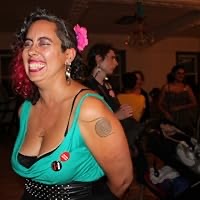
About Leah Lakshmi Piepzna-Samarasinha
We have collected 30 quotes from 1 book by Leah Lakshmi Piepzna-Samarasinha on BookQuoters.
More about the author →About the book
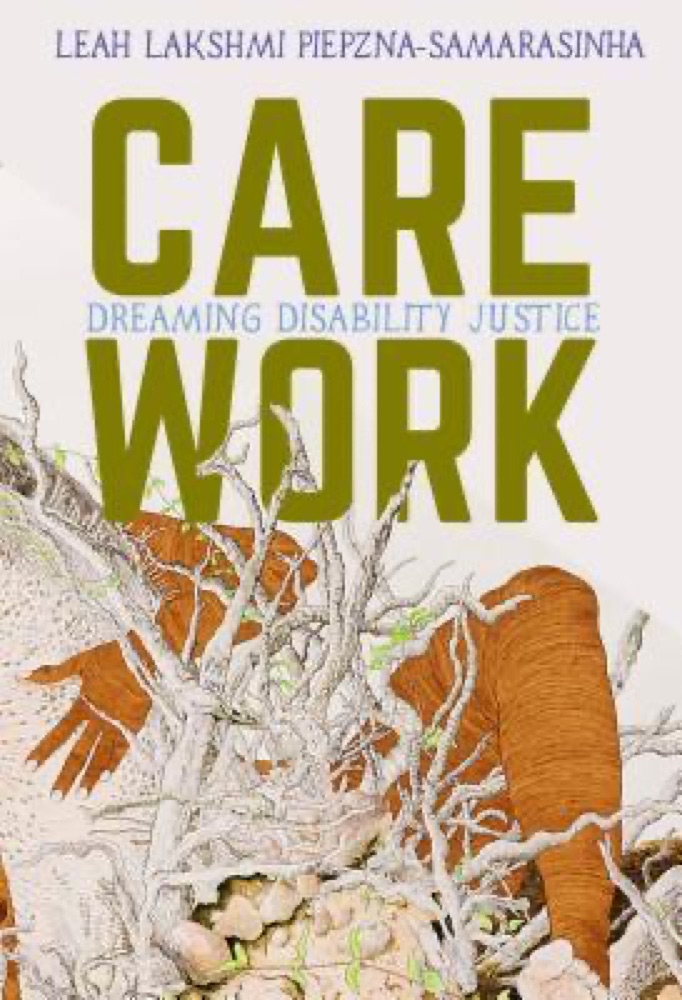
In this collection of essays, Lambda Literary Award-winning writer and longtime activist and performance artist Leah Lakshmi Piepzna-Samarasinha explores the politics and realities of disability justice, a movement that centers the lives and leadership of sick and disabled queer, trans, Black, and brown people, with knowledge and gifts for all.
Care Work is a mapping of access as radical love, a celebration of the work that sick and disabled queer/people of color are doing to find each other and to build power and community, and a tool kit for everyone who wants to build radically resilient, sustainable communities of liberation where no one is left behind. Powerful and passionate, Care Work is a crucial and necessary call to arms.
Book details
- First published
- 2018
- Genre
- Nonfiction
- Goodreads rating
- 4.51 (5k ratings)
Keep reading
Disability Visibility: First-Person Stories from the Twenty-first Century
 I Hope We Choose Love: A Trans Girl's Notes from the End of the World
 Haben: The Deafblind Woman Who Conquered Harvard Law
 Mutual Aid: Building Solidarity in This Crisis
 Opinions: A Decade of Arguments, Criticism, and Minding Other People’s Business
 Emergent Strategy: Shaping Change, Changing Worlds
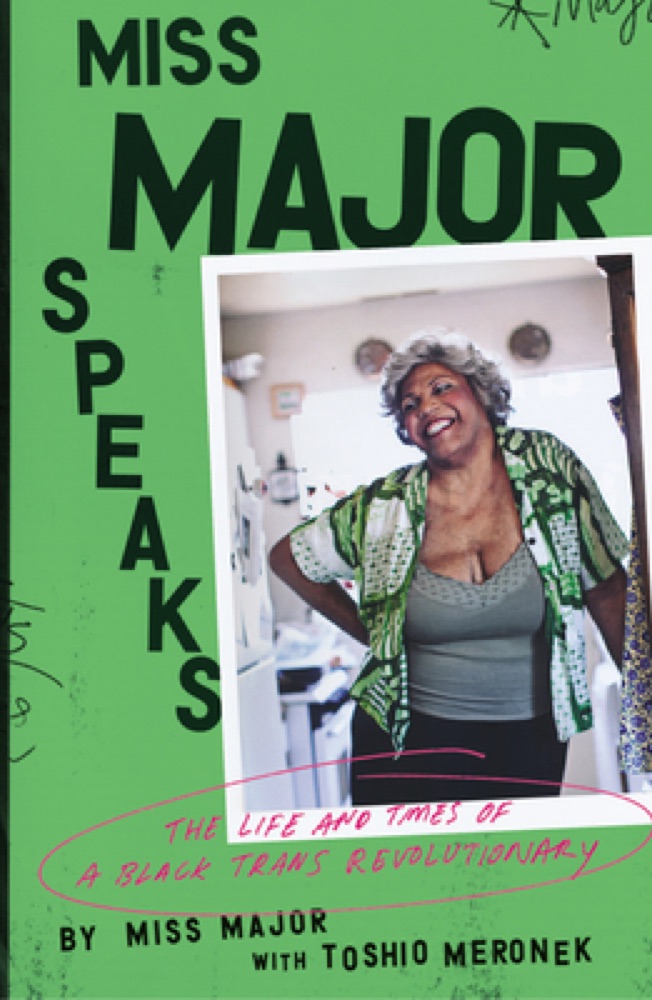 Miss Major Speaks: Conversations with a Black Trans Revolutionary
 When They Call You a Terrorist: A Black Lives Matter Memoir
 You Are Your Best Thing: Vulnerability, Shame Resilience, and the Black Experience
 On Freedom: Four Songs of Care and Constraint
 On the Other Side of Freedom: The Case for Hope
 Tomorrow Will Be Different: Love, Loss, and the Fight for Trans Equality
 Sissy: A Coming-of-Gender Story
 A Mind Spread Out on the Ground
 Living a Feminist Life
 Redefining Realness: My Path to Womanhood, Identity, Love & So Much More
 Different, Not Less: A Neurodivergent's Guide to Embracing Your True Self and Finding Your Happily Ever After
 The Master's Tools Will Never Dismantle the Master's House
 This Bridge Called My Back: Writings by Radical Women of Color
 The Source of Self-Regard: Selected Essays, Speeches, and Meditations
 A Burst of Light
 Far from the Tree: Parents, Children, and the Search for Identity
 Fall Down 7 Times Get Up 8: A Young Man's Voice from the Silence of Autism
 This Is What Inequality Looks Like
 Pleasure Activism: The Politics of Feeling Good
 Of Mess and Moxie: Wrangling Delight Out of This Wild and Glorious Life
 Feminists Don't Wear Pink (And Other Lies): Amazing Women on What the F-Word Means to Them
 In Search of Our Mothers' Gardens: Womanist Prose
 Sister Outsider: Essays and Speeches
 This Here Flesh: Spirituality, Liberation, and the Stories That Make Us
 The Mother of All Questions
 Undoing Gender
 Talking Back: Thinking Feminist, Thinking Black
 See No Stranger: A Memoir and Manifesto of Revolutionary Love
 Detransition, Baby
 Why I Am Not a Feminist: A Feminist Manifesto
 The Moment of Lift: How Empowering Women Changes the World
 Just Us: An American Conversation
 How to Stay Sane in an Age of Division
 We Do This 'til We Free Us: Abolitionist Organizing and Transforming Justice
 The Trauma Cleaner: One Woman's Extraordinary Life in the Business of Death, Decay, and Disaster
 Ten Steps to Nanette
 Pathologies of Power: Health, Human Rights, and the New War on the Poor
 Kitchen Table Wisdom: Stories that Heal
 Girl, Woman, Other
 Whose Story Is This? Old Conflicts, New Chapters
 Just Mercy
 The Reason I Jump: The Inner Voice of a Thirteen-Year-Old Boy with Autism
 The Madness of Crowds: Gender, Race and Identity
 United: Thoughts on Finding Common Ground and Advancing the Common Good
 The Transgender Issue: An Argument for Justice
 I'm Still Here: Black Dignity in a World Made for Whiteness
 The Light We Carry: Overcoming in Uncertain Times
 Shrill: Notes from a Loud Woman
 The Collected Schizophrenias: Essays
 How to Keep House While Drowning
 Stitches: A Handbook on Meaning, Hope, and Repair
 Hood Feminism: Notes from the Women That a Movement Forgot
 Everything Is Tuberculosis: The History and Persistence of Our Deadliest Infection